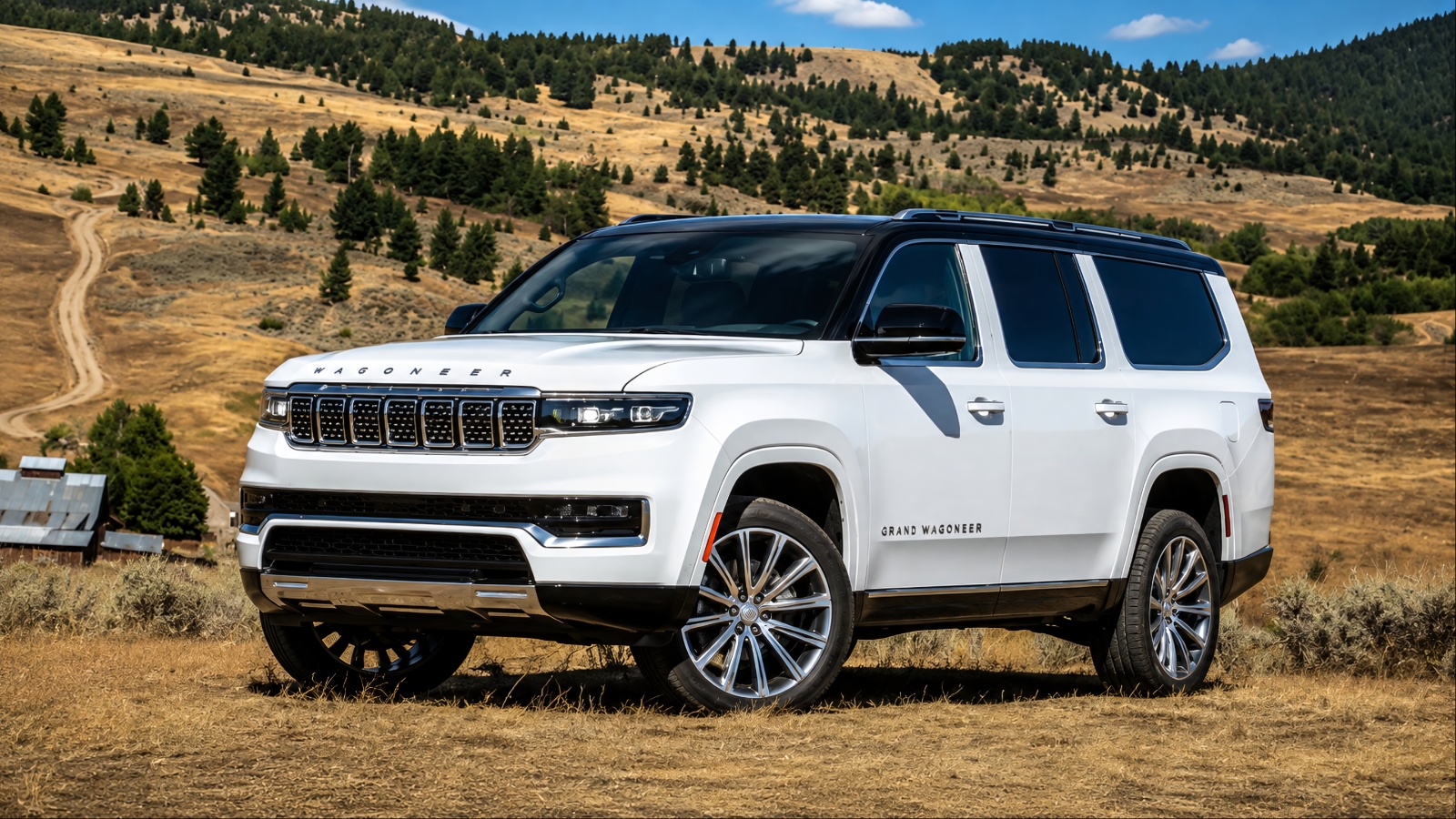
Factory wheels have grown dramatically as modern cars have become larger, heavier, and more performance-focused. For decades, 15- and 16-inch wheels were common, while 18- and 19-inch designs eventually became familiar on premium vehicles.
Today, 22-inch wheels are no longer unusual, and 24-inch OEM applications have pushed factory wheel sizing into a new category. Large luxury SUVs, high-performance models, and premium electric vehicles have helped drive this trend.
This article looks at ten production vehicles associated with factory 24-inch wheels, explaining their applications, design choices, engineering considerations, and the reasons manufacturers have embraced such enormous wheels.
1. Cadillac Escalade V-Series
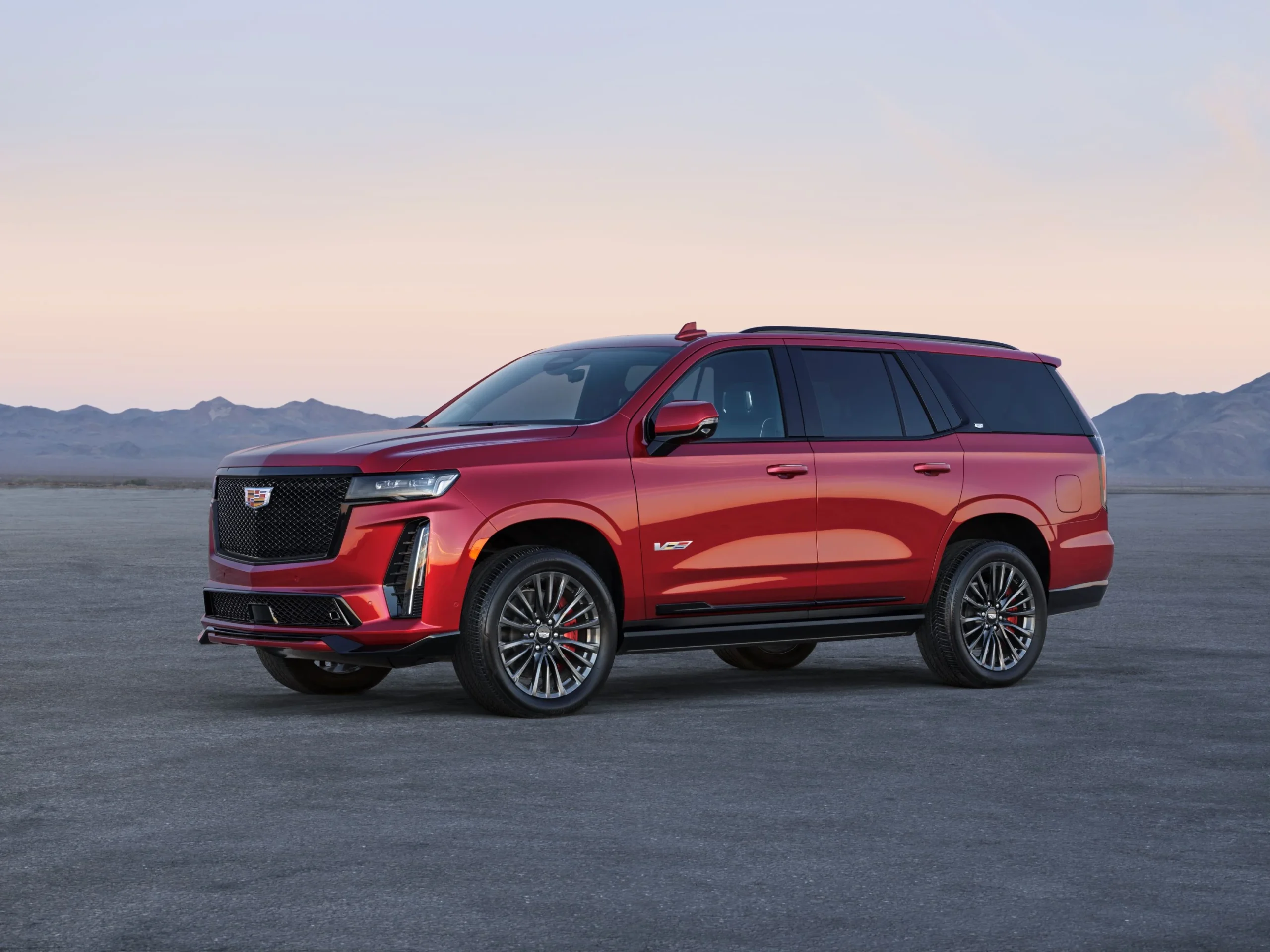
The Cadillac Escalade V-Series stands at the top of the factory-wheel conversation because its 24-inch wheels are fitted as standard equipment. The high-performance SUV combines a large luxury-SUV body with a supercharged 6.2-liter V8, creating a vehicle where the enormous wheels are visually consistent with the rest of the package.
The 24-inch split six-spoke alloy wheels have a substantial presence beneath the Escalade’s large wheel arches and help distinguish the V-Series from less aggressive versions. Current automotive coverage identifies the Escalade V-Series as having the largest standard factory wheels among production gasoline vehicles.
The size is particularly striking because the Escalade is not a specialized aftermarket build. These wheels are part of the manufacturer’s production specification, meaning Cadillac had to engineer the suspension, braking system, steering geometry, tire package, and body clearance around them.
A 24-inch wheel leaves considerably less room for sidewall than a smaller wheel wearing a tire of similar diameter. That changes the way the tire reacts to potholes, road imperfections, steering inputs, and hard cornering. The wheel itself also has to withstand the considerable mass and load associated with a full-size luxury SUV.
The V-Series treatment gives the wheels a purpose beyond simply making the Escalade appear larger. The split six-spoke pattern has a performance-oriented appearance, while the dark finish complements the aggressive styling of the V-Series.
Cadillac also uses the wheel design to visually separate the model from ordinary Escalade variants. When viewed from the side, the wheels fill a significant portion of the bodywork, creating the kind of stance that would previously have required an aftermarket conversion.
There is also a practical connection between the wheel diameter and the vehicle’s braking hardware. High-performance SUVs require powerful braking systems, and large wheels can provide additional space for substantial brake components.
That does not mean a larger wheel automatically improves braking, but it gives engineers more packaging room. On a vehicle producing hundreds of horsepower and carrying substantial weight, brake capacity becomes an important part of the engineering package.
2. Cadillac Escalade
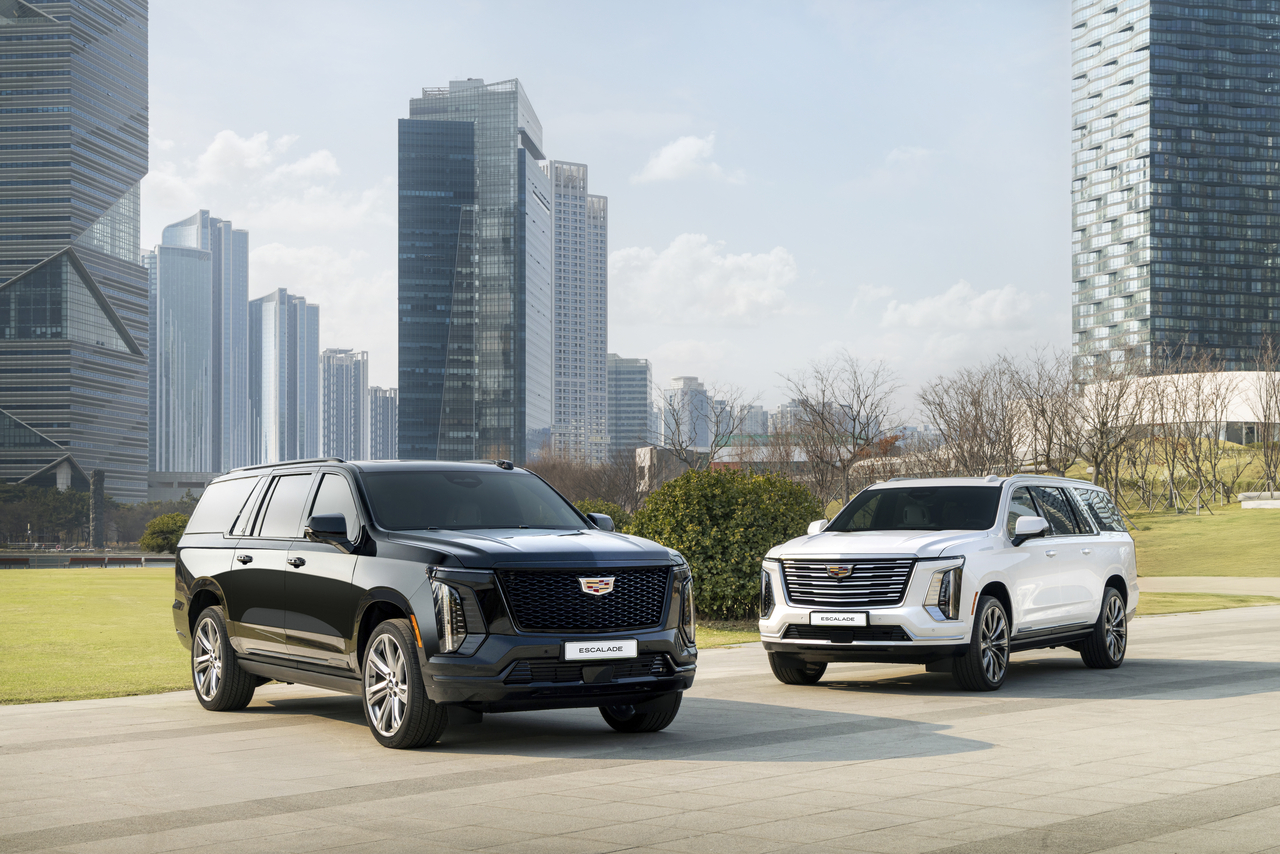
The regular Cadillac Escalade also belongs in any discussion of factory 24-inch applications. Cadillac introduced 24-inch wheel options for the Escalade as part of the model’s later development, marking a major increase from the 22-inch wheels previously associated with the SUV.
Contemporary reporting on the 2024 Escalade noted that the new 24-inch wheels would become the largest wheels Cadillac had offered from the factory on an Escalade.
The standard Escalade is an interesting example because it demonstrates how large wheels have moved beyond specialist performance variants. The Escalade is fundamentally a luxury SUV designed to provide space, comfort, technology, and road presence.
Offering 24-inch wheels as a factory specification shows how manufacturers now regard wheel diameter as an important part of the premium-vehicle experience. Customers buying large luxury SUVs increasingly expect substantial wheels to match the dimensions and visual character of the vehicle.
A 24-inch wheel also changes the proportions of a vehicle. On a smaller car, such a diameter would dominate the bodywork and create severe packaging challenges.
The Escalade’s enormous body allows the wheel to appear more naturally integrated. The large arches provide enough visual and physical space for the wheels, while the tall body prevents the wheels from making the SUV look disproportionately low or fragile.
Ride quality is an important consideration. As wheel diameter increases, tire sidewall height generally decreases when tire diameter remains within the intended range. Sidewalls provide compliance between the road and suspension, so reducing their height can make a vehicle feel sharper but can also make impacts more noticeable.
Cadillac therefore has to balance appearance with suspension tuning, tire construction, steering calibration, and the expectations of luxury-SUV buyers.
3. GMC Yukon Denali
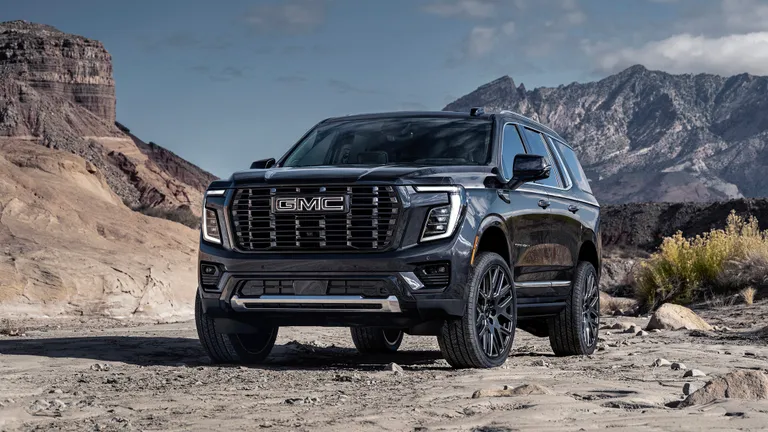
The GMC Yukon Denali represents another full-size American SUV where 24-inch wheels fit naturally into the design language. Denali models have long emphasized premium finishes, distinctive grilles, large wheels, and upscale interiors.
As the Yukon has grown in size and sophistication, its available wheel packages have grown accordingly. The 24-inch application places the Yukon firmly within the same visual territory as the largest luxury SUVs.
Large wheels are particularly effective on the Yukon because of its substantial dimensions. The SUV has a tall body, long wheelbase, large glasshouse, and wide stance.
Smaller wheels can make a vehicle of this size appear visually heavy, whereas a 24-inch design fills the wheel openings and gives the body a more balanced appearance. This is an important part of modern vehicle design because wheel size has become closely connected to how expensive and technologically advanced a vehicle appears.
The Denali nameplate also makes the wheel choice understandable from a market-positioning perspective. GMC uses Denali to distinguish its most luxurious versions from ordinary Yukon models.
The wheel design therefore serves as an immediate visual signal. Before a driver sees the interior, engine specification, or equipment list, the large wheels already communicate that the vehicle is positioned toward the premium end of the range.
From an engineering perspective, the Yukon has to account for the additional unsprung mass and the reduced tire sidewall associated with large wheel packages.
Unsprung mass includes components that move with the wheel and suspension rather than being supported directly by the vehicle body. Keeping this mass under control is important because excessive unsprung weight can affect ride response and suspension performance. Modern aluminum wheel construction and advanced tire designs help manufacturers manage the compromises involved.
4. GMC Yukon AT4
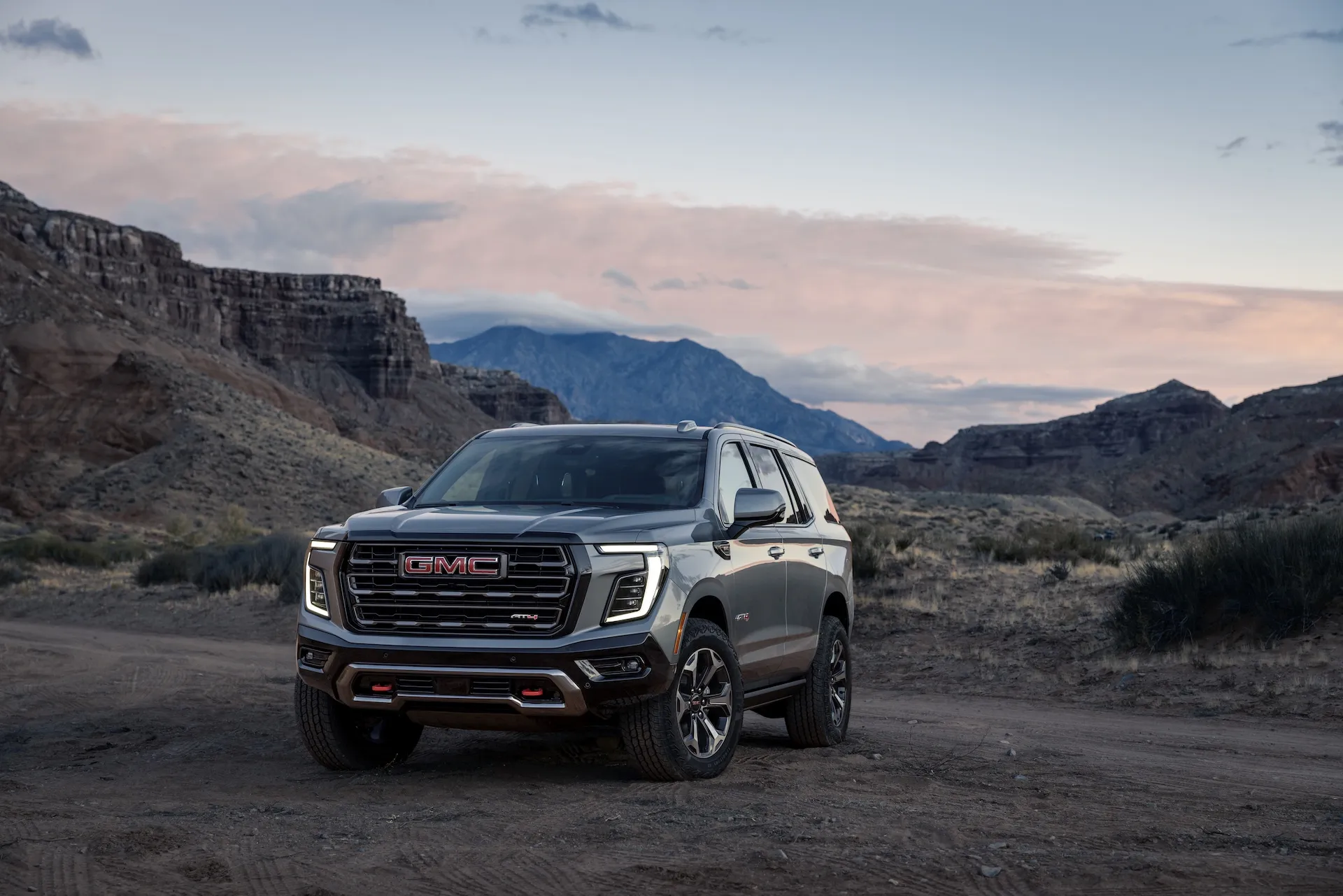
The GMC Yukon AT4 provides an interesting contrast to the more road-focused luxury versions of the full-size SUV. AT4 models emphasize rugged styling and off-road capability, making a large factory wheel application more complicated from a functional standpoint.
Large wheels generally mean less tire sidewall when tire diameter is constrained, while off-road driving benefits from substantial sidewall flexibility and protection.
That contrast makes the Yukon particularly interesting in discussions about OEM 24-inch applications. A wheel that looks perfect on a luxury-oriented SUV is not necessarily ideal for serious trail use.
Off-road tires often need sufficient sidewall to absorb impacts, conform to uneven surfaces, and operate at lower pressures. A 24-inch wheel leaves less room for that sidewall compared with smaller wheels using a similar tire diameter.
The AT4’s presence in the large-wheel conversation therefore demonstrates how manufacturers have to balance appearance with intended use. Many modern SUVs are marketed as vehicles capable of both urban luxury and recreational adventure.
Customers may spend most of their time on paved roads while still wanting an appearance that suggests rugged capability. Large wheels can satisfy the visual side of that equation, even if a smaller wheel and taller tire would be preferable for demanding off-road driving.
Wheel size also affects how a vehicle is perceived. A 24-inch wheel has become a visual shorthand for an expensive, heavily equipped SUV. Manufacturers understand that customers frequently judge a vehicle from the outside before experiencing its driving characteristics.
A large wheel design can therefore become an important part of the trim’s identity, particularly when combined with dark finishes, machined surfaces, or distinctive spoke patterns.
The Yukon AT4 highlights an important point about factory wheel sizing: biggest does not always mean best for every use. A 24-inch wheel can be entirely appropriate for a large premium SUV used primarily on paved roads, but the same dimensions require different considerations when the vehicle is expected to tackle rough terrain.
OEM engineering is therefore about compromise, and the factory wheel package reflects the intended balance between appearance, road performance, comfort, durability, and customer expectations.
5. Chevrolet Suburban
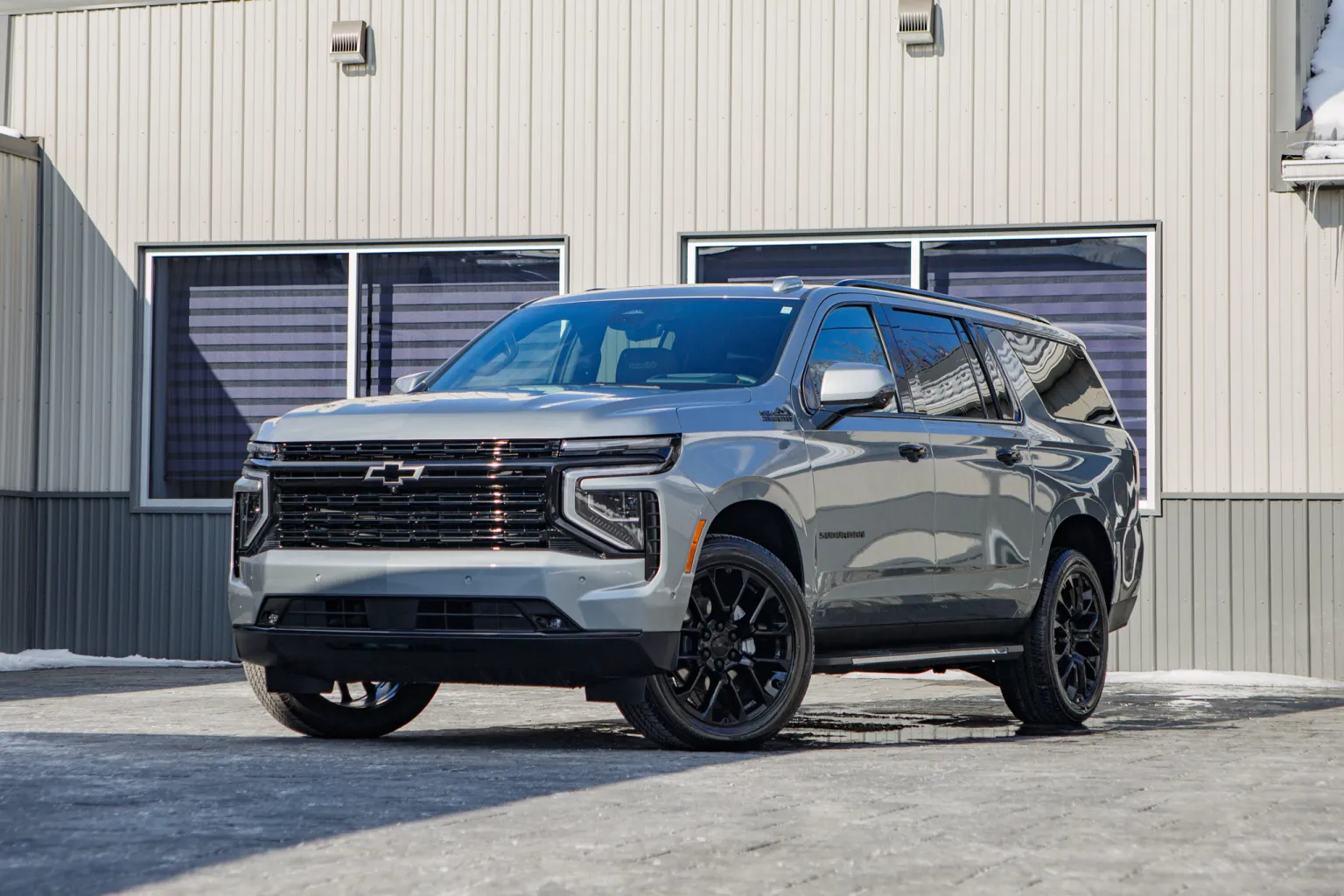
The Chevrolet Suburban is among the largest and longest-running names in the full-size SUV market. Its enormous proportions provide an ideal canvas for large wheels, and high-end versions of the current-generation Suburban have been associated with 24-inch factory wheel applications. The sheer size of the vehicle makes these wheels appear less extreme than they would on a midsize SUV.
The Suburban’s long body and large wheel openings are important factors. A 24-inch wheel needs a significant amount of physical space, and the Suburban has plenty of it.
The result is a vehicle where the wheel does not overwhelm the design. Instead, the wheels contribute to a more planted appearance and visually connect the lower body with the rest of the SUV’s massive proportions.
Large wheels also help differentiate premium trims. Chevrolet has used larger wheels, distinctive finishes, and more sophisticated exterior detailing to separate high-level versions of its full-size SUV range.
Buyers can therefore choose between more practical wheel-and-tire combinations and visually dramatic packages depending on their priorities. This flexibility is important because a Suburban can serve as a family vehicle, executive transport, long-distance cruiser, or heavy-duty utility machine.
For everyday driving, the 24-inch configuration places greater emphasis on pavement performance and appearance than on maximum sidewall protection. The lower-profile tire can provide crisp steering response and a direct connection to the road.
At the same time, the driver needs to be more conscious of potholes, sharp road edges, and damaged pavement because there is less tire material between the wheel and the road surface.
6. Chevrolet Tahoe
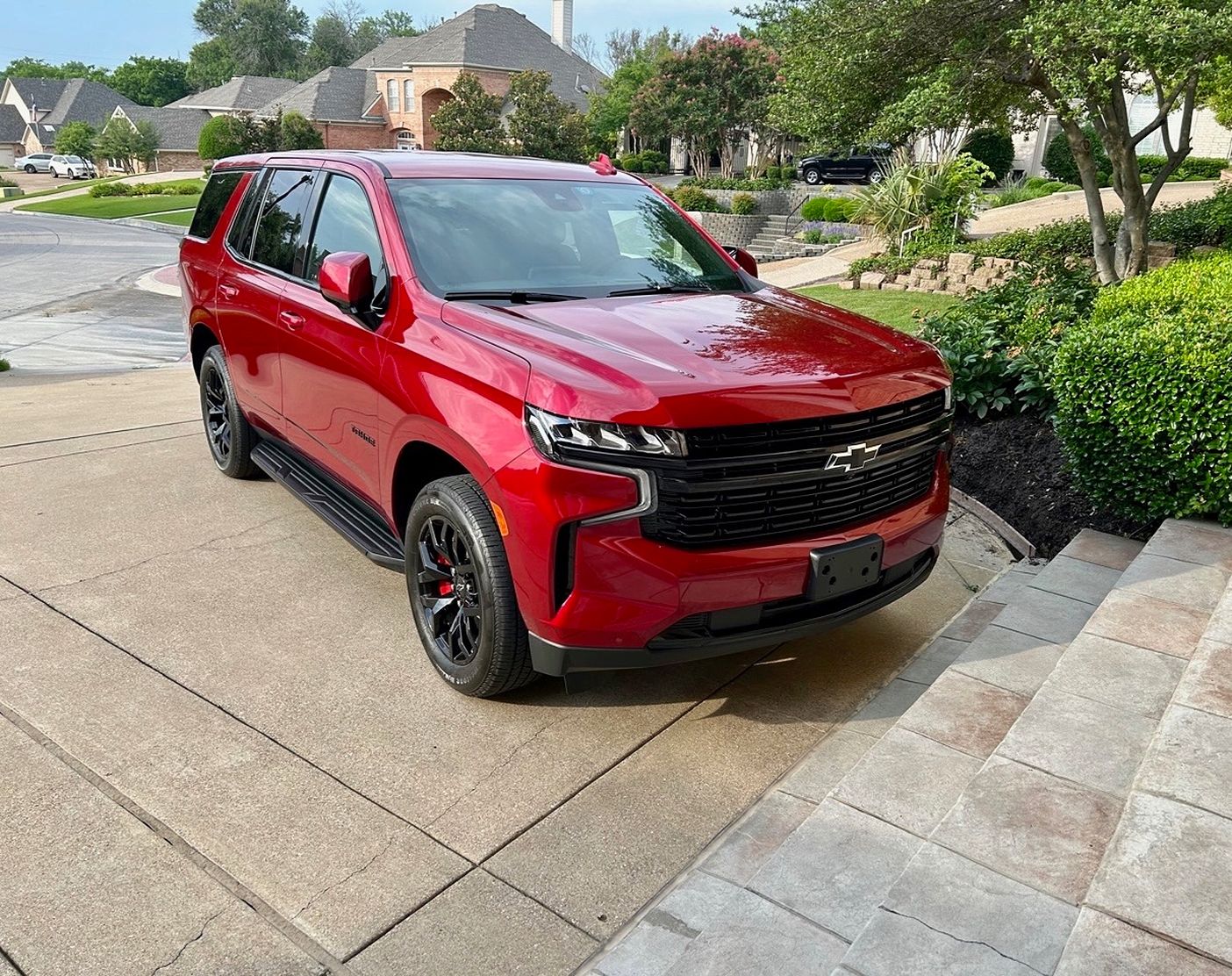
The Chevrolet Tahoe occupies a slightly more compact position than the Suburban, but it remains a full-size SUV with enough body volume to accommodate very large factory wheels. Its high-end configurations have helped push wheel sizes toward the 24-inch mark, reflecting the broader trend across the General Motors full-size SUV family.
The Tahoe’s shorter length gives the large wheels a slightly different visual effect compared with the Suburban.
The wheel openings occupy a greater visual percentage of the vehicle’s side profile, making the 24-inch design particularly noticeable. This gives the SUV a powerful stance without requiring aftermarket lowering or body modifications.
Factory integration is especially important here. When a manufacturer supplies a 24-inch wheel and tire combination, the vehicle’s electronic systems, steering characteristics, suspension settings, braking components, and clearance have to work with that configuration.
Modern vehicles also depend heavily on wheel-speed sensors and tire-pressure monitoring systems, so an OEM package is far more integrated than a simple cosmetic wheel swap.
There are financial considerations as well. Large wheels and their corresponding tires tend to cost more to replace than smaller packages.
Tire availability can also vary depending on the exact specification. Buyers who choose 24-inch wheels are therefore accepting a higher long-term cost in exchange for appearance, handling characteristics, and the premium feel associated with the package.
7. Jeep Grand Wagoneer
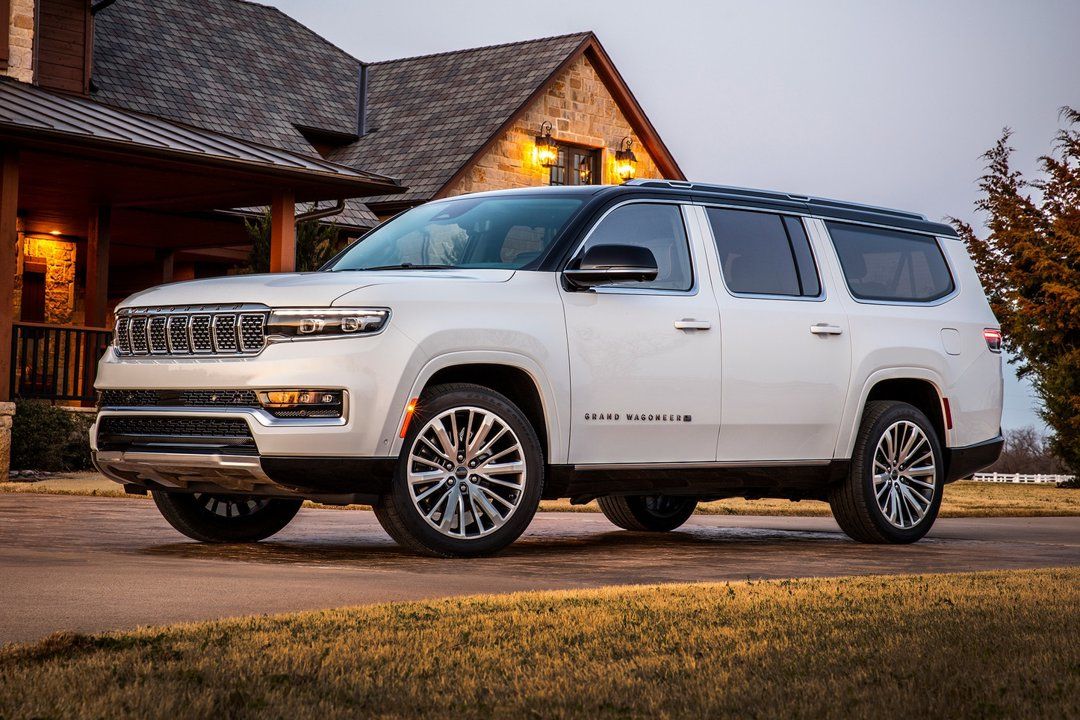
The Jeep Grand Wagoneer is another major name associated with 24-inch factory wheels, and its design makes the size especially fitting.
The Grand Wagoneer was conceived as a premium full-size SUV with a strong emphasis on luxury, craftsmanship, technology, and road presence. Its exterior proportions provide ample room for large wheels, while its premium positioning gives designers freedom to use dramatic wheel designs.
The original Grand Wagoneer concept showcased 24-inch multi-spoke aluminum wheels with an Obsidian finish and distinctive three-dimensional elements. Stellantis described those wheels as part of the concept’s premium exterior design.
The concept itself is not proof that every production configuration carried exactly the same wheel design, so it is important to distinguish concept specifications from confirmed production equipment when compiling a definitive list.
The importance of the Grand Wagoneer lies in its role within the premium SUV market. Jeep was moving into a category dominated by established luxury brands, meaning visual presence became particularly important.
Large wheels helped communicate that the Grand Wagoneer was not simply a larger Jeep. It was intended to compete for customers seeking high levels of luxury, space, technology, and refinement.
The 24-inch concept wheels also reveal how manufacturers use wheels as design features rather than simple mechanical components. Multi-spoke patterns, contrasting finishes, machined surfaces, and intricate center caps can transform the visual character of a large SUV.
With 24 inches of diameter available, designers have considerably more surface area to work with than they would on a conventional 18-inch wheel.
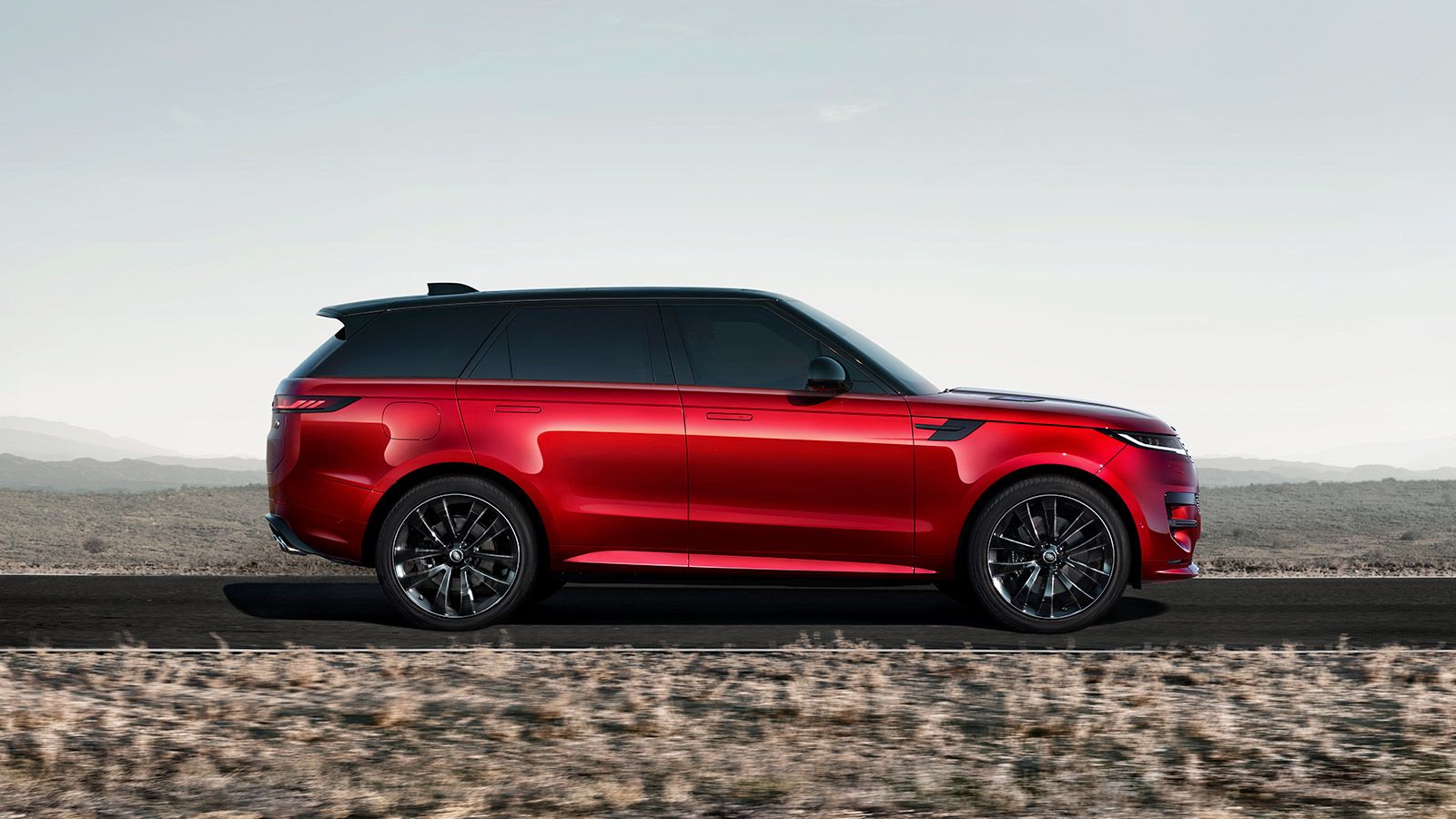
8. Range Rover
The Range Rover has played a major role in the growth of extremely large wheels in the luxury SUV sector. Its combination of sophisticated road manners, luxury positioning, and substantial body dimensions provides a natural environment for large-diameter wheels.
High-end Range Rover configurations have pushed wheel sizes well beyond what was considered normal for luxury SUVs in previous generations.
The Range Rover’s design philosophy is somewhat different from that of the large American SUVs. Its exterior tends to emphasize clean surfaces, restrained detailing, and carefully controlled proportions.
Large wheels therefore have to integrate with a minimalist design rather than becoming an isolated visual statement. The result can be remarkably effective because the wheel fills the arch without necessarily making the vehicle look overly customized.
There is also a technical reason why large wheels appeal to premium SUVs. Modern luxury vehicles increasingly combine high levels of power with sophisticated chassis systems.
Large brakes, adaptive suspension hardware, performance-oriented tires, and advanced steering systems all influence wheel design. A larger wheel can provide the necessary packaging space while allowing designers to maintain the desired exterior proportions.
Range Rover customers also have different expectations from traditional SUV buyers. Many use their vehicles primarily on paved roads and want a combination of comfort, refinement, performance, and prestige.
Large wheels support that image, even though they are not necessarily the ideal choice for serious off-road use. A buyer who regularly travels over rocks and deep ruts may value taller tire sidewalls more than additional wheel diameter.
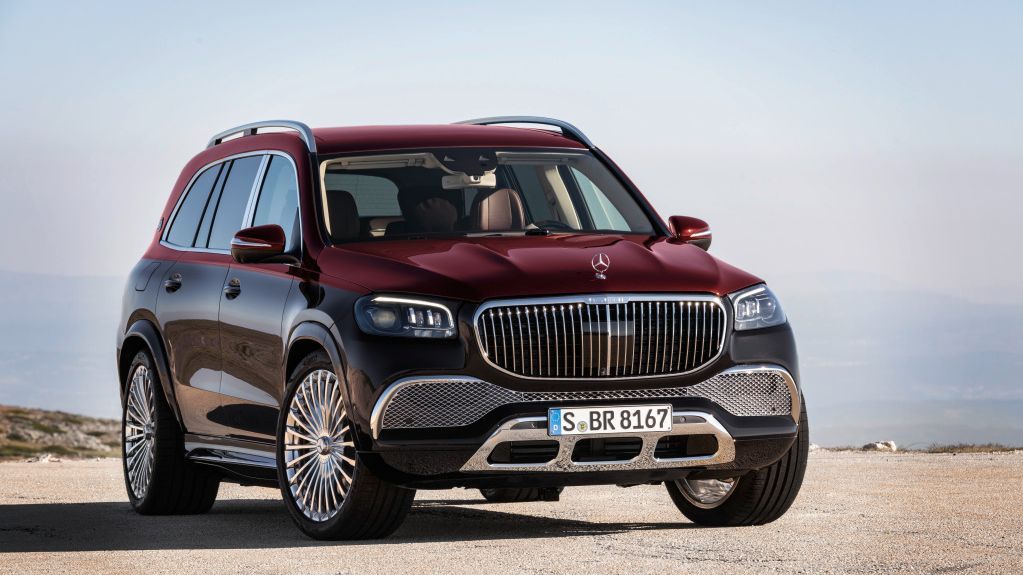
9. Mercedes-Maybach GLS
The Mercedes-Maybach GLS demonstrates how ultra-luxury SUVs have embraced large wheel diameters as part of their visual identity.
Maybach models are positioned above conventional Mercedes-Benz products, with extensive attention given to exterior detailing, interior materials, ride comfort, and exclusivity. Large wheels complement that positioning by giving the SUV a substantial and highly customized appearance.
A Maybach SUV needs to look different from a standard GLS, and wheels provide an effective way to achieve that distinction. A unique wheel pattern, polished or two-tone finish, and large diameter can immediately communicate the vehicle’s status. The effect is particularly strong when the wheels are combined with Maybach-specific exterior elements and a carefully designed body color scheme.
Large wheels on a vehicle of this type also need to work with a sophisticated suspension system. Ultra-luxury SUVs often use electronically controlled suspension technology to manage body movement and ride quality.
The suspension can compensate for some of the compromises introduced by large wheels, although it cannot eliminate the fundamental difference between a tall tire sidewall and a low-profile tire.
It is important to distinguish genuine Mercedes-Maybach equipment from aftermarket wheels frequently installed on these vehicles. The aftermarket market is full of 24-inch and larger wheels for luxury SUVs, including Maybach models.
Those products can look factory-like, but they should not automatically be counted as OEM applications. A list focused on factory wheels must separate manufacturer equipment from wheels supplied later by specialist companies.
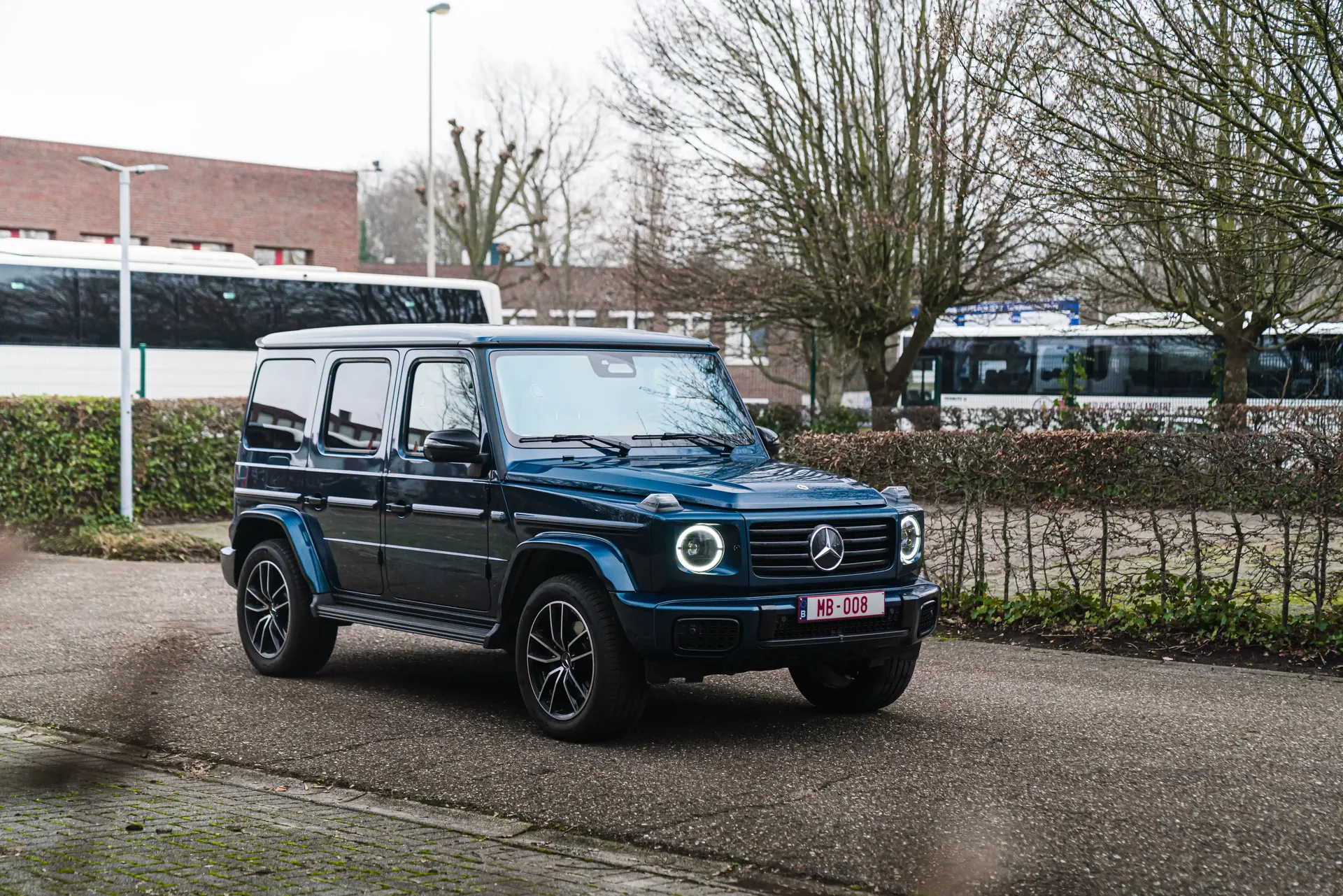
10. Mercedes-Benz G-Class
The Mercedes-Benz G-Class has a distinctive boxy shape that makes large wheels especially noticeable. Its upright body, prominent wheel arches, and iconic proportions create a strong visual relationship between the body and the wheels.
Factory wheel sizes have increased over successive generations, with high-end versions pushing into the territory associated with 24-inch applications.
The G-Class is an unusual case because its heritage is deeply connected to off-road capability. A traditional off-road vehicle benefits from a tire with sufficient sidewall, particularly when operating on rocks, sand, mud, or uneven terrain.
Yet the modern G-Class also serves as a luxury performance vehicle, and customers increasingly prioritize appearance and high-speed road behavior. This creates a natural tension between traditional utility and contemporary luxury design.
The AMG G 63 illustrates this shift particularly well. It combines the G-Class’s rugged architecture with enormous power, high-performance suspension technology, luxury equipment, and aggressive styling. Large wheels complement that transformation, giving the vehicle a much more road-focused appearance than early G-Class models.
As with the other vehicles on this list, careful terminology matters. Not every 24-inch wheel available for a G-Class is an OEM wheel. Specialist wheel manufacturers produce numerous 24-inch designs for the G-Class, and some aftermarket packages can look virtually indistinguishable from factory equipment.
For an accurate factory-wheel list, the distinction between manufacturer-installed equipment and dealer or aftermarket modifications must remain clear.