
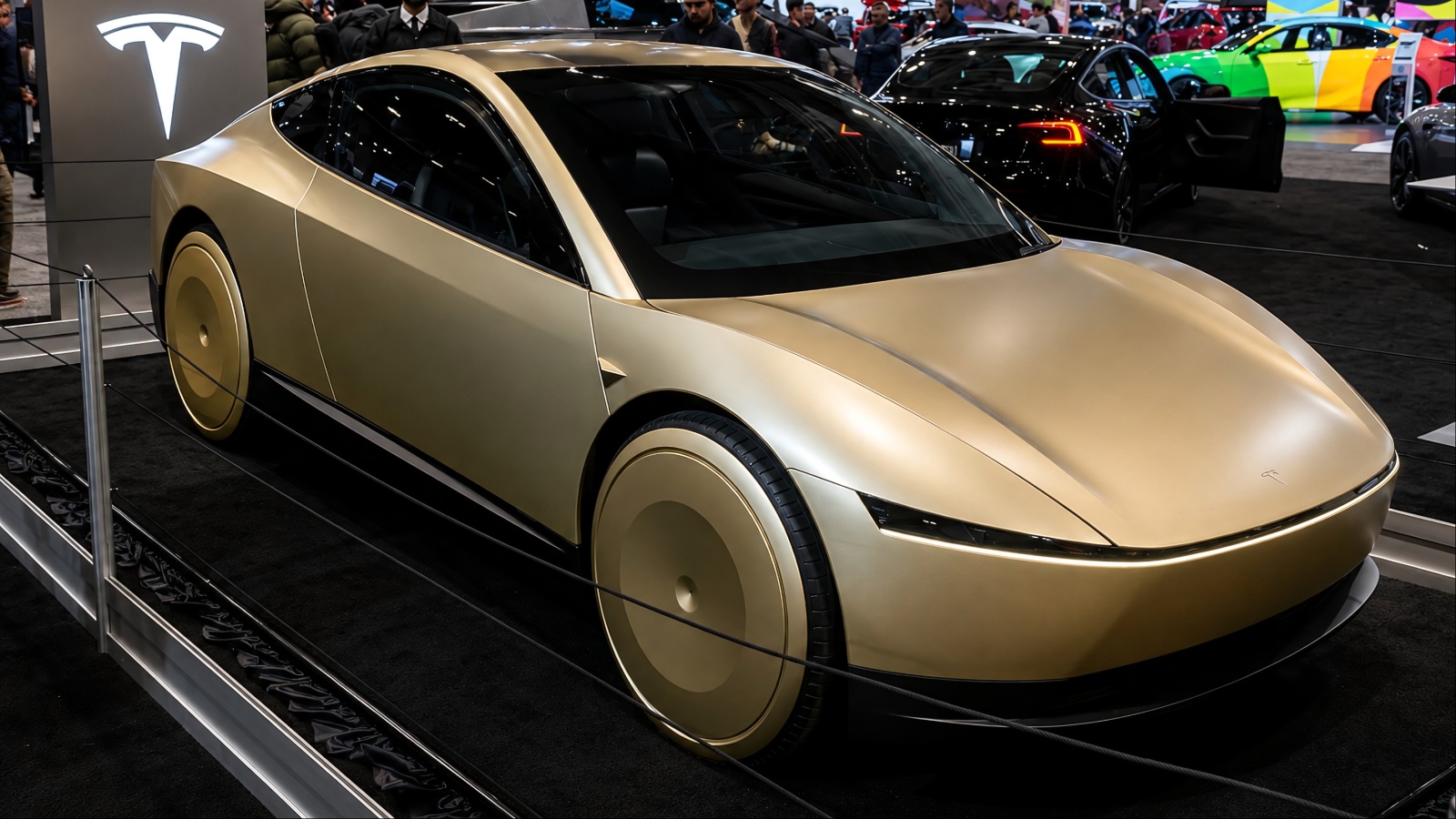
Tesla has set September 3, 2026, as the date for a major Cybercab event in Austin, Texas, giving the company a firm milestone for the next phase of its long-running autonomous driving ambitions.
The event is expected to put Tesla’s purpose-built robotaxi at the center of attention as the automaker moves beyond modified Model Y vehicles and toward a vehicle designed from the beginning to operate without conventional driver controls.
Tesla has been building its Robotaxi operation in Austin for months, but the Cybercab represents a much bigger bet. Unlike the Model Y vehicles currently being used for autonomous rides, the Cybercab was designed specifically for driverless transportation.
It has no steering wheel or pedals, meaning its commercial operation depends entirely on the vehicle’s autonomous driving system.
Teslarati reported on August 22 that Tesla had begun sending invitations for the September 3 event in Austin. Tesla’s own event materials independently confirm that it is organizing a Cybercab launch event at its Austin facility.
The company’s official Robotaxi sweepstakes page says participants could earn invitations through Robotaxi rides taken between August 17 and August 23, with winners selected ahead of the event.
The September date therefore appears to be more than another product presentation. It comes as Tesla is preparing to transition its Robotaxi strategy from early deployments using existing vehicles to a purpose-built platform that could eventually support a much larger autonomous fleet.
Cybercab Moves Tesla Beyond the Model Y Robotaxi
Tesla’s current Robotaxi service is already operating in several U.S. markets. According to Tesla, autonomous rides are currently available in Austin, Dallas, and Houston in Texas, as well as Miami, Orlando, and Tampa in Florida.
The company says those services are currently based on Model Y vehicles, while the Cybercab will be introduced as a purpose-built autonomous vehicle in the future.
That distinction is important because the Cybercab has been designed around the assumption that there will not be a human driver sitting behind the controls.
Tesla unveiled the Cybercab concept in October 2024, presenting it as a compact, two-seat electric vehicle developed specifically for autonomous transportation. The production version has retained the most radical part of the original concept: there is no steering wheel and no conventional accelerator or brake pedal.
That creates both an opportunity and a regulatory challenge. A conventional Tesla can still be driven by a person if its automated system encounters a problem. The Cybercab cannot rely on that fallback because the vehicle is intended to perform the driving task itself.
Reuters reported earlier in August that Tesla was preparing Cybercab testing in Austin, beginning with employee rides as the company moved toward its launch.
The report described the vehicle as a purpose-built self-driving machine without steering wheels or pedals, underscoring how different the Cybercab is from Tesla’s existing Robotaxi fleet.
Tesla has also been preparing the local infrastructure around the program. Recent reports indicate that emergency responders in the Austin area have received training related to handling incidents involving Cybercab vehicles.
That kind of preparation will become increasingly important if Tesla intends to place a meaningful number of vehicles on public roads without human safety drivers.
The company is also trying to build public familiarity with the service before the Cybercab event. Tesla’s official Robotaxi page encourages customers to use the Robotaxi app and states that Cybercab rides will eventually become available in additional areas.
For Tesla, the significance goes beyond introducing another vehicle. The Cybercab is closely tied to CEO Elon Musk’s vision of turning autonomous transportation into a major business.
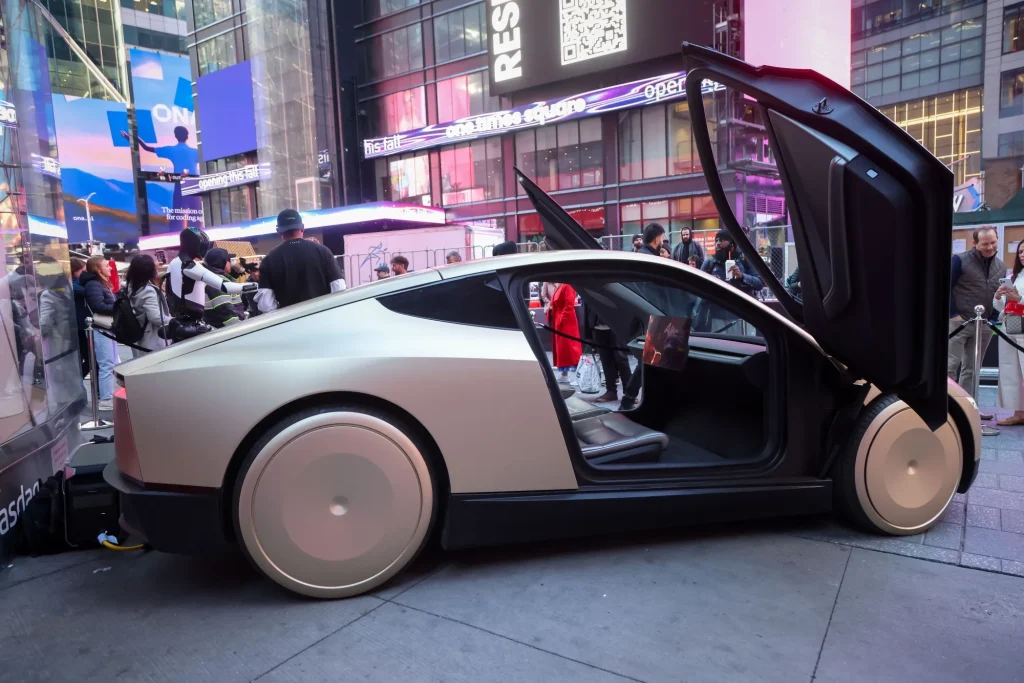
If Tesla can deploy large numbers of vehicles that operate without human drivers, the company could potentially generate revenue from each vehicle for much more of the day than a privately owned car typically does.
That is the theory. The difficult part is proving that the technology can operate safely and consistently at scale.
Austin Becomes a Critical Test for Tesla’s Autonomous Strategy
Austin is an especially important location for the Cybercab because Tesla has already established a robotaxi operation there and because the city is home to the company’s headquarters and major manufacturing operations.
Tesla’s existing Austin Robotaxi program has also been moving toward more autonomous operation.
The Verge reported this week that Tesla’s Robotaxi fleet in Austin appeared to have moved to fully unsupervised operation, based on tracking data covering 170 rides over two weeks. The report said no human safety monitors were identified onboard those tracked rides.
That development comes at an important moment. Tesla needs to demonstrate that its autonomous system can handle ordinary urban traffic before introducing a vehicle that has no physical controls for a human passenger to use.
However, Tesla’s progress is being watched against competitors that have spent years collecting driverless operating data.
The Verge noted that Waymo had more than 300 driverless vehicles operating in Austin and roughly 4,000 vehicles across its other markets. Tesla’s approach is therefore entering a market where another company already has significant operational experience.
There are also questions surrounding the amount of real-world autonomous driving data Tesla has accumulated. The Verge recently reported that Tesla’s unsupervised Robotaxi program had logged about 380,000 miles, while Waymo had accumulated roughly 220 million driverless miles.
Those figures are not directly equivalent because the companies operate different fleets and systems, but the gap highlights the challenge Tesla faces in demonstrating long-term reliability.
Recent incidents have added another layer of scrutiny. TechRadar reported that a Tesla Robotaxi in Austin was filmed driving through plastic traffic posts while attempting to navigate a curb extension.
Tesla has not publicly provided a detailed explanation of that specific incident. Such events are particularly significant because the Cybercab’s entire business proposition depends on the autonomous system making reliable decisions in unpredictable real-world environments.
Tesla’s supporters will argue that early autonomous systems inevitably encounter unusual situations and that the technology improves through additional training and deployment. Critics, meanwhile, point to incidents like these as evidence that the technology still needs extensive validation before it can be trusted at a large scale.
The September 3 event will therefore face expectations that go well beyond the Cybercab’s appearance. Investors, regulators, and potential customers will want to know how Tesla intends to operate the vehicle, where it can legally run, how quickly production can increase, and what safeguards will exist when something goes wrong.
The Bigger Question Is How Quickly Tesla Can Scale
Tesla’s ambitions for the Cybercab have always depended on scale. Building a small number of autonomous demonstration vehicles would be relatively straightforward compared with creating a commercially viable fleet capable of serving thousands or millions of passengers.
The company has reportedly been preparing dedicated Cybercab production capacity, with earlier reports suggesting the production line was being designed to build hundreds of vehicles per week. Teslarati previously reported on those production targets, although Tesla has not publicly confirmed a specific weekly production figure.
The September event could provide the clearest indication yet of how Tesla intends to move from testing into commercial deployment.
Another major issue is regulation. Because the Cybercab does not have traditional driver controls, its eventual deployment at scale requires Tesla to satisfy federal and state requirements applicable to vehicles and autonomous operations. The unusual design means regulatory approval is just as important as technological readiness.
Tesla is already expanding its Robotaxi ambitions beyond Austin. Nevada recently approved Tesla’s deployment of up to 5,000 robotaxis in Clark County, which includes Las Vegas, according to MarketWatch. The company is expected to begin that expansion with modified Model Y vehicles before transitioning toward the Cybercab.
That gives Tesla a potential path to expand its autonomous business while the Cybercab rollout develops.
The company’s strategy could eventually resemble a two-stage approach: use existing Tesla vehicles to establish Robotaxi operations and gather operational experience, then gradually replace or supplement those vehicles with Cybercabs specifically engineered for driverless service.
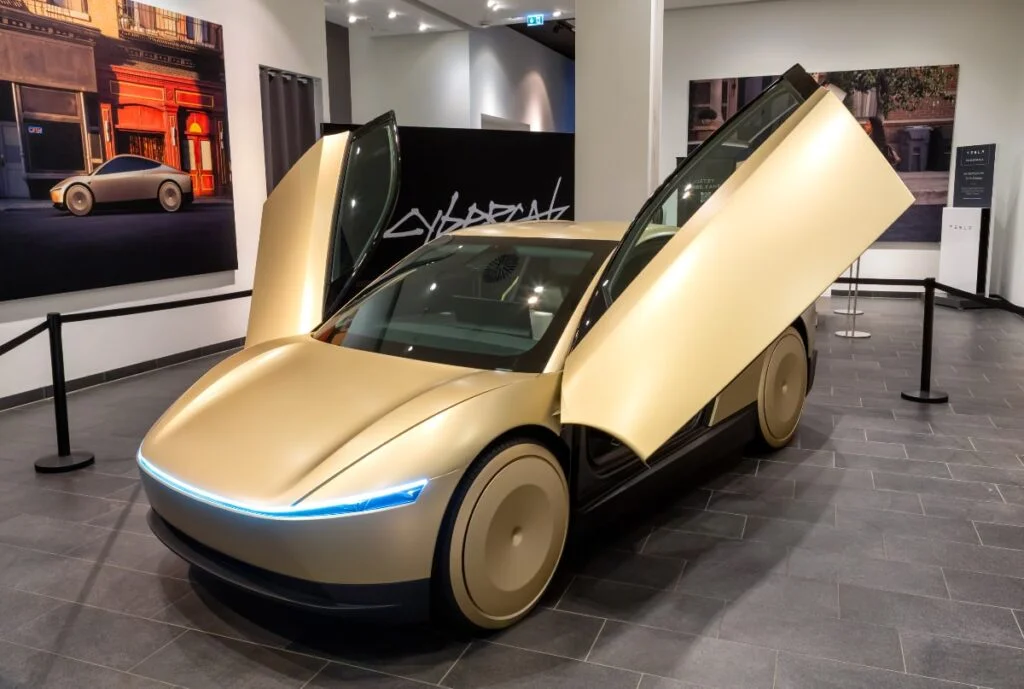
The September 3 event will be an important checkpoint in that transition. It will not, by itself, prove that Tesla has solved autonomous driving or established a profitable robotaxi network. A successful presentation can demonstrate the hardware, software, and production progress, but the real test will happen afterward on public roads with paying passengers.
For Tesla, however, the date represents a significant moment. The company has spent years promising that autonomous vehicles could fundamentally change how its cars are used and how Tesla generates revenue. With the Cybercab, that idea is finally moving toward a purpose-built production vehicle.
Austin will be the first major stage. If Tesla can demonstrate that the Cybercab can operate safely, reliably, and economically without human controls, September 3 could become a landmark date in the company’s transformation from an electric vehicle manufacturer into a major autonomous mobility provider.
If the technology or regulatory framework falls short, the event could instead expose just how much work remains before Tesla’s robotaxi ambitions can become a mass-market reality.
