
Trading in your current vehicle can make buying another car faster and more convenient, but that convenience can also make it easier to lose track of where your money is going. A dealership controls several figures at the same time, including the selling price of the replacement vehicle, your trade allowance, financing terms, incentives, fees, and any remaining balance on your old loan.
When all of those numbers are combined into one worksheet or monthly payment, an apparently attractive deal can hide thousands of dollars in lost trade equity.
The safest approach is to treat the trade-in as a separate transaction. Know what your vehicle is realistically worth, obtain competing offers, check your exact loan payoff, and negotiate the replacement vehicle’s price before allowing the trade to influence the discussion.
Dealers are entitled to make a profit, but you should be able to identify where that profit is coming from. These 10 trade-in tactics and common buyer mistakes can quietly make an otherwise reasonable purchase much more expensive.
1. Negotiating the Trade-In Before the New-Car Price
One of the easiest ways to lose money is allowing the salesperson to discuss your trade before you establish a fair selling price for the vehicle you are buying. Once both vehicles are part of the same conversation, the dealership can move money between the two sides of the deal.
For instance, your trade-in might genuinely be worth $12,000, but a dealer could offer $14,000 while pricing the replacement vehicle $2,000 higher than you could negotiate elsewhere. The larger trade allowance may look like a great deal, but your actual financial position has not changed.

The reverse can happen just as easily. A dealer may advertise a significant discount on the new car while quietly offering several thousand dollars less than market value for your trade. Protect yourself by negotiating in stages. First establish the replacement vehicle’s selling price without discussing your trade or desired monthly payment.
Once that number is clear, introduce the trade and negotiate its value separately. Keep written figures whenever possible so the numbers cannot be casually rearranged. A high trade allowance means very little if the dealership simply recovered the same money through a higher purchase price.
2. Letting the Dealer Focus Only on Monthly Payment
Salespeople frequently ask, “What monthly payment are you comfortable with?” because monthly payment is one of the easiest numbers to manipulate. A dealership can reduce a payment by extending the loan from 60 months to 72 or 84 months, increasing your down payment, changing the interest rate, or applying your trade equity to the balance.
The payment may look affordable even though the total transaction has become significantly more expensive. A $10,000 trade can make an overpriced vehicle appear surprisingly inexpensive when the conversation is focused only on what leaves your bank account each month.

Instead of negotiating by payment, identify the major numbers individually. You need to know the selling price, trade allowance, loan payoff, fees, interest rate, loan term, and amount financed. If your trade is valued at $15,000 but you still owe $8,000, you do not have $15,000 available as a down payment. Your actual equity is $7,000.
Once everything is itemized, you can calculate the monthly payment yourself and decide whether it fits your budget. Monthly payment should be the result of a good deal, not the number used to define the deal. Otherwise, expensive financing and weak trade value can disappear behind an attractive payment.
3. Accepting the First Trade-In Appraisal
The dealership’s first trade-in appraisal is not necessarily its best offer. Dealers must account for reconditioning, transportation, market risk, auction costs, and profit, so they naturally want to acquire used vehicles for less than they expect to sell them for.
However, the initial appraisal may also contain a substantial safety margin because management does not know how much negotiating you are willing to do. A car that could reasonably command $18,000 in the wholesale market might initially receive an offer of $15,000. Accepting immediately could mean giving up $3,000 without ever discovering whether more money was available.

Before visiting the dealership, obtain actual competing offers rather than depending entirely on online valuation estimates. Quotes from used-car chains, online buyers, or other dealerships give you something concrete to negotiate with. If another company is prepared to pay $17,800 for your vehicle, a $15,000 offer becomes much harder for the selling dealer to defend.
The dealership may decide to match or exceed the competing offer to keep the entire transaction. If it refuses, selling the car separately may be more profitable. Just remember to account for any sales-tax advantage your state may provide when trading directly to the selling dealership.
4. Falling for an Inflated “Over-Allowance”
Some dealerships advertise offers such as “$3,000 over book value” or “We’ll give you 125% of your trade value.” These promotions can sound like easy money, but the trade figure matters only when the rest of the transaction remains competitive.
If your car is realistically worth $15,000 and the dealer offers $18,000, that extra $3,000 is meaningless if the replacement vehicle carries a $3,000 markup or if the dealer refuses a discount that competing stores are offering. The money has simply moved from the purchase side of the worksheet to the trade side.

An inflated allowance can also disguise negative equity. If you owe $20,000 on a vehicle worth $15,000, a dealership might display an $18,000 trade allowance to make the shortfall look smaller while recovering the difference elsewhere. The better approach is to determine what you would pay for the replacement vehicle with no trade at all and what the dealership would pay for your old vehicle if you were simply selling it.
Those two independent numbers reveal the true transaction. A dealer can genuinely offer more than expected for your trade, especially if it needs that particular vehicle, but you should confirm that the extra money is not being quietly taken back through price, fees, or financing.
5. Rolling Negative Equity Into the Next Loan
Negative equity exists when your loan payoff is higher than your vehicle’s current value. If you owe $24,000 but the dealership values the car at $18,000, you are $6,000 underwater. Dealers can still complete the transaction by adding that $6,000 to your next loan, which can make it feel as though the old debt has disappeared.
In reality, the debt simply moves into the financing for the replacement vehicle. A $35,000 purchase can quickly become a $41,000 loan before taxes, fees, warranties, and other products are added.

The biggest danger is that you can become deeply upside down on the next vehicle almost immediately. If you finance for 72 or 84 months, it may take years before the vehicle’s value catches up with the balance. Before trading, obtain the exact payoff from your lender and subtract the best realistic trade offer. That difference is your true negative equity.
If the amount is substantial, keeping the vehicle longer, paying down the loan, or contributing cash may be financially safer than rolling everything forward. A dealership paying off your existing lender is not absorbing your debt for free. Unless your trade value covers the payoff, the remaining balance still belongs to you.
6. Letting Reconditioning Deductions Destroy the Appraisal
Dealers often justify low trade offers by pointing out worn tires, brake wear, scratches, windshield chips, wheel damage, overdue maintenance, or other imperfections. Some deductions are completely legitimate because the vehicle may require work before it can be retailed.
The problem occurs when the dealership subtracts full retail repair costs from an already conservative wholesale appraisal. It might claim $1,500 for tires, $900 for brakes, and $1,000 for cosmetic repairs even though its internal reconditioning department can perform some of that work for substantially less.

If management says the vehicle would be worth $20,000 except for certain issues, ask how each deduction was calculated. Compare those numbers with independent repair estimates, but do not automatically repair everything before trading. Spending $1,200 on tires does not guarantee that the dealership will raise your appraisal by $1,200. Minor cosmetic repairs can produce the same problem.
Competitive offers remain your strongest defense. If one buyer offers $19,500 for the vehicle exactly as it sits and another dealership claims it is worth only $16,500 because of “reconditioning,” the market has already shown you which appraisal is stronger. Condition should affect value, but it should not become an excuse for exaggerated deductions.
7. Ignoring the Sales-Tax Advantage of Trading In
In some states, trading your vehicle to the dealership selling you the replacement can reduce the amount of the purchase that is subject to sales tax. This benefit can be worth hundreds or even thousands of dollars, so comparing trade offers without considering taxes can lead you to make the wrong decision.
Suppose you buy a $40,000 vehicle and receive a $20,000 trade allowance in a state that taxes only the difference. If the sales-tax rate is 7%, you could potentially save $1,400 compared with paying tax on the entire $40,000 amount.
Now imagine an outside buyer offers $21,000 for your old vehicle. At first glance, the outside offer appears $1,000 better. However, if selling separately causes you to lose $1,400 in trade-related tax savings, the lower dealership offer may actually leave you $400 ahead.
The important point is that tax rules vary by state, so use the rules that apply to your transaction. Dealers may also use the tax benefit to justify a weak appraisal. If your tax savings are $1,400 but the dealer offers $3,000 less than an outside buyer, you are still worse off. Compare the final after-tax result rather than simply choosing the highest headline trade number.
8. Trading Without Knowing the Exact Loan Payoff
The balance shown on your latest loan statement may not be the exact amount required to satisfy the loan on the day you trade the car. Auto loans often accrue interest daily, and lenders commonly provide a specific 10-day or 15-day payoff quote.
Small fees, late charges, or credits can also affect the final amount. If you enter negotiations without knowing the exact payoff, one of the most important figures in the transaction is controlled entirely by the dealership and lender instead of by you.

Suppose your vehicle is appraised at $22,000 and you believe you owe approximately $16,000. You may assume you have $6,000 in positive equity. If the actual payoff is $17,200, your real equity is only $4,800. That $1,200 difference can change the amount financed and your expected down payment.
Obtain an official payoff quote directly from the lender shortly before shopping and ask how long it remains valid. After the trade is completed, monitor the old account until the balance reaches zero. Knowing your payoff also helps you interpret trade offers correctly. A $25,000 allowance sounds impressive, but if you owe $24,000, only $1,000 of real equity is being applied toward the new purchase.
9. Trading With Missing Keys, Accessories, or Service Records
Missing items can cost more than many owners expect. Modern smart keys can cost several hundred dollars to replace and program, and luxury-brand keys can be even more expensive.
Cargo covers, charging cables, removable seats, roof accessories, owner’s manuals, wheel-lock keys, factory tools, headphones, and other equipment can also affect what the dealership believes it will need to spend before reselling the vehicle. Electric vehicles deserve particular attention because charging cables and adapters can represent meaningful replacement costs.
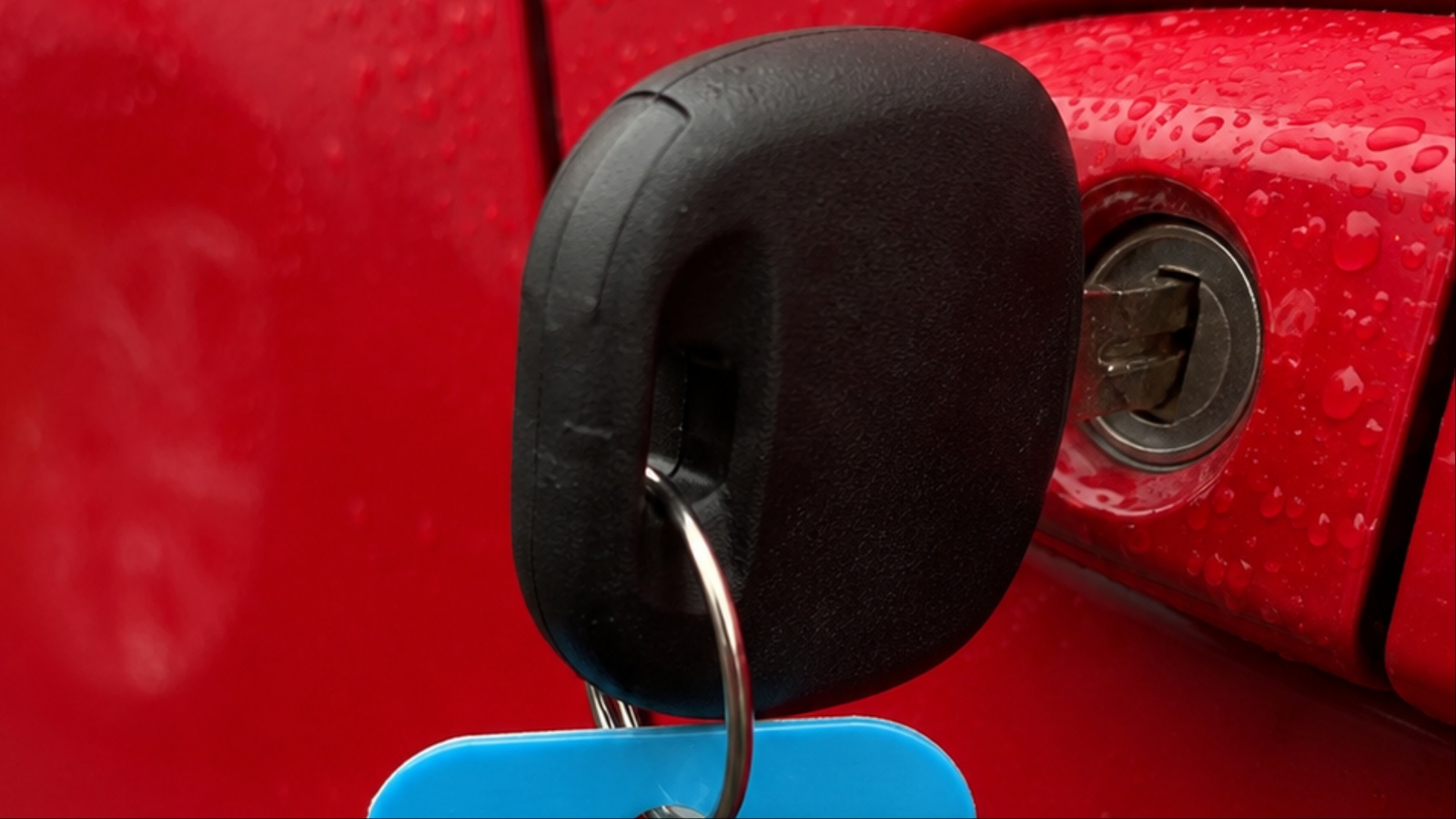
Before getting your vehicle appraised, collect everything that belongs with it. Bring all keys, service records, manuals, warranty documents, receipts, and evidence of expensive recent maintenance. Documentation showing new tires, brakes, a timing-belt replacement, battery, or major scheduled service can help an appraiser understand why your vehicle deserves a stronger number.
Consider removing expensive aftermarket accessories if the dealer is not willing to pay extra for them. Roof boxes, upgraded wheels, audio equipment, and tonneau covers may have more value when sold separately. A trade-in is essentially a wholesale transaction, so completeness matters. The easier your vehicle is for the dealership to resell, the fewer reasons it has to reduce its offer.
10. Looking Only at the “Difference” Number
Dealers sometimes reduce the entire transaction to a single statement such as, “You’re only $22,500 difference.” The difference between the purchase price and trade allowance is certainly important, but relying only on that number can hide how the dealership created it.
Suppose the replacement vehicle is listed at $45,000 and the dealer offers $22,500 for your trade, leaving a $22,500 difference. That seems easy to understand until you discover the new vehicle could have been purchased elsewhere for $42,000 and another buyer would pay $24,000 for your trade.
Using those competitive numbers, the true market difference would be only $18,000. The dealership’s apparently convenient deal is therefore $4,500 worse. The same problem becomes harder to detect when rebates, trade assistance, dealer accessories, negative equity, taxes, and optional products are mixed together.
Ask for an itemized buyer’s order showing the selling price, discount, manufacturer incentives, trade allowance, payoff, fees, taxes, optional products, and final amount financed. The best trade transaction is not necessarily the one with the highest trade figure or smallest-looking monthly payment. It is the one that leaves you with the lowest legitimate total cost after every relevant number is considered.