
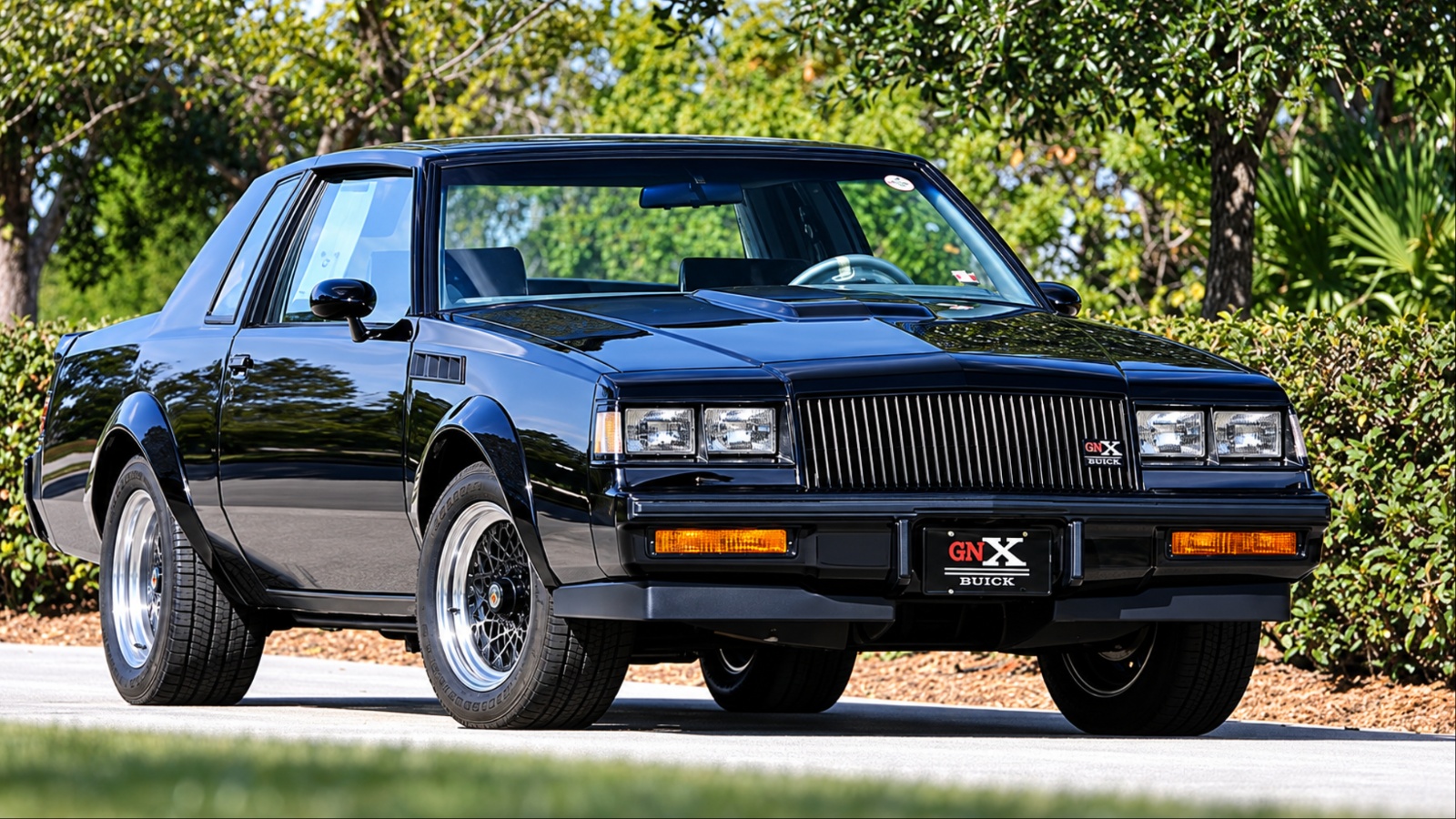
In the 1980s, Buick was known for comfort, not speed. It built cushioned sedans for retirees and suburban commuters, not street brawlers. Yet inside this quiet, conservative brand, engineers were secretly building one of the most feared cars in America. It carried no V8, no big displacement, and no flashy badge to announce its intentions.
Instead, it wore a turbocharged 3.8-liter V6, wrapped in a stealthy all-black body. It became known as the Buick Grand National, and later, in its final and most extreme form, the GNX.
This was a machine that could outrun Corvettes, Mustangs, and even exotic European sports cars in a straight line. It did this while wearing the badge of a brand associated with golf outings and country clubs.
The story of how this happened is not just automotive folklore. It is backed by real production numbers, dyno results, and quarter-mile timing slips that prove the legend true. This article breaks down exactly how Buick, almost by accident, built GM’s most unexpected performance hero.
The Origins: From NASCAR Success to Street Legend
Buick’s performance story actually began on the racetrack, not the showroom floor. The brand wanted to translate its NASCAR success into something buyers could purchase.
Buick originally launched the nameplate in 1982 to directly capitalize on their massive success in the NASCAR Winston Cup series. The aerodynamic Regal shape had proven itself on high-speed oval tracks.
Executives realized that racing prestige alone did not sell cars. They needed a street-legal version people could actually drive home. That is how the Grand National name was born, borrowed directly from NASCAR’s own championship series. It signaled performance intent from the very first year.
The 1982 Buick Grand National saw a limited production run of just 215 units as an option package for the Regal. It was a modest, almost tentative, first step.
Buick did not even produce the Grand National in 1983, pausing to rethink the formula entirely. This gap suggests early hesitation about the car’s direction.
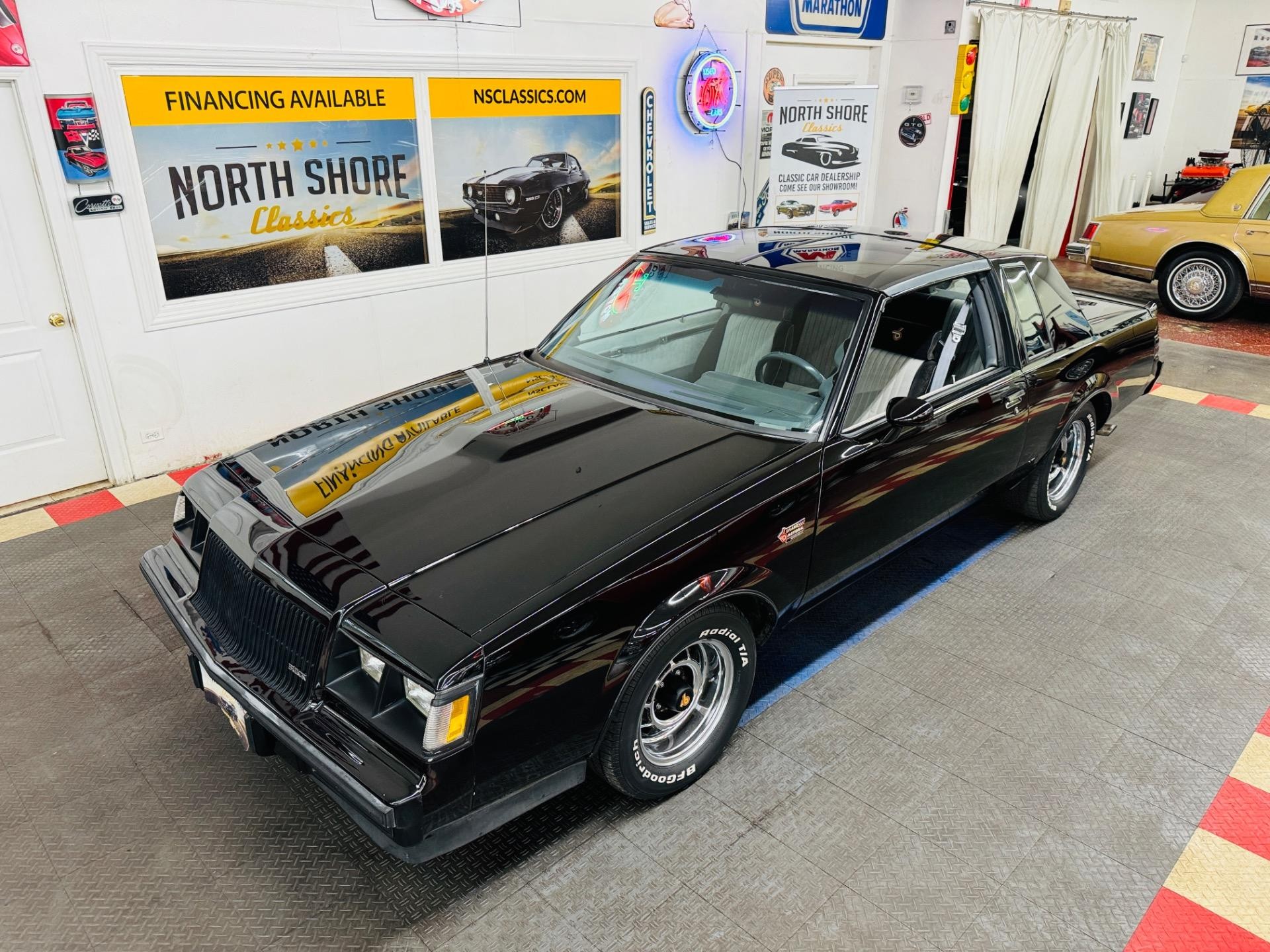
The Grand National returned in 1984 with production climbing to 2,000 units. Buick was testing the waters carefully, unsure how much demand existed.
By 1985, production rose again to 2,102 units, a small but steady increase. Word was clearly spreading among performance-minded buyers. Then in 1986, production numbers jumped dramatically to 5,512 Grand Nationals built. This was nearly triple the prior year’s output.
That surge signaled something important. Buick had stumbled onto genuine demand for a serious performance car under its badge. Part of this growth came from engineering upgrades under the hood. The addition of a front-mount intercooler in 1986 pushed output to 235 horsepower.
An intercooler cools compressed air before it enters the engine. Cooler air is denser, which allows for more efficient combustion and increased power output.
That same year, torque also climbed to 330 pound-feet, giving the car serious low-end pulling power. This made it feel far quicker than its modest V6 size suggested.
By 1987, output rose again to 245 horsepower and 355 pound-feet of torque. These were remarkable numbers for a turbocharged six-cylinder engine at the time.
At that point, the Grand National was genuinely competitive with V8 performance icons like the Ford Mustang GT and Chevrolet Corvette. A Buick sedan was now embarrassing sports cars.
This was a strange twist for General Motors. Its most feared straight-line performer was quietly built by the division known for comfort and reliability.
Every turbocharged Grand National relied on the same transmission architecture. Every model used a heavily reinforced Hydra-Matic 200-4R four-speed automatic transmission, tuned to handle the added torque.
This transmission featured a 0.67:1 overdrive gear, allowing the V6 to cruise quietly on the highway. It balanced raw acceleration with everyday drivability.
Notably, General Motors never offered the Grand National with a manual transmission from the factory. Every single unit left the factory as an automatic.
This was unusual for a serious performance car of that decade. Most rivals leaned heavily on manual gearboxes to prove their sporting credentials.
Despite that limitation, the numbers spoke for themselves on the drag strip. The basic Grand National could accelerate from 0 to 60 mph in about 4.9 seconds and clear the quarter-mile quickly.
It completed the quarter-mile in roughly 13.8 seconds, numbers that rivaled purpose-built sports cars of the era. This was staggering for a turbocharged family sedan.
The all-black paint scheme also became iconic almost by accident. The GNX was only ever offered in one color, and that color was black. Enthusiasts often joke that black is the only acceptable color for such a menacing machine. That single-color strategy only deepened the car’s mystique on American streets.
The GNX: Buick’s Final, Most Extreme Statement
By 1987, General Motors was preparing to retire the rear-wheel-drive G-body platform that had formed the foundation of the Buick Grand National. Rather than allow the platform and nameplate to disappear quietly, Buick decided to send them off with something extraordinary. The result was the Grand National Experimental, better known as the GNX, a limited-production performance car developed with assistance from ASC/McLaren.
The GNX was far more than a cosmetic upgrade. Buick sent 547 fully equipped Grand Nationals to ASC/McLaren, where they received extensive mechanical and performance modifications. Under the hood, the turbocharged V6 gained a Garrett T3 turbocharger with a ceramic impeller, a larger intercooler, revised engine management software, and additional measures designed to control heat and reduce turbo lag.
The suspension was also heavily revised. The GNX received performance-oriented components, a specialized torque bar, and a unique rear differential cover. A Panhard rod helped control the solid rear axle and reduce wheel hop during hard acceleration. McLaren also fitted 16×8-inch cross-lace aluminum wheels that gave the car a wider and more aggressive stance.
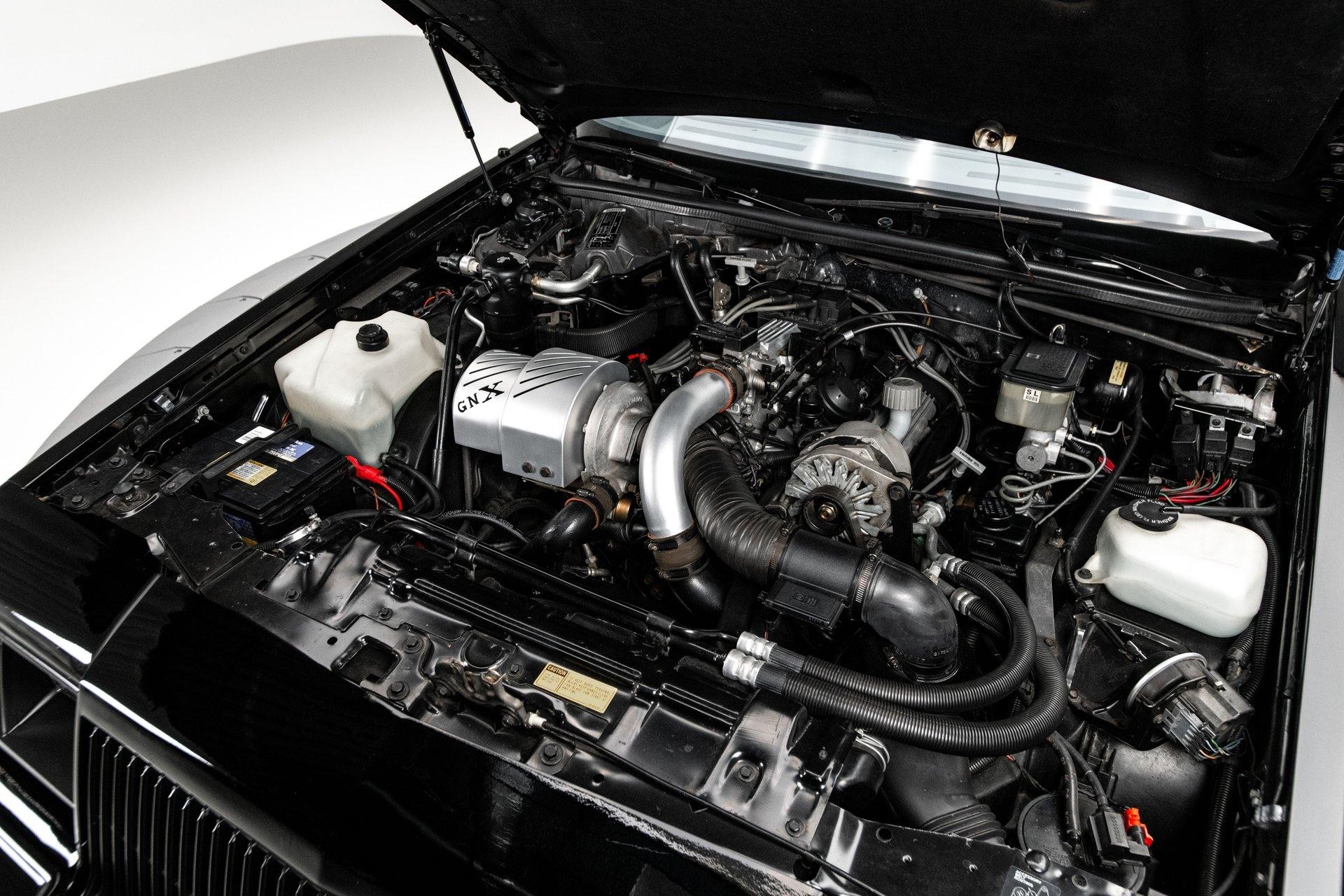
Buick officially rated the GNX at 276 horsepower and 360 pound-feet of torque. Independent testing suggested that the real output was considerably higher, with some reports estimating around 300 horsepower and 400 pound-feet of torque. For a turbocharged six-cylinder in 1987, those figures were remarkable.
The GNX’s performance quickly established its reputation. Period testing produced 0-60 mph times in roughly 4.6 to 4.7 seconds, while quarter-mile runs were recorded in the mid-13-second range at around 102 mph. Some tests produced even quicker results. These numbers placed the Buick alongside far more expensive sports cars from Ferrari and Porsche.
The car’s ability to outrun the factory Corvette earned it the famous nickname “Corvette Killer.” For a midsize Buick sedan to challenge America’s sports car flagship was almost unthinkable at the time. The GNX demonstrated that turbocharging and careful engineering could deliver exceptional acceleration without relying on a massive V8.
Its relatively modest weight also contributed to its performance, although period sources reported different curb-weight figures. Braking was respectable as well, with contemporary testing recording a 70-0 mph stopping distance of about 186 feet. Top speed was approximately 124 mph, reflecting the GNX’s focus on acceleration rather than high-speed cruising.
Production was intentionally limited to just 547 examples, with each car receiving its specialized modifications through the ASC/McLaren process. The combination of rarity, distinctive engineering, and extraordinary performance helped establish the GNX as one of the most memorable American performance cars of the 1980s.
The GNX was never intended to become a mass-market model. Instead, it served as a dramatic farewell to the G-body platform and demonstrated what Buick could accomplish when traditional American performance formulas were pushed aside. Its turbocharged V6, sophisticated modifications, and surprising straight-line speed gave the car a lasting reputation as one of Detroit’s most unlikely performance legends.
The Legacy: From Cult Classic to Cultural Icon
For decades, the Buick Grand National and GNX remained mostly known within the dedicated car community. That changed in 2024 when Kendrick Lamar named his sixth studio album GNX and featured the car prominently on its cover. The exposure introduced the 1987 Buick to a new generation and helped renew interest in the model.
The renewed attention has also coincided with rising collector values. Exceptional Grand Nationals have sold for around or above $100,000, while average values for standard examples have reached roughly $49,134. The GNX is even more valuable, with average prices near $196,264. Rare, low-mileage examples with documented histories can command significantly more.
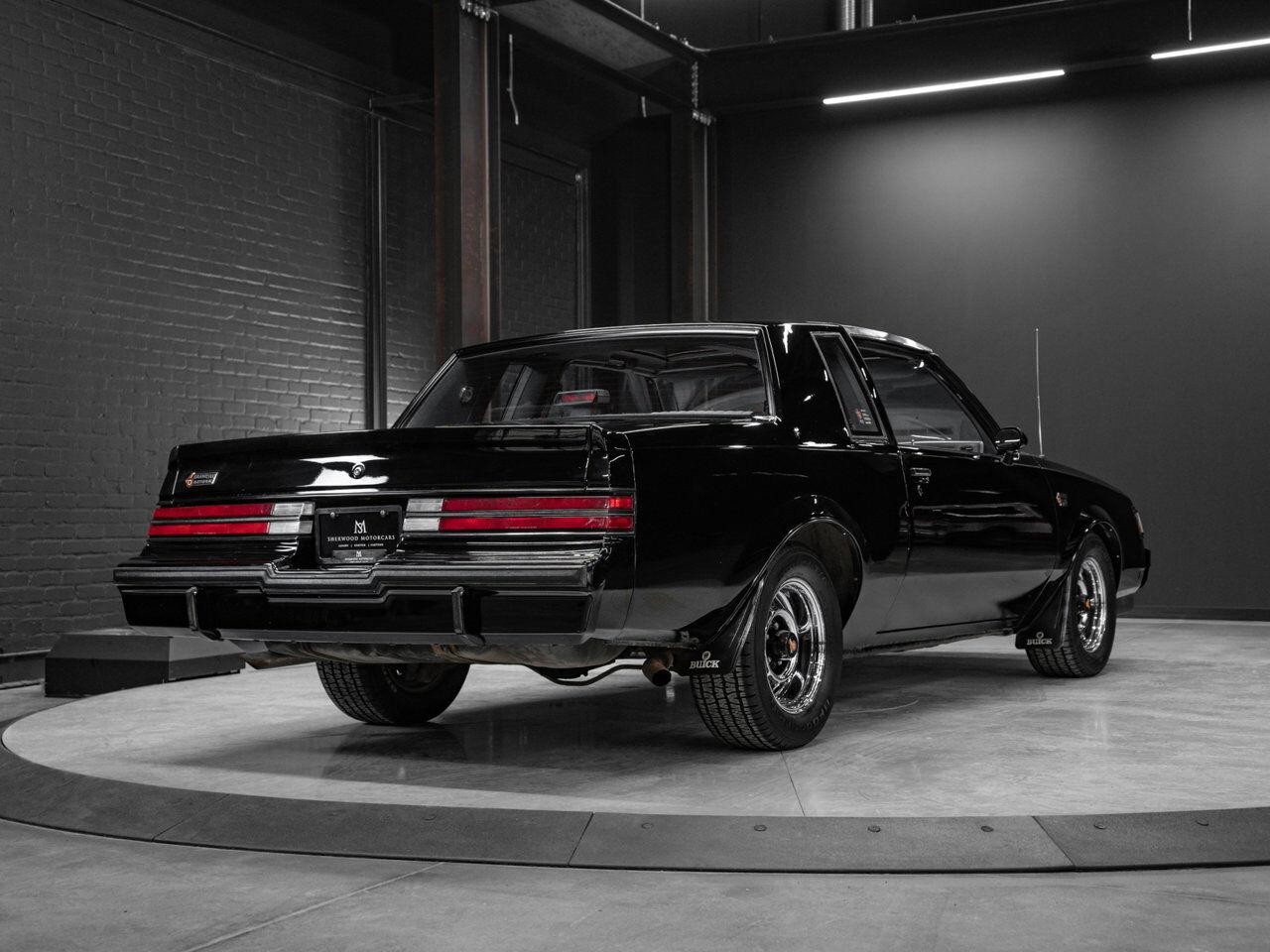
However, the GNX’s importance goes beyond its current market value. It earned its reputation through innovative engineering and impressive performance. The car demonstrated that serious speed did not require a massive engine. Turbocharging and careful engineering allowed Buick to challenge traditional muscle car formulas with a relatively small-displacement powerplant.
The achievement was especially surprising because Buick was traditionally associated with comfort and luxury rather than high performance. Today, the Grand National and GNX are remembered as unlikely performance icons that helped demonstrate the potential of turbocharged engines and influenced the future direction of American performance cars.
