
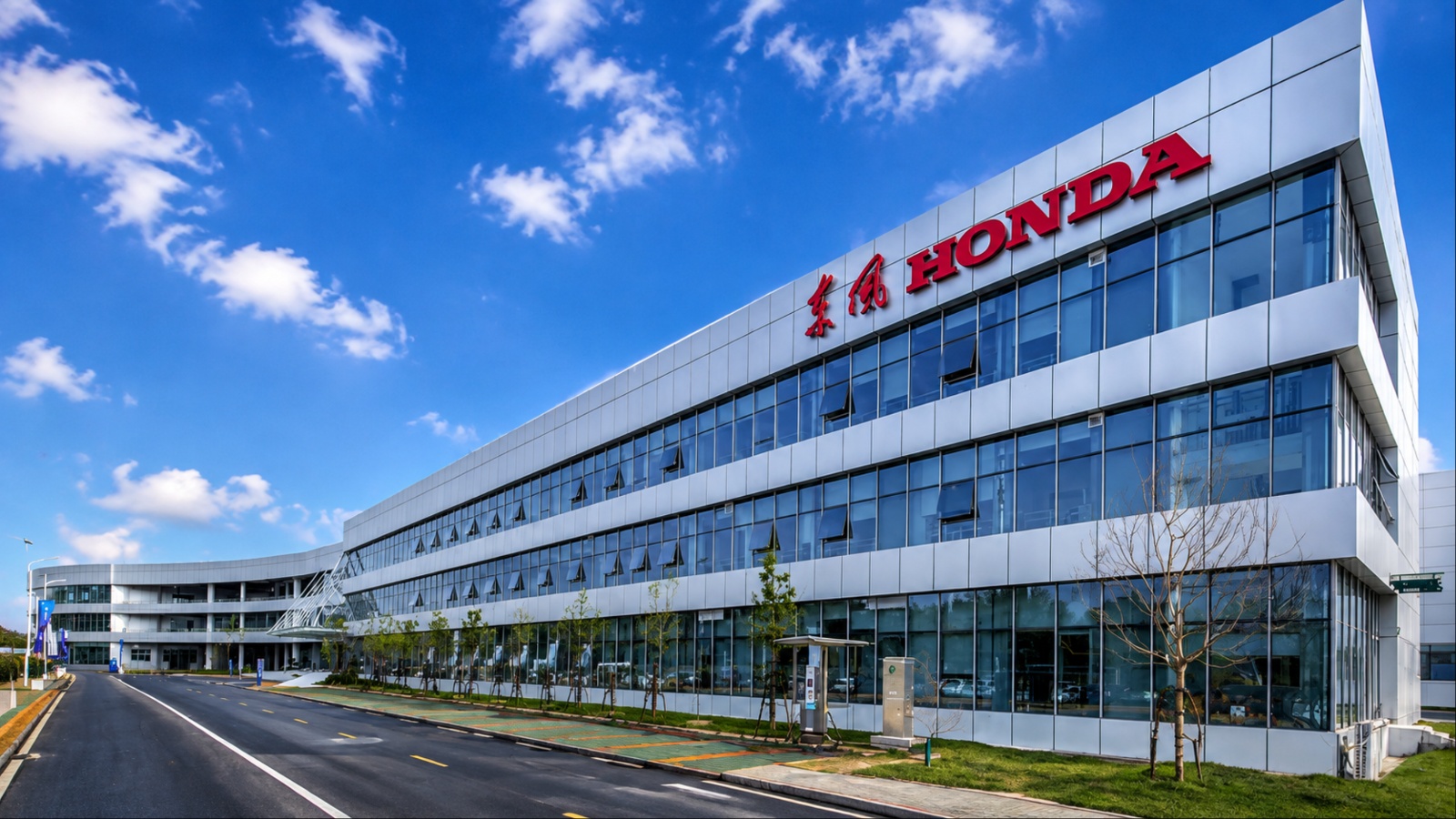
Honda is reconsidering plans for an eighth North American assembly plant as uncertainty over the future of the United States-Mexico-Canada Agreement creates another obstacle for the automaker’s long-term manufacturing strategy.
Honda says it is approaching full production capacity in North America and needs additional factory capacity to support future demand.
But according to Reuters, Executive Vice President Noriya Kaihara said the company may change its plans if the USMCA is not extended. Honda would need to decide within the next one or two years if it wants the facility operating around 2030.
The warning demonstrates how trade policy is increasingly influencing decisions that traditionally depended mainly on vehicle demand, labor costs, and factory capacity.
An assembly plant is a multibillion-dollar investment designed to operate for decades, so manufacturers need confidence that the rules governing tariffs, parts sourcing, and cross-border trade will remain predictable. For Honda, that confidence is becoming harder to obtain.
Why the USMCA Matters to Honda’s Factory Plans
The USMCA is particularly important to the auto industry because vehicle manufacturing in North America is deeply interconnected.
A vehicle assembled in the United States can contain engines, transmissions, electronics, and other components produced in Canada or Mexico. Parts can cross borders before a finished vehicle reaches a customer, making predictable trade rules essential to controlling manufacturing costs.
The agreement allows qualifying products to move within North America with preferential treatment, provided they meet its rules of origin.
Reuters reported in June that the United States had declined to extend the USMCA for another 16 years and instead was seeking changes during the ongoing review. The agreement remains in place for now, but the future framework is less certain than automakers would prefer.
That uncertainty is particularly significant for Honda because the company already operates a highly integrated manufacturing network across the continent.
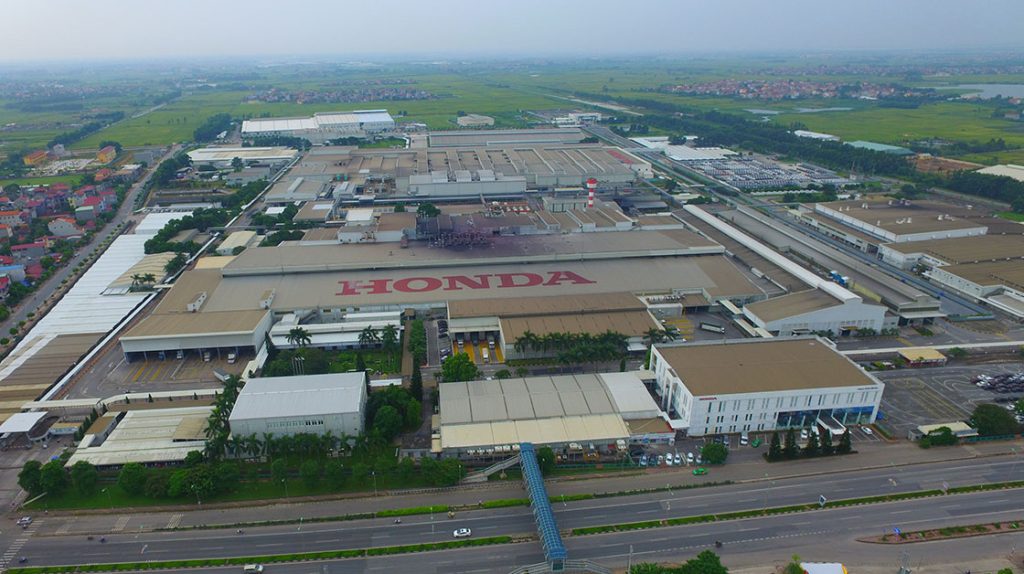
Honda says it has 12 manufacturing plants in the United States and has invested $25.7 billion in American operations, including manufacturing, research and development, parts centers, sales, and other activities. More than 60% of the vehicles Honda sold in the United States in 2025 were manufactured domestically.
The company therefore has a substantial commitment to North America. The question is how it should expand that footprint.
Kaihara said Honda is close to using its existing North American production capacity, making another plant necessary if the company expects demand to keep growing. However, if trade rules change, the economics of a new factory could change with them.
A plant built in the United States, Mexico, or Canada would not operate independently. Its profitability would depend partly on where suppliers are located and how easily components can move across borders.
For Honda, that means a decision about factory location cannot be separated from the future of the trade agreement.
The current environment is already demonstrating the potential risks. Reuters reported that the United States has imposed a 50% tariff on $20 billion of Canadian products, while Canada has announced retaliatory measures.
Honda has so far avoided passing increased tariff costs directly to North American customers, but continued trade deterioration could eventually force the company to reconsider pricing.
That makes a new factory a more complicated investment than it would have been under stable trade conditions.
Honda Is Rethinking Its Product and Manufacturing Strategy
The potential factory delay also comes as Honda is making major changes to its vehicle strategy.
The automaker has reduced its previous ambitions for battery-electric vehicles and is putting greater emphasis on hybrids. Reuters reported that Honda scrapped its long-term target for EVs to account for 20% of global new-vehicle sales in 2030. Instead, the company plans to introduce 15 new hybrid models globally by 2030.
The change reflects a significant shift in how Honda views consumer demand. Hybrid vehicles have become particularly important in the United States, where buyers can obtain improved fuel economy without having to rely entirely on battery charging. Honda’s recent sales performance suggests that this strategy is gaining traction.
According to Reuters, Honda’s U.S. car sales increased 36% in July, giving the automaker its strongest July performance in seven years. Higher oil prices have also strengthened demand for fuel-efficient vehicles.
Honda has already demonstrated that it is willing to move production between facilities when market conditions or trade policies change.
The automaker previously decided to shift production of its U.S.-bound five-door Civic hybrid from Japan to Indiana. That decision shows how Honda can use existing plants to adjust its manufacturing footprint without immediately committing to an entirely new facility.
Honda’s existing American plants are also becoming more flexible. The company says it has been expanding hybrid production in Ohio and Indiana while retooling Ohio operations to support gasoline, hybrid, and battery-electric vehicles on the same manufacturing lines.
That flexibility could become especially valuable if Honda ultimately decides to postpone its eighth assembly plant.
Rather than adding another facility immediately, the company could potentially increase production at existing factories, shift additional models between plants, or use flexible manufacturing to respond to changing demand.
There is a limit to that approach, however. Honda’s statement that it is nearing full production capacity suggests that existing plants cannot indefinitely absorb additional demand. If hybrid sales continue to rise, the company may eventually need new capacity regardless of the trade environment.
Honda’s recent decisions on EV investment also demonstrate how cautious the company has become.
The automaker indefinitely suspended its roughly $11 billion Canadian EV and battery project and canceled three planned EVs for the U.S. market. These moves followed a reassessment of EV demand and Honda’s broader electrification strategy.
That makes the proposed eighth factory particularly important. Honda is not simply deciding whether to build another plant. It must determine what types of vehicles that factory should produce and how much capacity the company will need in a market where gasoline, hybrid, and electric vehicles will coexist.
A flexible factory capable of producing different powertrains could become more valuable than a facility dedicated to one technology.
The Decision Could Affect North American Manufacturing
Honda’s hesitation also illustrates how trade uncertainty can influence automotive investment long before construction begins.
A new assembly plant creates jobs and generates business for suppliers, logistics companies, construction firms, and other regional industries. Delaying such a project can therefore affect an entire manufacturing ecosystem.
The issue is not unique to Honda. Reuters reported in 2025 that automakers had urged the U.S. government to extend the USMCA, with Hyundai warning that uncertainty was delaying investment decisions.
Hyundai said that early confirmation of an extension could unlock more than $20 billion in potential U.S. investment and that uncertainty was slowing job creation, site selection, and technology development. Honda is now making a similar calculation.
The company has spent decades building its North American production network. Honda says more than 60% of its U.S.-sold vehicles were manufactured in the United States in 2025, while its broader regional operations rely on suppliers and production facilities throughout North America.
A new plant would therefore become another piece of a supply chain already designed around the three-country region.
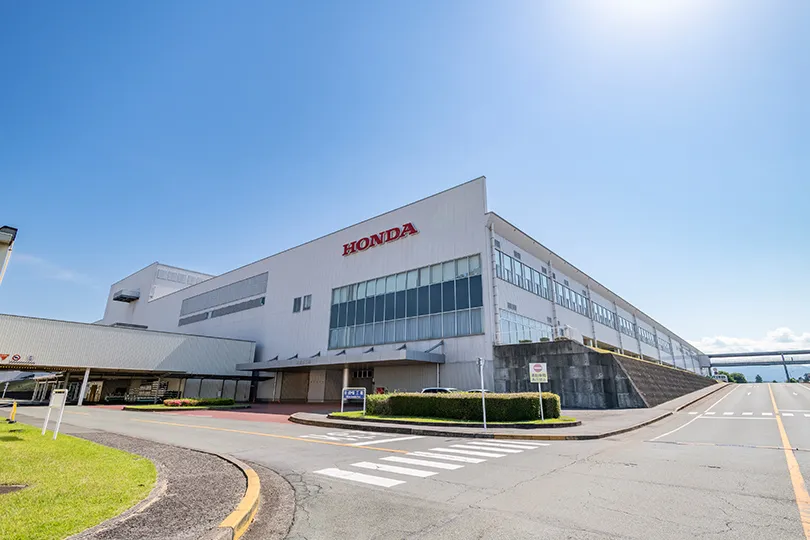
If trade rules remain stable, Honda could proceed with the investment and strengthen its ability to meet future demand. If tariffs increase or regional content requirements change substantially, the company could decide that expanding existing facilities is less risky.
The timing gives Honda some room to wait. Kaihara said the company needs to make a decision within one or two years if it wants the new factory running around 2030.
That means the next phase of USMCA negotiations could directly influence Honda’s investment timeline.
For now, the automaker is taking a cautious approach. It has strong demand for hybrids, a large existing manufacturing network, and a stated need for additional capacity. But it is also facing higher trade-related costs and uncertainty over the rules that will govern North American manufacturing in the years ahead.
The proposed eighth factory is therefore more than a routine expansion project. It has become a test of whether Honda can make a long-term manufacturing commitment while the region’s trade framework is being reconsidered.
If the United States, Canada, and Mexico provide enough certainty around the future of the USMCA, Honda could move forward with its plans. If uncertainty persists, the automaker may delay the project and rely more heavily on its existing plants.
Either way, Honda’s decision will show how deeply trade policy is now influencing the next generation of North American vehicle production.
