
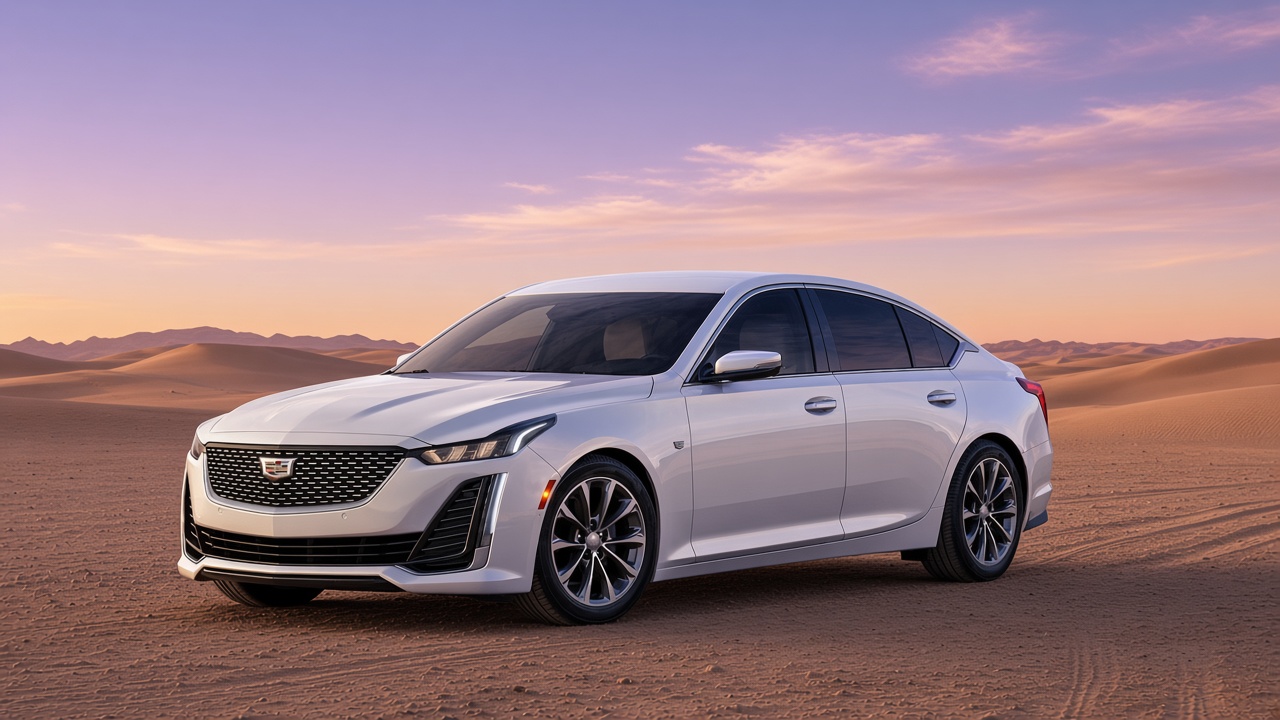
The 2026 Cadillac CT5 has struggled in the latest Insurance Institute for Highway Safety testing, receiving poor ratings in both the updated moderate overlap front test and the updated side test.
The results are significant because these are two of the key crashworthiness evaluations used by IIHS to determine how effectively a vehicle protects its occupants.
The CT5 was redesigned for the 2025 model year, but its latest test results fall short of the tougher standards introduced for 2026. The sedan performed well in several individual areas, including driver protection in the moderate overlap test and rear-passenger protection in the side test. However, serious weaknesses in other areas resulted in poor ratings.
The side test also highlighted a structural concern involving the B-pillar. IIHS measured the pillar at 13 centimeters short of the longitudinal centerline of the driver’s seat.
The negative measurement means the crush stopped short of that reference point; it does not mean the B-pillar passed through the driver’s seating position. Even so, the structural performance was rated marginal.
The CT5 also received Marginal or Poor ratings for its headlights, depending on equipment, while its standard vehicle-to-vehicle front crash prevention system received a Poor rating.
The Moderate Overlap Test Exposed a Rear-Seat Weakness
IIHS’s updated moderate overlap test is designed to evaluate both the driver and a rear passenger. The test involves a vehicle traveling at 40 mph, with 40% of its front end striking a deformable barrier.
A driver dummy is positioned behind the wheel, while a smaller dummy representing a small adult woman or 12-year-old child sits directly behind the driver. The CT5’s driver protection was actually strong.
IIHS rated the structure and safety cage as good. The driver’s head and neck, chest, thigh and hip, and leg and foot injury measurements were all good. Driver restraints and dummy movement also received good ratings.
The rear passenger produced a very different result. IIHS rated the rear passenger’s head and neck injury measures as poor, while the chest measurement was marginal. Rear passenger restraints and dummy movement were rated acceptable.
The head did not strike a stiff structure during the dummy’s forward movement, but the measured neck forces were still high enough to produce the poor rating.
The rear dummy recorded 3.1 kN of neck tension, while the chest index reached 45 and shoulder-belt tension reached 8.0 kN. Those measurements contributed to the unfavorable rear-passenger assessment. This is precisely the type of weakness IIHS’s updated test is designed to uncover.
The organization changed the moderate overlap test to place greater emphasis on rear-seat safety because occupants in the second row can experience different risks from those in the driver’s seat.
For 2026, IIHS also made its award criteria more demanding. To earn either a Top Safety Pick or Top Safety Pick+ award, vehicles must now achieve a Good rating in the updated moderate overlap test.
The CT5’s poor result therefore immediately eliminates it from consideration for either award. The result is notable because the sedan’s front structure itself performed well. The problem was not a collapse of the driver’s safety cage. Instead, the rear passenger’s injury measurements prevented the vehicle from receiving a stronger rating.
That distinction matters because a vehicle can provide excellent protection for its driver while still having weaknesses elsewhere in the cabin.
The CT5’s performance demonstrates why modern safety evaluations cannot rely on a single crash configuration.
Side Testing Raised Concerns for the Driver
The CT5’s second poor rating came from the updated side test, where the problems were concentrated around the driver.
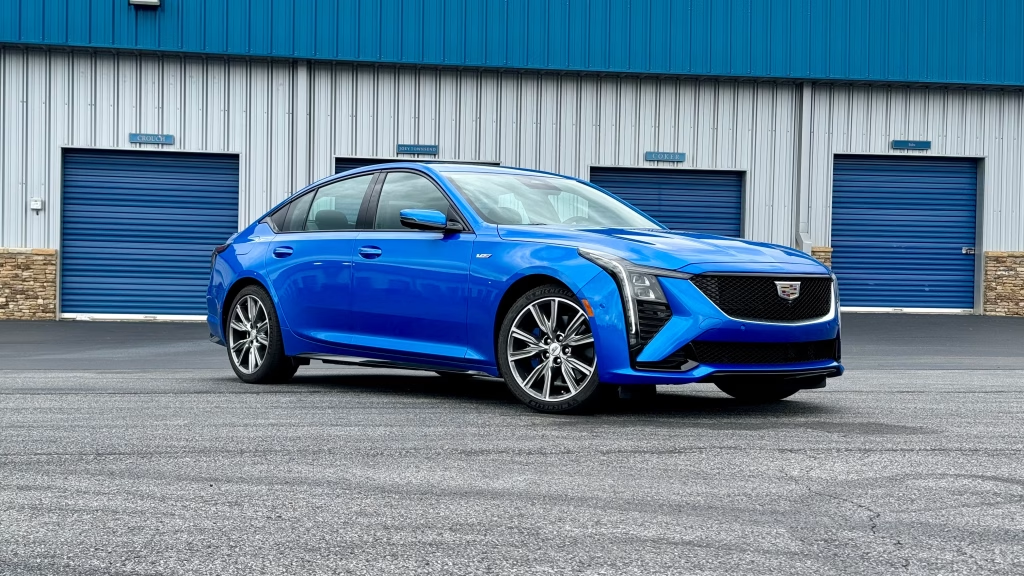
IIHS rated the vehicle’s structure and safety cage as marginal. Driver head and neck injury measures were poor, while torso and pelvis measurements were marginal. Driver head protection was also rated marginal.
The rear passenger performed much better. Its head and neck, torso, and pelvis injury measurements were all good, as was rear passenger head protection.
That creates an important contrast with the frontal test. The rear passenger was the primary weakness in the moderate overlap crash, while the driver was the main concern in the side impact.
IIHS conducts the side test using an SUV-like barrier traveling at 37 mph that strikes the driver’s side of the vehicle. The evaluation considers both structural intrusion and the injuries recorded by the crash-test dummies.
The CT5’s B-pillar measurement was -13.0 centimeters relative to the longitudinal centerline of the driver’s seat. According to IIHS, a negative number indicates how far the crush stopped short of the seat centerline. Although the pillar did not cross that point, the structural performance was still only marginal.
The driver dummy also recorded concerning injury measurements. Its HIC-15 head injury value reached 1,282, with a peak acceleration of 161 g during hard contact. Torso deflection reached 46 millimeters, while the pelvis experienced a combined force of 5.1 kN.
These measurements contributed to the poor head and neck rating and marginal torso and pelvis results.
Side impacts can be particularly difficult because there is less space between the occupant and the striking vehicle than in a frontal collision. The door, B-pillar, side structure, airbags, and restraints must absorb and manage crash forces within a relatively narrow area.
The CT5’s results indicate that this protection strategy did not meet IIHS’s current expectations. The sedan’s crash-avoidance results add another weakness.
Its standard vehicle-to-vehicle front crash prevention system received a poor rating in IIHS’s updated evaluation. Its pedestrian front crash prevention system performed better, earning an acceptable rating.
The CT5 also comes with standard blind-spot detection and lane-departure warning and prevention, while rear automatic braking is optional. Its headlights also vary significantly by configuration.
The standard LED projector headlights on premium luxury and sport trims received a marginal rating. Versions equipped with the Technology or Platinum packages received a poor rating. IIHS found inadequate illumination in several areas, particularly along parts of the road and curves, although neither system exceeded glare limits.
That means the CT5 has weaknesses in several areas of IIHS’s evaluation, but the two poor crashworthiness ratings are the most consequential because they directly concern occupant protection. The 2026 award requirements make the problem even clearer.
For Top Safety Pick, IIHS requires good ratings in the small overlap front, updated moderate overlap front, and side tests, along with acceptable or good headlights across all trims and an acceptable or good standard pedestrian front crash prevention system. Top Safety Pick+ adds stronger crash-avoidance requirements.
The CT5 does not meet those conditions. Its small overlap test has not been rated, its moderate overlap and side tests are both poor, its headlights range from marginal to poor, and its standard vehicle-to-vehicle crash prevention system is poor.
That does not mean the CT5 is unsafe in every situation. Its good driver measurements in the moderate overlap test and good rear-passenger measurements in the side test demonstrate that several aspects of its safety engineering work effectively.
But the latest IIHS results identify specific areas that need improvement. The most important are rear-passenger protection during a frontal crash and driver protection during a side impact. The B-pillar measurement adds another structural concern, while the headlight and crash-avoidance results show that the weaknesses are not limited to crashworthiness.
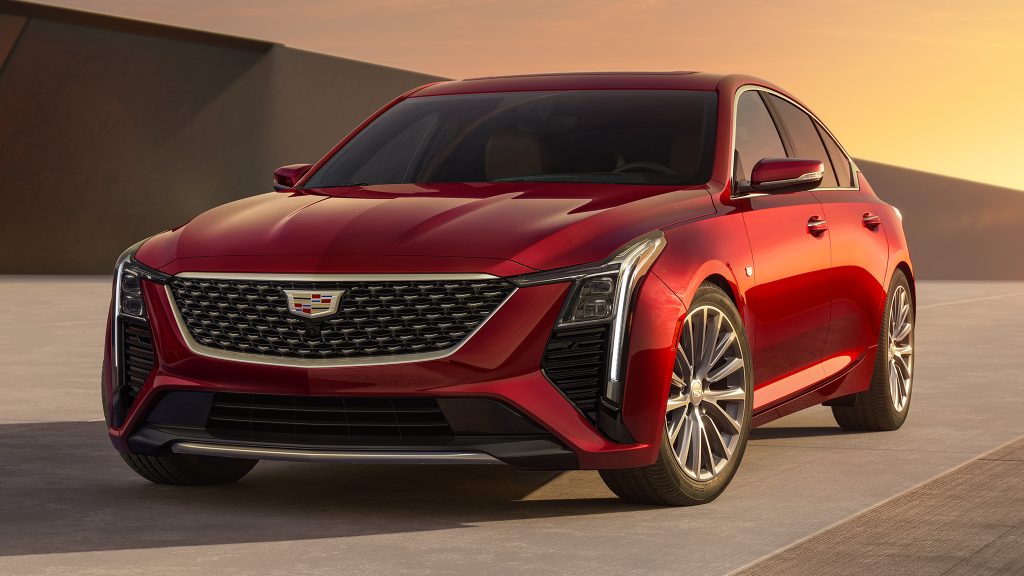
The CT5’s results are also notable because other midsize luxury sedans have performed considerably better under the same 2026 criteria. The Audi A5, for example, earned good ratings in the small overlap, moderate overlap, and side tests and received Top Safety Pick+ recognition.
For Cadillac, the results provide a clear engineering challenge. Improving the rear restraint system, reducing driver injury measures in side crashes, and strengthening side-impact protection would be necessary steps toward meeting IIHS’s current standards.
For shoppers, the takeaway is straightforward. The CT5’s luxury status and available safety features do not necessarily translate into a top IIHS crash rating.
The poor ratings in the updated moderate overlap and side tests are meaningful findings, particularly because both tests examine serious collision scenarios. The sedan has areas of strong protection, but its performance is inconsistent across different crash types.
The 2026 CT5 therefore represents a good example of why modern vehicle safety cannot be judged by equipment lists alone. A car can have blind-spot monitoring, pedestrian detection, advanced airbags, and a strong driver-assistance package while still exposing weaknesses in its crash structure or occupant restraints.
IIHS introduced stricter standards for 2026 to expose these kinds of safety weaknesses. For the CT5, the test results tell a clear story. It provides strong protection for the driver in the moderate overlap crash and performs well for rear passengers in the side test. However, its poor ratings in other areas highlight the need for substantial improvements before it can qualify for IIHS’s highest safety awards.
