Buying a car overseas can be tempting when the model is faster, rarer, or simply unavailable in American showrooms.
The catch is that bringing a foreign-market vehicle into the United States is not just a matter of shipping it across the ocean. Federal safety and emissions requirements can stop an otherwise desirable car at the border.
For vehicles under 25 years old that were not originally built and certified to U.S. standards, importers generally need a specific NHTSA eligibility determination and a registered importer to bring the vehicle into compliance. The cars below show why some international favorites remain difficult to legally import.
1. Toyota GR Yaris
The Toyota GR Yaris is exactly the type of car that can frustrate an American enthusiast. It is a purpose-built performance hatchback developed primarily for markets outside the United States, and its absence from the American market is not simply a matter of Toyota choosing a different trim level.
The important legal issue is federal certification. NHTSA states that a vehicle less than 25 years old that was not originally manufactured to comply with all applicable Federal Motor Vehicle Safety Standards, or FMVSS, cannot be permanently imported unless NHTSA has determined that particular make, model, and model year are eligible.
If it is nonconforming, the vehicle generally has to enter through a registered importer that can bring it into compliance.
That makes an ordinary foreign-market GR Yaris a very different proposition from a U.S.-certified Toyota. Simply buying one overseas does not give an American buyer the right to register it for road use after it arrives.
The 25-year exemption is the big exception. NHTSA says a vehicle becomes exempt from the federal FMVSS requirements once it is at least 25 years old, with the age calculated from its date of manufacture.
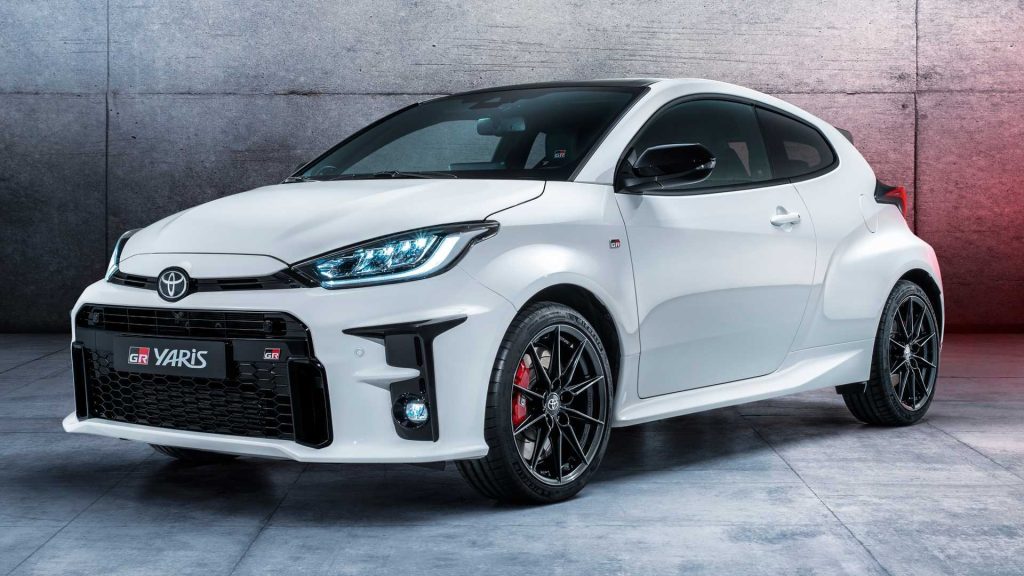
The GR Yaris is far too young for that exemption. Therefore, a recent Japanese-market example cannot simply be imported as a normal personal vehicle because an enthusiast likes its compact dimensions and rally-inspired engineering.
The GR Yaris offers a clear reminder that being a Toyota does not automatically make a foreign market model legal to import into the U.S. Federal certification requirements apply to the specific vehicle and its configuration.
2. Honda S660
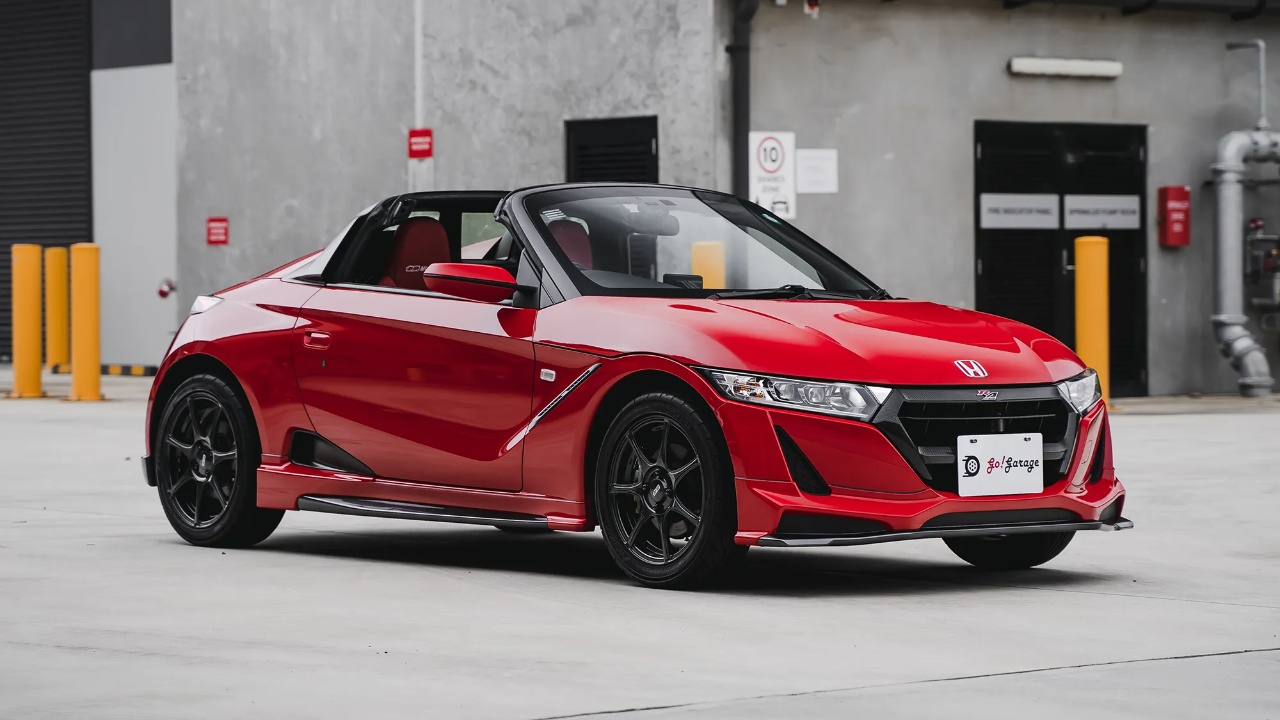
The Honda S660 is another small performance car that looks like an easy candidate for American importation but runs directly into the country’s federal vehicle rules. Built for Japan’s kei-car category, the tiny roadster was never developed as a normal U.S.-market vehicle.
Its size is part of its appeal. The S660 measures roughly 133.7 inches long and 58.5 inches wide, making it dramatically smaller than most vehicles sold in America. Under its Japanese specification, the car uses a 660 cc turbocharged three-cylinder engine and was designed around Japan’s kei-car regulations.
Those Japanese-market specifications do not automatically satisfy U.S. requirements. NHTSA explains that a vehicle under 25 years old that was not originally manufactured to comply with applicable FMVSS cannot be permanently imported unless NHTSA has determined that the vehicle is eligible and the required conformity process is completed.
That is why an American enthusiast cannot simply purchase a relatively new S660 in Japan, put it on a ship, and expect to receive a normal U.S. registration afterward. If the vehicle is not already covered by an applicable import eligibility determination, the federal process becomes the obstacle.
The famous 25-year rule eventually changes the equation. Once an imported vehicle reaches 25 years from its date of manufacture, NHTSA’s federal safety exemption allows it to enter without having to meet the FMVSS that applied when it was manufactured.
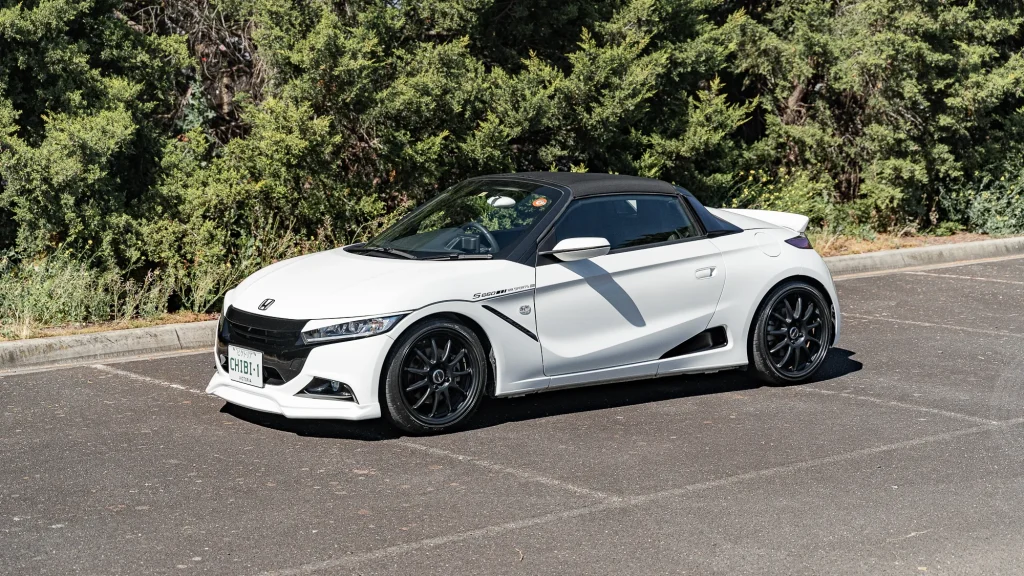
For a car as distinctive as the S660, waiting for that exemption can be the realistic long-term route for enthusiasts who want a genuine Japanese-market example.
The S660 demonstrates that even a tiny, relatively low-powered sports car can face serious federal import restrictions when it was never certified for the American market.
3. Nissan Skyline GT-R R34
The Nissan Skyline GT-R R34 is often described as “illegal in America,” but that statement needs an important qualification. The car is not permanently banned from the United States. The real issue is that specific model years were not originally certified to U.S. safety standards, so younger examples cannot simply be imported like a U.S. market Nissan.
NHTSA’s rules state that a vehicle less than 25 years old that was not originally manufactured and certified to meet applicable Federal Motor Vehicle Safety Standards cannot be permanently imported unless NHTSA has determined that the particular make, model, and model year are eligible.
If eligible, the import normally has to go through a registered importer or an owner working under contract with one.
The R34’s history makes the situation even more interesting. NHTSA has previously determined certain Skyline versions eligible for importation, including the 1999 Skyline R34, R34 GT-R V-Spec, and R34 GT-T. That does not mean every R34 from every year can enter under the same determination.
The 25-year exemption is what eventually makes later examples much easier to import. NHTSA calculates the exemption from the vehicle’s date of manufacture, not merely the model year.
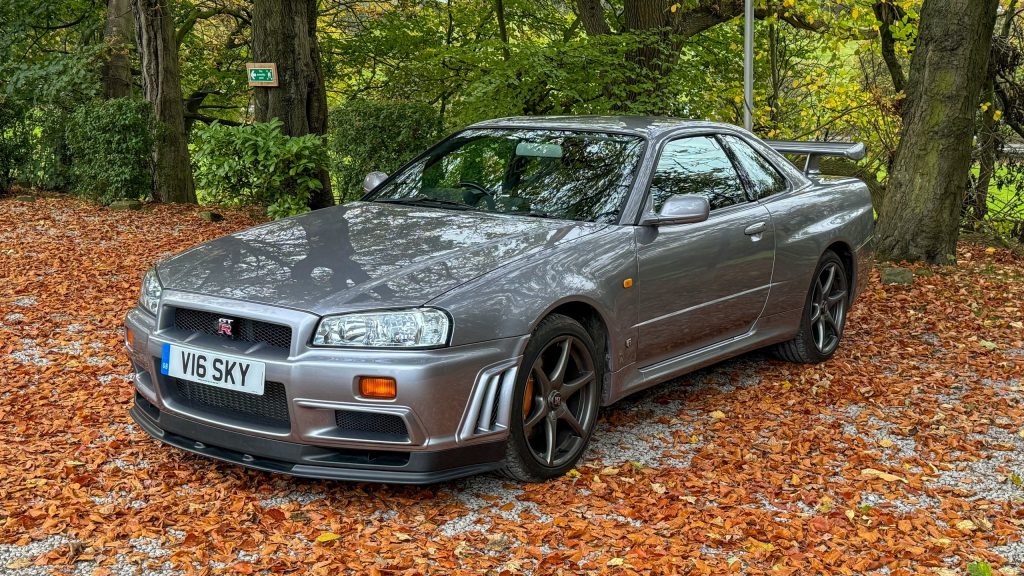
For an American buyer, that distinction can save thousands of dollars and prevent a serious legal problem. A foreign seller saying “R34” is not enough. The exact production date, model, and specification matter.
The R34 is therefore not a permanently forbidden car. It is a vehicle whose age, exact specification, and federal import eligibility determine whether it can legally enter the country.
4. Mitsubishi Lancer Evolution VI
The Mitsubishi Lancer Evolution VI is another legendary Japanese performance car that can create complications for American buyers looking to import a younger example. Its appeal is easy to understand. The Evo VI pairs a turbocharged four-cylinder engine with all-wheel drive and a rally-inspired chassis. However, it was never officially offered as part of Mitsubishi’s standard U.S. lineup.
That last point is critical. NHTSA does not decide import eligibility simply because a vehicle is famous or because an American enthusiast wants one. For a nonconforming vehicle under 25 years old, the agency requires the particular make, model, and model year to be eligible for importation.
If an eligible nonconforming vehicle is imported before reaching 25 years of age, it must generally come through a registered importer or through an owner who has contracted with one to complete the required conformity work.
NHTSA also requires a bond equal to 150 percent of the vehicle’s declared value for applicable nonconforming imports to ensure that the required modifications are completed or the vehicle is exported or abandoned.
The situation changes dramatically once the car reaches 25 years old. NHTSA says vehicles at least 25 years old can be imported without regard to compliance with the applicable FMVSS. The age is calculated from the vehicle’s manufacturing date.
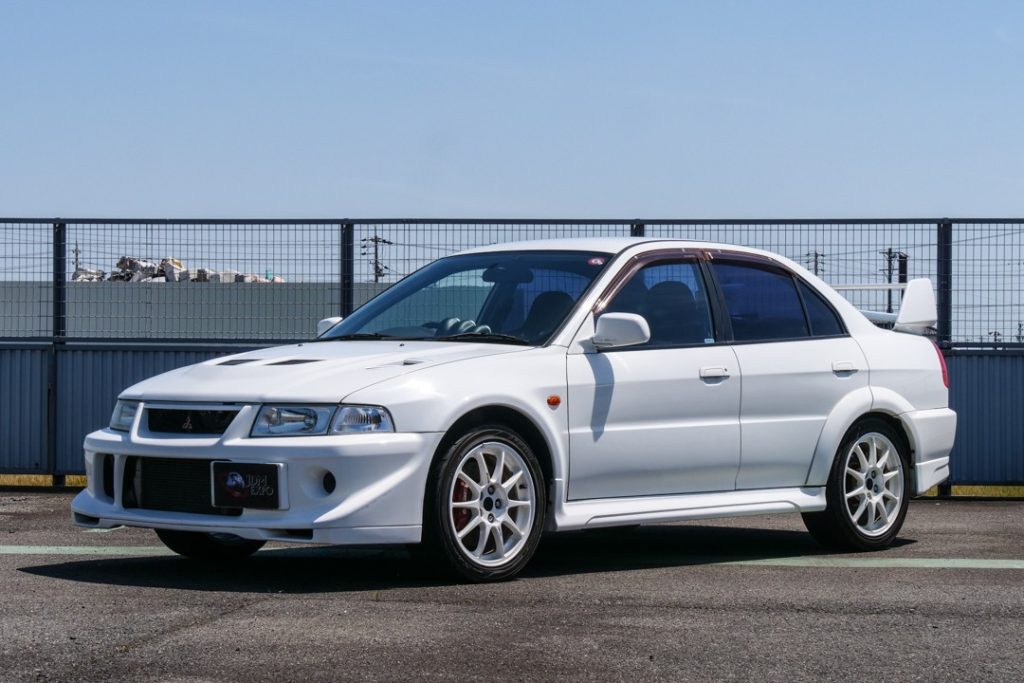
That is why the age of an Evo VI can matter more than its mileage or condition when an American buyer is calculating the cost of importing one.
The Evo VI highlights a key point for anyone considering a foreign-market performance car. A vehicle can be highly desirable and still fail to meet federal import requirements. Before arranging international shipping or making a purchase, buyers should verify the vehicle’s exact manufacturing date and confirm its eligibility with NHTSA.
5. TVR Sagaris
The TVR Sagaris is a classic example of a car that American enthusiasts can admire long before they can legally import a particular example. Built by British sports-car specialist TVR, the Sagaris was sold in the United Kingdom and other markets rather than being certified for normal U.S. road use.
Its biggest obstacle is not simply that it is right-hand drive or that it was never sold by a U.S. dealer. NHTSA states that a foreign-market vehicle less than 25 years old that was not originally manufactured to meet applicable Federal Motor Vehicle Safety Standards cannot be permanently imported unless NHTSA has determined the specific make, model, and model year are eligible.
There is an interesting exception for the Sagaris. NHTSA’s published eligibility records include the TVR Sagaris, T350, Tuscan, and Cerbera for model years 1996 through 2006. However, eligibility does not mean an importer can ignore the federal process.
Nonconforming vehicles covered by an eligibility determination generally must still be imported through a registered importer or by someone who has contracted with one to bring the vehicle into compliance.
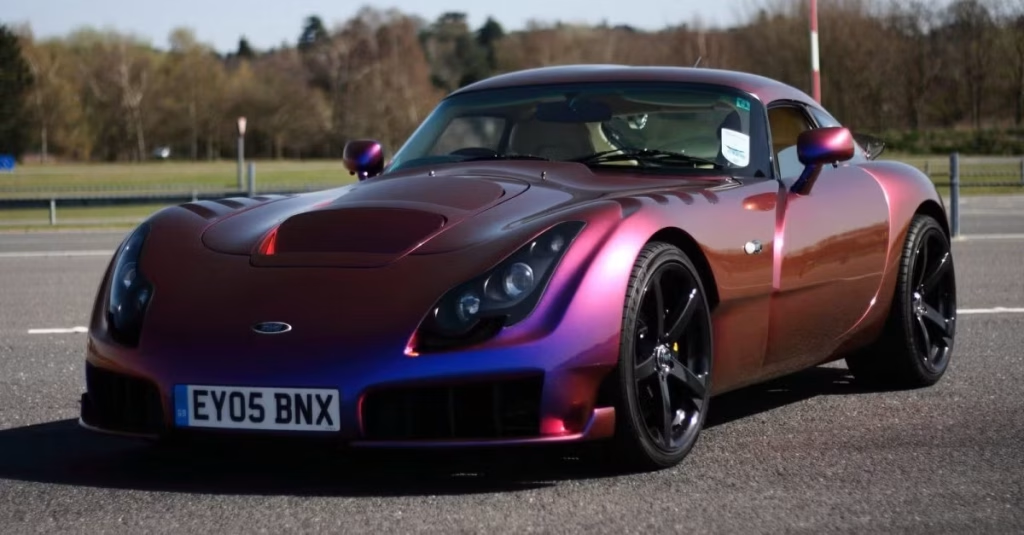
The 25-year rule eventually makes the process much simpler. Once the individual car is at least 25 years old based on its manufacturing date, the federal FMVSS restriction no longer applies in the same way.
The Sagaris, therefore, is not permanently banned from America. The real challenge is importing a qualifying example legally before the federal age exemption applies.
6. Nissan Silvia S15
The Nissan Silvia S15 is one of the most recognizable Japanese performance cars that American buyers have historically struggled to import. Produced for markets such as Japan, the S15 combined rear-wheel drive with a turbocharged four-cylinder engine and became particularly popular among enthusiasts interested in drifting and modified street cars.
For U.S. importation, however, enthusiasm does not override federal certification requirements. NHTSA says that a vehicle under 25 years old that was not originally manufactured to comply with all applicable FMVSS cannot be permanently imported unless the agency has determined the specific make, model, and model year eligible for importation.
That means an S15 cannot simply be purchased overseas and shipped to an American port as an ordinary used car. If the specific vehicle is not covered by an applicable eligibility determination, an importer cannot lawfully bring it into the country for permanent road use merely because it is a famous model.
The age exemption is ultimately the most important escape route. NHTSA’s rules allow vehicles that are at least 25 years old to qualify for the federal safety exemption, with the relevant age calculated from the vehicle’s manufacturing date.
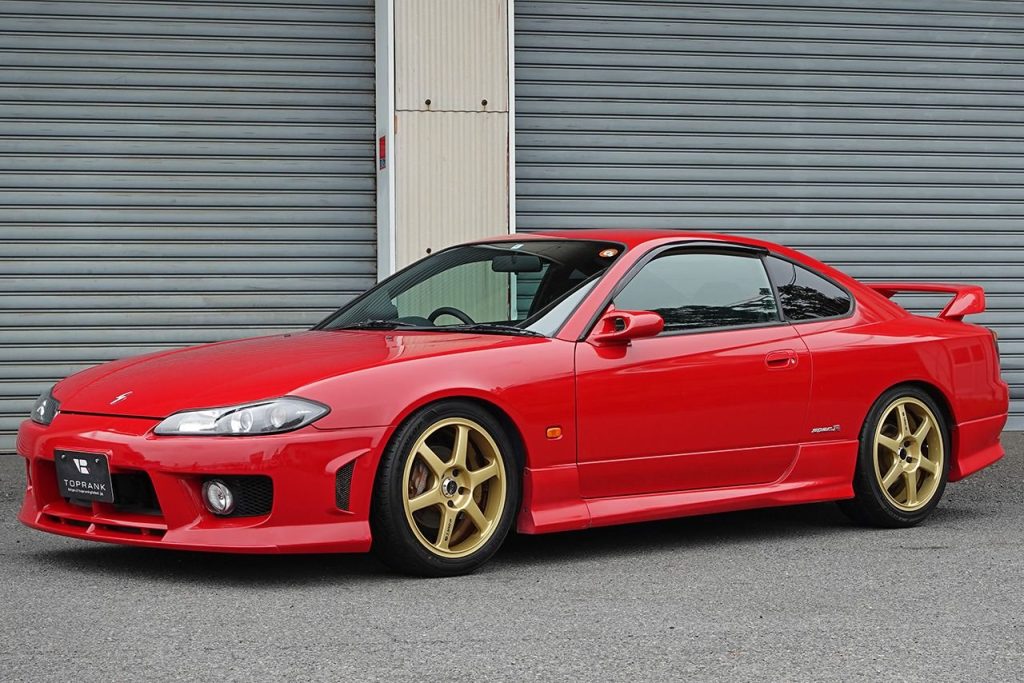
That makes the exact production date critical. Two S15s that look almost identical can have different import situations depending on when they were manufactured.
The S15 shows why the phrase “banned in America” can be misleading. It is not permanently prohibited. Instead, a relatively young foreign-market example faces federal import restrictions until it qualifies through an approved pathway or reaches the 25-year threshold.
7. Mitsubishi Lancer Evolution VII
The Mitsubishi Lancer Evolution VII is another Japanese performance car that can create a federal importation problem for American buyers, particularly when the vehicle is newer than the 25-year exemption.
The seventh-generation Evolution was sold primarily outside the United States in the form enthusiasts often want, and a foreign-market example cannot simply be shipped into America and treated like a U.S.-certified vehicle.
NHTSA has strict requirements for imported vehicles. If a vehicle is less than 25 years old and was not originally built to meet applicable Federal Motor Vehicle Safety Standards, it generally cannot be permanently imported unless that specific vehicle qualifies under NHTSA’s importation system.
Eligible nonconforming vehicles generally must be brought in through a registered importer or under contract with one.
That makes the manufacturing date especially important in 2026. A qualifying Evolution VII manufactured more than 25 years ago can use the federal age exemption, but a later example remains subject to the normal import requirements until it reaches that threshold.
NHTSA calculates the exemption from the month and year of manufacture, not simply the model’s name or generation.
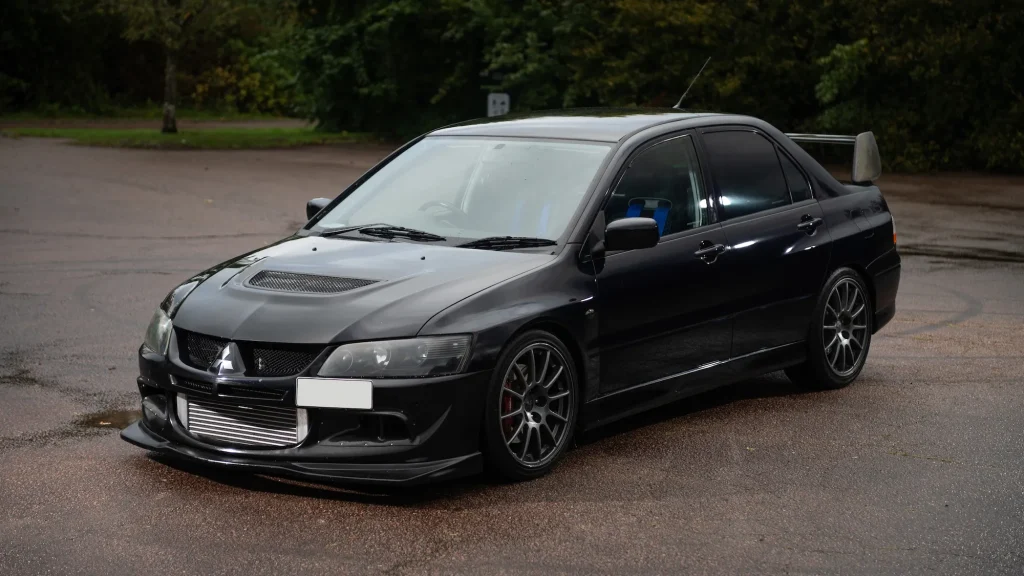
The Evo VII also demonstrates why buyers should verify the exact specification before purchasing. A foreign-market performance car can have different equipment, lighting, labeling, and safety configurations from vehicles certified for American roads.
NHTSA’s eligibility records are tied to specific makes, models, and model years rather than broad permission for an entire brand.
The Evo VII is therefore not permanently prohibited from America. The issue is whether the individual example is at least 25 years old or qualifies through the federal importation process.
8. Honda Integra Type R DC5
The Japanese-market Honda Integra Type R DC5 presents a similar challenge. American buyers may recognize the Integra name, but the Japanese-market Type R was not simply the same federally certified vehicle sold through Honda’s U.S. dealer network.
For a foreign-market vehicle under 25 years old, NHTSA requires compliance with the applicable Federal Motor Vehicle Safety Standards unless the vehicle falls under an exemption or has been determined eligible for importation through the agency’s process.
NHTSA’s published guidance makes clear that nonconforming vehicles can be imported through a registered importer when the required eligibility and conformity conditions are satisfied.
The age calculation makes the DC5 particularly interesting today. The first Japanese-market examples date from 2001, so an individual vehicle manufactured in 2001 may have reached the federal 25-year threshold depending on its exact production month. Later cars, including many 2002 and newer examples, remain younger than 25 years in 2026.
That means two visually similar DC5 Type Rs can have completely different import situations. The buyer cannot rely only on the model year shown in an advertisement. NHTSA specifically bases the 25-year exemption on the vehicle’s month and year of manufacture, making factory documentation important.
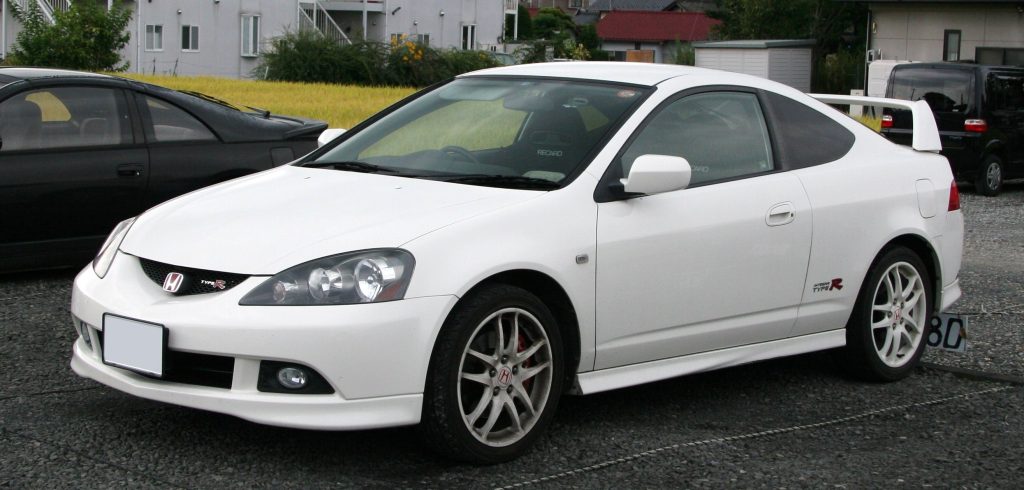
The car’s Japanese-market specifications also distinguish it from the U.S. Acura RSX. The Type R received a high-revving naturally aspirated engine, front-wheel drive, and performance-focused chassis hardware.
For American enthusiasts, the DC5 is a reminder that model similarity does not equal federal certification. Check the manufacturing date and exact specification before arranging an overseas purchase.
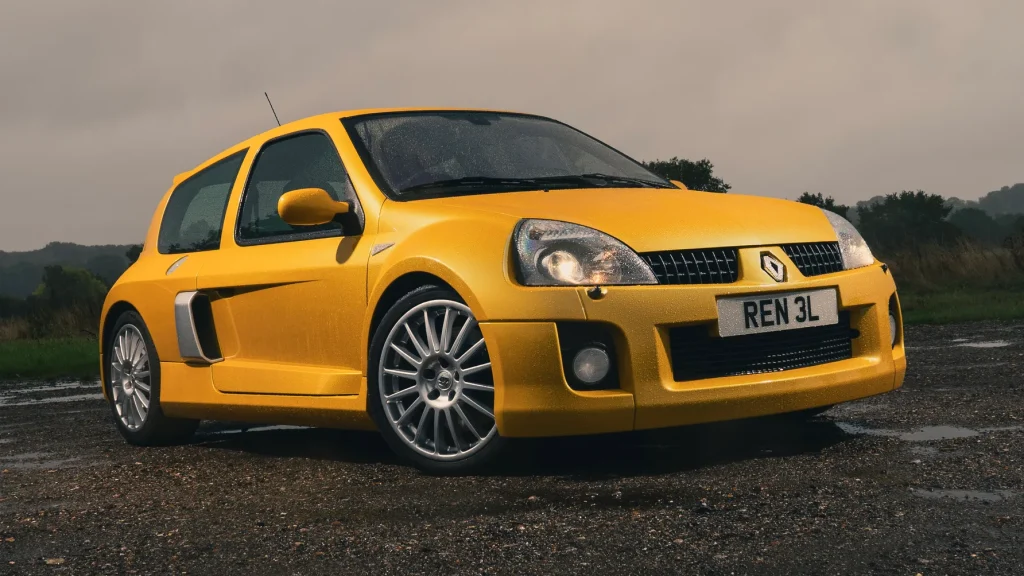
9. Renault Clio V6
The Renault Clio V6 is one of those European performance cars that can look deceptively simple to an American buyer.
Its compact hatchback body hides a mid-mounted six-cylinder engine, rear-wheel drive, and a layout that makes it radically different from an ordinary front-wheel-drive Clio. But buying one overseas does not automatically make it legal to bring into the United States.
The federal issue is certification. NHTSA says a vehicle younger than 25 years that was not originally manufactured to comply with all applicable Federal Motor Vehicle Safety Standards cannot be permanently imported unless NHTSA has determined that the specific make, model, and model year are eligible.
Importation of an eligible nonconforming vehicle must generally involve a registered importer or an importer working under contract with one.
That makes the exact production date crucial. A first-generation Clio V6 manufactured more than 25 years ago can qualify for the federal age exemption, while a younger example cannot simply bypass the rules because it is a collectible or because its owner intends to drive it only occasionally.
NHTSA specifically states that the 25 years is calculated from the vehicle’s month and year of manufacture.
There is another potential complication for right-hand-drive or unusual foreign-market configurations. NHTSA notes that right-hand-drive vehicles cannot automatically rely on an eligibility determination based solely on a substantially similar U.S.-certified left-hand-drive vehicle.
The Clio V6 is not permanently prohibited from entering the U.S. The main issue is its age. If a nonconforming example is less than 25 years old, it must qualify through a legal federal import process before it can be permanently brought into the country.
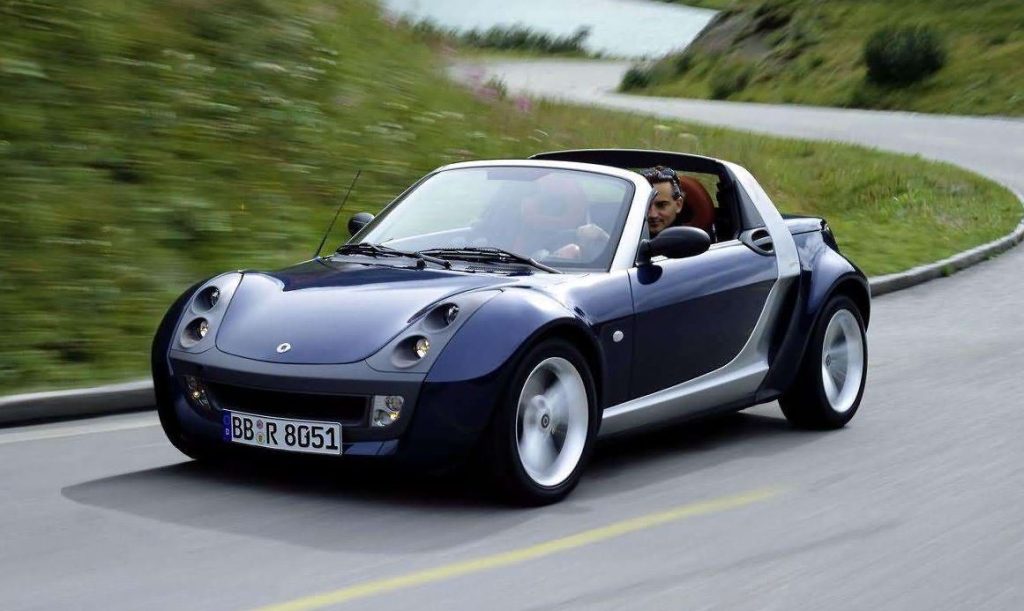
10. Smart Roadster
The Smart Roadster is another unusual European car that can become a paperwork nightmare when an American buyer tries to import a relatively new example. Its tiny dimensions and lightweight construction make it fascinating, but those characteristics do not exempt it from U.S. federal vehicle requirements.
NHTSA’s guidance is straightforward. A vehicle under 25 years old that was not originally manufactured to comply with all applicable FMVSS cannot be permanently imported unless the agency has determined that the particular make, model, and model year are eligible.
If the vehicle qualifies as a nonconforming import, it must generally enter through a registered importer or through an importer who has contracted with one to complete the necessary modifications.
NHTSA specifically discusses smart vehicles in its importation guidance. The agency explains that a nonconforming Smart vehicle cannot lawfully be imported without an eligibility determination, and its historical eligibility decisions applied to specific Smart models and model years rather than every Smart vehicle ever produced.
That model-and-year limitation is easy to overlook when shopping overseas. A seller may describe a car simply as a “Smart Roadster,” but federal import eligibility does not work that broadly. The exact model year and specification matter.
The 25-year exemption eventually provides the simplest federal route. NHTSA states that a vehicle at least 25 years old can be imported without regard to compliance with the FMVSS applicable when it was manufactured. The clock starts from the vehicle’s manufacturing date.
The Smart Roadster proves that federal import restrictions are not reserved for exotic supercars. Even an 80-horsepower micro-roadster can face the same federal certification rules when it was built for another market.