
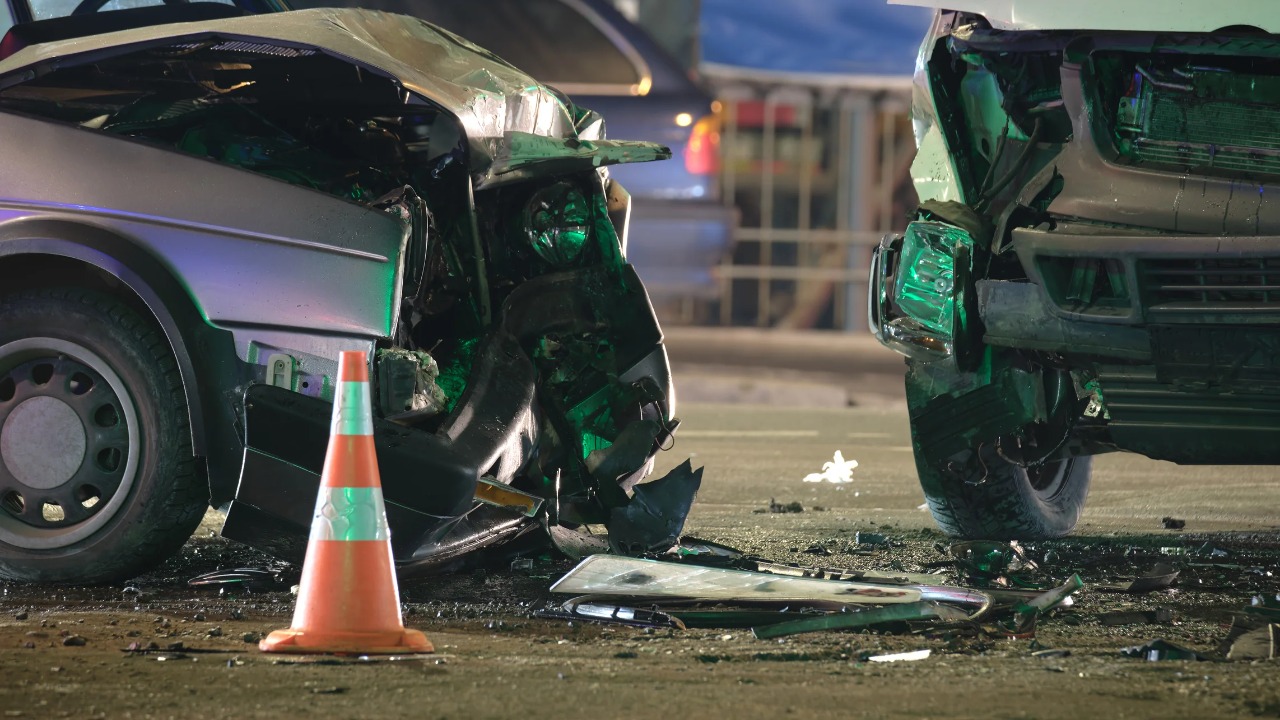
Nighttime represents a much smaller share of Americans’ travel than daytime, yet darkness is involved in a disproportionately large share of fatal crashes.
According to the Insurance Institute for Highway Safety, about half of all traffic deaths occur in darkness or around dawn and dusk, making visibility one of the most important safety challenges drivers face after sunset.
The difference becomes even more significant when nighttime travel is taken into account. IIHS reports that fewer than one in four trips start at night, yet nearly half of motor vehicle occupant deaths happen in darkness. The risk is even higher for pedestrians, with 77% of pedestrian fatalities occurring at night.
Those figures help explain why IIHS began independently testing and rating vehicle headlights in 2016. Federal requirements establish minimum lighting standards, but IIHS found that headlights meeting those requirements could still provide dramatically different levels of useful illumination.
The institute’s testing has demonstrated that headlights are not merely a convenience for seeing road signs and lane markings. Their performance can influence whether drivers see a pedestrian, animal, stopped vehicle, or obstacle early enough to react.
Darkness is not the only cause of nighttime crashes. Speed, alcohol impairment, fatigue, road design, pedestrian visibility, and driver behavior all contribute. But darkness removes natural light and makes hazards harder to identify, particularly on roads without adequate street lighting.
That is why IIHS treats headlights as an important crash-avoidance feature rather than simply another piece of vehicle equipment.
Why Darkness Creates Such a Serious Crash Risk
During daylight, drivers can use natural light to identify road edges, pedestrians, cyclists, animals, and objects beyond the area illuminated by their headlights. At night, much of that information disappears unless it comes from streetlights, other vehicles, or the vehicle’s own lighting system.
This becomes particularly dangerous at higher speeds. A vehicle traveling 55 mph covers approximately 81 feet every second. If a driver cannot see an obstacle until relatively close to it, there may be little time to identify the hazard, decide what to do, and brake or steer around it.
Headlights therefore provide much of the visual information a driver needs on an unlit road. IIHS has found substantial differences between vehicles.
When the organization launched its headlight ratings program, only 1% of tested systems earned a Good rating in 2016, while 62% were Poor. By the 2025 model year, 51% received good ratings and 10% were poor.
The improvement is substantial, but the remaining differences matter because better illumination is associated with fewer nighttime crashes.
IIHS research found that vehicles with good-rated headlights have 19% fewer nighttime single-vehicle crashes than vehicles with poor-rated headlights. They also have 23% fewer nighttime pedestrian crashes.
The organization evaluates headlights according to their actual performance rather than the technology used. LED, halogen, and high-intensity-discharge systems are all judged by how effectively they illuminate the road and whether they create excessive glare.
That means an LED system can receive a poor rating, while a well-designed halogen system performs better.
IIHS measures illumination along straightaways and curves using low and high beams. Curve performance is important because a driver needs illumination in the direction the vehicle is traveling rather than simply directly ahead.
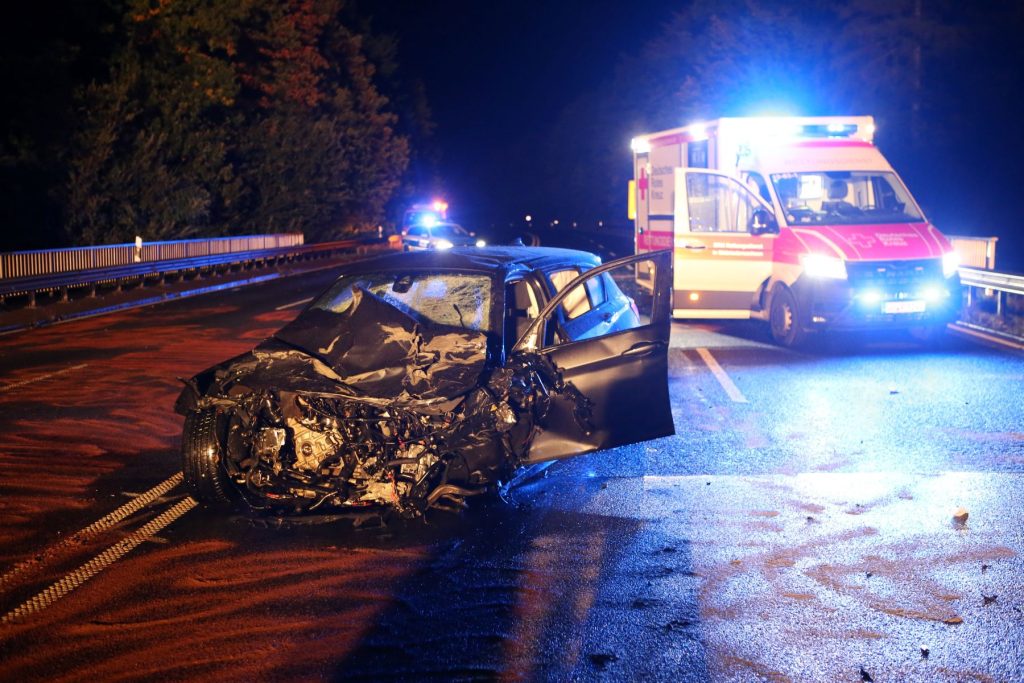
Advanced systems can improve that performance. Curve-adaptive headlights can redirect illumination as the vehicle turns, while automatic high beams can provide stronger lighting when no approaching traffic is detected. But the technology still has to work effectively.
Why IIHS Puts So Much Emphasis on Headlight Ratings
The difference between daytime and nighttime fatality risk is one reason IIHS incorporated headlights into its safety-award requirements.
The problem is particularly serious for pedestrians. IIHS data show that 77% of pedestrian deaths occur in darkness, based on data from the National Highway Traffic Safety Administration and the Federal Highway Administration.
That does not mean poor headlights cause 77% of pedestrian deaths. It demonstrates how strongly darkness is associated with pedestrian fatality risk.
Street lighting can help, but many rural roads, suburban streets, and stretches between communities become extremely dark after sunset. On these roads, headlights may be the driver’s primary source of forward illumination.
IIHS also notes that almost half of deaths in fixed-object crashes occur at night. Vehicles leaving the roadway can strike trees, utility poles, barriers, and other objects that may be difficult to see in darkness. However, better headlights cannot solve every nighttime safety problem.
Speed reduces reaction time, while alcohol, drugs, fatigue, and distraction can prevent drivers from responding even when a hazard is visible. Headlights work as part of a larger safety system that requires both effective equipment and responsible driving.
IIHS therefore evaluates usable illumination rather than simply measuring brightness. The institute also considers glare. Excessive glare can interfere with an approaching driver’s vision, but IIHS research suggests that inadequate visibility is a much larger crash concern.
A recent IIHS analysis of police-reported crashes found that headlight glare was cited in only 0.1% to 0.2% of nighttime crashes between 2015 and 2024. The percentage changed very little over that period.
That does not make glare irrelevant. Instead, it shows why improving road illumination should remain the primary objective while manufacturers continue controlling excessive light reaching other drivers.
Headlights Are Improving, But Differences Remain
The progress since IIHS began testing headlights has been dramatic. For 2016 models, just 1% of systems were good, while 18% were acceptable, 19% marginal, and 62% poor.
By 2025, the distribution had changed to 51% Good, 33% Acceptable, 6% Marginal, and 10% Poor. The latest 2026 results show 46% Good, demonstrating how far the market has moved toward stronger-performing systems.
IIHS has used its ratings and safety-award requirements to encourage manufacturers to improve lighting. Automakers have increasingly developed better beam patterns, aiming systems, and automatic high-beam technology.
The organization has also pushed manufacturers toward stronger standard equipment instead of reserving the best headlights exclusively for expensive trims.
That matters because headlight performance can vary between versions of the same vehicle. Two trims may use different lighting systems and receive different IIHS ratings.
For buyers, checking the specific headlight rating is therefore more useful than looking at the bulb type.
A vehicle advertised with LED headlights is not automatically safer at night than one using halogen lighting. The complete system determines how much of the road the driver can actually see.
The same applies to adaptive and automatic lighting. These systems can improve visibility when properly designed, but their effectiveness depends on their actual performance.
The evidence supporting better headlights is strong. IIHS’s real-world research links stronger headlight visibility with fewer nighttime single-vehicle and pedestrian crashes, including the 19% and 23% reductions associated with Good-rated systems compared with Poor-rated ones.
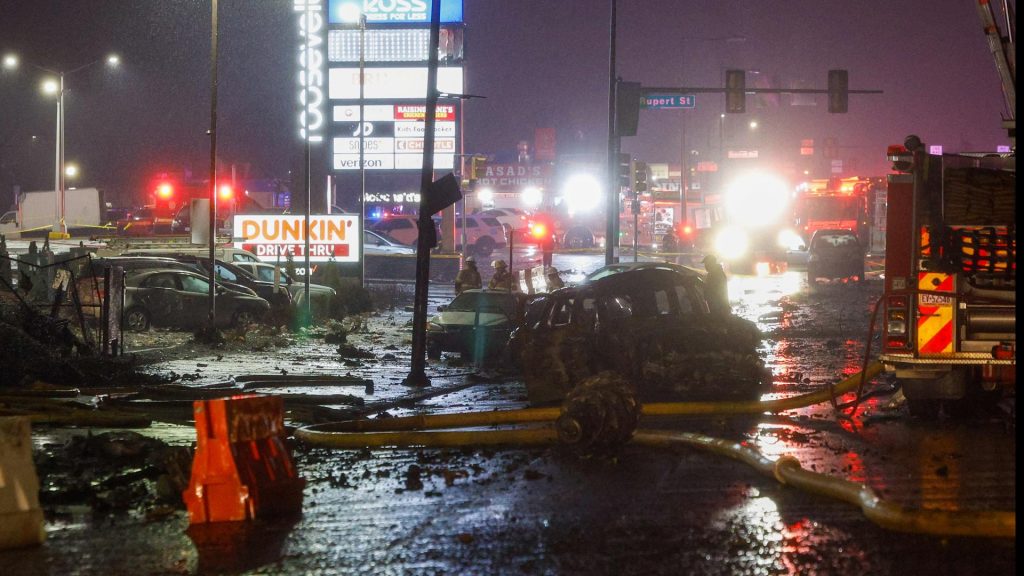
Those figures are population-level findings, not guarantees that an individual driver will avoid a crash simply by choosing good headlights.
But they demonstrate why nighttime visibility deserves attention when evaluating vehicle safety.
The bigger picture is clear. Most Americans drive during daylight hours, but nearly half of traffic deaths occur in darkness. Pedestrians face an even greater risk, with 77% of their fatalities happening at night. This gap helps explain why IIHS considers headlights an important part of vehicle safety.
Modern vehicles are providing better illumination than earlier generations, but substantial differences remain. For consumers, headlights should be judged by measured performance rather than marketing terminology.
When darkness removes the natural visibility drivers rely on during the day, headlights become their primary tool for seeing what lies ahead. IIHS testing shows that the quality of that tool can make a measurable difference.
