

Modern cars can feel remarkably sophisticated because manufacturers have packed them with technology that improves comfort, performance, safety, and convenience. The downside appears when one of those complicated systems fails outside warranty.
A feature that seems like a luxury can suddenly become a major repair bill because it may require specialized parts, extensive labor, calibration, or several components at once. RepairPal’s current U.S. estimates show that some repairs can already reach several thousand dollars before taxes and location differences are considered.
Here are eight vehicle features worth understanding before buying a car, especially when shopping for an older luxury model loaded with technology.
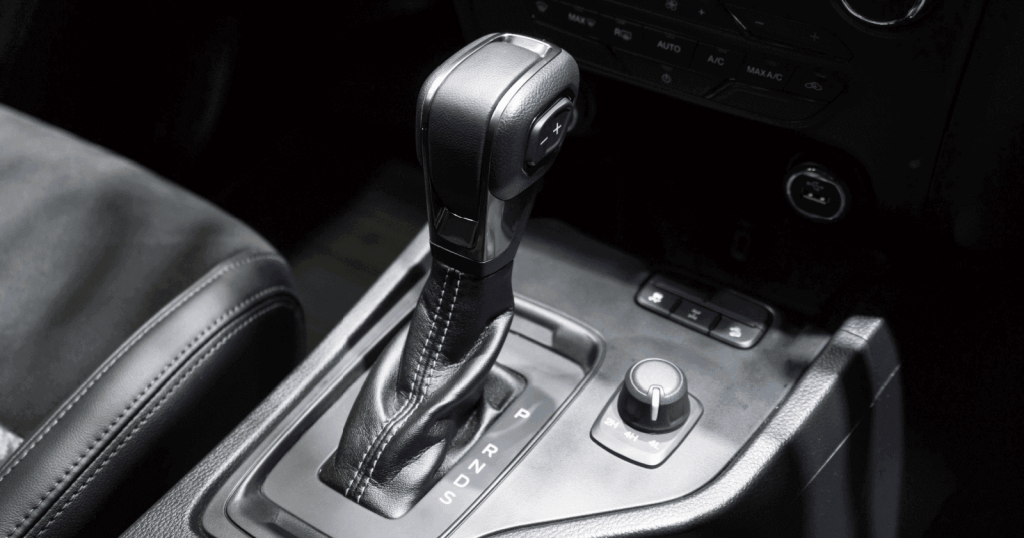
1. Automatic Transmission
Few mechanical failures can make a driver’s stomach drop faster than a failing automatic transmission. Unlike a simple sensor or switch, the transmission contains numerous mechanical and hydraulic components working together, and modern units also depend heavily on electronic controls.
When internal damage becomes severe, repairing or replacing the complete assembly can become one of the most expensive jobs outside an engine replacement.
According to RepairPal’s U.S. estimate updated in August 2026, the average cost for a transmission replacement is $6,166 to $6,685. That figure includes estimated labor of $1,112 to $1,632 and parts around $5,053, although the actual amount varies by vehicle, location, taxes, fees, and related repairs.
The frightening part is that a transmission warning does not automatically mean the entire unit needs replacement.
RepairPal specifically recommends proper diagnosis because problems involving wheel-speed sensors, ignition components, electronics, or other systems can sometimes affect transmission operation and create symptoms that look like transmission failure.
That is why symptoms such as slipping, delayed engagement, harsh shifts, unusual noises, or warning lights should not be ignored. Continuing to drive a vehicle with a developing transmission problem can potentially turn a repairable issue into a much larger mechanical failure.
Modern transmissions can also be expensive because manufacturers increasingly use replacement or remanufactured assemblies rather than rebuilding individual internal components at the dealership level.
For buyers considering a used vehicle, a smooth test drive is useful but not enough. Maintenance records, transmission service history, warning lights, fluid condition where applicable, and a professional inspection can provide far more insight into the risk of inheriting a major bill.
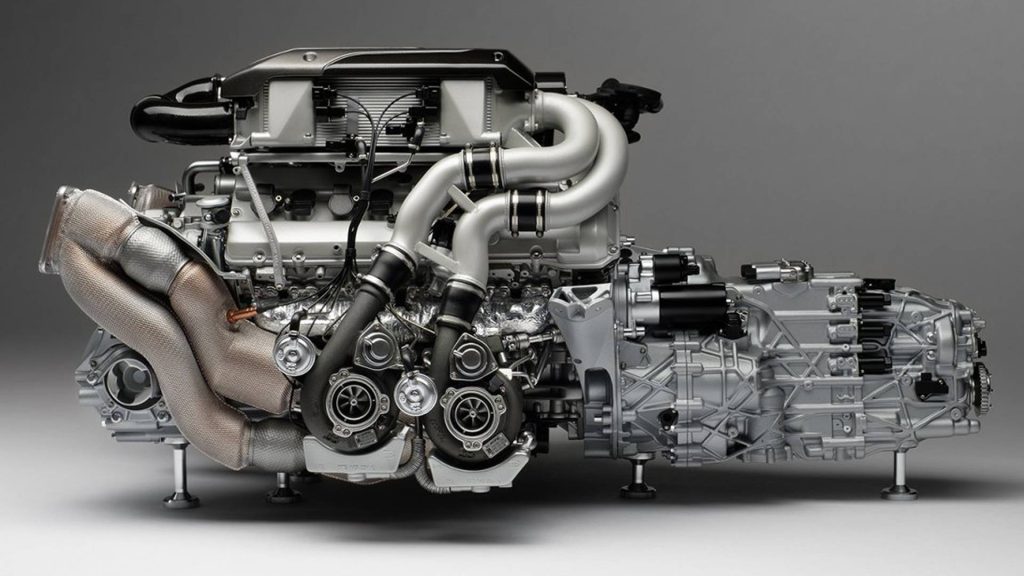
2. Turbocharged Engine System
Turbocharging can give a relatively small engine the power and torque of a much larger motor, which explains why turbocharged engines have become so common.
But the turbocharger operates in an extremely demanding environment, using exhaust energy to spin its compressor at very high speed while relying on proper lubrication and, in many applications, engine coolant.
When the turbocharger assembly fails, the repair can become expensive quickly. RepairPal’s current U.S. estimate places the average turbocharger assembly replacement at $2,490 to $3,095, with labor estimated between $731 and $1,073 and parts between $1,759 and $2,023.
The actual bill can vary considerably depending on the vehicle. For example, RepairPal currently estimates $2,170 to $3,499 for turbocharger replacement on a 2021 Honda Civic, while an Infiniti Q60 can run approximately $2,733 to $3,292 depending on application and model year.
A failing turbo does not always announce itself with an immediate catastrophic failure. Oil consumption, unusual whining, loss of boost, reduced acceleration, smoke, or abnormal noises can justify prompt diagnosis.
RepairPal notes that technicians may need to inspect the turbocharger shaft, compressor and impeller wheels, housing, wastegate, oil seals, and related plumbing before condemning the assembly.
That diagnostic process matters because replacing a turbocharger without identifying the original cause can result in another failure. Problems with lubrication, contaminated oil, damaged piping, or related engine systems can contribute to turbocharger problems.
For used-car shoppers, turbocharging is not a reason to avoid a vehicle. It is a reason to understand the maintenance requirements.
Regular oil changes using the manufacturer’s specified oil and addressing unusual symptoms early can help prevent a sophisticated performance feature from becoming a multi-thousand-dollar surprise.
3. Air Suspension
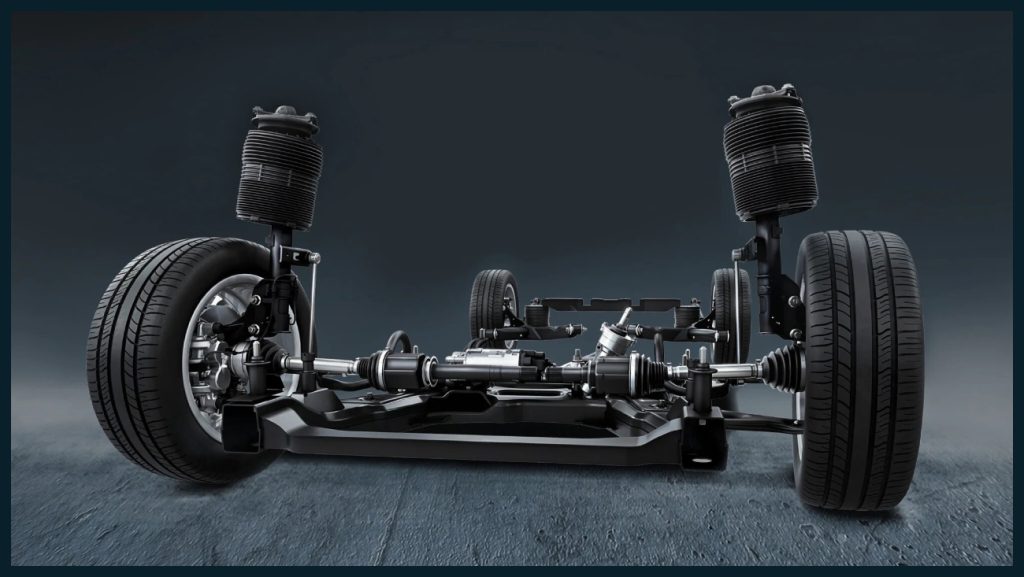
Air suspension can make a vehicle feel dramatically more refined. Instead of relying entirely on conventional steel springs, the system uses air springs along with compressors, valves, sensors, and electronic controls to maintain ride height and adjust suspension behavior.
Luxury SUVs and sedans often use this technology because it can provide a smoother ride while allowing the vehicle to raise or lower itself.
The problem appears when one component begins leaking, or the compressor struggles to maintain pressure. A small air leak may initially produce nothing more than a vehicle sitting lower after being parked overnight.
If the problem continues, the compressor may run excessively as it attempts to compensate, potentially turning a relatively small fault into a more expensive repair.
RepairPal’s current U.S. estimate puts air suspension system replacement at approximately $2,608 to $2,748 on average. The estimate includes labor and parts, but the final price varies substantially by vehicle and location.
The expense can become even more significant on premium vehicles because an air suspension system may use multiple electronically controlled components. A technician must determine whether the problem originates with an air spring, compressor, valve block, height sensor, air line, or another part of the system before replacement.
A vehicle that repeatedly sinks at one corner should not simply be topped up or driven indefinitely. That uneven stance can indicate an air leak, while compressor noise that occurs frequently can indicate that the system is working harder than intended.
Buyers shopping for used luxury vehicles should pay close attention to ride height after the vehicle has been parked for several hours. A professional inspection can also reveal cracked air springs, damaged lines, compressor problems, or stored suspension-related fault codes.
Air suspension itself is not necessarily unreliable. The financial risk comes from its complexity. A conventional suspension generally has fewer specialized components, while an air system combines mechanical, pneumatic, and electronic hardware. Once several parts age together, the repair bill can climb quickly.
4. Panoramic Sunroof
A panoramic sunroof can make a cabin feel significantly larger and brighter, but the feature also adds moving mechanisms, glass panels, seals, drains, motors, tracks, and electronic components that a conventional fixed roof does not need.
The financial problem is not necessarily the glass itself. Water leaks, broken mechanisms, damaged tracks, failed motors, deteriorated seals, or drainage problems can require substantial labor to diagnose and repair.
RepairPal’s U.S. estimates show that sunroof motor replacement can cost approximately $545 to $604, while the cost of repairing or replacing other components can vary considerably depending on the vehicle.
A panoramic roof can involve multiple moving sections, making the mechanism more complicated than a basic tilt-and-slide sunroof. If a track bends or a motor fails while the roof is partially open, additional components may be damaged during an attempted repair.
Water intrusion is another concern. Sunroof assemblies commonly use drainage channels designed to direct water away from the cabin.
If those drains become restricted, water can enter areas where it does not belong. Repairing the immediate leak may not be the end of the problem if moisture has reached carpeting, electrical connectors, control modules, or other interior components.
The warning signs are often easy to overlook. Wind noise, rattling, slow movement, uneven opening, water stains, damp carpeting, or unusual motor sounds deserve attention rather than being dismissed as normal aging.
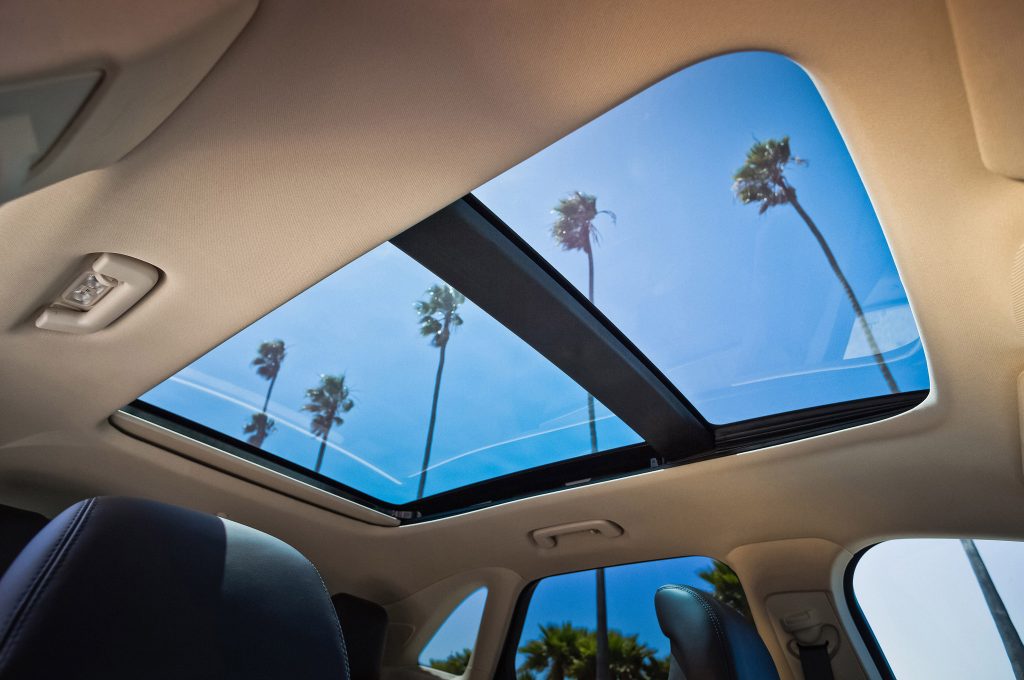
For used-car buyers, operating the complete sunroof is essential during an inspection. Open it, close it, tilt it if equipped, and check the surrounding headliner and interior for evidence of water intrusion.
The feature can be wonderful when everything works. But once seals, tracks, drains, and motors begin aging together, that impressive glass roof can become an expensive ownership feature rather than simply a luxury option.
5. Adaptive Air Suspension With Electronic Dampers
Some luxury vehicles take air suspension a step further by combining adjustable air springs with electronically controlled dampers. Instead of simply supporting the vehicle’s weight, the system can continuously alter ride height and damping characteristics according to road conditions, driving mode, vehicle load, or electronic inputs.
That sophistication is precisely what can make repairs expensive. A single suspension system may contain air springs, compressors, valve blocks, height sensors, electronically controlled shock absorbers, air lines, wiring, and control modules. A fault in one component can also cause other components to work harder than they should.
RepairPal’s U.S. estimates place shock absorber replacement at roughly $1,134 to $1,201 on average, although vehicles using electronically controlled or air-assisted suspension can have substantially different parts and labor costs. The final repair price depends heavily on the vehicle and the exact suspension configuration.
The more important point for owners is that a suspension warning should not automatically be treated as a failed shock absorber.
Electronic suspension systems can generate warnings because of height sensors, wiring faults, compressors, air leaks, control modules, or other components. Proper diagnosis is therefore critical before expensive parts are ordered.
A vehicle that becomes unusually harsh, leans to one side, sits at an incorrect height, or repeatedly displays suspension warnings deserves prompt attention. Leaving an air leak unresolved can force the compressor to operate more frequently, increasing stress on that component.
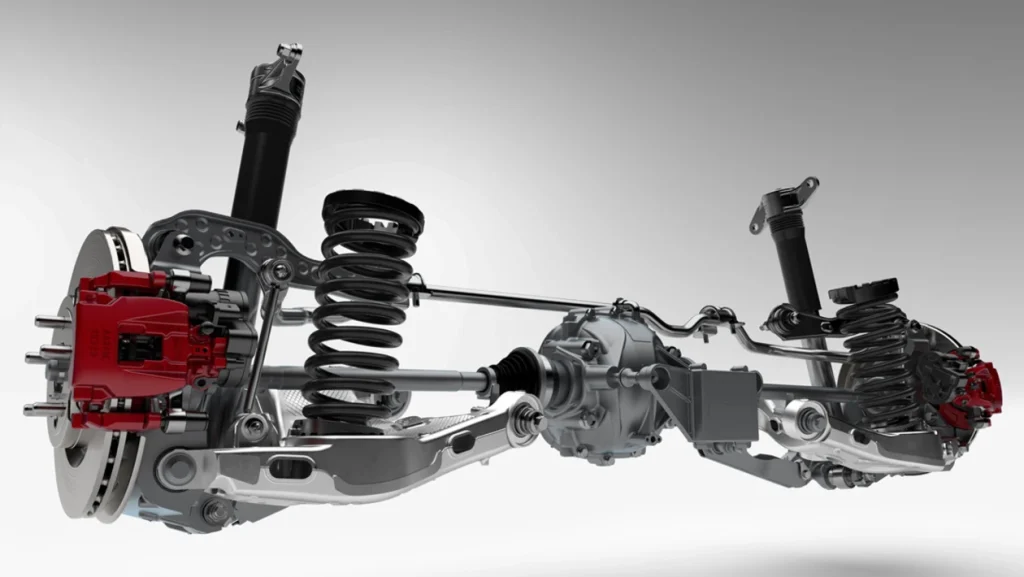
This feature is particularly important when purchasing an older luxury SUV or sedan. A smooth ride during a short test drive does not guarantee that the suspension system is healthy. The vehicle should be inspected after sitting, tested in different drive modes, and scanned for relevant fault codes.
Electronic dampers and air springs can provide an impressive driving experience, but they also create a network of specialized components. The potential expense comes from that complexity, especially when multiple aging parts begin developing problems at the same time.
6. Advanced LED and Matrix Headlights
Modern headlights can do far more than illuminate the road. Adaptive LED and matrix systems can automatically change beam patterns, steer light around curves, adjust intensity, and selectively dim portions of the beam. Some systems integrate cameras and electronic control modules to determine when and where light should be directed.
That technology is impressive, but it also means a damaged headlight assembly can cost substantially more than replacing a conventional bulb.
RepairPal’s U.S. estimates put headlight bulb replacement at roughly $131 to $160, but that figure does not represent the cost of replacing a complete advanced LED headlamp assembly.
Modern LED assemblies may contain integrated electronics, lighting modules, motors, cooling components, and other hardware that are not separately replaceable on every vehicle.
The distinction is important because a burned-out bulb on an older car is a completely different repair from a failed adaptive LED unit. Some newer vehicles use sealed assemblies rather than traditional replaceable bulbs, meaning a malfunction can require replacement of the complete housing or specialized electronic components.
Accident damage can make the bill even larger. A headlamp mounted near a front bumper corner can be damaged by a relatively minor collision, while the assembly may also need calibration after replacement if it incorporates adaptive lighting or sensors.
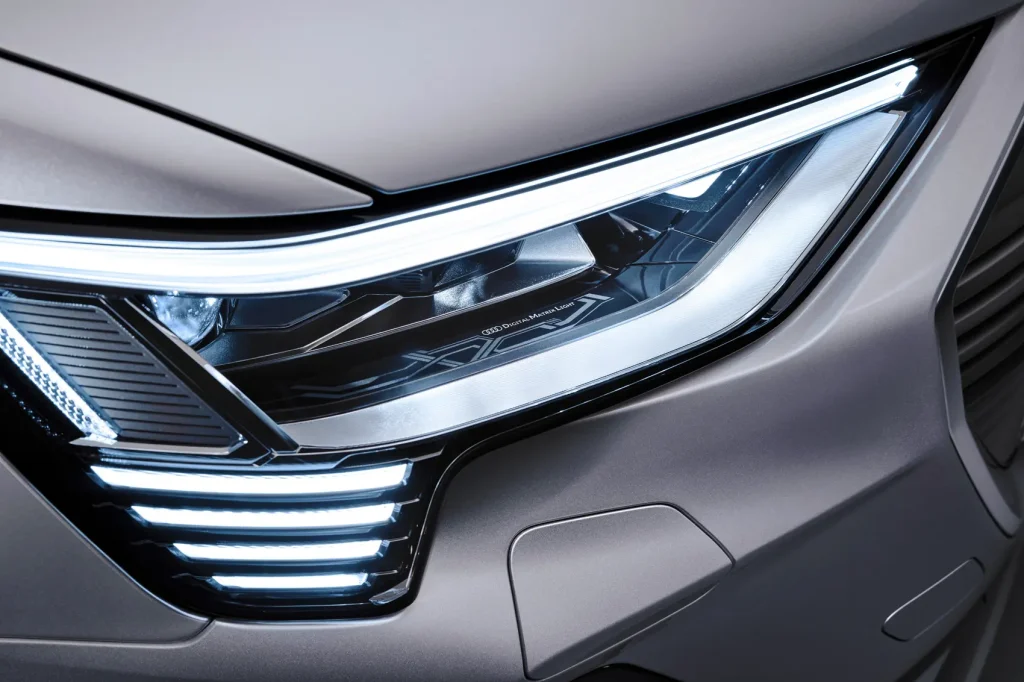
Used-car shoppers should test every lighting function before purchasing a vehicle with expensive adaptive headlights. Check low beams, high beams, automatic functions, cornering illumination, daytime running lights, turn signals, and any dashboard warnings.
The feature is valuable, but its replacement cost can be disproportionately high compared with the function of a traditional headlamp. That makes advanced lighting one of those options worth appreciating when it works and budgeting for when buying an older vehicle.
7. Power Liftgate
A power liftgate seems like a simple convenience feature until the motorized mechanism stops working. Instead of manually lifting a hatch or tailgate, the system uses electric motors, struts, latches, sensors, control modules, and switches to open and close the rear of the vehicle.
Because several components have to work together, the symptom “the liftgate will not open” does not identify the failed part. The problem could involve the latch, motor, actuator, wiring, control switch, sensor, or another electronic component.
RepairPal’s U.S. estimates show that power liftgate motor replacement can cost around $658 to $705, depending on the vehicle and location. That can already turn a minor convenience problem into a significant repair bill, particularly on a vehicle where the system uses multiple powered components.
There is also a mechanical side to the equation. A liftgate that becomes unusually slow, struggles near the top of its travel, reverses unexpectedly, or makes abnormal noises may be showing signs that a component is deteriorating. Continuing to force the system to operate can potentially increase the damage.
Owners should also pay attention to the vehicle’s battery condition. Low voltage can cause electronic systems to behave unpredictably, although a weak battery should not automatically be blamed for every liftgate malfunction.
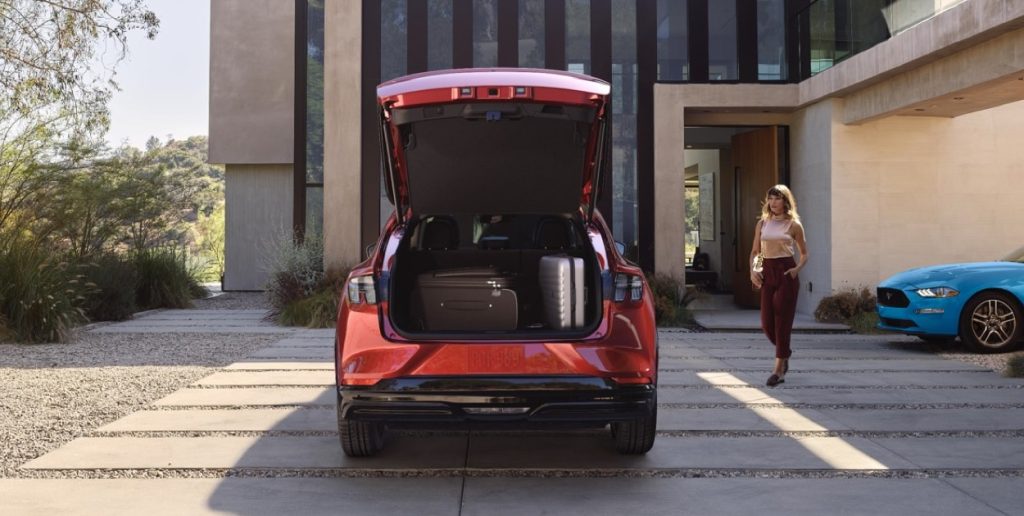
For used-car buyers, testing the liftgate several times is worthwhile. Use the exterior button, interior controls, key fob, and any hands-free opening feature if equipped. Watch for hesitation, uneven movement, unusual sounds, or warning messages.
A manual hatchback requires very little technology to operate. A power liftgate provides excellent convenience but introduces another motorized system that can fail. On an older vehicle, that convenience should be considered part of the ownership budget rather than treated as maintenance-free equipment.
8. Advanced Driver Assistance Cameras and Radar
Driver-assistance technology has become one of the most sophisticated features in modern vehicles. Adaptive cruise control, automatic emergency braking, lane-centering systems, blind-spot monitoring, and other functions can rely on cameras, radar sensors, ultrasonic sensors, electronic modules, and precise calibration.
The expensive part is not always replacing a sensor. Calibration after replacement or collision repair can add another layer of cost, particularly when the vehicle requires specialized equipment and procedures.
RepairPal’s U.S. estimate for radar sensor replacement currently ranges from about $1,127 to $1,210, although the actual cost varies significantly by vehicle and sensor location.
A minor front-end collision can therefore create a repair situation that goes beyond replacing a bumper cover. Radar sensors may sit behind the grille or bumper, while cameras can be mounted near the windshield or elsewhere around the vehicle. Even when a component appears physically intact, its alignment can be affected.
Windshield replacement is another consideration on vehicles with forward-facing cameras. If the camera is mounted behind the windshield, replacing the glass can require recalibration before driver-assistance functions can operate correctly.
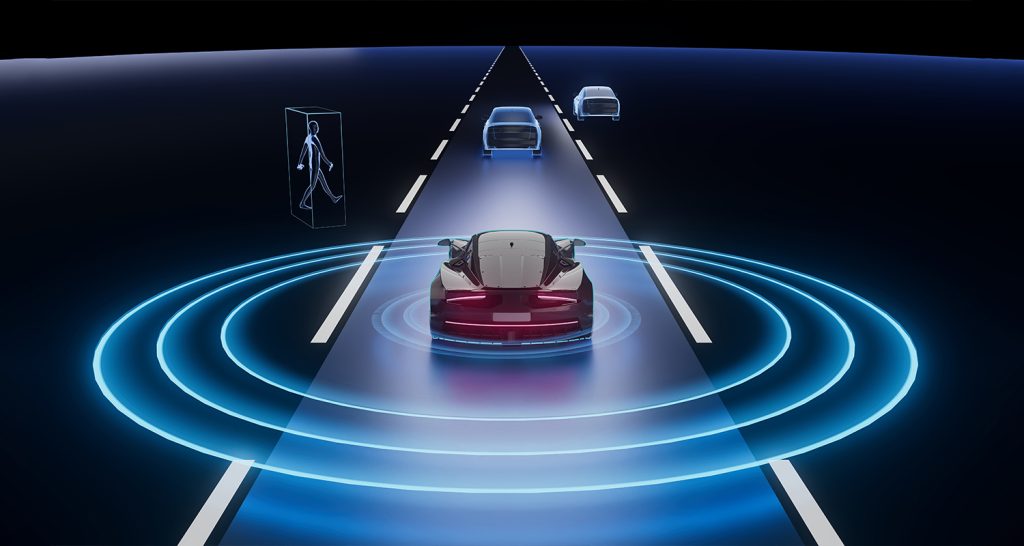
Owners should never assume that an intermittent warning means the entire system has failed. Dirt, snow, blocked sensors, damaged mounting points, wiring problems, calibration errors, or electronic faults can produce similar symptoms.
For a used vehicle equipped with extensive driver assistance, buyers should confirm that every system works and that no warning messages remain active. A professional inspection is especially valuable after a vehicle has been involved in an accident or windshield replacement.
These systems can make driving easier and safer when functioning correctly, but their repair requirements are considerably more complicated than those of traditional cruise control or parking sensors. The technology is valuable, yet it also creates another potentially expensive category of electronic hardware to maintain.
