
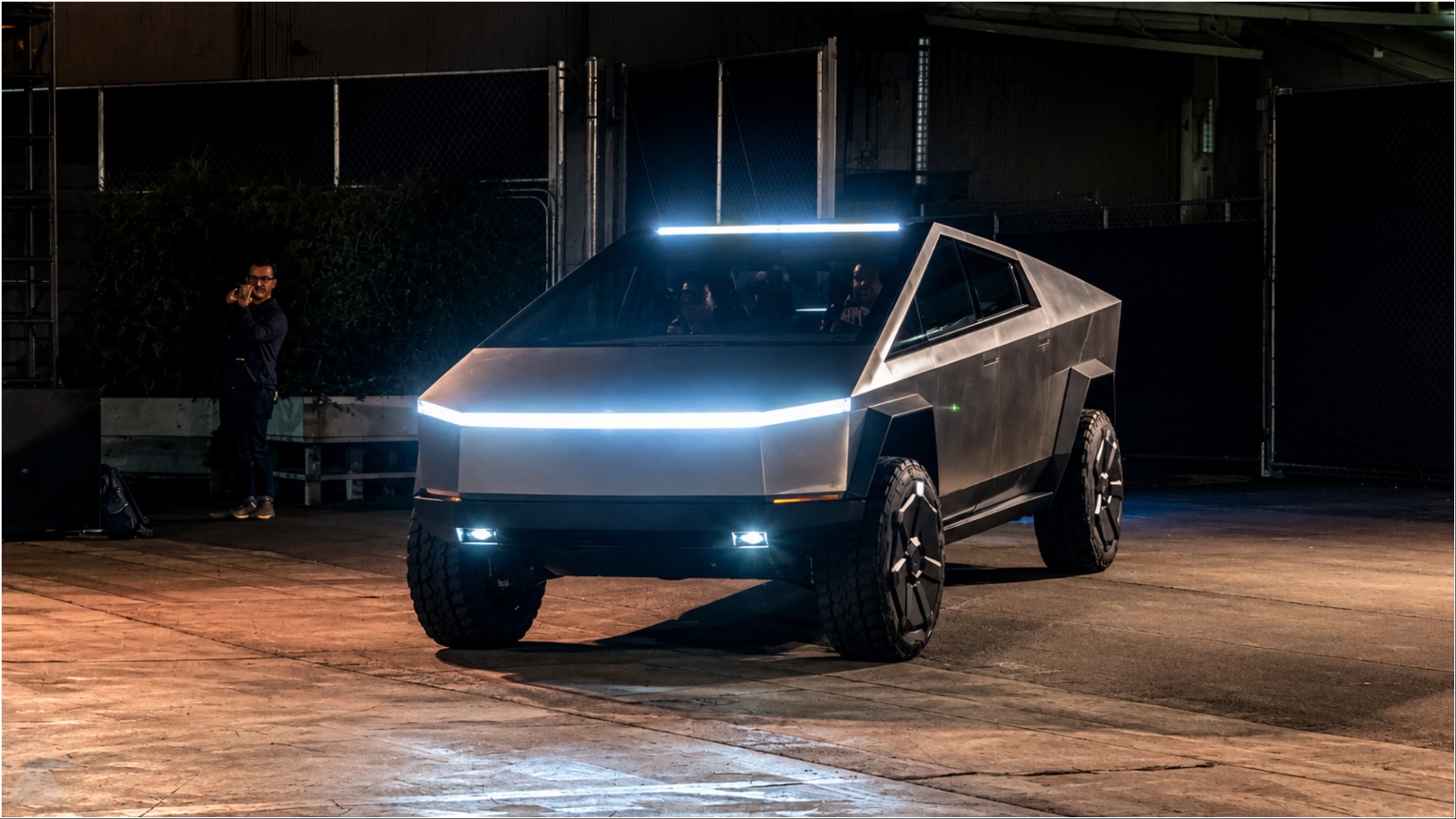
Remember all those jokes about the Cybertruck being a rolling safety hazard? Turns out the joke’s on the skeptics. The Insurance Institute for Highway Safety just handed Tesla’s angular steel truck its Top Safety Pick+ award, the highest rating the organization gives out, and it did so after Tesla fixed one of the truck’s most criticized flaws: headlights that used to blind other drivers on the road.
What used to earn a poor mark now earns a good one, and that single fix helped push the whole package over the line. Crash tests came back clean, pedestrian detection held up, and for the first time, a stainless-steel pickup that critics once dismissed as a design experiment is sitting at the top of the safety chart. Here’s what actually changed, and what it means if you’re shopping for one.
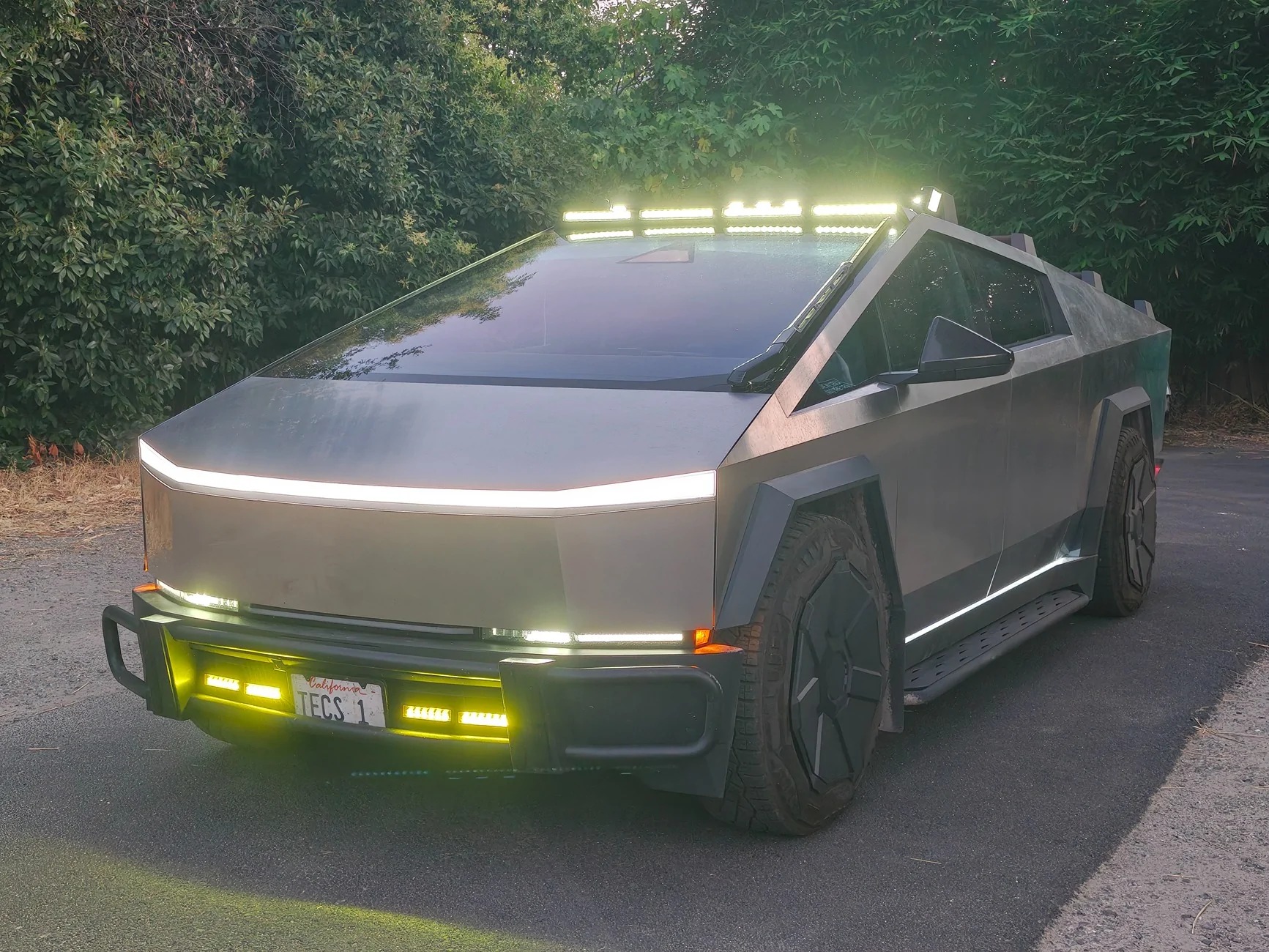
What The Top Safety Pick Plus Award Means
IIHS doesn’t hand out its top award casually. Top Safety Pick+ sits above the regular Top Safety Pick tier and requires a vehicle to score well across a long list of categories at once, not just one strong crash test result.
A truck needs good marks in structural crashworthiness, solid pedestrian crash avoidance technology, and headlights that actually meet the group’s visibility standards on every trim level sold.
Miss any one of those pieces and the badge stays out of reach, no matter how well the rest of the vehicle performs. That’s precisely why the Cybertruck’s earlier headlight problems mattered so much.
A vehicle can ace every crash test in the building and still get denied the top award over lighting that blinds oncoming drivers or fails to illuminate the road properly. The Cybertruck is now one of only two full-size pickups on the market to earn this distinction, and it’s the only one that pairs the badge with advanced driver assistance features through Tesla’s Full Self-Driving system.
For a vehicle that spent years fielding doubts about whether its sharp edges and unconventional build could even pass basic testing, landing at the top of the IIHS ranking is a genuine reversal of expectations.
Insurance companies pay attention to this rating too, which means the award could ripple into what owners actually pay to insure the truck going forward.
The Headlight Fix That Changed Everything
One area that deserves attention is the Cybertruck’s headlight performance, which was not always impressive. Earlier testing showed that the lighting system created too much glare for drivers approaching from the opposite direction.
Since the truck sits high above the road, its headlights could shine directly into another driver’s eyes, making it harder to see clearly for a moment. Tesla responded by making adjustments to the beam settings, cutoff angles, and automatic high beam system.
Those changes helped improve the headlight rating from poor to good, showing that the company took the problem seriously and worked to correct it. Proper headlights are useful for more than giving a vehicle a modern appearance.
They help drivers notice pedestrians, animals, cyclists, or stopped vehicles sooner when driving at night. Better visibility gives the driver more time to react safely. The improvement also benefits people approaching the truck.
Reducing excessive glare means other drivers are less likely to have their vision affected by bright headlights. This result matters because headlight performance has become an important part of vehicle safety testing.
Tesla’s decision to revise the Cybertruck’s lighting system shows how manufacturers can respond when testing identifies problems that may affect drivers and other road users.
Crash Test Scores That Impressed Engineers
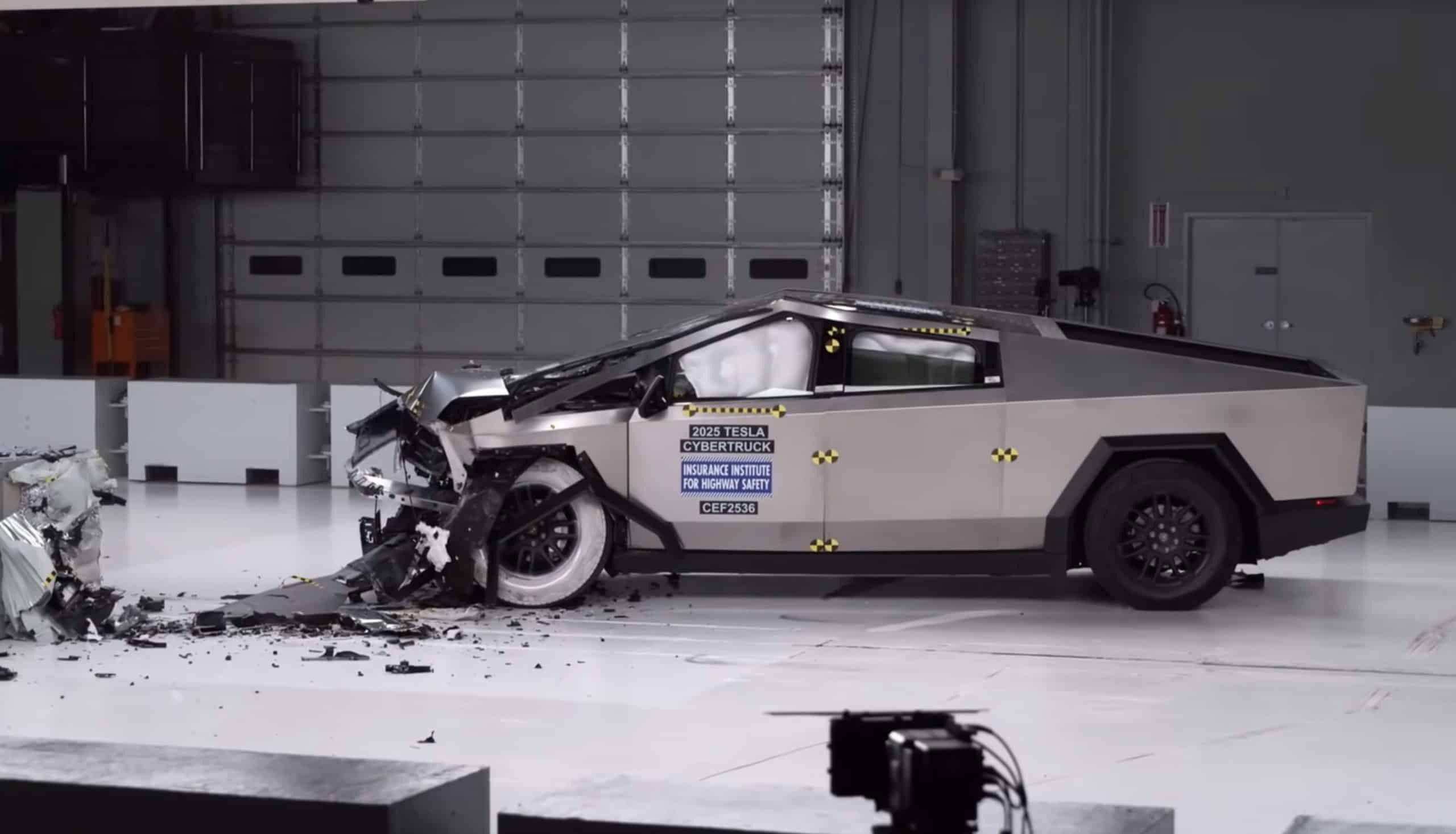
The Cybertruck received “Good” ratings, which is the highest grade given by IIHS, in three major crash tests: small overlap front, updated moderate overlap front, and updated side impact.
These tests form an important part of IIHS safety evaluations because they recreate serious collisions that can cause severe injuries. During the small overlap test, the driver’s head, neck, and pelvis all received good protection ratings.
Chest protection was rated acceptable, which is only one grade below the highest mark. This type of result gives engineers useful information for improving seatbelt tensioners, airbags, and other safety systems in future vehicles.
The truck’s passenger compartment also earned a good structural rating. The cabin maintained its shape during the crash and limited intrusion into the area occupied by the driver.
Tesla also made specific structural changes beneath the front section and around the footwell to improve performance in the updated moderate overlap test. That test takes place at 40 mph and places heavy demands on the vehicle’s structure.
Considering the Cybertruck’s size, weight, battery placement, and stainless steel body structure, strong crash results were not guaranteed. Its performance shows that a large electric pickup can provide solid protection when its structure and restraint systems work together effectively during a collision.
Only Trucks Built After April 2025 Qualify
Here’s the detail that trips people up: not every Cybertruck on a dealer lot carries this rating. IIHS specifically limits the Top Safety Pick+ designation to trucks built after April 2025, tied directly to the production changes Tesla made to the front underbody and footwell.
Two Cybertrucks parked side by side, identical in trim and color, could carry completely different safety ratings depending on which side of that build date they rolled off the line.
If you’re shopping used, or even checking a dealer’s current inventory, the badge on the window isn’t enough information on its own. Ask for the build date, not just the trim level or the model year.
This distinction matters beyond bragging rights, too. Insurance premiums and resale value can both be influenced by IIHS ratings, so a buyer who assumes every 2025 Cybertruck qualifies for the top award could end up disappointed, or overpaying, once the actual paperwork gets checked.
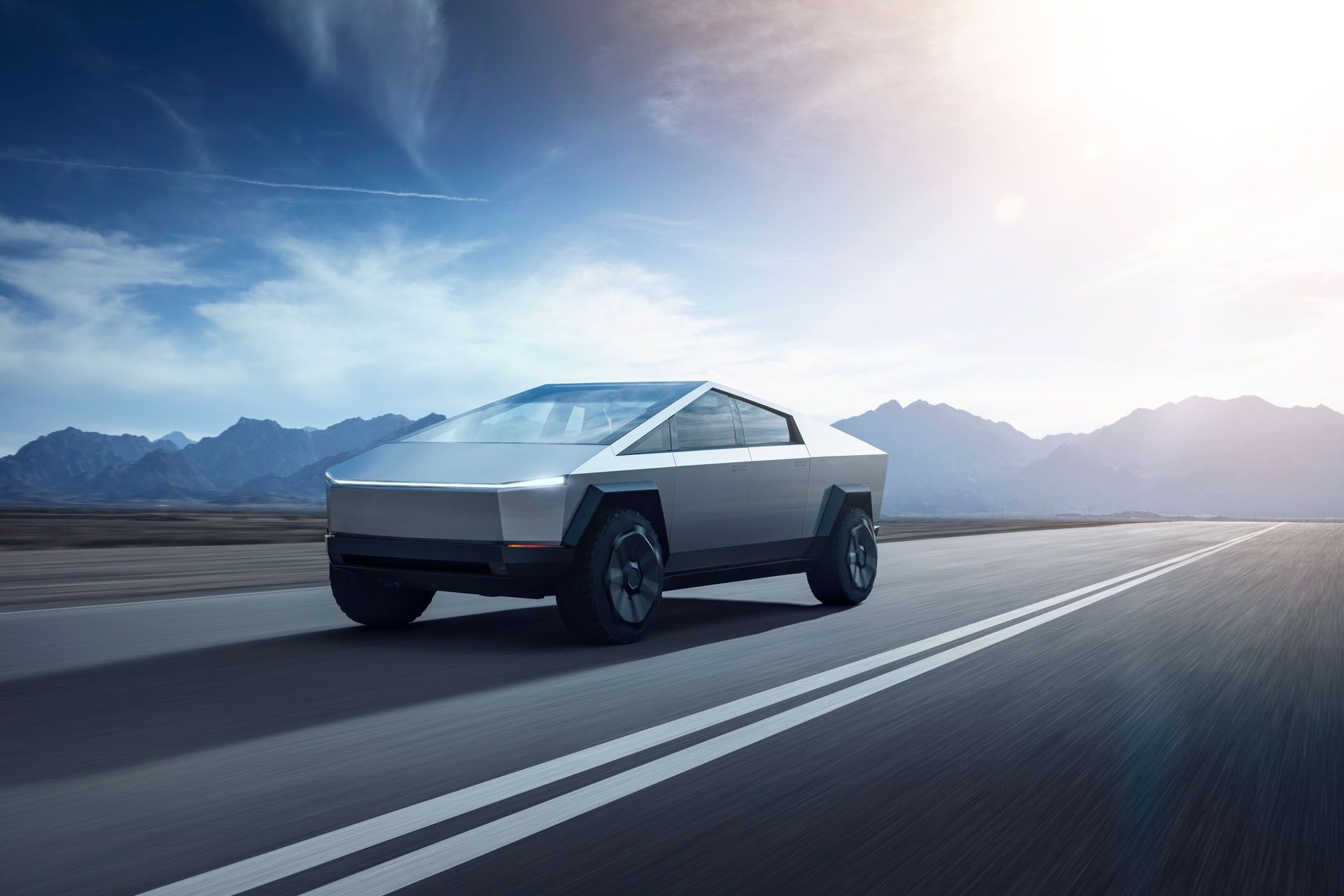
Why This Award Matters For Truck Buyers
Step back for a second, because the bigger picture here says something about the pickup segment as a whole. Full-size trucks have historically struggled to earn top IIHS honors.
Their height, weight, and traditional body-on-frame construction make managing crash energy genuinely difficult, and several well-known gas-powered trucks failed to qualify for either IIHS safety award this year due to weak side-impact or pedestrian protection scores.
The Cybertruck approached the problem from an entirely different angle, using a low center of gravity from its floor-mounted battery and a rigid steel exoskeleton to direct crash forces away from the cabin.
Paired with a five-star overall rating from NHTSA, the truck has quietly become one of the safer choices in its class, according to two separate government-adjacent safety organizations.
For buyers cross-shopping trucks purely on capability, price, or looks, this award adds a factor that’s easy to overlook until something goes wrong on the road.
Fixing the headlights wasn’t a minor tweak tacked onto a marketing announcement. It closed the one gap standing between a strong crash-test performer and the industry’s top safety distinction.
