
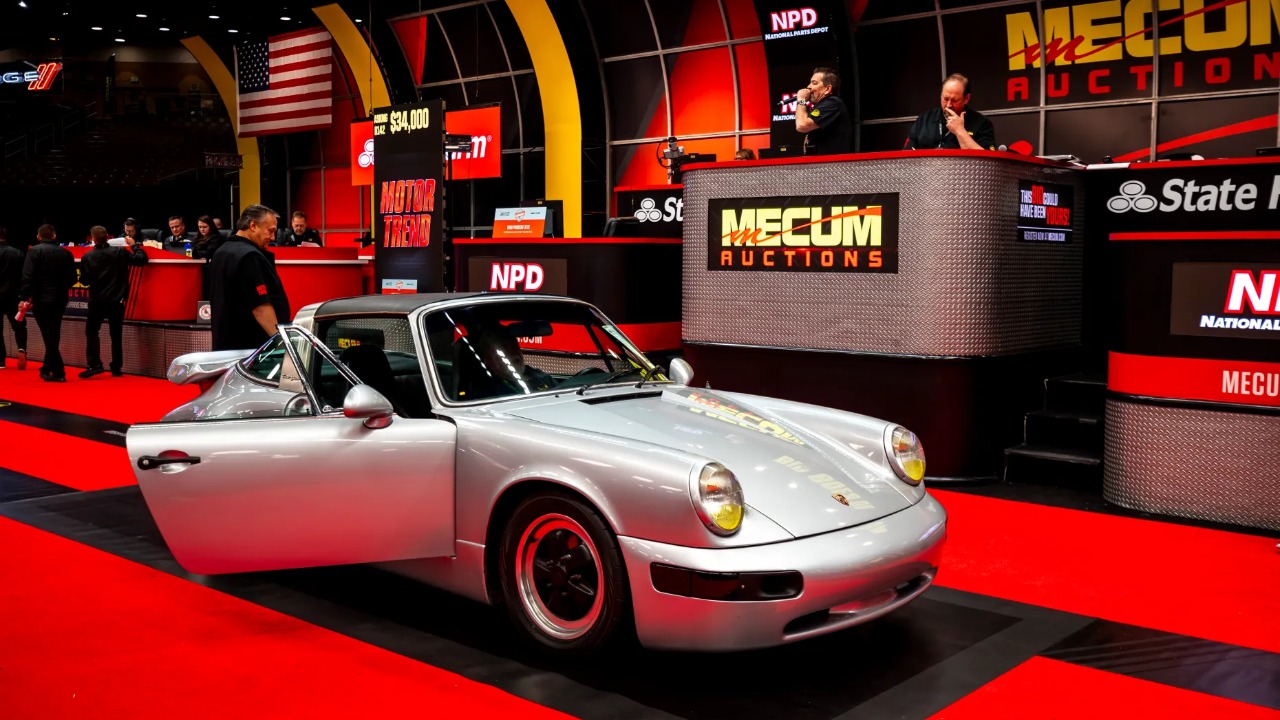
A car appearing at a wholesale auction can look like it has reached the end of the road. It may have been traded in, returned from a lease, retired from a rental fleet, recovered by an insurer, or simply taken off a dealer’s retail lot. Then it crosses the auction block and receives little or no bidding interest.
But an unsold auction car is rarely abandoned. In the wholesale automotive industry, a vehicle that fails to sell usually enters another stage of remarketing.
The seller may lower the reserve, move the vehicle to another auction, list it online, sell it directly to another dealer, or eventually place it with an exporter. Vehicles that are unattractive to American retail buyers can sometimes make economic sense in overseas markets.
Cox Automotive describes wholesale auctions as a largely unseen part of the used-car supply chain, where trade-ins, lease returns, retired rentals, fleet vehicles, and insurance vehicles are redistributed to buyers who may eventually retail them.
The important point is that “no sale” does not necessarily mean “worthless.” It often means the seller and the buyers have not yet agreed on a price.
The First Step: The Car Usually Goes Back Into Wholesale
At a traditional wholesale auction, many vehicles are sold with a reserve price. Manheim’s terms, for example, state that vehicles are generally sold with reserve unless announced otherwise, meaning the seller can establish a minimum acceptable price.
If bidding fails to reach that threshold, the auctioneer can record the vehicle as a no-sale. The car does not automatically become the property of the auction. It remains with the seller, subject to the auction’s procedures.
This distinction matters because auction companies generally function as marketplaces rather than buyers of every vehicle that passes through their facilities. The seller may be a franchise dealer, independent dealer, financial institution, rental company, manufacturer, fleet operator, or another commercial vehicle owner.
The next step is to look at the economics and determine where this particular vehicle is most likely to deliver the highest net return.
The seller might send it through the same auction again. It could receive a lower reserve after the owner realizes that the original pricing was too optimistic. A vehicle that missed its reserve by $500 or $1,000 may sell during a later run when a motivated buyer appears.
Another possibility is moving the vehicle into a digital wholesale marketplace. Online remarketing expands the potential buyer pool beyond the dealers physically attending one auction. Cox Automotive, for example, operates physical and digital wholesale marketplaces in Europe and emphasizes connecting sellers with relevant buyers through different channels.
The vehicle can also be transported to another auction where local demand is stronger. A pickup truck that attracts limited interest in one region could have considerably more value in another market.
Condition is another major factor. Auction vehicles carry disclosures that influence what buyers are willing to pay.
Manheim’s current arbitration system distinguishes between vehicles sold with different levels of guarantees and disclosures, including green, yellow, and red sale-light categories. Red generally indicates an as-is transaction with limited arbitration rights. That information can dramatically change the vehicle’s wholesale audience.
Why a Dealer Might Reject a Car That Still Has Value
Wholesale buyers are not necessarily looking for the cheapest vehicle. They are looking for the cheapest vehicle relative to its expected resale value and risk.
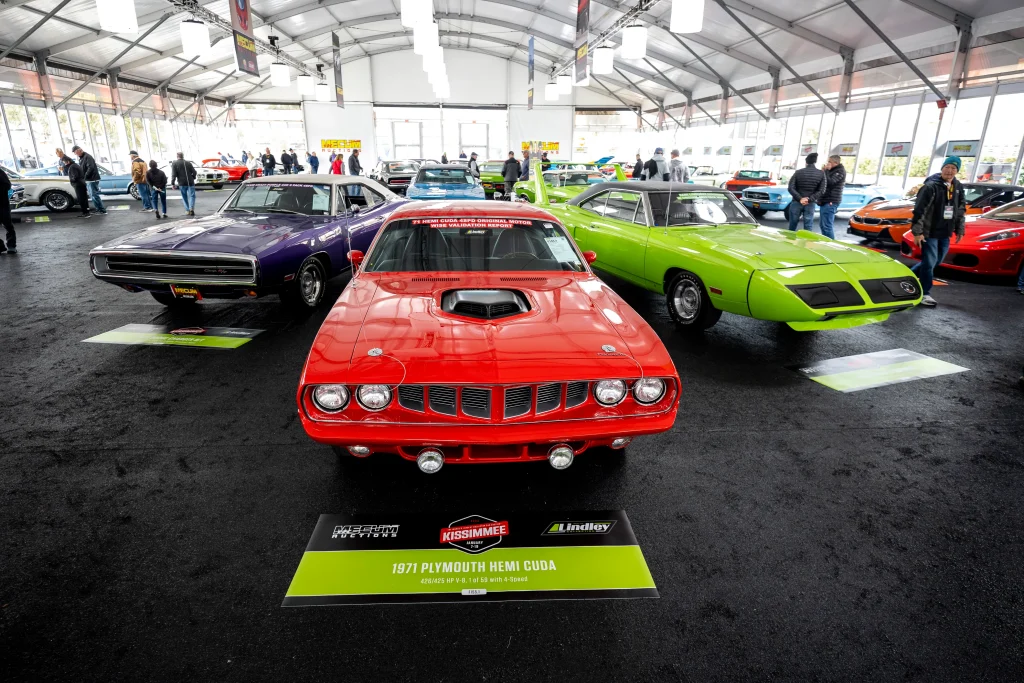
Suppose a dealer believes a vehicle could retail for $18,000 but expects $2,500 in mechanical and cosmetic work, transportation costs, auction fees, and warranty exposure. A $14,000 auction bid may not make financial sense.
An exporter, however, may have a completely different calculation. If the same vehicle has strong demand in another country, the exporter may be able to purchase it at a lower U.S. wholesale price and still make money after transportation, documentation, port charges, taxes, and overseas expenses. That is where the wholesale-to-export pipeline begins.
From Unsold Auction Car to Export Inventory
An exporter does not necessarily wait for a vehicle to become completely unwanted in the United States. Export buyers can actively purchase vehicles through wholesale auctions when they believe the car has a better market outside the country.
The process can happen through several channels. An exporter may bid directly at a dealer-only auction, purchase through an intermediary, or buy from a dealer that has already decided the vehicle is not worth retailing domestically.
Some exporters specialize in particular brands, vehicle types, or destination markets, allowing them to recognize demand that a conventional U.S. dealer may overlook.
For example, a vehicle with higher mileage may be difficult for a U.S. dealer to finance or retail competitively but still have a buyer overseas. The same can apply to older SUVs, pickups, luxury vehicles, or models with specifications that are particularly desirable in another country.
However, the vehicle must still pass the exporter’s financial test. The exporter has to account for the purchase price, auction fees, transportation from the auction to a yard or port, title processing, inland trucking, customs-related requirements, ocean freight, and destination costs.
Depending on the destination, local taxes, duties, registration requirements, and technical regulations can substantially alter the final economics. Documentation is particularly important.
The U.S. Department of Commerce’s International Trade Administration says vehicle exporters need documentation establishing lawful ownership, such as an appropriate certificate of title or qualifying documentation identifying the vehicle’s VIN. It also recommends using a customs broker or freight forwarder, particularly for first-time exporters.
The U.S. Census Bureau also requires additional information for qualifying used-vehicle exports through the Automated Export System. That information can include the VIN, vehicle title number, and state in which the title was issued.
There is an important timing requirement as well. U.S. Customs and Border Protection says export documents for used self-propelled vehicles must be submitted at least 72 hours before export, and Electronic Export Information must be filed through AES for used vehicles being exported to foreign countries.
That means an exporter cannot simply buy an unwanted auction car on Monday and throw it onto a ship Tuesday without handling the required paperwork.
After the purchase is completed, the vehicle usually passes through several stages before reaching its final market. It may move from the auction or seller to a transportation yard, then to an inspection or preparation facility, followed by the port and shipping vessel before arriving at the destination country for inland distribution.
The car may be shipped individually through an appropriate vehicle-shipping arrangement or consolidated with other vehicles, depending on the exporter’s operation and destination.
What Happens If Nobody Wants It Domestically or Overseas?
Export is only one possible destination. If repeated wholesale attempts fail, the seller can continue reducing the price until the vehicle attracts a buyer. A car might move between auction locations, enter a digital sale, or be sold directly to another wholesale operator.
Sometimes the problem is not the car itself but the economics. A vehicle can be mechanically sound yet difficult to sell because its mileage, age, configuration, history, or repair cost makes the expected margin too small.
Other vehicles take a different path. Cars with significant collision damage or insurance histories may enter salvage auctions rather than conventional wholesale channels. Some are purchased by rebuilders, dismantlers, or parts businesses.
A vehicle that has little value as a complete automobile can still have valuable engines, transmissions, electronics, body components, wheels, or other parts.
A less dramatic possibility is that the vehicle simply sits in inventory while the owner decides whether to change course.
Wholesale auctions are designed around repeated transactions. A failed sale is therefore better understood as one unsuccessful attempt to match a vehicle with a buyer, not a final judgment on the vehicle’s worth.
Even auction infrastructure reflects this continuing process. Manheim’s marketplace policies, for example, include procedures covering digital transactions, vehicle release, arbitration, and transactions that are unwound or canceled.
For vehicles that do eventually sell for export, the paperwork follows the car internationally. The Census Bureau notes that used self-propelled vehicles are specifically excluded from ordinary post departure filing treatment, reinforcing that these exports have distinct reporting requirements.
The result is a remarkably flexible supply chain. A vehicle can begin life as a new-car dealer trade-in, become wholesale inventory, fail to meet a reserve at one auction, appear in another digital marketplace, attract an exporter, and eventually leave the United States by ship.
Another vehicle may take the same initial path but end up with a domestic dealer, dismantler, or salvage buyer instead.
The key misconception is that an auction no-sale is the end of a vehicle’s commercial life. In reality, it can be the point at which the industry starts looking harder for the market where that vehicle makes the most financial sense.
For wholesalers, the question is not simply whether someone wanted the car at one auction on one day. It is whether another buyer, another region, or another country values the vehicle enough to justify the cost of moving it there.
That is why an apparently unwanted car can disappear from an American auction lot and later turn up thousands of miles away. The vehicle has not necessarily become more valuable. The market willing to pay for it has simply changed.
