
Some cars reach a strange point in their lives where their identity as vehicles matters less than the materials and parts inside them. A running example may struggle to attract buyers, while the same neglected car can still provide usable metal, aluminum, wiring, wheels, and a catalytic converter to a recycler.
That does not mean every example automatically pays more as scrap. Condition, location, weight, current scrap prices, and valuable components can completely change the calculation.
The cars below represent models where very low used values can make the scrap route financially sensible, particularly when major repairs would cost more than the vehicle is worth.
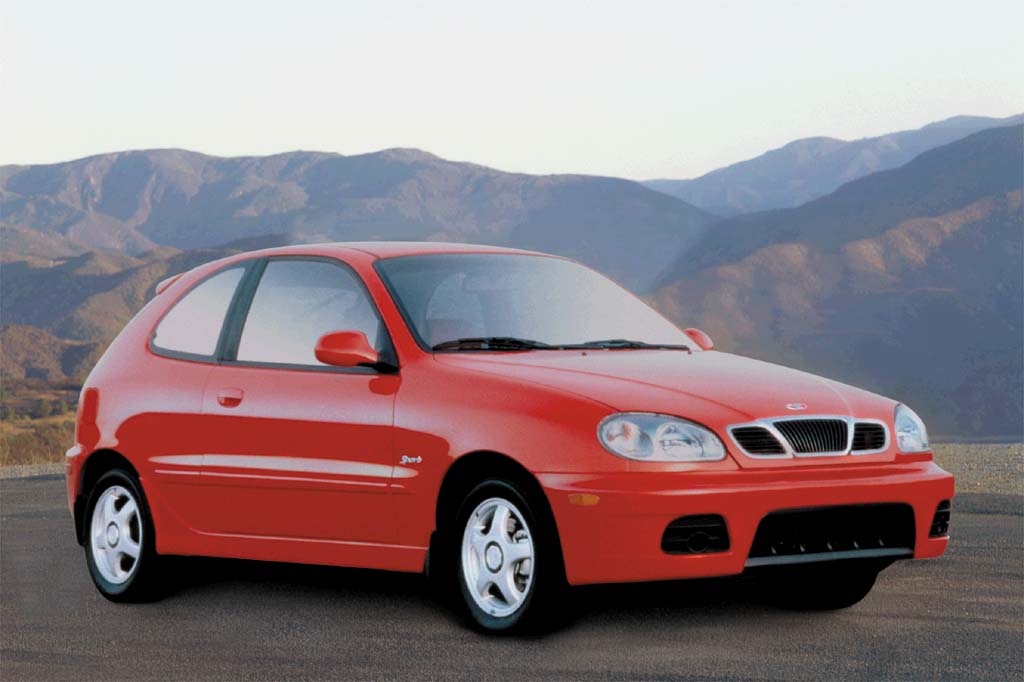
1. 1999 Daewoo Lanos
The Daewoo Lanos is one of the clearest examples of a car whose resale prospects can become difficult enough to make recycling attractive.
The 1999 model has virtually disappeared from the mainstream American used-car market, and Kelley Blue Book currently places its resale value at about $1,278, with an estimated trade-in value of only $486.
Those figures are national estimates and assume a vehicle in typical condition, so a neglected or non-running example can be worth substantially less.
That matters because the Lanos does not need to be worth nothing before scrap becomes a reasonable alternative. A vehicle with a failed transmission, severe rust, major electrical problems, or an expensive engine repair can quickly lose its economic appeal.
Spending several thousand dollars to restore a car with a limited buyer pool makes little financial sense when replacement vehicles are readily available.
The Lanos also carries some material value simply because it is a complete automobile. Edmunds lists the sedan at 2,522 pounds, giving recyclers a substantial amount of ferrous material to process.
Its 1.6-liter four-cylinder produces 105 horsepower and 106 lb-ft of torque, but mechanical condition determines whether that powertrain has meaningful resale value.
For an owner facing a major repair, the calculation is therefore different from someone selling a clean, running Lanos. If the car cannot reasonably be restored and its market value is already extremely low, a scrap yard or automotive recycler may offer a more practical exit.
The catalytic converter, aluminum components, wheels, battery, and other recoverable parts can add value beyond the basic weight of the vehicle.
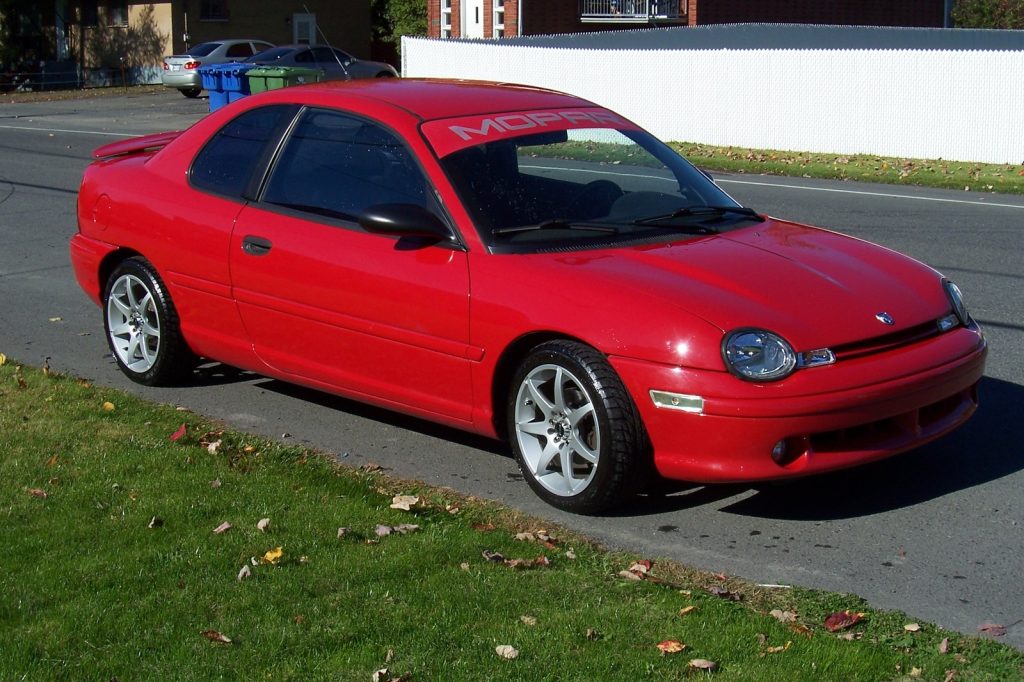
2. 1997 Plymouth Neon
The first-generation Plymouth Neon once competed as an affordable compact with surprisingly lively performance for its class. Decades later, its financial position is very different. Kelley Blue Book lists the 1997 Neon at approximately $1,073 in current resale value and just $416 in estimated trade-in value.
Those numbers help explain why a badly damaged or mechanically failed example can move quickly from used-car territory into recycling territory.
The Neon is particularly interesting because its low weight limits the raw scrap-metal payout compared with a large SUV or full-size sedan. Edmunds lists a typical 1997 Neon at about 2,459 pounds, with a 2.0-liter four-cylinder producing 132 horsepower and 129 lb-ft of torque.
The car’s 25 mpg city and 35 mpg highway EPA ratings were respectable for the period, but fuel economy no longer gives a decades-old, low-value example much financial advantage when repair bills become significant.
This is where the distinction between a functioning car and a failed one becomes important. A clean Neon with a healthy drivetrain may still have value to an enthusiast, collector of inexpensive classics, or buyer seeking basic transportation.
A neon requiring an engine, transmission, suspension work, body repairs, and extensive electrical troubleshooting is a different proposition.
The scrap decision becomes stronger when several costly problems arrive together. Its steel body, wheels, aluminum components, wiring, battery, and catalytic converter all contribute to the recycler’s calculation.
The exact payout depends on the yard and prevailing commodity prices, so it is impossible to guarantee that every Neon will bring more as scrap than it would as a car. For a severely deteriorated example with a market value near the trade-in figure, however, recycling can be the more rational financial choice.
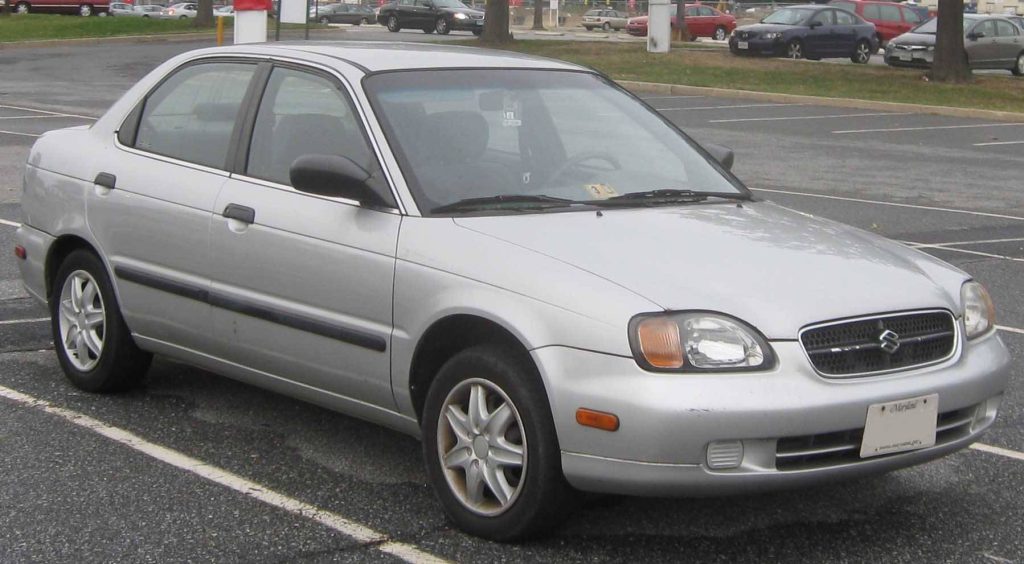
3. 1996 Suzuki Esteem
The Suzuki Esteem is the kind of forgotten compact that can become financially difficult to justify once serious mechanical problems appear.
Suzuki sold the Esteem in the United States as an inexpensive alternative to larger compact sedans, but its age and limited presence today make finding buyers for a damaged example considerably harder than it once was.
The important point is that scrap value is not determined simply by how desirable a car is. A recycler is primarily interested in the vehicle’s recoverable materials and components. That gives an old estate a second source of value even when its usefulness as transportation has largely disappeared.
A complete vehicle contains steel, aluminum, wiring, glass, wheels, a battery, and other recyclable materials. Depending on condition, the catalytic converter and reusable components can also affect the offer.
The Esteem was relatively light compared with modern vehicles, so its basic metal value should not be exaggerated. That is precisely why the decision needs to be based on the individual car rather than a universal scrap figure.
If an intact, running example can still find a buyer, selling it as a car will normally make more sense. The equation changes when the vehicle has a failed engine or transmission, extensive rust, collision damage, or several expensive problems at once.
Its modest specifications also illustrate why restoration is difficult to justify on a severely neglected example. The U.S.-market sedan used a 1.6-liter four-cylinder in lower trims, while the larger 1.8-liter engine was available in higher trims.
A major drivetrain repair can therefore represent a significant percentage of the vehicle’s actual market value.
For an owner holding onto a non-running Esteem, getting competing quotes from a used-parts buyer and a licensed recycler can reveal whether the remaining components are worth more than repairing the entire car.
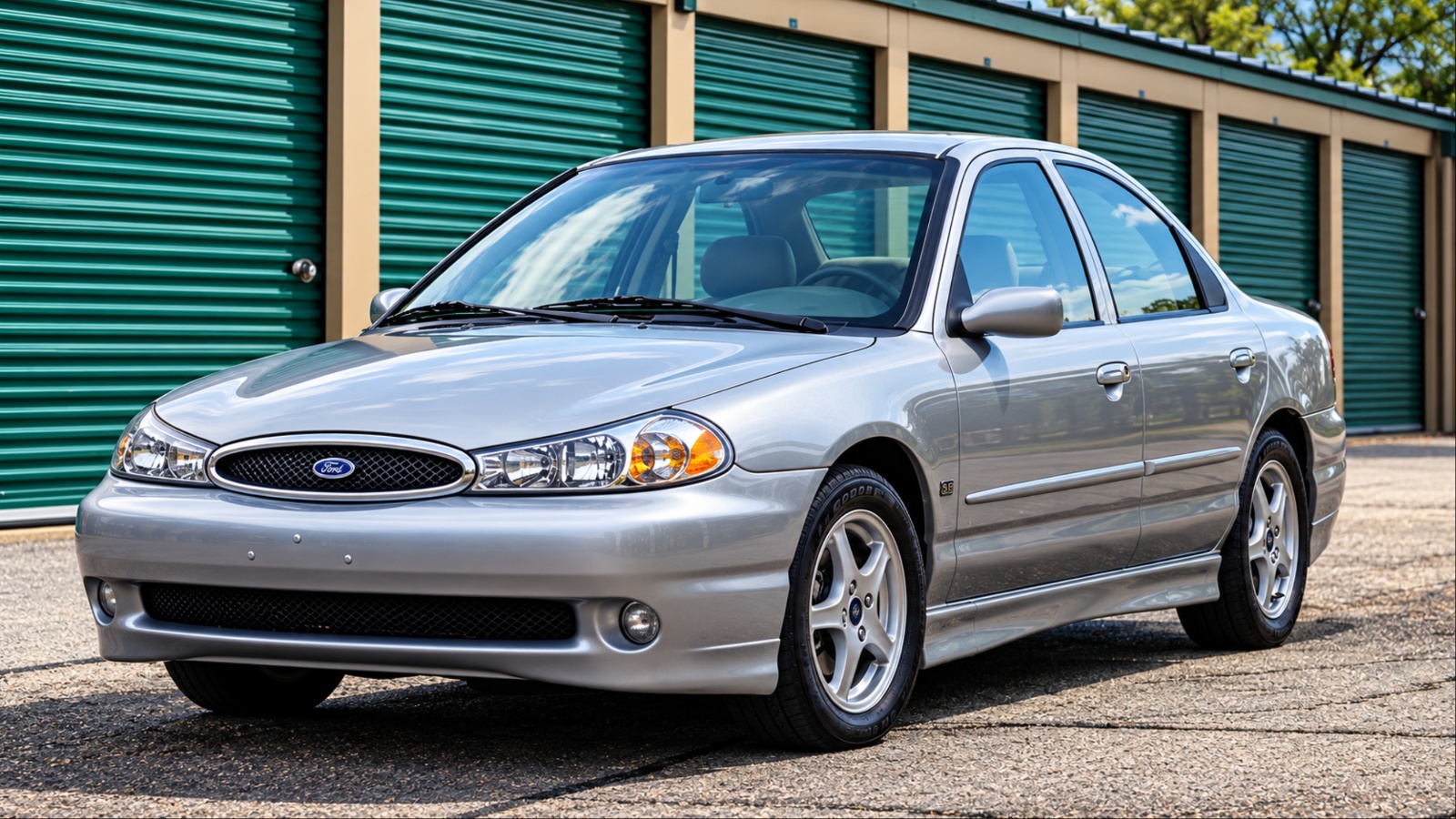
4. 1998 Ford Contour
The Ford Contour presents a different scrap-versus-car calculation because it was once a common American-market sedan but has become increasingly difficult to justify as a cheap used vehicle.
Based on the same principle that applies to many obsolete cars, its value depends heavily on whether someone actually wants the finished vehicle rather than simply the materials and components.
The Contour was sold with several engines, including a 2.0-liter four-cylinder and Ford’s 2.5-liter V6. The V6 gave the car considerably more performance than its basic commuter image suggested, but an aging drivetrain can become expensive when multiple systems begin requiring attention simultaneously.
Cooling-system problems, suspension wear, transmission issues, electrical faults, and rust can turn an inexpensive car into an uneconomical repair project.
That distinction is especially important with a car of this age. A running Contour in unusually clean condition may still appeal to someone looking for inexpensive transportation or to an enthusiast interested in an increasingly uncommon Ford.
A vehicle that has sat outside for years, cannot pass inspection, or needs major mechanical work is much harder to sell at a meaningful price.
There is also a practical advantage to recycling a complete Contour. The vehicle’s steel structure contributes to the scrap calculation, while aluminum components, wheels, wiring, and other recoverable materials can have separate value.
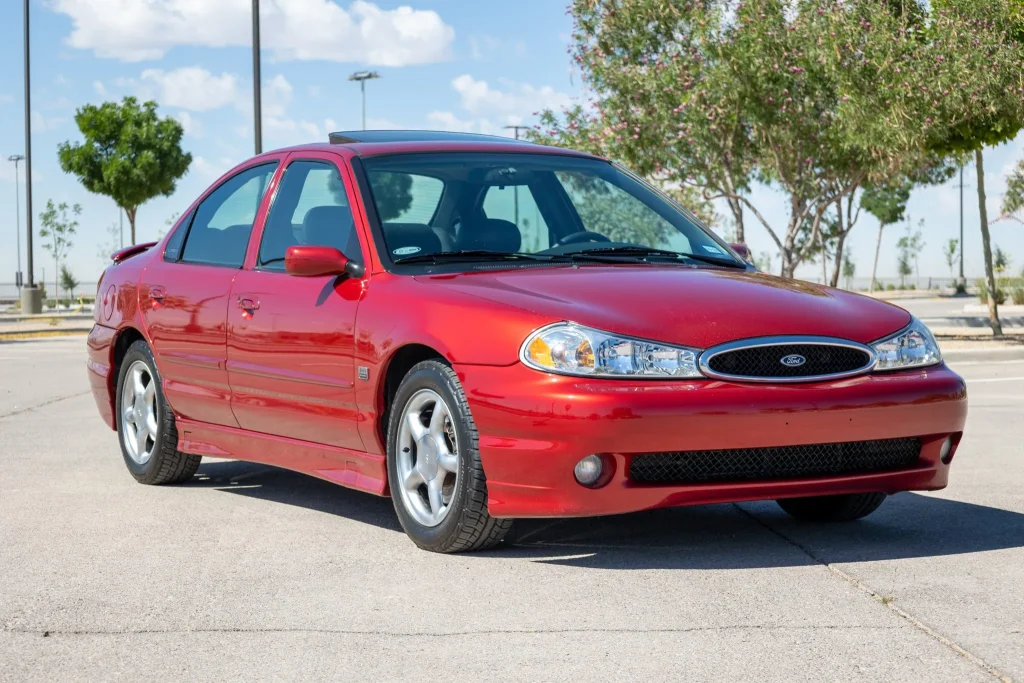
The catalytic converter can be particularly important, although its actual worth varies according to its specific configuration and current precious-metal prices.
The Contour, therefore, belongs on this list not because every example is automatically worth more in a scrapyard, but because its low resale prospects can make major repairs difficult to justify. If the repair estimate exceeds what comparable running examples sell for, dismantling or recycling the vehicle may become the financially sensible route.
5. 1999 Oldsmobile Alero
The 1999 Oldsmobile Alero has one advantage that many overlooked cars lack. Plenty of people still remember the model and recognize what it was. However, that familiarity has done little to give the Alero meaningful value in today’s market.
Kelley Blue Book currently places the 1999 Alero’s resale value at about $1,050 and its trade-in value at approximately $465. KBB notes that these figures vary according to condition, mileage, and location.
Edmunds gives a similar picture. Depending on trim and condition, its current appraisal figures can fall below $500 on the trade-in side for rough examples. A rough GX sedan, for instance, is listed at about $432 trade-in and $850 private-party value.
That creates an important threshold for owners facing major repairs. A transmission replacement or extensive engine work can easily consume more money than the entire vehicle is worth.
The Alero itself is not particularly small. Edmunds lists the sedan at 3,077 pounds, 186.7 inches long, and 70.1 inches wide. That gives a recycler considerably more physical material to work with than a tiny economy car.
The model was offered with a 2.4-liter four-cylinder making 150 horsepower and 155 lb-ft of torque, while the 3.4-liter V6 produced 170 horsepower and 200 lb-ft.
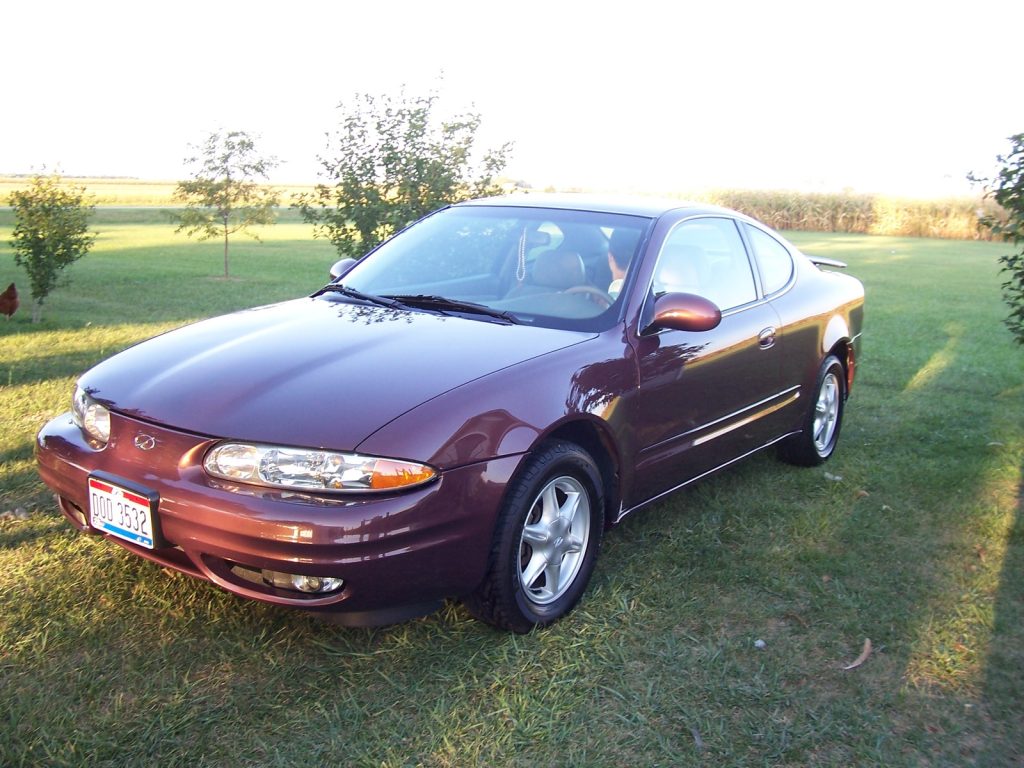
That combination makes the Alero an interesting borderline case. A clean, mechanically sound example should still be sold as a car. A badly rusted Alero with a dead drivetrain is another story. Its steel structure, aluminum components, wheels, wiring, battery, and catalytic converter all contribute to its recycling value.
The financial reality is straightforward. When the cost of repairing an Alero approaches or exceeds the price a working example could realistically command, spending more money on the car becomes increasingly difficult to justify.
6. 2000 Daewoo Nubira
Few cars make the scrap-versus-sale question as interesting as the Daewoo Nubira. The problem is not that the Nubira was an enormous failure when new. Its bigger issue today is rarity.
Daewoo’s departure from the American passenger-car market left owners with a vehicle that has become exceptionally difficult to support compared with more common compact cars.
Current valuation data shows just how little financial room there is. Kelley Blue Book lists a 2000 Nubira’s current resale value at about $1,130 and its trade-in value at approximately $442.
KBB’s figures are based on national averages and can vary substantially with condition, mileage, and location. Edmunds lists an estimated market value of $954 for a sedan in its current database.
That low valuation becomes particularly significant when the car develops a serious mechanical problem. A vehicle that needs an engine, transmission, or extensive suspension and electrical work may require an investment that makes little sense against its remaining market value.
Finding specialized parts or a buyer familiar with the model can also be more difficult than it would be with a Chevrolet, Ford, or Toyota of the same age.
The Nubira’s physical characteristics give recyclers something tangible to work with. Edmunds lists the sedan at 2,800 pounds, 177 inches long, and 66.9 inches wide. Its 2.0-liter four-cylinder produces 129 horsepower and 136 lb-ft of torque, with a five-speed manual transmission and front-wheel drive in the listed SE configuration.
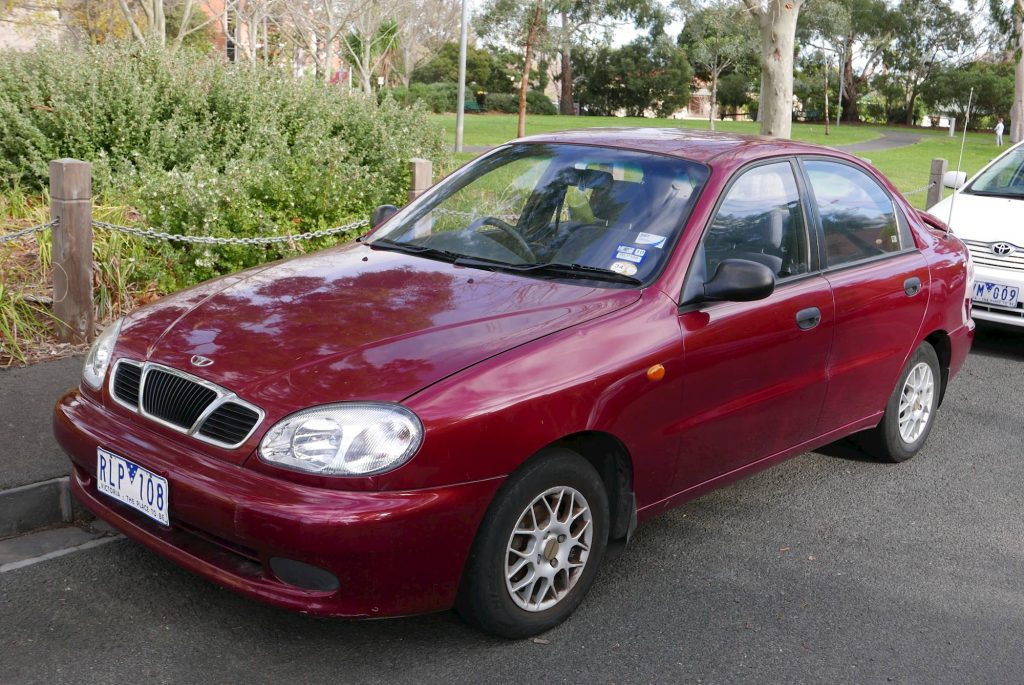
A running Nubira in unusually good condition could attract a niche buyer, making a private sale preferable. But a neglected example is a different proposition. Once repair costs, towing, storage, and parts availability enter the calculation, recycling can become more practical than putting additional money into an obscure 26-year-old sedan.
7. 2001 Daewoo Leganza
The Daewoo Leganza takes the scrap-versus-car argument a step further because even a functioning example has remarkably little financial headroom.
Kelley Blue Book’s current national data puts a 2001 Leganza’s estimated private-party value between about $925 and $1,250, while estimated trade-in value sits around $600 to $625 depending on body style and condition. KBB also makes clear that mileage, condition, and location can substantially change those figures.
That does not mean every Leganza should be crushed. A clean, running car can still be sold to someone who appreciates unusual vehicles or simply wants inexpensive transportation. The calculation changes dramatically when the car stops running.
Paying for a major drivetrain repair on a vehicle whose typical trade-in value is only around $600 can quickly become difficult to defend.
The American-market Leganza used a 2.2-liter four-cylinder producing 133 horsepower and 147 lb-ft of torque. It was offered with either a five-speed manual or four-speed automatic transmission.
The car was substantially larger than the tiny economy cars elsewhere on this list, giving a recycler a more substantial quantity of steel and other recoverable material.
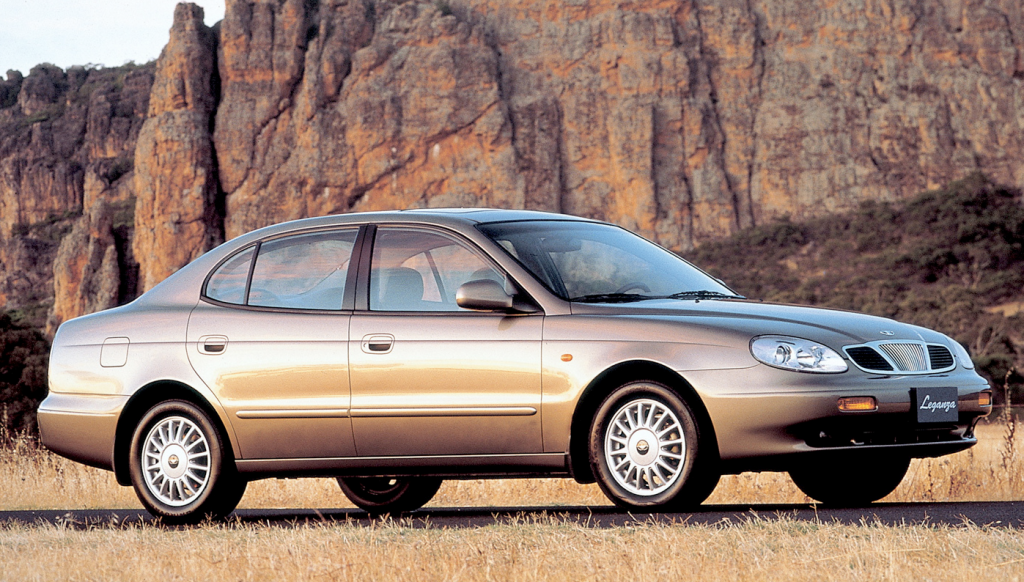
Its rarity can also work against the owner when parts or specialist assistance are required. Daewoo ended its North American passenger-car presence, leaving these cars far less common than contemporary Toyota, Honda, Ford, or Chevrolet models.
For a healthy Leganza, a private sale remains the better route. But when rust, drivetrain failure, collision damage, or multiple expensive faults reduce the vehicle to a non-running shell, its remaining material and component value can become more important than its identity as a used car.
8. 1999 Chrysler Cirrus
The Chrysler Cirrus is an interesting case because its low value does not necessarily come from being a tiny or insignificant vehicle. It was a mid-size sedan, and the model even received considerable praise when new. Decades later, however, its age changes the economics completely.
Kelley Blue Book currently puts the 1999 Cirrus at roughly $1,518 in resale value and about $607 in trade-in value. The exact figure varies by condition, trim, and location. Edmunds shows just how sharply condition can alter the calculation, with current trade-in estimates ranging from roughly $235 for a rough example to more than $2,000 for an outstanding one.
That spread is crucial. A well-maintained Cirrus with a good body and healthy drivetrain is not automatically a scrap candidate. A rough example, however, can reach the point where its market value is too low to justify substantial mechanical investment.
The Cirrus was built on Chrysler’s JA platform and measured roughly 186 inches long and 71 inches wide. Depending on configuration, buyers could get a 2.4-liter four-cylinder or a 2.5-liter V6. The platform was front-wheel drive and used a four-speed automatic in the Cirrus.
Its size gives recyclers more material than a lightweight subcompact, but the actual scrap payout remains dependent on local rates, vehicle completeness, and the value of individual components. A catalytic converter can add meaningful value, while aluminum, wheels, wiring, and other parts contribute to the recycler’s assessment.
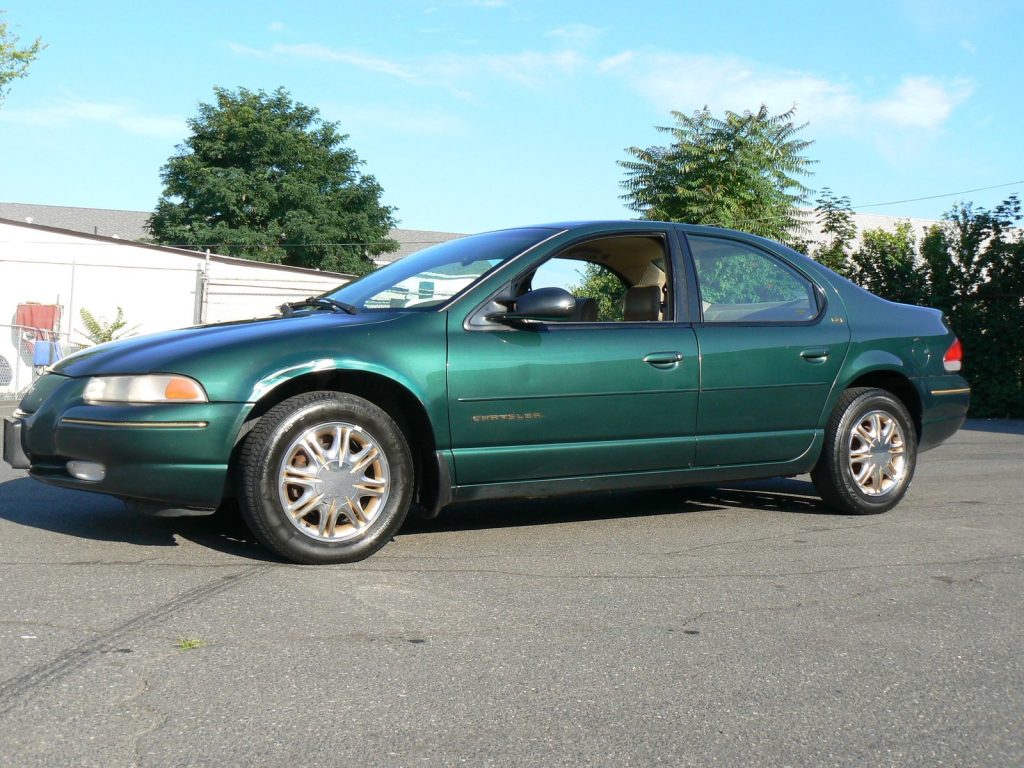
For an owner staring at a large repair bill, the key question is not simply whether the Cirrus can be repaired. It is whether the repaired car would be worth enough afterward to justify the expense. If the answer is no, selling the vehicle for parts or recycling it may make considerably more sense than continuing to invest in an aging sedan.
9. 1998 Saturn S-Series
The Saturn S-Series has a surprisingly strong argument for being recycled when a particularly rough example reaches the end of its useful life. It was once known for inexpensive ownership and practical transportation, but age has pushed many examples into a price range where even relatively ordinary repairs can become financially difficult.
Edmunds currently estimates the 1998 Saturn S-Series across a broad range of just $161 to $1,411, depending on body style and condition. For an SL sedan, the estimated private-party value ranges from only $246 for a rough example to $854 for one rated outstanding. The corresponding trade-in figures range from $161 to $527.
Those numbers make the condition of the individual car extremely important. A clean SL with a healthy engine can still be sold to someone looking for inexpensive transportation.
A rough car with substantial rust, a failed transmission, damaged suspension, or other expensive problems is much harder to justify repairing. Spending thousands of dollars on a vehicle potentially worth only a few hundred dollars afterward is rarely an attractive proposition.
The SL sedan weighed just 2,326 pounds, according to Edmunds, so its basic metal value is limited compared with heavier sedans and SUVs. Still, a complete vehicle contains steel, aluminum, wiring, wheels, a battery, and other recyclable materials.
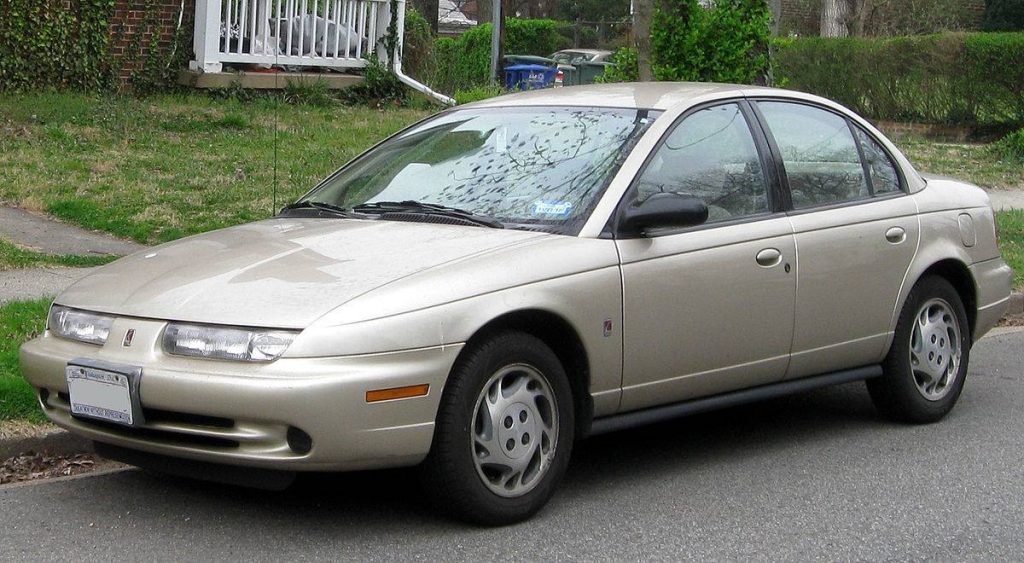
The catalytic converter can also contribute to a recycler’s offer, although its value varies with the specific component and market conditions.
The S-Series also belongs on this list because condition makes such a significant difference. A well-maintained example may still be worth keeping, while a severely neglected car can be more valuable as a source of usable parts and recyclable materials than as a restoration project.
10. 1999 Ford Escort
The Ford Escort is perhaps the least obscure name on this list, which makes its inclusion more interesting. Unlike several forgotten imports, the Escort was a familiar American compact sold in large numbers. Yet its age has pushed rough examples into a price range where selling the vehicle can become difficult.
Edmunds currently estimates 1999 Ford Escort values from $150 to $3,035 depending on body style and condition. For an LX sedan, a rough example has an estimated private-party value of only $483 and a trade-in value of $150. Even an average example is estimated at $1,150 private party and $359 trade-in.
That creates a very narrow financial window for a damaged escort. If the car runs well, selling it privately can still make sense. If it needs an engine, transmission, extensive bodywork, or several major repairs, the economics change quickly. Repairing a vehicle worth only several hundred dollars can easily cost more than the finished car would command.
The Escort’s 2,468-pound curb weight also gives recyclers a reasonable amount of material to process. Its steel body, aluminum components, wiring, wheels, and other recoverable materials all contribute to the vehicle’s end-of-life value.
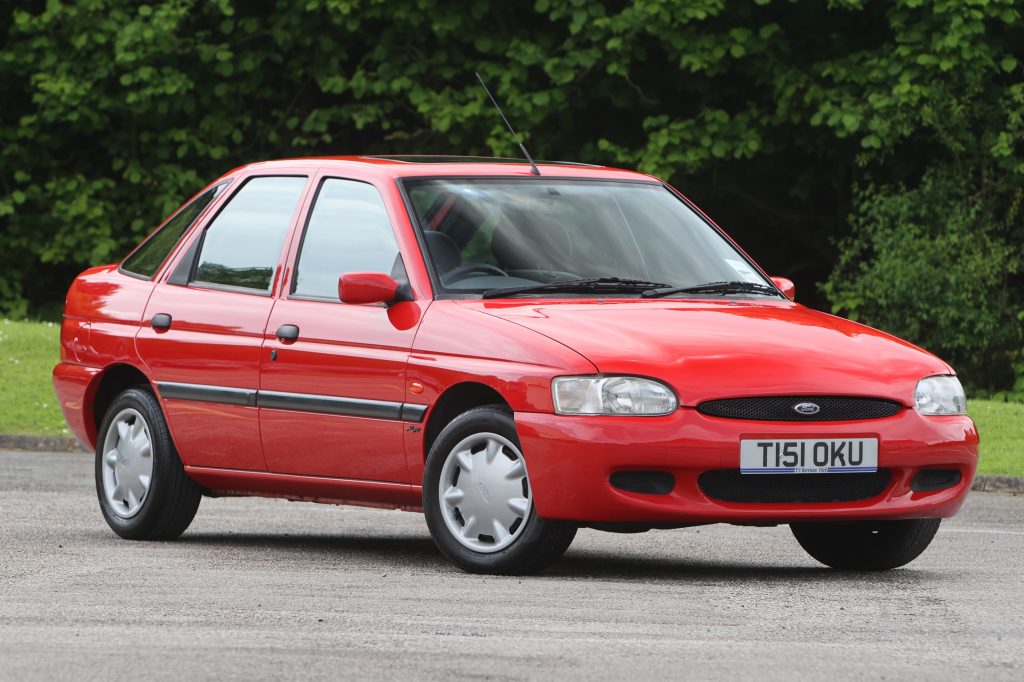
The catalytic converter can add another variable, although its exact value depends on the component and current recycling conditions.
Edmunds lists the standard 2.0-liter four-cylinder at 110 horsepower and 125 lb-ft of torque. The sedan measures 170.4 inches long and 67 inches wide.
The escort therefore earns the final position because its financial fate depends almost entirely on condition. A running survivor remains a usable car. A rough example valued at only a few hundred dollars may be better suited to parts recovery and recycling than another expensive repair.
