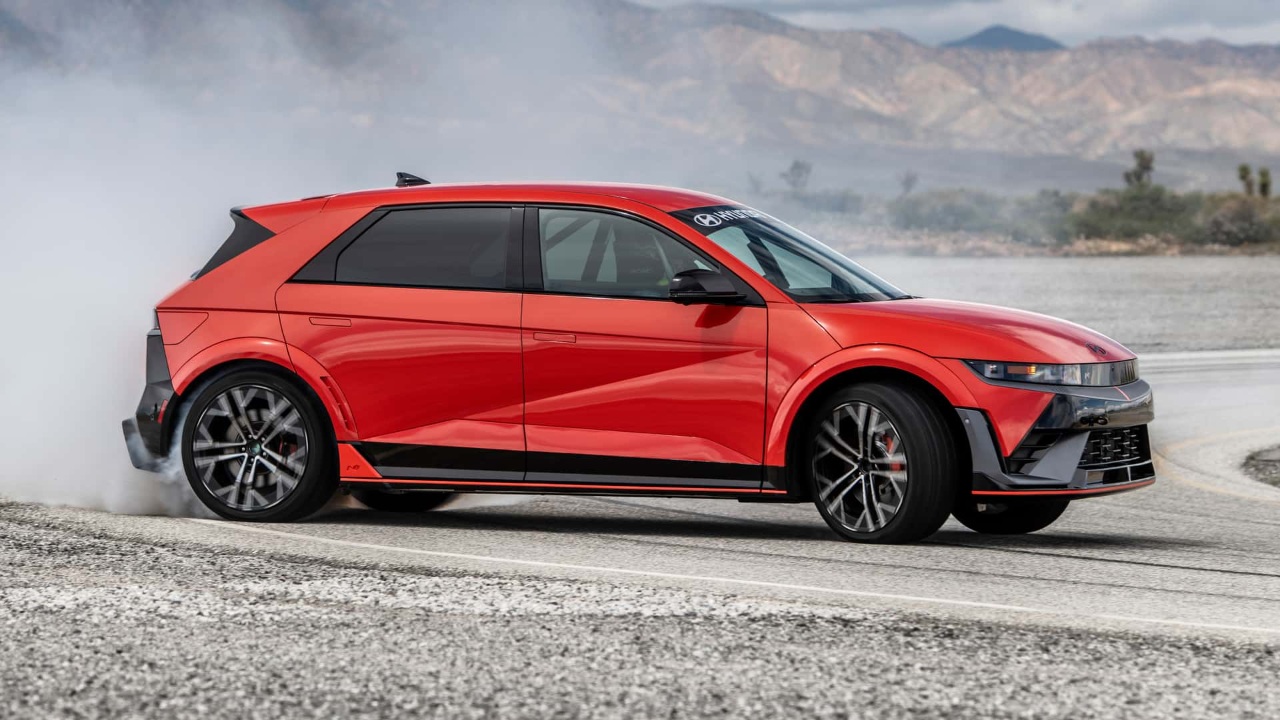
Hyundai is preparing one of the biggest expansions in the history of its N performance division, with the company planning to significantly increase both the number of models and the number of customers it reaches by the end of the decade.
The strategy will take N beyond its current small group of enthusiast-focused cars and into a much broader performance portfolio.
According to Hyundai’s 2026 CEO Investor Day announcement, the company wants its high-performance N lineup to reach 100,000 annual sales by 2030. Hyundai currently sells around 20,000 N vehicles annually, meaning the target represents roughly a fivefold increase in volume.
The company is also planning a new high-volume performance tier positioned between its existing N Line products and full N models.
Road & Track reports that Hyundai plans to expand the N range to seven models, with rear-wheel-drive and all-wheel-drive vehicles joining the existing front-wheel-drive and electric performance products.
The strategy is designed to make N a much more significant part of Hyundai’s global product lineup rather than a niche division focused primarily on enthusiast buyers.
The expansion comes as Hyundai is pursuing a much broader global product offensive. The company plans to launch or refresh more than 100 vehicles worldwide by 2030, allowing N to use a much wider selection of Hyundai platforms and powertrains.
From Ioniq 6 N to a Broader Performance Family
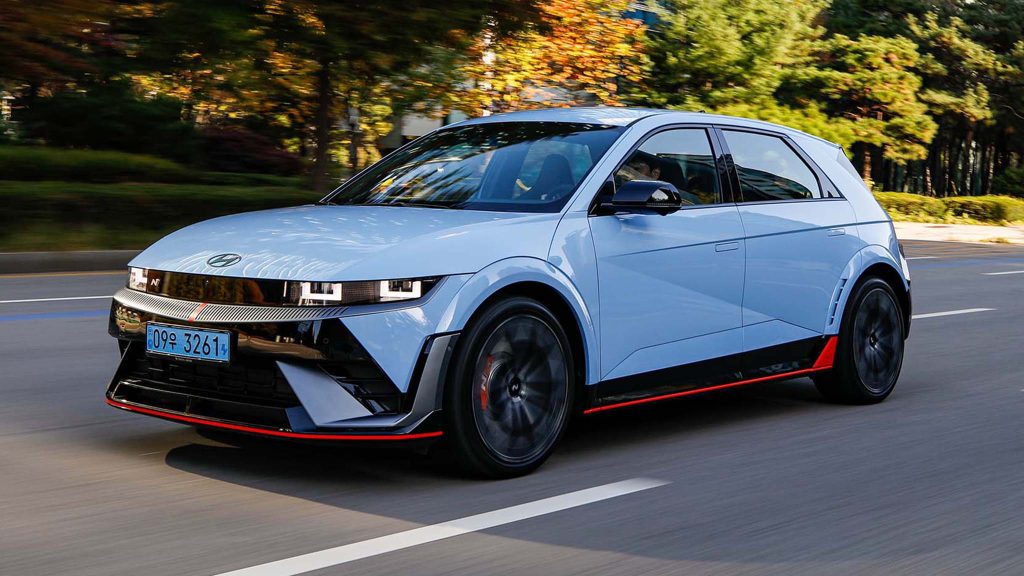
Hyundai’s current N lineup remains relatively small, but that is about to change. The company has already confirmed the Ioniq 6 N, which will become the second fully electric N model after the Ioniq 5 N.
The Ioniq 6 N is particularly important because it expands Hyundai’s performance strategy into a sleek electric sedan rather than another crossover or hatchback. Hyundai has said the model will use technology developed through its electric performance programs, including advanced thermal management and N-specific driving technologies.
Road & Track reports that Hyundai has also hinted at potential N versions of vehicles such as the Kona and Tucson, although the company has not confirmed final model names for the entire seven-model lineup. The future range is expected to include different body styles and drivetrain configurations rather than seven variations of essentially the same type of vehicle.
Auto Express provides more insight into the direction of the program, reporting that Hyundai is developing a new rear-wheel-drive high-performance flagship.
The publication says the wider N expansion will cover seven models across four technical layouts, suggesting that Hyundai is deliberately moving beyond its traditional front-wheel-drive performance cars.
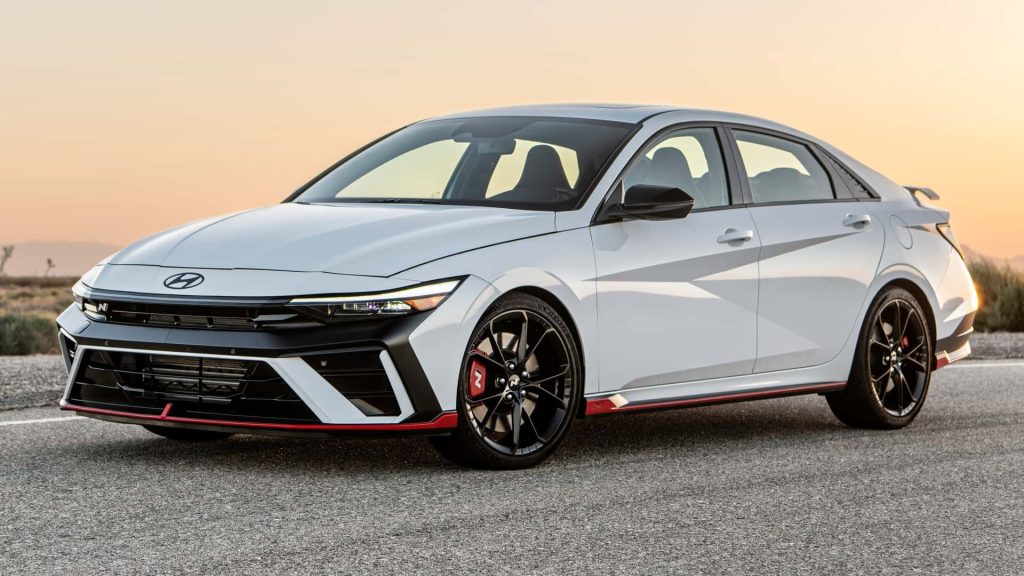
That would be a major change for the brand. The current Elantra N and earlier N models such as the Veloster N built their reputations around relatively lightweight front-wheel-drive platforms. Adding rear-wheel-drive and all-wheel-drive vehicles would allow Hyundai to compete in substantially different performance categories.
It would also give engineers greater freedom in how they approach power delivery. All-wheel drive is particularly useful for high-output electric and turbocharged vehicles, where instant torque can quickly overwhelm a front axle. Rear-wheel drive, meanwhile, could give a future flagship a more traditional sports-car character.
Hyundai has not yet released complete technical specifications for those future models, so claims about specific engines, horsepower figures or launch dates should be treated as projections rather than confirmed production details.
The company’s official strategy is clearer at a higher level: N is being expanded across more vehicle types while Hyundai attempts to make performance technology accessible to a much larger customer base.
A New Performance Tier Could Drive Volume
The most commercially important part of Hyundai’s plan may not actually be the seven full N models. Instead, the company is creating a new high-volume performance tier designed to sit between N Line and the more extreme N models.
The distinction is important because Hyundai already has a significant customer base for N Line products. According to Autoblog, N Line models generated around 161,000 sales in 2025, compared with roughly 20,000 sales for full N vehicles.
Hyundai therefore sees a large potential customer base between buyers who primarily want sporty styling and those willing to purchase a dedicated high-performance vehicle.
The new tier is intended to provide what Hyundai describes as a more everyday high-performance experience.
Instead of developing unique powertrains and hardware for every model, the company can use existing N components and carryover powertrains to create vehicles that offer stronger performance without the cost and compromises associated with full N models. That could make the new products easier to sell at higher volumes.
Auto Express describes the new category as a bridge between the appearance-focused N Line range and the full N models, while Road & Track says Hyundai wants to offer customers enhanced performance without requiring them to move into the more aggressive territory occupied by cars such as the Ioniq 5 N and Elantra N.
This strategy makes sense from a business perspective. A 100,000-unit annual sales target would be difficult to achieve if Hyundai relied exclusively on expensive, specialized performance vehicles.
By introducing a broader middle tier, the company can potentially increase the number of customers who interact with N technology while retaining the full N models as halo products.
It also gives Hyundai a way to adapt the N brand to different markets. The company says the high-performance lineup will operate globally, with varying levels of localization depending on regional demand. That means not every future N model is guaranteed to reach every market.
Hyundai’s broader corporate strategy should also provide the N division with more opportunities. The automaker plans more than 100 global launches and refreshes through 2030, including 58 in North America, 49 in Korea, 41 in Europe, 26 in India, and 22 in China. That enormous product pipeline gives N access to a much wider range of potential vehicles.
Hyundai Wants N to Become a Global Growth Engine
The ambitious sales target reflects a broader change in how Hyundai views performance vehicles. N is no longer being treated simply as a small enthusiast program.
Hyundai now sees performance as a way to strengthen its brand identity while creating additional opportunities across combustion, hybrid, and electric vehicles.
The company is simultaneously increasing its electrified lineup, with Hyundai targeting electrified vehicles to represent 60% of its global sales by 2030, compared with 23% in 2025. That makes the development of electric N models particularly important to the division’s future.
The Ioniq 6 N demonstrates that electrification does not necessarily mean Hyundai intends to abandon the driving characteristics associated with N. The Ioniq 5 N already established the brand’s ability to build an electric vehicle around performance, driver feedback and track capability rather than efficiency alone.
Future N models could therefore use different technologies depending on the segment. Electric powertrains may dominate some products, while turbocharged engines and hybrid systems could remain relevant where customers and regulations make them appropriate.
The potential rear-wheel-drive flagship could be especially significant because it would establish N as a competitor to performance cars from more established premium brands.
Until now, Hyundai’s performance identity has largely been built around affordable vehicles that deliver strong performance for their price. A higher-positioned flagship could push the brand into a different category.
Yet Hyundai is clearly not abandoning affordability. The new high-volume performance tier is designed specifically to expand N’s reach beyond traditional enthusiasts.
Reaching 100,000 annual sales by 2030 will still be a substantial challenge. Hyundai would need to increase N sales roughly fivefold from current levels while convincing buyers that performance variants deserve a premium over conventional models.
The company’s advantage is that it already has a large global customer base and an extensive product portfolio from which to develop performance derivatives.
If Hyundai can combine existing components with distinctive N tuning and technology, it can potentially create more performance models without taking on the enormous development costs of entirely bespoke vehicles.
The result could be a very different N division by the end of the decade. Instead of a handful of specialized cars, Hyundai could offer performance-oriented models across hatchbacks, sedans, SUVs, electric vehicles and rear-wheel-drive sports cars.
The seven-model expansion therefore represents more than an increase in the number of N badges. Hyundai is attempting to turn N into a genuine global performance brand, supported by a new middle tier designed for everyday buyers and a broader mix of drivetrains.
If the strategy works, the N badge could become far more common on Hyundai vehicles by 2030. The challenge will be maintaining the character and credibility that made the existing N models popular while expanding into much higher sales volumes.
With a target of 100,000 annual vehicles, Hyundai is betting that performance can become not just an enthusiast niche but a meaningful part of its mainstream global business.