
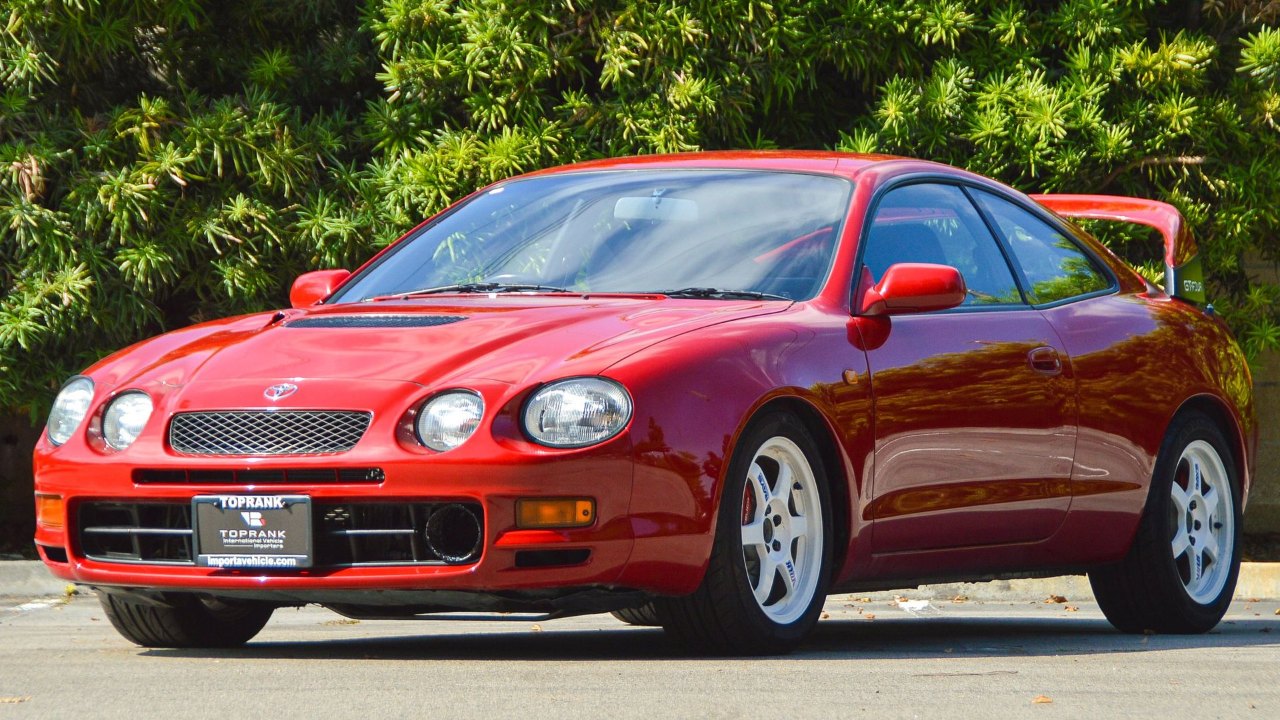
Toyota’s iconic Celica is moving closer to a comeback, more than two decades after the nameplate disappeared from showrooms. The eighth-generation coupe is expected to return as a performance-focused model under Toyota’s Gazoo Racing umbrella, combining a turbocharged engine with hybrid assistance and all-wheel drive.
According to Autocar, Toyota is developing the new Celica as an entry point for its expanding GR performance range. The company has not yet committed to an official launch date, but current reports suggest development is progressing and that the car could arrive around the 2028 model year.
The revival reflects Toyota chairman Akio Toyoda’s long held goal of bringing back three iconic models from the company’s past, the Supra, MR2, and Celica.
The Supra has already returned, while Toyota is also developing a new mid-engine sports car expected to revive the MR2 name. Bringing back the Celica would complete the trio and give Toyota a broader sports-car lineup.
Unlike some modern performance cars, the new Celica is not expected to be a purely electric vehicle. Current reports point toward a hybrid powertrain and four-wheel drive, combining electrification with the performance character associated with the Celica’s most memorable generations.
A New Celica With Hybrid Power and AWD
The most important development is the expected powertrain. Autocar reports that the road-going Celica is likely to use Toyota’s new 2.0-liter turbocharged four-cylinder engine, which is being developed for several future performance applications.
The engine, known as the G20E, is already attracting considerable attention within Toyota’s performance programs. Autocar India reports that the road-going version is expected to produce around 400hp and 500 Nm, although Toyota has not confirmed those figures for the Celica itself.
The engine is expected to work alongside a hybrid system, but one key detail has yet to be confirmed. Toyota has not revealed whether the Celica will feature a conventional self charging hybrid setup or a plug in hybrid system.
That distinction could significantly affect the car’s character. A conventional hybrid would allow Toyota to use a relatively compact battery and electric motor assistance primarily to improve response and performance. A plug-in hybrid would provide greater electric capability but could add considerable battery mass.
For a sports car, weight is particularly important. Toyota will therefore have to balance the benefits of electrification against the additional mass associated with hybrid hardware.
The company is also expected to give the new Celica all-wheel drive as standard. Autocar reports that the road-going car is expected to use four-wheel drive regardless of the final hybrid configuration.
That would provide a direct connection to some of the most famous Celicas ever produced. The Celica GT-Four became closely associated with Toyota’s World Rally Championship program, with generations such as the ST165, ST185, and ST205 developing legendary status among performance enthusiasts.
Toyota has not confirmed that the revived road car will carry the GT-Four name, however. The new model is currently being referred to internally as the Celica Sport, and the final branding remains unconfirmed.
The AWD system should nevertheless give the new coupe a different character from the rear-wheel-drive GR86. It would also allow Toyota to position the Celica as a more performance-oriented alternative to the Honda Prelude, which uses a front-wheel-drive architecture.
Autocar expects the new Celica to offer a choice between a six-speed manual and an eight-speed automatic transmission, although these details remain part of current reporting rather than confirmed production specifications.
If the manual transmission makes production, it would be particularly significant. Toyota would be combining a high-output turbocharged engine, hybrid assistance, all-wheel drive, and a traditional manual gearbox in a relatively compact coupe.
Corolla Foundations Could Keep the Celica Affordable
Toyota is not expected to develop the new Celica around a completely bespoke platform. Instead, Autocar reports that the coupe will likely use underpinnings related to the next-generation Corolla.
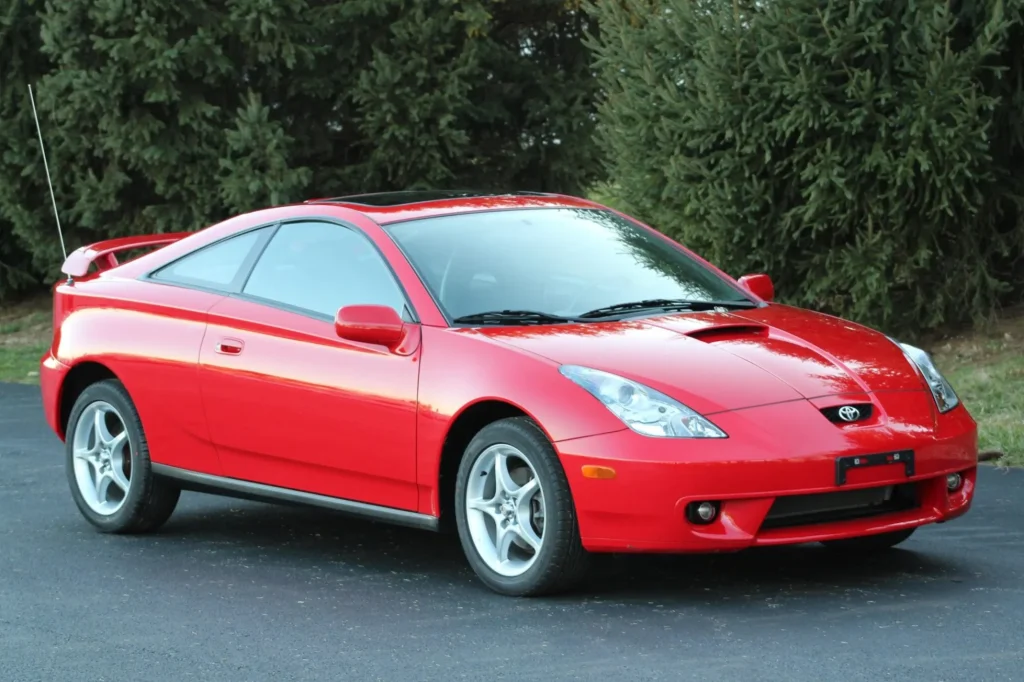
That approach follows a pattern Toyota has used throughout the Celica’s history. Previous generations shared engineering with more mainstream Toyota products, allowing the company to create an affordable sports coupe without the enormous development costs associated with a unique architecture.
Using the next Corolla as a foundation could make the new Celica commercially viable. Sports-car sales are generally much smaller than those of SUVs and mainstream sedans, so sharing components can significantly reduce the financial risk of bringing a coupe to market.
The new Celica is expected to remain a two-door front-engine coupe, maintaining the basic configuration that has characterized the nameplate across its seven previous generations. Autocar says the car would effectively become a sporting two-door interpretation of the next Corolla, giving Toyota a direct competitor to the new Honda Prelude.
That positioning could be important for Toyota’s GR lineup. The GR86 occupies the lower end of the company’s current sports-car range, while the Supra sits higher, and the upcoming GR GT supercar is expected to become the flagship.
A GR Celica could fill the space between the GR86 and Supra while providing a more technologically advanced alternative to the smaller coupe.
The Celica’s return is also closely connected to Toyota’s motorsport plans. A prototype of Toyota’s next-generation World Rally Championship car has been spotted wearing a radically different two-door body.
Although the 2027 WRC regulations no longer require rally-car bodywork to correspond directly with a production vehicle, its appearance has fueled speculation about a Celica connection.
Toyota has a particularly strong relationship with the Celica and rallying. The manufacturer won the 1993 and 1994 WRC manufacturers’ championships with Celica-based rally cars, making the name one of the most recognizable in Toyota’s motorsport history.
However, the road car and rally car will not necessarily share the same powertrain. The 2027 WRC regulations require a 1.6-liter engine, meaning the competition car is expected to continue using an evolution of Toyota’s current GR Yaris-based three-cylinder engine.
Toyota GR marketing manager Mikio Hayashi previously told Autocar that the 1.6-liter engine presents emissions challenges for a future road-going performance model, raising the possibility of a 2.0-liter engine instead.
The Celica Could Become a Key GR Model
Toyota’s decision to revive the Celica reflects a broader change in the company’s approach to performance cars. For years, the company had a relatively limited sports-car lineup, but the GR brand has gradually expanded with models such as the GR Yaris, GR Corolla, GR86, and Supra.
The Celica could become the next major addition, giving Toyota a performance coupe that combines the accessibility of the GR86 with considerably more power and technology.
Its hybrid system could also demonstrate Toyota’s approach to electrification in performance vehicles. Rather than abandoning combustion engines completely, the company is increasingly exploring ways to use electric assistance to improve performance while meeting increasingly strict emissions requirements.
The potential 2.0-liter turbocharged engine is particularly interesting because Toyota says the G20E has demonstrated substantial performance potential.
Carscoops reports that the engine has produced around 400hp in road-going form and more than 600hp in motorsport applications, although those figures should not be interpreted as confirmed specifications for the production Celica.
If Toyota can keep the production car relatively light, a roughly 400-hp hybrid AWD coupe with a manual option could become one of the more unusual performance cars on the market.
There is still plenty that remains unknown. Toyota has not officially revealed the production design, final power output, battery specifications, dimensions, weight, pricing, or launch date. The company also has not confirmed whether the car will use a conventional hybrid or plug-in hybrid system.
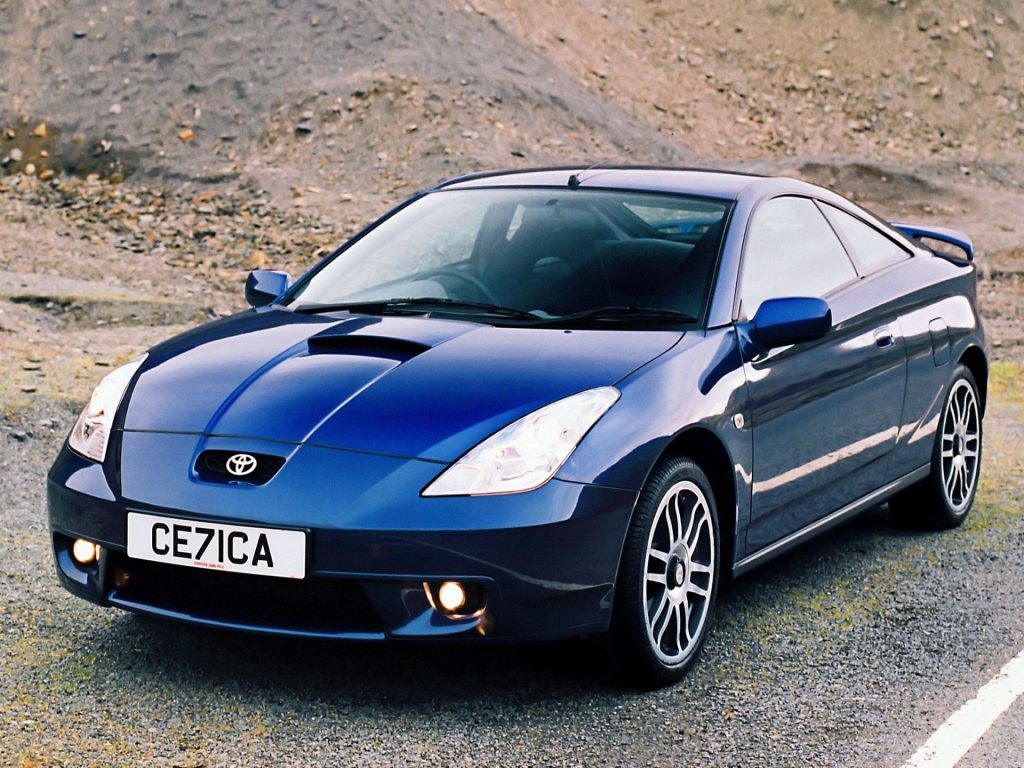
Those unanswered questions mean the current reports should be treated as a developing picture rather than a finalized specification sheet.
Even so, the direction is becoming increasingly clear. Toyota is preparing a front-engine, two-door performance coupe with all-wheel drive, while the latest reporting points toward hybrid power and a new 2.0-liter turbocharged engine.
If Toyota moves forward with production as planned, the Celica will reenter a car market that has changed significantly since its previous run. Even so, its core purpose should remain recognizable. It would be an accessible Toyota coupe aimed at offering more performance and a more engaging driving experience than the brand’s mainstream models.
The biggest difference is that the new Celica will use hybrid technology to achieve that goal. Rather than treating electrification as incompatible with sports-car character, Toyota appears determined to use it as another performance tool.
That could make the eighth-generation Celica one of the most important models in Toyota’s expanding GR family. After more than 20 years away, the famous nameplate appears to be coming back not as a nostalgic throwback, but as a modern hybrid performance coupe designed to carry Toyota’s sports-car ambitions into a new era.
