
America’s love affair with the automobile has entered a new chapter of efficiency. Every year, the Environmental Protection Agency publishes its Automotive Trends Report. This report tracks fuel economy, emissions, and vehicle technology since 1975.
The latest edition compares model year 2024 to model year 2004. It reveals one of the most significant improvements in automotive history. Average new vehicle fuel economy has improved 16 out of the last 20 years and has increased 41% compared to model year 2004. That is a remarkable two-decade transformation.
The average model year 2024 new vehicle increased fuel economy by 0.1 mpg to a record high 27.2 mpg. This marks yet another milestone in a long climb upward. The gains were not accidental.
They stem from deliberate engineering choices. Manufacturers embraced turbocharging, direct injection, and electrification. This report explains what changed and why it matters for drivers, the environment, and the auto industry’s future direction.
Two Decades of Fuel Economy Gains: The Numbers Behind the 41 Percent Increase
The starting point for this comparison is 2004. That year marked a turning point in automotive history. The 2004 report showed some stark differences with past automotive trends, dating back to 1975.
Before 2004, fuel economy had been declining for nearly two decades. For the previous twenty years, average new vehicle weight and horsepower steadily increased, while fuel economy steadily decreased. Cars were getting heavier and thirstier.
Then the trend reversed. Average CO2 emissions have decreased, and fuel economy has increased each year beginning in 2005. This reversal reset the trajectory of the entire industry.
Early gains were modest but steady. By 2008, average fuel economy value was 21.0 miles per gallon, up from earlier years, with CO2 emissions down 8 percent and fuel economy up 9 percent since 2004. Small steps built momentum.
By 2010, the pace had accelerated further. Average CO2 emissions had decreased by 64 grams per mile, or 14 percent, and average fuel economy had increased by 3.1 mpg, or 16 percent, since 2004. Progress was compounding year after year.
The middle years told a similar story of steady climbing. By model year 2015, fleetwide fuel economy reached 24.8 miles per gallon, an increase of 0.5 mpg from the prior year. Each incremental gain added up.
By 2022, the improvement had grown substantially larger. Since model year 2004, CO2 emissions had decreased 27 percent, or 123 grams per mile, and fuel economy had increased 35 percent, or 6.7 mpg. The trend was accelerating, not slowing.
Model year 2023 pushed the numbers even higher. New vehicle fuel economy increased by 1.1 mpg, reaching a record high 27.1 miles per gallon, while CO2 emissions decreased to a record low of 319 grams per mile. Records kept falling.
That same year, the long-term comparison crossed a major threshold. Since model year 2004, CO2 emissions had decreased 31 percent, or 142 grams per mile, and fuel economy had increased 40 percent, or 7.8 mpg. Forty percent was already a huge leap.
Model year 2024 pushed the figure to its current level. Average new vehicle fuel economy has increased 41 percent compared to model year 2004. This is the headline number driving today’s conversation.
Looking ahead, the trend shows no sign of stopping. Preliminary model year 2025 data suggest that average new vehicle fuel economy will continue to increase. The 41 percent figure may soon be surpassed.
It is worth noting how consistent this improvement has been. Since model year 2004, CO2 emissions have improved in 16 of 19 years. Consistency, not a single breakthrough, explains the long-term trend.
Electric vehicles have played an outsized role recently. In 2023, without EVs on the road, average fuel economy would have been 24.9 miles per gallon instead of 27.1. That gap illustrates the electrification effect clearly.
The same pattern holds for emissions data. Without EVs, average CO2 emissions in 2023 would have been 357 grams per mile instead of 319. Electrification is now doing heavy lifting.
What’s Driving the Improvement: Technology, Electrification, and Vehicle Mix
Engineering advances explain much of the two-decade gain. Engine technologies such as turbocharged engines and gasoline direct injection allow for more efficient engine design and operation. These innovations squeeze more power from less fuel.
Fuel injection systems have become notably more sophisticated. A growing number of engines use gasoline direct injection and port fuel injection systems, which can switch between the two depending on engine conditions. Flexibility improves both power and economy.
Adoption of direct injection has become nearly universal. Gasoline direct injection reached 73 percent of vehicles produced for the 2023 model year, the highest adoption level of any technology tracked. Most new cars now use it.
Turbocharging has followed a similar trajectory. Turbocharging, often paired with direct injection to maximize output from smaller engines, reached 37 percent of vehicles in 2023. Smaller engines now do more work.
Transmissions have also evolved considerably. Fifty-nine percent of vehicles produced had transmissions with seven or more gears, while 26 percent were fitted with continuously variable transmissions. More gears mean better efficiency across driving conditions.
Other technologies quietly contribute as well. Cylinder deactivation allows use of only a portion of the engine when less power is needed, while stop-start systems turn off the engine at idle. These features save fuel in everyday driving.
Manufacturers apply these technologies differently. Toyota uses gasoline direct and port injection in 92 percent of vehicles produced, more than any other manufacturer. Strategy varies widely across the industry.
Some companies lean on different tools entirely. General Motors and Mazda use cylinder deactivation far more than other manufacturers, while nearly every company except Mercedes-Benz and Mazda uses stop-start technology. No single formula fits every brand.
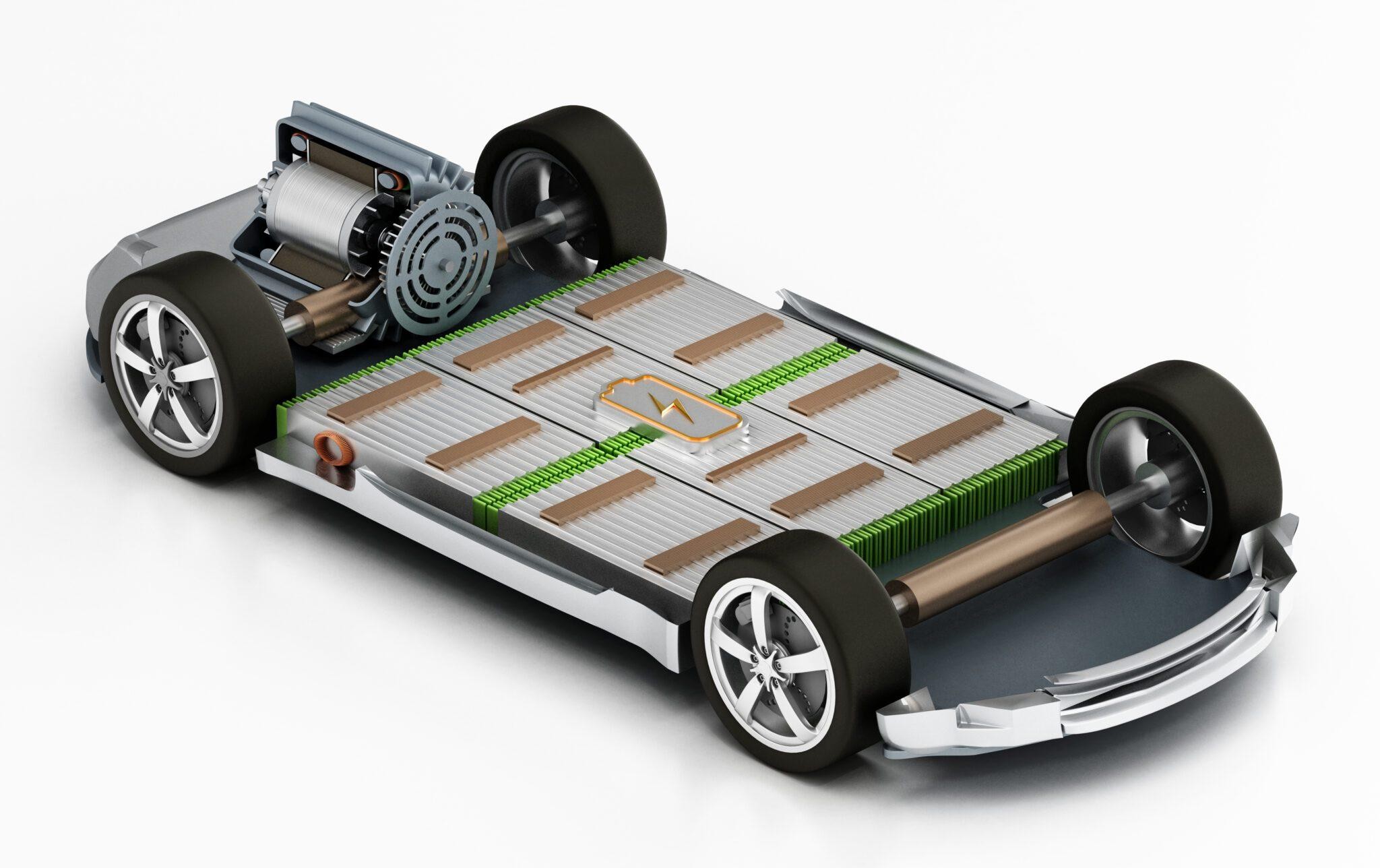
Electrification, though, is the newest and fastest-growing lever. The combined category of EVs, PHEVs, and fuel cell vehicles increased from 4 percent of production in 2021 to 7 percent in 2022, then projected to reach 12 percent in 2023. Growth has been rapid.
The real 2023 figures exceeded those projections. Battery-electric vehicles, PHEVs, and fuel cell vehicles increased from 6.7 percent of production in 2022 to 11.5 percent in 2023, projected to reach 14.8 percent in 2024. Electrified vehicles are becoming mainstream.
This shift is reshaping the entire fuel economy curve. EVs and PHEVs reduced CO2 emissions by 38 grams per mile and improve fuel economy by roughly 2.2 mpg. Electrified models are pulling fleet averages upward.
Vehicle mix has shifted just as dramatically as technology. New vehicle production has been trending towards sport utility vehicles for many years. SUVs now dominate American showrooms.
This shift has changed how efficiency gains show up. Car SUVs increased fuel economy by 7.2 mpg, becoming a major driver of fleet improvement. Even larger vehicles have grown far more efficient.
Electrification within SUVs deserves special mention. This improvement in CO2 emissions stems from the influx of battery electric vehicles within car SUVs, with BEVs now accounting for 36 percent of all model year 2023 car SUVs. SUVs are no longer synonymous with poor efficiency.
Not every manufacturer has kept pace equally. Nine automakers improved in both fuel efficiency and emissions, while four manufacturers Subaru, Honda, Mazda, and General Motors became less efficient than before. Progress has been uneven across brands.
Interestingly, some of those same companies are now pivoting. GM and Honda experienced decreased fuel economy and increased emissions through 2023, though both are expected to improve as their EV sales grow. Their electric lineups may soon reverse the trend.
Emissions, Vehicle Attributes, and the Road Ahead
Fuel economy improvements in the U.S. have also produced meaningful reductions in vehicle emissions. For model year 2023, real-world CO2 emissions from new vehicles fell to a record low of 319 grams per mile. Each vehicle used less fuel and produced fewer emissions, while small reductions multiplied across millions of vehicles.
Despite this progress, transportation remains a major contributor to climate change. Passenger cars and light trucks represented nearly 17 percent of total U.S. greenhouse gas emissions in 2022, showing that additional improvements are still necessary. At the same time, all 14 large automakers were compliant with EPA light-duty greenhouse gas requirements through the 2023 reporting period.
Vehicle development has also changed significantly since 2004. Fuel economy, horsepower, and vehicle weight have generally increased together, reversing the pattern seen during the previous two decades. Before 2004, vehicles were becoming heavier and more powerful while fuel economy declined. Advances in engineering have allowed automakers to deliver greater performance without sacrificing efficiency.
Vehicle footprints have also grown since EPA began tracking them in 2008. However, larger vehicles have not prevented fuel economy gains. In 2024, average fuel economy improved while vehicle weight, horsepower, and footprint all declined slightly compared with 2023.
Market conditions have influenced these trends as well. Changes in truck demand, economic downturns, and programs such as Cash for Clunkers have affected the composition of the vehicle fleet.
Future improvements are expected to continue. Preliminary 2025 data indicate that average fuel economy is likely to rise further, while increasing EV production points toward greater electrification. Battery-electric and plug-in hybrid vehicles are expected to represent a growing share of new sales.
The EPA’s findings demonstrate that technology, engineering, and changing consumer preferences have helped improve efficiency despite the popularity of larger vehicles and SUVs.
