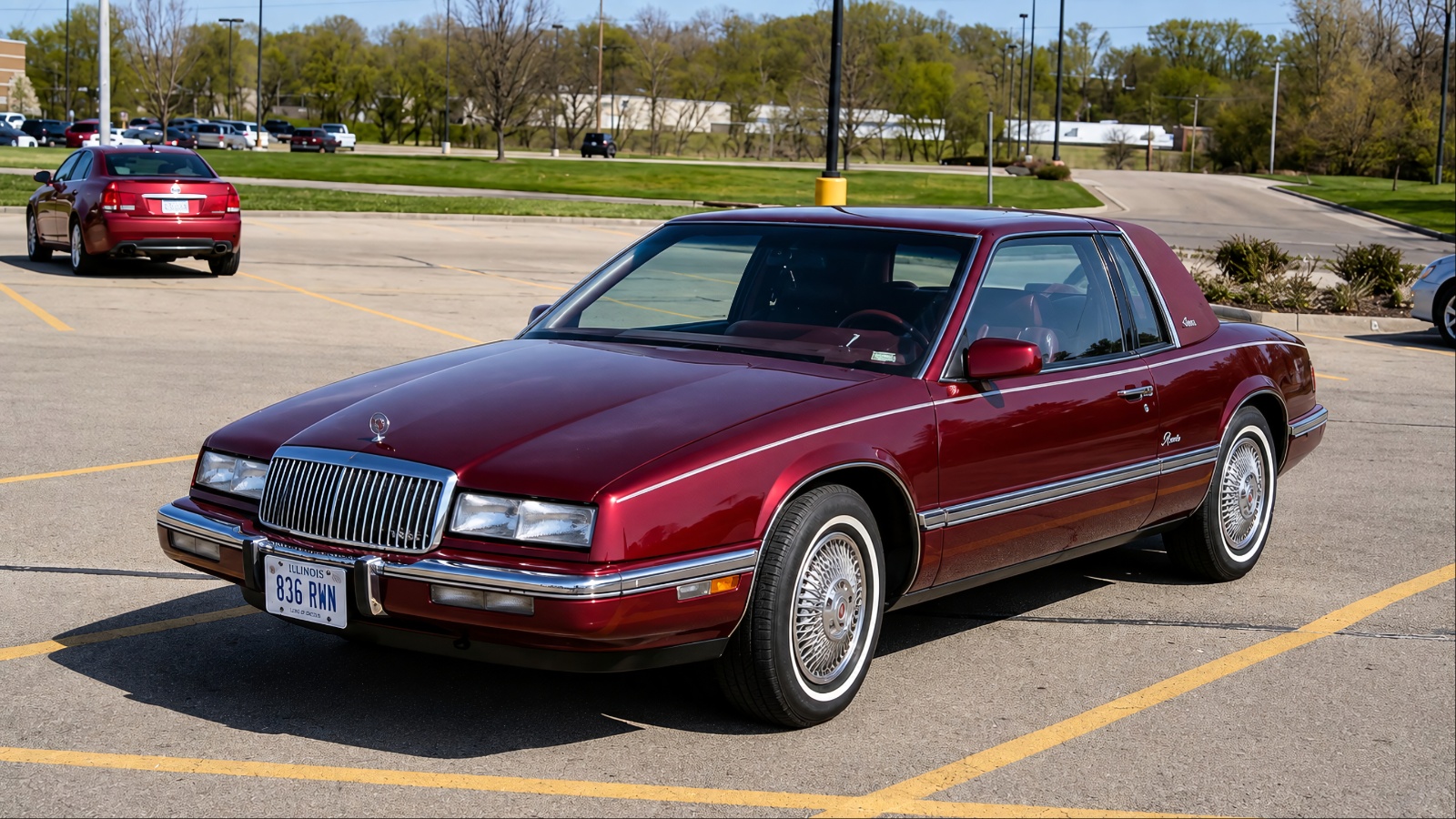
Today, a touchscreen in a car barely attracts attention. A new vehicle can have a 12-inch or larger display controlling navigation, climate settings, audio, vehicle functions, and connected services. In 1986, however, even the idea of touching a dashboard screen to operate a car seemed almost futuristic.
Buick was already doing it. The 1986 Buick Riviera introduced the Graphic Control Center, or GCC, widely recognized as the first production automotive touchscreen system.
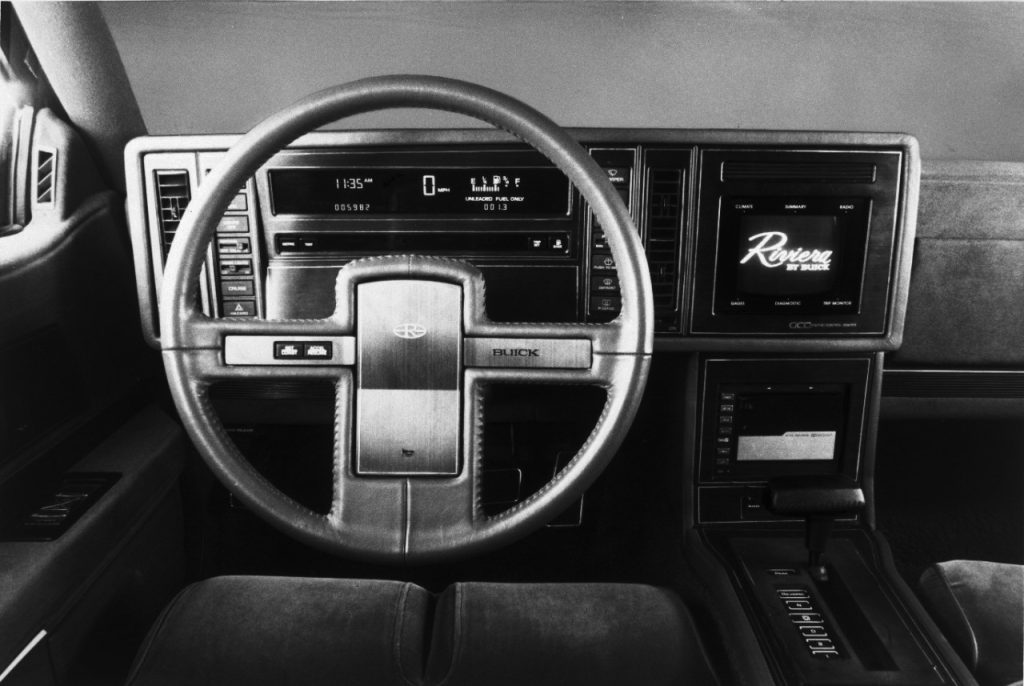
Instead of a modern LCD, Buick used a small monochrome cathode-ray tube, or CRT, paired with a touch-sensitive membrane. The system replaced numerous conventional switches and controls with an interactive digital interface. General Motors itself now describes the Riviera’s GCC as a precursor to the displays found in virtually every modern vehicle.
The technology was remarkable for its time. The GCC could control the Riviera’s radio and climate system, display trip information and vehicle data, and provide diagnostic information. Yet the same characteristics that made it revolutionary also made it difficult to use.
Tiny virtual controls, a lack of tactile feedback, and the need to look directly at the screen meant that the system could be distracting while driving.
It ultimately disappeared, but the basic concept survived. Decades later, virtually every automaker would return to the same idea.
How Buick Built a Touchscreen Before LCDs Took Over
The 1986 Riviera’s Graphic Control Center did not resemble today’s infotainment displays. It used a green-and-black CRT, the same fundamental display technology that powered many televisions and computer monitors during the 1980s.
Contemporary reporting from The Washington Post described the screen as a roughly 3-by-5-inch cathode-ray tube, positioned just to the right of the driver. It was touch-sensitive and could be used to adjust the cabin temperature, operate the radio, and retrieve vehicle information.
The distinction between the display and the touch interface is important. The CRT itself was not inherently touch-sensitive. Engineers placed a transparent membrane switch system over the screen.
According to a technical paper presented by engineers involved in the project, the GCC combined CRT technology with transparent membrane switches to create an interactive and reconfigurable automotive display.
The interface used visually defined touch areas rather than today’s highly responsive capacitive touchscreen. A Department of Transportation document describing the system explained that drivers could select functions through controls around the display and then touch small, visually defined areas on the CRT for additional commands.
That sounds primitive compared with a modern smartphone, but the underlying philosophy was remarkably similar.
Rather than dedicating a physical switch to every function, the Riviera could display different controls depending on what the driver was doing. The screen effectively changed its control panel from one task to another. That made the system extraordinarily flexible.
The GCC controlled the automatic climate-control system and AM/FM radio, including a graphic equalizer. It also provided trip calculations, digital vehicle information, and diagnostic functions. GM says the system could display information relating to the brakes, electrical systems, and powertrain while also providing a calendar and maintenance reminders.
There was even a service mode intended to help technicians diagnose problems. In other words, Buick wasn’t simply installing a digital radio screen. It was experimenting with the concept of a central electronic interface for the automobile.
The significance becomes clearer when the technology is placed in its historical context. GM notes that fewer than 10% of American households had a personal computer in 1986.
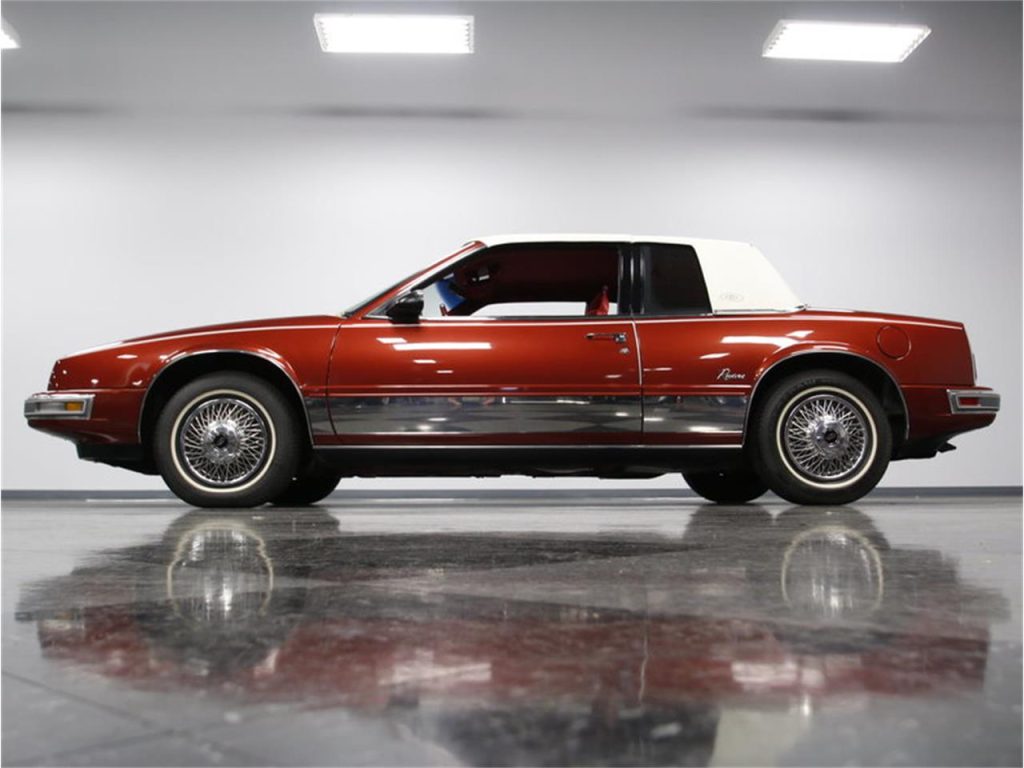
Microsoft had only recently introduced Windows, and touchscreen computing itself remained a niche technology. Modern LCD automotive displays were still decades away from becoming commonplace.
Buick was essentially attempting to bring an emerging computer interface into an automobile before most consumers had encountered one at home.
A Brilliant Idea With Serious Human-Factor Problems
The GCC’s biggest weakness wasn’t that it failed to work. It was that it required drivers to interact with a system that had very little physical feedback.
A traditional climate-control knob can be found by touch. A radio button has a physical location and can be pressed without looking. The Riviera’s virtual controls had none of those advantages.
The driver had to look at the display, identify the appropriate on-screen area, and touch it accurately.
That problem was recognized when the Riviera was new. The Washington Post’s 1986 review described the screen’s ability to control basic vehicle functions, while later automotive coverage has documented contemporary criticism of its ergonomics.
MotorTrend, looking back at the system, cited Popular Mechanics’ complaint that the interface violated a fundamental principle of automotive ergonomics because drivers had to take their eyes off the road to make adjustments. The technology also had physical limitations.
A CRT requires considerably more space and power than the thin LCD panels used today. The display was relatively small, while the virtual buttons were difficult to operate compared with modern interfaces. The system could also take time to display information because of the CRT technology.
Yet Buick’s engineers anticipated some of these limitations. The system was designed to activate as the driver approached the vehicle and to shut itself down after a period without interaction, according to historical documentation of the GCC.
The result was an interface that could perform an impressive number of functions but was not necessarily intuitive.
GM now acknowledges that the GCC wasn’t particularly popular. The company says its complexity and small virtual buttons made the system confusing for average users and difficult to navigate while driving.
The concept subsequently appeared in other GM products, including the Buick Reatta and Oldsmobile Trofeo, but the company’s early touchscreen experiment eventually ended.
That makes the Riviera particularly interesting in hindsight. The technology itself wasn’t necessarily wrong. The timing and execution were the bigger problems.
Modern touchscreens became successful because the surrounding technology eventually caught up. Displays became thinner, brighter, and larger. Processing power increased dramatically.
Touch interfaces became more accurate. Smartphones demonstrated that consumers could comfortably interact with software-based controls.
Automakers eventually learned how to combine touchscreens with physical controls, voice commands, and better graphical interfaces. The Riviera had essentially arrived before that ecosystem existed.
Why the 1986 Riviera Still Matters Today
The easiest way to understand the GCC’s importance is to ignore its green CRT and tiny buttons and look at what it was trying to accomplish.
A modern infotainment system typically consolidates multiple functions into one display. Navigation, audio, climate controls, vehicle settings, trip information, and diagnostics can all exist within different software screens.
The Riviera did the same basic thing in 1986. GM’s current historical account specifically identifies the GCC as a precursor to today’s automotive displays. The system could change what appeared on the screen depending on the selected function, turning a single piece of hardware into multiple control interfaces.
That is the fundamental idea behind modern software-defined dashboards. The Riviera was also more than a technology demonstrator. The GCC was standard equipment on the 1986 Riviera, according to the engineering paper documenting its development.
Engineers had tested the concept before production, including an experimental fleet, before putting the system into customer cars.
The experiment continued in related GM vehicles. The Buick Reatta adopted a related system called the Electronic Control Center, while the Oldsmobile Toronado Troféo eventually received a color-screen Visual Information Center.
GM’s experience with those systems helped establish an early lineage connecting computerized vehicle controls with today’s infotainment architecture.
The GCC did not become an immediate industry standard. Touchscreens remained uncommon in cars for years, and the technology’s limitations made physical controls more practical for most applications. But that doesn’t diminish what Buick accomplished.
The company demonstrated that a car’s dashboard did not have to be a fixed collection of knobs, switches, and gauges. It could be a programmable interface capable of presenting different controls and information depending on what the driver selected.
That concept eventually became one of the defining features of modern vehicle interiors. The irony is that Buick’s 1986 solution was simultaneously too early and remarkably correct. Its CRT was bulky, its interface was cumbersome, and its tiny touch areas were poorly suited to driving.
But the central idea of one interactive screen capable of replacing numerous dedicated controls was exactly where the automobile industry would eventually go.
More than 40 years later, drivers routinely use enormous digital displays for functions that the Riviera’s tiny green screen was already attempting to consolidate.
The 1986 Buick Riviera therefore deserves recognition not because its touchscreen was comparable to today’s technology, but because it anticipated the architecture of the modern digital dashboard long before the hardware was ready.
Buick was not the company that created the modern touchscreen. Its greater contribution to automotive history was showing how a touchscreen could serve as the central interface for controlling a vehicle’s functions.