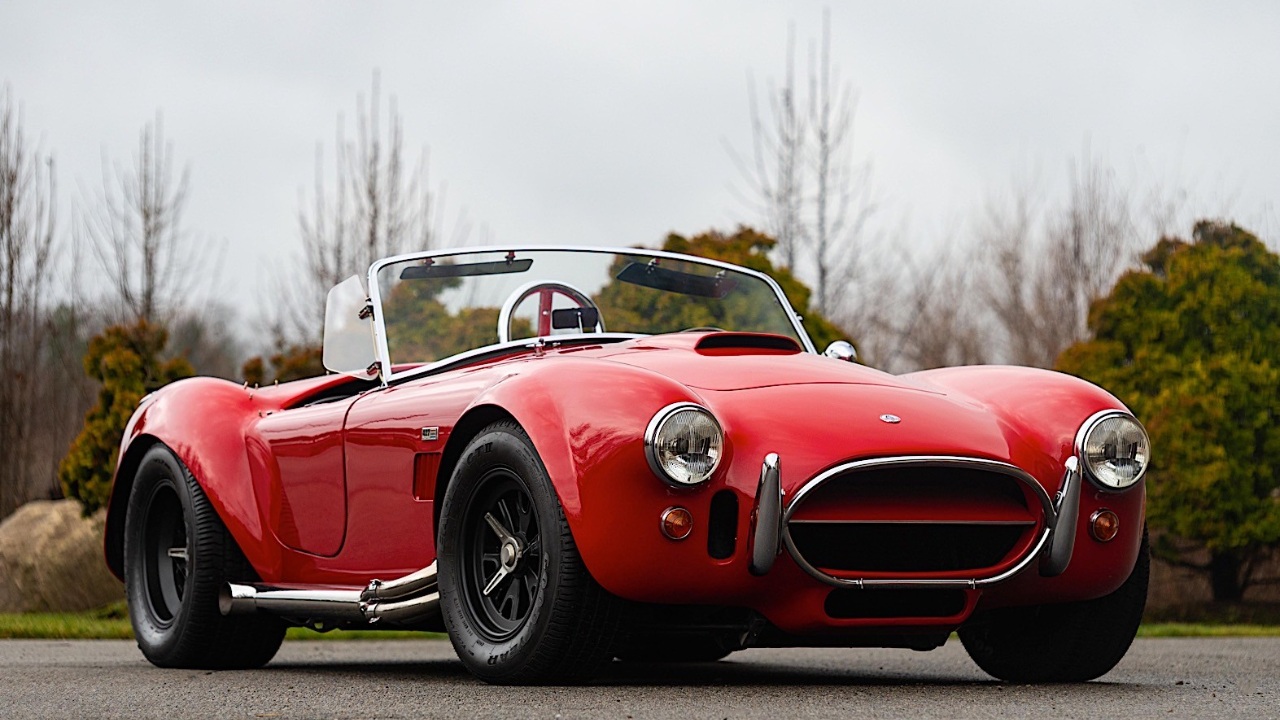
Few rivalries in automotive history were as personal, competitive, and consequential as the battle between Carroll Shelby and Ferrari. It produced one of America’s most famous sports cars, helped transform Ford’s international racing ambitions, and eventually contributed to one of the greatest endurance-racing victories ever achieved.
The story is often reduced to a simple claim that Shelby built the Cobra to take on Ferrari. While that captures part of the truth, the real story is far more compelling and involves a much more ambitious vision.
Shelby’s Cobra emerged from a combination of his own racing ambitions, the availability of a lightweight British chassis, and Ford’s desire to challenge European manufacturers. Ferrari became the ultimate target because its cars dominated international sports-car racing, particularly at the 24 Hours of Le Mans.
Shelby’s first objective was not specifically to defeat Ferrari at Le Mans. The Cobra was created as a lightweight American-British sports car that could challenge European machinery in the rapidly growing American sports-car racing scene. But as Shelby’s ambitions grew, Ferrari became the benchmark.
The rivalry would ultimately move from the Cobra to Ford’s GT40 program, culminating in Ford’s famous Le Mans victory in 1966.
How the Cobra Became Shelby’s Weapon
Carroll Shelby already had international credibility before the Cobra existed. He won the 1959 24 Hours of Le Mans outright driving an Aston Martin DBR1 with Roy Salvadori, giving him firsthand knowledge of what it took to win against Ferrari and other European manufacturers.
Shelby retired from racing soon afterward because of a heart condition, but he quickly redirected his competitive instincts toward building cars.
The opportunity arrived from Britain. AC Cars had a lightweight sports-car chassis but needed a new engine after the company lost access to the Bristol six-cylinder engine. Shelby approached AC about installing an American V8.
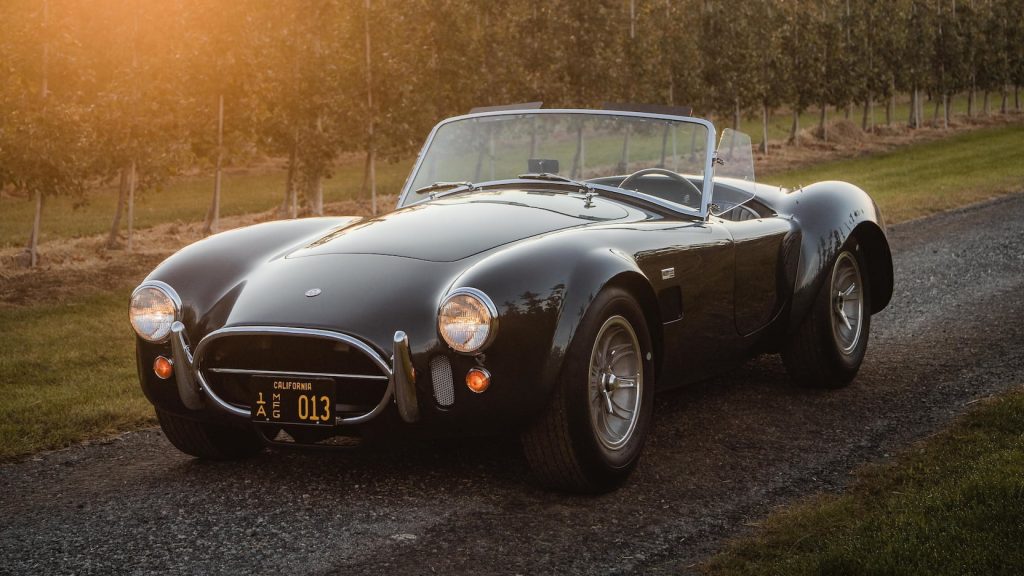
Ford provided the engine that powered the AC Cobra, which made its debut in 1962. The concept behind the car was straightforward yet highly effective. Engineers combined a powerful American V8 with a small, lightweight British sports car to create a machine with an impressive performance advantage.
According to the Shelby American Collection and historical records from Shelby American, the first Cobra used Ford’s 260-cubic-inch V8 before the car evolved to the more powerful 289-cubic-inch engine. Shelby’s approach emphasized low weight and high power rather than the sophisticated multi-cylinder engines used by Ferrari.
That made the Cobra unusually effective in American road racing. The FIA homologated the Cobra for international competition, and Shelby’s team began competing in European events.
The Cobra’s lightweight construction and substantial V8 power made it a formidable machine, but it wasn’t initially designed as a direct replacement for Ferrari’s purpose-built endurance racers.
Shelby’s ambition eventually expanded. He wanted the Cobra to compete at the highest level, and Ferrari was the obvious standard. Ferrari’s 250 GTO had become one of the defining GT racing cars of the early 1960s, combining a powerful V12 with sophisticated aerodynamics, chassis development, and Ferrari’s extensive racing experience.
The Cobra’s advantage was different. It had enormous torque and relatively simple mechanical construction. Shelby’s team could extract considerable performance without the complexity of Ferrari’s approach.
The rivalry grew even more important in the GT class. In 1964, the Cobra Daytona Coupe tackled one of the original roadster’s biggest shortcomings by improving its aerodynamics. Pete Brock designed the coupe with help from Shelby’s team, replacing the open body with a sleek enclosed design built to perform at high speeds on the racetrack.
The result was dramatically more competitive in international GT racing. According to Shelby American, the Daytona Coupe helped Shelby American win the 1964 World Manufacturers’ GT Championship, defeating Ferrari in the GT category.
That achievement demonstrated that an American team using a Ford-powered car could beat Ferrari on the international stage. But by then, Ford had a much bigger target.
Ford’s GT40 Took the Fight to Le Mans
The Cobra rivalry with Ferrari was not the direct origin of the GT40, but Shelby’s relationship with Ford and Ferrari’s dominance formed part of the larger competitive environment that produced it.
Ford had attempted to acquire Ferrari in the early 1960s. Negotiations reportedly collapsed after Enzo Ferrari rejected Ford’s proposed arrangement, particularly over control of Ferrari’s racing program. Ford subsequently turned its attention toward defeating Ferrari at Le Mans.
The resulting GT40 program began before Shelby became involved, with Ford developing its own mid-engine endurance racer. The early GT40 Mk I struggled against Ferrari and other European competitors, however, and Ford eventually brought Shelby into the program.
That decision proved decisive. Shelby had already demonstrated that he could take Ford’s V8 power and turn it into a competitive international racing package. He was placed in charge of the GT40 Mk II effort for the 1966 season.
The transformation was substantial. Ford’s 427-cubic-inch V8 replaced the earlier engine, while Shelby American worked alongside Ford and other partners to improve reliability, handling, and race preparation.
The GT40 Mk II was not simply a faster Cobra. It was a purpose-built endurance prototype engineered around the demands of Le Mans. And Ferrari remained the opponent to beat.
Ferrari had won Le Mans repeatedly during the early 1960s and arrived in 1966 with the new 330 P3. Ford, meanwhile, entered a major assault with multiple GT40s. At the 1966 24 Hours of Le Mans, Ford finally achieved the victory it had been pursuing.
The winning GT40 Mk II was driven by Bruce McLaren and Chris Amon. Ford’s cars finished first, second, and third, creating one of the most famous podium sweeps in motorsport history.
Ford’s historical record credits the achievement as the first Le Mans victory by an American automaker. The win also brought Ferrari’s string of consecutive victories at the event to an end.
The victory also strengthened Shelby’s racing philosophy. It showed that American horsepower could compete successfully at one of the world’s toughest endurance races when matched with the right chassis, careful preparation, and effective engineering.
The Ferrari Rivalry Became Bigger Than the Cobra
It is tempting to treat the Cobra and GT40 as two stages of the same revenge story, but their relationship was more complicated.
The Cobra came first and established Shelby’s reputation as a constructor capable of turning Ford engines into serious racing weapons.
Its success against Ferrari in GT competition strengthened Shelby’s credibility and helped create the relationship with Ford that would eventually put him at the center of the GT40 program. The Daytona Coupe was particularly important.
Its 1964 GT championship victory showed that Ferrari could be beaten in international sports-car racing. Shelby American’s Cobra Daytona Coupe was lighter and mechanically different from Ferrari’s machinery, but it proved that careful aerodynamic development and American V8 power could compete successfully against Europe’s best.
Ford’s GT40 then escalated the contest from GT racing to outright endurance-racing victory. The distinction matters because Ferrari and Ford were not merely fighting over lap times. They were competing over technological prestige and corporate identity.
Ferrari embodied the traditional European approach to racing, with sophisticated engines, lightweight designs, and decades of experience on the track. Ford brought a very different advantage to the competition through its massive industrial resources and strong foundation in American engineering.
Shelby sat somewhere between those worlds. He understood European racing because he had competed and won there. He understood American performance because he was working with Ford’s engines and engineers. The Cobra became the physical expression of that combination.
The GT40 took the same philosophy to another level. Ford’s victory in 1966 was followed by another Le Mans win in 1967, when Dan Gurney and A.J. Foyt drove a GT40 Mk IV to victory. That second win demonstrated that the 1966 result was not simply a one-off triumph.
Ferrari eventually returned to the top at Le Mans, but the balance of power had changed. The Cobra had already established Shelby as a serious manufacturer and racer. The Daytona Coupe had beaten Ferrari for a world championship. The GT40 had then delivered Ford the ultimate endurance-racing victory.
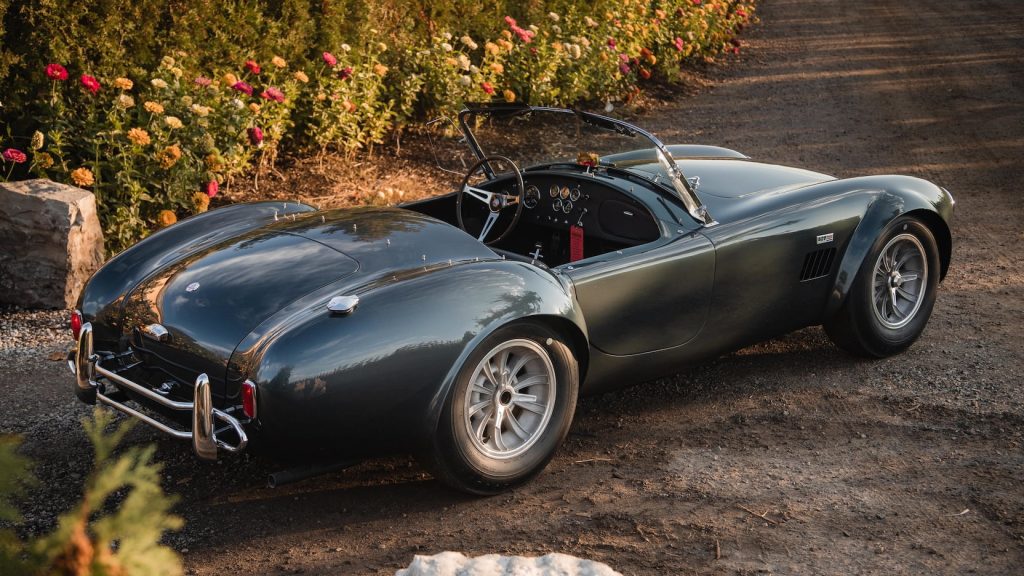
That sequence explains why the Shelby-Ferrari rivalry remains so important. Shelby did not wake up one morning and build the Cobra solely because he wanted to beat Ferrari.
The Cobra grew from a practical engineering opportunity and Shelby’s desire to build competitive sports cars. But Ferrari became the benchmark against which Shelby’s ambitions were measured.
Once Ford joined the competition, the stakes rose dramatically. What followed became one of the most influential sequences in American performance car history. A British chassis was paired with an American V8, while a retired racing driver took on the role of constructor. The growing rivalry with Ferrari eventually led to a Ford racing prototype that achieved what once seemed unlikely by defeating Ferrari at Le Mans.
The Cobra may have started as a relatively simple sports car, but it helped establish the credentials that allowed Shelby to take on a much larger challenge.
Five years after the Cobra first appeared, Ford’s GT40 delivered the answer on the world’s biggest endurance-racing stage. And Ferrari, more than any other rival, helped give that answer its meaning.