
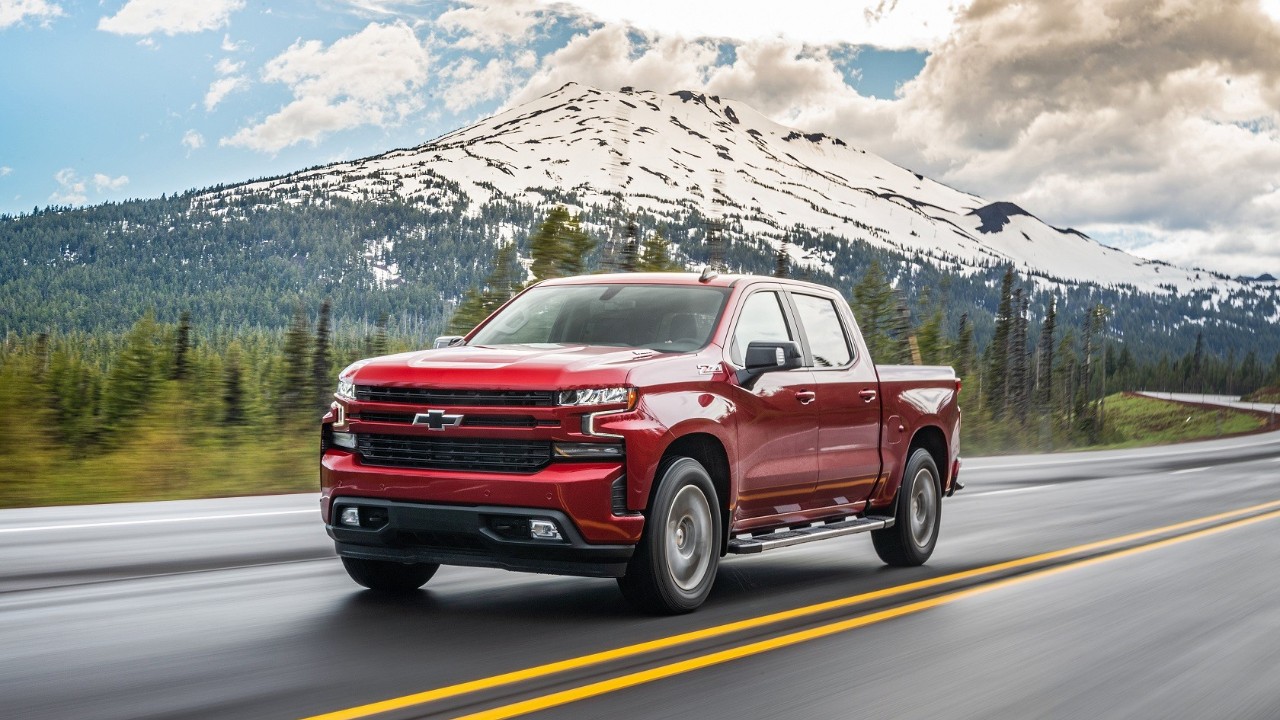
Diesel trucks are supposed to be about towing, hauling, and getting serious work done, not embarrassing performance cars at a stoplight. Yet modern diesel powertrains have become so potent that some enormous pickups can accelerate with surprising urgency.
Their secret is not lightweight construction or high-revving engines, but mountains of low-end torque, sophisticated turbocharging, and transmissions designed to keep that power moving efficiently.
While the newest Mustang GT remains considerably quicker than most diesel pickups, several trucks can outrun older Mustang GT generations in straight-line acceleration. These machines prove that a heavy-duty workhorse can have genuinely surprising performance when the right diesel engine is under its hood.
1. Ford F-250 Super Duty High-Output Power Stroke
It takes a remarkable amount of diesel muscle to make an 8,000-pound-plus pickup look quick, but the Ford F-250 Super Duty manages exactly that. In Car and Driver testing, a 2024 F-250 SuperCrew 4×4 equipped with Ford’s high-output 6.7-liter Power Stroke diesel reached 60 mph in just 5.5 seconds.
That is not enough to beat the current automatic Mustang GT’s 3.7-second run, but it is extraordinary for a heavy-duty work truck.
The high-output Power Stroke produces 500 horsepower and 1,200 lb-ft of torque, with the torque figure arriving at only 1,600 rpm. Ford pairs it with a 10-speed automatic transmission, allowing the engine to keep delivering its enormous torque while the gearbox rapidly moves through its ratios.
The contrast with a sports coupe is almost comical. The tested F-250 measured 250.0 inches long and weighed around 8,100 pounds, yet its 5.5-second sprint puts it in the same broad acceleration conversation as many older Mustang GTs. It can also tow as much as 40,000 pounds with the appropriate gooseneck configuration.
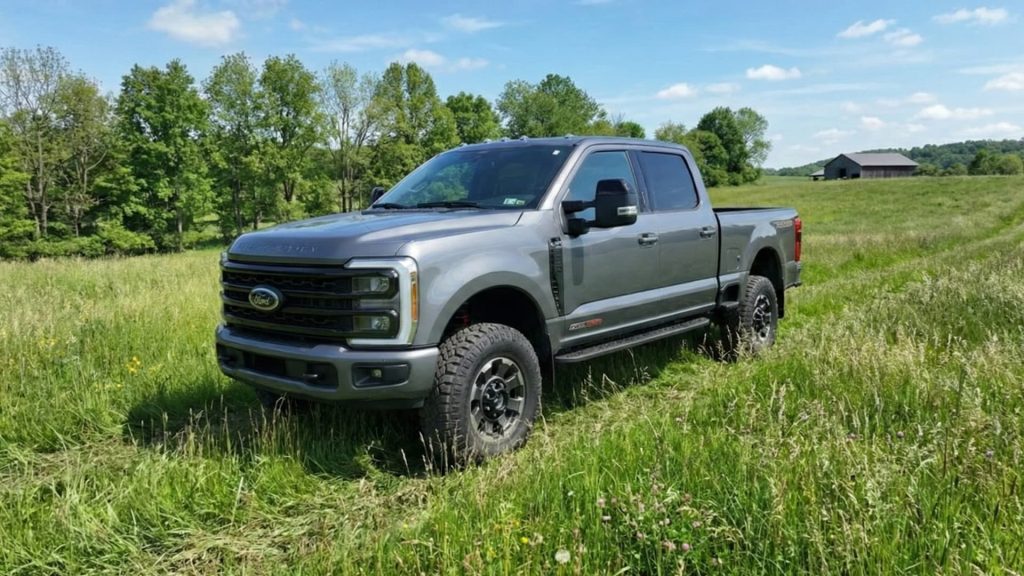
This is where diesel torque changes the personality of a truck. The F-250 does not need to rev toward 7,000 rpm like a Mustang’s gasoline V8. Its huge torque output arrives early, giving the truck an immediate shove whenever the throttle is opened.
The most impressive part is that the same powertrain responsible for the acceleration is designed to haul enormous loads. It is essentially a heavy-duty workhorse that happens to possess startling straight-line performance.
2. Ram 2500 Cummins Turbo Diesel
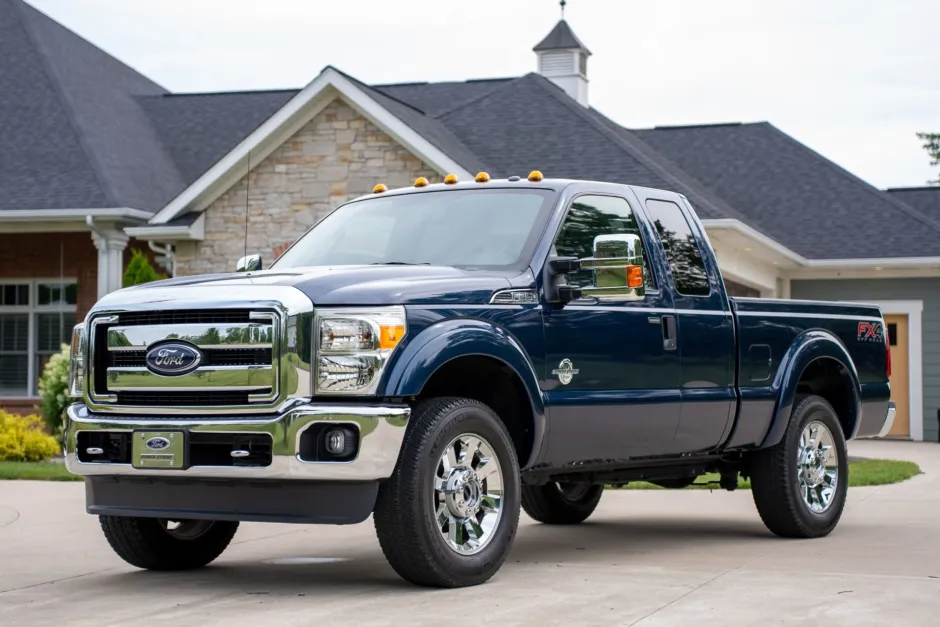
The Ram 2500 takes a completely different approach to diesel performance by relying on an inline-six rather than a V8. The 6.7-liter Cummins turbo-diesel produces 430 horsepower and 1,075 lb-ft of torque in the current U.S.-market truck. Car and Driver tested a diesel-powered Ram 2500 Limited and recorded a 6.3-second zero-to-60-mph time.
That result is particularly interesting because the Ram was not designed as a sports truck. It is a full-size heavy-duty pickup with a chassis engineered around towing, payload capacity, and durability. Yet the 6.3-second run puts it ahead of numerous older Mustang GTs in straight-line acceleration.
The Cummins reaches its peak of 1,075 lb-ft at 1,800 rpm, keeping the strongest part of its power delivery low in the rev range. An eight-speed automatic handles the gear changes, giving the six-cylinder enough flexibility to move the truck without requiring high engine speeds.
The physical dimensions make the acceleration even more surprising. The Ram 2500 measures about 250 inches long and 80 inches wide without mirrors. It can also tow up to 20,000 pounds with the diesel powertrain, showing that its performance credentials come from an engine engineered primarily for heavy-duty work rather than drag racing.
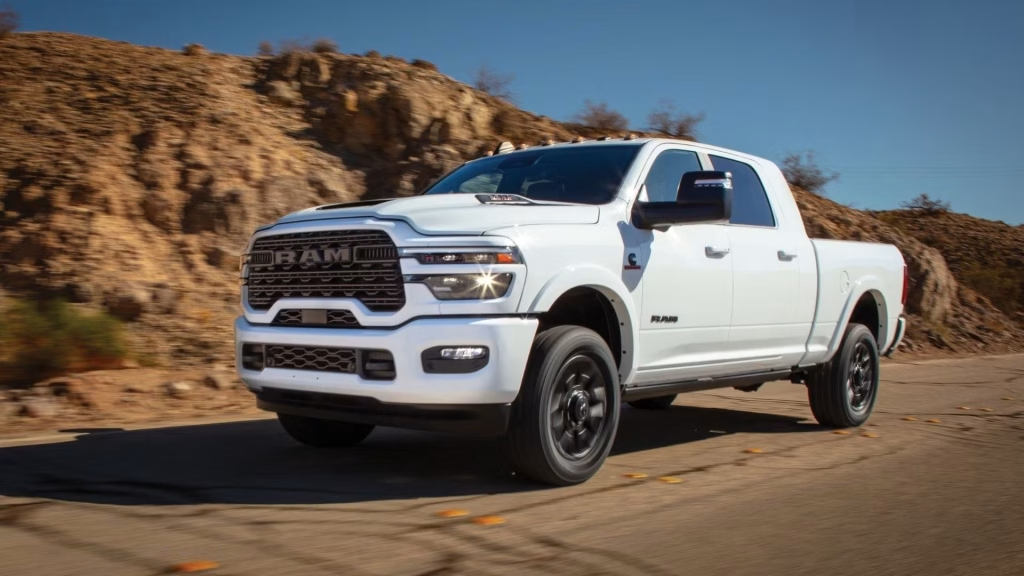
There is something uniquely entertaining about watching a truck this large gather speed. A Mustang announces its intentions through a low sports-car driving position and a high-revving V8. The Ram does almost the opposite.
It sits tall, carries a substantial bed, and looks ready for a job, yet its diesel six-cylinder can push the truck to 60 mph in a surprisingly short time.
That combination of work capability and unexpected acceleration is exactly what makes modern diesel pickups so interesting.
3. Chevrolet Silverado 2500HD Duramax
Chevrolet’s Silverado 2500HD does not look remotely like a sports car, and that is precisely what makes its acceleration numbers so entertaining. The 2024 Silverado 2500HD equipped with the available Duramax diesel reached 60 mph in 6.4 seconds during Car and Driver testing.
That is not enough to challenge the latest Mustang GT, but it is quicker than several older Mustang GT generations and remarkably rapid for a heavy-duty pickup weighing thousands of pounds.
The source of that shove is a 6.6-liter turbocharged Duramax V8 producing 470 horsepower and 975 lb-ft of torque at 1,600 rpm. Chevrolet connects it to an Allison 10-speed automatic transmission, giving the truck a wide spread of ratios for both acceleration and heavy-duty work.
The 975 lb-ft torque figure is the more revealing statistic. A Mustang GT builds its performance through a high-revving gasoline V8, while the Silverado generates nearly a thousand pound-feet of twisting force close to idle. That makes the truck exceptionally effective when accelerating from low speeds or pulling a heavy trailer.
The Car and Driver’s test truck measured 250.0 inches long, 82.0 inches wide, and weighed approximately 8,260 pounds. Despite that immense mass, it completed the quarter-mile in 14.9 seconds at 94 mph.
Its electronically limited top speed was 97 mph, showing that this machine is engineered around pulling power rather than high-speed cruising.
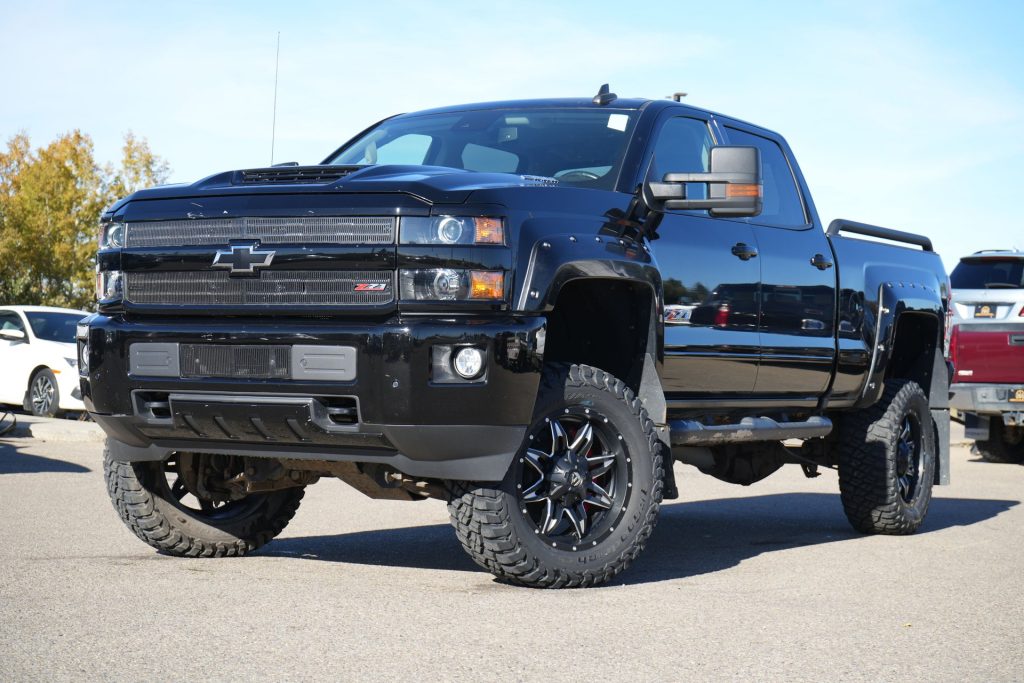
There is an amusing contrast here. The Silverado can tow as much as 36,000 pounds in the right configuration, yet its unloaded acceleration is strong enough to surprise drivers accustomed to ordinary pickups.
It is not a sports truck pretending to be a workhorse. It is a genuine heavy-duty workhorse that happens to accelerate far harder than its size suggests.
4. GMC Sierra 2500HD Duramax
GMC’s Sierra 2500HD shares its basic mechanical architecture with the Silverado HD, but that does not make its performance any less remarkable. The diesel version uses a 6.6-liter Duramax turbocharged V8 rated at 470 horsepower and 975 lb-ft of torque.
That immense torque arrives at only 1,600 rpm, allowing the truck to build speed without needing the engine to spin anywhere near the rev range expected from a gasoline performance car.
Car and Driver recorded a 6.6-second zero-to-60-mph time for a diesel Sierra 2500HD. That result puts the heavy-duty GMC within striking distance of many older V8-powered performance cars, despite the truck being designed primarily for towing and hauling.
The 10-speed automatic transmission plays an important role. Rather than leaving the engine to rely on a handful of wide gear ratios, GMC can keep the Duramax operating in a useful portion of its torque curve. That matters when the truck is moving from a stop, merging onto a highway, or pulling substantial weight.
The Sierra HD also illustrates why horsepower alone can be misleading when comparing diesel trucks with sports cars. Its 470 horsepower is less than the output of many modern performance coupes, yet the 975 lb-ft torque figure is dramatically higher. That difference is immediately noticeable when the accelerator is pressed at low speed.
The truck measures approximately 250 inches long, while its width approaches 82 inches depending on configuration. GMC offers the diesel in both 2500HD and 3500HD models, with four-wheel drive available.
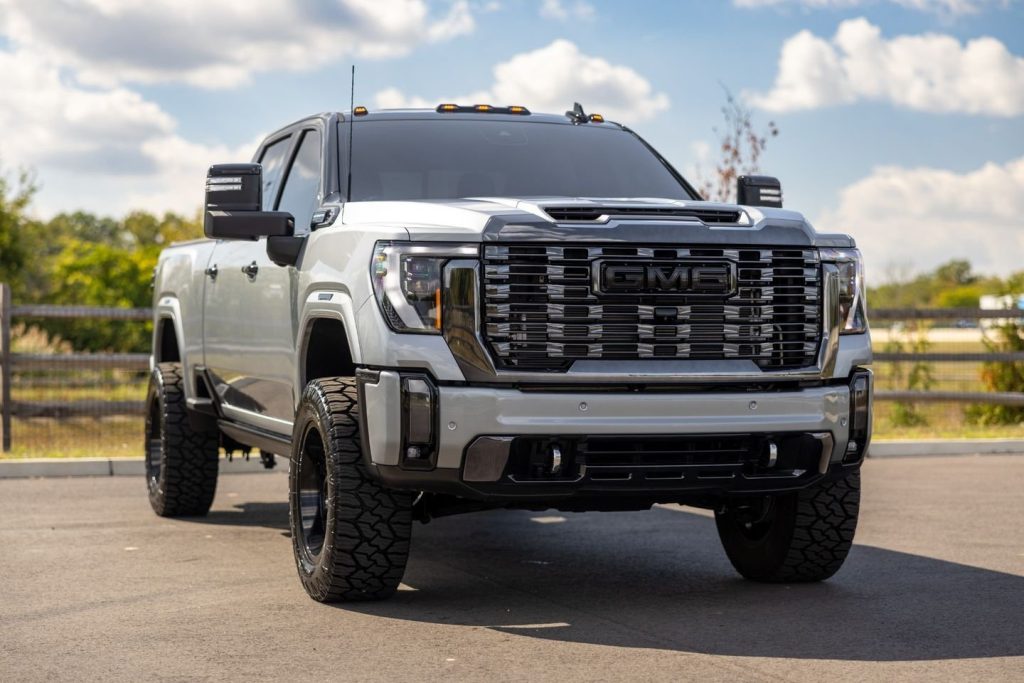
The diesel Sierra 3500HD can also be configured for enormous towing capacity, making the engine’s speed-oriented abilities almost incidental to its primary mission.
That is what makes this pickup entertaining. Its performance is not the reason GMC built the Duramax. The speed is simply a byproduct of building an engine powerful enough to move extremely heavy loads.
5. Ford F-350 Super Duty Power Stroke
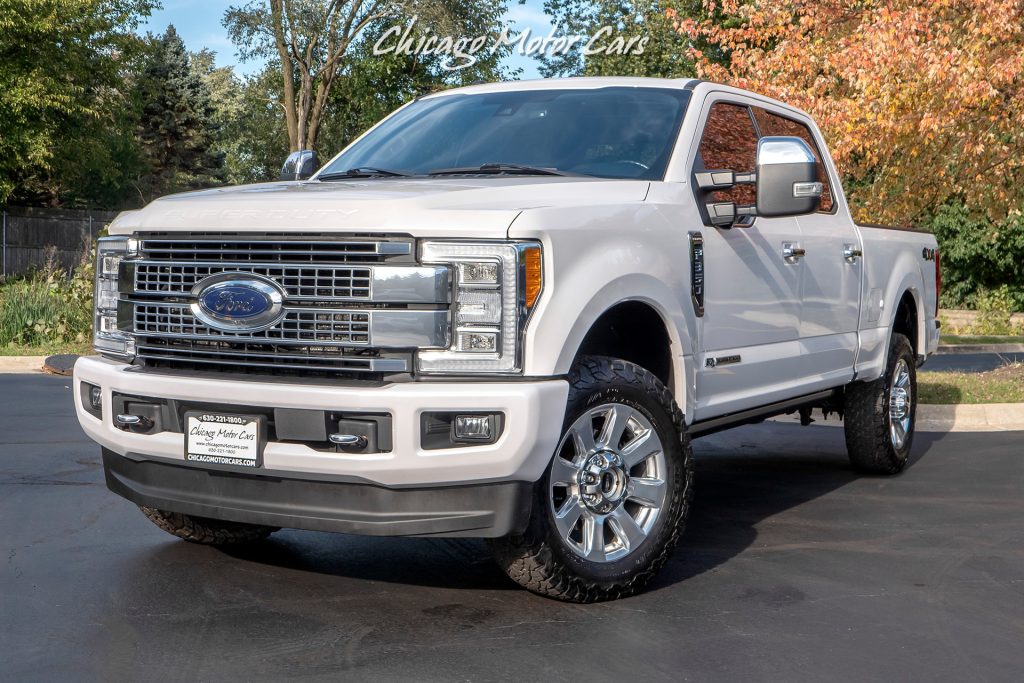
The Ford F-350 demonstrates just how strange the phrase “quick diesel truck” can become. In 2017, Car and Driver tested a four-wheel-drive F-350 Crew Cab equipped with Ford’s 6.7-liter Power Stroke V8 and recorded a 7.2-second zero-to-60-mph run.
That was described as class-leading at the time, and the truck weighed 8,060 pounds in the tested configuration.
Ford’s 6.7-liter diesel produced 440 horsepower and 925 lb-ft of torque for that model year. The torque peak arrived at 1,800 rpm, while maximum horsepower came at 2,800 rpm. A six-speed automatic transmission handled the shifting, with manual-shift capability available to the driver.
The acceleration becomes much more impressive when the F-350’s purpose is considered. This was not a stripped-down performance special. It was a heavy-duty pickup built around towing and payload duties, complete with a frame designed to handle enormous loads.
The tested truck could tow up to 21,000 pounds with the appropriate fifth-wheel or gooseneck equipment.
Car and Driver also recorded a 15.6-second quarter-mile at 89 mph. Its electronically governed top speed was 97 mph.
These figures highlight a key difference between diesel trucks and sports cars. Although the truck delivers strong acceleration, its gearing and electronic restrictions are clearly optimized for heavy-duty tasks rather than sustained high-speed driving.
There is also an amusing engineering detail behind the F-350’s launch behavior. Ford deliberately limited torque in the first three transmission gears to maintain traction and protect the driveline. In other words, the truck could potentially unleash even more force, but its electronics prevent the engine from delivering everything immediately.
That combination of immense torque, substantial weight, and conservative gearing makes the F-350 a fascinating example of a work truck that can still produce surprisingly quick acceleration.
6. Ford F-250 Super Duty Power Stroke
If there is one diesel pickup that most clearly demonstrates how far heavy-duty truck acceleration has progressed, it is the Ford F-250. Car and Driver tested a 2020 F-250 Super Duty with the 6.7-liter Power Stroke and recorded 60 mph in just 6.1 seconds. At the time, the publication called it the quickest diesel pickup it had ever tested.
The tested truck was a four-wheel-drive F-250 Lariat Crew Cab with Ford’s Tremor off-road package. It weighed 8,120 pounds, meaning the Power Stroke was moving more than four tons of truck when it produced that 6.1-second sprint.
The engine generated 475 horsepower and 1,050 lb-ft of torque in that configuration. That torque figure is the key to understanding the F-250’s unusual acceleration.
The engine does not need to climb toward the upper reaches of a gasoline V8’s rev range before producing serious force. Its enormous torque output arrives relatively low in the rev band, giving the truck a powerful shove as soon as the turbocharged V8 is working.
The Tremor-equipped test vehicle also had 35-inch Goodyear Wrangler Duratrac tires, a limited-slip front differential, and an electronic-locking rear differential. Car and Driver’s testing therefore represented a relatively rugged configuration rather than a lightweight street-oriented setup.
This makes the 6.1-second result even more entertaining. A vehicle weighing over 8,000 pounds, riding on aggressive off-road tires and wearing a body designed for heavy-duty work, was capable of acceleration that could surprise drivers in ordinary passenger cars.
It is also worth putting the result in perspective. The F-250 did not actually defeat the modern Mustang GT in acceleration. Instead, its significance is that a diesel work truck could approach the performance of older V8 muscle cars while simultaneously offering enormous towing and payload capability.
7. Chevrolet Silverado 3500HD Duramax
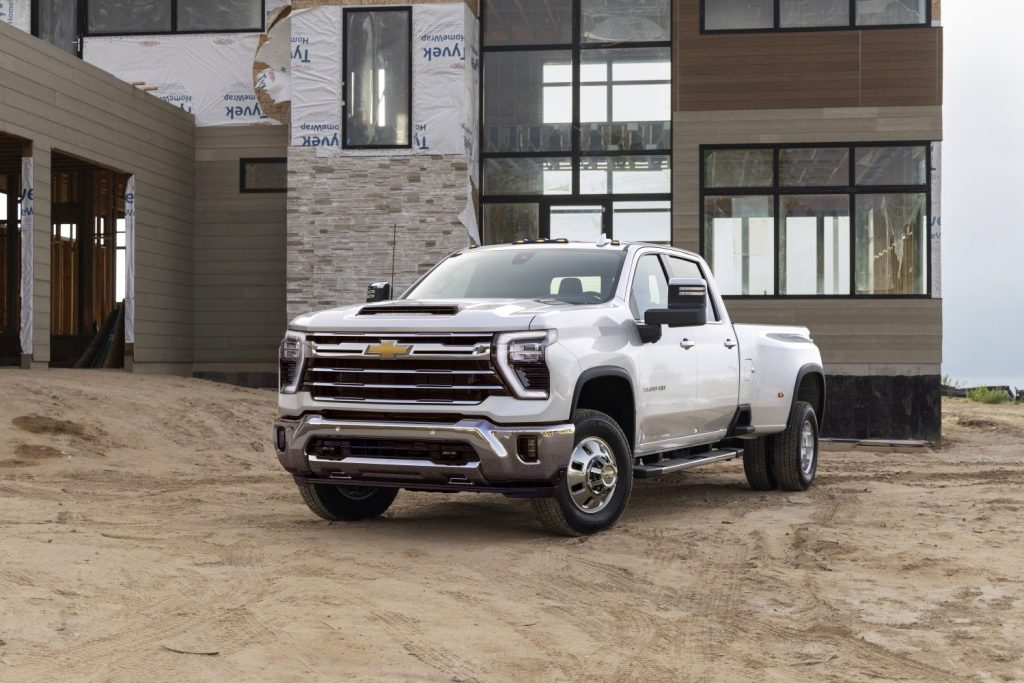
The Chevrolet Silverado 3500HD shows that a diesel truck does not need to be a lighter three-quarter-ton model to deliver surprisingly quick acceleration. Car and Driver tested a 2017 Silverado 3500HD equipped with the 6.6-liter Duramax diesel and recorded a 6.6-second zero-to-60-mph time. That is remarkable for a truck weighing 8,440 pounds.
The Duramax V8 produced 445 horsepower and 910 lb-ft of torque, with peak torque arriving at just 1,600 rpm. Chevrolet paired the engine with a six-speed Allison automatic transmission, giving the heavy-duty pickup the low-speed force needed to move its enormous mass with surprising urgency.
The quarter-mile result was equally impressive. The Silverado 3500HD completed the run in 15.1 seconds at 91 mph, numbers that Car and Driver noted compared favorably with some considerably smaller performance vehicles. The truck’s acceleration is particularly impressive because its primary purpose was hauling and towing rather than fast launches.
That huge torque output gives the Silverado a distinctly different character from a Mustang GT. Rather than relying on high engine speeds to build acceleration, the Duramax produces its strongest pulling force near the bottom of the rev range. The result is a powerful surge as soon as the driver applies the throttle.
The 3500HD also demonstrates why diesel performance cannot be judged by horsepower alone. Its 445 horsepower figure is modest compared with modern performance cars, but 910 lb-ft of torque gives the truck the muscle necessary to move more than four tons with surprising ease.
8. Ram 2500 Cummins Diesel
The Ram 2500 takes the diesel formula in a different direction with its legendary Cummins inline-six. The 2019 version used a 6.7-liter turbocharged diesel producing 400 horsepower and 1,000 lb-ft of torque in its most powerful configuration. Car and Driver tested a Ram 2500 equipped with that engine and recorded a 7.2-second zero-to-60-mph time.
Seven seconds may not sound extraordinary beside a modern performance car, but the circumstances make the figure much more interesting. The tested Ram weighed 7,480 pounds and was equipped with four-wheel drive. It still completed the quarter-mile in 15.6 seconds at 89 mph.
The Cummins engine produces its massive torque at low engine speed, which is exactly what a heavy-duty truck needs. Instead of building power through high rpm, the inline-six delivers its strongest pulling force early, allowing the Ram to move substantial weight with relatively little effort.
The 2019 update was also significant because the Cummins reached the 1,000 lb-ft milestone. Car and Driver noted that the 2500’s 7.2-second run was respectable, although the publication had recorded quicker acceleration from Ford and General Motors’ diesel competitors.
The Ram’s physical size makes its performance even more entertaining. The 2019 2500’s dimensions varied by configuration, with the Mega Cab models stretching well beyond 240 inches. The truck’s heavy-duty chassis, substantial suspension components, and available four-wheel drive all add mass that a sports car simply does not have to carry.
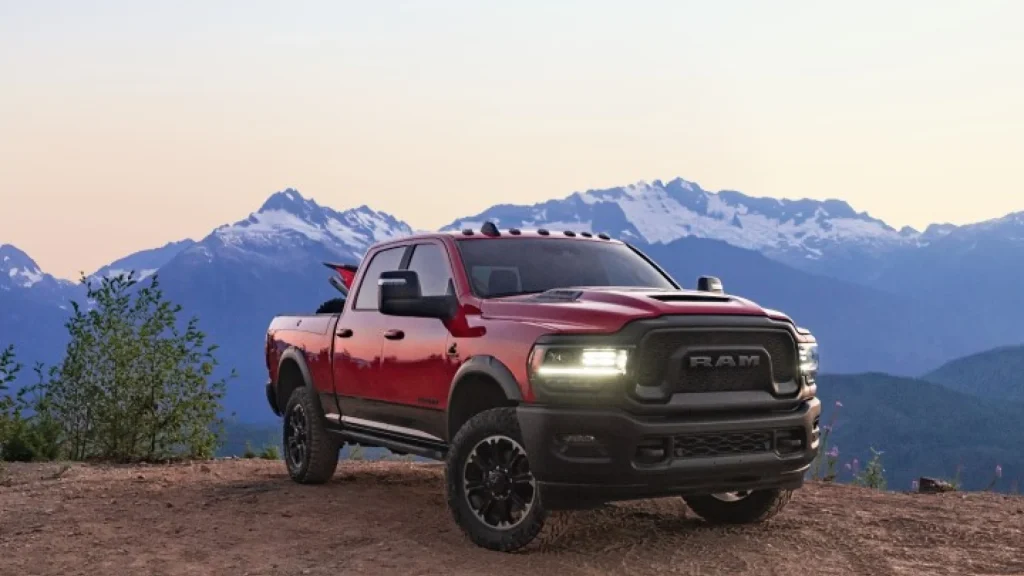
That is why comparing a Cummins-powered Ram with a Mustang is fascinating even when the Mustang wins the stopwatch battle. The Ram was never designed to win drag races. Its real party trick is producing sports-car-like urgency while being capable of towing up to 20,000 pounds in later configurations.
The Cummins delivers a different kind of performance. Rather than relying on lightweight agility, it produces remarkable speed through the immense power and torque of its large diesel engine.
9. 2018 Ford F-150 Power Stroke
The Ford F-150 Power Stroke is a very different kind of diesel truck from the heavy-duty machines already discussed. Rather than using a massive V8, Ford squeezed a 3.0-liter turbocharged diesel V6 into its half-ton pickup.
The engine produced 250 horsepower and 440 lb-ft of torque, with maximum torque arriving at 1,750 rpm. It was paired with a 10-speed automatic transmission.
Car and Driver tested a Platinum SuperCrew equipped with the Power Stroke and recorded 7.7 seconds from zero to 60 mph, followed by a 16.0-second quarter-mile. Those numbers might not threaten a modern Mustang GT, but they are remarkably respectable for a diesel pickup weighing thousands of pounds.
The F-150’s appeal was not brute force alone. This diesel was designed to give buyers a combination of pulling ability and highway efficiency without moving into the much larger Super Duty class.
Ford’s 3.0-liter V6 used turbocharging and direct injection to generate its torque relatively low in the rev range, making it particularly useful for merging, passing, and hauling.
The truck Car and Driver tested was also a substantial machine, with a crew cab body and four-wheel drive. Yet its powertrain remained considerably lighter and smaller than the diesel systems found in Ford’s heavy-duty pickups.
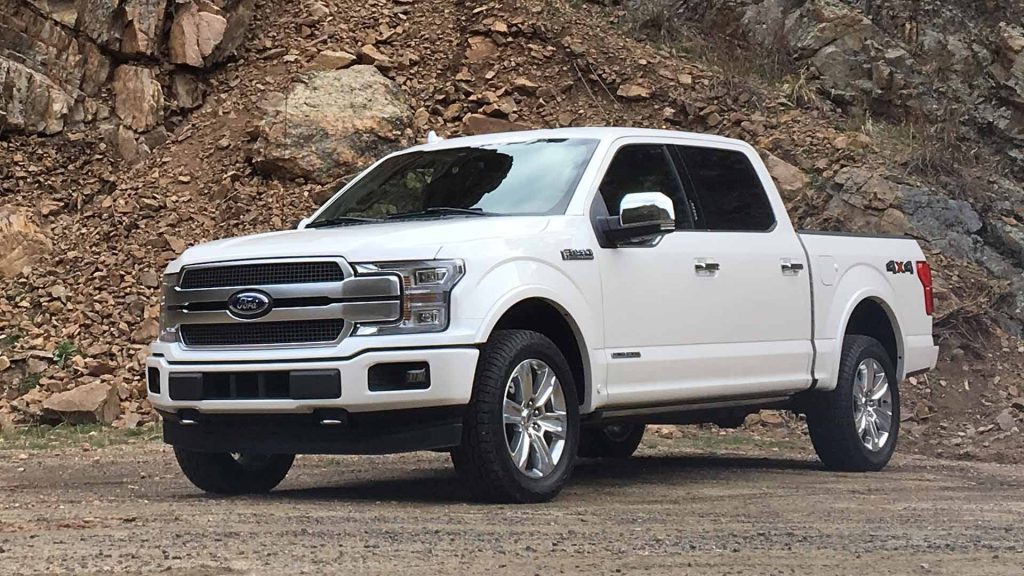
For comparison with the Mustang theme, the F-150 Power Stroke makes more sense against earlier Mustang GT generations than the current car. Its 7.7-second run is slower than today’s Mustang GT, but it demonstrates just how much performance could be extracted from a diesel pickup that was never intended to be a street-racing machine.
Its most impressive quality may therefore be restraint. Ford created a diesel engine that could deliver useful torque and respectable acceleration without turning the F-150 into an enormous heavy-duty truck.
10. 2020 Chevrolet Silverado 1500 Duramax
Chevrolet’s 3.0-liter Duramax showed that a diesel did not need a large V8 to make a full-size pickup surprisingly quick. The inline-six produced 277 horsepower and 460 lb-ft of torque at just 1,500 rpm. Chevrolet paired it with a 10-speed automatic transmission, creating a powertrain designed to combine low-speed pulling strength with relaxed highway operation.
MotorTrend’s track testing produced an especially interesting result. A rear-wheel-drive Silverado 1500 RST Duramax reached 60 mph in 7.0 seconds and completed the quarter-mile in 15.4 seconds at 90.7 mph. That made it quicker to 60 mph than the diesel F-150 and considerably quicker than many older performance cars that once represented high speed.
Car and Driver independently tested a four-wheel-drive Silverado 1500 LTZ with the same diesel engine and recorded 7.1 seconds to 60 mph. Its test truck weighed 5,653 pounds and achieved 15.5 seconds at 88 mph in the quarter-mile.
Those results highlight the character of the 3.0-liter Duramax. It does not deliver the violent acceleration of a large gasoline V8, but its 460 lb-ft torque peak arrives very early. The result is a smooth, effortless surge rather than a dramatic high-rpm rush.
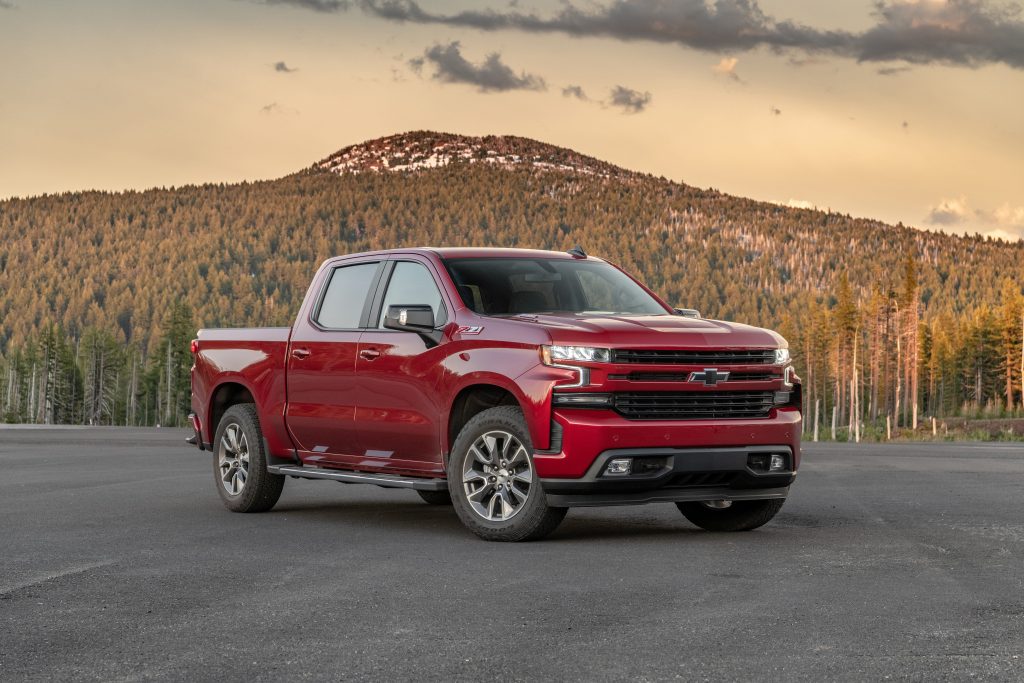
The Silverado also retains genuine truck capability. MotorTrend recorded a maximum tow rating of 7,600 pounds for the tested configuration, while Chevrolet’s diesel powertrain was positioned as an efficient alternative to the larger gasoline engines.
At approximately 231.7 inches long and 81.2 inches wide, the Silverado 1500 is hardly small. That makes its 7.0-second acceleration particularly entertaining. It is not actually faster than a modern Mustang GT, but against older Mustang GTs, this diesel pickup demonstrates how dramatically truck performance has improved.
