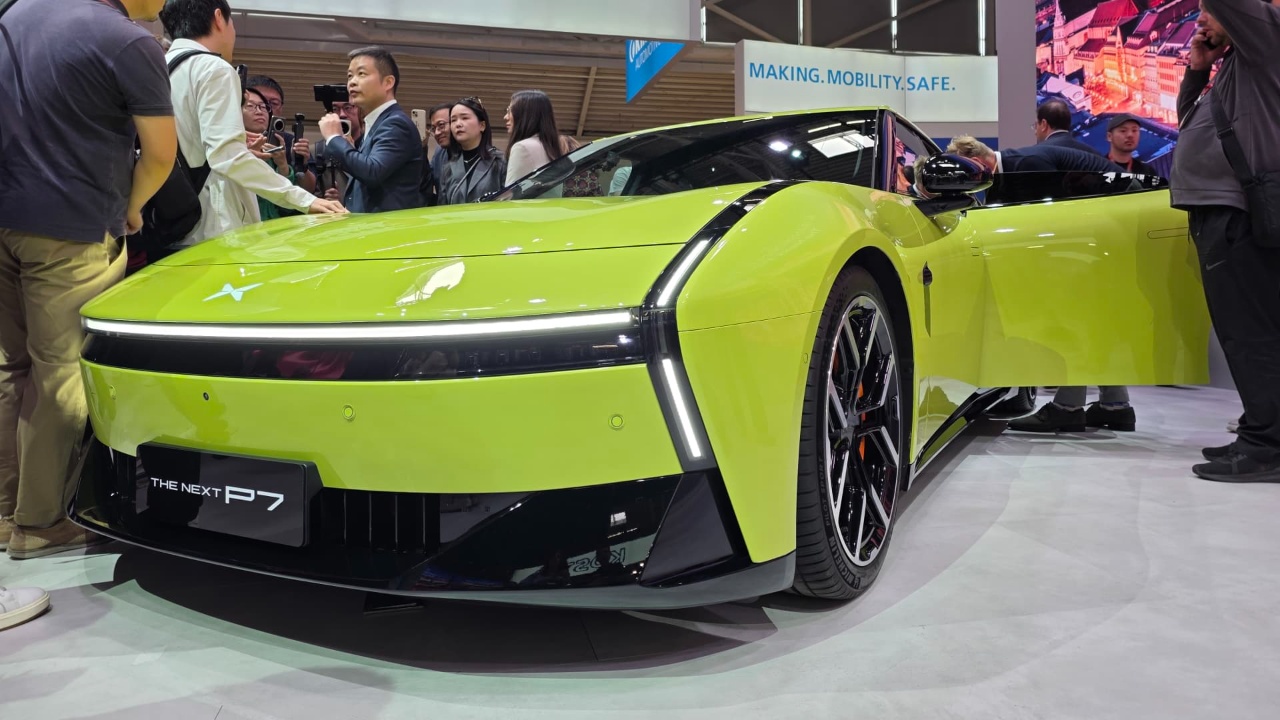
Chinese electric-vehicle manufacturers are becoming a serious challenge for established German automakers in Europe, changing the competitive landscape of a market long dominated by Volkswagen, BMW, and Mercedes-Benz.
Companies such as BYD and XPeng are expanding their European presence with electric vehicles that combine competitive pricing with generous standard equipment, advanced technology, and increasingly capable charging systems.
German manufacturers still have major advantages, including established dealer networks, brand recognition, customer relationships, and stronger residual values, but the gap is becoming harder to ignore.
According to the European market analysis published by Xpert. Digital Chinese manufacturers are competing particularly aggressively on price, equipment, charging technology, and vehicle technology.
Their approach is forcing European brands to reconsider how they position electric vehicles as consumers increasingly compare specifications and value rather than automatically choosing established names.
The challenge is significant because Europe’s EV transition is creating an opportunity for newer manufacturers.
Unlike the traditional combustion-engine market, where decades of engineering experience, manufacturing scale, and dealer relationships created major barriers to entry, the EV market gives companies opportunities to compete through batteries, software, and digital technology.
Chinese manufacturers have invested heavily in those areas. German automakers are responding by developing new electric architectures, improving software, and adjusting pricing strategies.
The competition is increasingly becoming a battle over technology and value rather than simply a contest between established and emerging brands.
BYD and XPeng Challenge Europe’s Traditional EV Hierarchy
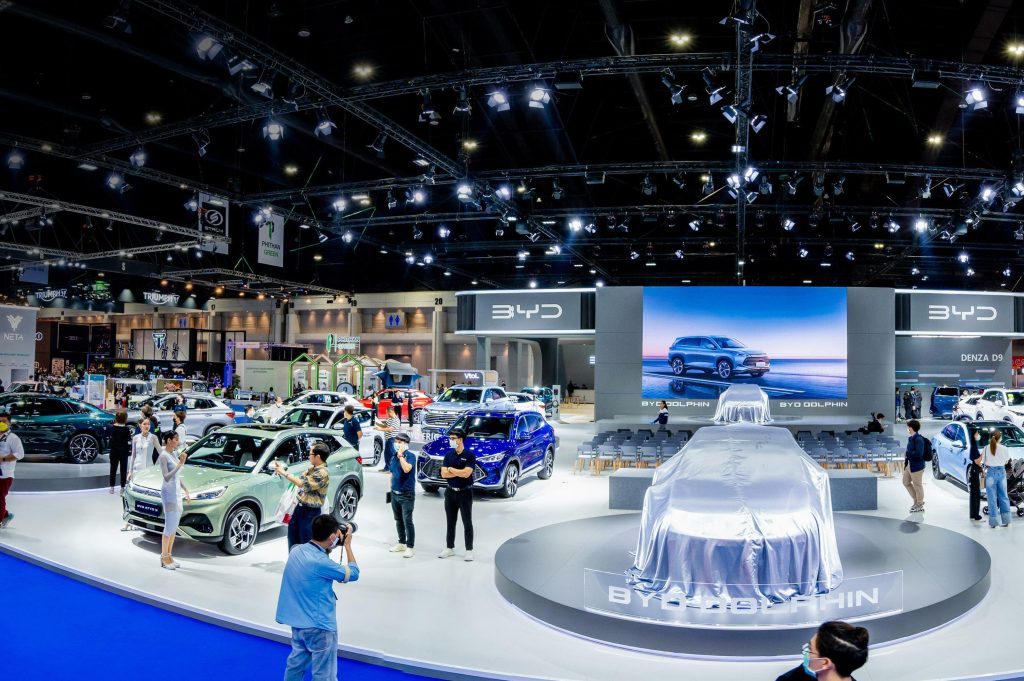
Among Chinese manufacturers expanding in Europe, BYD has become one of the most visible. The company has expanded its European lineup across multiple segments, from family cars to premium electric models.
BYD’s advantage comes partly from vertical integration. The company produces batteries and other major components itself, giving it greater control over costs and technology. Its Blade Battery has also become a central part of its EV strategy.
The company is expanding European production as well. BYD began producing vehicles at its Hungary plant in 2025, an important step toward establishing a stronger local manufacturing presence. Reuters reported that European production forms part of BYD’s strategy to build vehicles closer to customers and reduce exposure to trade barriers.
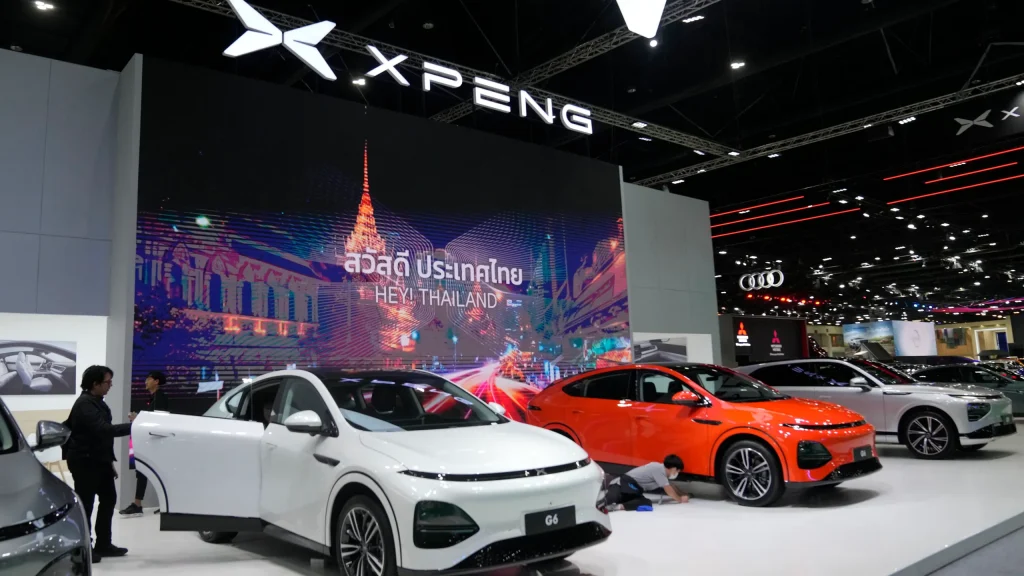
XPeng represents another type of challenge. The company has positioned itself around technology, advanced driver assistance, and software-driven functions while expanding into additional European markets.
Its strategy increasingly focuses on countries with strong EV adoption and consumers receptive to technology-heavy vehicles. XPeng has also emphasized fast charging and advanced electronic architecture as ways to distinguish its products.
The competition is not simply about cheaper electric cars. Chinese brands increasingly want customers to view their vehicles as alternatives to European products on technology and features.
That matters because German brands have historically justified higher prices through engineering, quality, luxury, driving dynamics, and brand reputation. Chinese manufacturers are attempting to narrow that perceived gap by offering equipment that can cost significantly more as options on European vehicles as standard.
A buyer comparing similarly sized electric SUVs may find that a Chinese model includes advanced driver assistance, large displays, connectivity, and premium equipment without requiring the same additional spending.
This changes the purchasing calculation. European consumers still value established brands, but Chinese EVs are increasingly testing that loyalty against measurable product value.
German Automakers Still Have Major Advantages
Despite the growing competition, Chinese manufacturers have not displaced German automakers in Europe.
Established brands continue to possess advantages that are difficult to reproduce quickly. Volkswagen, BMW, and Mercedes-Benz have extensive European dealer and service networks, established parts distribution systems, and decades of relationships with customers and fleet operators.
Those factors matter particularly to buyers keeping vehicles for many years. Residual value is another advantage. Used-car buyers in Europe are familiar with German brands, and established demand helps support resale values. New Chinese brands have not yet accumulated the same long-term track record.
That creates uncertainty for customers considering an unfamiliar brand. Even if the purchase price is attractive, buyers may worry about depreciation, service availability, and replacement parts several years later.
The German manufacturers also have extensive experience with European regulations and local driving conditions. Their vehicles are developed around European roads, safety standards, and consumer preferences.
Chinese companies, however, are adapting quickly. The European Union has introduced tariffs on battery-electric vehicles imported from China, creating another challenge.
The European Commission imposed definitive countervailing duties on Chinese BEVs in addition to the existing 10% import duty, with rates varying by manufacturer. BYD received a lower additional rate than some competitors.
These tariffs can reduce the pricing advantage Chinese manufacturers might otherwise enjoy. Chinese automakers are responding by increasing local production and considering additional European manufacturing operations.
Building vehicles inside Europe can reduce exposure to import tariffs while strengthening relationships with local markets. Charging technology is another important battleground.
Chinese manufacturers have invested heavily in high-voltage architectures and rapid charging. Some newer Chinese EVs can accept extremely high charging power under suitable conditions, reducing charging times.
German automakers are also moving in this direction. Volkswagen Group’s upcoming EV platforms are designed around higher-voltage systems and faster charging, while Mercedes-Benz has developed advanced electric architectures for its next generation of vehicles. The advantage, therefore, may not remain permanently with one side.
Europe’s EV Market Is Becoming More Competitive
The growing presence of Chinese EV manufacturers could benefit European consumers by forcing established automakers to deliver more technology and equipment for the money.
For years, many European EVs commanded significant premiums over comparable combustion-engine models. As competition increases, manufacturers face greater pressure to improve efficiency, reduce production costs, and make electric vehicles more accessible.
Chinese companies have demonstrated that EVs can combine competitive pricing with extensive equipment, and that example is difficult for European competitors to ignore.
However, price alone will not determine which brands succeed. Service quality, reliability, software support, battery durability, charging infrastructure, and resale value will become increasingly important as consumers gain more experience with EV ownership.
The ability to provide long-term support could become one of Germany’s strongest defenses. A large service network gives customers confidence that problems will be addressed quickly, particularly for vehicles increasingly dependent on software and electronic systems.
Chinese automakers therefore need to establish more than sales operations. They must build customer-service infrastructure capable of matching established European manufacturers.
Brand perception will also take time to develop. Volkswagen, BMW, and Mercedes-Benz have spent generations building recognition in Europe. New Chinese brands cannot reproduce that history immediately.
But the EV market allows technology-focused manufacturers to build reputations around different strengths.
Software, battery performance, charging speed, and digital interfaces are becoming increasingly important to buyers, particularly younger consumers who may have less attachment to traditional brands. That creates an opening for companies such as BYD and XPeng.
Europe’s EV market is therefore moving toward a more complicated competitive structure. German manufacturers retain enormous advantages in brand strength, manufacturing experience, service coverage, and resale confidence, while Chinese companies are increasingly competitive in price, equipment, battery technology, and charging performance.
The outcome will depend on how quickly each side adapts. German automakers must lower costs and make their EVs more compelling without weakening the premium characteristics that support their brands.
Chinese manufacturers must prove that their products can deliver dependable long-term ownership, strong residual values, and comprehensive service support. The European consumer stands to benefit from that competition.
As more Chinese EV brands enter the market and established manufacturers respond with new platforms and more competitive products, buyers will have more choices than ever. The next phase of Europe’s EV transition will not simply determine how quickly electric cars replace combustion engines.
It could also determine which companies control the next generation of automotive technology.
For Germany’s traditional automotive giants, the arrival of Chinese EV manufacturers is therefore more than a pricing challenge. It is a test of how quickly some of Europe’s most established brands can adapt to a market where technology, value, and innovation increasingly matter as much as heritage.