
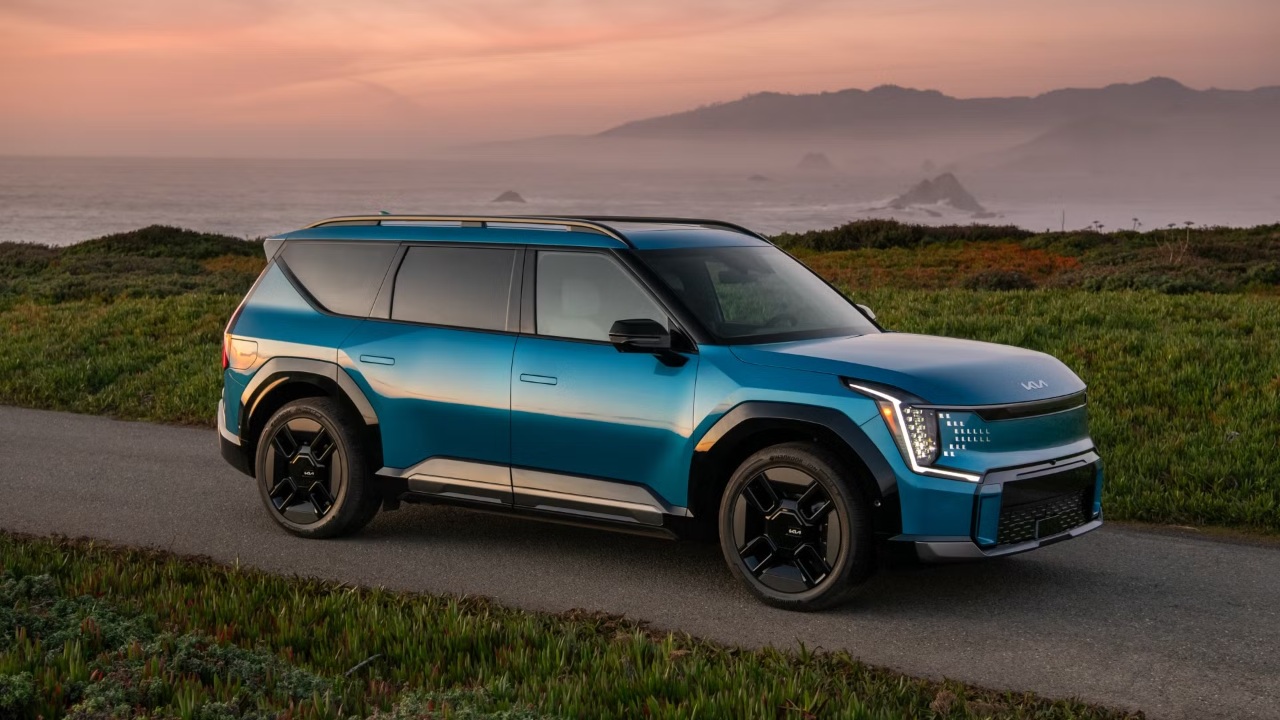
Kia is recalling 21,290 EV9 electric SUVs in the United States after discovering a problem with the front passenger Occupant Detection System (ODS), which could prevent the vehicle from correctly identifying a child or child restraint in the passenger seat.
If the system fails to recognize the occupant properly, the front passenger airbag may remain active when it should be suppressed, increasing the risk of injury in a crash.
The recall covers certain 2025 and 2026 model-year EV9 SUVs built at Kia’s Georgia manufacturing plant. According to recall information from the National Highway Traffic Safety Administration (NHTSA), the problem involves the ODS beneath the front passenger seat cushion.
The ODS determines whether the passenger seat is occupied by an adult, child, or child restraint. That information helps the restraint system determine whether the passenger airbag should deploy.
NHTSA’s campaign covers vehicles manufactured between May 17, 2024, and May 13, 2026, at Kia’s Georgia plant. EV9s built in South Korea are not included.
Kia has not reported injuries connected to the defect. Nevertheless, the potential consequences are serious enough to trigger a federal safety recall because an airbag deploying in front of a child or child restraint can increase the risk of injury.
How the EV9 Airbag Detection System Can Fail
The problem involves more than a conventional electronic sensor failure. The ODS uses a bladder tube integrated into the passenger-seat detection mat to sense occupant weight. According to recall information reported by Car and Driver, the tube was improperly routed during assembly.
When the front passenger seat is moved into its highest position, the tube can become pinched. Repeated seat adjustments may eventually damage it. If that happens, the occupant detection system may malfunction.
The system’s purpose is critical. Modern vehicles use sensor information to determine how the passenger seat is occupied and whether airbag deployment is appropriate.
If the EV9’s ODS cannot correctly identify a child or child restraint, the system may fail to deactivate the passenger airbag.
For an adult, a functioning passenger airbag is an important part of crash protection. For a young child, however, sitting directly in front of an active frontal airbag can create a substantially greater injury risk. This is why children are generally recommended to ride in the rear seats, particularly when using child restraints.
There are warning signs that could alert an owner to an ODS malfunction. According to the recall information, an airbag warning light may illuminate. The passenger-seatbelt warning chime could also sound when the seat is unoccupied.
These symptoms should not be ignored because safety-system warnings can indicate problems affecting restraint operation.
The defect appears to be connected to manufacturing rather than the EV9’s electric powertrain. There is no indication that its battery, electric motors, or charging system is responsible for this recall.
That distinction is important because the EV9’s propulsion system is unrelated to the passenger-seat detection problem.
Which EV9s Are Affected and What Owners Should Do
The recall covers 21,290 EV9 SUVs, although available reporting indicates that only a fraction are expected to actually contain the physical defect. Auto123 reports that NHTSA estimates approximately 6% of recalled vehicles have the affected condition.
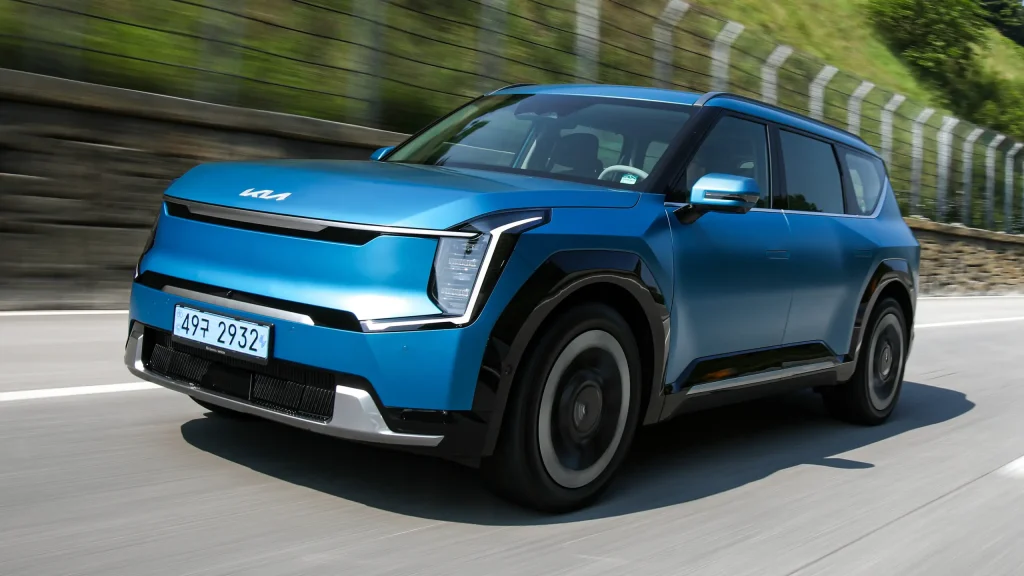
Manufacturers often recall a broader population than the vehicles known to contain a defective component. This allows dealers to inspect potentially affected vehicles and identify which ones require repair.
The affected population consists of certain EV9s produced at Kia’s Georgia facility between May 17, 2024, and May 13, 2026. South Korean-built vehicles are not part of this U.S. campaign.
Kia has assigned the recall internal campaign number SC379, while NHTSA identifies it as 26V545. Owners can use their vehicle identification number to determine whether their EV9 is included once the recall information becomes available.
Kia plans to notify affected owners beginning October 20, 2026. Dealers will inspect the occupant detection system and replace affected components if necessary. The repair will be free of charge.
Until the vehicle has been inspected or repaired, owners should take the warning signs seriously. Kia recommends avoiding the use of a child restraint in the front passenger seat, while children should remain in the rear seats.
Owners who see an airbag warning light or receive an unexpected passenger-seatbelt warning should contact Kia or an authorized dealer rather than assuming it is a minor electrical issue.
The recall is particularly relevant for families because the EV9 is a large, three-row SUV. Its spacious cabin and multiple seating positions make passenger protection an important part of its appeal.
The EV9 has also received safety recognition. The 2024 model received an IIHS Top Safety Pick designation for vehicles built after January 2024 following improvements to its headlights.
That broader safety record does not eliminate the importance of this recall. Vehicle safety depends on hundreds of components working together, and a problem with one restraint-system component can still require corrective action.
A Small Component With a Significant Safety Role
The Kia EV9 recall shows how modern vehicle safety depends on mechanical components, sensors, and software working together. A small tube beneath the passenger seat can interfere with the vehicle’s ability to make an important airbag-deployment decision.
Unlike a recall involving cosmetic or convenience features, this issue directly concerns occupant protection and federal safety requirements.
NHTSA requires vehicles to meet federal occupant-protection standards, including requirements governing airbags and restraint systems. When a manufacturer identifies a condition that could affect compliance or create an unreasonable safety risk, a recall may be necessary.
Kia’s decision to recall more than 21,000 vehicles also demonstrates why manufacturers generally act before a defect produces injuries. A recall is intended to reduce the possibility of a safety problem causing harm.
So far, there are no reported injuries associated with this particular EV9 defect, according to available recall reporting.
For Kia, the repair should be relatively straightforward compared with recalls involving major electric-drive components. Dealers can inspect the ODS system and replace affected detection components where necessary.
For owners, the most important step is confirming whether their EV9 is included and arranging the inspection once Kia’s notifications begin.
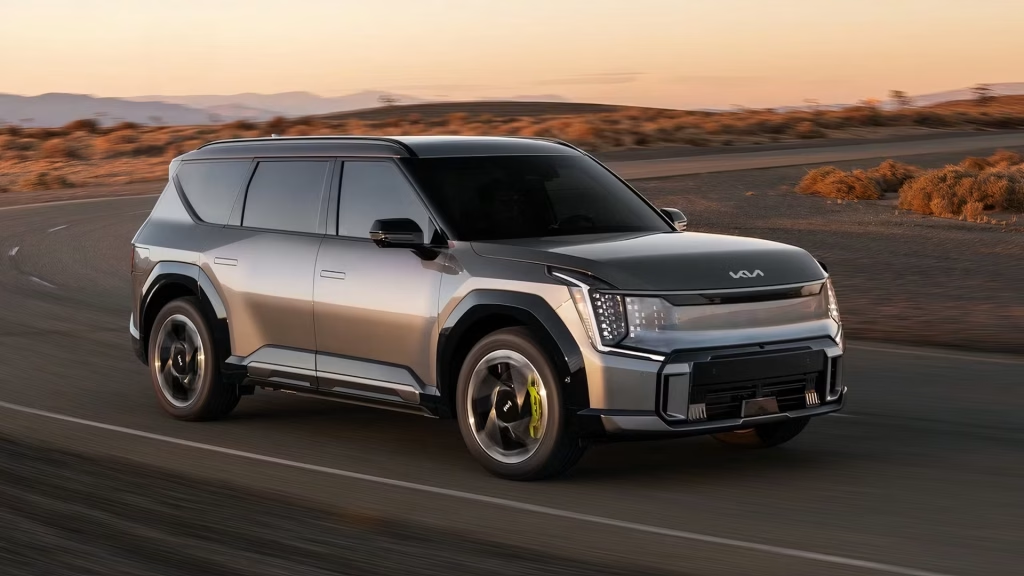
The campaign also highlights an important point about electric vehicles. Safety discussions often focus on batteries, charging systems, and high-voltage components, but EVs still rely on airbags, seatbelts, occupant sensors, and crash-management systems just like gasoline-powered vehicles.
The EV9 recall is therefore not an indication of a problem with electric propulsion. It is a manufacturing and occupant-detection issue affecting a specific group of vehicles.
Affected owners should check their VIN once the recall database is updated, follow Kia’s instructions, and have the vehicle inspected by an authorized dealer. Until then, children and child restraints should remain in the rear seats.
With 21,290 vehicles included, the campaign is significant in size, but the estimated defect rate appears much lower. The critical issue is the system involved: the ODS is responsible for helping the EV9’s restraint system respond appropriately to the occupant.
Because a failure could leave a child exposed to an active front airbag during a crash, Kia is taking the necessary step by recalling the affected vehicles and providing a corrective repair before the problem can result in more serious consequences.
