

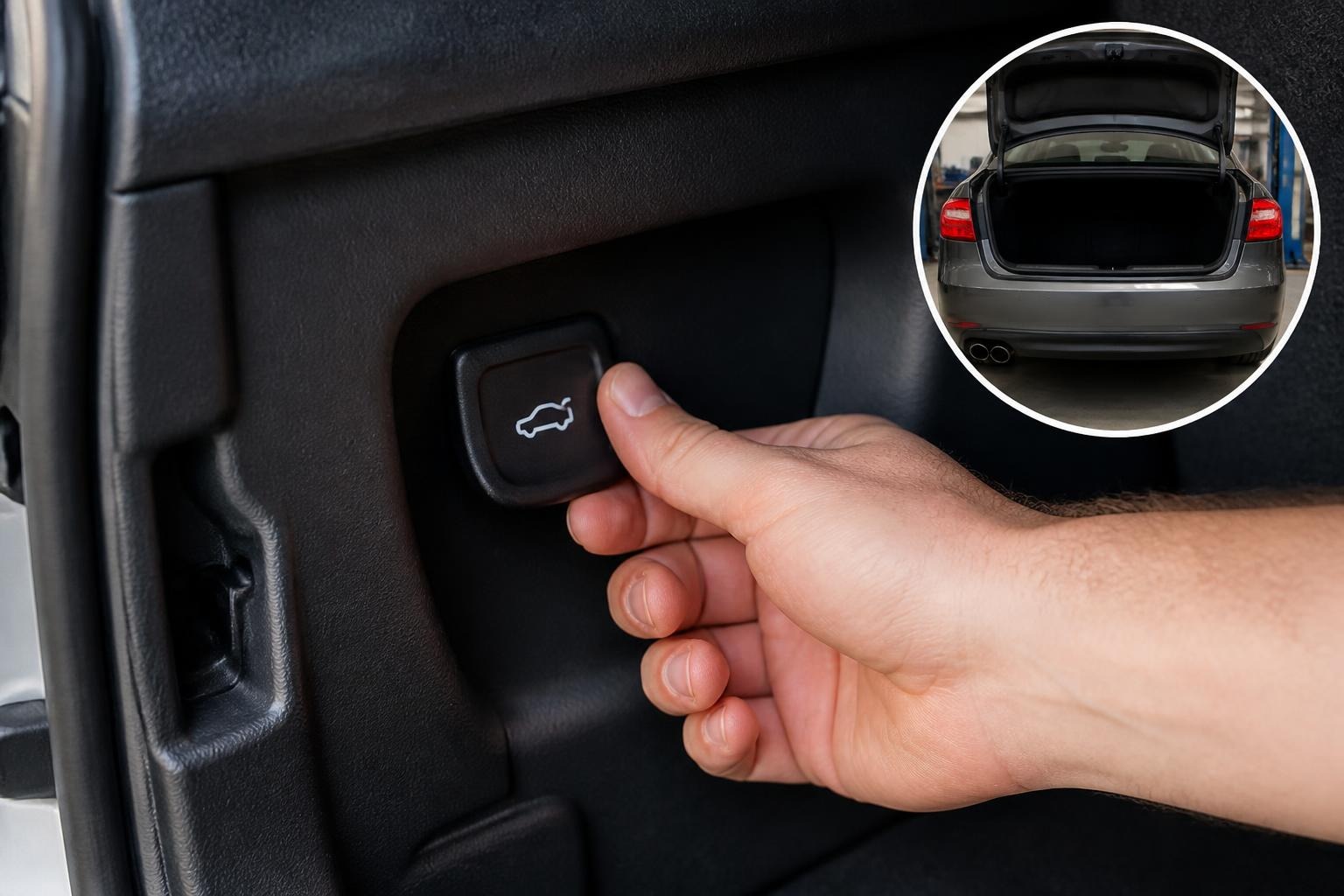
Imagine opening your trunk and spotting a small handle that glows in the dark. It looks like a simple piece of plastic, easy to ignore. Yet that handle exists because one woman survived a terrifying kidnapping and decided other people should have a way out. In October 1995, Janette Fennell and her husband were forced into the trunk of their Lexus after being attacked in their San Francisco garage.
During the ordeal, Fennell discovered a way to release the trunk and escape. Her experience later became part of a long safety campaign that helped bring interior trunk releases to passenger cars in the United States. Today, that glowing handle is a quiet reminder that some vehicle features have deeply personal origins.
A Quiet Night Turned Into a Kidnapping
On October 29, 1995, Janette Fennell, her husband Greig, and their nine-month-old son arrived home after visiting friends. They entered their garage in San Francisco, expecting an ordinary night. Instead, two masked men came underneath the closing garage door and confronted the couple.
The attackers forced Janette and Greig into the trunk of their own Lexus. Their baby was still inside the vehicle, which made the situation even more frightening. The couple could hear little and had no idea what would happen to their child.
As the car traveled through San Francisco and onto the highway, Janette searched for anything that might help. She pulled away some trunk carpeting and found wiring. She hoped that disturbing the wiring might cause the vehicle lights to behave strangely and attract attention.
That plan did not work. Eventually, the vehicle left the highway and stopped away from the paved road. The kidnappers opened the trunk, demanded money and banking information, then locked the couple inside again.
With no obvious escape route, Fennell kept looking for one.
The Light That Changed Everything
Inside the dark trunk, Fennell noticed something unusual near the wiring she had exposed. A small light caught her attention. That tiny glow helped her recognize that she had found part of the trunk’s release system.
She told Greig what she had found, and he pulled the exposed wire. The trunk opened. The couple escaped from the vehicle and immediately checked for their baby.
Their son was not there. After using an emergency key to drive back toward the city, they contacted police and learned that the kidnappers had left the infant safely outside their home.
The experience could have ended with their escape, but Fennell chose to take action. She began researching how many vehicles had a way for someone trapped inside a trunk to get out.
At the time, someone trapped inside a vehicle’s trunk could face a dangerous situation because there was often no obvious way to open it from the inside. Fennell believed that needed to change.
Her personal experience gave her a reason to push for a safety feature that many drivers now take for granted.
Janette Fennell Started Pushing for Change
Fennell’s escape showed that an interior trunk release could make a real difference, but getting such a feature into vehicles required more than a clever idea. It required attention from automakers, safety advocates, lawmakers, and federal regulators.
he founded the Trunk Releases Urgently Needed Coalition, or TRUNC, to advocate for emergency trunk releases. Her campaign centered on a simple but important principle. Anyone trapped inside a vehicle’s trunk should have a practical way to open it from the inside.
The issue also gained attention after children died in separate trunk entrapment incidents during 1998. According to safety information cited by ShunAuto, 11 children died in three incidents within three weeks. Those tragedies added pressure for stronger federal action.
The National Highway Traffic Safety Administration had received petitions about interior trunk releases as early as 1984. Later investigations and safety recommendations helped lead to federal requirements.
Fennell’s experience was not the only reason for the rule, but it became an important part of the push for better trunk safety.
Why the Handle Glows in the Dark
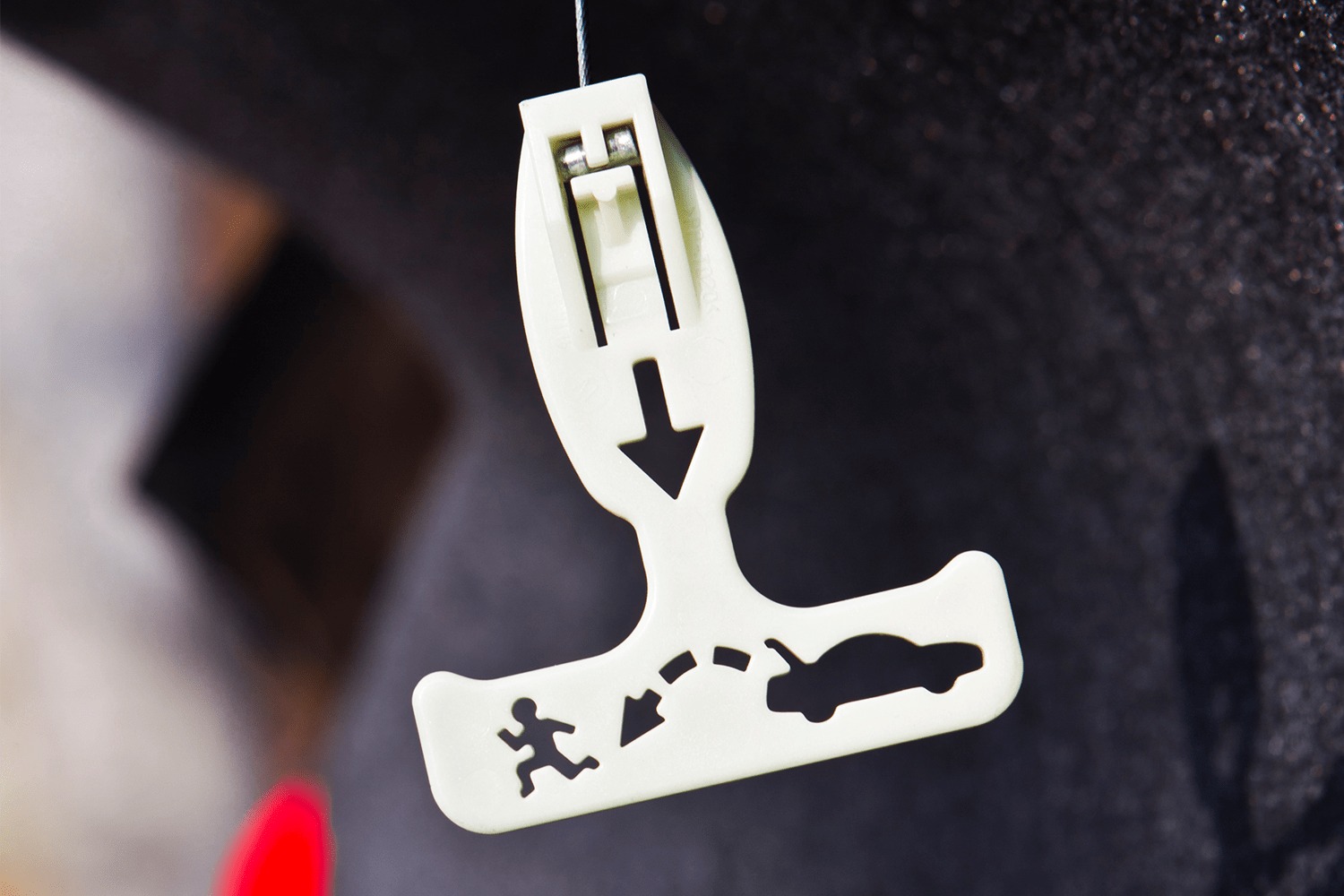
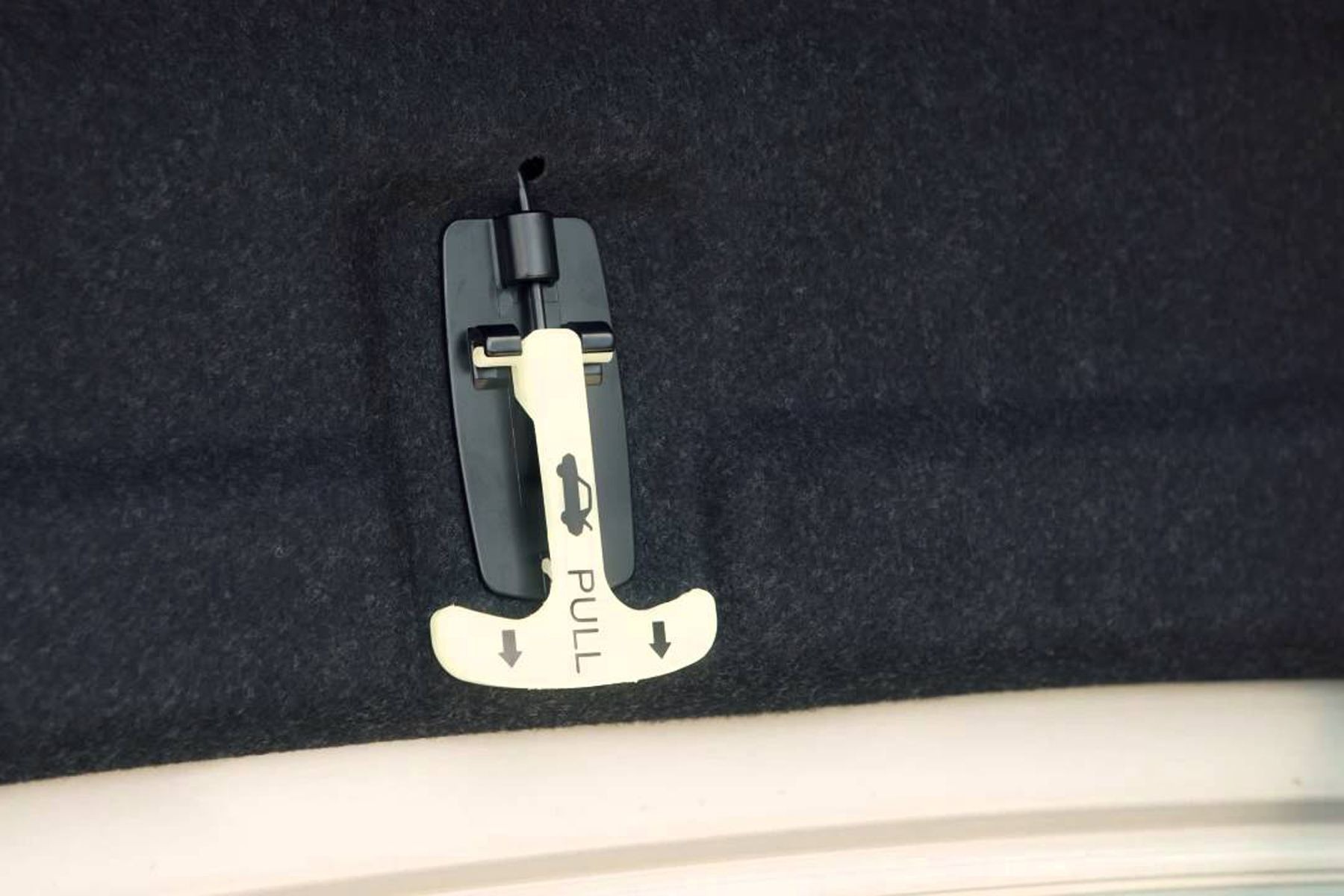
A trunk release would not be very useful if someone trapped inside could not find it. That is why the emergency handle or release mechanism is designed to remain visible inside a closed trunk.
Federal requirements call for manual release mechanisms to include lighting or a phosphorescent feature that makes them easy to see in darkness. That explains the familiar glow-in-the-dark handle found in many passenger cars.
It does not need to be connected to a bright electrical lamp simply to perform its basic safety function. The glow helps a person identify the release when the trunk is dark.
The design differs between manufacturers. Some vehicles use a pull handle, while others rely on different types of interior release mechanisms. The purpose remains the same. Anyone trapped inside the trunk should be able to operate the release without needing help from outside.
For drivers, the handle may seem like a minor detail. For someone trapped inside a closed trunk, finding it could be life-saving. It is one of those vehicle features whose purpose becomes clear only when you understand why it was created.
A Small Handle With a Remarkable History
Federal Motor Vehicle Safety Standard No. 401 established requirements for interior trunk releases, with the rule applying to passenger cars manufactured after September 1, 2001, according to the sources reviewed. The requirement took effect for applicable vehicles built from 2002 onward.
The rule was designed to address both accidental entrapment and situations involving people who were forced into trunks. The release mechanism must allow the trunk lid to be opened from inside under specified conditions, while the manual mechanism must also be visible in darkness.
That little glowing handle therefore carries a much bigger story than its size suggests. It reflects years of safety advocacy, federal action, and lessons learned from tragic incidents.
For Janette Fennell, the issue was personal. She had experienced firsthand what it meant to be trapped inside a trunk with no obvious escape. Rather than keeping that experience to herself, she used it to push for a safety improvement that could help strangers.
The next time you see that glowing handle, it is worth remembering what it represents. It is not merely a piece of plastic attached to a trunk lid. It is a safety feature shaped by one woman’s experience and her determination to make sure fewer people would ever face the same danger.
