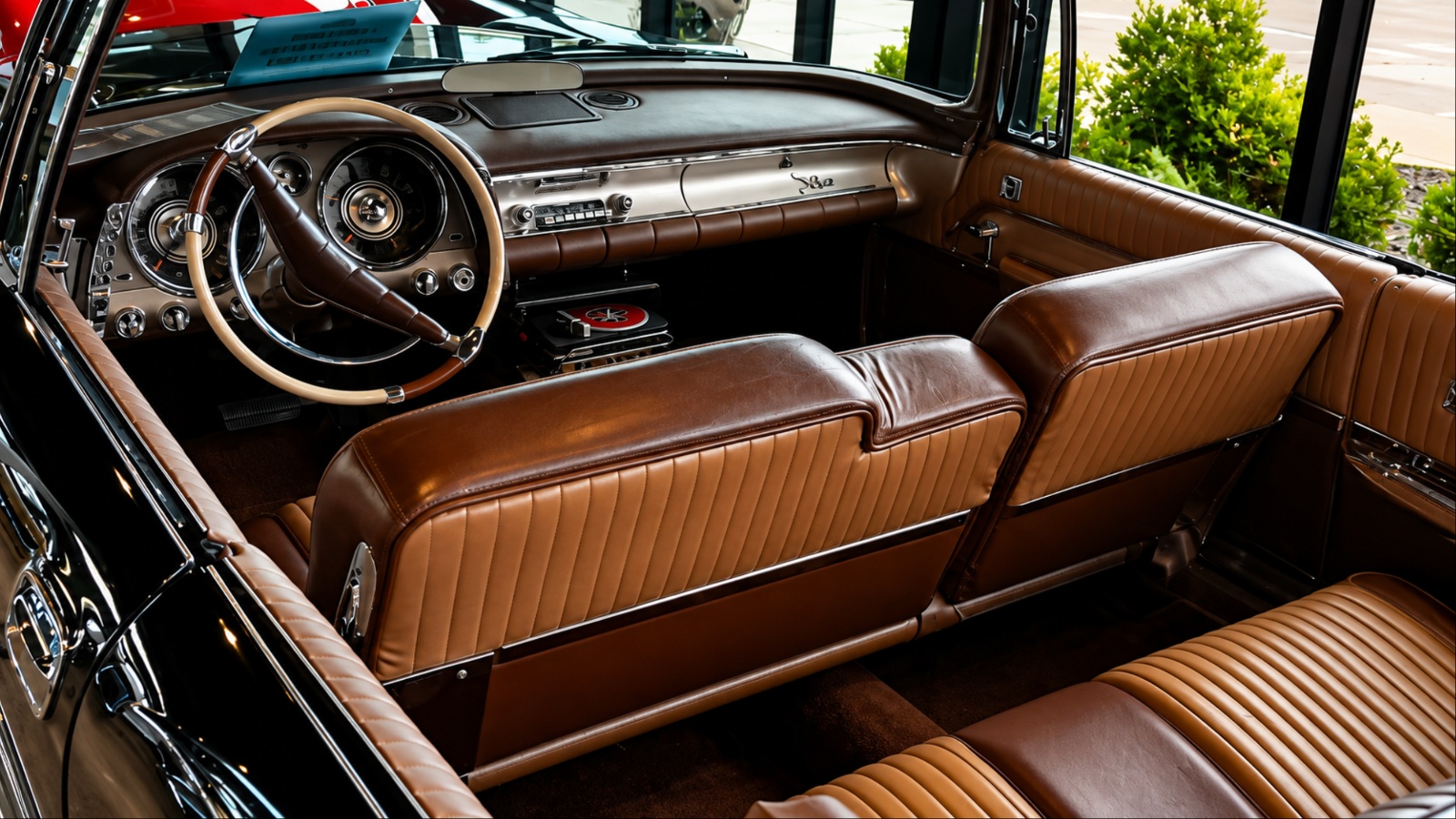
Buying a new car in 1956 could come with an unusual option that seemed more appropriate for a living room than a dashboard. Chrysler actually offered a real record player for its cars. Called Highway Hi-Fi, the system was developed with CBS Laboratories for Chrysler’s 1956 models. Instead of using standard records, it played specially made seven-inch discs that spun at a slow 16 2/3 rpm.
The slower speed allowed each record to hold much more music, while the player was built to cope with the bumps and vibrations of a moving car. It was an ambitious idea for its time, giving drivers a way to listen to music and spoken programs without depending on an AM radio signal. For a short period, Chrysler turned the automobile into something surprisingly close to a living room on wheels.
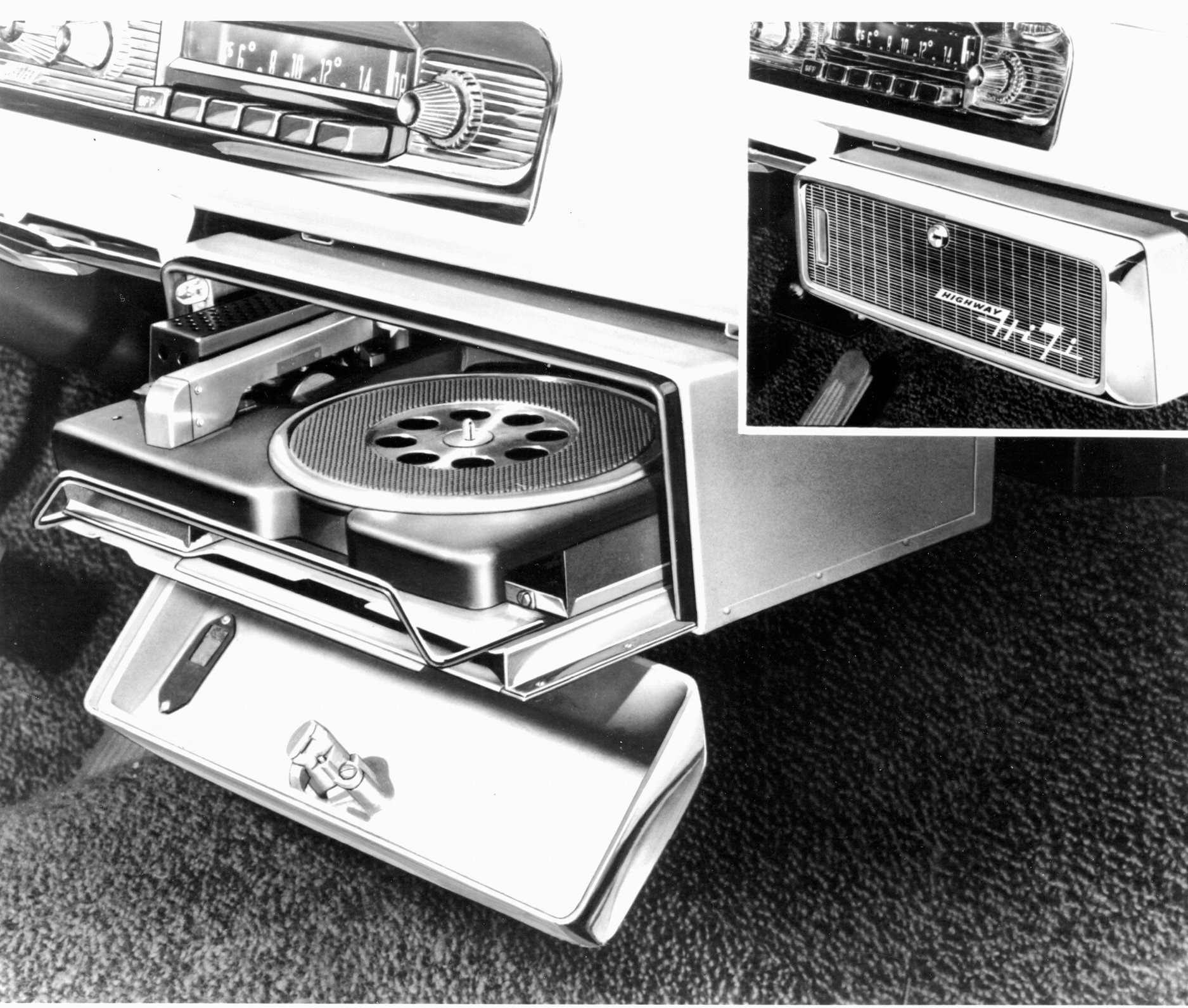
Chrysler Put a Phonograph Under the Dashboard
Back in the 1950s, AM radio was the main source of in-car entertainment. That meant drivers had limited control over what they heard, especially when traveling beyond the strongest local stations. CBS Laboratories saw an opportunity to change that experience.
Peter Goldmark, who had helped develop the 33 1/3 rpm long-playing record, worked on a format designed specifically for automobiles. The result was Highway Hi-Fi. Chrysler announced the system for its 1956 model range, including Plymouth, Dodge, DeSoto, Chrysler, and Imperial vehicles. The player sat beneath the dashboard and connected to the car’s radio system for sound.
There was a practical problem to solve first. A standard 12-inch LP was too large for convenient use inside a car, while a seven-inch 45 rpm record generally offered only a short playing time. Goldmark’s answer was a smaller disc that rotated much more slowly.
At 16 2/3 rpm, the special Highway Hi-Fi records could provide roughly 45 minutes to an hour of audio on each side. That gave motorists a long stretch of uninterrupted listening without constantly replacing records.
For 1956, that was an impressive piece of automotive entertainment technology.
The Records Were Built for Rough Roads
Putting a delicate phonograph inside a moving automobile created an obvious problem. Cars bounce, vibrate, turn, accelerate, and brake. A conventional record player could easily lose contact with the groove when subjected to that treatment.
CBS engineers therefore had to make the Highway Hi-Fi system unusually resistant to movement. The records used extremely fine grooves, while the player employed a specially designed pickup arrangement intended to maintain contact as the car traveled. Chrysler’s advertising specifically promoted the system as capable of playing on rough roads.
The discs were seven inches across but contained far more groove information than an ordinary record of the same size. Their 16 2/3 rpm speed was half the speed of a normal LP, giving the stylus much more time to travel across each side.
There was another catch, though. These were not ordinary Columbia records that could simply be taken from a home collection and placed into the car. They were special discs made for Highway Hi-Fi players.
That created a small but important ecosystem. The buyer needed the Chrysler player, and the player needed compatible records. Columbia supplied recordings, while Chrysler dealers helped distribute them.
The clever engineering worked, but convenience was another matter.
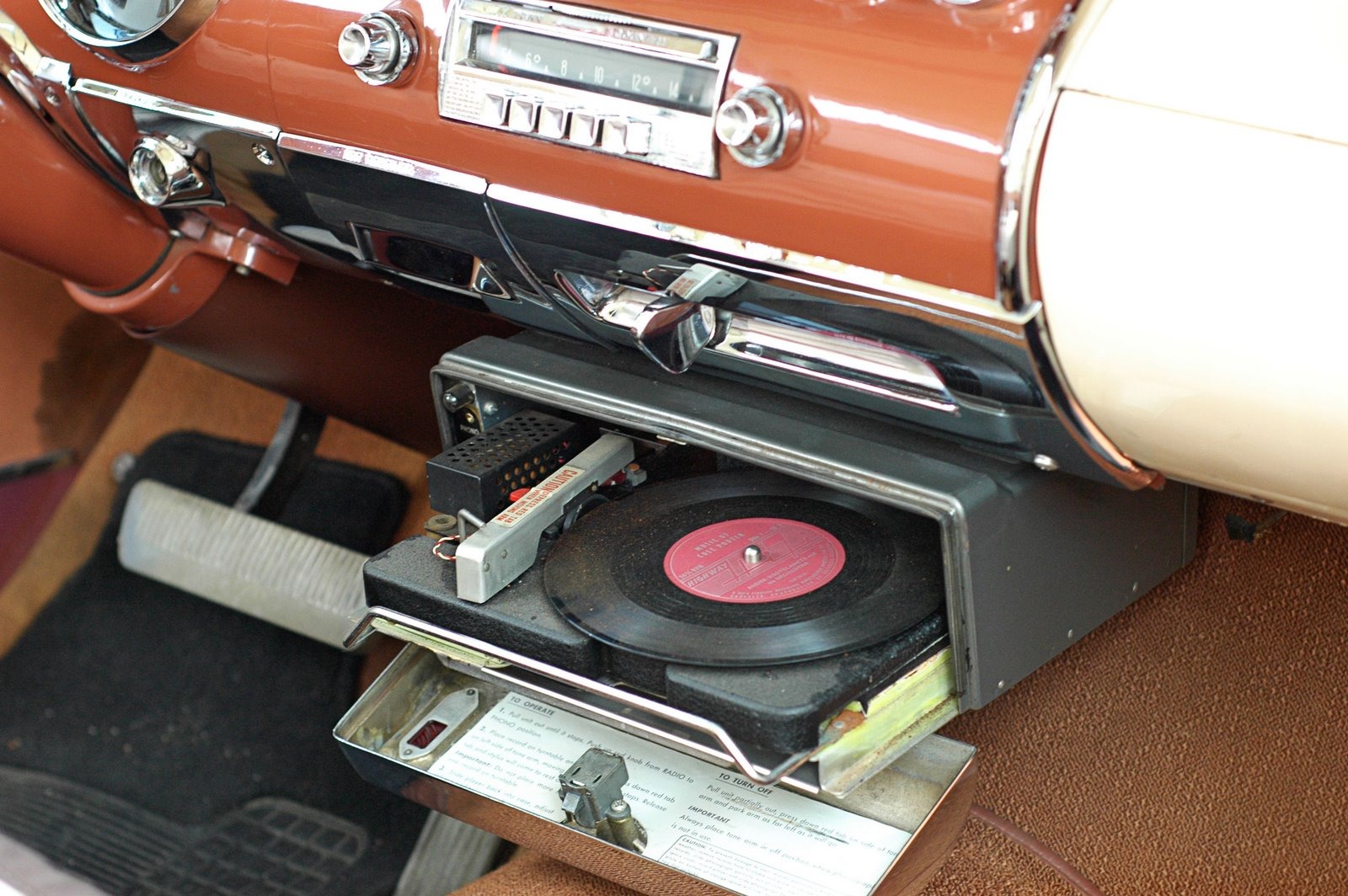
Seven Inches Held Nearly an Hour
The record itself was just as unusual as the machine playing it. Standard 12-inch LPs were too large for convenient use inside a car, while ordinary seven-inch 45 rpm singles offered relatively little playing time. Goldmark’s team needed something small enough for a dashboard but long enough to provide uninterrupted music.
Their answer was a seven-inch disc spinning at 16⅔ rpm, exactly half the speed of a conventional 33⅓ rpm LP. The grooves were packed much more tightly than those on standard records. This allowed each side to carry roughly 45 minutes to an hour of material, depending on the recording.
That tiny disc therefore solved a very practical problem. A driver could start a record and listen for a long stretch without needing to replace it every few minutes. Six records could also be stored with the unit, giving motorists several hours of entertainment.
There was a catch, though. These were not ordinary records. Highway Hi-Fi discs were made for the system and were sold through Columbia’s catalog. Owners could not simply grab their favorite record from a shelf at home and drop it onto the dashboard player.
For its time, however, the concept was remarkably smart. Chrysler had taken an existing form of entertainment and redesigned nearly every part of it for life inside a moving vehicle.
Drivers Had a Small Record Library
Buying the player was only the first step. Owners also needed something to play.
The early Highway Hi-Fi catalog included music, dramatic programs, children’s material, Broadway selections, and spoken recordings. Chrysler’s promotional material described a library designed to give motorists plenty of listening choices during their journeys.
That sounds appealing until you consider how different the system was from a normal home turntable. Highway Hi-Fi records were made specifically for the car player, so owners could not simply bring their favorite collection of standard LPs or 45s and use them.
The unusual format also meant customers had to find and purchase the special recordings separately. Consumer Reports later pointed to the high price of the system and the limited selection of proprietary records as possible reasons for its short life.
Price certainly mattered. The option cost nearly $200 according to Consumer Reports, a hefty amount for an accessory at the time.
There was also a social side to the idea. The player gave drivers control over their entertainment at a time when radio dominated the dashboard. Instead of waiting for a favorite song or program to appear on the air, the driver could choose a recording.
That sounds familiar today because modern drivers expect exactly that kind of control.
In 1956, though, it required a custom phonograph under the dash.
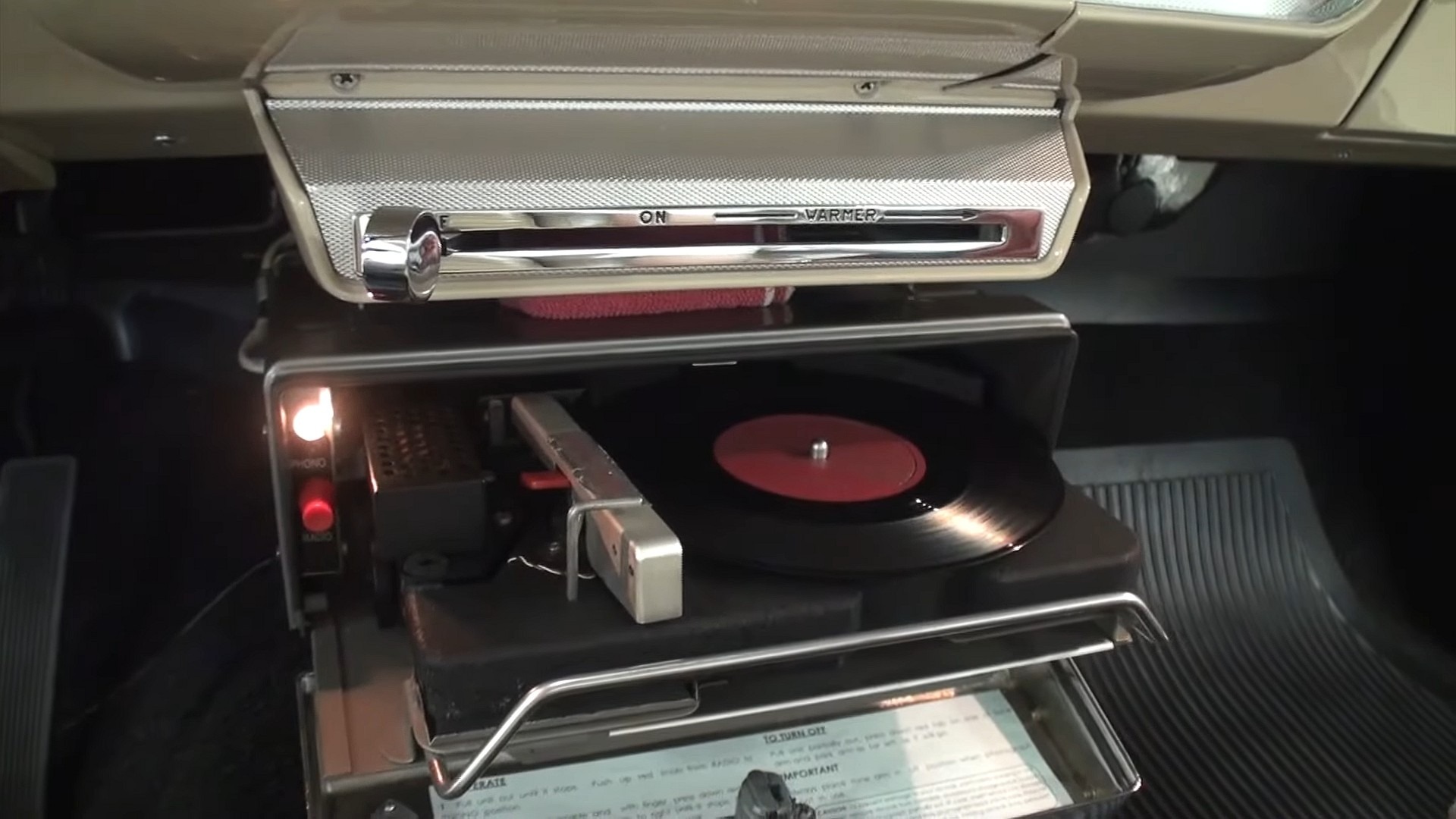
Highway Hi-Fi Did Not Last Long
The biggest problem was not that the concept was foolish. It was that the system had too many practical weaknesses for a mass market.
Highway Hi-Fi was expensive, required special records, and had reliability concerns. A moving car was simply a difficult environment for a mechanical record player. Service issues also became a burden for owners and dealers.
Chrysler eventually tried another approach. RCA developed a later automotive player that could handle standard 45 rpm records, giving drivers access to a much larger existing music collection. Chrysler offered this type of system during the early 1960s.
That change made plenty of sense. Standard records already existed in homes and stores, so drivers did not have to build a separate collection for the car.
Then technology moved again. Cartridge formats offered a simpler way to carry music into a vehicle without exposing a fragile record to bumps and vibration. Eight-track systems and later cassettes made mechanical car record players look increasingly old-fashioned.
Highway Hi-Fi therefore became a short-lived experiment rather than a lasting standard. Still, its basic idea was remarkably modern.
The system tried to give drivers personal control over their entertainment, long before digital playlists, Bluetooth, streaming services, or smartphone integration made that expectation routine.
Chrysler’s dashboard record player failed as a product, but it proved something important: people wanted their cars to be more than transportation.
They wanted them to feel like personal spaces, too.