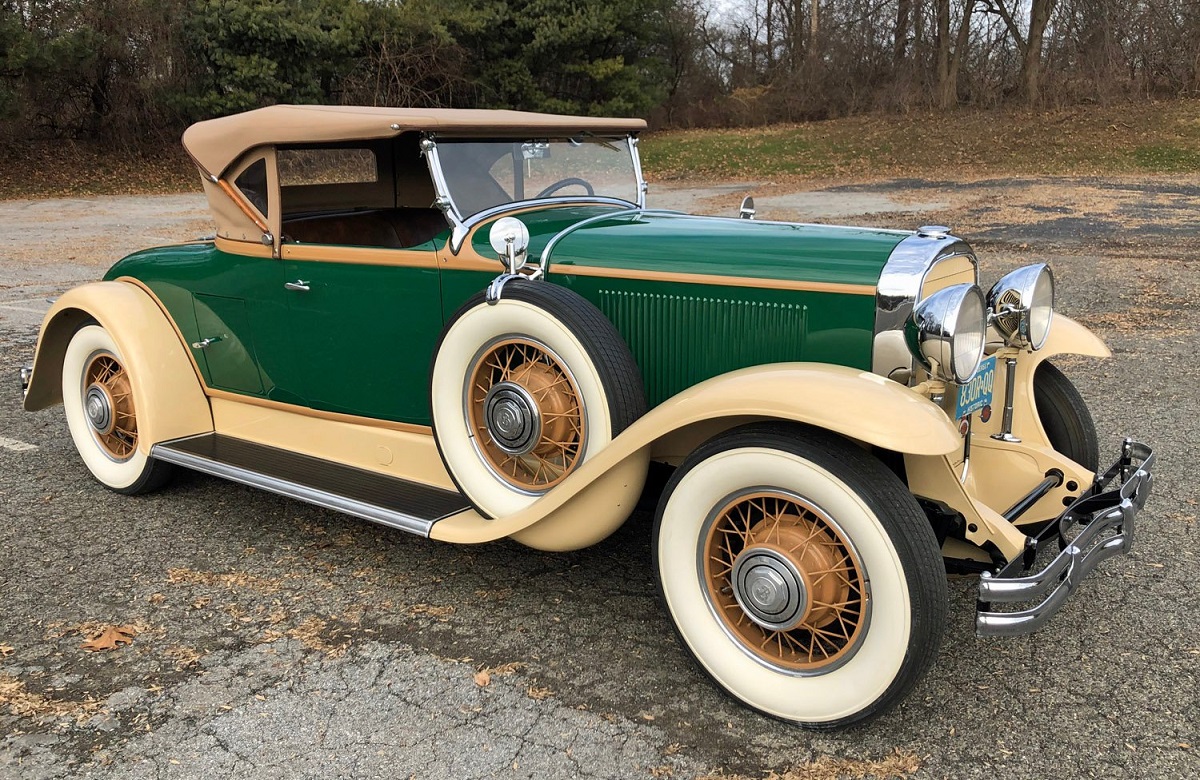
David Dunbar Buick helped create a car company that would become a foundation of General Motors, yet he died without the fortune most people would expect from such a legacy. Born in Scotland and raised in Detroit, Buick was an inventor first and businessman second.
His mechanical talent helped produce important advances in early automobile engineering, including the overhead valve engine. His company attracted William C. Durant, who transformed Buick into a major automobile manufacturer. Buick, however, struggled with finance and business strategy.
He eventually left the company, sold his interest, and watched the Buick name become enormously valuable without him. Years later, he was nearly broke, working at a Detroit trade school before his death in 1929.
David Buick Was an Inventor Before He Was an Automobile Pioneer
David Dunbar Buick was born in Arbroath, Scotland, in 1854. His family moved to Detroit when he was only two years old, placing him in a city that would eventually become the center of America’s automobile industry. Buick left school as a teenager and entered the working world early.
His career initially had nothing to do with cars. He found employment with a company producing plumbing equipment, where he developed the practical mechanical skills that would shape the rest of his life.
Buick was not simply interested in machines as objects. He had a natural instinct for figuring out how things could be made more effectively.
His work in plumbing produced his first significant financial success. Buick developed a method for applying vitreous enamel to cast iron, making it possible to produce attractive white bathtubs more efficiently. At a time when indoor plumbing was becoming increasingly important in American homes, this was a commercially useful invention.
Buick eventually entered the plumbing business and built a solid financial foundation for himself. That financial security gave him the freedom to pursue his mechanical interests without having to depend on a traditional source of income. However, that same freedom would later become a double-edged advantage.
During the 1890s, Buick became increasingly fascinated by gasoline engines. The automobile industry did not yet exist in the form people recognize today. There were experimental vehicles, competing engine designs, uncertain manufacturing methods, and very little agreement about what a practical automobile should look like.
Buick saw possibilities in the internal combustion engine and began spending more time on experimentation. His attention gradually shifted away from plumbing and toward automobiles, creating a conflict between his interests as an inventor and the commercial demands of running a business.
Buick’s greatest contribution came through engineering rather than marketing. His work on the overhead valve engine helped create a design capable of producing greater power than the side valve arrangements common among early competitors.
The technology became an important part of Buick automobiles and helped establish the reputation of the young company. The engineering was impressive, but engineering alone could not pay factory bills, purchase materials, or build a national distribution network. Buick repeatedly put his attention into development while his finances became increasingly strained.
By the beginning of the twentieth century, Buick had committed himself to automobiles. He established companies to develop engines and eventually complete vehicles, but money disappeared faster than expected.
His development efforts produced only a handful of cars while expenses continued to rise. Buick was talented enough to create promising technology but lacked the financial discipline and commercial instincts required to turn that technology into a large manufacturing enterprise.
His life was beginning to follow a pattern that would continue for decades. Buick had a talent for developing valuable ideas, but he repeatedly struggled to turn those innovations into lasting financial success.
William Durant Turned Buick’s Invention Into a Business Empire
By 1903, Buick needed outside money to keep his automobile company alive. A loan from Benjamin Briscoe helped him continue, and the Buick Motor Company was formally established.
The company was operating in an industry that was still young and unpredictable. Buick had the engineering vision, but the business required somebody who understood production, sales, and expansion. That person arrived in the form of William C. Durant, a successful carriage manufacturer from Flint, Michigan.
Durant possessed something Buick did not have to the same extent. He had a strong instinct for business and expansion. While Buick concentrated on improving the automobile itself, Durant saw an opportunity to build a much larger company around the vehicle.
He understood distribution, manufacturing scale, and the importance of convincing investors that a company could grow. The partnership between the two men therefore worked for a time because their abilities were different. Buick provided technical credibility, while Durant provided business leadership and a growing network of resources.
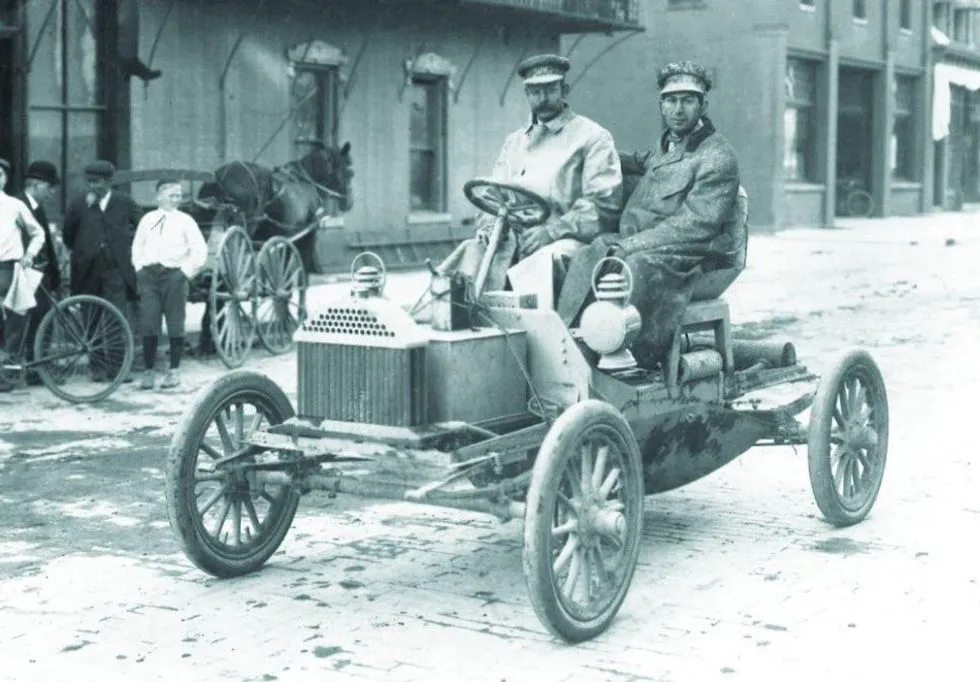
The early Buick cars gained a reputation for engineering quality. The company also benefited from competition and automobile endurance events that helped demonstrate what its vehicles could do.
Production increased rapidly. Buick’s name became increasingly recognizable, and the company attracted more investment. Yet as the organization expanded, Buick’s personal influence declined. The company was becoming larger than the inventor who had started it.
This is where the tragedy of Buick’s financial story becomes especially striking. In 1906, Buick left the company and accepted a settlement. Accounts of the precise arrangement differ, but he received substantial money for his interest, including a famous $100,000 payment associated with his departure.
At the time, that was a considerable sum. Buick had not walked away empty-handed. He had made a fortune by the standards of his own career, but he had also surrendered his connection to a company whose future value would become vastly greater.
William Durant understood the potential of Buick far better as a corporate asset than Buick himself seemed to understand. Buick became an important part of the industrial structure Durant was building.
In 1908, Durant used Buick as a foundation for the creation of General Motors. Buick therefore became a cornerstone of an organization that would eventually become an enormous force in the global automobile industry. The founder whose name appeared on the cars, however, was no longer directing the company.
There is an important lesson in that separation. Creating a successful product and building a successful company are different skills. Buick had demonstrated that he could solve difficult engineering problems. Durant demonstrated that he could turn a promising automobile manufacturer into something much larger.
Buick received money when he left, while Durant gained control over an asset with enormous future potential. Neither man could have known exactly how large General Motors would become, but their different approaches produced dramatically different financial outcomes.
How the Founder of Buick Ended Up Nearly Broke
After leaving Buick, David Buick tried to reproduce his earlier success through investments and new ventures. The results were disappointing.
He invested in California oil opportunities and later became involved in Florida real estate. These ventures consumed much of the money he had received. The financial decisions that followed were particularly painful because the value of his old company was continuing to grow while his own financial position was moving in the opposite direction.
Buick also tried to return to automobile manufacturing. He became associated with ventures including Lorraine Motors and later worked on an automobile concept that carried the Dunbar name. These efforts failed to develop into successful mass-production businesses.
His mechanical imagination remained active, but the commercial environment had changed. By then, the automobile industry was increasingly dominated by companies capable of raising large amounts of capital, organizing factories and establishing broad sales networks. Buick was still thinking like an inventor trying to build a better machine.
His financial decline became severe during the 1920s. He put money into Florida property at a time when the state’s real estate boom was collapsing. The investment left him in a difficult position.
By the time he returned to Detroit, the fortune he had once possessed was largely gone. The contrast was extraordinary. Cars carrying the Buick name were becoming part of a major American industrial empire, while the man who had founded the original company was struggling to support himself.
Near the end of his life, Buick worked at the Detroit School of Trades. Accounts describe him teaching and later performing more modest duties. He was no longer living like the wealthy automobile pioneer people might imagine from his name.
A 1928 interview described a man who was almost completely broke and could not even afford a telephone. The image is difficult to reconcile with the enormous industrial legacy attached to his surname, yet it captures the unusual path his life had taken.
David Buick died in Detroit in March 1929 at the age of 74. He had spent his life creating machines, developing ideas, and helping establish a company that would survive him by many decades.
The Buick brand continued growing, while its founder disappeared from the center of the story. He did not die as a wealthy industrial magnate. He died after losing much of the money he had earned and after spending his final working years in a far more ordinary position.