
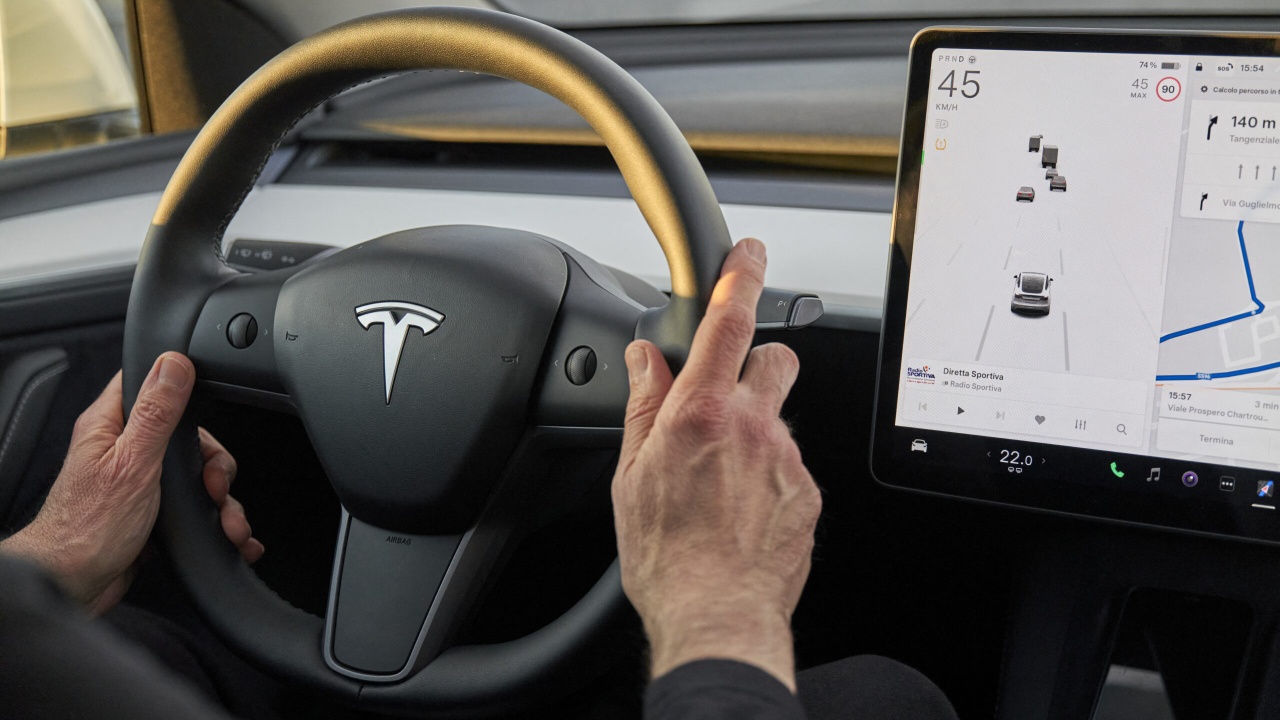
Tesla is making a stronger case for wider approval of its Full Self-Driving system in Europe after releasing safety data that it says shows the supervised technology is involved in substantially fewer collisions than manually driven Tesla vehicles.
According to Reuters, Tesla said supervised FSD recorded 4.1 times fewer collisions than manually driven Teslas across five European countries between April and August 2026. The comparison covers more than 100 million kilometers of public-road driving in the Netherlands, Belgium, Denmark, Estonia, and Lithuania.
Tesla said FSD-equipped vehicles recorded three collisions on highways and nine on non-highway roads during the period. Manually driven Tesla vehicles recorded 137 highway collisions and 490 non-highway collisions.
Tesla is using the figures to support its argument for broader approval as European regulators consider whether the technology should be allowed more widely.
The announcement comes at an important moment. Europe has maintained a cautious regulatory approach toward advanced driving systems, making approval a major hurdle for Tesla. Wider access could give the company a much larger customer base and strengthen its position in a competitive electric-vehicle market.
However, Tesla’s 4.1-times claim needs context. The data comes from Tesla’s own vehicles and analysis, and it does not establish that FSD is universally 4.1 times safer than every human driver or vehicle on European roads.
What Tesla’s European Data Shows
The most important feature of Tesla’s announcement is the scale of the real-world data. More than 100 million kilometers gives the company a large sample from which to measure collisions across different European environments.
Tesla says the results show a significant reduction in collisions when supervised FSD is active. The difference appears on both highways and other roads, although most reported collisions occurred away from highways.
The company’s public safety information includes testing conducted specifically for European road conditions. Tesla says its engineering fleet has evaluated situations including intersections, roundabouts, traffic lights, pedestrians, and cyclists.
Those situations matter because European driving environments differ from those in North America. Road layouts, signs, lane markings, traffic behavior, and the frequency of roundabouts vary between countries. A system that performs well in one region still has to demonstrate that it can handle conditions elsewhere.
The company also separates different types of driving and road conditions in its analysis. This is useful because collision rates can vary considerably depending on where and how vehicles are driven.
Still, the comparison between FSD and manual driving has limitations. Drivers who regularly use FSD may travel different routes, at different times, and under different conditions than drivers who operate their Teslas manually. Driver behavior can also influence exposure to collisions.
That does not automatically make Tesla’s results invalid. A large real-world sample can provide valuable evidence about system performance. But the 4.1-times figure should be viewed as Tesla’s reported comparison under its methodology, rather than an independently established universal safety ratio.
The distinction is important because Tesla is seeking regulatory approval while promoting the safety results.
Why the EU Decision Matters
Tesla currently has provisional approval for supervised FSD in five European countries, including the Netherlands, Belgium, Denmark, Estonia, and Lithuania. The company is seeking to expand beyond these markets and secure broader regulatory approval.
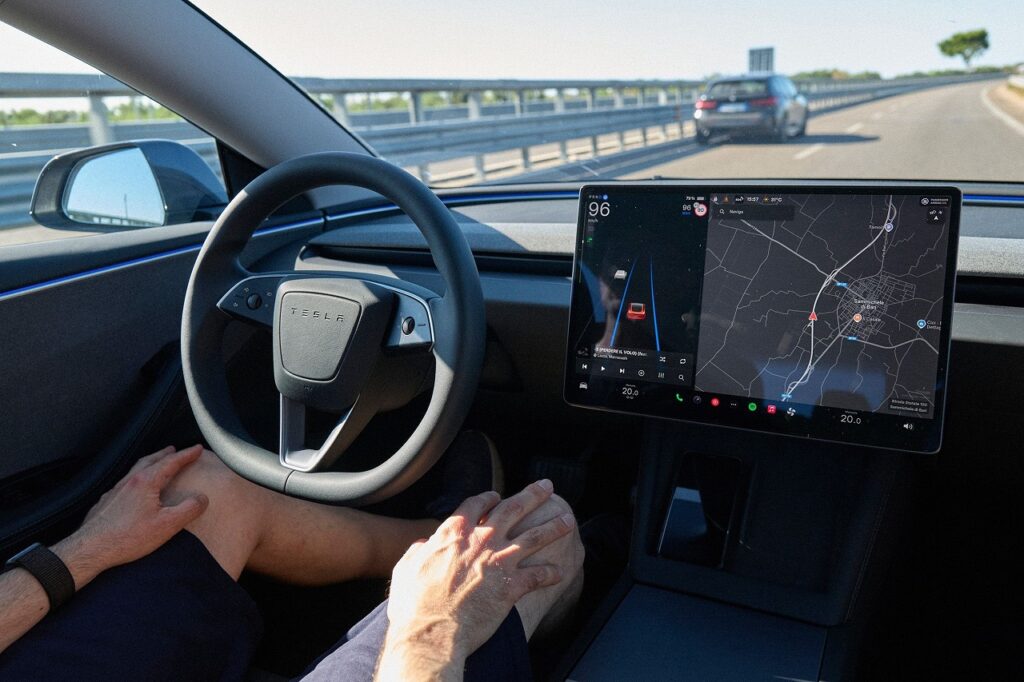
According to Reuters, an EU vote could take place as early as October 6. Approval would require support from at least 15 of the European Union’s 27 member states, representing at least 65% of the bloc’s population.
A successful vote could significantly change Tesla’s European FSD strategy. Instead of dealing with restrictions market by market, Tesla could gain access to a broader regulatory framework and make the feature available to more customers.
That would also create an opportunity to collect more real-world driving data. More vehicles operating under European conditions could help Tesla identify unusual road situations, improve its software, and build a larger safety record.
Reuters has reported that skepticism remains around Tesla’s comparisons and that the European approval process has faced criticism over transparency. Regulators have not released all supporting information, citing commercial sensitivity.
This matters because manufacturers have a commercial interest in demonstrating that their technology is safe and effective. Regulators must determine whether the evidence remains convincing when evaluated independently and under consistent standards.
The methodology will be particularly important. Tesla is comparing its FSD vehicles with manually driven Teslas rather than with every vehicle on European roads. The two groups may have different drivers, routes, and operating conditions.
A fair evaluation therefore needs to consider factors that affect collision exposure. Road type, traffic density, weather, vehicle usage, and driver behavior can all influence results.
The technology itself also requires careful definition. Despite its Full Self-Driving name, Tesla’s European system remains supervised. Drivers must continue monitoring the road and be ready to intervene. The system does not make the driver irrelevant, and its operation does not remove human responsibility.
That distinction will remain central to European regulators as they consider wider deployment.
The safety question is therefore not simply whether the software can control a vehicle without crashing. Regulators also have to consider how drivers interact with automation and whether they can respond effectively when the system encounters something unexpected.
What Wider Approval Could Mean for Tesla
If wider approval is granted, Tesla could gain a significant opportunity to expand FSD across Europe.
A larger customer base would give the company more real-world exposure and potentially more data for future software development. It could also make advanced driving technology a more prominent selling point for Tesla vehicles at a time when the European EV market is becoming increasingly competitive.
For Tesla, the biggest challenge will be proving that the reported safety advantage is consistent beyond the conditions represented in its current data.
A reduction in collisions across more than 100 million kilometers would be meaningful if the comparison is robust. However, collision frequency alone cannot answer every safety question. Automated systems must also be evaluated for how they respond to rare, complicated situations and how effectively drivers can intervene when necessary.
This is particularly important for supervised systems. Human drivers can become less attentive when automation handles most driving tasks, creating a potential mismatch between automation and the driver’s ability to respond quickly when something unexpected happens.
Tesla must therefore demonstrate more than FSD’s ability to control a vehicle safely. It also needs to show that the complete human-machine system operates as intended.
The company’s latest announcement nevertheless represents a clear effort to influence the regulatory discussion with a large real-world safety dataset.
The 4.1-times figure gives Tesla a powerful headline, but the details behind that number will matter more to regulators. If the data survives independent examination and continues to show a meaningful reduction in collisions, it could strengthen Tesla’s case for wider deployment.
If regulators conclude that important variables have not been adequately controlled, they could request additional evidence before granting broader access.
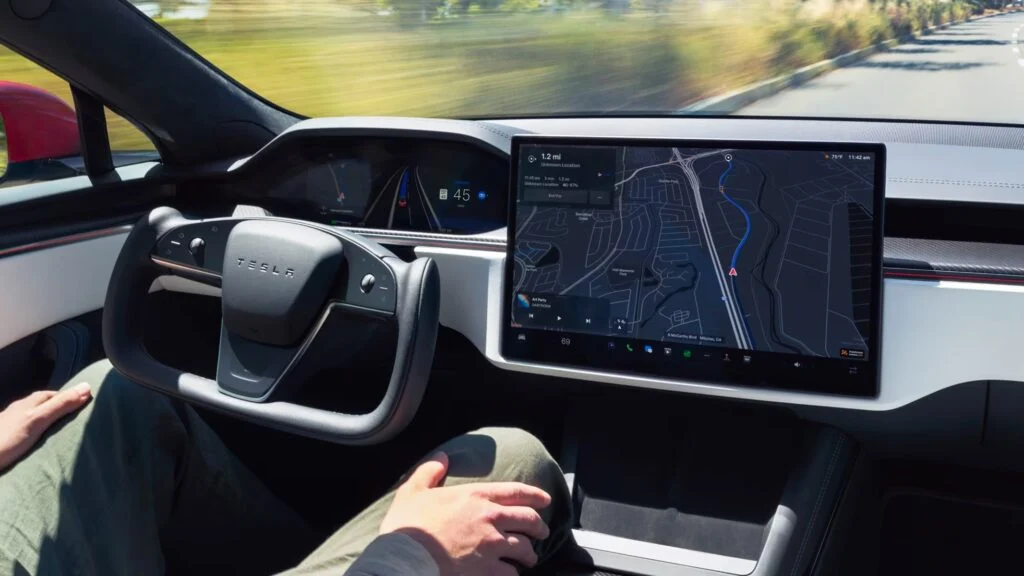
The upcoming EU decision is therefore an important test for both Tesla and European regulators. Tesla wants to demonstrate that supervised FSD can safely operate on European roads, while regulators must decide whether the evidence is strong enough to justify wider deployment.
For consumers, the most important issue remains whether the system actually improves safety while drivers use it as intended.
Tesla’s new data suggests that it can. The company says its supervised system has recorded far fewer collisions than manually driven Teslas over a very large distance. But the figure remains a Tesla-generated comparison, and independent validation will be important before it can be treated as a definitive measure of safety.
That makes the upcoming regulatory decision significant. Europe has an opportunity to encourage useful automated-driving technology while maintaining rigorous standards for safety and accountability.
Tesla’s 4.1-times claim is therefore not the end of the debate, but it could become one of the most important pieces of evidence in the company’s effort to expand its advanced driving technology across Europe.
