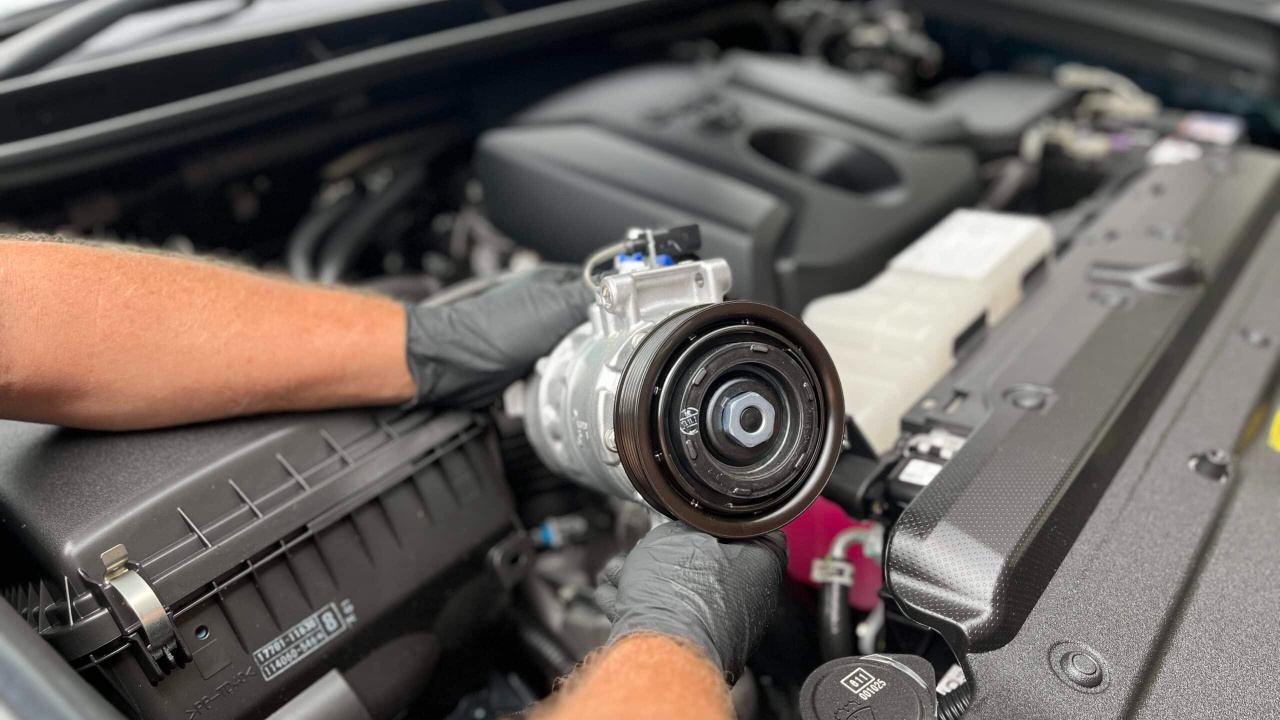
A failed air conditioning compressor at 150,000 miles can leave a used car owner facing a difficult decision. Spending four figures on a high mileage vehicle may seem hard to justify, but there is no universal answer. The right choice depends on the car’s condition, value, and expected future repairs.
Mileage alone should not determine whether an AC compressor gets replaced. A well-maintained vehicle with 150,000 miles can have many useful years ahead, while a poorly maintained car with considerably fewer miles may be approaching several major repairs.
The more important calculation is the vehicle’s condition, market value, expected remaining life, and the actual cost of restoring the AC system.
The compressor is also only one part of the system. A technician needs to determine whether the compressor itself has failed or whether another component is responsible for the lack of cold air.
According to RepairPal’s August 2026 estimates, replacing an automotive AC compressor averages $1,058 to $1,447, including approximately $239 to $351 in labor and $819 to $1,096 for parts. The estimate varies considerably by vehicle.
Kelley Blue Book’s current national estimate is higher, placing average compressor replacement at $1,546 to $1,705, while noting that location and vehicle-specific factors affect the final price.
That difference illustrates why getting a vehicle-specific estimate is essential before deciding whether a 150,000-mile car is worth repairing.
First, Determine Whether the Compressor Actually Failed
A car that stops blowing cold air does not automatically need a new compressor. The AC system includes the compressor, condenser, evaporator, expansion device, refrigerant lines, and electrical controls. A leak, electrical fault, clutch problem, or another failed component can produce symptoms that look like compressor failure.
Kelley Blue Book lists weak cooling, unusual noises such as grinding or squealing, unpleasant smells, and changes in engine performance when the AC is switched on as symptoms associated with compressor problems.
Proper diagnosis therefore matters more on a high-mileage vehicle because unnecessary parts replacement can quickly turn a manageable repair into an expensive one.
RepairPal says compressor diagnosis requires checking system pressures and using professional equipment, while replacement generally involves evacuating the refrigerant, removing the belt, refrigerant lines, and electrical connections, installing the new compressor, and recharging the system.
If only a clutch, electrical component, or another relatively inexpensive part has failed, replacing the entire compressor may not be necessary.
If the compressor has seized or experienced an internal mechanical failure, replacing it is often the more practical solution. However, the condition of the compressor is not the only concern. It is also important to determine what happened when the original unit failed.
If the compressor suffered an internal breakdown and contaminated the refrigerant circuit with debris, replacing only the compressor may not be sufficient.
The technician may need to inspect and potentially replace other components and properly flush or clean the system. That can push the final bill substantially above the basic compressor-replacement estimate.
This is why a $1,200 quote and a $2,500 quote can both be legitimate for apparently similar AC problems.
The first may involve a straightforward compressor replacement. The second may include additional components or contamination-related work. At 150,000 miles, the distinction becomes critical.
Compare the Repair With the Car’s Remaining Value
Once the diagnosis is confirmed, the next question is not whether the car is “old.” It is whether the entire vehicle is healthy enough to justify another significant investment.
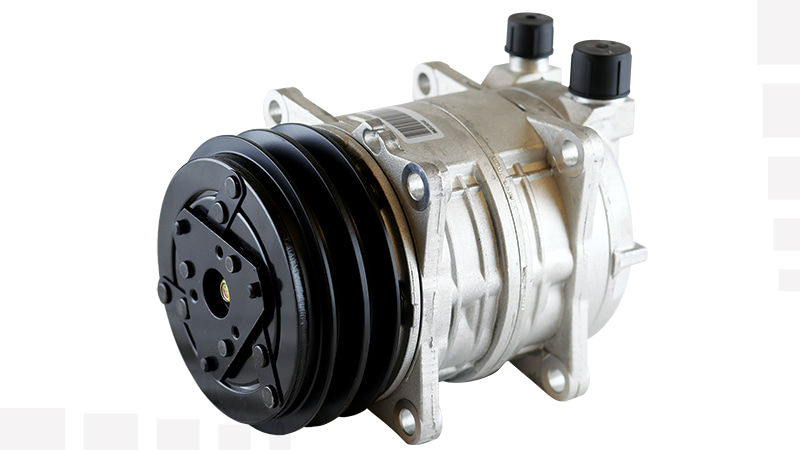
Consider a 150,000-mile sedan that has been regularly maintained, has a healthy engine and transmission, has good suspension, has minimal rust, and has no major warning signs. If the AC compressor costs $1,300 to replace, repairing it can be perfectly rational.
The car’s mileage does not erase the value of the transportation it provides. By contrast, imagine the same repair on a vehicle that also needs tires, brakes, suspension work, and cooling-system repairs and has an engine consuming significant oil. The compressor could become the repair that pushes the ownership economics in the wrong direction.
The right approach is to look at near-term repair exposure, not just today’s bill. Kelley Blue Book notes that AC repair costs vary according to the vehicle’s make and model and the complexity of the problem. Its current general estimates place ordinary AC repair at $384 to $445, AC recharging at $239 to $281, and compressor replacement at $1,546 to $1,705.
Those numbers make diagnosis particularly important. Paying hundreds of dollars for a recharge when the system has a significant leak may only postpone the real repair. Conversely, replacing a compressor when the actual problem is an electrical fault wastes money.
At 150,000 miles, an independent inspection can help put the AC repair into context. Ask the mechanic to evaluate the engine, transmission, cooling system, suspension, steering, brakes, tires, and major leaks while the car is already being inspected.
You want to know whether the compressor is an isolated failure or simply the latest problem in a vehicle entering a more expensive stage of ownership. The vehicle’s maintenance history also matters.
A car that has received regular oil changes, cooling-system service, transmission maintenance, and other scheduled work has a different risk profile from one that has been neglected.
Age matters too. A 150,000-mile car that has accumulated those miles primarily through highway driving may have experienced less severe use than one that spent most of its life in heavy stop-and-go traffic. Mileage is useful information, but it does not tell the entire story.
The quality of the replacement part matters as well. A cheaper aftermarket compressor may reduce the initial bill, but warranty terms and part quality should be considered alongside the purchase price. RepairPal’s estimates show that parts account for a substantial portion of compressor-replacement costs, making the choice of component important.
For an older vehicle you intend to keep, paying for a reputable replacement with an appropriate warranty can be more sensible than choosing the cheapest available part.
When Fixing It Is the Smarter Decision
One common financial mistake is assuming that every repair on a high mileage vehicle is money wasted simply because the car has already covered a lot of miles.
That is not necessarily rational. If a reliable 150,000-mile vehicle needs a $1,300 compressor but would otherwise be expensive to replace, repairing the AC may be considerably cheaper than buying another used vehicle with its own unknown problems.
Buying another car also involves taxes, registration, financing costs, insurance differences, and the risk of inheriting someone else’s deferred maintenance.
A known vehicle with a documented maintenance history can therefore be worth more to its owner than its trade-in value suggests. The calculation changes if the vehicle has become structurally or mechanically unreliable.
If the engine or transmission is already showing serious problems, rust is compromising the body, or several major systems are approaching failure, spending $1,500 or more on air conditioning becomes harder to justify.
The same applies if the vehicle’s market value is extremely low and you cannot reasonably expect to keep it long enough to benefit from the repair. One useful rule is to ask how long you expect to keep the car.
If you plan to drive it for another three to five years and the rest of the vehicle is healthy, restoring the AC can be a reasonable investment. If you are planning to sell it within a few months, spending heavily on a major AC repair may not make financial sense unless the repair is necessary to make the vehicle usable or saleable.
Comfort also has a legitimate value. In hot climates, air conditioning isn’t merely a luxury. A functioning system can make daily transportation considerably more practical, particularly for long commutes or passengers who cannot tolerate high cabin temperatures.
That means the decision should not be based entirely on resale value. At 150,000 miles, the smartest approach is to diagnose before replacing, inspect the entire vehicle, obtain a written estimate, and compare the repair with the car’s remaining mechanical life.
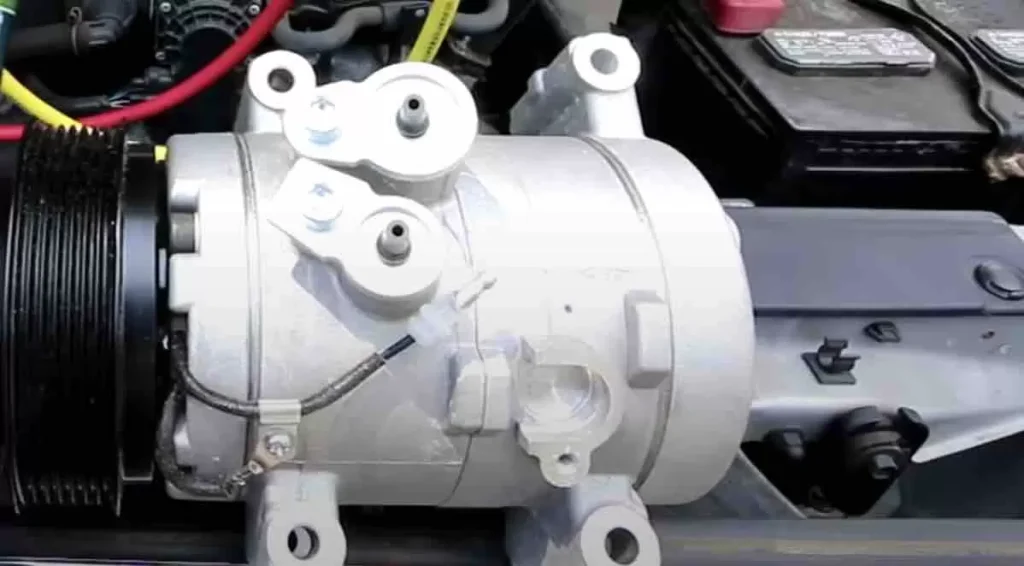
If the compressor replacement is around $1,000 to $1,700 and the vehicle is otherwise healthy, there is no inherent reason to reject the repair simply because the odometer reads 150,000 miles.
Current RepairPal and Kelley Blue Book estimates show that compressor replacement is expensive but still within the range of a major repair that can make sense on a healthy older vehicle.
If the compressor failure comes alongside several major problems, however, the better decision may be to stop investing in the car. The odometer should start the conversation, not end it.
A 150,000-mile car with a healthy drivetrain and solid maintenance history can absolutely be worth fixing. A neglected vehicle with multiple major repairs ahead may not be.
The deciding factor is not how many miles the car has traveled. It is how many reliable miles you can reasonably expect after the repair.