
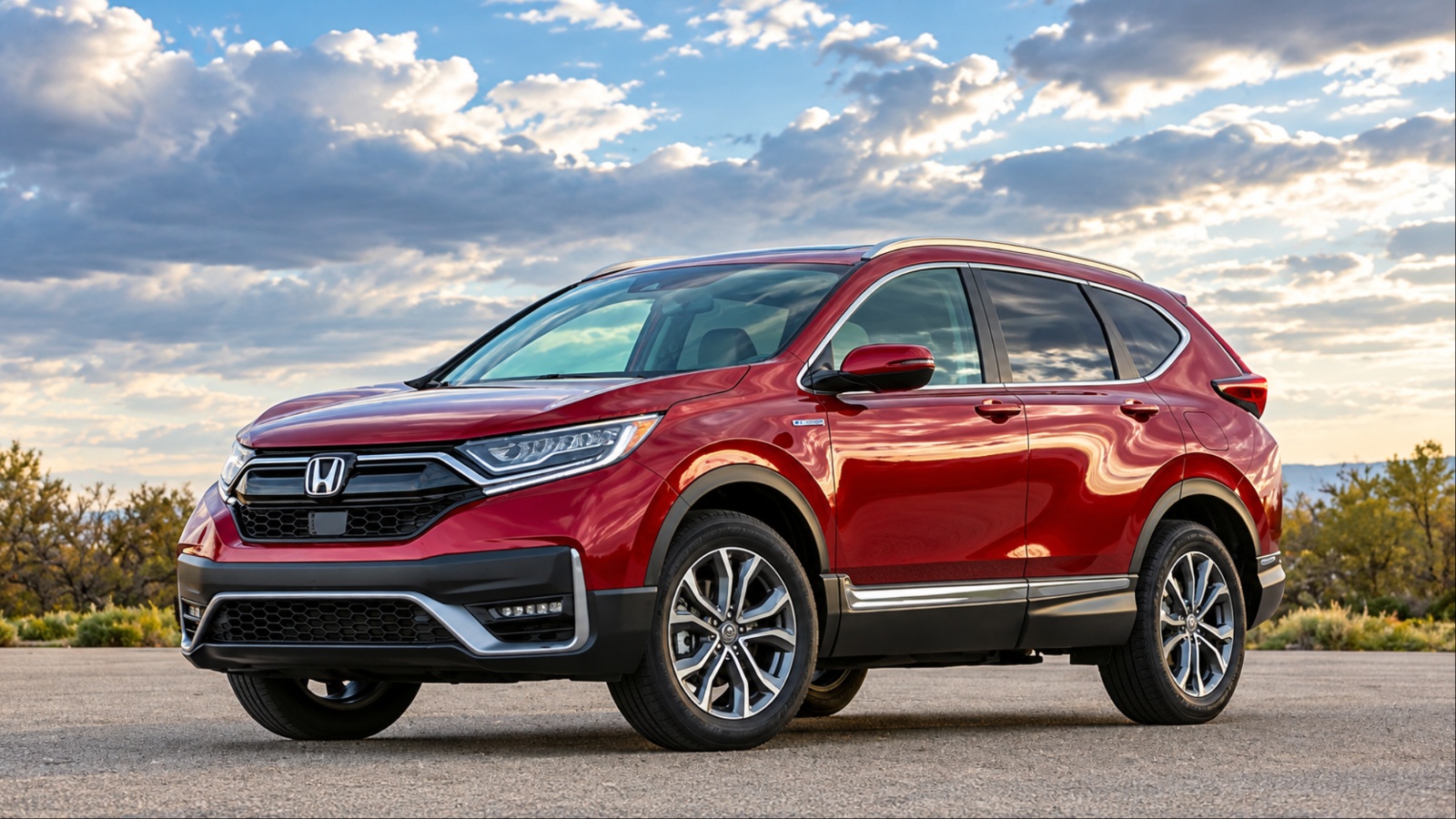
Some Honda CR-Vs simply refuse to retire. While most vehicles eventually become expensive to keep on the road, documented CR-V examples have accumulated mileage figures that would make many owners nervous.
Reports include first-generation models surpassing 400,000 miles, a 2007 example reaching 386,000 miles, and a 2014 CR-V exceeding 350,000 miles.
There is also broader statistical evidence behind the CR-V’s reputation. iSeeCars analyzed nearly 400 million vehicles and calculated that the CR-V has a 10.6 percent predicted chance of reaching at least 250,000 miles, compared with a 4.8 percent average across vehicles in its study.
The ranking below combines documented high-mileage owner examples with the generations and configurations that have demonstrated exceptional endurance in the U.S. market.
1. 2001 Honda CR-V
The first-generation Honda CR-V has one of the strongest documented high-mileage stories in the entire model’s history. A 2001 CR-V discovered in a Northern California junkyard showed 403,757 miles on its odometer. Autoblog documented the vehicle and noted that the first-generation CR-V was sold in the United States from 1997 through 2001.
What makes this example particularly interesting is that it was not some exotic long-distance specification. The vehicle was an entry-level LX with front-wheel drive and an automatic transmission. Under its hood sat Honda’s B20 DOHC four-cylinder, producing 146 horsepower and 133 lb-ft of torque.
The CR-V’s simple mechanical layout helped make it well suited to high-mileage use. The B20 engine was naturally aspirated, eliminating the turbocharger and associated hardware found in many modern small SUVs. The first-generation vehicle also used a conventional automatic transmission rather than a continuously variable transmission.
Its 403,757-mile odometer reading does not mean every 2001 CR-V will reach that number. This particular vehicle eventually ended up in a junkyard, and its condition showed that extremely high mileage eventually takes a toll. Nevertheless, the documented figure demonstrates how far a properly maintained example could travel.
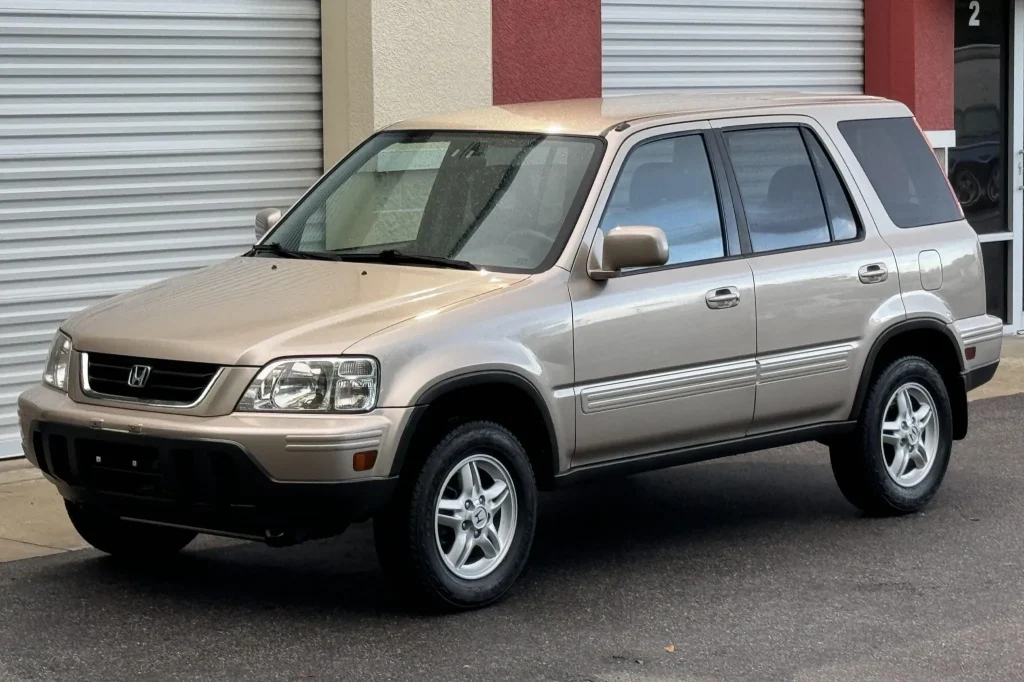
The first-generation CR-V also had an unusually practical interior for its era. Its rear cargo-area cover could unfold into a picnic table, while the rear seats offered useful flexibility.
For anyone studying CR-V longevity, this 2001 model is difficult to ignore. More than four hundred thousand miles is extraordinary for any passenger vehicle, and the fact that this example achieved the figure with a relatively simple four-cylinder powertrain makes it one of the most compelling high-mileage CR-Vs ever documented.
2. 2007 Honda CR-V
A 2007 Honda CR-V documented by TFLcar reached 386,000 miles, giving this third-generation model one of the most impressive verified owner-reported mileages in the CR-V’s history. The owner reported using a five-speed automatic and said the vehicle remained in service at 386,000 miles after replacing the starter once and the alternator twice.
The 2007 model was significant because Honda had completely redesigned the CR-V for the third generation. Instead of carrying over the first- and second-generation shape, the new vehicle adopted a more upright body, a different interior layout, and a new generation of Honda’s K-series four-cylinder engine.
For U.S. buyers, the engine was a 2.4-liter naturally aspirated four-cylinder producing 180 horsepower and 161 lb-ft of torque. That output was considerably higher than the 146 horsepower offered by the 2001 model, yet the vehicle retained a relatively straightforward powertrain.
The 386,000-mile example is particularly useful because its owner provided specific information about repairs rather than simply reporting an odometer figure. Major components inevitably required attention, but the vehicle continued functioning deep into mileage territory that few ordinary SUVs reach.
The third-generation CR-V also benefited from a conventional five-speed automatic during this period. That transmission avoided the complexity associated with later CVT-equipped CR-Vs and contributed to the mechanical character of these earlier vehicles.
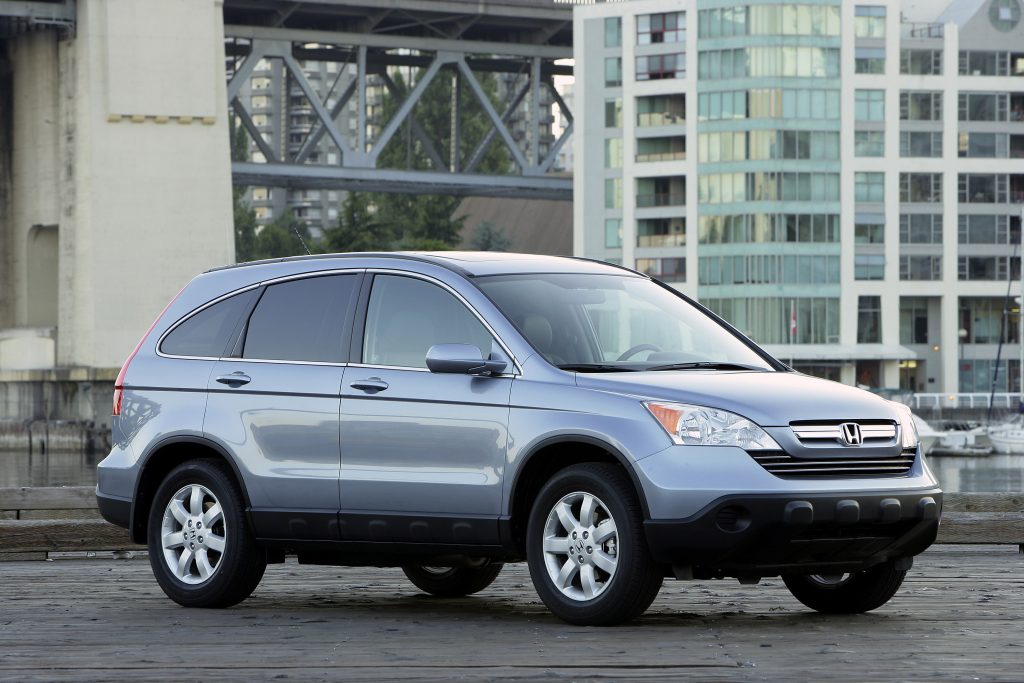
Another advantage was the widespread availability of replacement parts. Because the third-generation CR-V was sold in large numbers across the United States, maintaining an older example remains comparatively practical.
A documented 386,000 miles does not guarantee that every 2007 CR-V will reach the same figure. Maintenance history, climate, driving conditions, accident history, and previous repairs matter enormously. Still, this particular example provides hard evidence that the third-generation platform can survive an extraordinary amount of use.
3. 2014 Honda CR-V
Few CR-V longevity stories are as convincing as the one attached to a 2014 model owned by TFLcar reader Stephen S. He purchased the AWD crossover new in August 2014 and accumulated more than 350,000 miles.
The remarkable part is not simply the odometer reading. The owner provided a detailed account of what had actually been replaced during that time, giving the story considerably more credibility than an unsupported high-mileage claim.
At more than 300,000 miles, the CR-V was still being driven daily. The owner reported that 95 percent of the mileage came from city driving, while the vehicle continued to have no warning lights and its major functions remained operational.
The documented maintenance included a belt tensioner at 180,000 miles, an alternator at 280,000 miles, and rear struts and mounting brackets at 298,000 miles, along with multiple sets of tires and brake jobs.
The 2014 CR-V belongs to the fourth generation and uses Honda’s 2.4-liter four-cylinder engine in the U.S. market. The engine produces 185 horsepower and 163 lb-ft of torque.
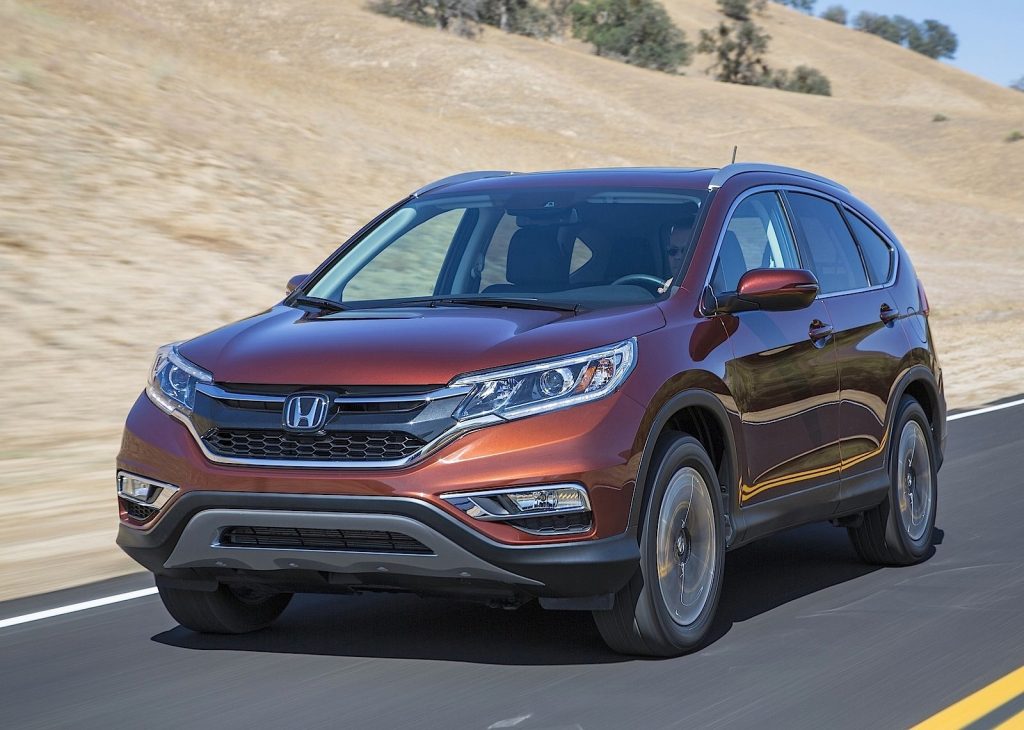
Unlike later CR-Vs that moved toward continuously variable transmissions, the 2014 model used a conventional five-speed automatic, which the owner specifically sought when purchasing the vehicle.
Its dimensions also remained relatively compact for an SUV, measuring 178.3 inches long and 71.6 inches wide. The example’s extraordinary mileage demonstrates that high-mileage durability is possible, but it should not be interpreted as a guarantee. Maintenance history and individual vehicle condition remain critical.
4. 2006 Honda CR-V
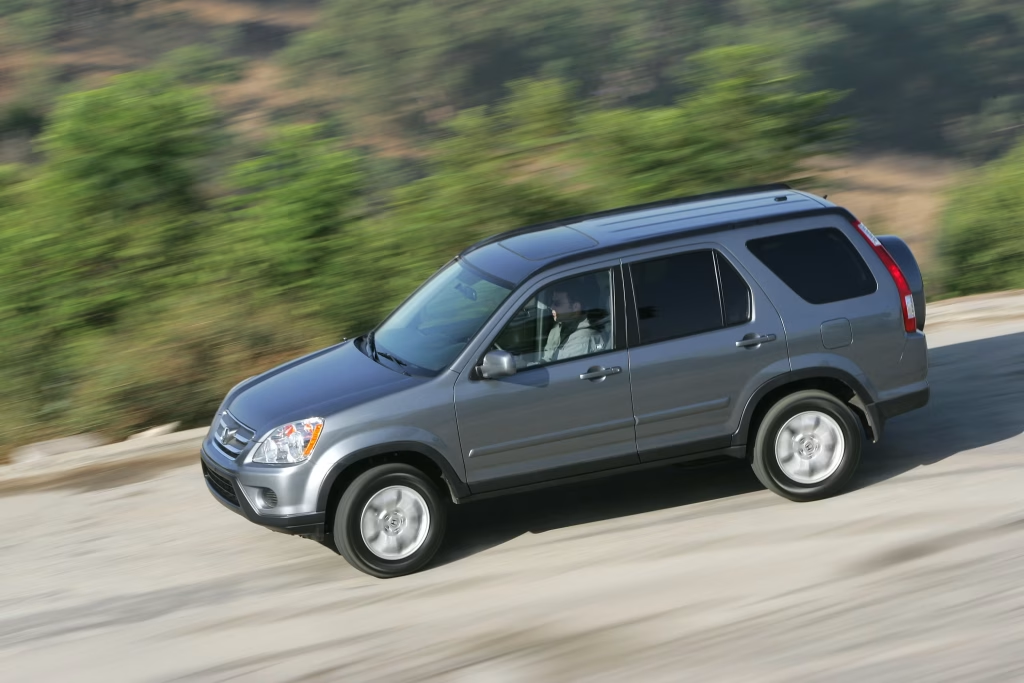
The 2006 Honda CR-V provides another hard piece of evidence for the second generation’s durability. A U.S. salvage-yard vehicle record documents a 2006 CR-V with exactly 300,000 miles on its odometer. The record identifies the vehicle as a four-cylinder model, making it a useful example of an older CR-V reaching the 300,000-mile threshold.
There is stronger statistical evidence behind the reputation of this particular generation as well. CARFAX’s reliability data for 2006 CR-Vs shows that 42.3 percent of the vehicles in its analyzed data had reached 200,000 miles, compared with 26.9 percent for similar compact SUVs. It also found that 70.4 percent had reached 150,000 miles.
Under the hood, the U.S.-market 2006 CR-V uses Honda’s 2.4-liter four-cylinder, part of the K-series family. The engine produces 156 horsepower and 160 lb-ft of torque and is paired with either a five-speed manual or five-speed automatic transmission, depending on configuration.
The 2006 model is especially interesting because it represents the final year of the second-generation CR-V in the United States. Its relatively straightforward mechanical package predates many of the technologies that became commonplace in later compact SUVs.
The vehicle measures 181.0 inches long and 68.9 inches wide, giving it a relatively narrow footprint by modern SUV standards. That compact size was paired with a practical interior and available all-wheel drive.
A 300,000-mile odometer does not mean every 2006 CR-V will reach that distance. Age-related problems involving suspension components, air-conditioning hardware, seals, rust, and other systems can become increasingly important.
Still, the documented 300,000-mile example combined with CARFAX’s longevity data makes the 2006 model one of the strongest candidates for a high-mileage CR-V ranking.
5. 2012 Honda CR-V
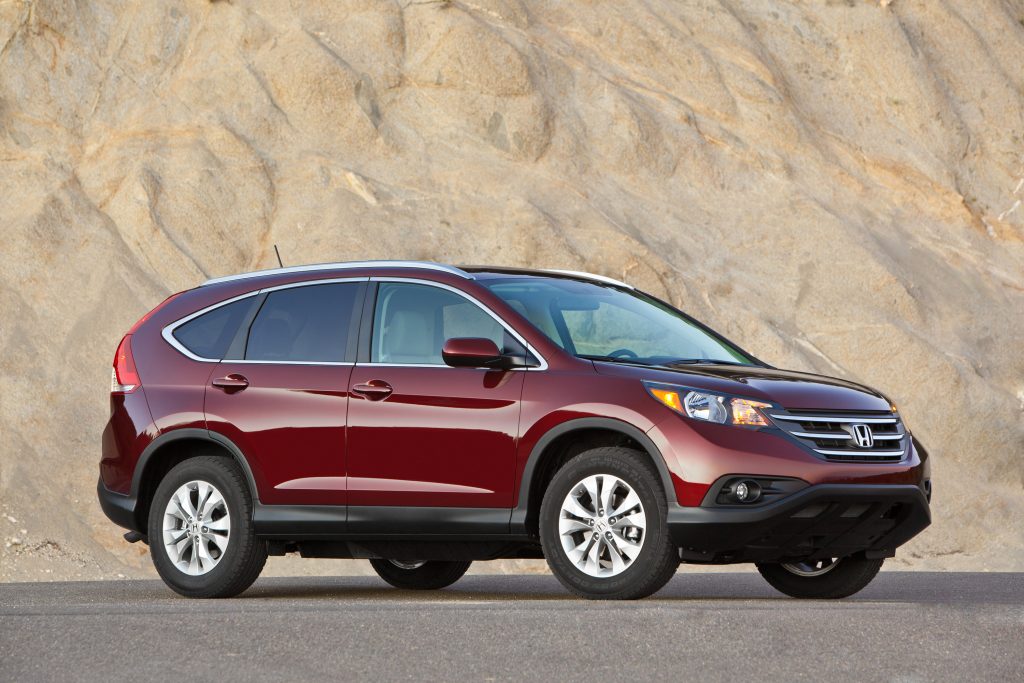
The 2012 Honda CR-V deserves attention because it sits at the end of the third-generation run and benefits from years of development within a well-established platform.
CARFAX’s vehicle-history data for 2012 CR-Vs shows that 34.6 percent of the vehicles in its analyzed data had reached at least 200,000 miles, while 72.4 percent had reached 150,000 miles. Those figures put the model among the stronger performers in its class for reaching substantial mileage.
The 2012 CR-V uses a 2.4-liter naturally aspirated four-cylinder producing 185 horsepower and 163 lb-ft of torque. Unlike many newer compact SUVs, the powertrain uses a conventional five-speed automatic transmission.
That relatively straightforward mechanical package is one reason these CR-Vs remain interesting to high-mileage buyers.
This generation also introduced a more refined interior and revised exterior compared with the outgoing model. Honda retained the practical layout that made the CR-V popular while improving cabin space and everyday usability.
The 2012 model measures about 178.3 inches long and 71.6 inches wide, making it considerably easier to maneuver than many modern midsize SUVs.
High-mileage durability is not simply about the engine. Suspension components, cooling systems, transmissions, wheel bearings, air-conditioning equipment, and electrical components can all determine whether an older vehicle remains economical to keep.
A CR-V that has reached 200,000 miles with consistent maintenance can therefore be a very different proposition from one with neglected service.
The CARFAX data is especially useful because it provides a large-scale look at real vehicles rather than relying on one unusually successful owner example. Reaching 200,000 miles is still significant, but the percentage recorded by CARFAX suggests that high mileage is not an isolated occurrence for this model year.
For buyers evaluating an older CR-V, maintenance records remain more important than the odometer alone.
6. 2010 Honda CR-V
The 2010 Honda CR-V shows why a high-mileage ranking should consider statistical durability rather than simply collecting extraordinary odometer stories.
CARFAX’s analysis of 2010 CR-V vehicles found that 33.9 percent had reached 200,000 miles, while 69.2 percent had reached 150,000 miles. That gives the model a substantial track record among vehicles that have accumulated serious mileage.
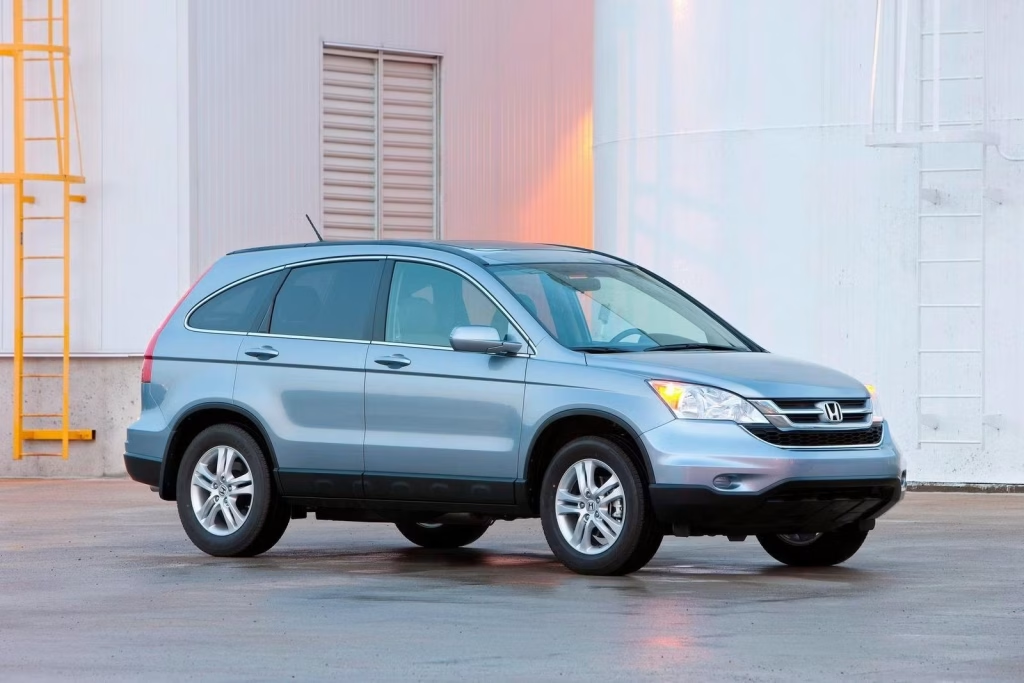
Mechanically, the 2010 CR-V belongs to the third generation and uses Honda’s familiar 2.4-liter four-cylinder engine. U.S.-market output is 180 horsepower and 161 lb-ft of torque.
Buyers could choose between front-wheel drive and Honda’s Real Time four-wheel-drive system, while transmission choices included a five-speed manual on certain configurations and a five-speed automatic.
The five-speed automatic is worth noting because it represents a different era of drivetrain design. The CR-V had not yet moved to the continuously variable transmissions that became common in later Honda models. For owners keeping a vehicle for many years, transmission maintenance can become just as important as engine care.
The 2010 CR-V is also relatively compact, measuring roughly 179.3 inches long and 71.6 inches wide. Its size makes it practical for city driving while still offering the elevated seating position and flexible cargo area that helped establish the CR-V as a major compact SUV.
There is nothing glamorous about an odometer showing 200,000 miles, but that is precisely why the CARFAX numbers matter. They indicate that reaching that threshold was not limited to a tiny number of exceptional examples.
A used 2010 CR-V should still be evaluated individually. Age, previous ownership, accident history, rust exposure, maintenance quality, and drivetrain condition can radically change the ownership experience. However, the available mileage data gives this model year a credible place among long-running CR-Vs.
7. 2011 Honda CR-V
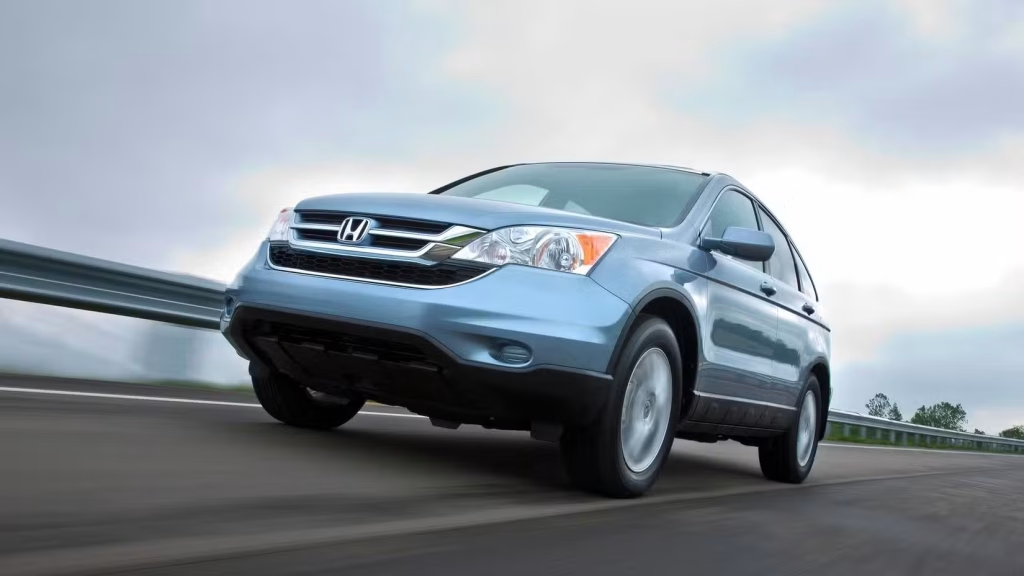
The 2011 Honda CR-V sits in an interesting position because it combines the mature engineering of the third-generation platform with a mileage record that remains impressive today.
CARFAX data shows that 32.6 percent of analyzed 2011 CR-Vs had reached 200,000 miles, while 68.6 percent had reached 150,000 miles. Those figures put it firmly among the CR-V model years with a strong record of reaching high mileage.
Its powertrain is familiar territory for Honda enthusiasts. The U.S. version uses a 2.4-liter four-cylinder engine producing 180 horsepower and 161 lb-ft of torque. A five-speed automatic transmission was available, while the lineup also offered front-wheel drive and Honda’s Real Time four-wheel-drive system.
The numbers tell only part of the story. The 2011 CR-V’s appeal to long-term owners also comes from its straightforward mechanical layout.
There is no turbocharger in the standard engine, and the vehicle predates Honda’s widespread adoption of CVTs in this segment. That does not eliminate maintenance requirements, but it gives the vehicle a relatively conventional drivetrain.
The body measures approximately 179.3 inches long and 71.6 inches wide, keeping it manageable compared with today’s larger crossovers. Inside, Honda focused heavily on practicality, giving the CR-V a useful cargo area and flexible rear seating.
At this age, condition becomes more important than the original specification. A 2011 CR-V with documented fluid changes, regular brake and suspension work, and consistent inspections can be a far better purchase than a lower-mileage example that was neglected.
The CARFAX figures provide useful context because they cover a broad group of vehicles rather than a single unusually durable example. Nearly one-third reaching 200,000 miles is a meaningful indicator of longevity.
For anyone considering a high-mileage CR-V, the 2011 model demonstrates that a carefully maintained compact SUV can remain useful long after many owners would normally consider replacing it.
8. 2009 Honda CR-V
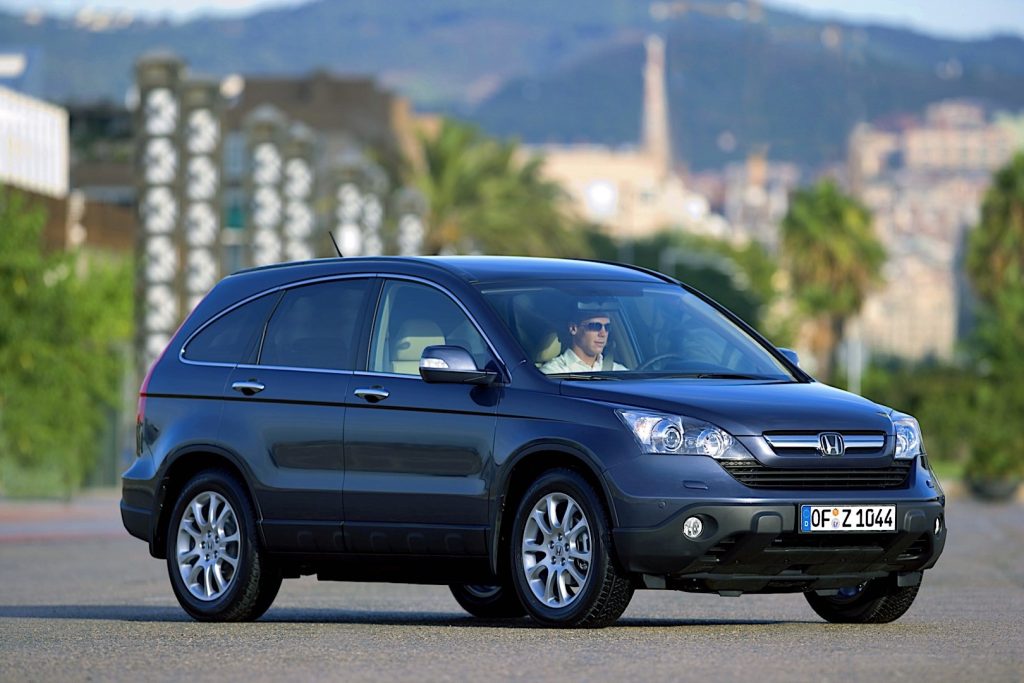
The 2009 Honda CR-V gives this list another example from the third-generation era, but its case is built particularly well by real-world mileage data. CARFAX reports that 32.1 percent of the 2009 CR-Vs in its analyzed vehicle population had accumulated at least 200,000 miles. The figure for reaching 150,000 miles was even stronger, at 69.5 percent.
For an SUV that entered the U.S. market more than 15 years ago, those numbers provide useful evidence of long-term survivability. The 2009 model uses the same basic 2.4-liter naturally aspirated four-cylinder found throughout this generation, producing 180 horsepower and 161 lb-ft of torque.
The powertrain was deliberately conventional. A five-speed automatic was available, and buyers could choose front-wheel drive or Honda’s Real Time four-wheel-drive system. The absence of forced induction in the standard engine kept the mechanical package relatively uncomplicated.
The CR-V’s dimensions also suited its role. At approximately 179.3 inches long and 71.6 inches wide, it was compact enough for everyday American roads while providing considerably more usable cargo flexibility than a typical sedan.
High mileage, however, should never be treated as proof that a particular used vehicle is automatically reliable. By the time a 2009 CR-V reaches 200,000 miles, components unrelated to the engine can become major factors.
Suspension parts, exhaust components, cooling-system hardware, air-conditioning equipment, wheel bearings, and drivetrain components may all require attention simply because of age and accumulated use.
That makes maintenance records essential. CARFAX’s data indicates that many 2009 CR-Vs have crossed major mileage thresholds, but the individual vehicle in front of a buyer still needs a professional inspection.
The 2009 CR-V earns its position because its high-mileage performance is supported by a sizeable real-world dataset rather than a single extraordinary anecdote.
9. 2008 Honda CR-V
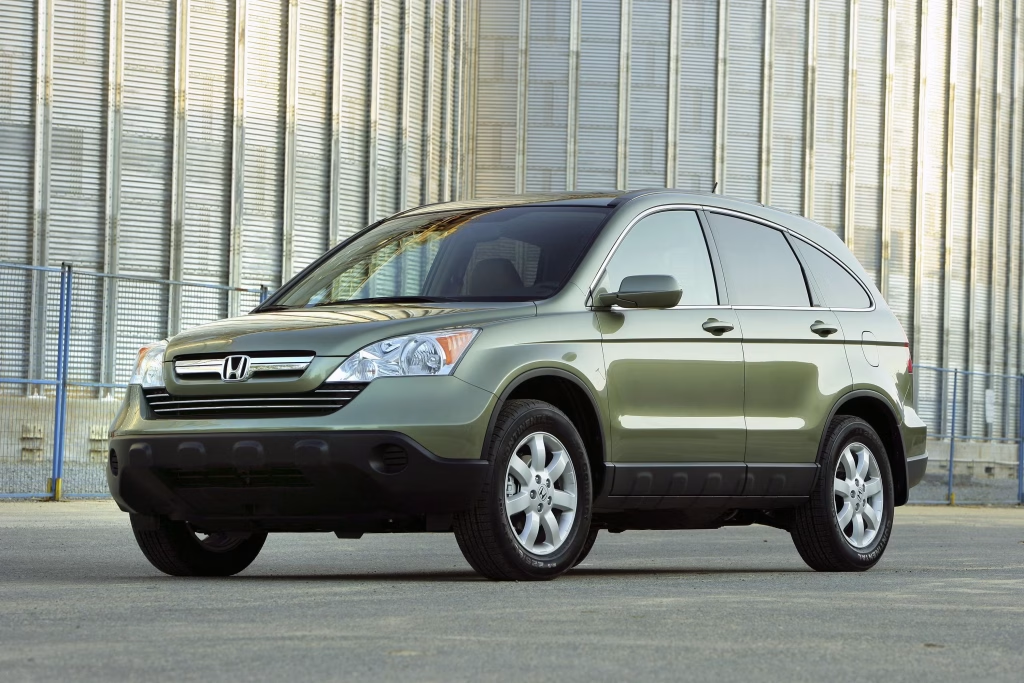
The 2008 Honda CR-V continues the pattern established by the third-generation models above. According to CARFAX’s analysis, 31.5 percent of 2008 CR-Vs in its dataset had reached at least 200,000 miles, while 68.2 percent had reached 150,000 miles. That gives this model year a substantial real-world record for surviving prolonged use.
The mechanical recipe is familiar but important. U.S.-market 2008 CR-Vs use a 2.4-liter four-cylinder producing 180 horsepower and 161 lb-ft of torque.
The engine is naturally aspirated, meaning it does not rely on a turbocharger to produce its power. Depending on configuration, the CR-V was offered with front-wheel drive or Honda’s Real Time four-wheel-drive system.
The available five-speed automatic transmission also keeps the drivetrain relatively conventional compared with many newer compact SUVs. Buyers could choose a five-speed manual on the LX trim, although the automatic became the more common choice.
At approximately 179.3 inches long and 71.6 inches wide, the 2008 CR-V occupies a useful middle ground. It is larger and more practical than a typical compact sedan, yet considerably smaller than many current three-row SUVs.
Its high-mileage record becomes particularly relevant when shopping the used market today. A vehicle of this age may have passed through several owners, so the condition of the individual example matters enormously.
Regular oil changes, transmission-fluid service, cooling-system maintenance, and suspension repairs can make a major difference in whether an older CR-V remains economical.
The CARFAX figures should therefore be interpreted as evidence of potential rather than a promise. More than three out of ten vehicles in its dataset reaching 200,000 miles is impressive, but it does not mean every example will do so without substantial repairs.
Still, the 2008 CR-V has an unusually strong case for inclusion. Its conventional engine, straightforward drivetrain, practical dimensions, and documented high-mileage statistics make it one of the more interesting older CR-Vs for buyers seeking long-term usability.
10. 2005 Honda CR-V
The 2005 Honda CR-V closes the ranking with a second-generation model that has accumulated enough age to provide a meaningful picture of long-term durability.
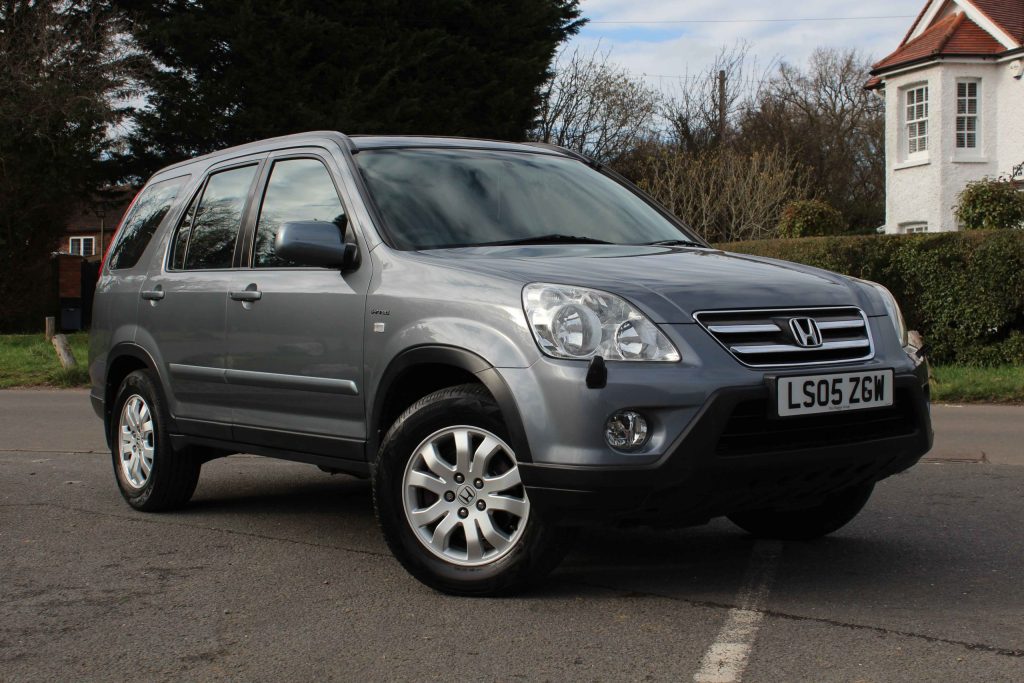
CARFAX’s data shows that 30.5 percent of analyzed 2005 CR-Vs had reached 200,000 miles, while 68.1 percent had reached 150,000 miles. Those numbers are notable considering these vehicles have now spent roughly two decades on American roads.
Under the hood is Honda’s 2.4-liter four-cylinder engine, producing 160 horsepower and 162 lb-ft of torque in U.S. specification. Buyers could select a five-speed manual transmission or a five-speed automatic, with both front-wheel drive and Honda’s Real Time four-wheel-drive system available.
The second-generation CR-V’s dimensions were slightly different from the later models. It measured roughly 181.0 inches long and 68.9 inches wide, giving it a relatively narrow body by modern SUV standards. That compact width was useful in parking lots and city streets, while the upright body provided practical passenger and cargo space.
One of the interesting characteristics of these older CR-Vs is how much conventional engineering they contain. The naturally aspirated four-cylinder does not depend on a turbocharger, while the transmission choices are mechanically familiar. That simplicity can be appealing when evaluating a vehicle intended to remain in service for many more years.
Of course, age creates its own problems. Rubber components, suspension parts, seals, electrical equipment, air-conditioning systems, and body hardware can deteriorate even when the engine remains healthy. Rust exposure is another important consideration for vehicles that have spent years in areas where road salt is heavily used.
The 2005 CR-V therefore earns its place not because every example is destined for 200,000 miles, but because a significant share of the vehicles examined by CARFAX have already crossed that threshold.
For buyers willing to inspect an older vehicle carefully, this model demonstrates how far a well-maintained CR-V can potentially travel.
