
Buying a car comes with a cost that does not appear on your monthly payment, fuel receipt, or repair bill. Every mile you drive can reduce what the vehicle is worth when you eventually sell or trade it. That loss is depreciation, and for many drivers, it can be one of the highest costs of owning a vehicle. The tricky part is figuring out what each mile really costs.
There is no universal number that fits every car because age, mileage, model, condition, and buyer demand all matter. Still, a per-mile estimate can make the cost much easier to understand. Here is how the math works, what typical estimates look like, and why your particular vehicle may lose value faster or slower than the average.
Why Every Mile Has a Price
Think of depreciation as the portion of your car’s value that disappears while you own it. Some of that loss happens simply because the vehicle gets older.
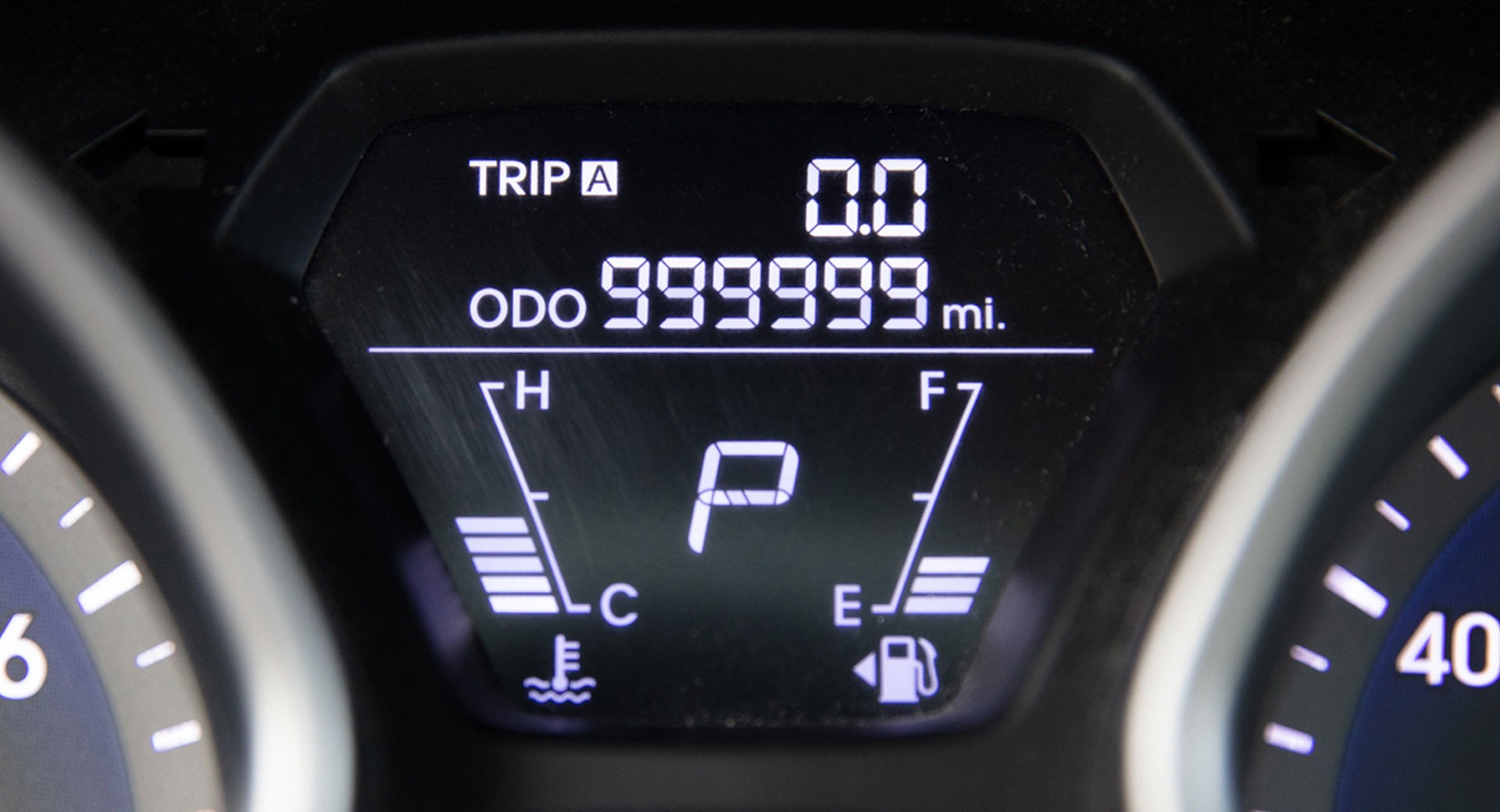
Mileage also plays a major role because a higher odometer reading can make a used vehicle less attractive to buyers. A car with 30,000 miles generally commands a different price than the same model with 130,000 miles.
Here is a simple way to picture it. Suppose you purchase a vehicle for $30,000 and later sell it for $18,000. You have experienced $12,000 in depreciation.
If the car traveled 100,000 miles during your ownership, a basic per-mile calculation would be $12,000 divided by 100,000, or 12 cents per mile. That figure is not a universal market rate.
It is simply the depreciation experienced by that particular vehicle during that particular period. A newer luxury vehicle may lose much more money per mile, while an older, dependable used car may lose considerably less.
There is another important point to consider. Depreciation is not necessarily linear. A brand-new vehicle can lose a substantial portion of its value very quickly.
Direct Car Buying cites a common estimate of about 10% immediately after a new vehicle leaves the dealership, followed by slower annual depreciation.
So, when someone asks, “How much does depreciation cost per mile?” the honest answer is that it depends on the vehicle and how the loss is measured.
How to Calculate Your Cost Per Mile
The basic calculation is pleasantly simple:
Depreciation cost per mile = Total depreciation ÷ Miles driven
To find total depreciation, subtract the vehicle’s eventual value from its starting value. If you paid $40,000 and later sold the car for $25,000, the loss is $15,000. Drive 100,000 miles during that period and the calculation becomes:
$15,000 ÷ 100,000 miles = $0.15 per mile
That means depreciation costs you about 15 cents for every mile driven.
There is a second approach that can be useful when you are planning rather than looking backward. A per-mile depreciation model can start with the vehicle’s purchase price, estimated resale or salvage value, and expected useful mileage.
MyDepreciation describes this as a usage-based method. You subtract the expected ending value from the original cost, then divide the depreciable amount by the expected total number of units, such as miles.
For example, imagine a $42,000 vehicle expected to retain $2,000 at the end of a 200,000-mile useful life. The depreciable amount is $40,000. Divide $40,000 by 200,000 miles, and you get 20 cents per mile. At 30,000 miles, that model would assign $6,000 of depreciation.
This method gives you a practical planning number, but real resale prices can tell a different story.
What Changes the Number From Car to Car
A sedan, pickup, luxury SUV, and electric vehicle can all lose value at very different rates. Mileage matters, but it is only one piece of the pricing puzzle. Age, reliability, fuel economy, popularity, condition, equipment, and buyer demand can all affect resale value.
Consider two cars that have each traveled 100,000 miles. One might still have a strong reputation for reliability and command a healthy used-car price. The other could have a history of expensive repairs and limited buyer interest.
Treating both vehicles as though they have the same depreciation cost per mile would miss what is actually happening in the market. A 2022 analysis from Eight Portions provides a useful illustration.
Its regression of vehicle listings estimated an average price association of roughly $0.05 for each additional mile, while separate estimates varied by vehicle type.
The analysis put the mileage coefficient around $0.04 for pickups, $0.07 for SUVs, and $0.09 for sedans. The author also cautioned that mileage and vehicle age are closely related, which makes a simple mileage-only figure imperfect.
Those figures should not be treated as a price guarantee. They came from a particular dataset and methodology. Their real value is showing why a single “cost per mile” number can be misleading.
Your car’s depreciation rate can also change as it ages. The first few years may produce a much larger loss in dollar terms than later years, even if you drive a similar number of miles.
Why Mileage Matters When You Sell
Imagine you own a vehicle that could reasonably reach 200,000 miles. At 40,000 miles, a future buyer may see plenty of useful life remaining. At 160,000 miles, that same buyer may expect more repairs, greater wear, and fewer remaining miles before major components need attention.
That helps explain why the odometer matters so much during a sale. Direct Car Buying notes that buyers are effectively paying for the useful life they believe remains in a vehicle.
It gives the example of two otherwise similar cars, one with 30,000 miles and another with 100,000 miles, where the lower-mileage vehicle can command a higher price.
The practical lesson is not “drive as little as possible.” A car exists to be used. The better question is whether the value you receive from each mile is worth the value you give up.
Suppose an extra 10,000 miles reduces your eventual resale value by $800. Your mileage-related depreciation would be about 8 cents per mile. If those miles allow you to avoid $1,500 in airfare, generate income, or make daily life much easier, the loss in vehicle value may be a reasonable trade.
This is also why mileage should be considered alongside other ownership expenses. Fuel, insurance, maintenance, repairs, registration, financing, and depreciation all contribute to the true cost of using a vehicle. For people who use a car for business, the tax calculation adds another layer.
Taxstra explains that the standard mileage method bundles several vehicle costs into one per-mile deduction, while the actual-expense method considers the business-use share of real costs, including depreciation.

Cutting Your Per-Mile Losses
Reducing your personal depreciation cost per mile starts with choices made before you ever sign a purchase agreement. Researching resale value trends for specific makes and models before buying puts you ahead of owners who choose based purely on styling or initial price, since some vehicles simply hold value dramatically better than others within the same general price bracket.
Maintaining detailed service records throughout ownership pays real dividends too, giving future buyers documented proof of care that frequently translates into a stronger resale price when that day eventually arrives.
Timing your sale strategically around mileage thresholds, selling just before hitting 100,000 miles rather than well past it, can meaningfully soften the depreciation hit compared to waiting until the vehicle has crossed that psychological barrier in a buyer’s mind.
Choosing popular colors and reasonably equipped trim levels over unusual configurations also tends to support stronger resale demand, since buyers gravitate toward options that feel broadly appealing rather than niche or overly customized.
Driving fewer unnecessary miles, combining errands, carpooling occasionally, or simply being mindful about discretionary trips directly reduces the depreciation accumulating against your vehicle over time.
None of these strategies eliminate depreciation entirely since it’s simply built into vehicle ownership as an unavoidable reality, but they genuinely soften its financial bite, putting more control back into your hands rather than leaving your car’s future value entirely up to chance.
A Better Way to Think About Your Car’s Cost
The most useful depreciation number is not necessarily the one you find online. It is the one that helps you make a better decision about your own vehicle.
Start with three figures. Consider what you paid, what you expect to receive when you sell the vehicle, and how many miles you expect to drive before the sale.
If you paid $32,000, expect to sell for $17,000, and plan to drive 100,000 miles, your estimated depreciation is $15,000, or 15 cents per mile.
Now test different scenarios. What happens if you keep the car for another 30,000 miles? What if its resale value falls faster than expected? What if you buy a three-year-old vehicle instead of a new one?
Running these numbers can reveal why purchase price alone does not tell you whether a vehicle is affordable. The same exercise can help when comparing models.
A car that costs $4,000 more upfront may not be more expensive to own if it retains much more of its value. Likewise, a bargain-priced vehicle can become costly if its resale value drops sharply.
There is no magic depreciation figure that applies to every driver. A rough estimate may land somewhere around several cents per mile, while certain vehicles can cost far more.
MyDepreciation cites example fleet benchmarks ranging from about 11 cents per mile for compact sedans to more than 35 cents for some luxury vehicles.
The takeaway is simple. Every mile has a financial cost beyond gasoline. Once you account for depreciation along with your other vehicle expenses, you get a much clearer picture of what your car really costs to drive.
