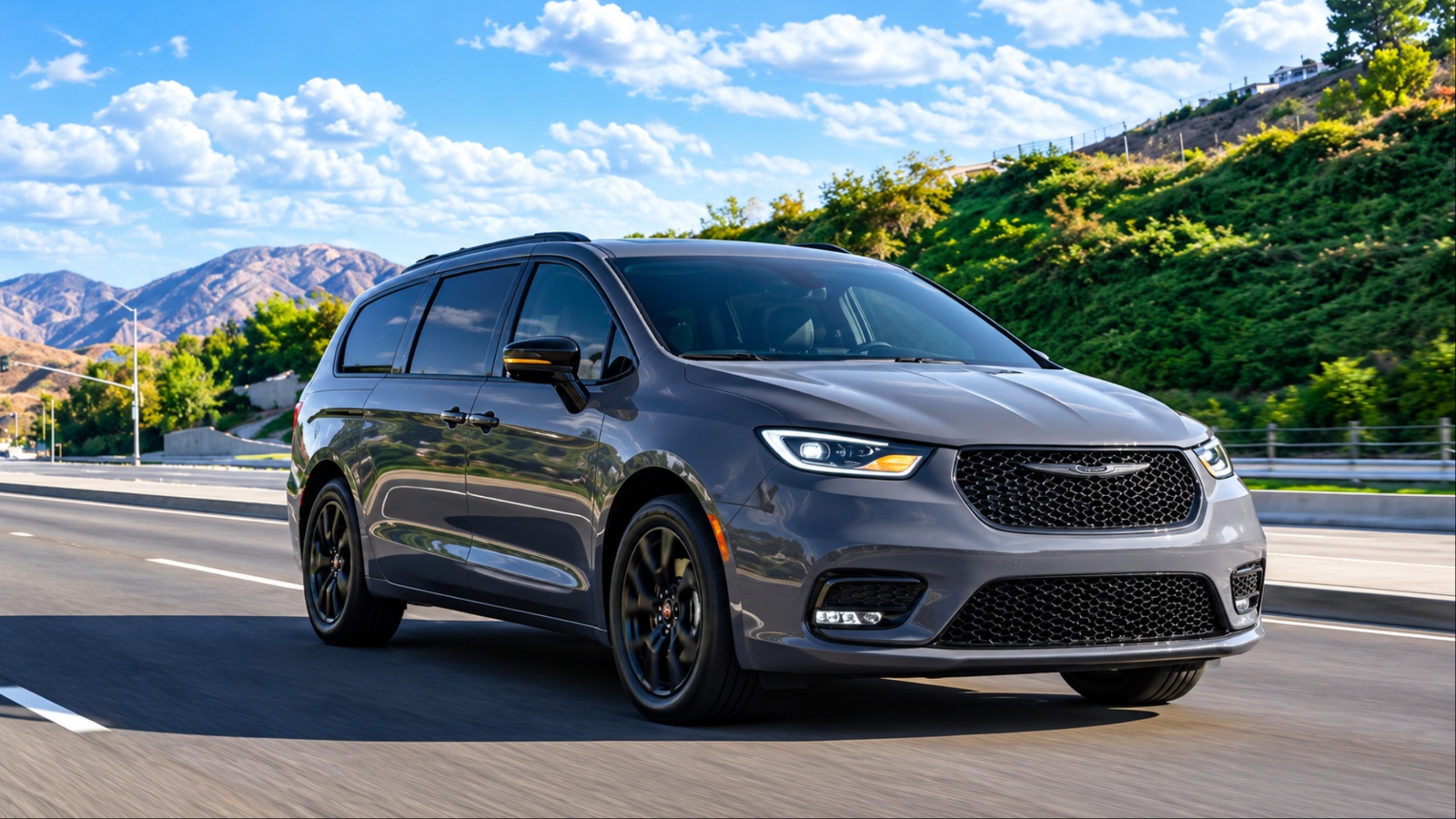
Chrysler is recalling 2,017 Pacifica and Voyager minivans in the United States after discovering that a defective brake-pedal position sensor can disable the electronic stability control system. The issue affects certain 2025 and 2026 model-year vehicles, including a small number of Pacifica plug-in hybrids.
According to Autoevolution, the recall is based on documents filed with the National Highway Traffic Safety Administration (NHTSA). The affected population consists of 1,652 Pacificas, 357 Voyagers, and eight Pacifica Plug-In Hybrid models. The recall campaign, identified as 69D by Chrysler and 26V561 by NHTSA, was reported on September 1.
The defect is tied to a capacitor inside the brake-pedal position sensor. If the capacitor is cracked, the sensor can stop functioning correctly. That can cause the electronic stability control system, an important active-safety feature, to shut down.
The problem may not immediately affect the vehicle’s ability to move or stop, but it can remove an important safeguard when the vehicle begins to lose traction. Stability control can help correct a skid by selectively applying brakes and managing engine torque.
If the system is unavailable, the driver loses that additional protection. NHTSA considers the condition a violation of Federal Motor Vehicle Safety Standard 126, which requires electronic stability control systems to remain operational.
A Small Sensor Can Disable a Major Safety System
The brake-pedal position sensor has a straightforward but important job. It monitors the driver’s brake-pedal input and communicates that information to the vehicle’s electronic systems. In the affected vehicles, a cracked capacitor can prevent the sensor from operating as intended.
Autoevolution reports that the suspect component carries part number 68236598AA and is supplied by CTS Corporation. Chrysler estimates that about 10 percent of the affected vehicles contain the defect, although that figure is an estimate rather than a prediction that 10 percent will necessarily experience a safety event.
Once the sensor fails and electronic stability control is disabled, a warning light illuminates for the driver. That warning is important because the vehicle may otherwise continue to operate normally. A driver could potentially remain unaware that an important safety system is no longer available without the warning indicator.
Electronic stability control is particularly valuable during an emergency maneuver, sudden lane change, or loss of grip on a wet or slippery surface. The system cannot eliminate every crash, but it can help a driver maintain control when the tires are no longer generating equal traction.
That makes a loss of ESC more than a routine electronic fault. The vehicle can remain drivable, but its ability to respond automatically to a developing skid is reduced.
The defect also highlights how modern safety systems increasingly depend on relatively small electronic components. A capacitor hidden inside a sensor can ultimately affect an entire vehicle-control function.
That is one reason regulators treat these failures differently from ordinary convenience-system glitches. When a component affects a federally required safety system, even a relatively small defect population can justify a recall.
Chrysler’s remedy is straightforward. Dealers will inspect the brake-pedal position sensor and replace it if necessary, with the repair performed free of charge. Owners are not being asked to pay for the corrective work.
How Chrysler Found the Problem
The recall was not triggered by a single isolated incident. FCA US began investigating the sensor issue on March 25, 2026, after receiving reports involving sensor functionality in 2025 and 2026 vehicles.
According to Autoevolution’s review of the recall chronology, Chrysler’s Technical Safety and Regulatory Compliance organization worked with engineering teams through May to investigate the potential cause and determine which vehicles could be affected.
From June through August, the company examined additional field reports and customer assistance records involving the Pacifica and Voyager. That investigation eventually led Chrysler’s safety organization to conclude that a vehicle-build issue involving the brake-pedal position sensor could create a noncompliance with federal requirements.
The Vehicle Regulations Committee subsequently determined that a safety recall was necessary.
The investigation shows how an apparently small electronic problem can require months of work before an automaker can establish the affected population and remedy.
In this case, the affected vehicles are from the 2025 and 2026 model years, with the eight Pacifica Plug-In Hybrid vehicles built between September 11 and October 25, 2025. The recall covers specific production populations rather than every Pacifica or Voyager from those model years.
That distinction is important for owners. A vehicle’s model year alone does not confirm that it is part of the recall. The exact vehicle identification number and production configuration determine whether the repair is required.
Chrysler plans to notify owners by mail beginning September 29, while dealers are scheduled to receive recall information earlier, on September 9. NHTSA’s VIN database is also expected to allow owners to check their vehicles once the campaign information becomes searchable.
Owners who receive a notice should arrange the inspection promptly. Because the remedy involves an inspection and possible sensor replacement, some vehicles may not require a new sensor.
The company has not issued a do-not-drive order, but drivers should pay attention to any stability-control warning and understand that the system may not be available if the sensor fails.
What the Recall Means for Pacifica and Voyager Owners
The Pacifica and Voyager are family-oriented minivans designed to carry multiple passengers, making electronic stability control an especially important safety feature. Families frequently use these vehicles for highway travel and long-distance journeys, where changing road conditions can make stability control useful.
The recall does not mean the affected vehicles are expected to lose control. Instead, it means a specific sensor defect can disable a system that is intended to help prevent loss of control.
The distinction matters because recalls identify potential safety risks rather than predicting that every affected vehicle will experience a dangerous event.
Owners should also understand that the brake-pedal position sensor is not the same as the vehicle’s basic braking hardware. The recall concerns the electronic signal used by vehicle systems. It does not indicate that the brake pedal itself will suddenly stop working or that the minivan will automatically lose its ability to stop.
That said, the loss of electronic stability control can increase crash risk, particularly in situations where the vehicle begins to skid or deviate from the driver’s intended path. The remedy is designed to remove that risk by ensuring the sensor is functioning correctly.
The campaign also adds another recall to a busy period for Chrysler. The Pacifica and Voyager have been involved in other safety campaigns, including recalls involving airbags and other equipment. This latest action is separate from those campaigns and is focused specifically on the brake-pedal position sensor.
For owners, the most useful step is to check the vehicle identification number rather than relying on general model information. NHTSA recommends using its recall lookup system to determine whether a specific vehicle has an open recall, and recall repairs are performed without charge.
The campaign demonstrates a broader point about modern vehicle safety. Many of the systems that help keep drivers in control now depend on electronic sensors, software, and small components that may not attract attention during normal driving.
When those components work properly, the driver may never notice them. When one fails, however, it can affect an entire safety system.
For Chrysler, the current recall is relatively limited to 2,017 vehicles, but the affected function is important enough to require federal action. The company identified the problem, investigated its scope, and developed a repair intended to restore proper operation.
For affected Pacifica and Voyager owners, the safest course of action is straightforward. Check the recall status, respond to the notification, and arrange for a dealer to inspect or replace the sensor as needed.
The minivans can continue to provide normal transportation in most circumstances, but electronic stability control is an important safety backup that drivers should not have to operate without. Completing the recall repair ensures that this system remains available when it is needed most.