
Some cars look ordinary from the outside yet feel spacious once you open the doors. Their designers have squeezed impressive passenger and cargo capacity into bodies that remain easy to park and maneuver.
For this ranking, size is not judged by exterior length alone. The order is based on total interior volume, combining the manufacturer’s passenger-space and cargo-volume figures where both are provided.
That gives a clearer picture of how much usable room each car actually offers. The result includes sedans and hatchbacks that deliver an unusually roomy cabin without demanding SUV-sized dimensions or a huge footprint on the road.
1. Honda Accord
The Accord earns the top position because its interior volume is difficult to reconcile with its exterior proportions. Honda lists 105.7 cubic feet of passenger volume for the 2026 LX, along with 16.7 cubic feet of trunk space.
Adding those figures produces 122.4 cubic feet of combined passenger and cargo volume, the largest figure in this ranking.
The car itself is 195.7 inches long and 73.3 inches wide, so the packaging is impressive without moving into oversized-car territory. Honda also gives the Accord a 111.4-inch wheelbase, helping create useful room between the axles.
What makes that number meaningful is the space passengers can actually use. Front legroom measures 42.3 inches, while rear passengers receive 40.8 inches. Rear shoulder room reaches 56.5 inches, and rear hip room is 55.4 inches.
Those measurements help explain why the Accord can feel closer to a larger sedan from inside than its sleek exterior suggests.
The trunk is another major advantage. Honda specifically highlights the 16.7-cubic-foot cargo area as larger than those of several direct competitors. The rear seatback also folds, giving owners another way to handle longer or bulkier items.
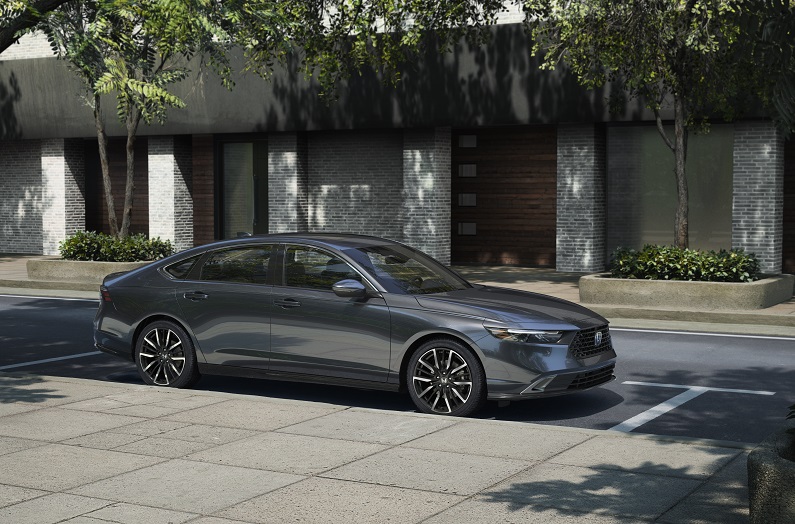
Powertrain choice does not change the car’s roomy basic proportions. The LX and SE use a 1.5-liter turbocharged four-cylinder making 192 horsepower and 192 lb.-ft. of torque. Higher trims use a hybrid system with 204 total horsepower.
The Accord therefore wins this ranking through a combination of passenger room and cargo capacity rather than one oversized dimension. It manages to package more interior volume than many buyers would expect from a conventional midsize sedan.
2. Kia K5
The Kia K5 is a classic example of a sedan that looks low and sleek from the curb but gives its occupants a surprisingly substantial cabin. Kia lists 121.3 cubic feet of total interior volume, placing the K5 second in this ranking.
That figure includes 105.3 cubic feet of passenger interior volume and 15.6 cubic feet of SAE cargo space. At 193.1 inches long and 73.2 inches wide, the K5 achieves that capacity without appearing or driving like a large sedan.
Its dimensions are particularly favorable for people who care about room in both rows. Front legroom measures 46.1 inches, while rear passengers get 35.2 inches. Rear shoulder room is 56.1 inches, and rear hip room reaches 56.6 inches, giving the cabin useful width for a midsize sedan.
The 112.2-inch wheelbase is also longer than the car’s exterior length alone might suggest, supporting the generous passenger compartment.
Cargo space helps the K5 stay near the top of the list. The 15.6-cubic-foot trunk is large enough to make the sedan useful for airport trips, shopping runs, or a weekend away, without requiring a hatchback body.
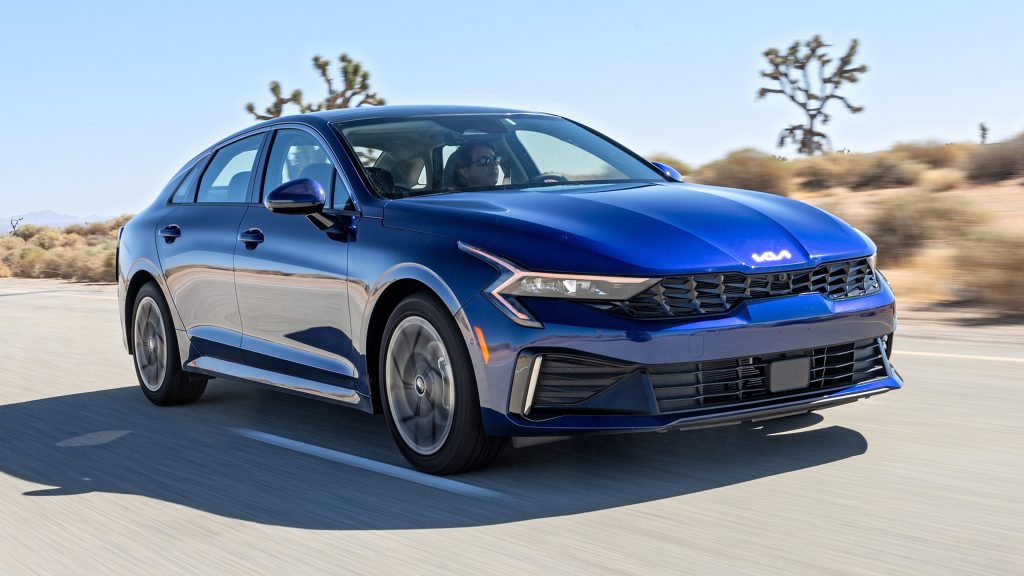
Kia offers two distinct performance levels. The standard 2.5-liter four-cylinder produces 191 horsepower and 181 lb.-ft. of torque, while the GT substitutes a turbocharged 2.5-liter engine producing 290 horsepower and 311 lb.-ft. of torque. Both versions retain the same fundamental cabin dimensions.
The K5’s appeal is therefore rooted in efficient packaging. It does not rely on a tall roof or bulky bodywork to create room. Instead, its long wheelbase, wide cabin, and useful trunk give passengers and luggage more space than the exterior silhouette initially suggests.
3. Hyundai Sonata
The Hyundai Sonata is one of those sedans that can fool the eye. Its exterior is sleek and relatively low, yet the cabin has the kind of measurements associated with a considerably larger four-door car.
Hyundai lists 120.0 cubic feet of total interior volume, made up of 104.4 cubic feet of passenger volume and 15.6 cubic feet of trunk capacity. That puts it only a small step behind the K5, while its exterior remains 193.3 inches long and 73.2 inches wide. Its 111.8-inch wheelbase also gives Hyundai a useful foundation for maximizing cabin space.
The Sonata becomes particularly impressive when the seating measurements are considered. Front passengers receive 46.1 inches of legroom, while the rear seat provides 34.8 inches. Shoulder room measures 57.9 inches up front and 56.1 inches in back, giving the cabin plenty of lateral space for a midsize sedan. Rear hip room reaches 54.4 inches.
These figures help explain why the Sonata’s interior can feel more substantial than its low-slung exterior suggests.
There is also a useful balance between passenger space and luggage capacity. The 15.6-cubic-foot trunk does not require the car to sacrifice rear-seat room, making the Sonata well-suited to commuting, airport runs, and longer trips.
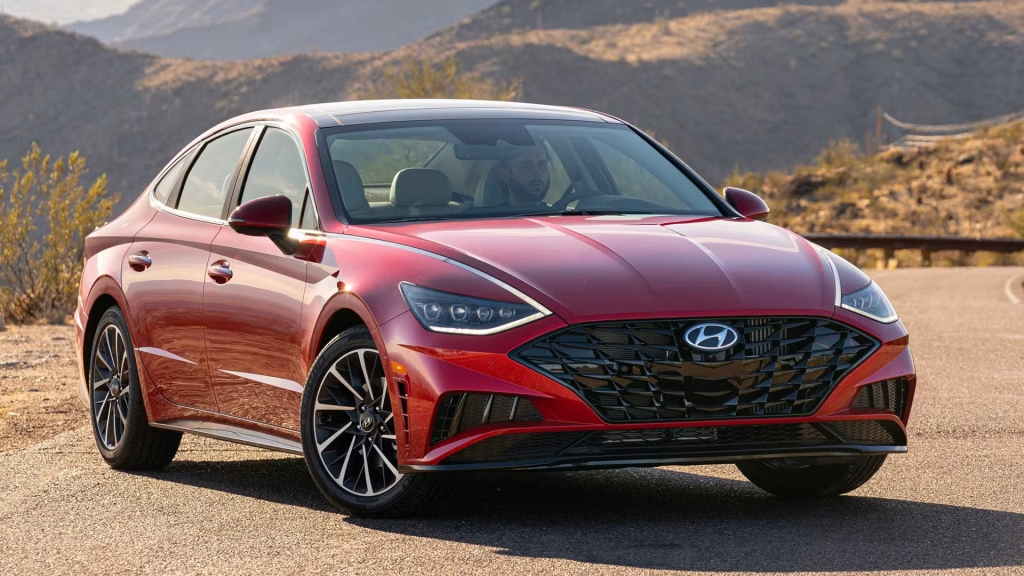
Hyundai’s U.S. lineup gives buyers several powertrain choices. The conventional Sonata uses a 2.5-liter four-cylinder producing 191 horsepower and 181 lb.-ft. of torque, while the N Line uses a turbocharged 2.5-liter engine with considerably greater output. The hybrid version offers another route for buyers prioritizing fuel economy.
The Sonata earns its position because its interior dimensions are remarkably generous relative to its 193.3-inch body. It is not simply a car with a large trunk. The passenger compartment itself accounts for most of its impressive interior volume.
4. Toyota Camry
The Toyota Camry may be one of the most familiar names in the American sedan market, but its interior packaging deserves more attention than its conservative reputation suggests. Toyota lists 99.9 cubic feet of passenger volume for the 2026 Camry without a moonroof, along with 15.1 cubic feet of trunk space.
That gives the car approximately 115 cubic feet when the two published figures are considered together, placing it comfortably among the roomiest cars in this group.
The numbers become more convincing when viewed from the passenger’s perspective. The Camry provides 42.1 inches of front legroom and 38.0 inches for rear passengers. Rear shoulder room is 55.7 inches, while rear hip room measures 54.6 inches.
Those figures show that Toyota did not simply devote its interior volume to the front occupants. There is meaningful space for passengers in both rows.
At 193.5 inches long and 72.4 inches wide, the Camry is not an especially bulky sedan. Its 111.2-inch wheelbase helps distribute the available length efficiently, creating a cabin that feels substantial without making the car unnecessarily difficult to place in a parking space.
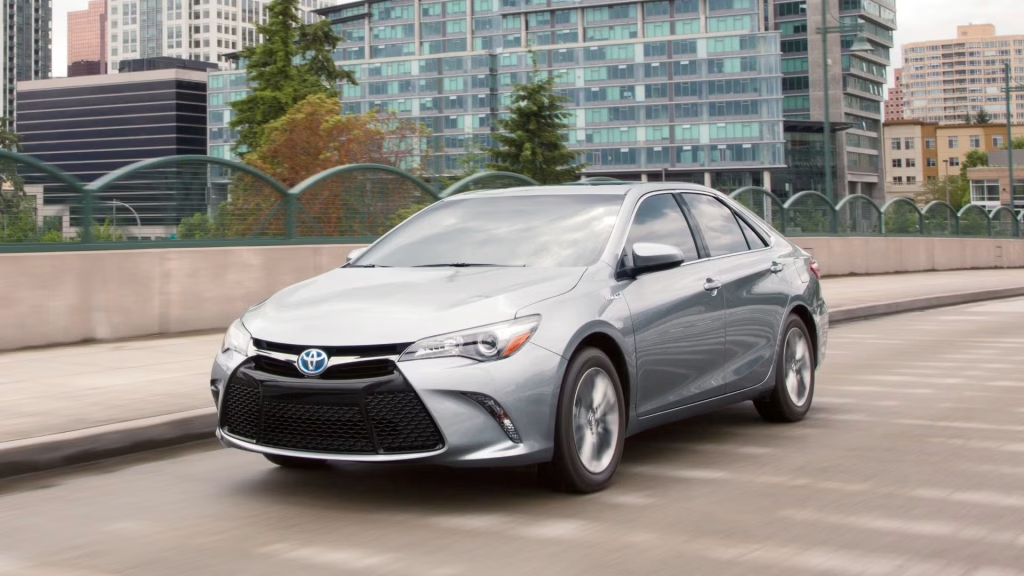
The trunk adds another practical advantage. Its 15.1 cubic feet of capacity gives the Camry enough room for everyday luggage while preserving the usable rear-seat area. The current Camry also uses a hybrid powertrain across its U.S. lineup, with Toyota listing 225 horsepower for front-wheel-drive versions and 232 horsepower for all-wheel-drive models.
What makes the Camry stand out is the absence of obvious bulk. It does not have the tall roof of a crossover or the oversized proportions of a full-size sedan. Instead, Toyota has used its wheelbase and cabin dimensions efficiently, creating a car that feels considerably more spacious once passengers settle inside.
5. Honda Civic Sedan
The Honda Civic proves that a compact sedan does not have to feel compact from behind the wheel. The 2026 Civic sedan measures just 184.8 inches long and 70.9 inches wide, yet Honda lists as much as 99 cubic feet of passenger volume and 14.8 cubic feet of cargo capacity in the non-hybrid LX and Sport models.
That creates a combined 113.8 cubic feet of passenger and cargo space, an impressive result considering how modest the Civic’s exterior footprint is.
Its cabin measurements explain the sensation. Front legroom reaches 42.3 inches, while rear passengers receive 37.4 inches. Rear shoulder room is a particularly useful 56.0 inches, giving passengers more lateral space than the Civic’s exterior proportions might suggest.
There is also 37.1 inches of rear headroom, so the low sedan roof does not translate into an especially restrictive rear compartment.
Cargo capacity adds another practical dimension. The 14.8-cubic-foot trunk is substantial for a compact sedan, while Sport and hybrid versions retain the same basic trunk figure. The Civic also uses a 60/40 split-folding rear seat on most versions, allowing longer objects to be carried without giving up the entire back seat.
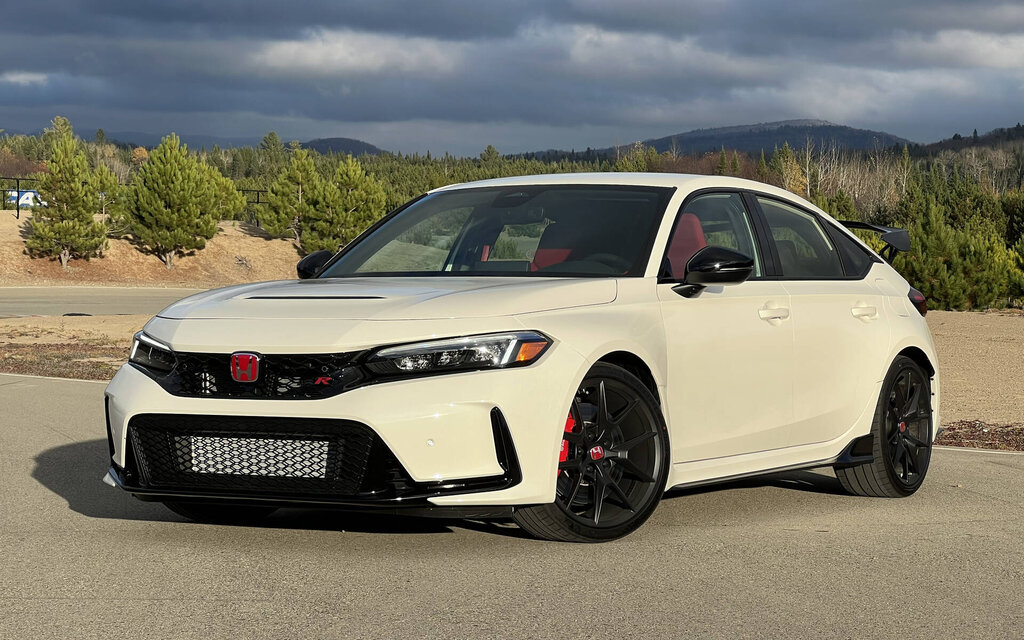
The standard Civic uses a 2.0-liter four-cylinder producing 150 horsepower and 133 lb.-ft. of torque. Hybrid versions combine a 2.0-liter engine with electric motors to produce 200 total system horsepower.
The Civic’s achievement is therefore about efficiency rather than sheer size. A car shorter than 185 inches manages to provide nearly 100 cubic feet of passenger room, making its interior feel noticeably larger than its exterior dimensions suggest.
6. Nissan Sentra
The Nissan Sentra takes the concept even further by delivering substantial cabin volume from a remarkably compact exterior.
The 2026 Sentra measures only 183 inches long and 71.5 inches wide, yet Nissan lists 96.1 cubic feet of passenger volume without the available moonroof and 14.3 cubic feet of cargo capacity. Combined, those figures amount to 110.4 cubic feet of interior passenger and cargo volume.
That space is not merely theoretical. Nissan gives the Sentra 44.0 inches of front legroom and 34.8 inches in the rear. The front seats therefore offer particularly generous room for a compact sedan, while the rear compartment remains competitive for the class.
Without a moonroof, passenger volume reaches its maximum because the roof design preserves additional usable headroom.
The trunk contributes considerably to the Sentra’s usefulness. At 14.3 cubic feet, it is almost as large as the Civic’s despite the Nissan being slightly shorter. The combination makes the Sentra well suited to everyday errands where a small exterior footprint is valuable, but passengers still need room for bags, groceries, or luggage.
Nissan powers the current U.S. Sentra with a 2.0-liter four-cylinder engine producing 149 horsepower and 146 lb.-ft. of torque. Every version uses front-wheel drive and an Xtronic continuously variable transmission.
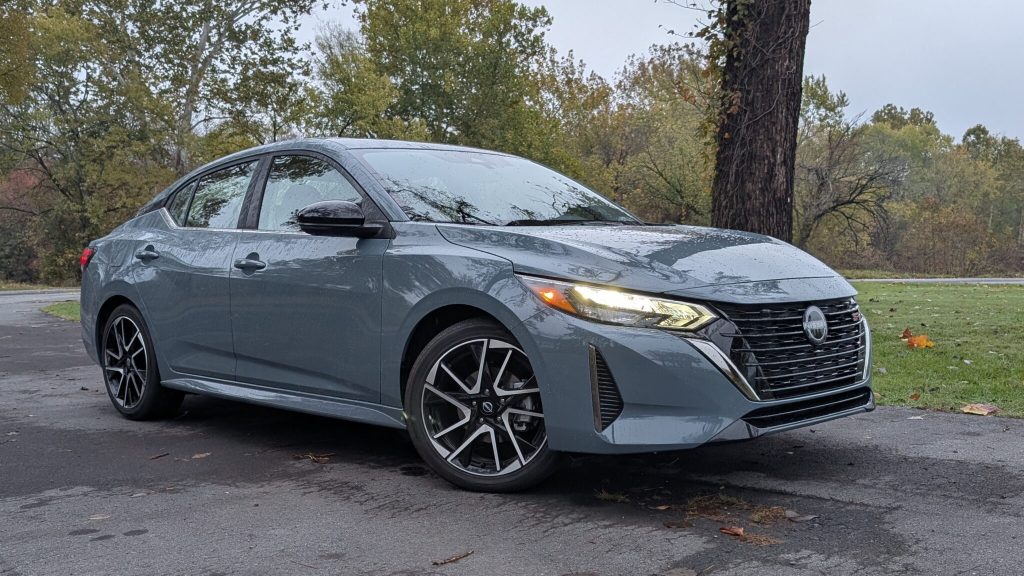
What makes the Sentra particularly interesting in this ranking is the relationship between its exterior and interior measurements.
At just 183 inches long, it is shorter than every car placed above it so far, yet it still provides more than 110 cubic feet of combined passenger and cargo volume. That is exactly the kind of packaging that makes a car feel considerably bigger once the doors close.
7. Hyundai Elantra
The Hyundai Elantra is a particularly convincing example of clever interior packaging because its exterior footprint remains firmly in compact-car territory. At 185.4 inches long and 71.9 inches wide, it is not a large sedan by American standards.
Yet Hyundai lists 99.4 cubic feet of passenger volume and another 14.2 cubic feet of trunk capacity, giving the Elantra 113.6 cubic feet of total interior volume. That is remarkable for a car with such modest exterior dimensions.
The rear seat is where the Elantra makes an especially strong impression. Hyundai gives second-row passengers 38.0 inches of legroom, 37.3 inches of headroom, and 55.6 inches of shoulder room. Up front, occupants receive 42.3 inches of legroom.
The cabin’s width also remains useful, with 53.4 inches of front hip room and 50.5 inches in the rear. Those measurements show that the Elantra’s interior volume is not simply a mathematical advantage. There is genuine usable space distributed throughout the cabin.
The trunk contributes another 14.2 cubic feet, making the sedan useful for everyday shopping, luggage, and other cargo without forcing owners to move into a crossover. The 107.1-inch wheelbase is also significant because Hyundai has managed to create a generous passenger compartment without stretching the car to an unwieldy length.
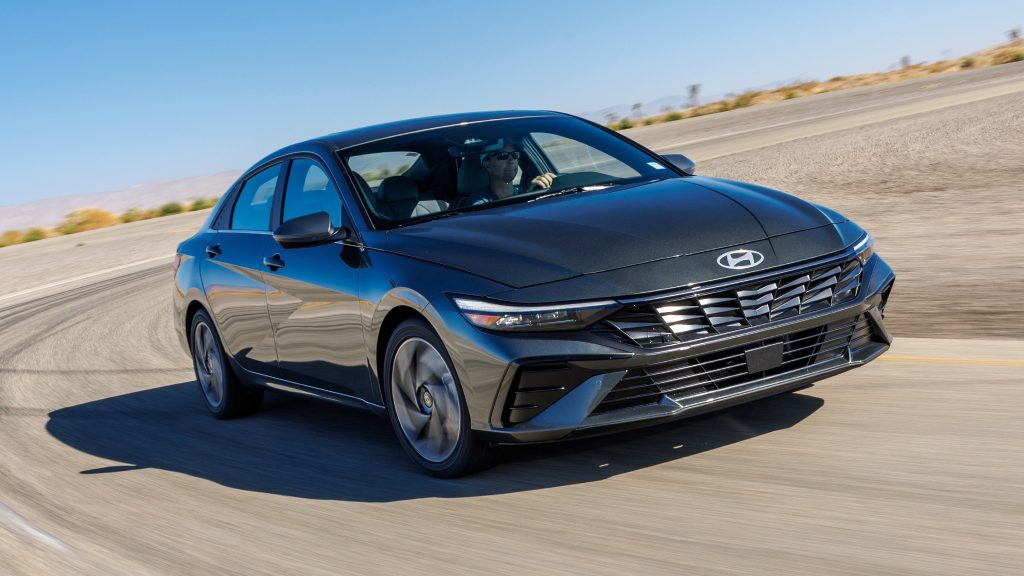
Power comes from a 2.0-liter four-cylinder producing 147 horsepower and 132 lb.-ft. of torque in the standard Elantra. Hyundai also offers an Elantra Hybrid and the substantially more powerful N variants, but the standard model best demonstrates the space-to-size relationship that earns this car its ranking.
The Elantra therefore succeeds through disciplined packaging. It is long enough to provide useful passenger room but remains short enough to feel easy to place in crowded streets and parking lots.
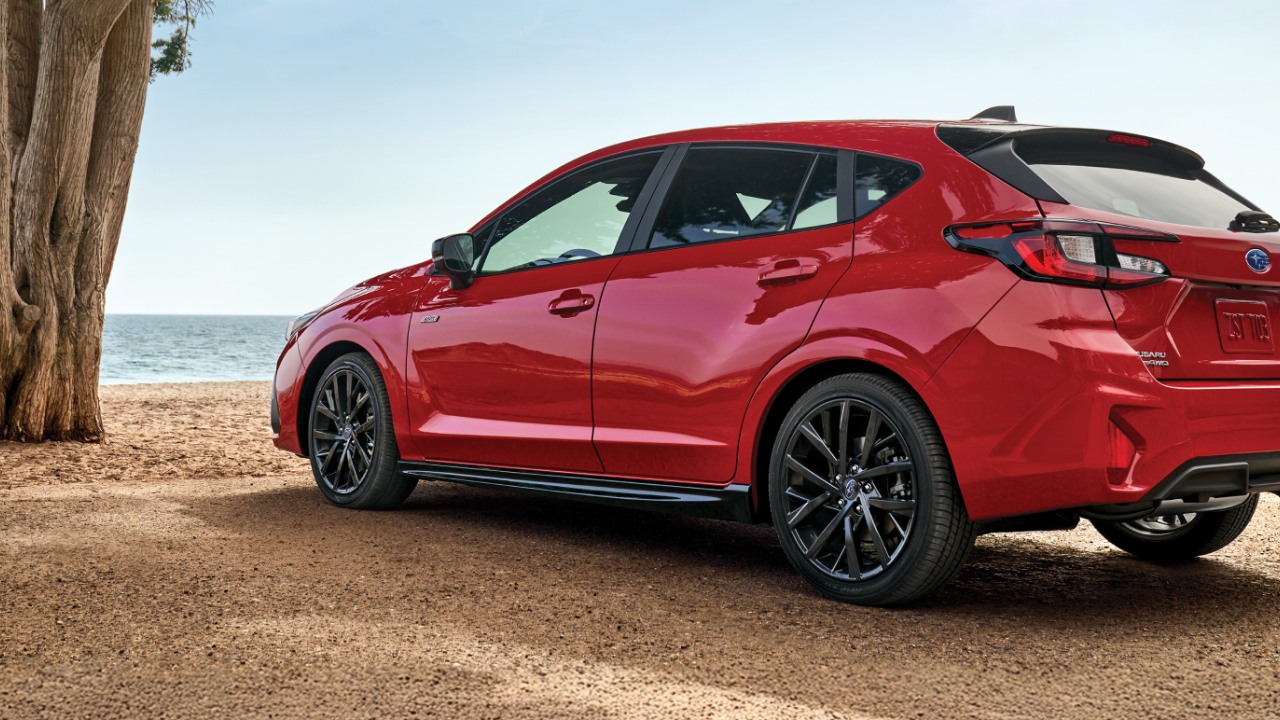
8. Subaru Impreza
The Subaru Impreza changes the formula by using a hatchback body, and that immediately gives it an advantage when cargo flexibility becomes part of the equation.
The 2026 Impreza has 100.5 cubic feet of passenger volume and 20.4 cubic feet of cargo volume with the rear seats upright, producing an EPA total passenger-and-cargo volume index of 120.9 cubic feet. Subaru’s own specifications therefore put it near the top of this list despite its relatively short 176.2-inch body.
That exterior-to-interior relationship is impressive. The Impreza is only 70.1 inches wide, yet Subaru lists 56.8 inches of front shoulder room and 55.3 inches in the rear. Front legroom reaches 42.9 inches, while rear passengers receive 36.5 inches.
Rear headroom is 38.0 inches, helping the hatchback maintain a genuinely useful passenger compartment rather than concentrating all of its space around the cargo area.
The cargo area is where the Impreza separates itself from conventional compact sedans. With the rear seats raised, there are 20.4 cubic feet available behind the passengers.
Fold those 60/40-split rear seatbacks, and Subaru lists a maximum cargo capacity of 56.0 cubic feet. That makes the Impreza far more adaptable for bulky objects than a traditional trunk-equipped car.
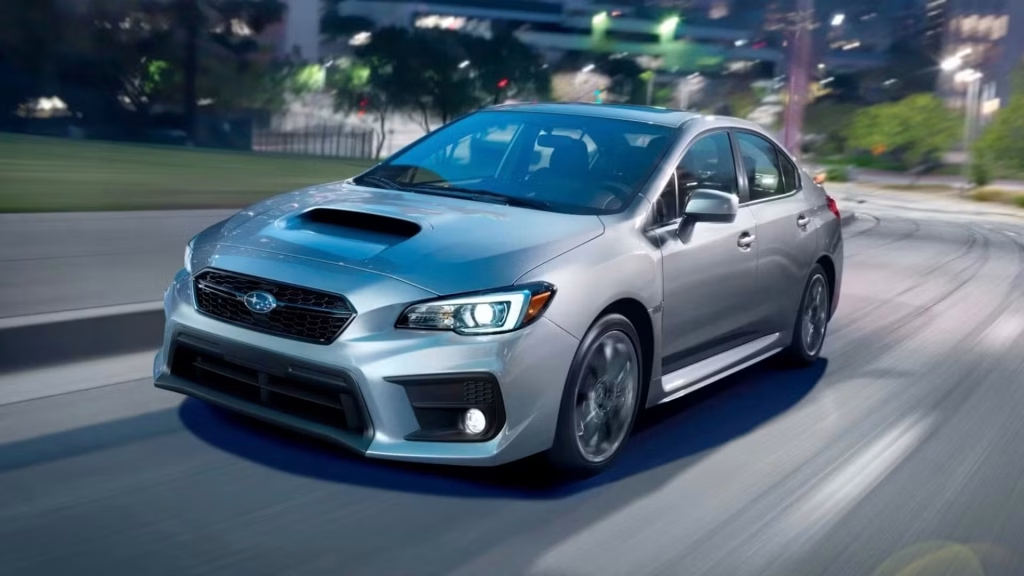
Power comes from a 2.0-liter horizontally opposed four-cylinder engine producing 152 horsepower and 145 lb.-ft. of torque. Standard Symmetrical All-Wheel Drive is another unusual advantage in this class, giving the Impreza capability that many compact competitors do not offer as standard equipment.
The Impreza’s position is therefore based on more than passenger space. Its short exterior, hatchback configuration, substantial passenger compartment, and 20.4-cubic-foot cargo area make it one of the clearest examples of smart interior packaging.
9. Mazda3 Hatchback
The Mazda3 Hatchback makes a strong argument for judging a car from the driver’s seat rather than the sidewalk. At just 175.6 inches long and 70.7 inches wide, it has one of the smallest exterior footprints in this ranking.
Yet Mazda lists 92.7 cubic feet of passenger volume and 20.1 cubic feet of cargo space, giving the hatchback 112.8 cubic feet of EPA interior volume. That is a substantial amount of usable space for a car that is shorter than many subcompact SUVs.
The packaging becomes more impressive when individual seating measurements are considered. Front legroom is 42.3 inches, while rear legroom reaches 35.1 inches. The front shoulder room measures 55.7 inches, with 53.4 inches available behind the front seats.
Rear headroom is 37.2 inches. None of these figures suggests that Mazda simply created a large front cabin and left the rear passengers behind. The space is distributed throughout the two-row interior.
The hatchback design is particularly valuable when cargo is involved. With the rear seats upright, there are 20.1 cubic feet available behind them.
Fold the split rear seatbacks, and the available cargo area expands dramatically, allowing the Mazda3 to handle objects that would be difficult to fit into a conventional sedan’s trunk. That flexibility is one reason the car can feel much larger during everyday use than its exterior dimensions suggest.
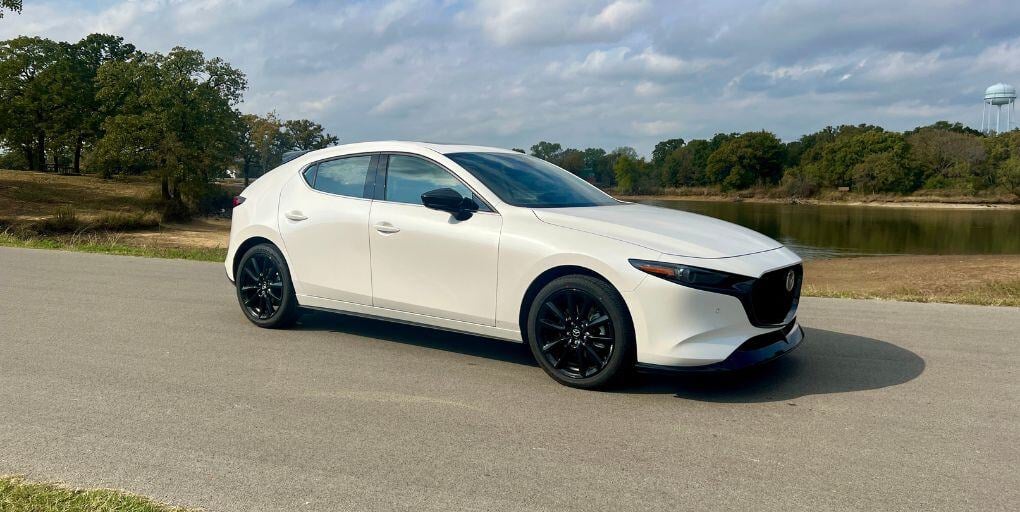
Mazda uses a 2.5-liter Skyactiv-G four-cylinder producing 186 horsepower and 186 lb.-ft. of torque with 87-octane fuel. The combination gives the compact hatchback enough output without requiring a larger engine.
The Mazda3 does not win by having the biggest cabin here. Its advantage is how much passenger and cargo capacity Mazda has managed to package into a body measuring less than 176 inches long.
10. Toyota Corolla Hatchback
The Toyota Corolla Hatchback closes the ranking with perhaps the clearest example of a tiny exterior hiding a useful amount of interior capacity. The 2026 Corolla Hatchback measures only 172 inches long and 70.5 inches wide, making it one of the shortest cars in this comparison.
Despite that compact footprint, Toyota lists 84.6 cubic feet of passenger volume and 17.8 cubic feet of cargo space, giving it 102.4 cubic feet of EPA interior volume.
Its front compartment is particularly accommodating for a car this short. Front legroom reaches 42.0 inches, while front headroom measures 38.4 inches. Rear headroom is 37.6 inches, and rear shoulder room actually reaches 54.5 inches.
The limitation becomes clearer in the rear legroom figure of 29.9 inches, so the Corolla Hatchback is better suited to shorter rear passengers than some of the larger cars higher on this list.
Cargo capacity gives the hatchback another reason to exist. Toyota lists 17.8 cubic feet behind the rear seats, which is considerably more flexible than the trunk of many similarly sized sedans. The rear seats can also fold, allowing the hatchback body to accommodate larger objects when passenger space is not required.
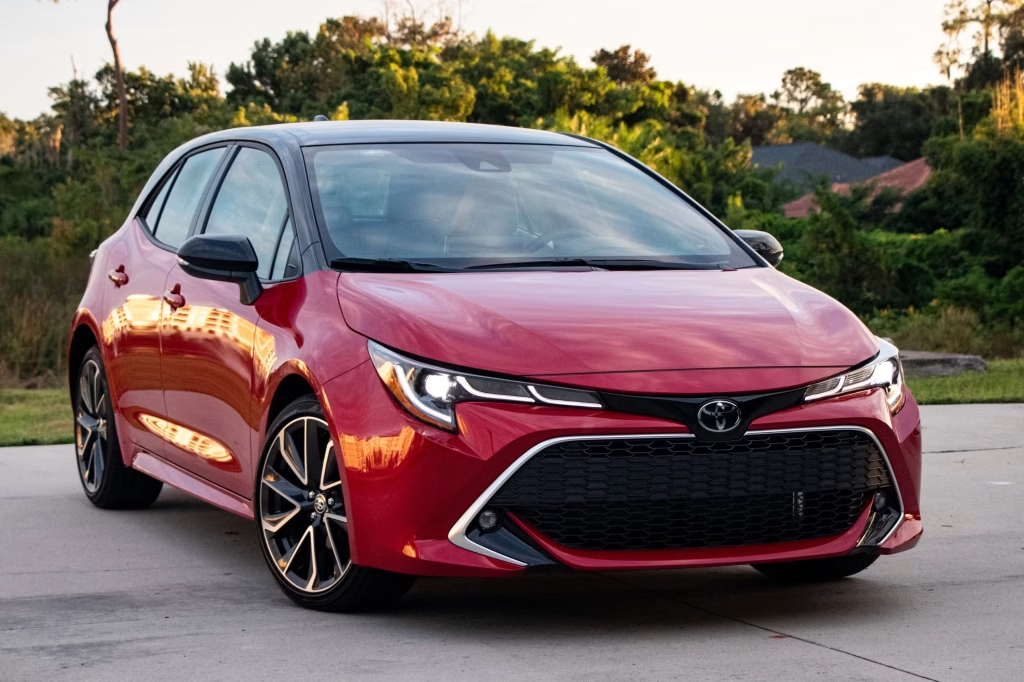
The Corolla uses a 2.0-liter four-cylinder producing 169 horsepower and 151 lb.-ft. of torque. Front-wheel drive and a continuously variable transmission are used in the U.S. model.
The Corolla Hatchback does not pretend to have midsize-sedan levels of rear legroom. Instead, its strength is the amount of usable cabin and cargo space contained within a 172-inch body. It is easy to maneuver, relatively easy to park, and surprisingly practical for its footprint.
That makes it a fitting conclusion to a ranking based on one simple idea. A car’s true size is sometimes best measured by how much it can accommodate once everyone is inside.
