
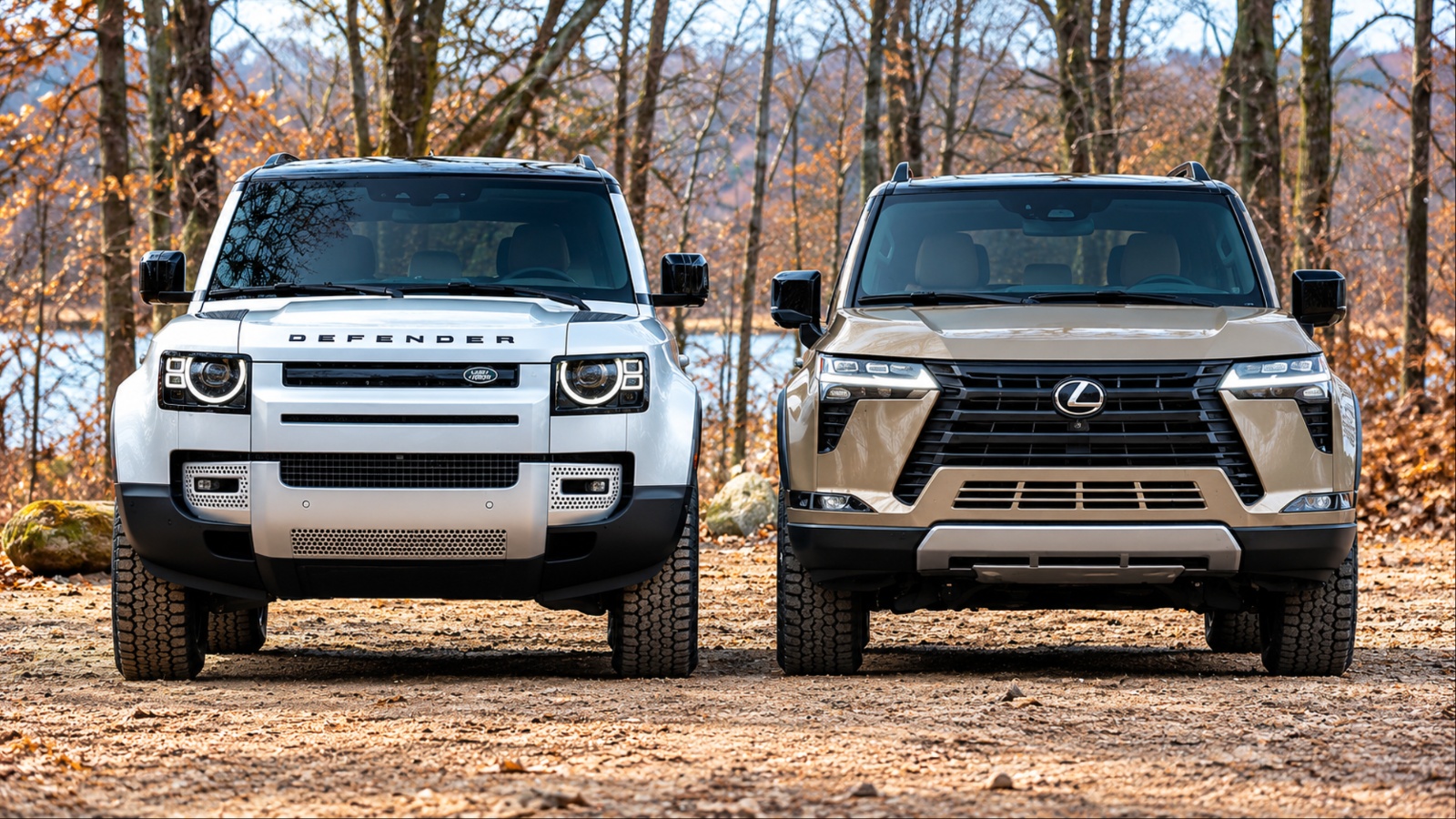
The Toyota Land Cruiser, Land Rover Defender, and Lexus GX are three of the most recognizable names in the luxury-capable SUV world. Each combines body-on-frame construction, four-wheel-drive capability, and strong off-road credentials, but they approach the formula differently.
The Toyota Land Cruiser focuses on durability, efficiency, and traditional off-road ability. The 2026 U.S.-spec model uses a turbocharged 2.4-liter four-cylinder hybrid powertrain producing 326 horsepower and 465 lb-ft of torque. It seats five and can tow up to 6,000 pounds. Car and Driver also records an EPA-estimated 23 mpg combined.
The Lexus GX adds a stronger powertrain and more luxury. Its twin-turbocharged 3.4-liter V6 produces 349 horsepower and 479 lb-ft of torque, while maximum towing reaches more than 9,000 pounds depending on configuration. The GX can also seat up to seven.
The Land Rover Defender takes the most flexible approach. It is offered in several body styles and with multiple engines, ranging from a turbocharged four-cylinder to powerful six-cylinder and V8 configurations.
The Defender 110 can tow up to 7,716 pounds in certain configurations, while higher-performance versions can produce well over 500 horsepower.
That creates three very different ownership propositions. The Land Cruiser emphasizes dependable adventure. The GX combines luxury with serious capability.
The Defender prioritizes customization, technology, and broad performance ability. Here is how they compare across six important categories.
Price and Value
The Land Cruiser starts this comparison with a significant advantage in purchase price. For 2026, the Toyota Land Cruiser 1958 starts at about $59,195, while the Lexus GX Premium starts around $68,335. The Defender 110 begins at approximately $65,350 before moving considerably higher with additional equipment and more powerful engines.
That gives Toyota a clear entry-price advantage. The Land Cruiser also provides a substantial amount of capability without requiring buyers to move into an expensive trim. Four-wheel drive, low-range gearing, and a turbocharged hybrid powertrain are central to the vehicle rather than being reserved exclusively for expensive versions.
That matters because the Land Cruiser is not simply a stylish SUV with a rugged appearance. Its entire design revolves around durability and off-road use.
The Lexus GX asks buyers to spend more, but the additional money buys a more luxurious cabin and a stronger powertrain. Its 349-horsepower twin-turbo V6 produces 479 lb-ft of torque, considerably more than the Land Cruiser’s 465 lb-ft.
The GX also offers more seating flexibility, with Premium and Luxury versions capable of carrying up to seven passengers. Overtrail models focus more heavily on off-road capability and sacrifice the third row.
The Defender sits between the two at its entry point but quickly becomes much more expensive.
A base Defender 110 is priced similarly to the GX, but buyers can move through several trims before reaching V8 versions costing well into six figures. KBB lists the 2026 Defender 110 from $65,350, with V8 models starting above $115,000 and the Defender OCTA reaching substantially more.
That gives Land Rover the widest pricing range but not necessarily the strongest value. The Defender’s advantage is customization.
Buyers can select different body lengths, engines, suspension systems, and equipment levels. But the more specialized the configuration becomes, the more expensive the vehicle gets.
The Land Cruiser is easier to justify. It provides serious four-wheel-drive hardware, hybrid-assisted performance, and a strong equipment package without approaching the Defender’s upper pricing levels.
It also offers better EPA fuel economy than the GX. Car and Driver lists the Land Cruiser at 23 mpg combined compared with 17 mpg for the GX.
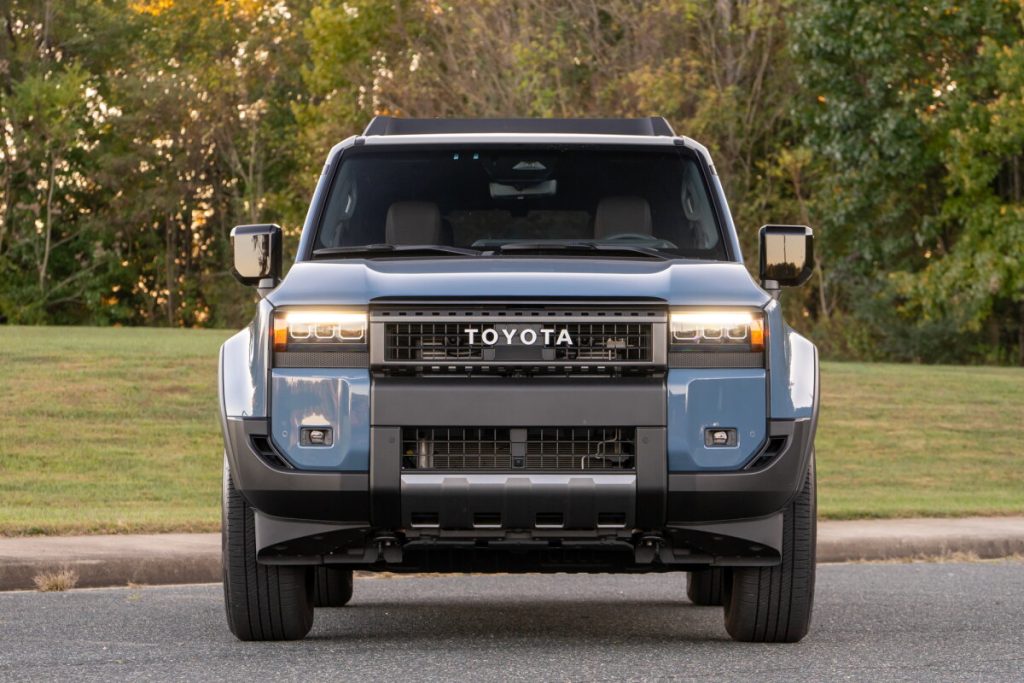
For buyers who want a capable SUV without spending luxury-SUV money, Toyota delivers the strongest proposition. The GX is worth the extra money for buyers prioritizing luxury and towing.
The Defender makes sense for buyers who want maximum customization and distinctive design. But when purchase price, standard capability, and efficiency are considered together, the Land Cruiser offers the strongest value.
Winner: Toyota Land Cruiser
Powertrain and Performance
The Defender takes this category because it offers the widest range of powertrains and the highest performance ceiling.
In the U.S. market, the Land Cruiser comes with a single powertrain. It combines a turbocharged 2.4-liter four-cylinder engine with hybrid assistance to produce 326 horsepower and 465 lb-ft of torque. Power is delivered through an eight-speed automatic transmission.
That is a strong combination. The electric assistance gives the Land Cruiser considerable low-end torque, and the powertrain is well suited to low-speed off-road driving. However, acceleration is not its main priority. Car and Driver recorded 0 to 60 mph in 7.7 seconds during testing.
The Lexus GX is substantially quicker. Its twin-turbocharged 3.4-liter V6 produces 349 horsepower and 479 lb-ft of torque, paired with a 10-speed automatic transmission. Car and Driver recorded a 6.2-second 0-to-60-mph time.
That gives the GX a meaningful performance advantage over the Land Cruiser. The Defender takes the concept much further.
Its engine range includes a 296-horsepower 2.0-liter turbocharged four-cylinder, turbocharged mild-hybrid six-cylinder engines, and supercharged or twin-turbo V8 options. KBB lists up to 518 horsepower for the regular Defender V8 and 626 horsepower for the Defender OCTA.
That gives the Defender a performance ceiling neither Toyota nor Lexus can match. The Defender’s engine diversity is one of its strongest advantages.
A buyer who prioritizes fuel economy can choose the smaller engine. Someone wanting stronger acceleration can move into a six-cylinder. Buyers seeking extreme performance can choose a V8 or OCTA.
The GX is much simpler. Every GX uses the twin-turbo V6, which is not necessarily a disadvantage. Its 479 lb-ft of torque provides excellent response, and the 10-speed transmission keeps the engine in a useful part of its powerband.
The Land Cruiser is the efficiency-focused option. Its hybrid system provides strong torque while keeping fuel consumption substantially below the GX. That makes it particularly attractive for long-distance travel and buyers who expect to spend considerable time on the road.
But this category is about performance breadth. The Defender can be configured as a comfortable long-distance cruiser, a capable off-road vehicle, or a genuinely fast luxury SUV.
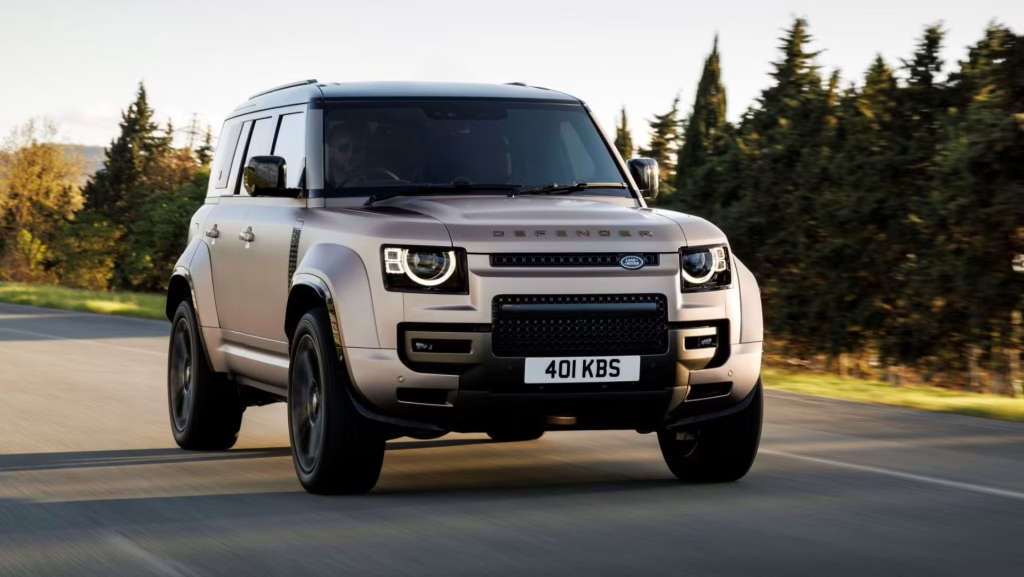
The V8 versions transform its character completely, while the OCTA takes performance even further with 626 horsepower. The GX offers the best balance between the Toyota and Land Rover.
It is significantly stronger than the Land Cruiser and more straightforward than the Defender. Still, the Defender has the broadest engine lineup and the highest performance ceiling.
For buyers who want the greatest choice of powertrains and maximum performance, the Defender wins.
Winner: Land Rover Defender
Off-Road Capability
All three SUVs are highly capable away from pavement, but the Land Cruiser’s design is particularly focused on traditional off-road durability.
The current Land Cruiser uses Toyota’s GA-F body-on-frame platform and comes standard with four-wheel drive and low-range gearing. Its architecture is designed around maintaining traction and control over difficult terrain rather than simply providing an aggressive appearance.
The Land Cruiser’s relatively compact dimensions also help on narrow trails. Its 193.8-inch length and 112.2-inch wheelbase make it shorter than the Lexus GX and similar in size to many traditional off-road vehicles. Car and Driver lists 8.3 inches of ground clearance for the standard Land Cruiser.
The GX uses the same broad GA-F platform family. That gives Lexus a major structural advantage because the platform was engineered to withstand twisting forces and maintain suspension articulation in demanding terrain. Lexus also offers specialized Overtrail and Overtrail+ versions with additional off-road hardware.
The GX is therefore extremely capable. Its available electronic locking rear differential, four-wheel-drive system, and terrain-focused technology make it a serious trail vehicle.
The Defender takes a different approach. Its available air suspension allows the vehicle to change ride height depending on conditions, while advanced electronic systems help manage traction. The Defender also offers a variety of drive modes designed for different surfaces.
KBB highlights the Defender’s optional air suspension as a major advantage because it can lower the SUV for highway driving or raise it for additional clearance away from pavement.
That gives the Defender tremendous versatility. However, Toyota’s philosophy remains simpler. The Land Cruiser’s mechanical four-wheel-drive system and low-range gearing are designed around predictable operation. Its hybrid powertrain also provides substantial torque at low speeds.
The Land Cruiser is not the most sophisticated vehicle here. That can actually be an advantage on remote trails. Fewer complicated systems and a strong mechanical foundation are reassuring when the nearest service facility is far away.
The GX combines impressive luxury with comparable off-road hardware, making it perhaps the best choice for someone who wants to spend serious time on trails without giving up premium comfort.
The Defender is exceptionally capable and arguably the most adaptable. Its adjustable suspension and electronic systems allow it to tackle a broad range of terrain.
But the Land Cruiser’s purpose is clearer. It was designed to be a durable, capable expedition-style SUV first and a comfortable daily vehicle second.
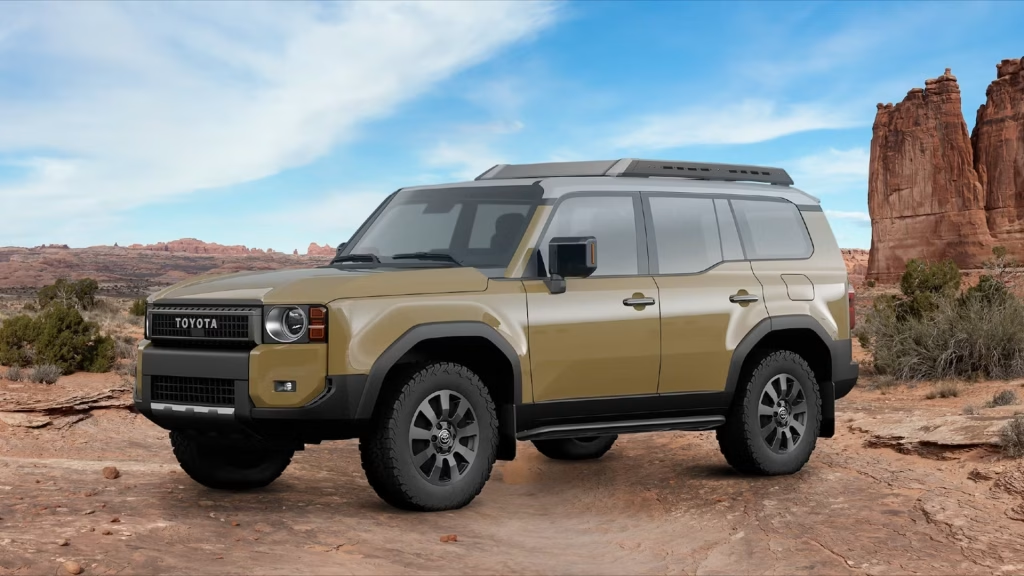
Its reputation has been built around surviving difficult environments, and the current model retains that philosophy while adding modern hybrid technology.
For buyers who prioritize traditional four-wheel-drive capability, predictable mechanical performance, and long-distance adventure, the Land Cruiser has the edge.
Winner: Toyota Land Cruiser
Towing and Utility
This category is where the Lexus GX separates itself from the Land Cruiser. The 2026 GX can tow more than 9,000 pounds when properly equipped. Lexus lists up to 9,063 pounds for several grades and 9,096 pounds for the Overtrail configuration with the standard tow hitch receiver.
That is an enormous advantage. The Land Cruiser’s maximum towing capacity is 6,000 pounds. Six thousand pounds is enough for many boats, campers, and recreational trailers, but it is nowhere near the GX’s capability.
The Defender can tow up to 7,716 pounds in the relevant Defender 110 configuration, according to KBB. That places it between the Toyota and Lexus. The GX therefore has the strongest numerical advantage.
Its 479 lb-ft of torque also gives the SUV substantial pulling power. The twin-turbo V6 and 10-speed automatic provide the kind of powertrain combination that works well when moving a heavy trailer.
The Land Cruiser has a different advantage. Its hybrid powertrain produces 465 lb-ft of torque, so it does not lack low-end strength. Its smaller towing limit reflects the vehicle’s positioning rather than an inability to produce torque.
The Land Cruiser is intended more for adventure travel than heavy trailer work. That distinction becomes important when considering the type of owner each SUV targets.
A Land Cruiser owner might tow a small travel trailer, boat, or utility trailer while spending the rest of the time exploring remote roads.
A GX owner can do the same but has substantially more capacity available when the trailer becomes larger. The Defender is also highly capable.
Its available engines and advanced towing technology make it useful for hauling recreational equipment, while its longer wheelbase can contribute to stability on the highway.
However, its towing figure still falls behind the GX. The Lexus also provides a useful combination of towing and passenger space.
Premium and luxury grades can seat up to seven, giving the GX a major advantage for families who need both towing capacity and additional seating. Overtrail versions sacrifice the third row for more specialized off-road equipment.
The Land Cruiser remains a five-seat SUV, so it cannot match the GX’s passenger flexibility. The Defender can also be configured with different seating arrangements depending on body style.
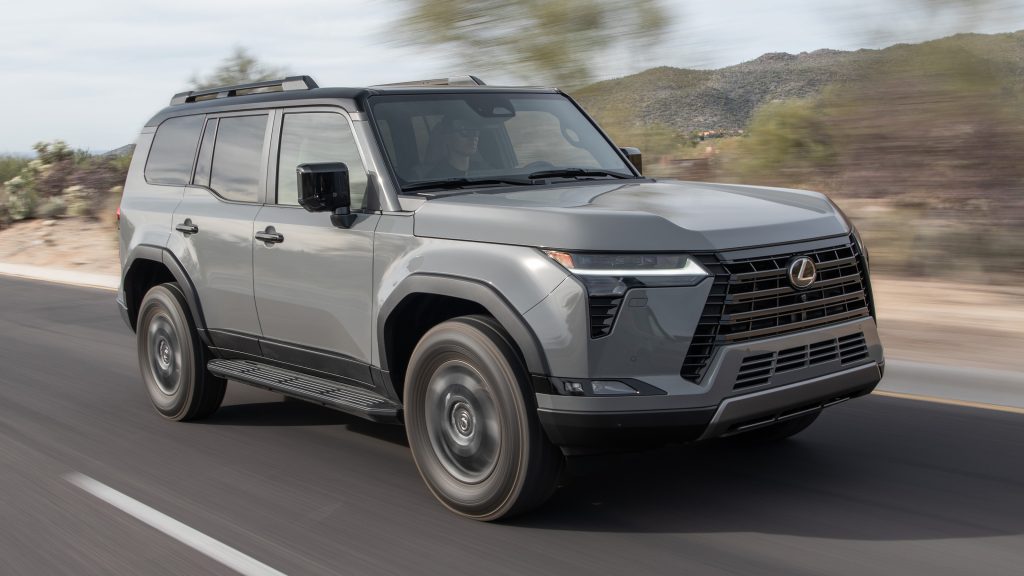
But when the task is moving a heavy trailer, Lexus has the strongest argument. Its more than 9,000-pound maximum towing capacity is substantially higher than the Land Cruiser’s 6,000 pounds and the Defender’s approximately 7,700-pound rating.
The GX also retains serious off-road credentials, so buyers do not have to choose between towing and trail capability.
For owners who tow frequently or simply want the largest possible trailer margin, the GX is the clear winner.
Winner: Lexus GX
Interior, Comfort, and Technology
The Defender wins this category because it combines distinctive design with a wide range of available luxury and technology features. The GX is arguably the most traditionally luxurious vehicle here.
Its cabin uses premium materials and a clean dashboard layout, while every GX receives a 14-inch touchscreen with wireless Apple CarPlay and Android Auto.
The GX also provides excellent front and second-row space, and Premium and Luxury models can accommodate up to seven passengers. It feels like a proper luxury SUV rather than simply a premium version of an off-road truck.
The Land Cruiser is more utilitarian. Its cabin is modern and comfortable, but Toyota clearly prioritized durability and function. The top trim receives a 12.3-inch touchscreen, and wireless Apple CarPlay and Android Auto are available.
The controls are straightforward, and the driving position provides excellent visibility. The Defender is different.
Land Rover designed its cabin around a mixture of ruggedness and premium appeal. The dashboard is modern without appearing fragile, and the cabin can be configured with different materials and equipment depending on trim.
Its body-style range also gives buyers greater flexibility. The Defender 90 provides a shorter two-door configuration, the Defender 110 serves as the mainstream four-door model, and the Defender 130 offers three-row seating.
That flexibility is unusual. The GX offers two-row or three-row configurations depending on trim, while the Land Cruiser is strictly a five-seat SUV in the U.S. market.
The Defender therefore covers more use cases. It can function as a compact adventure vehicle, a family SUV, or a high-performance luxury SUV.
The available air suspension also improves highway comfort while providing additional clearance off-road. The GX remains the better choice for buyers who want traditional luxury.
Its materials, seating comfort, and technology feel polished without being unnecessarily complicated. The Land Cruiser appeals to buyers who prefer function over extravagance.
Its interior is easier to understand and appears designed to tolerate heavy use. But the Defender provides the most distinctive cabin.
It combines high-quality materials with a rugged design language that matches the vehicle’s exterior. The result feels premium without losing the adventurous personality that separates it from conventional luxury SUVs.
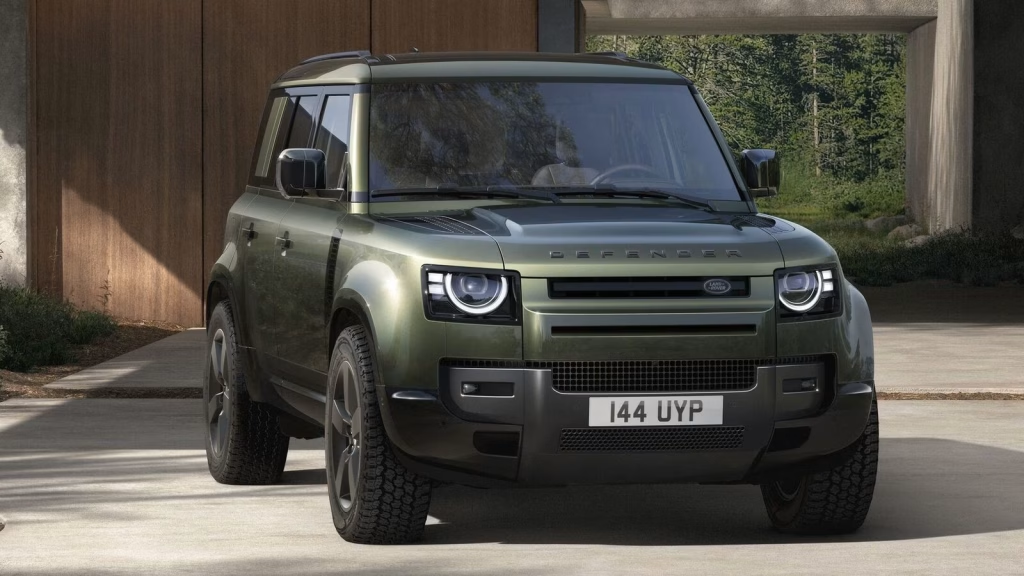
The technology package is also strong, while the available body styles and equipment allow buyers to customize the vehicle extensively.
This category is therefore less about raw specifications and more about the experience. The GX is luxurious. The Land Cruiser is functional. The Defender is both luxurious and distinctive.
For buyers who want the most interesting cabin, greatest configuration flexibility, and strongest combination of luxury and adventure character, the Defender earns the category.
Winner: Land Rover Defender
Reliability, Ownership, and Long-Term Appeal
The Land Cruiser takes the final category because reliability and long-distance durability have always been central to its identity.
Toyota’s reputation in this area is a major reason the Land Cruiser name has remained so influential around the world.
The current model introduces hybrid technology, but the underlying vehicle retains a traditional body-on-frame structure and four-wheel-drive architecture. That combination gives the Land Cruiser a strong foundation for long-term ownership.
The GX shares Toyota’s GA-F platform and benefits from Lexus engineering, making it an excellent alternative for buyers who want Toyota-family durability with a more luxurious experience. Lexus also provides a four-year/50,000-mile basic warranty and six-year/70,000-mile powertrain warranty.
The Defender has a different ownership proposition. It offers outstanding engineering, impressive capability, and a much wider range of configurations, but its complex systems and luxury positioning can make long-term ownership more expensive.
That does not mean the Defender is inherently unreliable. It means the vehicle has more systems, more technology, and more expensive components than the simpler Land Cruiser.
The GX occupies an attractive middle ground. It provides a premium cabin and powerful engine while retaining Toyota’s underlying body-on-frame architecture.
For buyers who want luxury without completely abandoning Toyota’s traditional engineering philosophy, the GX is arguably the most appealing choice. But the Land Cruiser remains the strongest option for long-term adventure use.
Its fuel economy also helps. Car and Driver estimates 23 mpg combined for the Land Cruiser compared with 17 mpg combined for the GX.
That difference becomes significant over many years of driving. The Land Cruiser’s hybrid system is another advantage for daily use. It gives the SUV strong torque while reducing fuel consumption compared with the larger V6-powered GX.
The Defender can provide better fuel economy than the GX in some configurations, with KBB listing 20 mpg combined for the four-cylinder Defender 110.
However, the Land Cruiser’s combination of efficiency, durability, and mechanical simplicity makes it easier to recommend for owners planning long-term use.
It is also less expensive than the GX and Defender at the entry point. That means owners can spend less initially while retaining serious off-road capability.
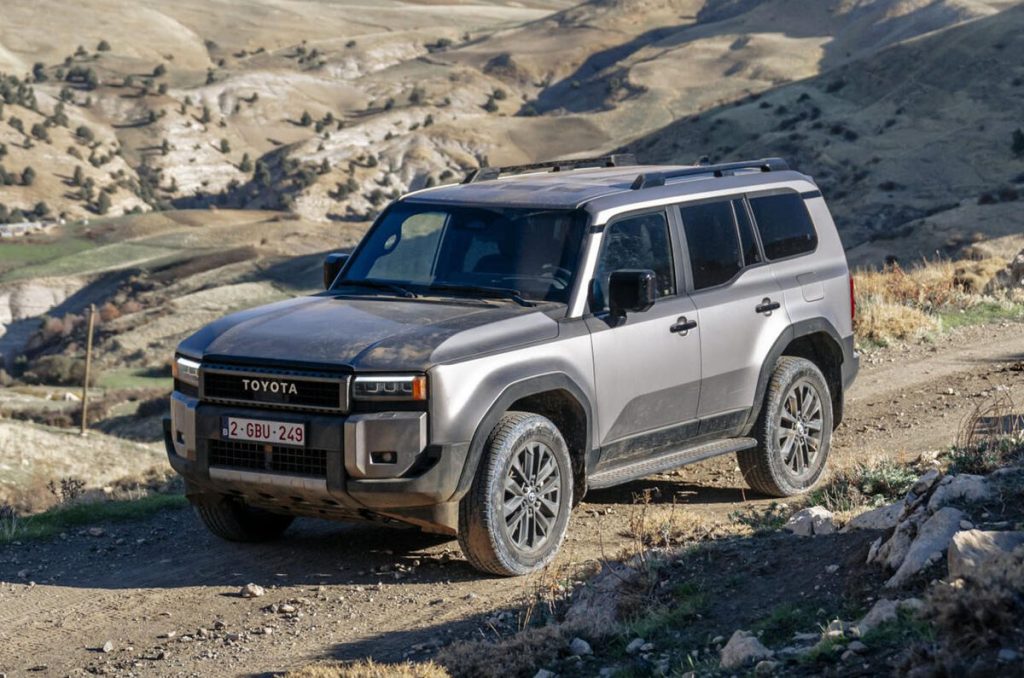
The GX remains an excellent long-term luxury choice. The Defender is more appealing to buyers who prioritize individuality, technology, and performance.
But the Land Cruiser has the strongest reputation for surviving demanding conditions and accumulating substantial mileage. For someone planning to keep an SUV for many years and potentially take it into remote areas, that confidence matters. The Land Cruiser therefore earns the final category.
Winner: Toyota Land Cruiser
The Toyota Land Cruiser, Land Rover Defender, and Lexus GX all deliver genuine four-wheel-drive capability, but they are built around different priorities.
The Toyota Land Cruiser is the durability specialist. Its 326-horsepower hybrid powertrain, 465 lb-ft of torque, standard four-wheel drive, and 23 mpg combined EPA rating make it a particularly strong combination of efficiency and off-road ability. Its maximum towing capacity is 6,000 pounds.
The Lexus GX is the luxury and towing specialist. Its twin-turbo V6 produces 349 horsepower and 479 lb-ft of torque, while its towing capacity can exceed 9,000 pounds. It also offers seating for up to seven.
The Land Rover Defender is the customization and performance specialist. Its broad engine range, multiple body styles, adjustable suspension, and high-performance V8 variants give it the greatest variety of configurations.
Here is how the six categories shake out:
| Category | Winner | The Edge |
|---|---|---|
| Price and Value | Toyota Land Cruiser | Lower entry price combines hybrid efficiency with serious off-road capability. |
| Powertrain and Performance | Land Rover Defender | Broad engine range provides the strongest performance and configuration choices. |
| Off-Road Capability | Toyota Land Cruiser | Traditional four-wheel-drive hardware emphasizes durability and difficult-terrain performance. |
| Towing and Utility | Lexus GX | More than 9,000 pounds of towing capacity dominates both competitors. |
| Interior, Comfort, and Technology | Land Rover Defender | The distinctive luxury cabin offers greater customization and configuration flexibility. |
| Reliability, Ownership, and Long-Term Appeal | Toyota Land Cruiser | Proven durability and efficiency support confident long-term ownership. |
