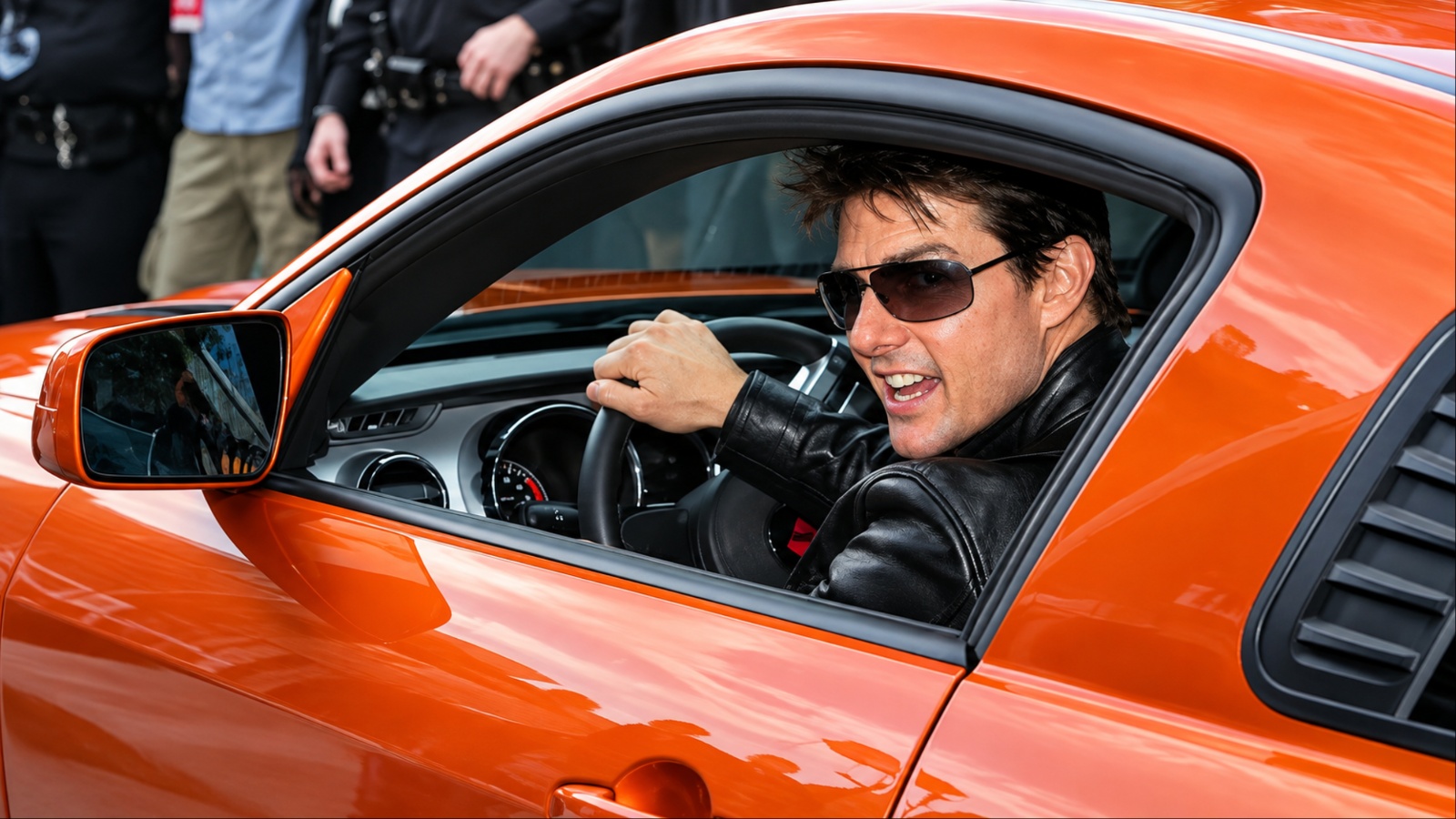
Tom Cruise has spent decades building a reputation as one of Hollywood’s most committed speed enthusiasts, both on screen and off. From flying real fighter jets for the Top Gun franchise to performing his own motorcycle stunts in the Mission: Impossible series, his love of fast machines has never been a marketing gimmick.
That passion carries over into a private garage that blends humble beginnings with jaw-dropping exotica, and pieces of genuine film history sit alongside seven-figure hypercars.
What makes Cruise’s collection stand out isn’t just the price tags attached to a few standout pieces. It’s the story behind almost every vehicle, many of which trace directly back to his most famous roles or his own personal rise from struggling actor to global star. Below, we rank ten of the rarest cars associated with his collection, from notable to nearly unobtainable.
10. 1976 Dodge Colt
Long before private jets and Bugattis, Tom Cruise’s daily driver was a modest 1976 Dodge Colt, a compact economy car built by Mitsubishi and sold under Dodge’s badge in the United States.
Powered by either a 1.3-liter or 1.5-liter four-cylinder engine, the Colt was never designed to impress anyone on a racetrack. It was designed to be cheap, dependable transportation, exactly what a young, unproven actor bouncing between auditions and odd jobs actually needed in the years before his breakout success.
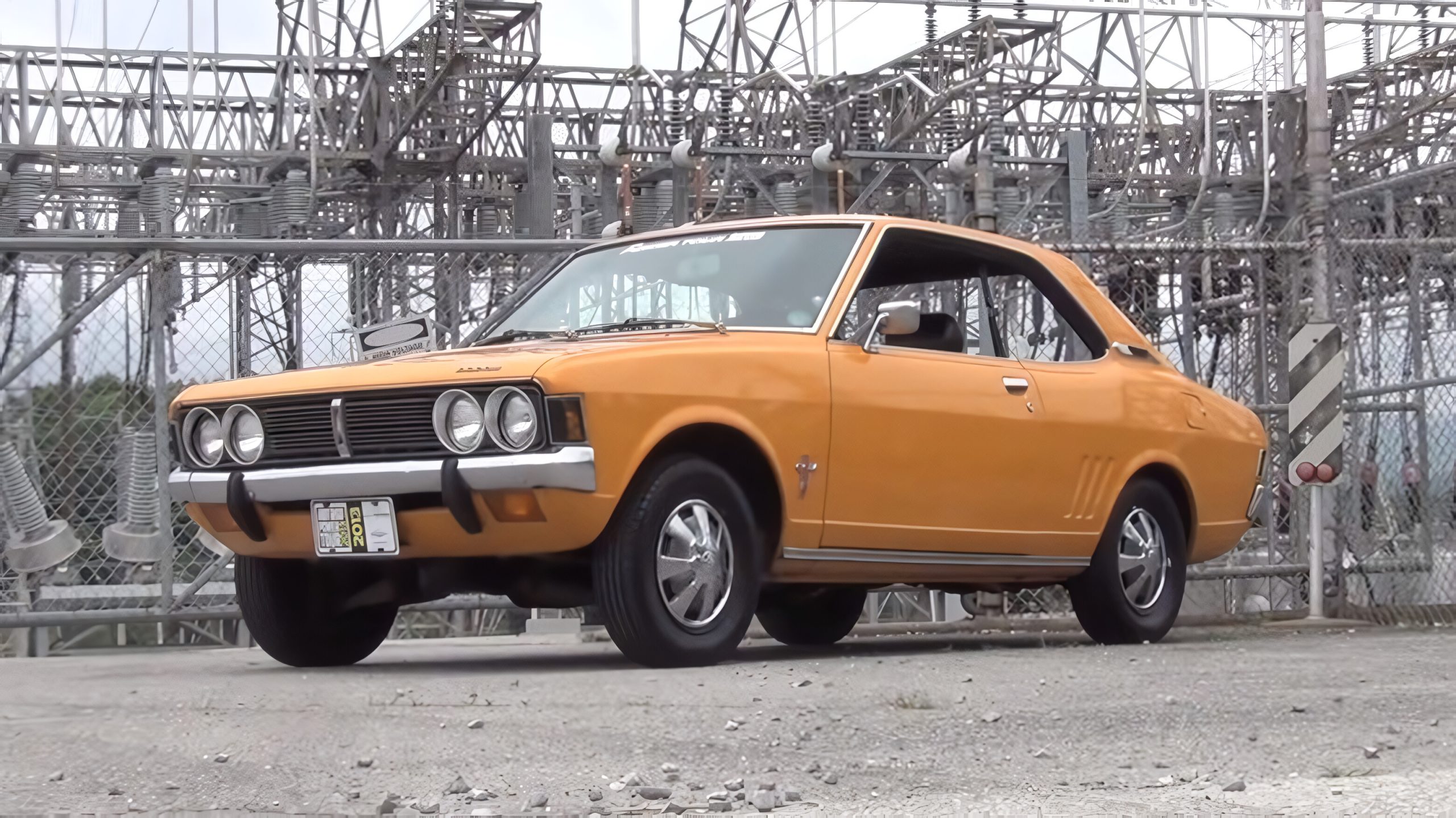
Details about Cruise’s specific Colt are scarce, since it predates his fame and the kind of documentation that follows a celebrity’s later purchases. What is known is that the car played a genuinely practical role in his early career, getting him from one casting call to the next during a period when a reliable car mattered far more than a fast one.
Most Colts from this era have long since been scrapped or lost to rust, which ironically makes this unglamorous economy car one of the rarer surviving vehicles tied to Cruise today.
Its place on this list has little to do with performance or exclusivity in the traditional sense. Instead, it represents the origin point of a car obsession that would eventually grow into a garage full of exotic machinery, and it offers a grounded contrast to everything else on this list. For collectors and fans alike, an unassuming survivor with this kind of backstory carries a different, more sentimental kind of rarity.
9. 2000 Ford Excursion
The Ford Excursion is not the vehicle most people picture when they imagine a movie star’s garage, and that’s precisely what makes its inclusion notable. Built as Ford’s answer to the growing appetite for oversized SUVs at the turn of the millennium, the Excursion was massive, heavy, and unapologetically utilitarian rather than glamorous. It was never marketed as a performance vehicle or a status symbol in the way a sports car would be.
For Cruise, the appeal appears to be practicality rather than prestige. A vehicle of this size offers space, comfort, and the kind of low-key presence that can be useful for a celebrity trying to move around without drawing the same attention a supercar would attract. It’s a reminder that even collectors with access to virtually any vehicle on earth sometimes just need something functional for everyday errands, hauling gear, or family use.
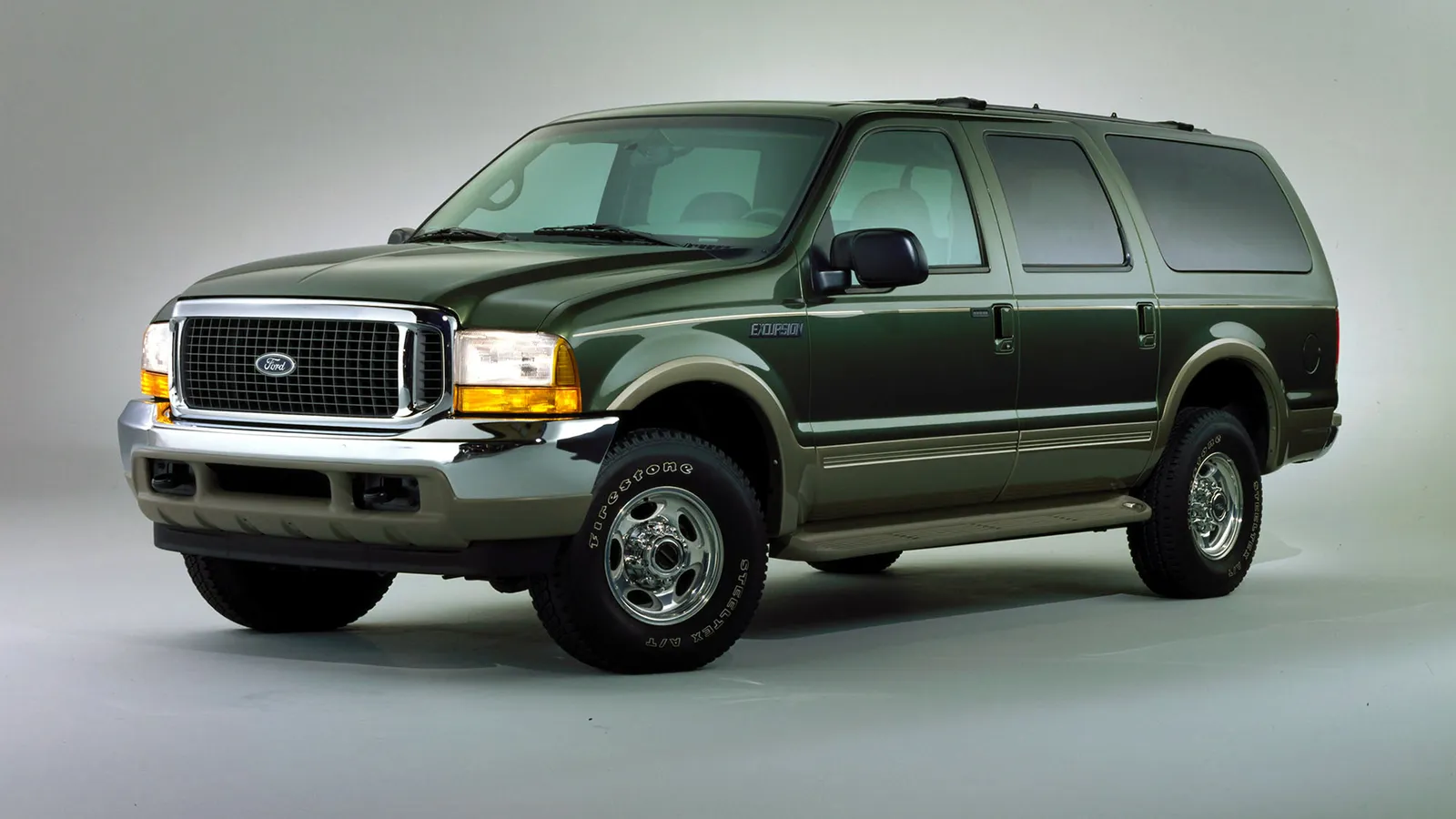
Rarity here comes less from scarcity of production and more from the unlikely pairing of owner and vehicle. Excursions were produced in meaningful numbers throughout their run, so this isn’t a car that’s difficult to find on the used market.
What makes it noteworthy within Cruise’s collection is the contrast it creates, sitting quietly among machines worth hundreds of times its value, and serving as a useful reminder that even a garage full of exotica needs a few practical workhorses.
8. Saleen S281
The Saleen S281 represents a very American approach to building a supercar, taking the already potent Ford Mustang platform and pushing it further with the help of aftermarket tuning specialist Steve Saleen.
When it launched in 2005, the base price sat just north of fifty thousand dollars, a figure that would have been pocket change for a star of Cruise’s stature, but the car earned its place through genuine performance credentials rather than badge prestige alone.
Under the hood, the S281 typically paired a supercharged V8 with upgraded suspension, brakes, and aerodynamic bodywork designed to separate it visually and mechanically from a standard Mustang.
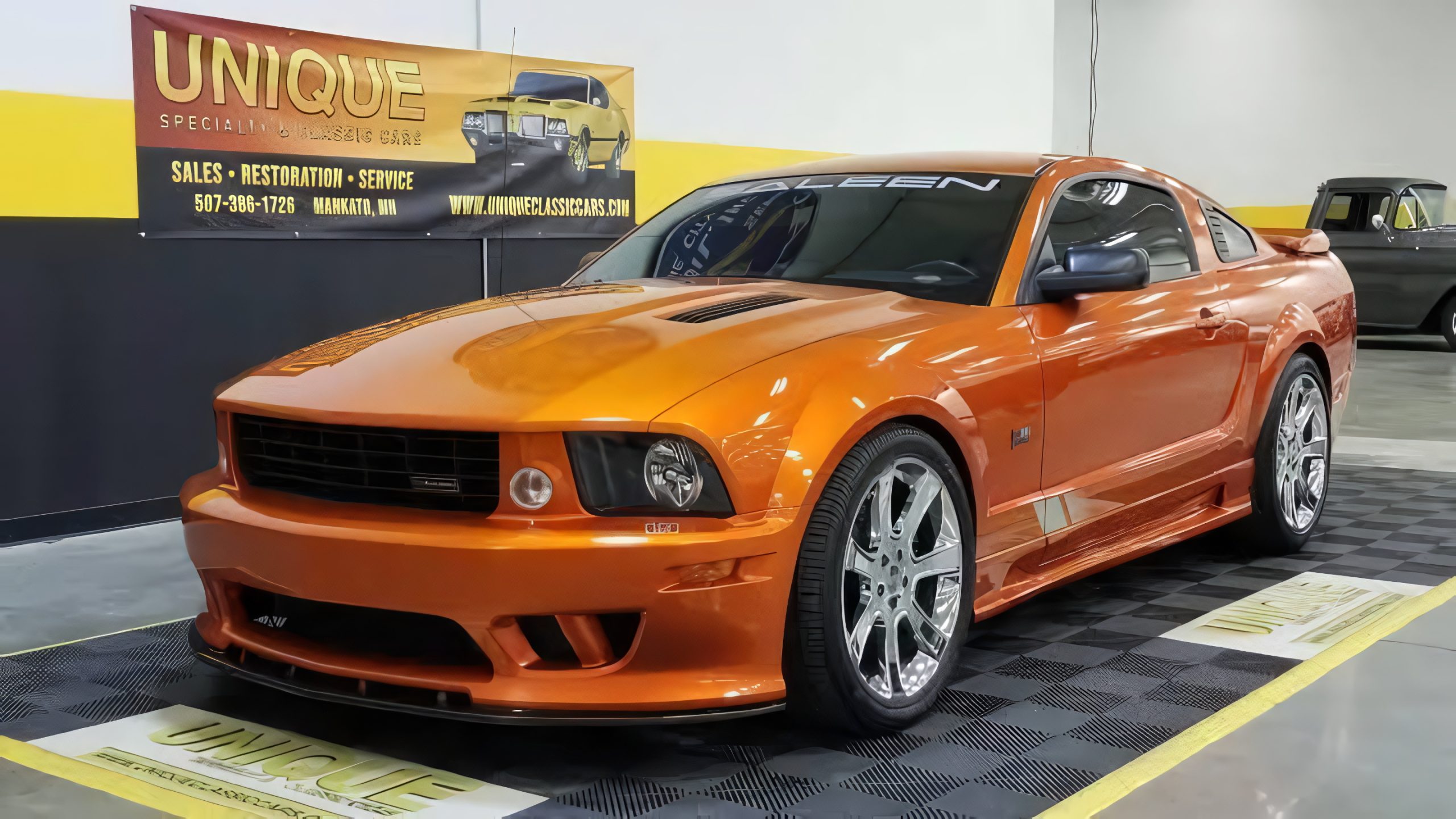
Saleen built these cars in limited numbers compared to Ford’s mainstream production runs, and certain S281 variants pushed output well past what most muscle car buyers were used to at the time, giving the car serious bite to match its aggressive looks.
Because Saleen operated as a smaller specialty manufacturer rather than a mass-market brand, surviving examples of the S281 are considerably harder to find today than the Mustangs they were built from.
For a collector like Cruise, who has shown a consistent interest in American muscle throughout his garage, the S281 fits naturally alongside his other domestic picks while offering a rarer, more track-focused edge. It’s a car built for drivers who wanted more than what the factory Mustang could offer.
7. 1970 Chevrolet Chevelle SS
Few muscle cars carry the same instant recognition as the 1970 Chevrolet Chevelle SS, a car widely regarded as one of the high points of Detroit’s muscle car era before emissions regulations and insurance costs reshaped the industry. With aggressive styling and some of the largest big-block engines General Motors ever offered in a mid-size car, the Chevelle SS became a benchmark that other manufacturers spent years trying to match.
Cruise isn’t alone among celebrities in appreciating the model. Fellow car enthusiast Vin Diesel is also known to keep one in his own collection, and the Chevelle’s cultural footprint extends well beyond Hollywood garages into decades of drag strips and car shows.
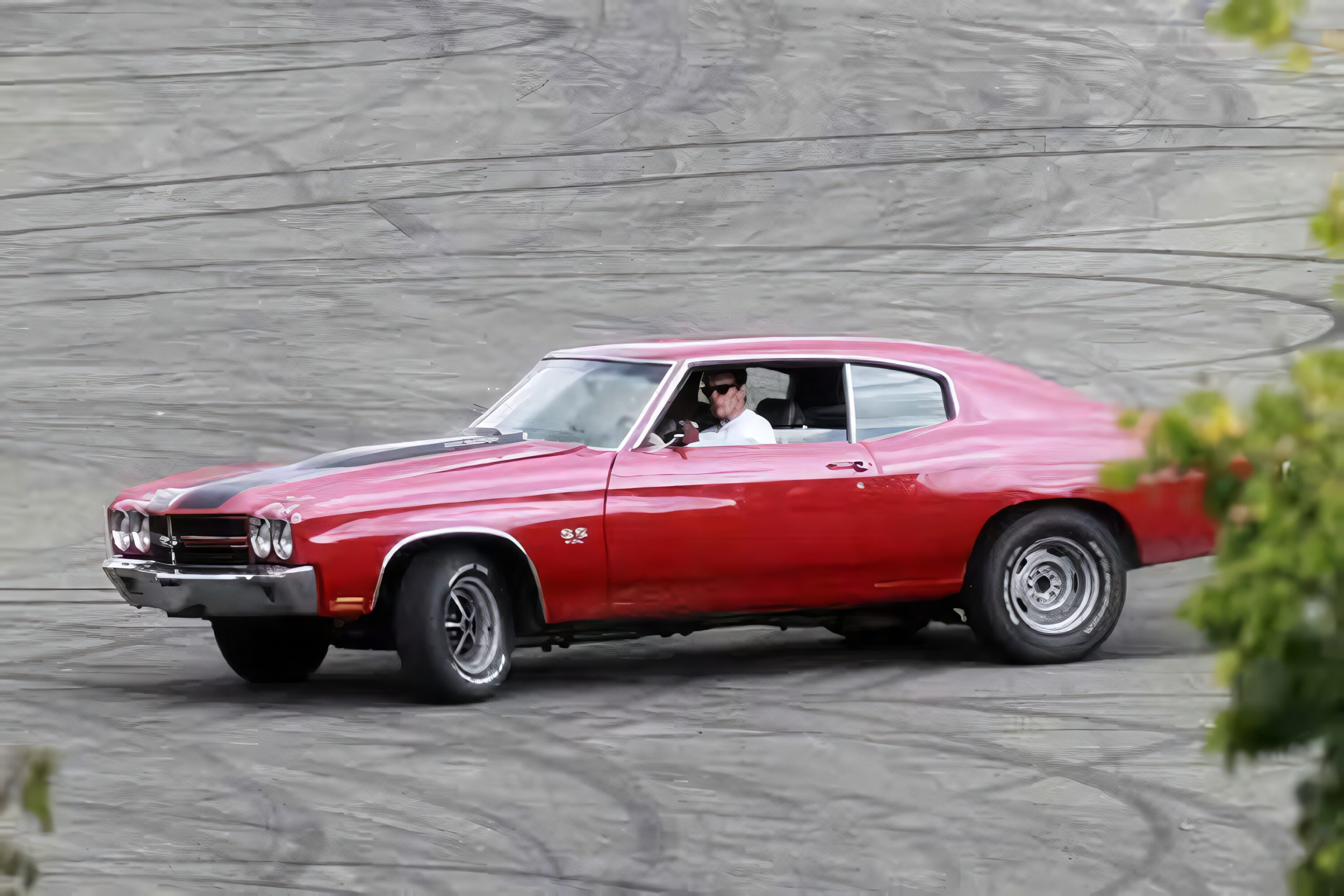
The SS396 was not originally destined to remain in Cruise’s personal collection. He encountered the car while looking for vehicles to feature in one of his film productions. Afterward, however, the Chevelle stayed with him. That connection gives the car an interesting piece of Hollywood history that adds to its original factory pedigree.
Few 1970 Chevelle SS models have survived in their original, numbers-matching condition. Years of modifications, restorations, and normal attrition have made authentic examples increasingly scarce. That rarity has helped drive up the value of well-preserved cars, giving this Chevelle a special place in Cruise’s collection. It is not only a valuable classic, but also a standout example of American muscle from one of the genre’s defining eras.
6. 1958 Chevrolet Corvette C1
The first-generation Corvette, commonly known as the C1, remains one of the most visually striking American cars ever produced, and the 1958 model year is particularly beloved among collectors. Its dual headlights, chrome-heavy grille, and sweeping body lines capture a distinctly optimistic era of American design, when styling ambition often outpaced engineering restraint in the most charming way possible.
Chevrolet built the C1 in relatively modest numbers compared to later Corvette generations, and the model represented the brand’s first real attempt at a genuine sports car rather than a dressed-up sedan.
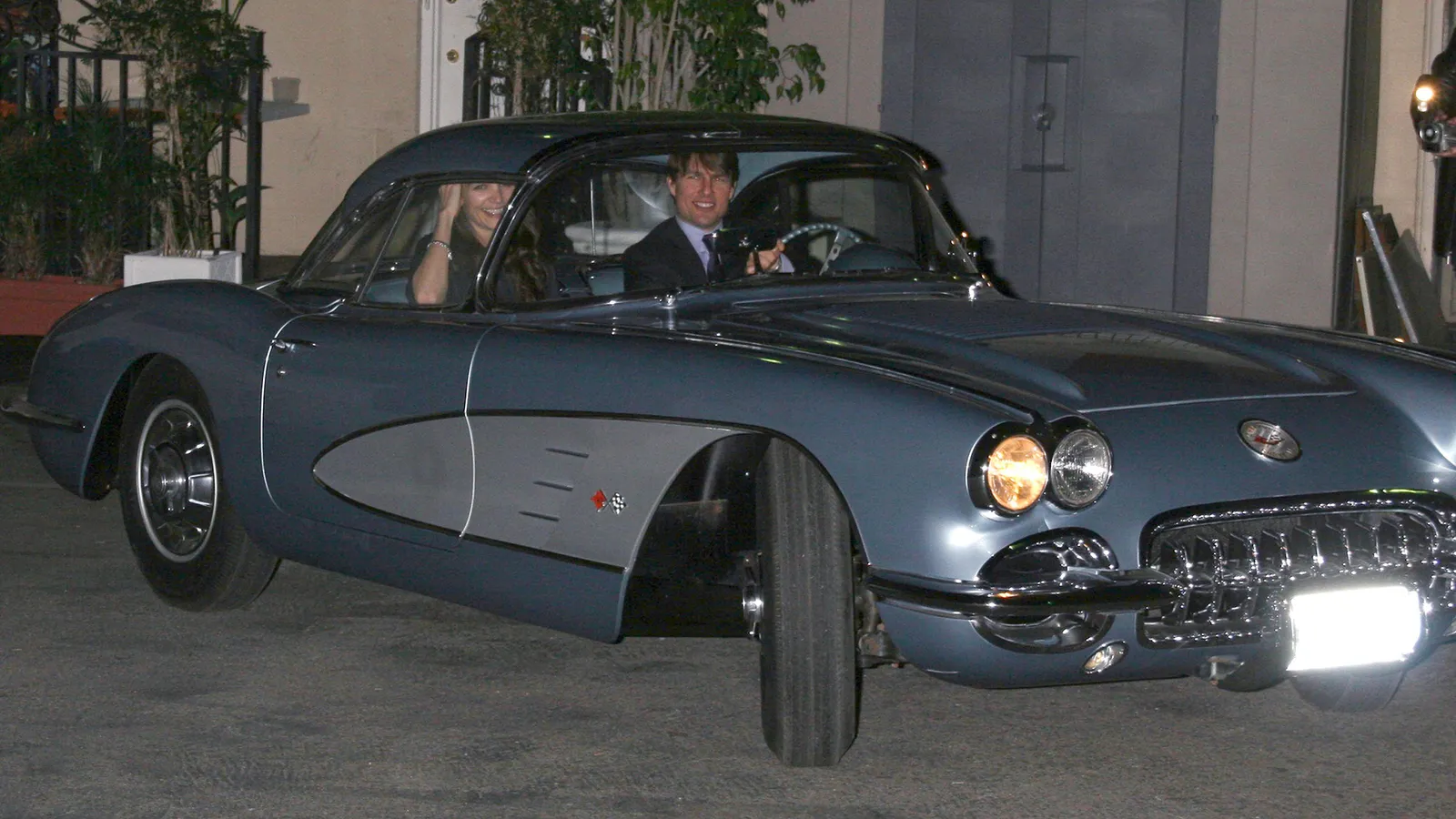
Early Corvettes struggled with mixed performance reviews when they first launched, but by 1958 the formula had matured considerably, with improved engine options and the fussy early styling elements refined into something more cohesive and confident.
For a collector like Cruise, whose garage already leans heavily into classic Americana alongside European exotica, the C1 fits as a natural centerpiece. Surviving examples in strong original or professionally restored condition are increasingly hard to find, and prices for well-documented cars have risen accordingly at major auctions in recent years.
It stands as one of the more historically significant pieces in his collection, representing not just a beautiful car but the literal beginning of an American automotive icon.
5. BMW E30 3 Series
The BMW E30 generation of the 3 Series has become something of a modern cult classic, prized by driving purists for its light weight, balanced chassis, and refreshingly analog feel compared to the heavier, more electronically assisted cars that followed it. Produced through the 1980s, the E30 combined boxy, understated styling with genuinely engaging handling that still holds up favorably against far newer machinery.
Most E30 models sold in the era were fitted with an inline four- or six-cylinder engine paired with a manual transmission, delivering the kind of direct steering feedback and driver involvement that has since become rare in mainstream cars.
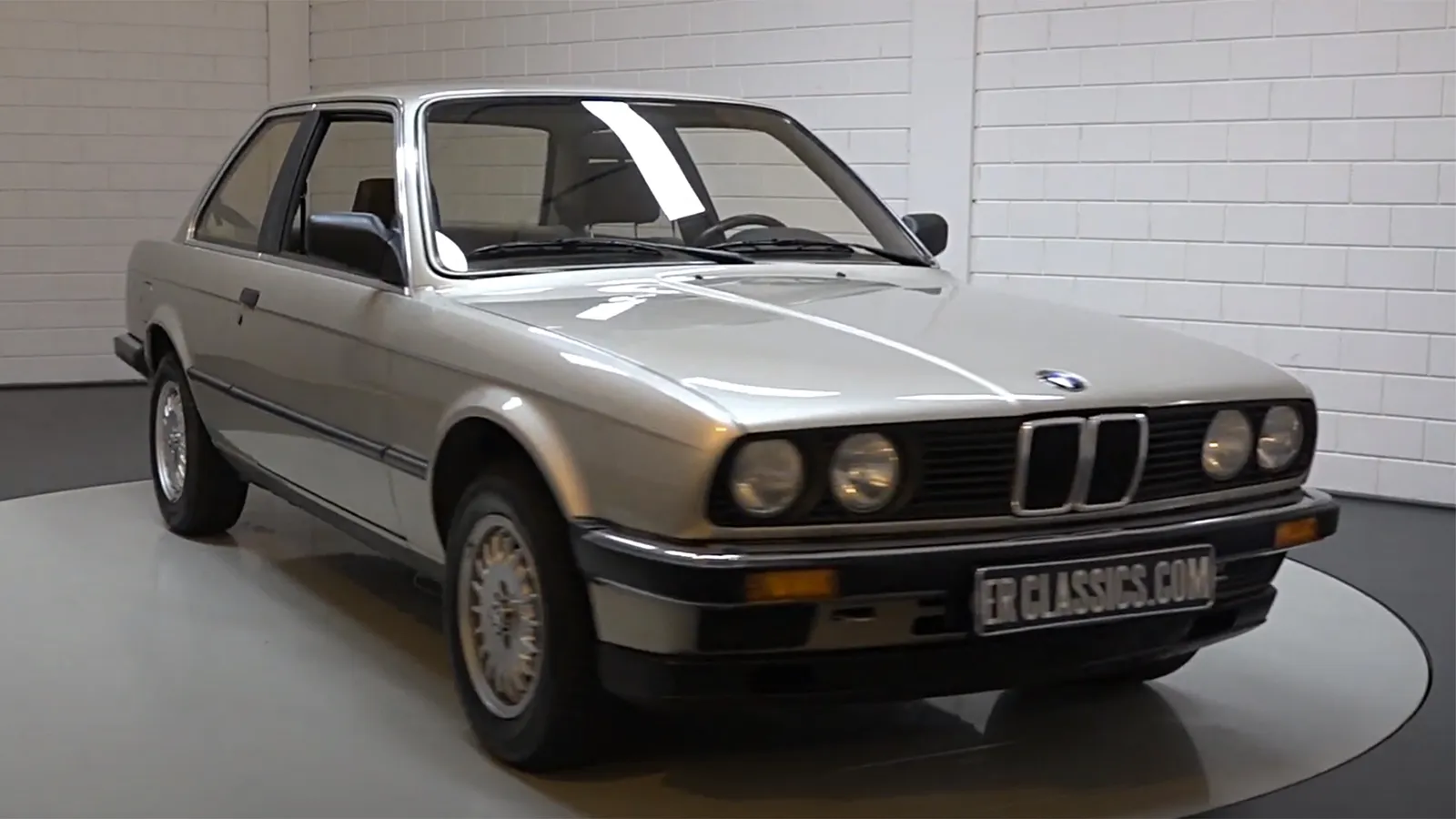
It’s a car built for people who care more about how a vehicle feels on a winding road than about outright horsepower figures on a spec sheet, which likely explains its appeal to a genuine car enthusiast like Cruise rather than someone simply collecting for status.
Clean, unmodified E30s have become increasingly sought after as younger collectors rediscover analog driving experiences, and prices for well-kept examples have risen sharply over the past decade as a result.
Within Cruise’s garage, the E30 stands out as a choice clearly made for enjoyment rather than headlines, a compact, well-engineered classic that rewards the kind of attentive, engaged driving that fast, flashy supercars don’t always require.
4. Porsche 928
Cruise’s connection to the Porsche 928 runs deeper than simple ownership, since the car became instantly recognizable after starring alongside him in the 1983 film Risky Business. Positioned by Porsche as a potential long-term replacement for the 911, the 928 broke from tradition with a front-mounted V8 engine rather than the rear-mounted flat-six the brand was famous for, giving it a distinctly different character and driving feel.
Reports suggest that after filming wrapped, Cruise was sufficiently taken with the car that he purchased his own example directly from a dealership, drawn to the smooth power delivery and grand-touring comfort the 928 offered over Porsche’s more traditional sports cars.
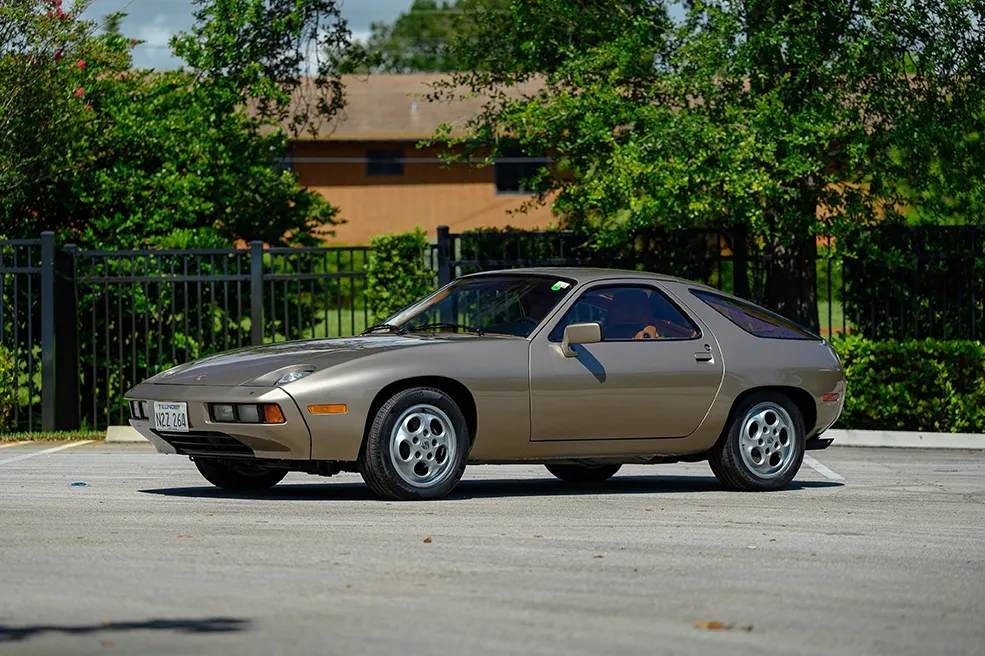
With roughly 234 horsepower from its 4.7-liter V8 and a five-speed manual transmission, it wasn’t the fastest car of its era, but it delivered a refined, confident driving experience that suited its price point and image well.
The actual movie car used in Risky Business later sold at auction for a substantial sum, reflecting just how much cinematic history adds to a vehicle’s value beyond its mechanical specifications alone.
Between its film pedigree and Porsche’s decision to end 928 production after a relatively short run, surviving examples in good condition have become genuinely scarce, cementing this car’s place as both a personal favorite and a significant collector’s item within Cruise’s garage.
3. 1949 Buick Roadmaster
Few cars in Cruise’s collection carry as much emotional and cinematic weight as the 1949 Buick Roadmaster, forever associated with his Academy Award-winning film Rain Man alongside Dustin Hoffman. The car’s role in the film was so central that director Barry Levinson reportedly described it as essentially a third lead performer, given how much screen time and narrative weight it carried alongside the two human stars.
Two Roadmasters were used during filming, and one later crossed the auction block through Bonhams decades after the movie’s release. Ownership details remain somewhat murky, with some reports suggesting Cruise acquired one of the original film cars while auction records point to the vehicles going to Hoffman and Levinson instead.
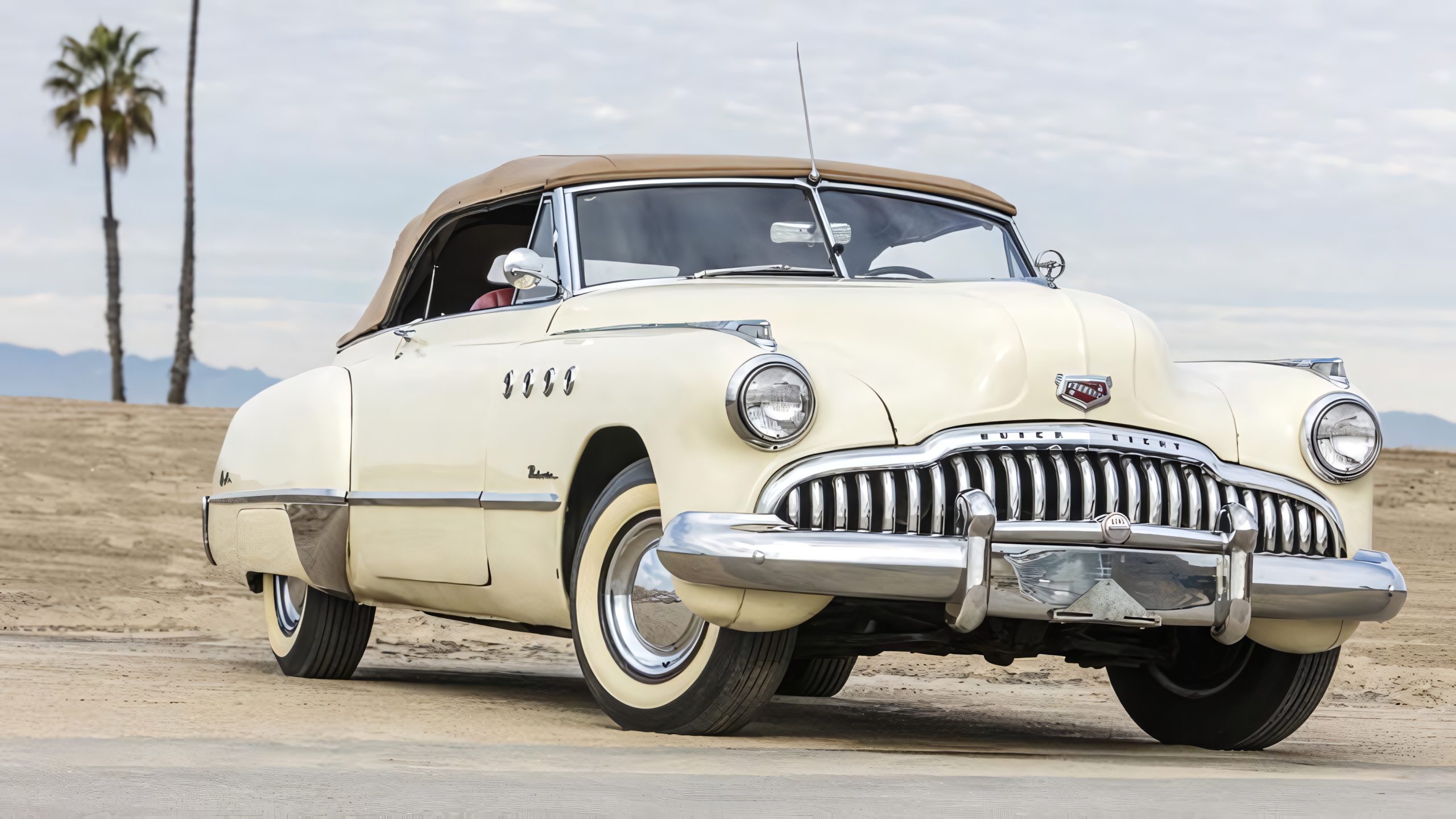
What’s beyond dispute is that Cruise has been photographed driving a matching 1949 Roadmaster on multiple occasions over the years, suggesting he either purchased his own example or maintained long-term access to one of the originals.
Mechanically, the Roadmaster offered a 5.2-liter straight-eight engine producing around 150 horsepower, paired with an early automatic transmission that was genuinely advanced for its era. Regardless of the exact ownership chain, its connection to one of Cruise’s most celebrated performances makes it one of the most historically significant and emotionally resonant vehicles associated with his name.
2. Porsche 993
Among Porsche enthusiasts, the 993 generation of the 911 holds a particularly special status as the final air-cooled version of the model before Porsche transitioned to water-cooled engines with the following generation. Produced for a relatively brief window in the mid-to-late 1990s, the 993 is widely considered by purists to represent the last “pure” 911 in terms of mechanical character and driving feel.
Cruise’s ownership of a 993 places him alongside a long list of celebrity enthusiasts who have gravitated toward the model, including figures like Harry Styles and Kendall Jenner, though Cruise’s appreciation appears rooted in genuine mechanical interest rather than trend-chasing.
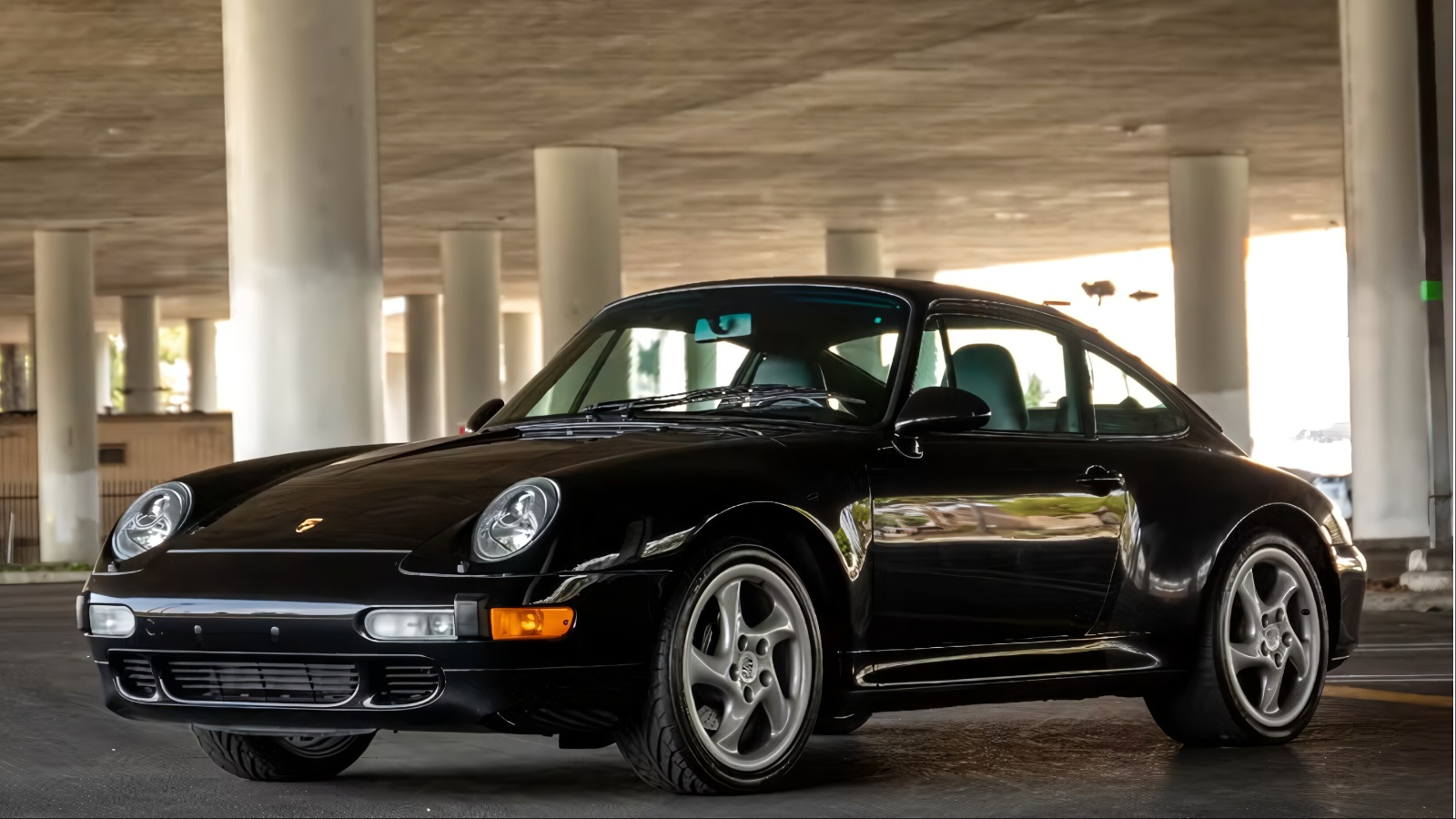
Reports suggest that among his various Porsches, the 993 has stood out as a personal favorite, reflecting the same attention to nuanced driving character seen in his choice of the BMW E30.
As the air-cooled era has become increasingly mythologized among collectors, values for clean 993 examples have risen dramatically over the past decade, often surpassing far more powerful modern Porsches at auction.
Its rarity today isn’t purely about limited production numbers, but about the fact that Porsche will never again build a 911 quite like it, given the brand’s permanent shift toward water-cooled and increasingly electrified powertrains in every generation since.
1. Bugatti Veyron
Topping the list is the Bugatti Veyron, a car that redefined what a road-legal vehicle was capable of when it launched and remains one of the most significant hypercars ever produced. Cruise added his example to the collection in 2005, the same year the Veyron first went on sale, positioning him among the earliest private owners of a car that instantly overshadowed nearly everything else on the road.
The numbers alone explain why the Veyron still commands attention decades later. A quad-turbocharged, sixteen-cylinder engine mounted amidships and paired with all-wheel drive allowed the car to sprint from a standstill to 60 mph in roughly 2.5 seconds and reach 150 mph in just over eight seconds, figures that were essentially unheard of in a production car at the time.
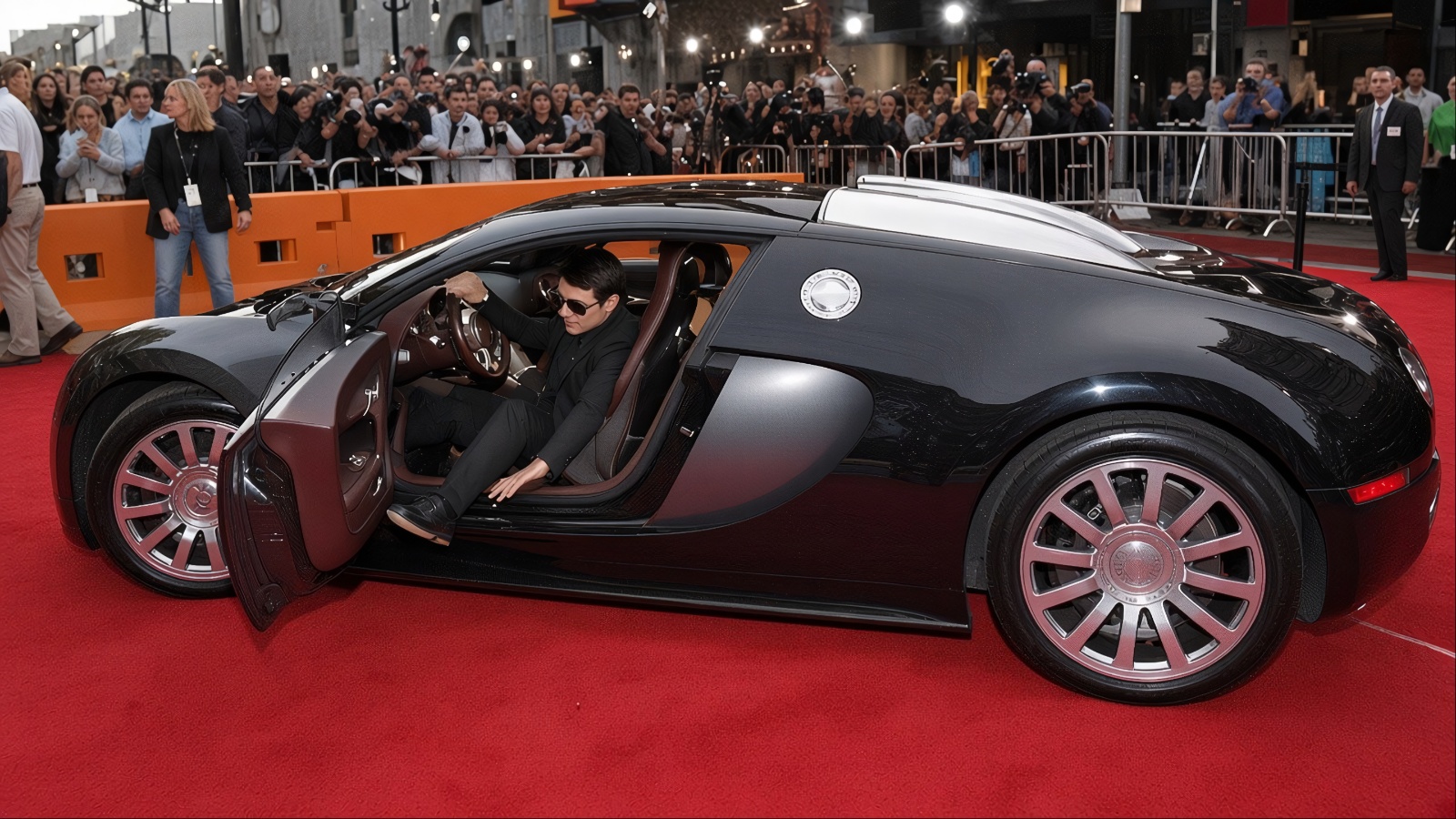
Even routine ownership costs reflect the car’s extremity, with a single set of tires reportedly running around $25,000.
Bugatti built the Veyron in strictly limited numbers across its production run, and given the complexity of its engineering, very few have ever changed hands compared to more conventional supercars.
Combined with its status as an early, genuinely era-defining hypercar, Cruise’s Veyron stands as the rarest and most valuable vehicle associated with his name, a fitting centerpiece for a collection built by someone whose entire public image has long been tied to speed.