
Honda has built plenty of vehicles that would look completely at home on American roads but were never offered through U.S. dealerships. Some were created around Japan’s kei-car regulations, while others targeted dense cities, family transport, or markets where compact dimensions matter more than outright size.
A few are especially intriguing because they offer clever packaging that the U.S. market rarely gets from Honda. This list focuses on genuine production models sold outside America, not concepts or simple trim levels.
Specifications can vary by model year and market, so the figures below use representative versions and avoid treating overseas equipment as if it were U.S.-market equipment.
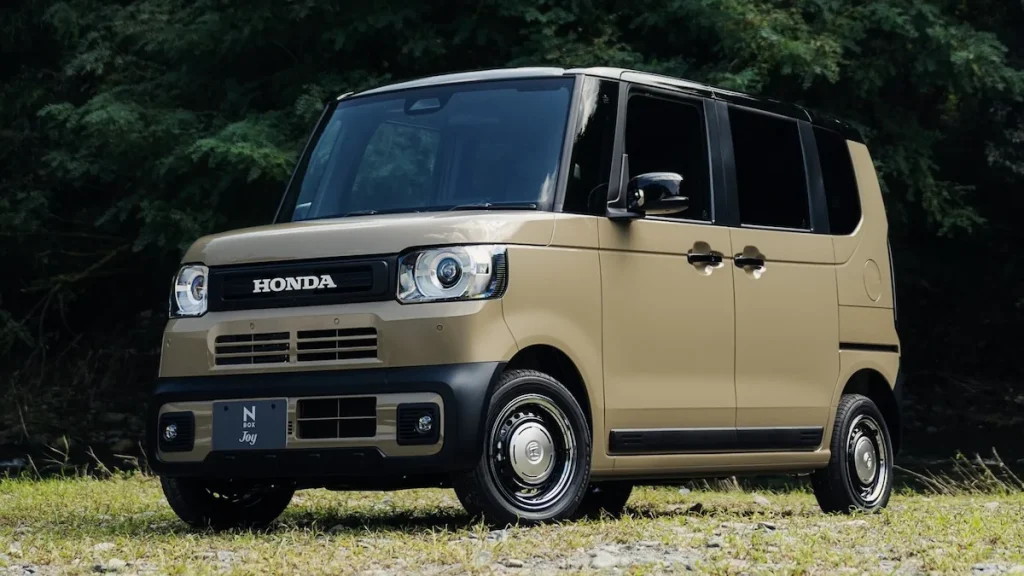
1. Honda N-BOX
The Honda N-BOX is arguably the Japanese-market Honda that would create the biggest culture shock in an American showroom. It is tiny by U.S. standards, yet Honda has designed its interior around a concept Americans may recognize from full-size minivans. The goal is to maximize usable passenger space while keeping the mechanical footprint as small as possible.
Honda introduced the N-BOX in Japan in 2011 as the first model of its N Series. The company specifically developed it around Japan’s kei-car regulations, using a 660cc engine and an unusually space-efficient platform.
Honda described the first-generation vehicle as a “mini-minivan,” emphasizing its large cabin and center-tank layout.
The current third-generation N-BOX continues that philosophy. Honda says the latest version has one of the largest cabins among Japanese mini-vehicles, while its packaging provides a relatively unobstructed field of vision.
The company also made Honda Sensing standard across the lineup, including features such as collision mitigation braking and unintended-acceleration mitigation.
The really interesting part is how much functionality Honda squeezes into such a small footprint. The N-BOX can carry four occupants, and the tall roof and boxy body create a surprisingly useful interior. A turbocharged version is also available for buyers who want more performance while remaining within the kei-car formula.
The U.S. market would require substantial changes because American vehicles must satisfy different safety and regulatory requirements. More importantly, the N-BOX’s appeal depends heavily on Japan’s kei-car tax and registration system.
Still, its packaging demonstrates something American buyers rarely get from Honda: an extremely small exterior combined with an interior designed almost like a tiny apartment.
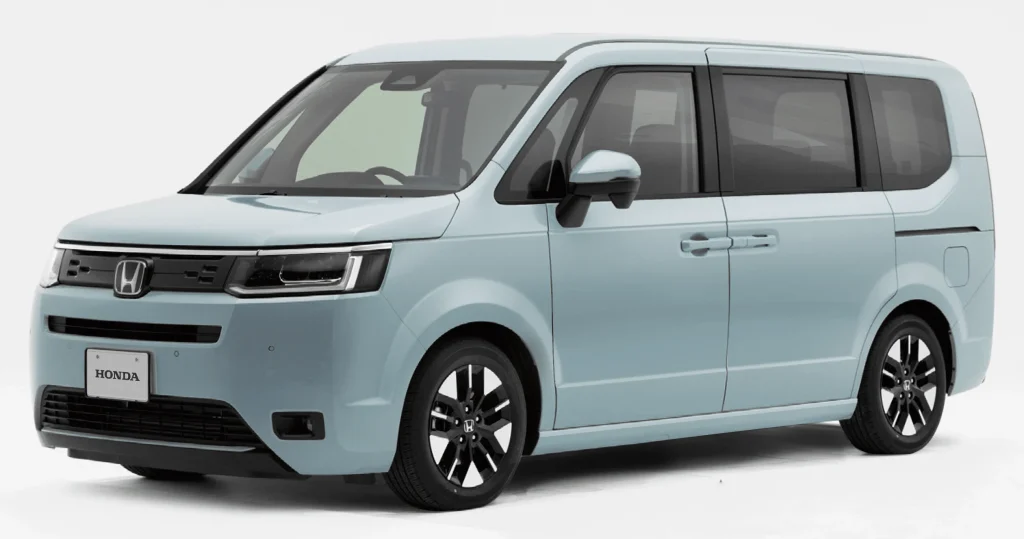
2. Honda Step WGN
The Honda Step WGN is the kind of minivan that could make an American Odyssey owner wonder why Honda never offered something similar here. It is smaller than the largest American minivans but uses clever packaging to create a highly flexible passenger compartment.
Honda introduced the fifth-generation Step WGN in Japan with a newly developed 1.5-liter direct-injection VTEC Turbo engine. The company specifically highlighted the vehicle’s living-room-like cabin and its unusual Waku Waku Gate rear-door system.
That rear opening is what makes the Step WGN particularly interesting. Instead of relying only on a conventional large liftgate, certain versions incorporated a split-style rear arrangement that allowed occupants to access the cargo area in ways that were useful in tight spaces.
Honda’s engineers were clearly thinking about urban practicality rather than simply maximizing exterior size.
The Step WGN also demonstrates how differently Honda approaches minivans in Japan. The vehicle has traditionally been offered with gasoline and hybrid powertrains, while its relatively narrow body makes it easier to maneuver through Japanese streets and parking facilities.
Honda later added its two-motor Sport Hybrid i-MMD system to Step WGN SPADA models. By 2017, Honda also made Honda Sensing standard across the Step WGN range.
For an American buyer, the biggest attraction would probably be the combination of three-row utility and a footprint smaller than a typical U.S. minivan. The challenge is that the American market has historically favored larger vehicles and has already given Honda the Odyssey as its dedicated minivan.
The Step WGN therefore represents a different interpretation of family transportation: less about maximum dimensions and more about making every inch of a relatively compact body useful.
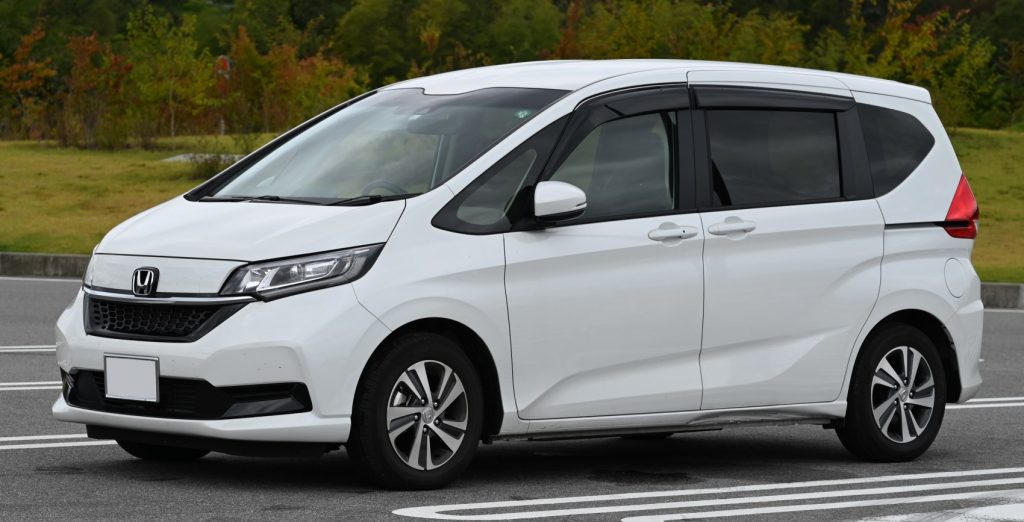
3. Honda Freed
The Honda Freed is arguably one of the most interesting Honda models the United States never received because it solves a problem American minivans usually solve by simply becoming larger. The Freed is a compact family vehicle designed around maneuverability, easy access, and efficient use of interior space.
Honda currently sells the Freed in Japan in both gasoline and e:HEV hybrid forms, with seating configurations for five or six passengers depending on the version. The current model is only about 169 inches long, yet Honda manages to package three rows of seating into the vehicle.
That size would be the headline feature in the United States. A Freed would fit into parking spaces and narrow urban streets that can be awkward for a conventional American minivan. Its relatively narrow body also reflects Japan’s road environment, where width can be more restrictive than it is in most U.S. suburbs.
The hybrid version makes the concept even more interesting. Honda offers the Freed e:HEV with its two-motor hybrid system, while the gasoline model provides a simpler alternative. The current Japanese lineup also includes the CROSSTAR, giving buyers a more rugged-looking variant without turning the vehicle into a large SUV.
Honda’s decision not to sell the Freed in America is understandable. The U.S. market already has the Odyssey, and bringing in a much smaller family vehicle would require positioning it against compact SUVs and other vehicles rather than traditional minivans.
Yet that is exactly why the Freed is fascinating. It offers a third option between a compact crossover and a full-size minivan, proving that three-row practicality does not necessarily require a large footprint.
4. Honda N-WGN
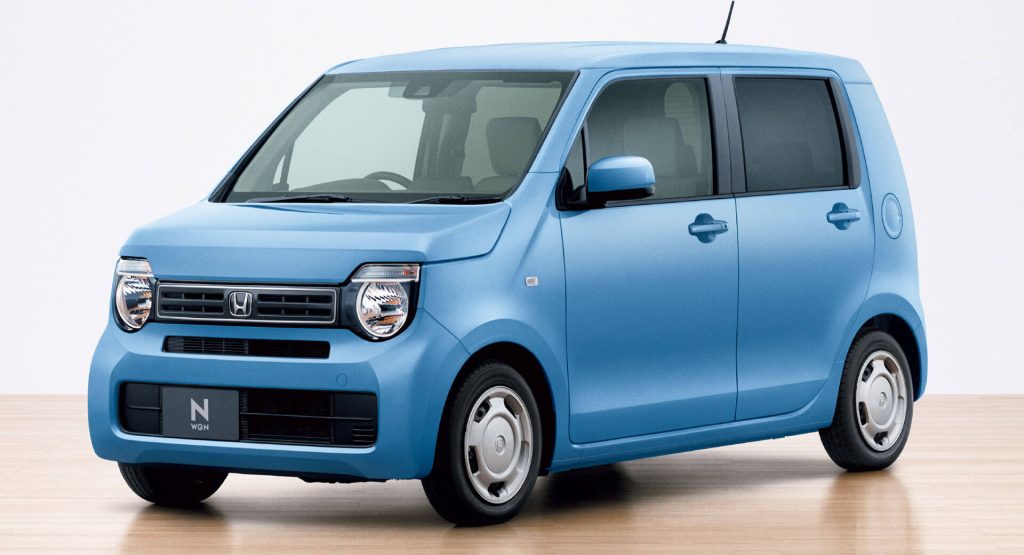
The Honda N-WGN is another Japanese-market model that demonstrates how much functionality can be created from a very small footprint. It belongs to Japan’s kei-car category, meaning its dimensions and engine are specifically designed around the country’s regulations for ultra-compact vehicles.
The N-WGN measures only about 133.7 inches long, putting it roughly 60 inches shorter than a typical Honda Accord. Yet its tall body provides a surprisingly useful passenger compartment and upright driving position.
Honda designed the N-WGN around practical urban transportation rather than performance. Its kei-car powertrain uses a 660cc three-cylinder engine, with a turbocharged version available for buyers who want stronger acceleration.
The tiny engine is not intended to compete with American compact cars for highway performance. Its purpose is to provide inexpensive and efficient transportation within Japan’s regulatory framework.
What makes the N-WGN especially interesting is its approach to everyday usability. The tall roof makes entry and exit easier, while the compact exterior minimizes the amount of road and parking space required. Honda also equips the model with Honda Sensing safety technology, showing that a small vehicle does not necessarily mean a stripped-down vehicle.
An American version would face an immediate challenge. U.S. crash and safety requirements are built around a very different vehicle environment. The N-WGN’s compact size could also make it difficult to compete with the larger vehicles that dominate American roads.
Still, there is an argument for its concept. For city residents who rarely carry more than one or two passengers, a vehicle this small could dramatically reduce parking difficulties and operating costs.
The N-WGN is therefore less interesting as a potential U.S. product than as evidence of how dramatically Honda’s idea of practical transportation changes between markets.
5. Honda N-VAN
The Honda N-VAN is a very different kind of vehicle from the compact cars Americans usually associate with Honda. It was created as a kei-class commercial van, but Honda designed it with an unusual level of attention to loading efficiency and everyday usability.
The cleverest feature is the absence of a center pillar on the passenger side. Honda says this creates a large side opening that makes loading and unloading cargo substantially easier. The vehicle also uses a low floor and high roof, allowing the cargo area to accommodate bulky items despite the van’s tiny exterior dimensions.
That design makes the N-VAN useful for small businesses, delivery work, mobile tradespeople, and recreational users. It is not simply a tiny cargo van. Honda offers passenger-oriented versions as well, including the FUN grade, which gives the vehicle a broader role than its commercial appearance might suggest.
The gasoline N-VAN uses a 660cc three-cylinder engine, with naturally aspirated and turbocharged versions available. Honda also offers a six-speed manual on selected versions, something that would make this tiny commercial vehicle surprisingly engaging for enthusiasts.
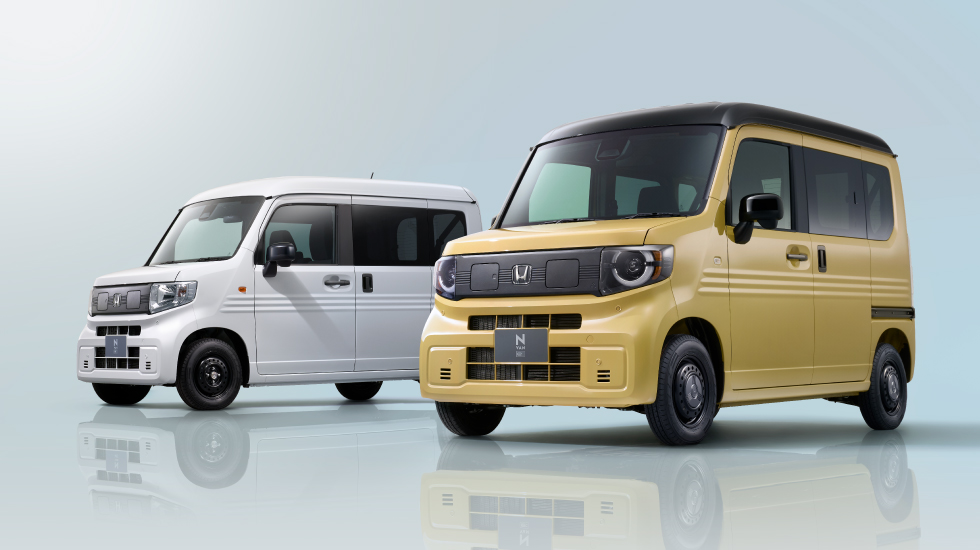
Honda later went a step further with the N-VAN e, an all-electric version. The EV offers a Japanese WLTC-rated range of 152 miles and retains the model’s flat floor, tall cargo area, and large side opening.
An American version would face regulatory challenges and a very different commercial-vehicle market. Yet its packaging is precisely what makes the N-VAN fascinating. It demonstrates that a work vehicle does not have to be physically large to carry useful cargo.
6. Honda N-ONE
The Honda N-ONE looks like a tiny retro hatchback, but its appeal goes beyond styling. Honda created it around the company’s “Man Maximum, Machine Minimum” packaging philosophy, maximizing the space available to occupants while keeping mechanical components compact.
The current N-ONE remains a Japanese kei car, with a 660cc engine and versions ranging from straightforward commuter models to the more enthusiast-oriented RS. Honda has even offered the RS with a six-speed manual transmission, giving this tiny front-wheel-drive car an unusual performance angle.
That manual transmission is arguably the detail American enthusiasts would find most intriguing. A small, lightweight vehicle with a manual gearbox does not need enormous horsepower to feel entertaining, particularly on narrow roads where outright speed is less important.
Honda also gave the N-ONE a surprisingly comprehensive safety package. The 2020 generation included Honda Sensing features such as lane-keeping assistance, automatic high beams, collision mitigation braking, and false-start prevention.
The N-ONE’s tiny dimensions are dictated partly by Japan’s kei regulations. That means importing the concept directly into the United States would not produce the same economic advantages because America does not have an equivalent kei-car classification.
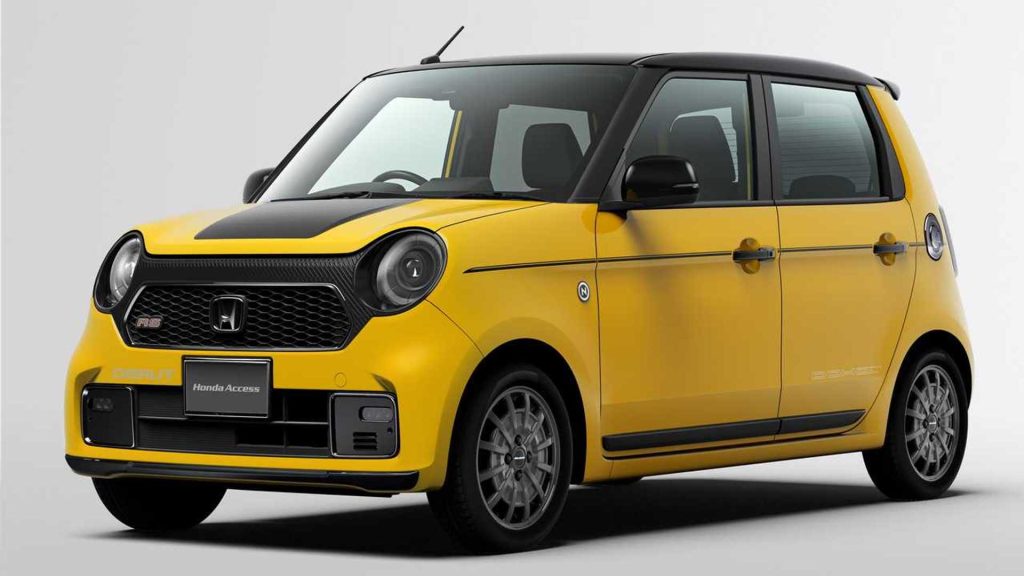
Honda has now pushed the formula into the electric era with the N-ONE e, introduced in Japan in 2025. That EV retains the compact N-ONE philosophy while offering a Japanese WLTC-rated range of 183 miles and vehicle-to-home capability.
The N-ONE is therefore more than a car America missed. It represents a category of lightweight, space-efficient transportation that has almost disappeared from the U.S. new-car market.
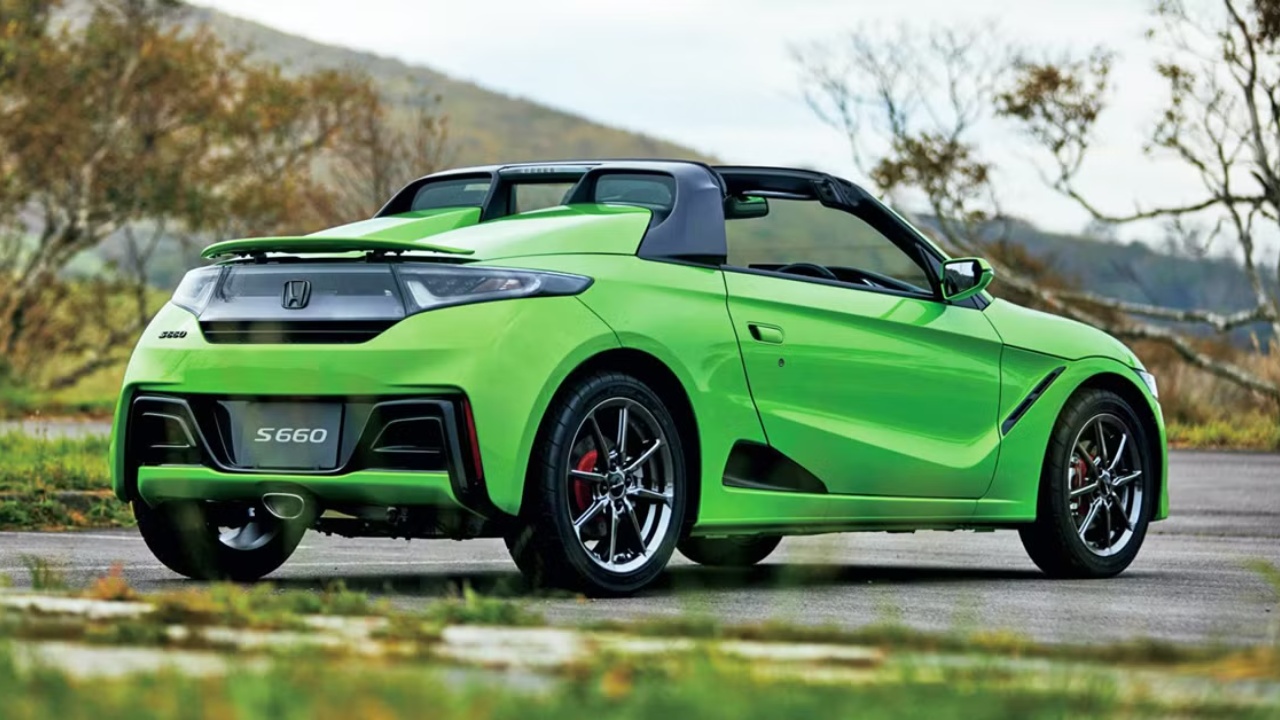
7. Honda S660
The Honda S660 is probably the model on this list that American enthusiasts would have noticed immediately. It is a genuine mid-engine, rear-wheel-drive two-seat roadster, yet its engine displaces only 658cc. Honda developed it specifically for Japan’s kei-car regulations, which explains both its tiny dimensions and its unusual mechanical formula.
The S660 uses a turbocharged three-cylinder engine mounted behind the seats, sending power to the rear wheels. Honda offered both a six-speed manual transmission and a CVT. The result is something rarely found in modern American sports cars. Its lightweight chassis allows drivers to enjoy much of the available performance without having to reach extreme speeds.
Honda rated the engine at 64 horsepower and 77 lb-ft of torque, with the power output constrained by Japan’s kei-car rules.
The dimensions are almost comically small by U.S. standards. It measures only 133.7 inches long and 58.1 inches wide, with a 90-inch wheelbase. The mid-engine layout gives it a low center of gravity and rear-biased weight distribution, while Honda specifically developed the chassis around responsive cornering rather than straight-line acceleration.
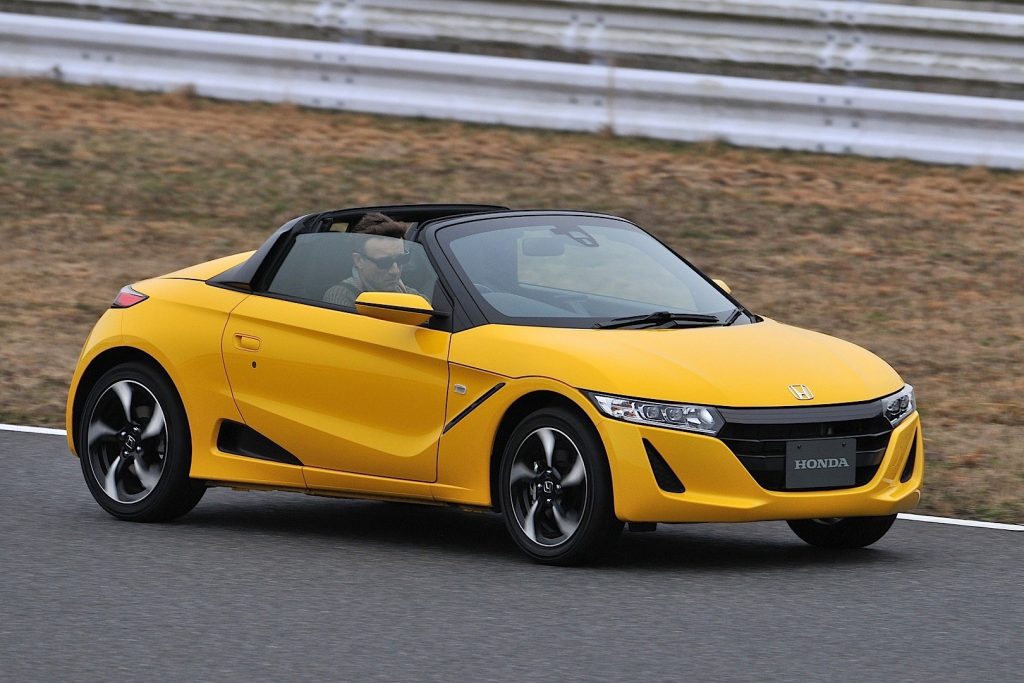
Honda also fitted the S660 with an Agile Handling Assist system, which could selectively apply braking to improve cornering response. The company positioned it as a car that could make ordinary roads entertaining rather than a machine designed around high top speed.
The S660 ended production in March 2022, but Honda’s final limited production sold out far faster than expected.
For America, its biggest obstacle was never lack of character. It was simply that a 658cc kei sports car was engineered for a regulatory and market environment the United States does not have.
8. Honda Shuttle
The Honda Shuttle is the kind of practical Honda that could have found a small but dedicated American audience. It was essentially a compact wagon built around the Fit platform, but Honda gave it considerably more cargo-oriented versatility than the ordinary hatchback.
The Shuttle measured about 173.2 inches long and 66.7 inches wide, keeping its footprint considerably smaller than a typical American crossover.
Its 99.6-inch wheelbase helped create useful cabin space, while the rear seating could be folded to produce a long, relatively flat cargo area. Honda’s specifications list a 173.2-inch overall length and 66.7-inch width for the hybrid model.
What makes the Shuttle interesting is its timing. Honda sold it during a period when American buyers were moving rapidly away from traditional compact wagons and toward crossovers. In Japan, however, a low, efficient wagon remained useful because it combined easy maneuverability with substantial cargo capacity.
The powertrain selection also reflected Japanese priorities. Earlier Shuttle Hybrid models used Honda’s 1.5-liter i-VTEC engine paired with the i-DCD hybrid system and a seven-speed dual-clutch transmission. Honda offered both front-wheel drive and four-wheel drive.
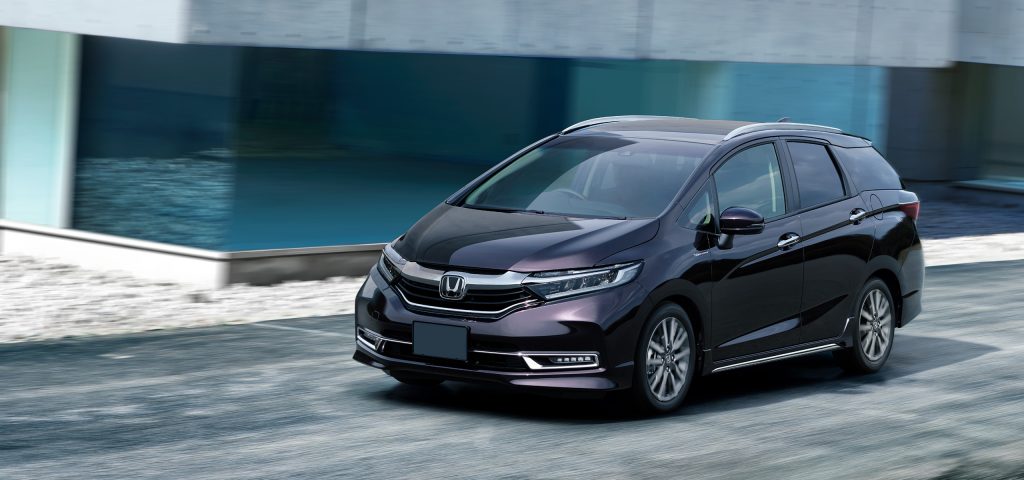
That combination gave the Shuttle a very different identity from an American-market CR-V. It sat lower, occupied less road space, and prioritized cargo efficiency without adopting the taller crossover body that dominates the U.S. market.
Honda eventually discontinued the Shuttle in Japan, with production ending in 2022 as the company reshaped its compact lineup. Its disappearance makes the model particularly interesting in hindsight because it represents a body style that has become increasingly rare in America.
A U.S. version would have faced a difficult marketing challenge, but for buyers who value efficient packaging more than a high driving position, the Shuttle could have been an unusually compelling alternative.
