
American automakers have created some vehicles that make far more sense to buyers outside the United States than their domestic sales suggest.
The reasons are often unexpected. A compact Jeep can become a major seller in Europe, while a Ford developed for international markets can find enormous demand in China or Brazil.
In some cases, the American market simply prefers larger vehicles, leaving smaller models to do better abroad.
This ranking focuses on American-branded vehicles that have recorded periods when overseas sales exceeded U.S. sales, using documented market data rather than assuming that a globally sold American badge is automatically more popular overseas.
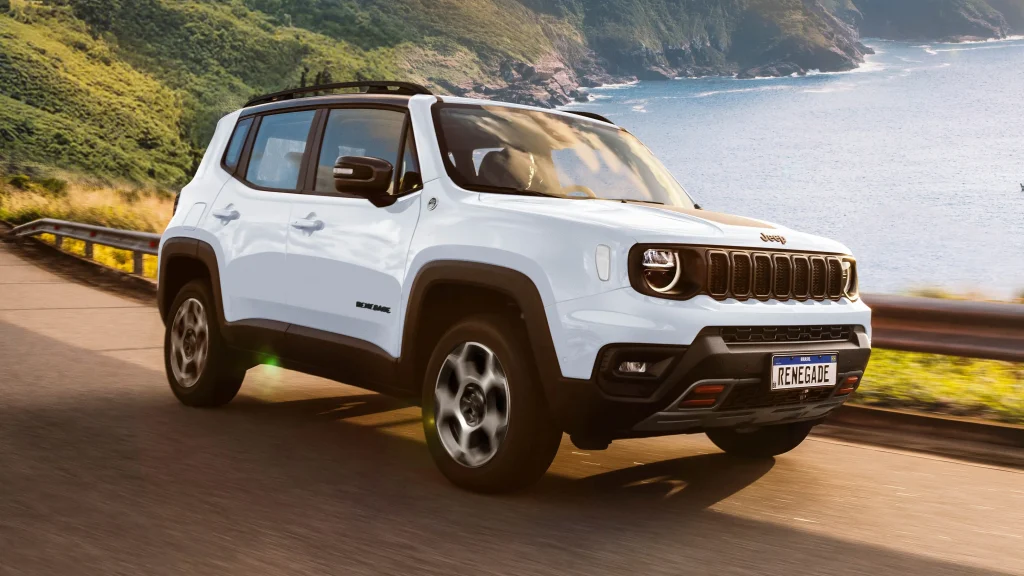
1. Jeep Renegade
The Jeep Renegade is one of the clearest examples of an American-branded vehicle finding greater demand overseas than in its home market. The difference becomes especially striking when comparing its European and U.S. sales during individual years.
In 2019, European sales reached 78,842 units, compared with 76,886 in the United States. In 2021, Europe recorded 62,981 Renegades, while U.S. sales had fallen to about 47,100 units.
That performance makes sense once the Renegade is viewed through the lens of European vehicle preferences. Its relatively compact dimensions made it much easier to fit into urban streets and parking spaces than many traditional Jeep products.
It also offered the visual identity of a Jeep without requiring the footprint of a Wrangler or Grand Cherokee.
The model was particularly important to Jeep because it brought the brand into a smaller crossover category that was already well established outside America. Its boxy shape and upright seating gave it a recognizable Jeep character, while its size made it considerably more practical for dense European cities.
The contrast with the U.S. market was revealing. American buyers had access to a much larger selection of compact crossovers from virtually every manufacturer, while Jeep’s brand image traditionally leaned toward larger SUVs and off-road vehicles. The Renegade therefore occupied an unusual position domestically.
Its international success was not accidental, either. The Renegade was developed as a global vehicle and was manufactured in Italy, Brazil, and China for different markets. That international production strategy helped Jeep position the model closer to the markets where compact crossovers were already highly popular.
The Renegade eventually disappeared from the U.S. lineup after the 2023 model year, making its overseas performance an interesting example of how a vehicle can find stronger demand abroad even when its American sales trajectory weakens.
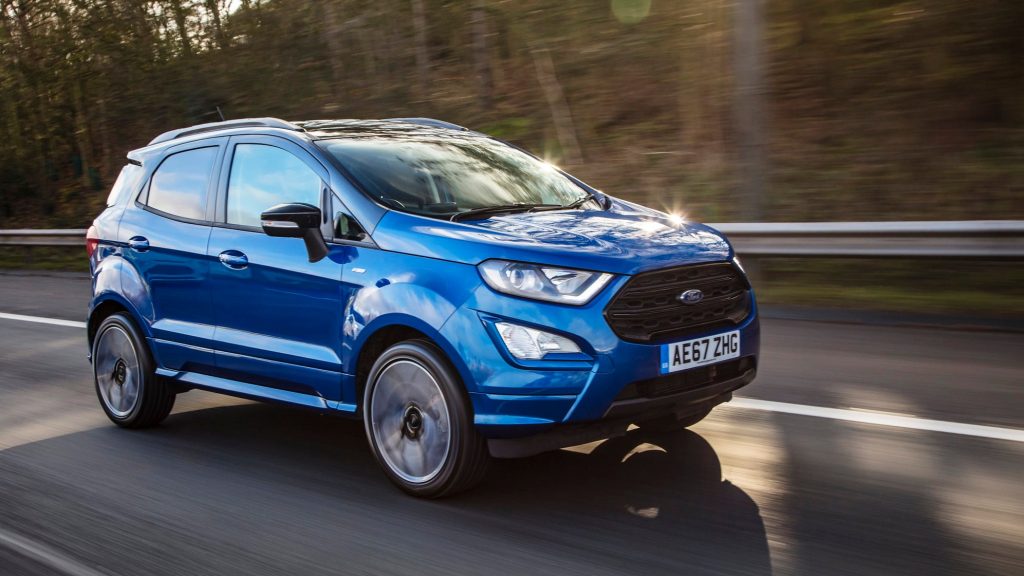
2. Ford EcoSport
The Ford EcoSport provides an even more dramatic example because its strongest markets were not simply slightly larger than the United States. In several years, overseas markets sold multiples of the number of EcoSports delivered in America.
In 2018, U.S. EcoSport sales totaled 54,348 units. China alone recorded approximately 110,574, while Brazil added roughly 34,497 and Europe another 16,033. Those three markets combined therefore sold more than three times the U.S. volume that year.
In 2019, China alone recorded approximately 120,376 EcoSport sales, compared with 60,599 in the United States.
The explanation is rooted in where the EcoSport was designed to compete. It was a small crossover created with emerging and international markets in mind, particularly Brazil and India, rather than as a downsized version of a traditional American SUV.
Its compact footprint was an advantage overseas. The EcoSport was easy to maneuver in crowded cities while providing the higher seating position and hatchback practicality that increasingly attracted crossover buyers.
The U.S. market, however, was moving toward larger compact SUVs. Vehicles such as the Escape, CR-V, and RAV4 offered considerably more interior space, making the EcoSport’s small dimensions less attractive to American shoppers.
Ford’s international strategy also meant the EcoSport had a much longer and broader global life than its U.S. sales numbers would suggest. It was sold in numerous markets and produced in multiple countries, allowing Ford to tailor the vehicle to regions where small crossovers were already mainstream.
That difference highlights an important point about American automakers. A vehicle wearing an American badge does not necessarily target American-sized buyers. The EcoSport succeeded because Ford designed it for markets where compact dimensions were an advantage rather than a compromise.
3. Chevrolet Tracker
The Chevrolet Tracker is an unusual case because it carries a distinctly American brand name while being designed around markets where small crossovers dominate.
Unlike the large Chevrolet SUVs that define the brand in the United States, the Tracker was developed primarily for international markets and became particularly important in Latin America and China.
Its strongest argument for this list is not a single U.S. versus foreign sales comparison but the enormous difference in market relevance. Chevrolet’s U.S. lineup has never offered the Tracker as a mainstream domestic model, while the vehicle has been produced and sold extensively in markets such as Brazil, Argentina, and China.
That distinction matters because American-branded does not necessarily mean American-market. General Motors developed the Tracker around the needs of regions where a compact crossover can be a primary family vehicle rather than a second choice behind a larger SUV.
In Brazil, for example, the Tracker became one of Chevrolet’s important compact SUVs, competing in a segment dramatically more significant to local buyers than it would be in the traditional U.S. Chevrolet lineup.
The vehicle also demonstrates how GM uses the same brand differently across continents. In America, Chevrolet’s identity is strongly associated with Silverado pickups, full-size SUVs, and larger crossovers.
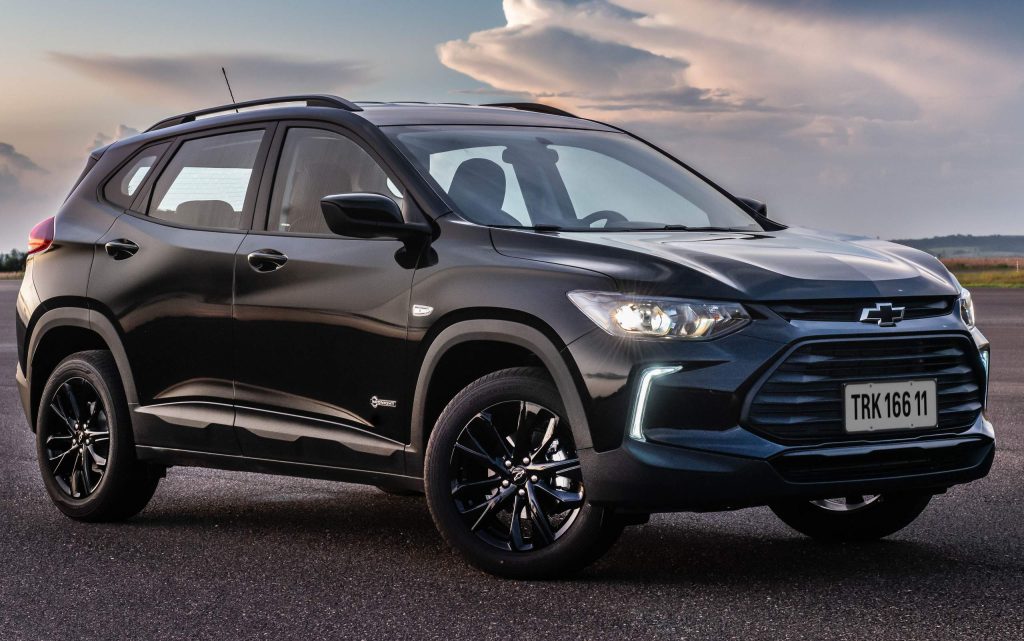
Overseas, Chevrolet has historically used smaller vehicles to reach customers whose roads, fuel prices, and parking conditions make compact dimensions more attractive.
That makes the Tracker an interesting case of an American badge succeeding through not behaving like a typical American vehicle.
The U.S. market does not currently offer the Tracker, so there is no meaningful current U.S. sales total to compare with its international volumes. It is therefore more accurate to classify it as a globally successful Chevrolet that has far greater market significance overseas than at home rather than claim a current annual U.S. sales victory.
4. Ford Territory
The Ford Territory is another vehicle that challenges the idea of what an American car is supposed to look like. The current Territory is aimed primarily at international markets and has become particularly important in China and other markets where midsize crossovers are in high demand.
Unlike the Ford Explorer or Expedition, the Territory is not designed around traditional American SUV proportions. Its relatively compact footprint and crossover-oriented packaging make it better suited to dense cities and markets where buyers want SUV styling without the size and fuel consumption associated with a full-size American utility vehicle.
China is particularly important to the Territory’s story. Ford has developed products specifically for the Chinese market through its local operations, and the Territory is part of that strategy rather than being a modified U.S.-market SUV exported overseas.
That distinction helps explain why its American sales are effectively irrelevant. Ford does not sell the current Territory through the U.S. dealer network, so it cannot generate meaningful domestic volume. In markets where it is sold, however, the model competes directly in one of the industry’s largest and most crowded segments.
The Territory also illustrates a broader change in Ford’s international strategy. The company has increasingly developed certain vehicles around regional demand rather than assuming that one American-designed product should serve every market.
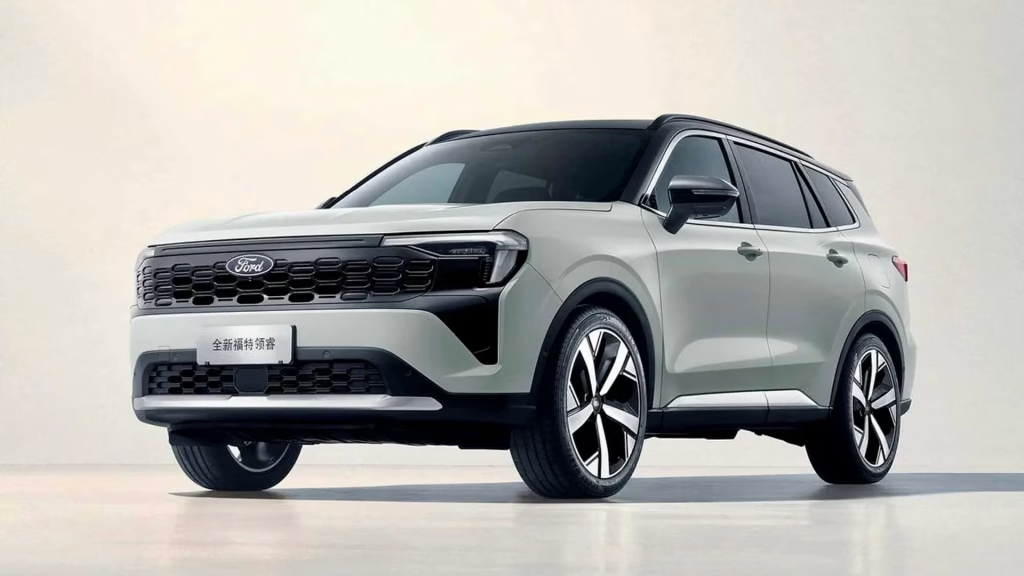
Its appeal comes from the combination of elevated seating, five-seat practicality, turbocharged power, and technology, all packaged in a footprint considerably smaller than Ford’s traditional U.S. SUVs.
Describing it as a car that “sells better overseas” requires some context. The Territory is essentially an overseas-market Ford rather than a U.S. model that failed to gain traction at home. Its international success is notable because Ford does not need to sell it in the United States for the model to remain commercially important in other markets.
5. Buick Envision
The Buick Envision is an interesting example because much of its international importance is tied to China, a crucial market for Buick. The model has been sold in both the United States and China, but its role in the Chinese market has historically been far more significant than its relatively modest sales in the United States might suggest.
The Envision was developed through General Motors’ global operations, with the first generation introduced in China before the vehicle was later brought to the United States.
That history matters because the SUV was designed from the beginning around Chinese demand for premium-feeling crossovers rather than being simply an American vehicle exported abroad.
Buick has a particularly strong historical presence in China. GM states that Buick has been part of the Chinese market for more than a century, and the brand has become much more prominent there than its sales position in the United States would imply.
The Envision fits that environment neatly. It sits between smaller and larger SUVs, giving buyers a premium-oriented vehicle without the size of a traditional American full-size utility vehicle.
U.S. sales have remained comparatively modest. Buick sold approximately 21,000 Envisions in the United States in 2023, while the model has maintained a substantially larger role in Buick’s Chinese portfolio during various periods.
Exact cross-market annual comparisons are difficult because Chinese sales reporting is not always separated using the same methodology as U.S. registrations.
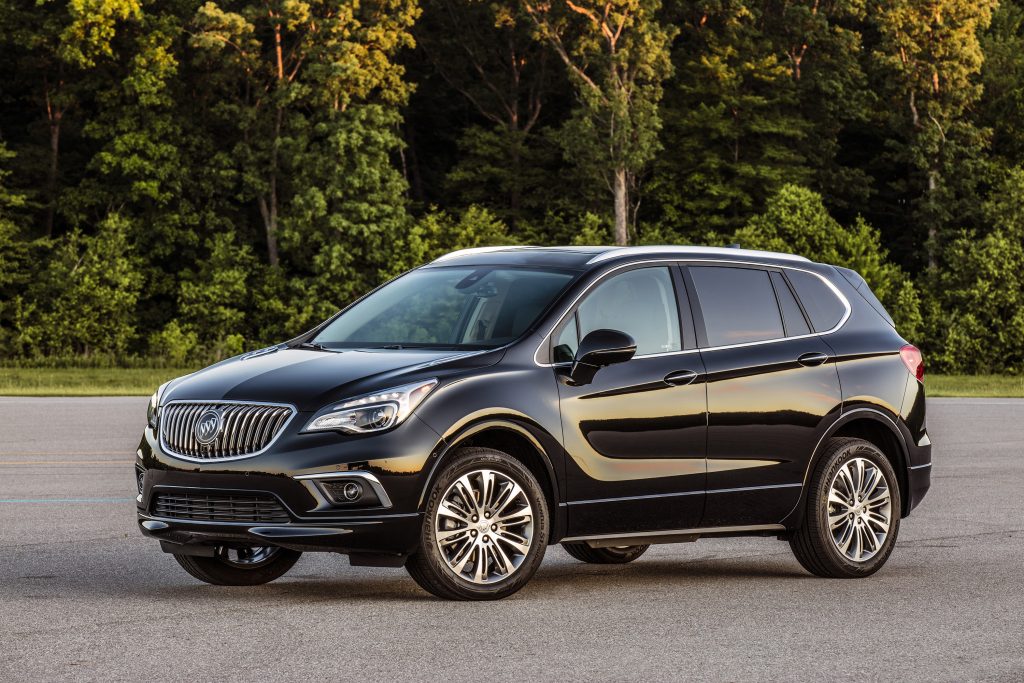
That makes the Envision different from a simple “American car exported successfully” story. It is a vehicle whose development, production, and positioning were heavily influenced by international demand.
Its U.S. specification also reflects the American preference for more powerful compact luxury SUVs. The current Envision uses a 2.0-liter turbocharged four-cylinder producing 228 horsepower and 258 lb-ft of torque, paired with all-wheel drive.
The vehicle demonstrates how an American brand can find a much more natural customer base overseas when its product positioning aligns closely with local expectations.
6. Chevrolet Captiva
The Chevrolet Captiva is perhaps one of the clearest reminders that Chevrolet’s international lineup has often been radically different from its American one. The Captiva name has been used on several generations and market-specific vehicles, with the modern version aimed primarily at regions outside the United States.
The current Captiva is sold in markets across Latin America, the Middle East, and other regions where affordable three-row crossovers have strong demand. It is not part of Chevrolet’s U.S. lineup, meaning its American sales are effectively zero while international deliveries continue.
That alone makes the comparison striking, but the more interesting question is why Chevrolet needs such a vehicle abroad. In many developing markets, buyers want the appearance and seating position of an SUV but remain highly sensitive to purchase price, fuel consumption, and operating costs.
The Captiva addresses that combination with a relatively compact footprint and available three-row seating. A vehicle of this type can serve as a family transporter without requiring the physical size or engine displacement associated with a Tahoe or Suburban.
This is exactly where the vehicle becomes poorly suited to the traditional U.S. Chevrolet portfolio. American buyers have historically had access to much larger crossovers and SUVs, while the compact three-row segment has evolved differently.
The Captiva also demonstrates GM’s willingness to adapt products for specific regions rather than export a single U.S.-market design everywhere. Its specifications vary significantly by country, including engine choices, transmissions, and equipment, so international figures should not be treated as if they represent one universal version.
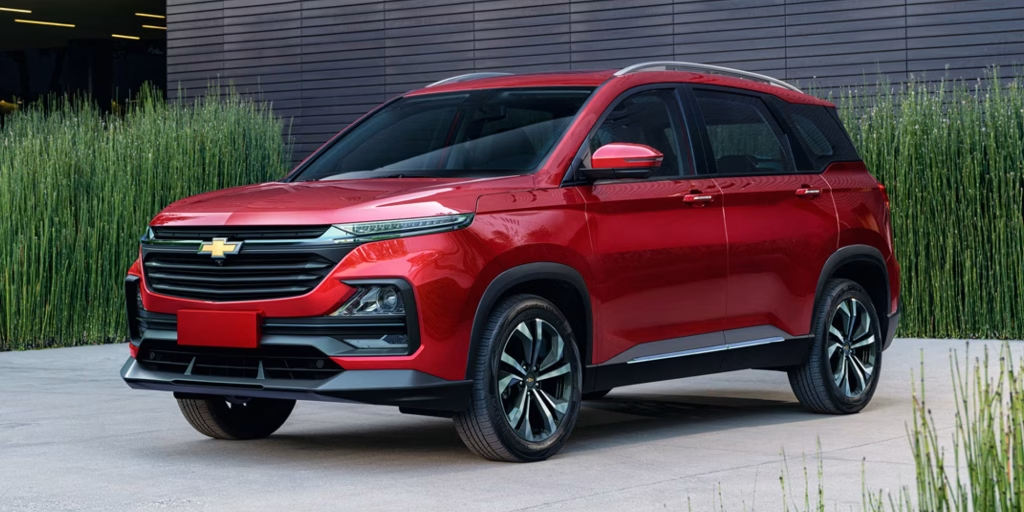
For the American consumer, the Captiva is therefore more interesting as a case study than as an overlooked domestic bargain. It carries Chevrolet branding, but its commercial purpose is almost entirely international.
That makes its overseas sales dominance less about defeating a U.S. competitor and more about proving that an American marque can remain relevant by building products around the realities of markets beyond North America.
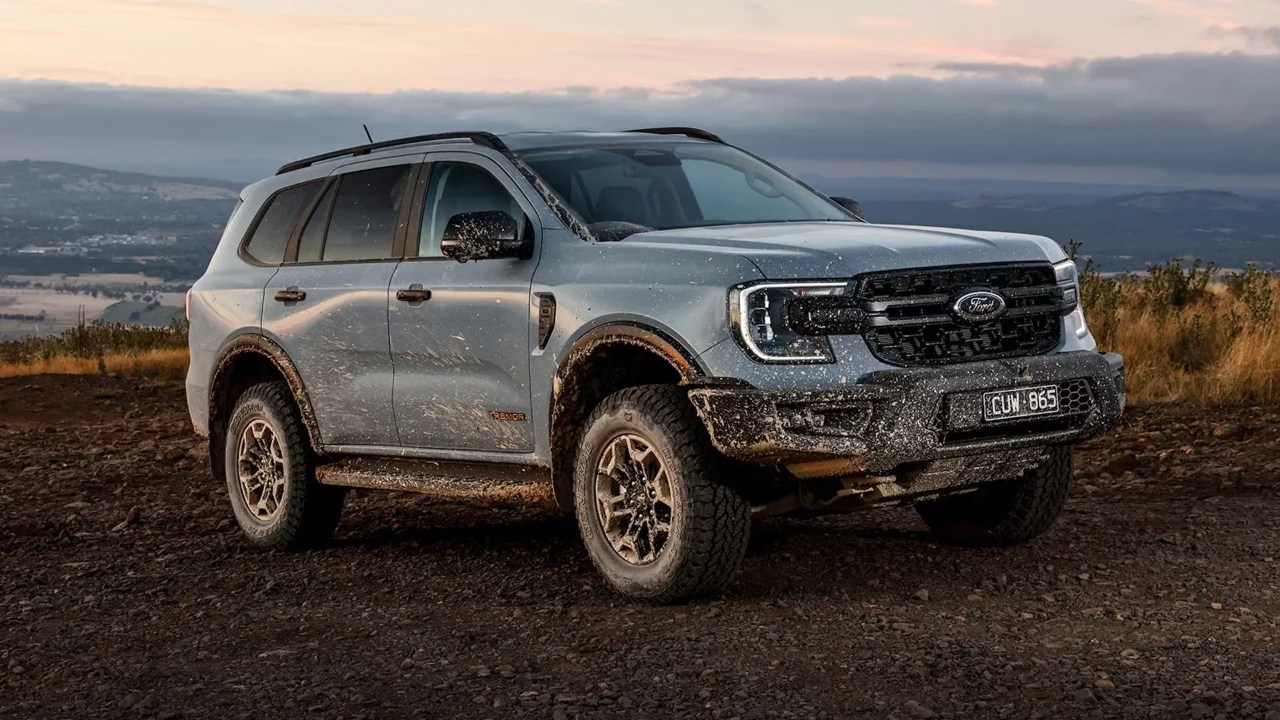
7. Ford Everest
The Ford Everest is one of the clearest examples of Ford building a vehicle for the rest of the world that has no direct U.S. counterpart. Based on the Ranger platform, the Everest is a three-row SUV sold primarily across markets in Asia-Pacific, Africa, and other regions. Ford does not sell it through American dealerships, so its U.S. sales are effectively zero.
That makes its international volume especially significant. The Everest has become an important Ford SUV in Australia, where it competes against vehicles such as the Toyota Prado and other body-on-frame family SUVs. In 2024, Ford Australia reported more than 20,000 Everest sales, giving the model a substantial position in the country’s SUV market.
Its formula is distinctly different from the typical American crossover. The Everest uses a body-on-frame architecture related to the Ranger pickup, making it suitable for towing, rough roads, and recreational use while retaining three-row seating.
Australia explains much of the vehicle’s appeal. Buyers there frequently expect an SUV to handle long-distance travel, dirt roads, trailers, and outdoor equipment. A rugged platform is therefore not merely an image feature.
The Everest also illustrates why Ford does not simply bring every successful international model to America. U.S. buyers already have the Explorer, Expedition, and Bronco, creating considerable overlap. Introducing the Everest would add another SUV competing within Ford’s own portfolio.
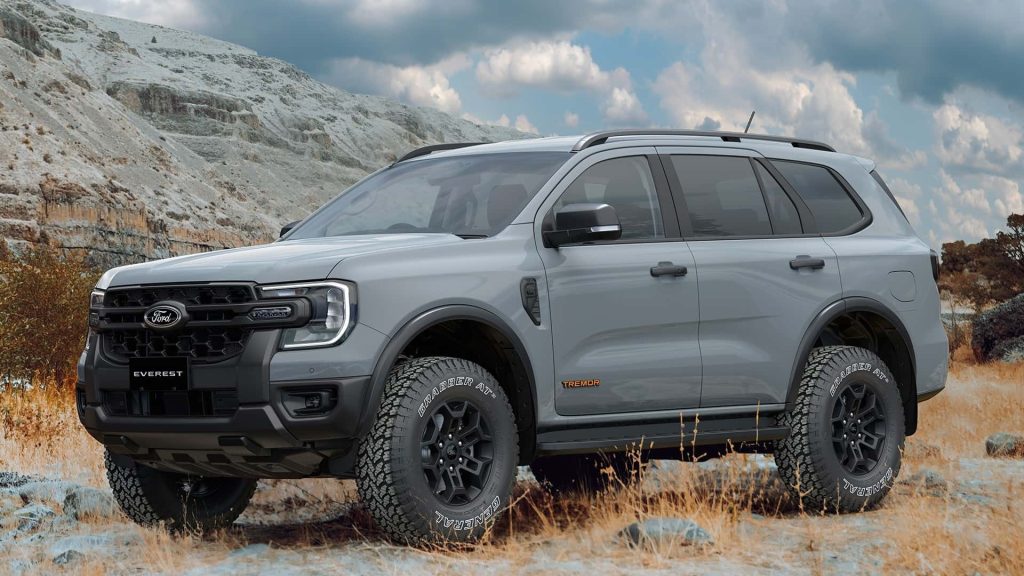
International specifications vary, but current versions offer turbocharged gasoline and diesel engines depending on the market. The 3.0-liter Power Stroke V6 diesel available in some markets produces 247 horsepower and 443 lb-ft of torque.
Its absence from the U.S. makes the sales comparison almost unfair, but that is precisely what makes the Everest interesting. An American automaker can have a major SUV success story while the vehicle itself remains essentially invisible in its home market.
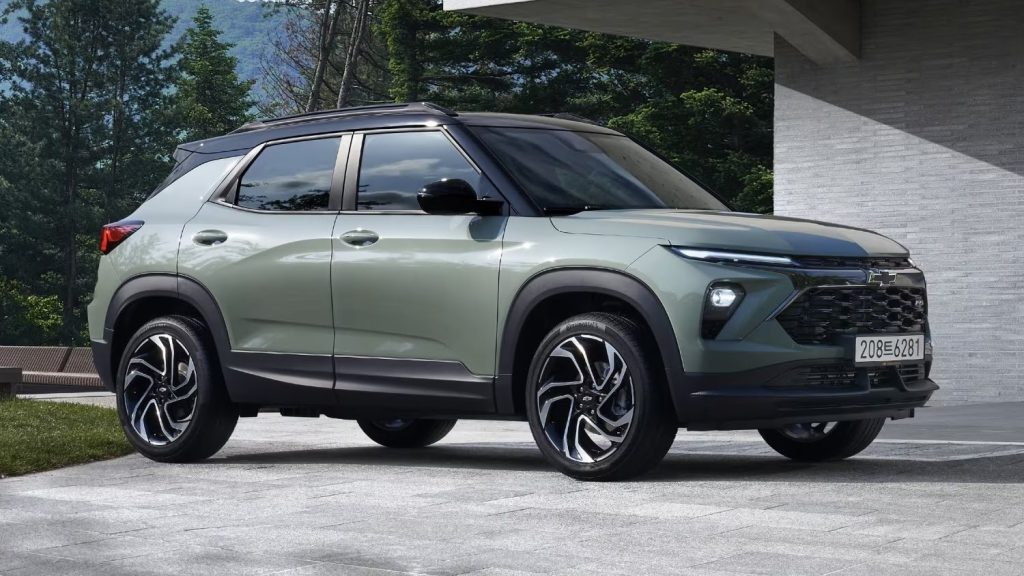
8. Chevrolet Trailblazer
The Chevrolet Trailblazer creates an unusual situation because the name has existed on substantially different vehicles in different markets. The modern Trailblazer sold in the United States is a subcompact crossover, while Chevrolet has used the same name on other international products with different dimensions, engines, and market positioning.
That makes direct worldwide sales comparisons difficult, but the international version demonstrates how differently Chevrolet approaches markets outside America.
In China, the Trailblazer name has been associated with a larger crossover developed specifically for that market. It was introduced as part of Chevrolet’s strategy to compete in China’s rapidly expanding SUV segment. The vehicle was positioned above smaller Chevrolet crossovers and offered turbocharged engines and a more premium-oriented interior.
The U.S. Trailblazer, by contrast, was designed for a much smaller segment. Its compact dimensions allow it to compete against vehicles such as the Honda HR-V and Hyundai Kona, giving Chevrolet a relatively inexpensive entry into the crossover market.
The international Trailblazer story is therefore not simply about sales volume. It demonstrates how an American manufacturer can reuse a familiar nameplate for very different regional customers.
Chinese buyers have historically placed substantial importance on rear-seat space, technology, and premium-looking interiors, while American buyers in the subcompact segment can place greater emphasis on affordability, fuel economy, and exterior size.
The U.S. Trailblazer uses a 1.3-liter turbocharged three-cylinder engine in higher-output applications, producing 155 horsepower and 174 lb-ft of torque. Its small footprint is a deliberate response to the American subcompact crossover market.
Because the Chinese and U.S. vehicles are fundamentally different products, combining their sales would produce a misleading statistic. The more defensible conclusion is that Chevrolet has achieved stronger commercial relevance with Trailblazer-branded products in overseas markets than the name’s U.S. sales alone would suggest.
It is a good example of why global sales data must be examined carefully rather than treating every vehicle carrying the same badge as identical.
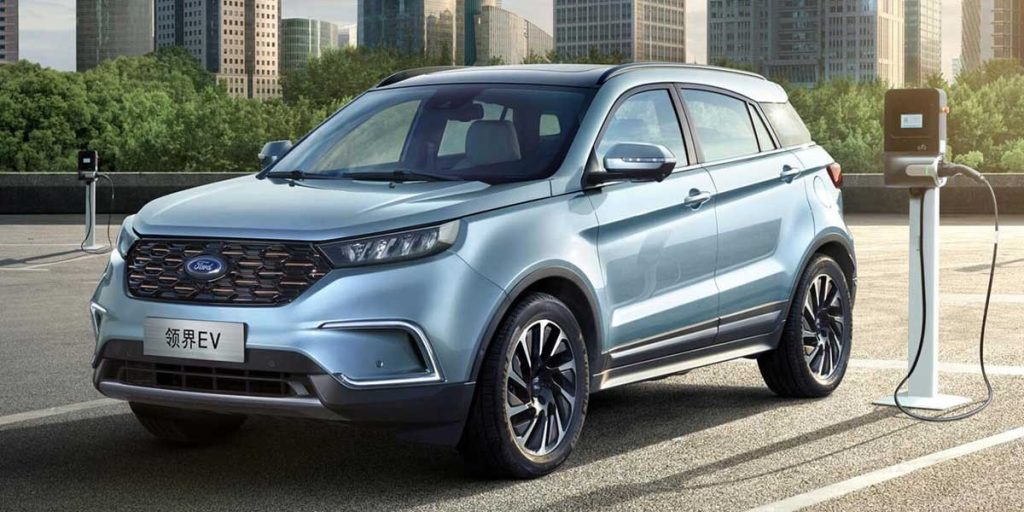
9. Ford Territory EV
The Ford Territory EV shows how differently an American automaker can position an electric vehicle outside its domestic market. The Territory family is primarily associated with China and other international markets, where Ford has developed products specifically around regional customer expectations rather than simply exporting its U.S. lineup.
The important point is that Ford does not currently sell the Territory EV through its U.S. dealer network. Consequently, its American sales are effectively zero, while the model can compete in overseas markets where compact and midsize electric SUVs have become much more established.
China is especially significant because it has developed into the world’s largest electric-vehicle market. Chinese consumers have access to an enormous selection of locally developed electric crossovers, forcing international manufacturers to compete on technology, packaging, range, and pricing rather than relying solely on brand recognition.
Ford’s response has been to work with its Chinese operations and partners to develop vehicles tailored to that environment. The Territory platform is an example of this regional approach.
That also explains why importing the vehicle into the United States is not a simple matter of bringing a U.S.-market Ford across the border. Federal safety, emissions, and certification requirements would need to be satisfied, and the vehicle’s specifications are not necessarily aligned with U.S. standards.
The Territory’s overseas appeal comes from a practical combination of features. It offers SUV proportions, a family-friendly interior, modern infotainment, and an electric powertrain in a package that is considerably smaller than the Ford Expedition.
Because the model is not sold domestically, there is no honest way to claim that it “outsells itself” in another market. Instead, it belongs on this list because its entire commercial existence is concentrated outside Ford’s home market.
That makes the Territory EV a useful example of Ford’s increasingly regional product strategy. Sometimes an American company can achieve stronger relevance by building a vehicle specifically for overseas customers instead of trying to make one American model fit every country.
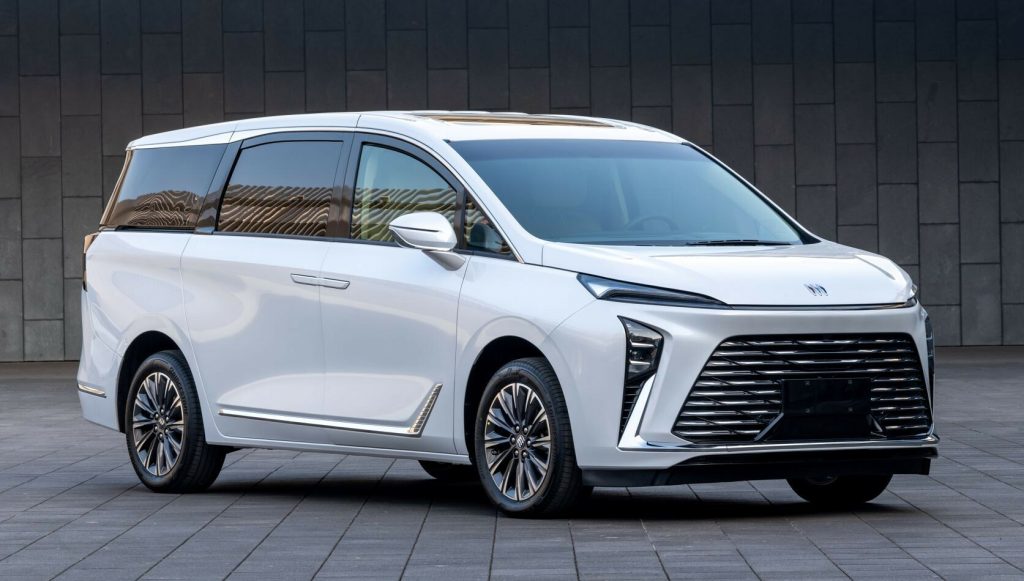
10. Buick GL8
The Buick GL8 is arguably the most dramatic example on this list because it has become a major Buick product in China while having no meaningful U.S. sales presence.
The GL8 is a large premium minivan designed specifically around Chinese customers, where chauffeur-driven transportation and high-end family MPVs have developed into important market segments. Buick has sold the GL8 in China for decades, and it has become one of the brand’s best-known products there.
The model is particularly interesting because the traditional American minivan market has moved in a different direction. Vehicles such as the Chrysler Pacifica, Honda Odyssey, and Toyota Sienna dominate the U.S. premium-family minivan conversation, while Buick has not offered the GL8 domestically.
China’s market created a different opportunity. The GL8 is frequently configured around spacious second-row seating, premium materials, and high levels of passenger comfort. In some versions, the second row receives captain’s chairs designed more like luxury seats than conventional minivan furniture.
Buick’s long-standing reputation in China also gives the GL8 an advantage that would be difficult to recreate from scratch. GM has said Buick has more than a century of history in the Chinese market, giving the brand considerable familiarity among Chinese consumers.
Sales have been substantial. Buick has reported periods in which annual GL8 deliveries in China exceeded 100,000 units, a volume that dwarfs the model’s nonexistent U.S. sales.
The contrast is revealing. In America, the Buick brand is increasingly associated with crossovers and SUVs. In China, Buick has been able to occupy a premium people-mover niche that has little equivalent in the current U.S. lineup.
The GL8 therefore represents more than an American car that happens to sell well overseas. It is a vehicle that became commercially important because Buick adapted itself to a market where the same American brand could occupy an entirely different role.
