
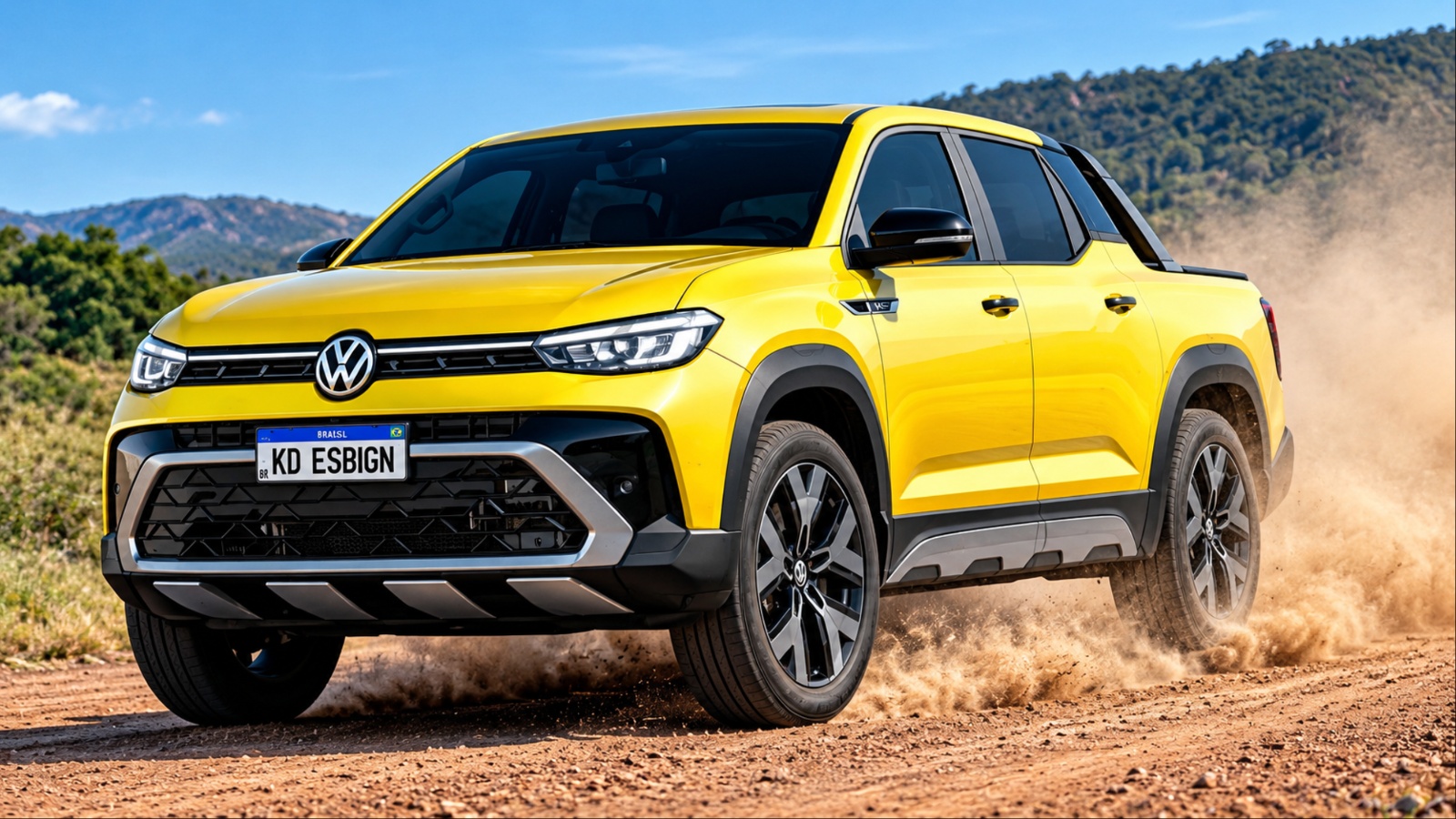
Volkswagen is considering developing body-on-frame pickup trucks specifically for the United States, potentially giving the German automaker a more serious entry into one of America’s most profitable and competitive vehicle segments.
According to Motor1, Volkswagen is studying the possibility of building a truck using a traditional body-on-frame architecture rather than adapting one of its existing unibody passenger-vehicle platforms. The project remains under consideration, meaning there is no confirmed production vehicle, platform, factory, or launch date at this stage.
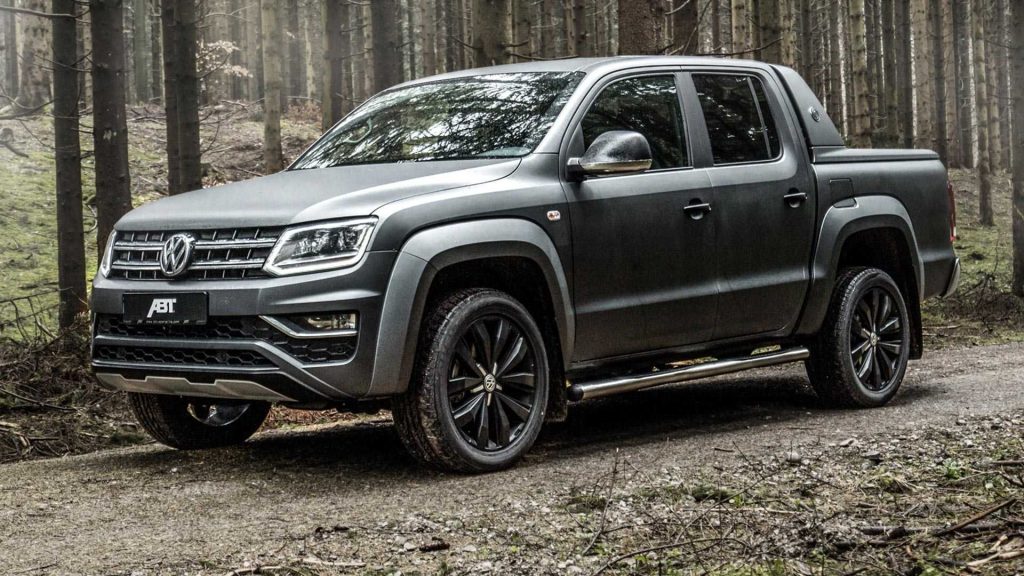
The potential move would represent a significant change from Volkswagen’s current approach to pickups in North America. The company’s existing pickup experience is centered largely on the Amarok, a midsize truck developed primarily for markets outside the United States.
A body-on-frame truck designed specifically around American requirements could allow Volkswagen to compete more directly in a market dominated by established manufacturers such as Ford, Chevrolet, GMC, Ram, and Toyota.
The opportunity is enormous, but so are the challenges. A successful U.S. pickup needs more than a large bed and rugged styling. Buyers expect strong towing capability, useful payload ratings, four-wheel-drive systems, extensive storage, and durability, while fleet customers place additional emphasis on operating costs and reliability.
Volkswagen would therefore need to develop a truck that meets American expectations rather than simply adapting an existing global model.
Why Volkswagen Is Looking at a Traditional Truck Platform
Body-on-frame construction remains common among full-size and midsize pickups because it separates the passenger body from the vehicle’s underlying frame. That architecture can provide the strength and flexibility required for towing, hauling, and off-road use.
Volkswagen already has experience with this type of vehicle through the Amarok, although the truck is not currently sold in the United States.
The Amarok shares its underlying architecture with the Ford Ranger through an industrial partnership between Volkswagen and Ford. That relationship gives Volkswagen access to proven pickup engineering, but bringing the current Amarok to America would not necessarily provide the company with the product differentiation it needs.
The U.S. market is also different from many international pickup markets. American buyers have traditionally favored larger trucks, particularly full-size models.
Vehicles such as the Ford F-150, Chevrolet Silverado 1500, and Ram 1500 sell in huge numbers, while midsize trucks such as the Toyota Tacoma, Ford Ranger, and Chevrolet Colorado have established a separate market.
A Volkswagen truck could potentially target either segment. A midsize model would be easier to position against established global products, while a larger body-on-frame truck could give Volkswagen access to the far more lucrative full-size category.
Motor1’s report does not indicate which direction Volkswagen would ultimately choose. The company has not announced specifications, dimensions, powertrains, or a target segment.
That uncertainty is important because a clean-sheet U.S. truck would require substantial investment. Volkswagen would need to determine whether projected sales could justify the engineering and manufacturing costs.
The U.S. Market Could Make the Investment Worthwhile
Volkswagen has strong motivation to pursue the project because pickup trucks play a major role in the American automotive market.
Full-size trucks remain among the country’s best-selling vehicles and generate significant profits for manufacturers. Buyers are willing to spend heavily on higher trims, larger engines, towing equipment, advanced driver-assistance systems, and luxury features.
A successful Volkswagen pickup could therefore contribute significantly more revenue per vehicle than a typical compact car.
The truck could also strengthen Volkswagen’s overall presence in the United States. The company has traditionally relied heavily on passenger cars and SUVs in America, where its market share is considerably smaller than that of the leading domestic manufacturers.
Adding a dedicated pickup would give Volkswagen another product category and potentially attract customers who might not otherwise consider the brand.
There is also a broader strategic argument. Volkswagen has been investing heavily in SUVs and electric vehicles, but the American market does not necessarily move at the same pace as Europe.
A U.S.-focused truck could allow the company to develop a product tailored to American customer preferences instead of forcing the market into a European-oriented lineup.
That could include larger dimensions, greater towing capability, and a powertrain strategy designed around the way Americans use trucks. The choice of powertrain would be particularly important.
Volkswagen could theoretically consider gasoline, hybrid, plug-in hybrid, or fully electric powertrains. A conventional engine would provide familiarity and potentially lower development risk, while hybrid technology could improve fuel economy without sacrificing the towing and range characteristics truck buyers expect.
An electric truck would give Volkswagen a different opportunity, but the company would have to overcome challenges involving battery weight, towing range, and charging infrastructure. Those issues have become especially important as U.S. consumers have become more cautious about fully electric pickups.
A body-on-frame hybrid could potentially offer Volkswagen a middle ground, providing electric assistance while retaining the flexibility of a combustion engine for long-distance towing.
However, Volkswagen has not confirmed any powertrain direction for the potential project.
Production Could Be the Biggest Decision
Even if Volkswagen approves the truck, deciding where to build it would be one of the project’s most important questions.
Producing a vehicle in the United States could help Volkswagen avoid some import costs and make the truck more competitive. It would also give the company a stronger local manufacturing presence.
But building a new pickup factory or substantially modifying an existing facility would require a major investment.
Volkswagen already operates manufacturing facilities in the United States, including its plant in Chattanooga, Tennessee, which produces vehicles such as the Atlas and ID. 4. Whether that facility could support a future body-on-frame truck would depend on the vehicle’s size, platform, and production requirements.
No production site has been confirmed for the proposed pickup. The company would also need to establish a supply chain capable of supporting high-volume truck production. Pickup trucks require specialized components, including heavy-duty suspension parts, frames, axles, four-wheel-drive hardware, and towing equipment.
Volkswagen could potentially use an existing platform or cooperate with another manufacturer to reduce those costs. Its relationship with Ford demonstrates that partnerships can give Volkswagen access to pickup expertise without requiring every component to be developed independently.
However, the potential U.S. project appears to be at an earlier stage than a confirmed joint-production program.
That means Volkswagen still has to answer fundamental questions about the truck’s business case.
Would it be a midsize model or a full-size pickup? Would it use an existing architecture or an entirely new platform? Would it be built in America? And how quickly could Volkswagen bring it to market?
None of those questions has an official answer yet. For now, the project should therefore be viewed as an exploration rather than a confirmed product announcement.
Volkswagen Would Face an Extremely Tough Market
Entering the U.S. pickup market would be considerably harder than simply developing a capable truck.
Ford, Chevrolet, GMC, Ram, and Toyota have decades of experience understanding American truck customers. Their dealer networks are deeply established, and their trucks offer enormous numbers of configurations, engines, and trim levels.
Volkswagen would have to convince buyers to switch from brands with long-standing reputations for towing, hauling, and durability.
The company would also need to develop a dealer network capable of supporting truck customers. Pickup buyers often expect specialized service, accessories, and commercial support that differs from the experience associated with passenger cars.
Pricing would be another major challenge. Volkswagen could not rely solely on its European brand image to justify a premium. A new truck would need competitive capability and equipment at a price customers consider reasonable.
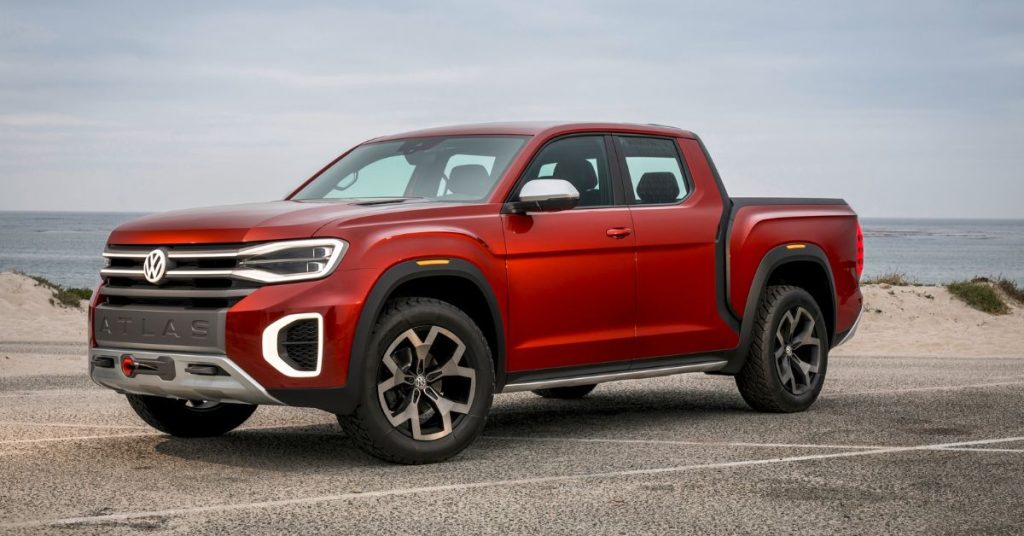
Yet the potential reward explains why the idea is attracting attention. A well-designed Volkswagen pickup could expand the company’s American lineup, generate additional sales, and give it a stronger position in a market where trucks remain enormously important.
The body-on-frame approach would also signal that Volkswagen is taking the segment seriously. Instead of turning an existing crossover into a pickup, the company would be developing around the requirements of towing, payload, and off-road capability from the beginning.
For now, however, there is no guarantee that the project will move beyond the study phase. Motor1’s report makes clear that Volkswagen is still considering its options, with no confirmed platform, factory, or production timetable.
If the company ultimately gives the project the green light, the development process would likely take several years. Volkswagen would have to finalize the architecture, powertrain, manufacturing strategy, and market positioning before production could begin.
The idea nevertheless represents an intriguing shift in Volkswagen’s American strategy. A dedicated body-on-frame pickup could give the company access to one of the industry’s most valuable segments while providing a product specifically engineered around U.S. expectations.
The challenge will be determining whether Volkswagen can enter a market controlled by deeply established competitors without spending more money than the potential sales justify.
For now, the truck remains a possibility rather than a confirmed model. But if Volkswagen decides to move forward, its first truly American-focused pickup could become one of the most significant additions to the brand’s U.S. lineup in years.
