
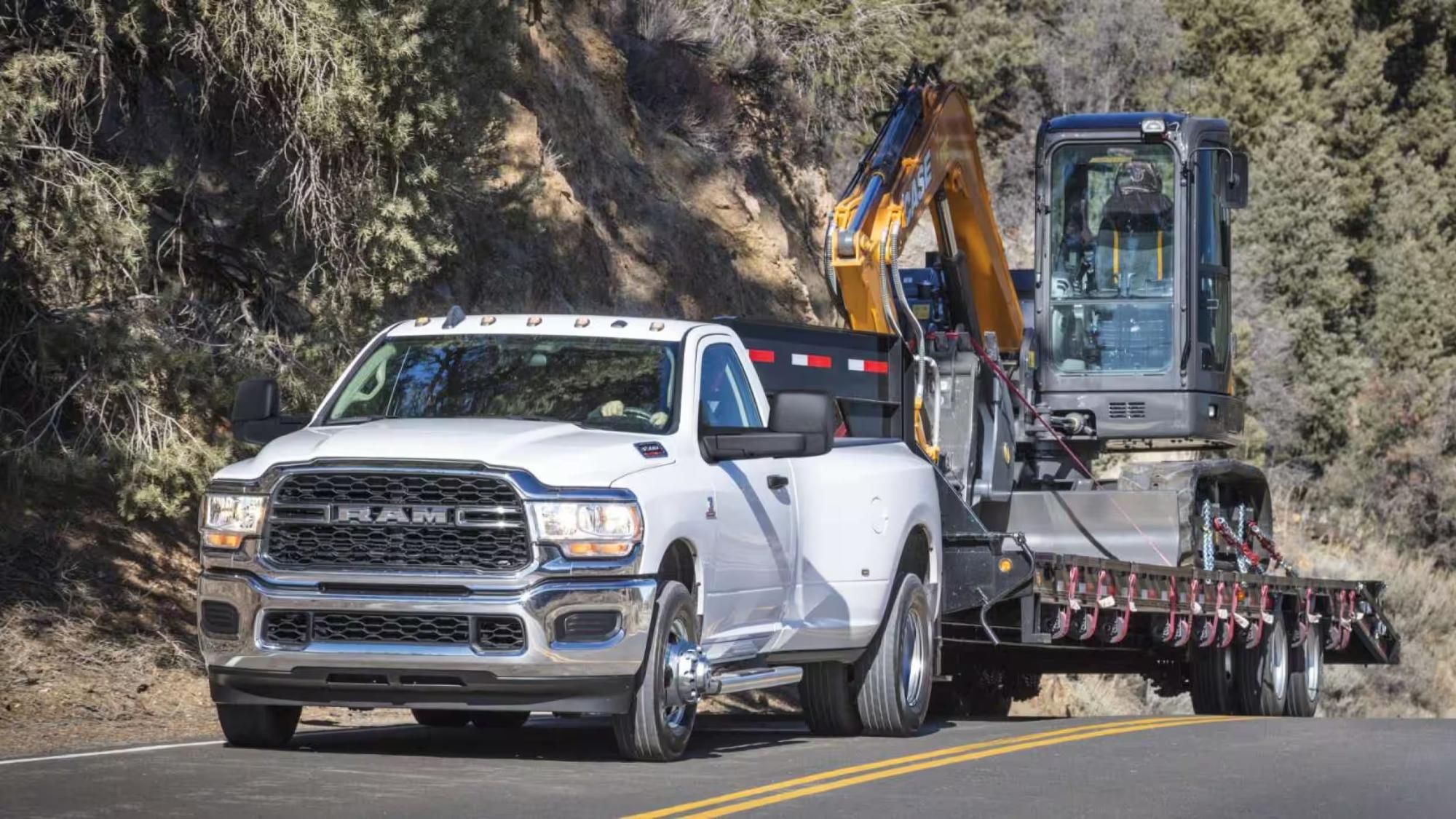
Tow operators live and die by torque. It’s the number that decides whether a truck can drag a stuck flatbed off a muddy shoulder. Horsepower gets the headlines, but torque does the actual work. It’s the twisting force that gets a heavy load moving from a dead stop.
For wrecker drivers and rollback operators, that low-end grunt matters more than top speed ever will. It’s the difference between crawling up an icy grade or spinning out.
This list ranks eight trucks purely by peak torque output. Some are familiar one-ton pickups. Others are the chassis-cab workhorses that tow companies actually upfit.
Each entry covers the engine, the horsepower and torque figures, and the truck’s real-world footprint. These are the numbers that matter when speccing a truck for daily recovery work.
1. Ford F-450 Super Duty
The F-450 sits at the top of this list for a reason. Ford built it for buyers who need more truck than an F-350 offers. It bridges the gap between heavy pickups and true commercial chassis. Many tow companies use it as the backbone of their rollback fleets.
The optional High-Output Power Stroke is what earns this truck first place. That 6.7L V8 turbo diesel produces 500 horsepower. Torque is the real story here. It tops out at 1,200 lb-ft, the highest figure on this entire list.
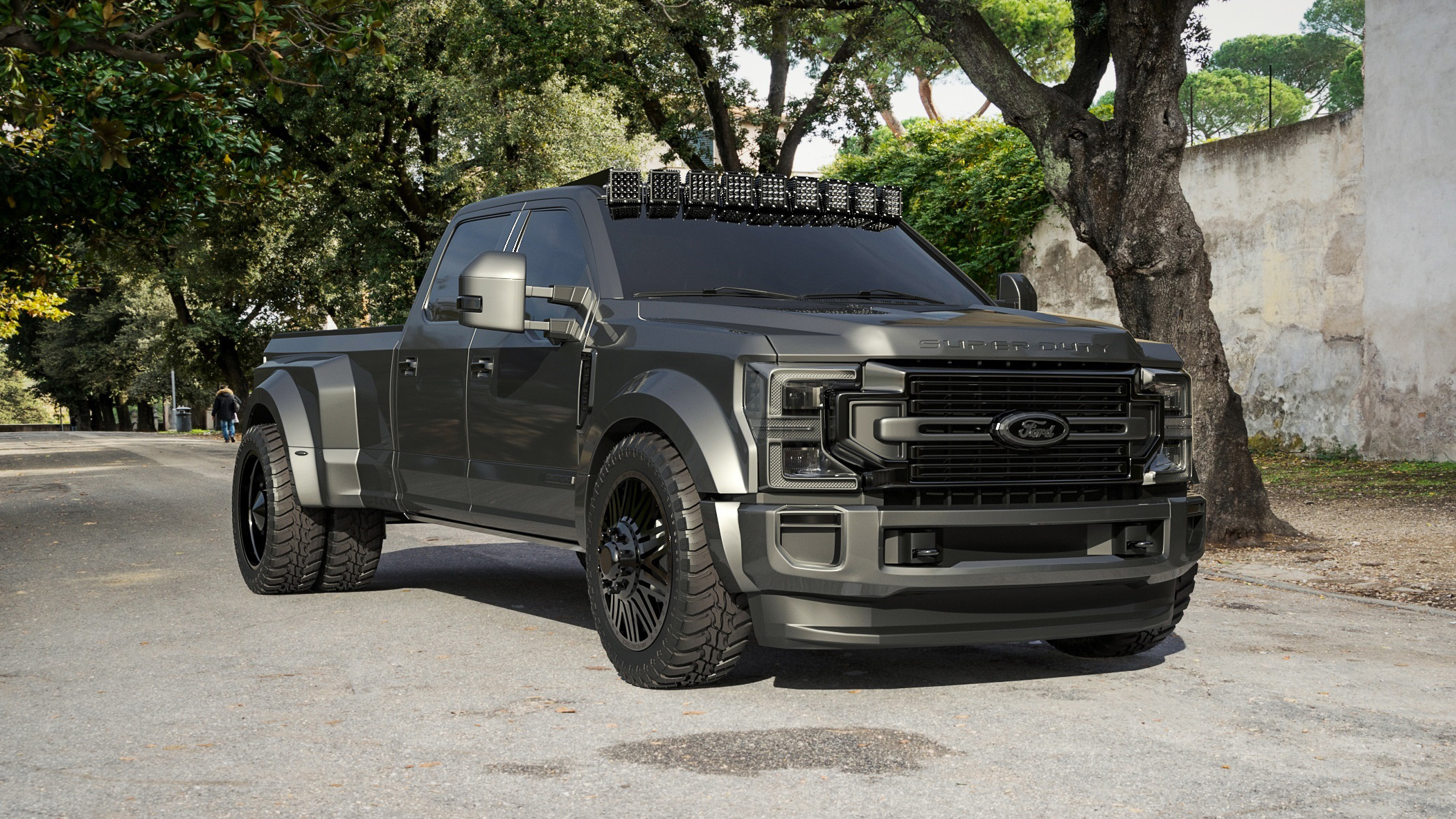
Ford pairs this engine with aggressive axle gearing. Most F-450s ship with a 4.30:1 ratio for stronger low-end pull. This matters on recovery jobs. Dragging a dead sedan up an icy embankment needs low-rpm shove, not top-end power.
The F-450 also carries a heavier frame than the F-350. It’s rated to handle the stress of loaded rollback beds and winch work. A ten-speed TorqShift automatic transmission handles that power delivery. Shifts stay smooth even under maximum trailer load.
Crew cab dually versions stretch to roughly 273 inches long. Width grows to nearly 96 inches once you account for the dual rear wheels. Fuel capacity runs up to 48 gallons on many configurations.
That extended range matters for operators covering wide service areas. The tradeoff is size and price. Platinum trims can climb past $95,000 before any rollback body is installed.
Its dually rear end also makes it wider than a standard pickup. That can be a problem in tight parking garages or narrow alleys. Still, for pure pulling power, nothing on a consumer lot beats it. That’s why so many wrecker fleets build around this chassis.
2. Ram 3500 (High-Output Cummins)
The Ram 3500 has built its reputation on diesel longevity. Fleet operators trust the Cummins name more than almost any other badge. With the High-Output Cummins option, the 3500 becomes a serious torque contender. It trails only the Ford Super Duty lineup here.
The base 6.4L HEMI V8 gas engine is respectable but unremarkable. Most serious operators skip straight to the diesel option instead. The High-Output 6.7L Cummins Turbo Diesel produces 430 horsepower. Torque comes in at 1,075 lb-ft, delivered low in the rev range.
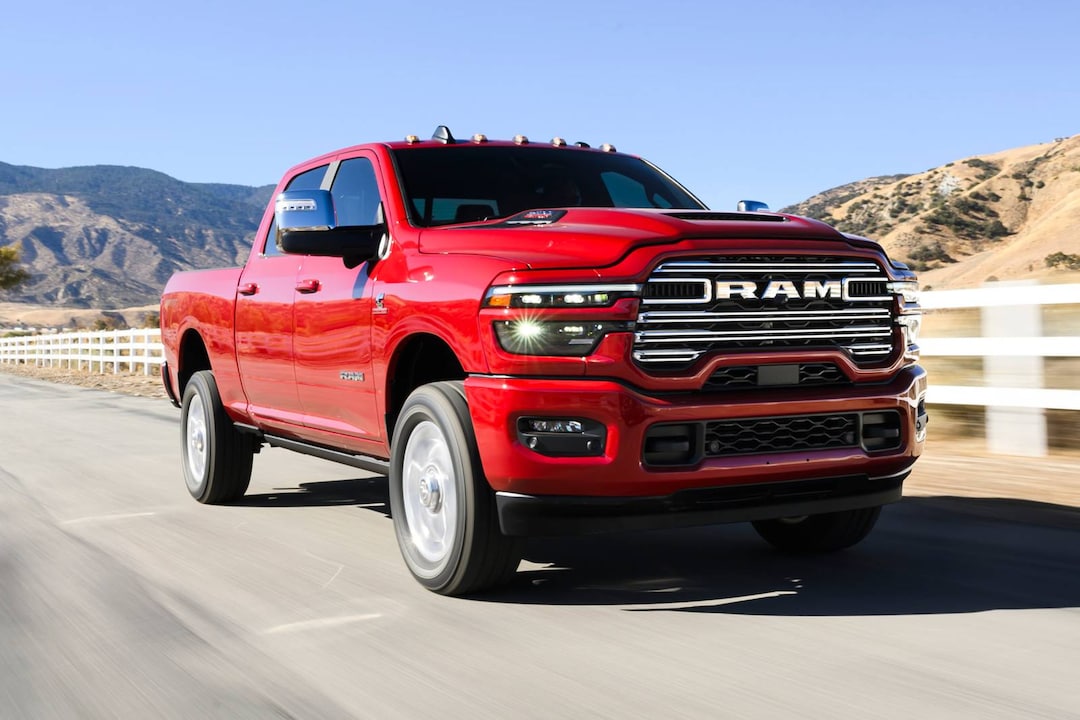
That low-rpm delivery is exactly what towing demands. Cummins engines pull hard even before the turbo fully spools up. An eight-speed TorqueFlite HD automatic handles the power. It’s built specifically for repeated heavy-load starts and stops.
Ram backs this platform with real towing tech. Trailer Reverse Steering Control helps drivers back a loaded rollback into tight spots. A 360-degree Surround View Trailer Camera adds safety on hookups. That’s valuable when working roadside in low visibility.
Crew cab models run around 258 inches in length. Width sits near 84 inches, noticeably narrower than the dually Fords above it. A 189-liter fuel tank is available on select crew cab models. That’s the largest tank in its class among heavy-duty pickups.
Reliability is the Ram’s calling card among fleet buyers. Many operators cite the Cummins engine’s track record past 300,000 miles. The tradeoff versus Ford is simple. Ford wins on raw numbers, but Ram counters with a proven long-term reputation.
3. Ram 5500 Chassis Cab
The Ram 5500 isn’t a pickup. It’s a bare chassis cab, built specifically to receive commercial bodies like rollback beds. Tow truck upfitters favor this platform heavily. It shares the same High-Output Cummins engine found in the Ram 3500.
That means identical torque output. The engine simply carries a heavier frame and axle rating underneath it. Horsepower holds at 430, with torque steady at 1,075 lb-ft. Those numbers carry straight over from the 3500 unchanged.
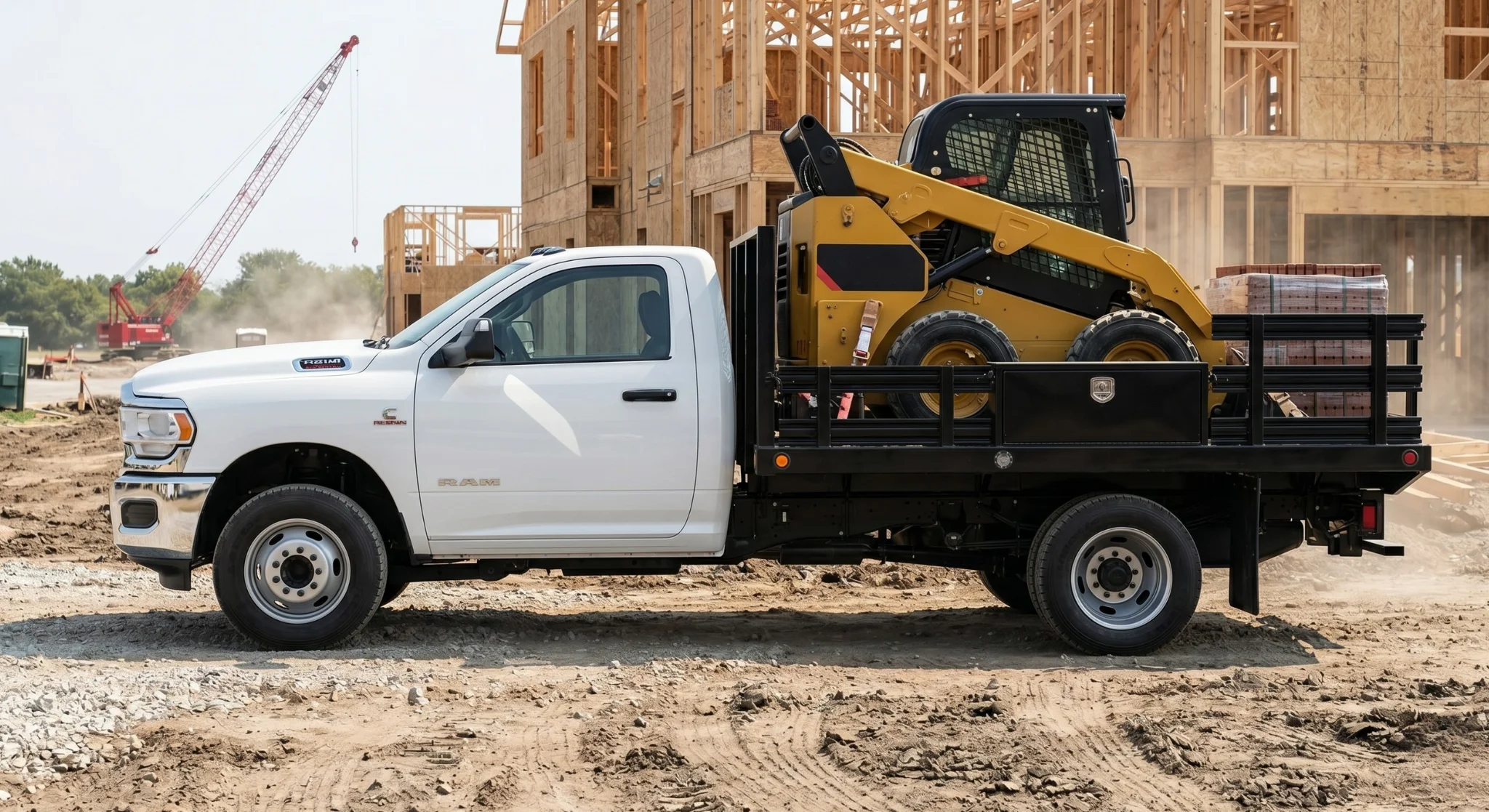
This is a genuine advantage for wrecker work. The 5500’s chassis is rated for significantly higher payload than any consumer pickup. Operators mount Jerr-Dan or Chevron rollback bodies without exceeding weight limits. That headroom is critical for legal, safe operation on the road.
Wheelbase options run long on this platform. A 204.5-inch wheelbase is common for rollback and wrecker builds specifically. The chassis length lands around 266 inches before any body is added. Width on dually configurations reaches roughly 96 inches.
That extra length gives upfitters room to mount longer beds. It also improves stability when carrying a loaded vehicle up top. Forum discussions among wrecker operators frequently debate Ram versus Ford chassis reliability. Brake and ball-joint wear come up often in these threads.
Despite that, many operators still prefer the 5500 for flatbed builds specifically. Its ride height sits lower than some rival platforms. Lower ride height means easier loading angles. That’s a meaningful advantage for rollback work during roadside recovery.
4. Ford F-550 Super Duty
The F-550 is Ford’s answer to the Ram 5500. It’s the chassis cab platform most associated with wrecker and rollback builds nationwide. Unlike the F-450, most F-550 tow builds skip the High-Output engine. The standard Power Stroke is usually sufficient and easier to maintain.
That standard 6.7L Power Stroke V8 makes 475 horsepower. Torque comes in at 1,050 lb-ft, just behind the Ram Cummins twins. Wrecker forums note a common industry debate here. Some operators prefer the F-550’s lower ride height over the taller Ram 5500.
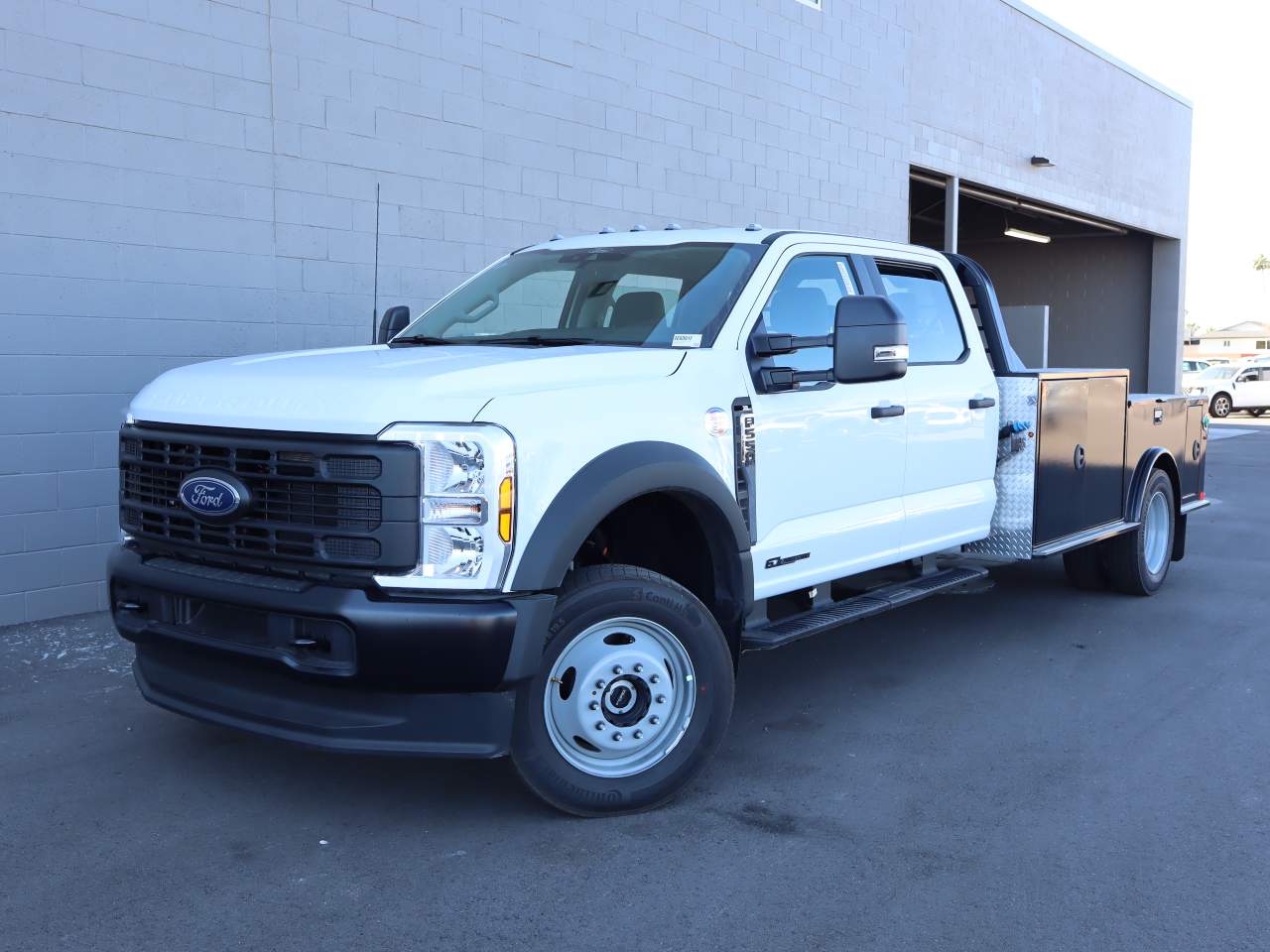
A lower deck height makes loading vehicles onto a rollback bed easier. That’s a real operational advantage during roadside recovery work. A ten-speed automatic transmission manages power delivery. It’s a shared architecture with the F-450 and F-350 platforms above it.
Crew cab dually configurations run about 266 inches long. Width grows close to 96 inches with the dual rear wheel setup. Many tow companies also cite parking garage access as a factor. The F-550’s dimensions allow entry into some structures the taller 5500 cannot fit.
Reliability opinions split sharply among operators. Some praise the Power Stroke’s smoothness, while others report turbo and injector issues over time.
A handful of fleets have switched to the 6.8L gas V10 option instead. They cite fewer diesel-specific repair headaches on high-mileage trucks. Either way, the F-550 remains one of the most common wrecker chassis on American roads today. Its combination of size and torque hits a practical sweet spot.
5. GMC Sierra 3500HD
The Sierra 3500HD brings GMC’s Duramax diesel into the heavy-duty conversation. It shares its core mechanicals with the Chevrolet Silverado 3500HD.
GMC positions this truck slightly upmarket. Denali and Denali Ultimate trims add luxury touches not found on the Chevrolet equivalent. Underneath the badge, the numbers are what matter here.
The 6.6L Duramax Turbo Diesel produces 470 horsepower. Torque output lands at 975 lb-ft. That’s a meaningful step below the Ford and Ram diesel options above it.
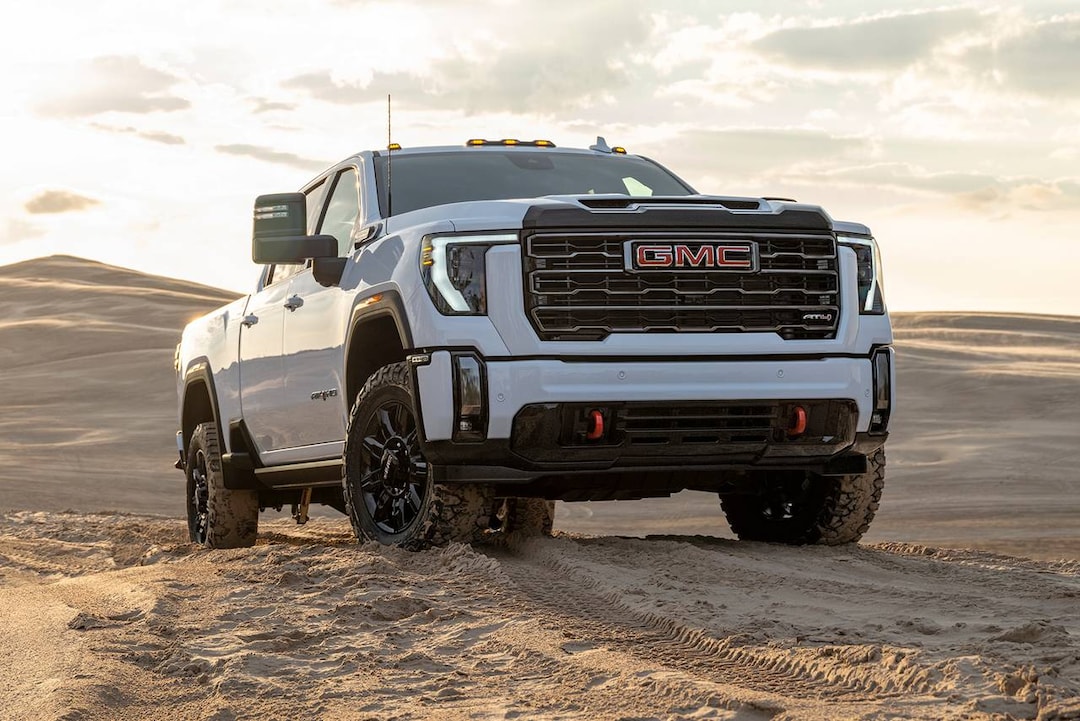
An Allison 10-speed transmission handles that power delivery. Allison-branded transmissions carry a strong reputation among commercial fleet buyers.
Crew cab dually models measure close to 266 inches in length. Width reaches about 96 inches once mirrors and dual rear wheels are factored in. Max towing capacity reaches up to 36,000 lbs in the right configuration. Payload ratings top out around 7,000 lbs on 3500HD dually models.
GMC includes a full towing technology suite standard. Up to 14 camera views help drivers go through the tight hookup situations safely. A Trailer Surround View Camera adds extra confidence during reversing. That’s genuinely useful for solo tow operators without a spotter.
The trade-off versus the diesel leaders above is straightforward. Less peak torque means slightly less confidence on steep grades under maximum load.
Still, for operators who prioritize smooth power delivery and dealer network support, the Sierra remains a strong practical choice. It’s mechanically proven and widely serviced.
6. Chevrolet Silverado 3500HD
The Silverado 3500HD is mechanically identical to the GMC Sierra above it. Both trucks share the same frame, engine, and transmission architecture.
Chevrolet markets it as more of a work-first option. Pricing generally sits below the equivalent GMC trim level. The 6.6L Duramax Turbo Diesel carries over unchanged.
Horsepower and torque figures match the Sierra exactly. That means 470 horsepower and 975 lb-ft of torque. It’s a proven combination with a long service history in fleet applications.
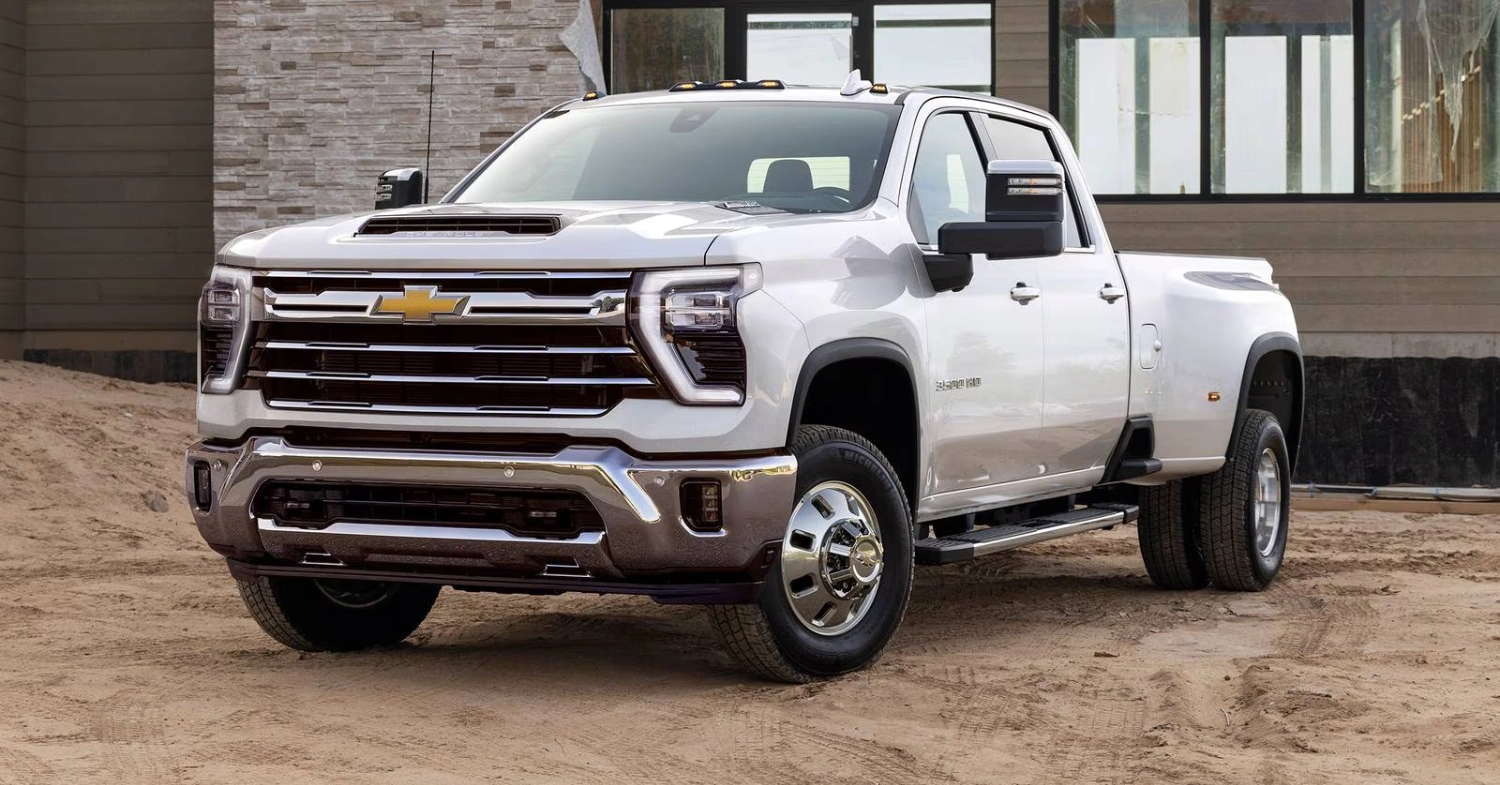
Length and width figures also mirror the Sierra closely. Crew cab dually versions run about 266 inches long and 96 inches wide. Chevrolet’s towing suite includes pre-departure trailer checklists. That feature helps operators catch light or brake issues before rolling out.
Max towing capacity sits around 36,000 lbs in the strongest configuration. Payload maxes out near 7,290 lbs on the right regular-cab dually build.
Independent testing outlets rate the Silverado HD highly for reliability. It scores well on long-term value retention among heavy-duty trucks specifically.
Many municipal and utility fleets favor the Silverado for exactly this reason. Lower acquisition cost paired with strong resale makes it an easy fleet decision. For tow operators watching a budget closely, this is often the more sensible buy. The performance gap versus the GMC badge is essentially zero.
7. Ram 2500 (Standard Cummins)
The Ram 2500 sits a class below the 3500 in payload and towing capacity. It’s still a serious option for lighter-duty tow and repossession work. Two engines are available here. The base 6.4L HEMI V8 gas engine produces 405 horsepower and 429 lb-ft of torque.
Most serious operators choose the diesel instead. The standard 6.7L Cummins bumps torque up considerably over the gas option. That standard Cummins produces 370 horsepower. Torque lands at 850 lb-ft, well short of the High-Output version in the 3500.
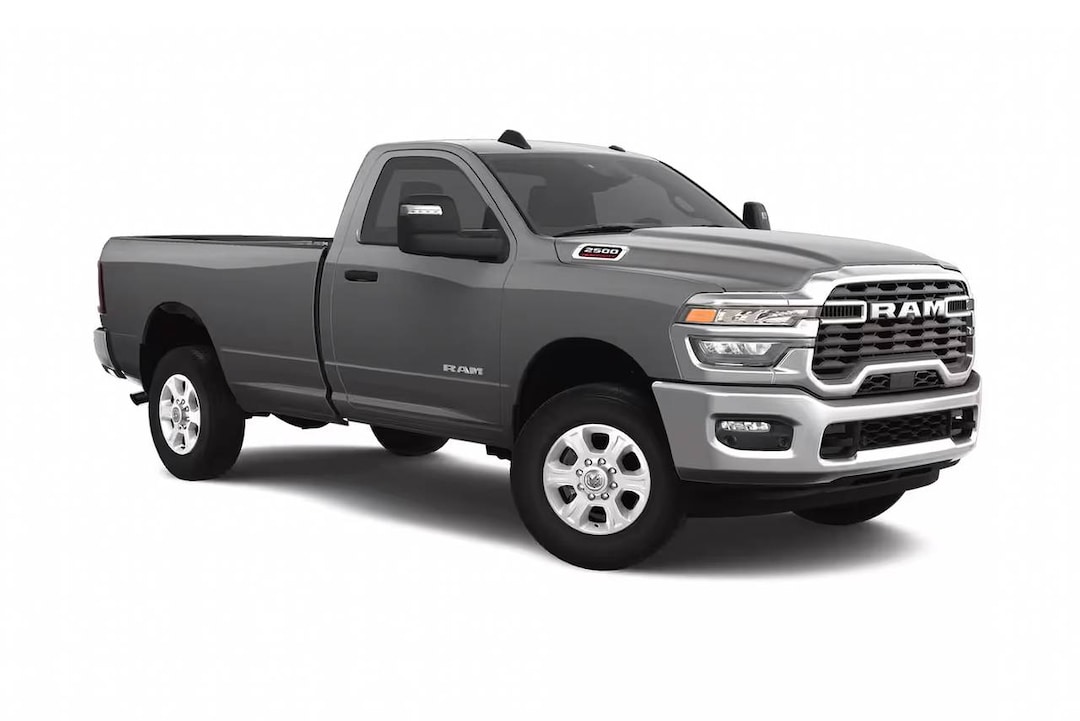
An eight-speed automatic transmission shifts smoothly under load. It’s a shared unit with the larger 3500 platform above it. Crew cab models come in around 232 inches long. Width sits close to 82 inches, the narrowest footprint among the diesel trucks here.
Max towing capacity on the 2500 Cummins reaches up to 20,000 lbs. That’s plenty for light-duty wheel-lift and repossession trucks. This truck makes the most sense for repo work and light wheel-lift towing. It’s not built for heavy rollback or wrecker duty.
Its smaller footprint is a real advantage in city repossession work. Tighter turning and a narrower body help in crowded residential streets. For operators who don’t need one-ton capacity, the 2500 saves real money. Fuel costs and purchase price both drop meaningfully versus the 3500.
8. Ford F-250 Super Duty (7.3L Gas)
The F-250 rounds out this list as the lightest-duty option here. It still qualifies as a genuine Super Duty truck, just without diesel torque numbers. Ford offers the F-250 with several engines. The 7.3L gas V8, nicknamed the “Godzilla,” is the most relevant for towing applications.
This engine trades diesel-level torque for gas-engine simplicity. Maintenance costs run noticeably lower than any diesel option on this list. Output comes in at 430 horsepower. Torque is rated at 485 lb-ft, far below every diesel entry above it.
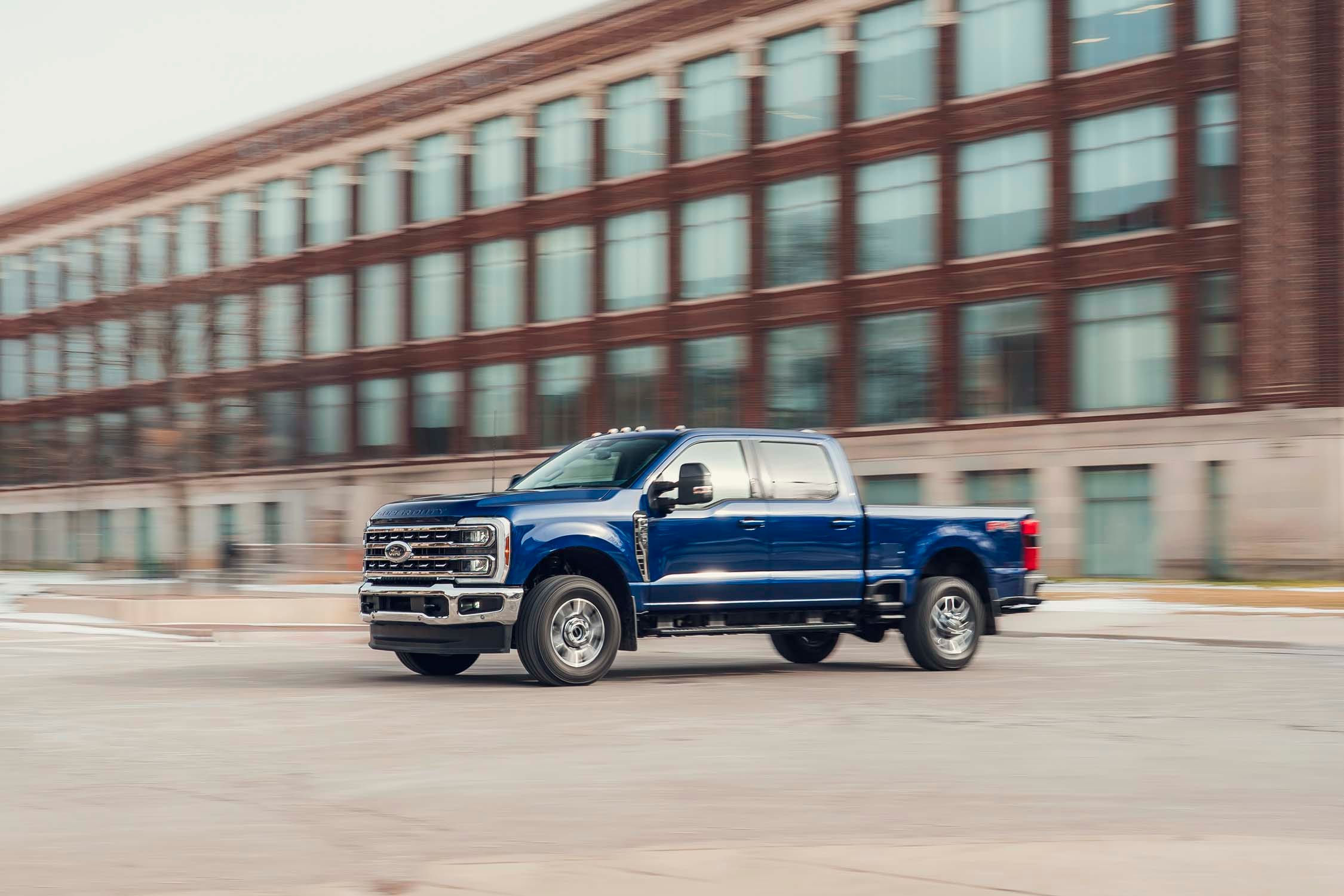
A ten-speed automatic transmission is standard across the lineup. It’s shared with the larger F-350 and F-450 platforms above it. Crew cab models measure about 250 inches in length. Width holds at roughly 80 inches, the narrowest and lightest truck on this list.
Despite lower torque, the F-250 still tows a respectable amount. Properly configured, it handles many light and medium wheel-lift towing jobs comfortably.
Some wrecker operators specifically favor gas engines over diesel. They cite fewer emissions-system headaches and simpler roadside repairs. Fuel economy is worse than a comparable diesel under load. But purchase price and repair costs run meaningfully lower over the truck’s life.
For smaller tow operations running lighter equipment, the F-250 offers a sensible entry point. It’s Super Duty capability without the highest-end diesel cost.
