
Rental fleets are built around a different calculation than private ownership. A rental company needs vehicles that can be purchased economically, survive heavy use, attract customers, and retain enough resale value when they leave service.
That is why a model can be perfectly acceptable to individual owners yet disappear from rental lots. Some cars vanished because automakers discontinued them as shoppers moved toward SUVs, while others became difficult to justify because of depreciation, repair costs, recalls, fuel economics, or changing customer demand.
This list looks at ten cars that rental fleets largely stopped replenishing in the U.S. and the business reasons behind their decline.
1. Ford Focus
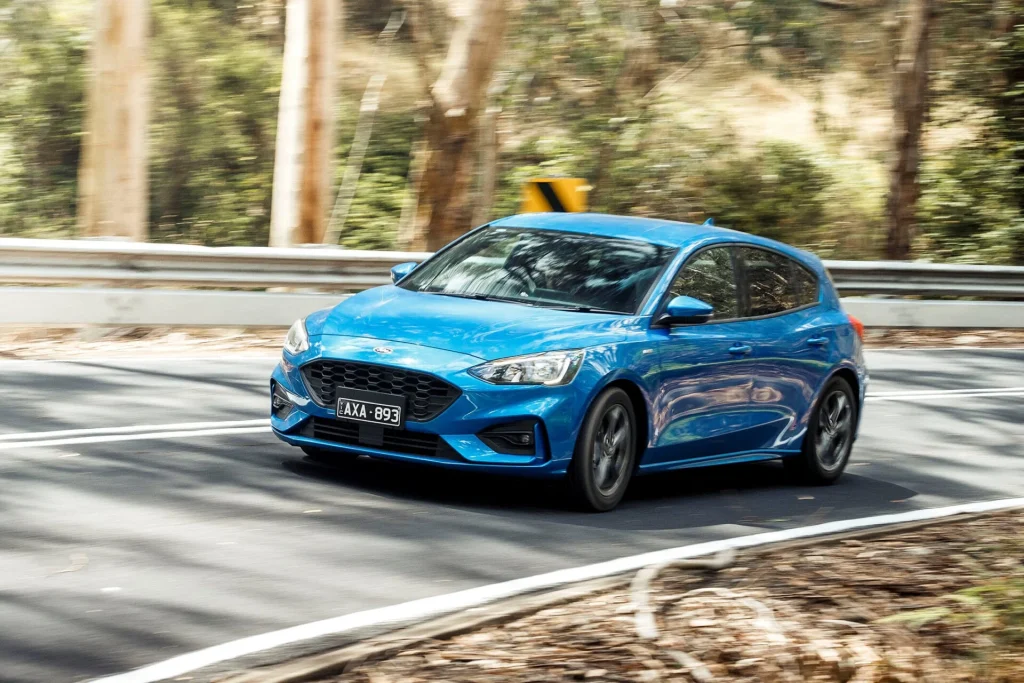
The Ford Focus was once a common sight at U.S. rental agencies, where its compact size, seating for five, and respectable fuel economy made it a practical choice for fleet operators. It offered the basic qualities rental companies typically sought in an affordable compact car.
Ford’s 2018 U.S. specifications listed the Focus sedan at 178.7 inches long and 74.1 inches wide, with the standard 2.0-liter four-cylinder producing 160 horsepower and 146 lb-ft of torque.
The bigger issue was not that rental customers suddenly disliked the Focus. Ford was changing its North American product strategy.
The company announced plans to replace more than 75 percent of its North American portfolio by 2020 while adding new trucks and SUVs, reflecting stronger demand and profitability in those segments. The Focus subsequently disappeared from the U.S. market after the 2018 model year.
That created a simple challenge for rental companies. Once Ford discontinued the Focus in the U.S., fleet operators could no longer replace aging cars with new ones. Existing Focus models could remain in service until they reached their normal replacement cycle, but the supply of available vehicles steadily declined.
There was also a quality-related complication. Ford recalled approximately 1.5 million 2012-2018 Focus vehicles in North America for a canister-purge-valve problem that could cause fuel-system issues and potentially result in a stall.
A recall does not mean every Focus was unreliable, but fleet operators have to account for downtime, repair scheduling, and operating costs when vehicles are used intensively.
2. Chevrolet Cruze
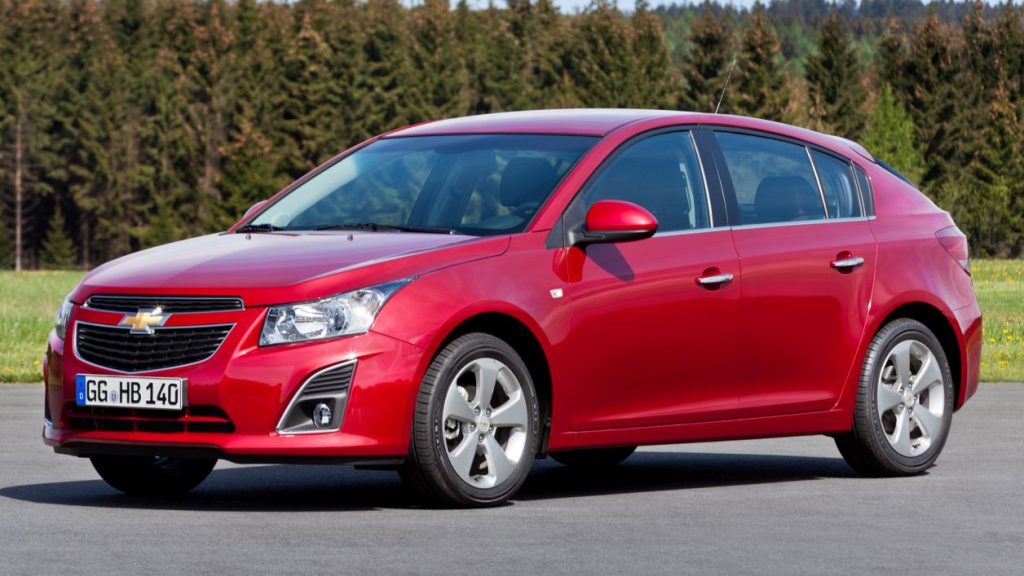
The Chevrolet Cruze illustrates how quickly a once-common rental sedan can disappear when the manufacturer’s strategy changes. Cruze models were widely suited to fleet use because they offered five-passenger seating, compact dimensions, and efficient powertrains.
The 2019 Cruze sedan used a 1.4-liter turbocharged four-cylinder producing 153 horsepower and 177 lb-ft of torque, giving it enough performance for ordinary rental customers without requiring a larger engine.
Chevrolet’s decision to discontinue the Cruze in the U.S. was driven primarily by a changing market rather than the car suddenly becoming unusable. General Motors was shifting resources toward trucks, SUVs, and crossovers as American buyers increasingly moved away from traditional compact sedans.
After production ended with the 2019 model year, rental companies faced a familiar challenge. Without a new U.S.-market Cruze, fleets could no longer replace aging examples with fresh inventory. Existing cars could remain in service for a time, but the supply would gradually decline as vehicles reached the end of their fleet life.
For rental operators, replacement availability matters enormously. A fleet car may be sold after relatively short service, so a model needs a dependable supply of new vehicles at suitable prices.
Hertz’s filings show just how important acquisition costs, resale values, vehicle availability, and holding periods are to rental economics. Fleet operators also assess the used-car market because vehicles eventually have to be disposed of.
The Cruze’s disappearance therefore says more about the economics of the compact-sedan segment than about one specific mechanical flaw. As SUVs became more popular with rental customers, a compact sedan occupying valuable fleet capacity became harder to justify when manufacturers themselves were reducing investment in the category.
The result is a car that may still appear in used rental inventories, but it is no longer something major U.S. rental fleets can routinely purchase new.
3. Nissan Juke
The Nissan Juke was an unusual rental-fleet proposition from the beginning. Its distinctive styling helped it stand out, but rental companies generally benefit from vehicles that appeal to a broad customer base, offer straightforward packaging, and can be replaced easily.
Nissan ended U.S. production of the Juke after the 2017 model year, replacing it with the Kicks, so rental fleets eventually lost the ability to replenish their Juke inventory with new U.S.-market vehicles. Nissan itself positioned the Kicks as the Juke’s successor.
That change was significant because the Juke had a narrower audience than conventional compact cars. Its unusual exterior, relatively tight rear accommodation, and distinctive interior design could attract some customers while being less appealing to others.
A rental company cannot choose vehicles purely because they are interesting. It needs cars that work for business travelers, families, leisure renters, and customers who simply want inexpensive transportation.
The Juke also had a turbocharged 1.6-liter four-cylinder producing 188 horsepower and 177 lb-ft of torque in standard form, with an available all-wheel-drive system. The 2017 model was rated at 28 mpg city and 33 mpg highway by Nissan.
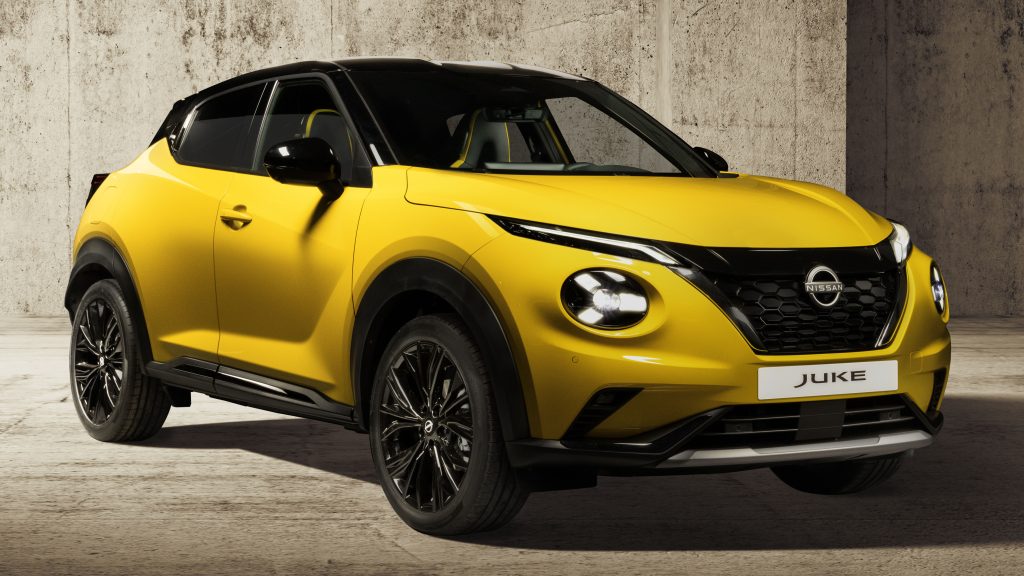
Its compact dimensions were certainly fleet-friendly. The 2017 Juke measured approximately 163 inches long and 69.5 inches wide, making it considerably smaller than many modern compact SUVs.
The key reason rental fleets stopped buying it was therefore less about one catastrophic mechanical weakness and more about product strategy and customer appeal.
Once Nissan replaced the Juke with the Kicks, fleet operators naturally shifted toward the newer model. For a rental business, a discontinued vehicle becomes progressively harder to standardize, replenish, and cycle through the fleet.
4. Dodge Dart
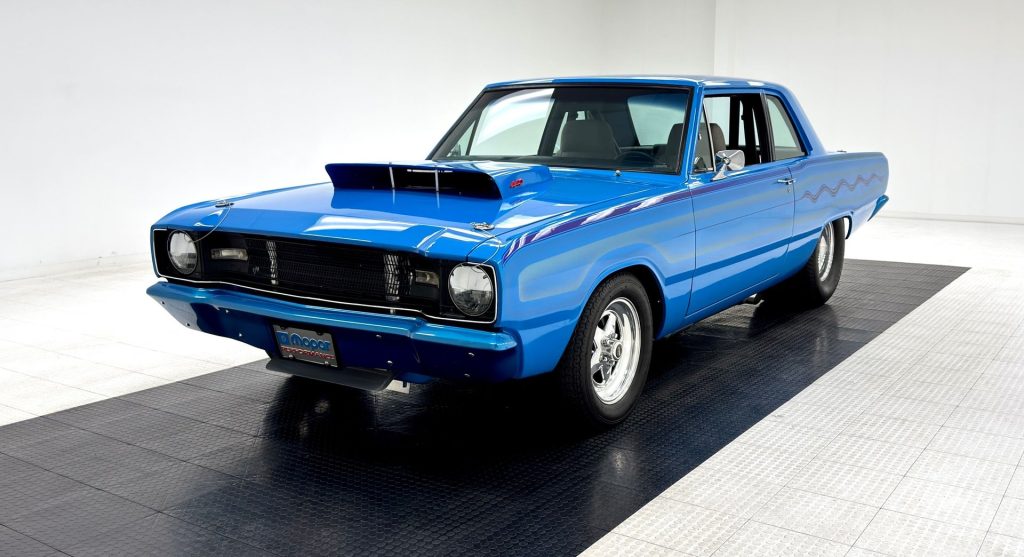
The Dodge Dart is an interesting example because its disappearance was tied more closely to product economics and market performance than to a single mechanical problem.
Dodge produced the modern Dart from 2013 through 2016, but the compact sedan did not become the long-term volume player FCA had hoped for. The manufacturer eventually discontinued it, leaving Dodge without a compact sedan.
That mattered to rental fleets because compact sedans traditionally depend heavily on price, efficiency, and high-volume purchasing.
The Dart entered this crowded segment with multiple powertrains, including a 2.0-liter Tigershark four-cylinder producing 160 horsepower and 148 lb-ft of torque, a 1.4-liter turbo producing 160 horsepower and 184 lb-ft, and a 2.4-liter engine producing 184 horsepower and 174 lb-ft.
The variety was technically attractive, but complexity is not automatically an advantage for a fleet buyer. Rental companies generally prefer vehicles that can be ordered in large numbers with predictable specifications, straightforward maintenance requirements, and strong resale prospects.
A model with relatively limited market momentum can become harder to justify when another compact sedan offers stronger demand or better fleet economics.
The Dart’s production ended after the 2016 model year. Dodge’s own historical information confirms that the model was discontinued in 2016 and is no longer produced.
There was also a broader industry problem working against it. Customers were increasingly moving toward crossovers, while manufacturers were becoming more selective about investing in traditional compact sedans.
Once the Dart disappeared from production, rental operators had little reason to continue building a long-term fleet strategy around a vehicle they could no longer purchase new.
The Dart therefore became another example of a car that disappeared from rental fleets primarily because the business case for continuing it disappeared first.
5. Ford Fiesta
The Ford Fiesta once made sense for rental fleets because it was inexpensive, compact, and economical, but those advantages became less compelling as American rental customers increasingly favored larger vehicles.
Ford ended U.S. Fiesta production after the 2019 model year as part of a broader strategy to reduce its traditional car lineup and concentrate on trucks and SUVs. Ford’s own U.S. site now identifies the Fiesta as a discontinued model.
For a rental company, the disappearance of the model from Ford’s new-vehicle pipeline was a decisive problem. Fleets need a steady supply of replacement vehicles because rental cars accumulate mileage much faster than privately owned cars.
Hertz’s current filings show that fleet costs depend heavily on acquisition prices, disposal values, vehicle mix, and holding periods. A discontinued model eventually becomes difficult to maintain as a standardized fleet category simply because newer replacements are unavailable.
The Fiesta itself was genuinely efficient. Ford’s 2019 product information lists the car with a 12.4-gallon fuel tank and five-passenger seating, while its compact dimensions made it easy to maneuver in congested areas.
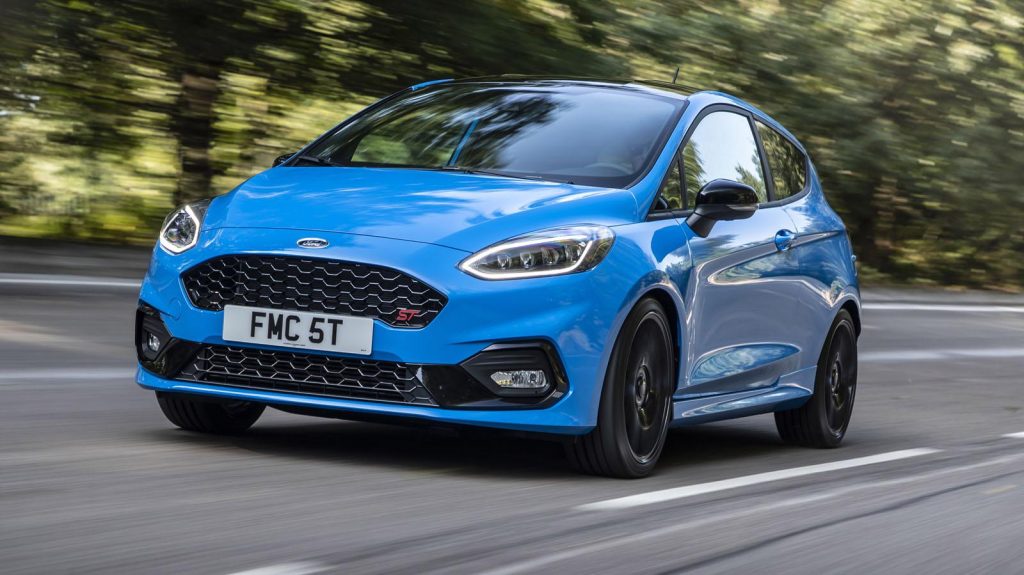
The problem was customer perception as much as economics. A small subcompact sedan or hatchback can be cheap to operate, but rental customers frequently have luggage, multiple passengers, and highway-driving requirements. A slightly larger compact car or crossover can therefore be easier to sell as a rental upgrade.
That shift explains why the Fiesta gradually disappeared from major fleet inventories. It was not necessarily a bad rental car. It simply became harder to justify buying a small sedan or hatchback when the manufacturer itself was moving toward SUVs and trucks.
6. Hyundai Accent
The Hyundai Accent was almost tailor-made for the traditional economy-rental category. It was inexpensive, compact, relatively fuel-efficient, and simple enough to serve as basic transportation for customers who cared more about price than luxury.
Yet Hyundai discontinued the Accent in the U.S. for the 2023 model year, explicitly citing its expanded SUV lineup as the reason. The Venue became Hyundai’s entry-level model instead.
That decision illustrates why rental fleets stopped buying the Accent. It was not because Hyundai suddenly declared the car unsuitable for transportation. Rather, the company determined that its product mix made more sense with an entry-level SUV alongside the Elantra and Sonata sedans.
The sales trajectory also showed the pressure facing the model. Hyundai reported just 17,823 Accent sales in the U.S. during 2022, down 9 percent from 19,614 in 2021. That was a relatively small volume compared with the company’s SUVs and larger sedans.
Discontinued economy cars also create a fleet management challenge for rental companies. When a manufacturer drops a model from its lineup, rental operators can no longer continue ordering new vehicles that match their existing fleet. As older cars are retired, companies must gradually replace them with different models.
It must eventually replace them with another model, and that transition affects everything from parts inventories to maintenance procedures and customer expectations.
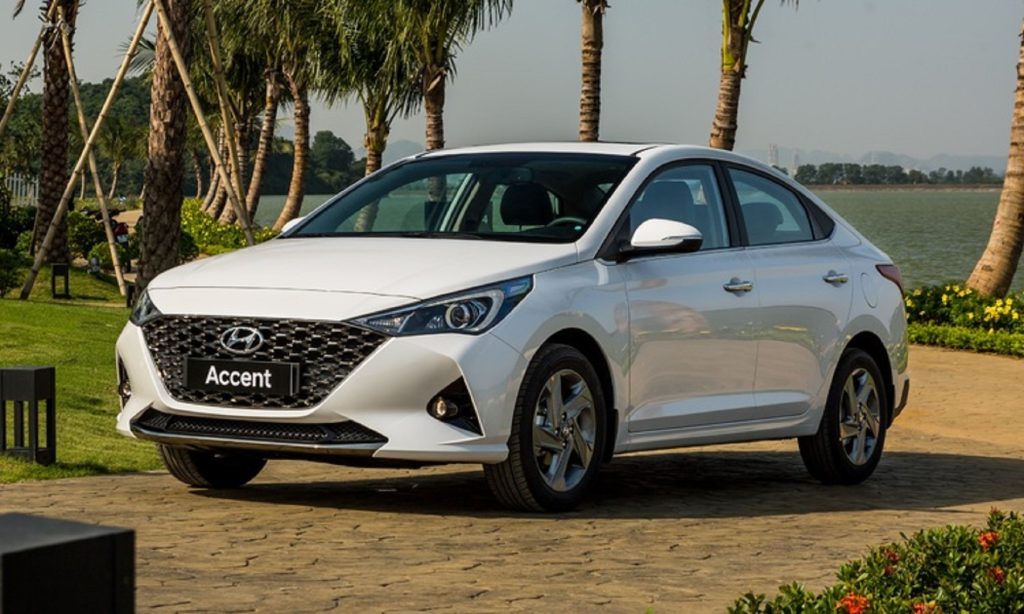
The Accent also faced a broader customer-demand problem. A renter carrying luggage or traveling with several people may prefer a small crossover because it offers a higher seating position and more flexible cargo area without necessarily costing dramatically more.
There were safety-related recalls involving later Accents as well, including a 2019-2022 seat-belt pretensioner recall, although that should not be confused with the primary reason for the model’s discontinuation. Hyundai’s stated reason was the company’s expanded SUV lineup.
7. Toyota Yaris
The Toyota Yaris was once a logical economy-car candidate for rental fleets because it was inexpensive to operate, easy to maneuver, and efficient enough for customers covering long distances.
Toyota’s own 2020 fleet guide listed the Yaris among its fleet vehicles, while the company’s national daily-rental program specifically included the Yaris Sedan and Liftback. The program required rental-risk vehicles to remain in service for at least six months or 12,000 miles, showing that Toyota actively supported the model for rental use.
The problem was that the Yaris became a shrinking part of Toyota’s U.S. strategy. Toyota confirms that 2020 was the final model year for both the Yaris and Yaris Hatchback in the United States.
That matters considerably to rental operators. A fleet can tolerate an aging model when an automaker continues producing replacement vehicles, but once production ends, the fleet must eventually transition to something else.
Toyota’s 2021 fleet information even listed the Yaris as unavailable for fleet orders, while the Corolla, RAV4, and other models remained available.
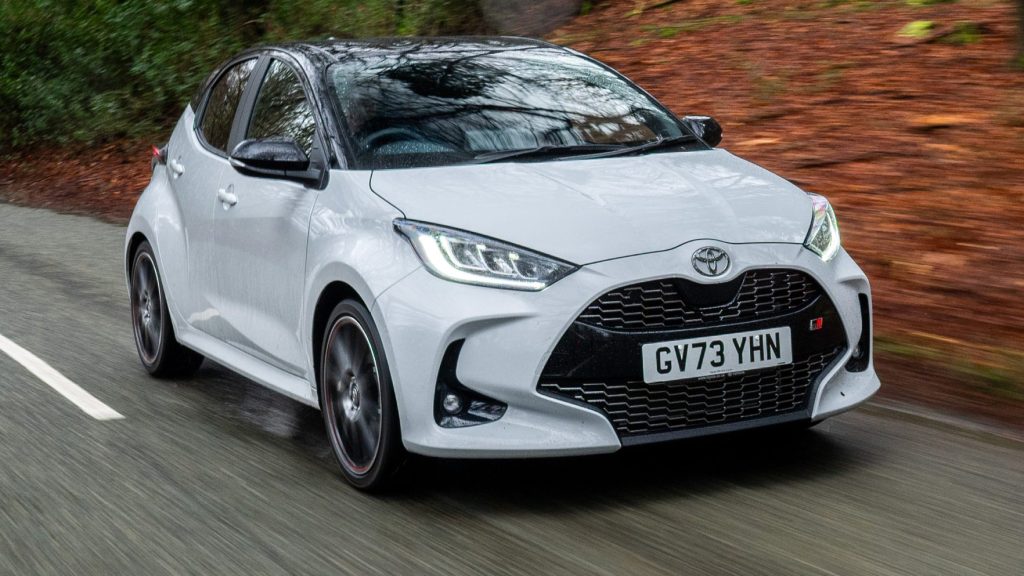
The Yaris itself had attractive operating characteristics. The 2020 sedan used a 1.5-liter four-cylinder producing 106 horsepower and 103 lb-ft of torque, while Toyota estimated up to 40 mpg highway with the automatic transmission. The hatchback was only 161.6 inches long, with a 32.2-foot turning circle, making it exceptionally easy to position in tight parking areas.
So why did rental fleets stop buying it? Primarily because Toyota stopped offering it for the U.S. market. As rental companies replaced aging Yaris examples, newer Corolla, Corolla Hatchback, and crossover products offered a more sustainable path for fleet renewal.
8. Nissan Versa Note
The Nissan Versa Note was another small car that made sense when rental companies wanted inexpensive transportation in a compact package.
The 2019 model provided seating for five and 18.8 cubic feet of cargo space behind the rear seats, expanding to 38.3 cubic feet with those seats folded. Its 1.6-liter engine could deliver up to 39 mpg highway, according to Nissan.
Nissan also clearly recognized the importance of the rental channel. Its 2019 fleet-sales program specifically listed the Versa Note among vehicles eligible for certified daily-rental sales assistance, with a $500 daily-rental incentive. That is direct evidence that Nissan was actively targeting rental operators with the model at the time.
The Versa Note eventually became difficult for fleets to justify because Nissan discontinued it in the United States. Nissan’s current discontinued-vehicle information confirms that the Versa Note is no longer in production and points customers toward newer alternatives such as the Versa and Sentra.
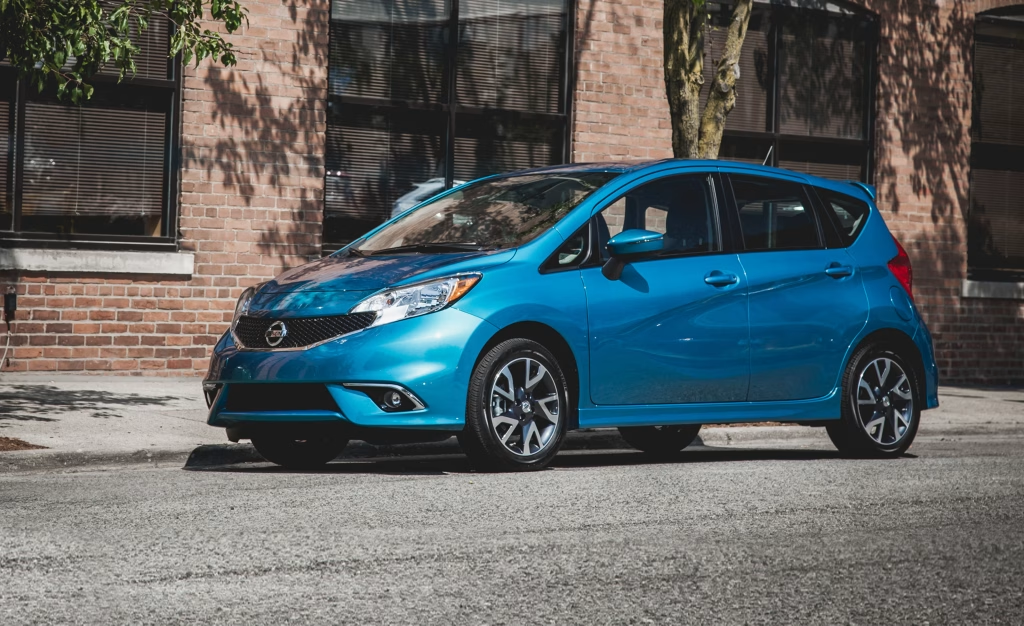
There was nothing inherently impractical about its dimensions. At 163.7 inches long and 66.7 inches wide, it was extremely easy to maneuver and park. Its hatchback configuration also made it more useful than its small exterior footprint might suggest.
The issue was the changing economics of the U.S. small-car market. Rental companies need vehicles they can replenish consistently, and automakers need enough consumer demand to justify continued production. Once Nissan removed the Versa Note from the lineup, fleet operators had little reason to build their future purchasing around it.
Its disappearance reflects a common pattern in rental fleets. A small car can remain practical and useful for years, yet still disappear from rental lots when the manufacturer determines that another model makes better business sense over the long term.
9. Honda Fit
The Honda Fit was an unusually useful little car for rental fleets because its exterior footprint was tiny while its interior packaging was remarkably flexible.
The 2020 Fit measured just 161.4 inches long and 67.0 inches wide, yet Honda’s Magic Seat system allowed the rear seats to fold in multiple ways. That gave a small rental car more practical cargo flexibility than its dimensions suggested.
Its final U.S. model year was 2020. Honda decided not to bring the redesigned global Fit to America and instead increased production of the related HR-V crossover. That decision effectively removed one of the most space-efficient subcompact cars from the U.S. rental-car pipeline.
For fleet operators, the replacement decision made business sense. Rental companies need vehicles that match what customers are asking for, and the rising popularity of crossovers gave Honda a stronger reason to allocate production capacity toward the HR-V rather than continue offering the Fit.
A rental customer might appreciate the Fit’s clever interior, but a crossover generally provides the elevated seating position and SUV-like appearance that had become increasingly popular.
The Fit was also exceptionally economical. Its 1.5-liter four-cylinder produced 128 horsepower and 113 lb-ft of torque with the CVT, while EPA estimates reached 33 mpg city and 40 mpg highway. The manual version produced 130 horsepower and 114 lb-ft of torque.
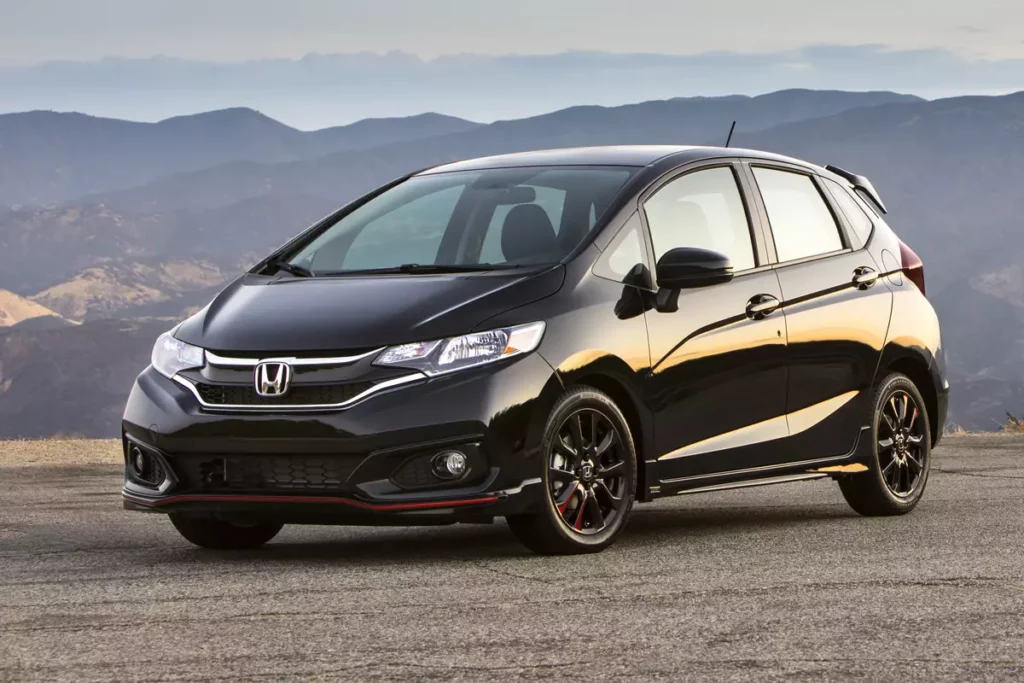
None of those figures made the Fit a poor rental car. In fact, its low purchase price, efficiency, and compact dimensions were useful fleet attributes. The problem was future availability. Once Honda stopped selling it in America, rental companies could no longer build a fresh supply around the model.
Its disappearance therefore reflects a change in what the rental market wanted rather than a fundamental failure of the Fit itself.
10. Volkswagen Golf
The Volkswagen Golf was not a typical economy rental car, but it offered several qualities that could appeal to fleet operators. Its compact dimensions made it easy to maneuver, while the hatchback body provided useful cargo space. It also delivered stronger performance than many smaller economy cars.
The final regular Golf sold in the United States was the 2021 model, after Volkswagen ended U.S. production and shifted its American strategy toward SUVs while retaining the Golf GTI and Golf R.
The 2021 Golf used a 1.4-liter turbocharged four-cylinder producing 147 horsepower and 184 lb-ft of torque. It was available with either a six-speed manual or an eight-speed automatic and remained front-wheel drive.
For rental companies, the Golf’s strongest attribute was packaging. At 167.6 inches long and 70.8 inches wide, it was easy to maneuver while offering 17.4 cubic feet of cargo capacity with all seats in place. Folding the rear seats increased maximum cargo capacity to 25.0 cubic feet.
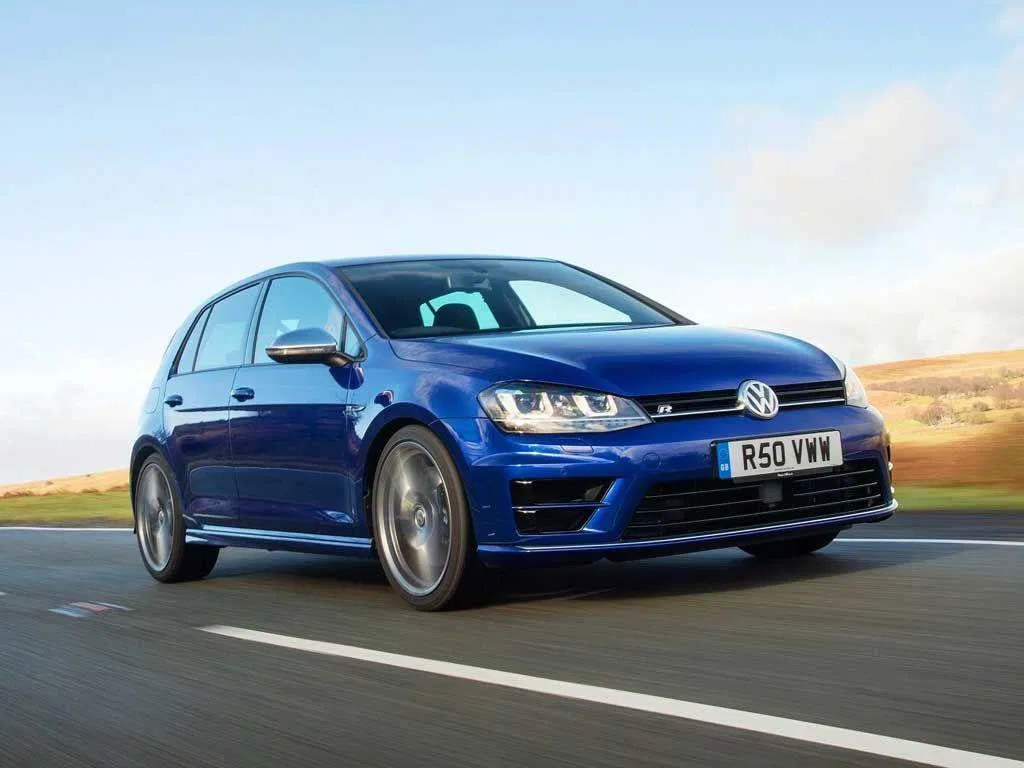
The main reason rental fleets moved away from the Golf was straightforward. Volkswagen discontinued the regular Golf in the U.S. as the company shifted its focus toward SUVs and crossovers. The Golf name remained in the American market through the performance-focused GTI and Golf R, but the standard model was no longer part of the lineup.
That change created an awkward position for rental fleets. A GTI or Golf R could technically replace the Golf nameplate, but their higher performance, pricing, and positioning made them poor substitutes for a conventional fleet hatchback.
The Golf car, therefore, became another victim of the shrinking U.S. traditional-car market. Its practicality did not disappear, but the business case for continuing to purchase ordinary Golf models for American rental fleets did.
