
Denver presents a demanding combination for an SUV. At roughly 5,280 feet above sea level, the city sits high enough for thinner air to affect naturally aspirated engine performance, while winter can bring snow, ice, and rapidly changing road conditions.
A suitable SUV therefore needs more than all-wheel drive. Ground clearance, traction management, engine response, tire capability, and predictable handling all matter when roads become slippery or snow accumulates.
The best choices also need to remain practical for daily commuting, because Denver drivers often move between clear city streets and snowy mountain roads. These SUVs combine those characteristics with U.S.-market specifications and proven winter-oriented hardware.
1. Subaru Outback
The Subaru Outback is a natural fit for Denver drivers, where steep elevation changes and frequent snowfall can make winter driving more demanding. Its standard Symmetrical All-Wheel Drive provides power to all four wheels, while X-MODE helps enhance traction on snow, ice, and other low-grip surfaces.
Subaru also gives the 2025 Outback 8.7 inches of ground clearance in standard form, with the Wilderness reaching 9.5 inches. That extra space underneath becomes valuable when snow accumulates on residential streets or mountain roads.
Altitude is where the powertrain choice becomes particularly interesting. The standard 2.5-liter BOXER four-cylinder produces 182 horsepower and 176 lb-ft of torque.
Drivers who frequently climb from Denver toward higher elevations can instead choose the available 2.4-liter turbocharged BOXER, which produces 260 horsepower and 277 lb-ft.
Turbocharging can help maintain stronger engine response as elevation increases because the turbo compensates for some of the reduction in air density that naturally aspirated engines experience. Subaru pairs the turbo engine with the Outback’s standard AWD system.
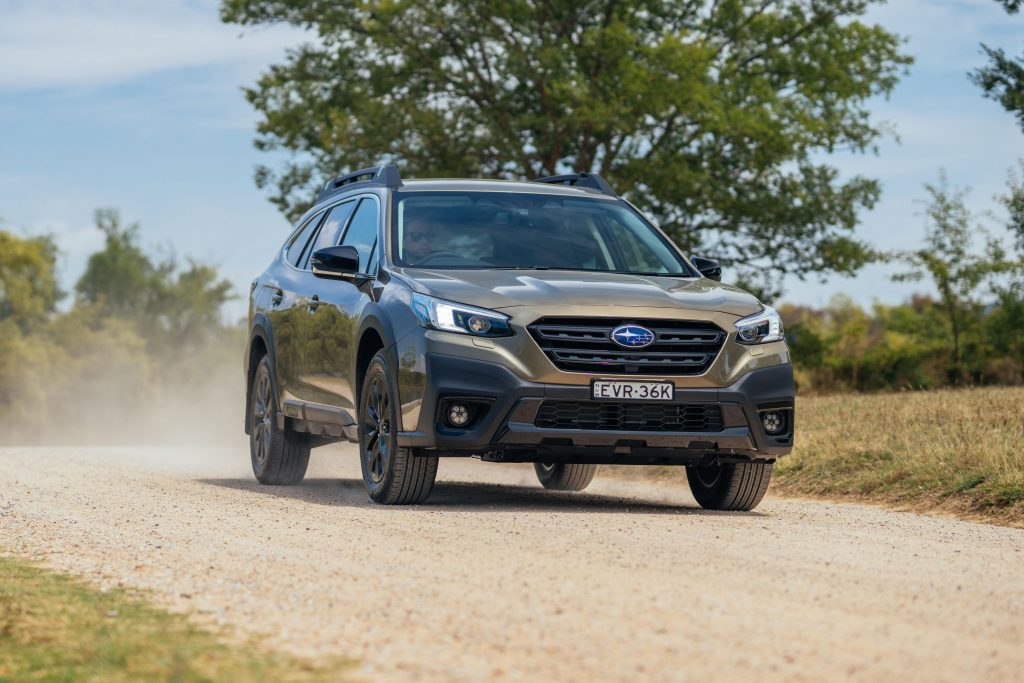
The Wilderness version adds another layer of winter usefulness. Its 9.5 inches of clearance, dual-function X-MODE, and all-terrain tires give it more ability when snow becomes deeper, or roads become rougher. The turbocharged Wilderness also produces 260 horsepower and 277 lb-ft of torque, giving it a meaningful advantage when climbing steep grades.
For Denver drivers who regularly combine city commuting with mountain travel, the Outback’s combination of clearance, AWD, and available turbocharged power makes it one of the most versatile choices in this group.
2. Subaru Crosstrek
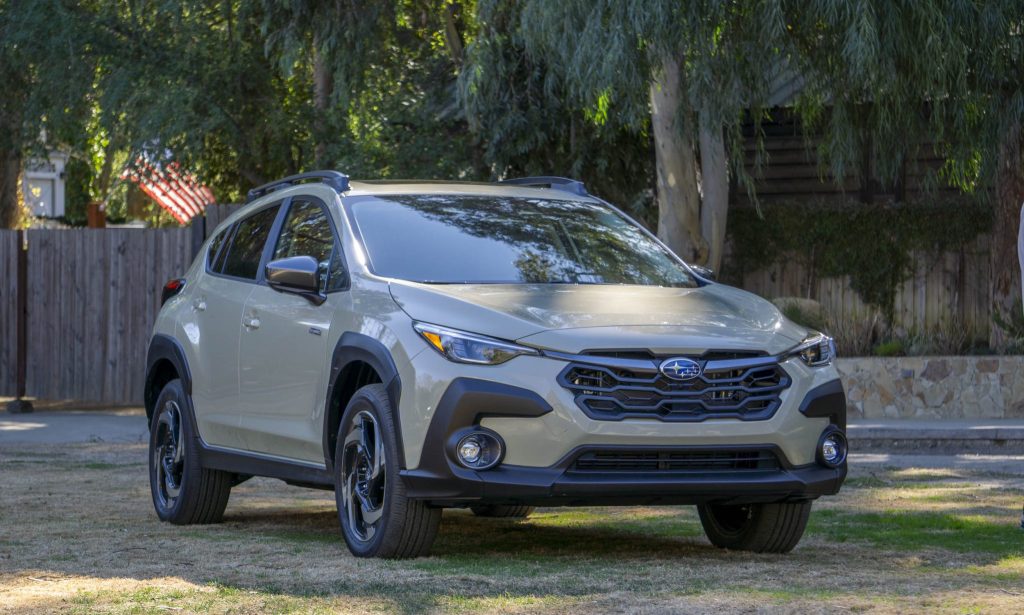
A smaller SUV can actually be the smarter choice in Denver when maneuverability matters as much as snow capability. The Subaru Crosstrek is only 176.4 inches long and 70.9 inches wide, giving it a relatively compact footprint while retaining the key hardware needed for winter driving.
Every 2025 Crosstrek comes with Subaru Symmetrical All-Wheel Drive, so buyers do not have to move into a more expensive trim simply to obtain all-wheel traction.
Its ground clearance is another major advantage. Standard Crosstrek models sit 8.7 inches above the ground, while the Wilderness raises that figure to 9.3 inches.
Subaru specifically positions the Crosstrek around slippery conditions, and its available dual-function X-MODE can optimize the drivetrain for conditions including deep snow, dirt, and mud.
The Wilderness adds all-terrain Yokohama tires and a front skid plate, making it particularly suited to drivers who regularly leave paved roads during winter.
There is also a useful engine distinction. The standard Crosstrek uses a 2.0-liter BOXER producing 152 horsepower and 145 lb-ft, while the Premium, Sport, Limited, and Wilderness versions use a 2.5-liter engine producing 182 horsepower and 178 lb-ft.
For Denver’s elevation, the larger engine is the more attractive choice because it starts with substantially greater output before altitude-related power loss is considered.
The Crosstrek’s compact dimensions can be just as useful as its drivetrain when navigating crowded Denver neighborhoods. A 35.4-foot turning circle also helps when maneuvering around parked vehicles, snow piles, and narrow spaces.
3. Toyota RAV4 Hybrid
For drivers who want winter traction without accepting the fuel consumption of a larger SUV, the Toyota RAV4 Hybrid is an especially sensible Denver choice.
Its hybrid powertrain produces 219 net combined horsepower, while the electronic all-wheel-drive system is standard on the RAV4 Hybrid. That combination is useful in a city where a vehicle may spend one day on dry pavement and the next dealing with fresh snow.
The RAV4 Hybrid also has enough clearance to avoid feeling vulnerable when snow accumulates. Toyota lists up to 8.6 inches of ground clearance depending on configuration, while independent specifications put the standard RAV4 around 8.4 inches. Either figure gives the vehicle considerably more space underneath than a typical sedan.
What makes the RAV4 Hybrid particularly interesting at Denver’s elevation is the way its electric motor contributes to propulsion. The gasoline engine does not have to handle every demand by itself, and the hybrid system can provide additional electric assistance during acceleration.
That does not eliminate the effects of altitude, but it gives the powertrain another source of propulsion beyond the gasoline engine.
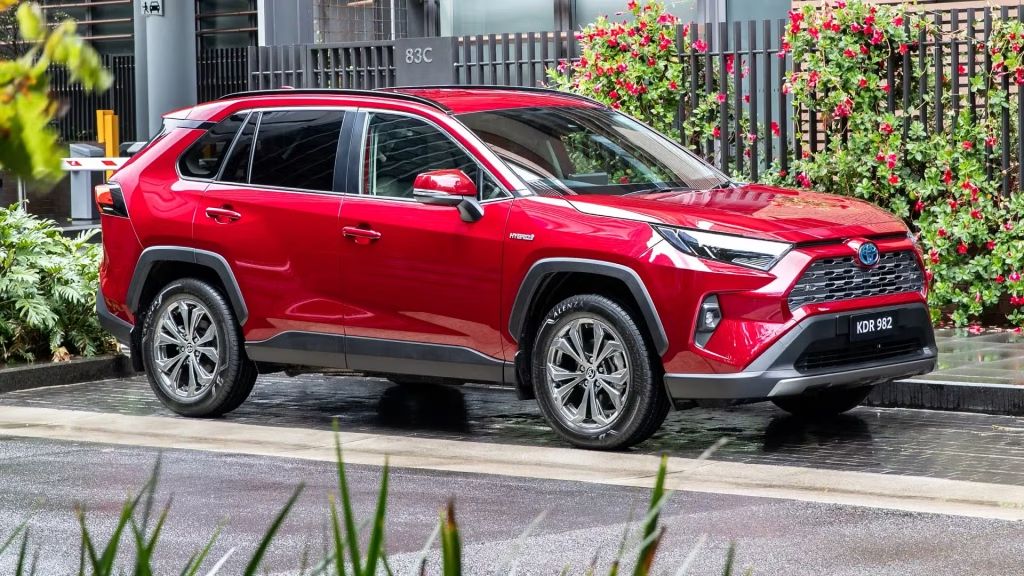
The dimensions are also reasonable for an urban SUV. The RAV4 measures 180.9 inches long and 73.0 inches wide, with a 36.1-foot turning circle. Its cargo area provides 37.5 cubic feet behind the second row and as much as 69.8 cubic feet with the seats folded.
Fuel economy adds another advantage. Toyota rates the 2025 RAV4 Hybrid at up to 39 mpg combined, making it possible to have AWD capability without moving into a thirsty, heavy SUV.
4. Mazda CX-50
Denver drivers who regularly transition from city pavement to snowy foothill roads need an SUV that feels composed rather than merely capable on paper.
The Mazda CX-50 fits that role with standard all-wheel drive, useful ground clearance, and a chassis designed around controlled road manners. Its 8.3 inches of minimum clearance on several 2025 configurations gives it a useful buffer when snow starts collecting on the road surface.
The standard 2025 CX-50 uses a 2.5-liter naturally aspirated four-cylinder producing 187 horsepower and 185 lb-ft of torque. Mazda pairs it with a six-speed automatic and standard all-wheel drive.
For drivers who want more muscle for steep grades, the available turbocharged 2.5-liter engine raises output substantially, making the turbo version more attractive for frequent mountain travel.
One of the CX-50’s less obvious advantages is its approach to difficult terrain. Mazda lists a 17.8-degree approach angle and a 24.1-degree departure angle on the base configuration, figures that help when entering snow-covered driveways or navigating uneven surfaces.
Its 36-foot turning circle also keeps it reasonably maneuverable despite being larger than a Crosstrek or RAV4.
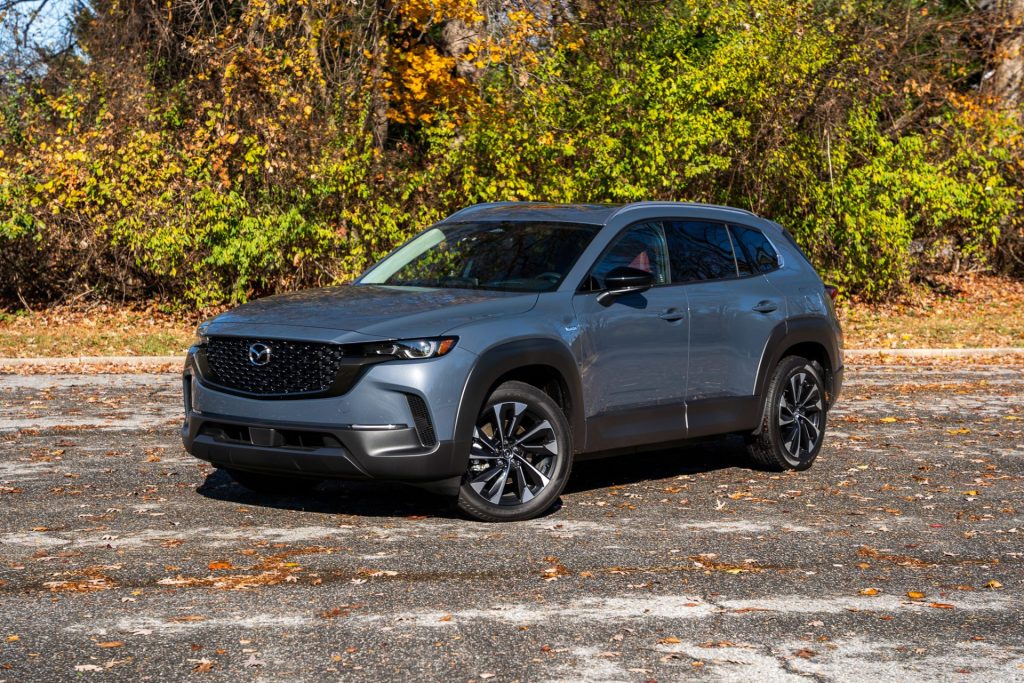
The CX-50 measures 185.8 inches long and 75.6 inches wide without mirrors. That makes it wider than several other SUVs on this list, so drivers who frequently park in very tight city spaces may prefer something smaller. In exchange, it provides 31.4 cubic feet of cargo capacity behind the second row and 56.3 cubic feet with the rear seats folded.
For Denver’s combination of elevation, snow, and mountain access, the CX-50 is compelling because it does not rely on one feature alone. AWD supplies traction, clearance provides extra snow-running room, and the available turbo engine gives drivers a stronger option for climbing at altitude.
5. Honda CR-V
Denver’s winter roads do not always require a rugged SUV. Sometimes the better answer is a vehicle that combines sensible dimensions, predictable traction, and an efficient powertrain.
The Honda CR-V fits that description, particularly in an AWD configuration. Honda’s 2025 U.S. specifications show Real Time AWD with Intelligent Control System available across the lineup, while AWD versions have 8.2 inches of ground clearance.
The gas-powered CR-V uses a 1.5-liter turbocharged four-cylinder producing 190 horsepower and 179 lb-ft of torque. That turbocharged setup is relevant at Denver’s elevation because naturally aspirated engines generally lose more power as air density falls.
The turbocharger helps the engine maintain stronger output than a comparable naturally aspirated engine would at the same altitude. Honda also gives the CR-V AWD models a snow driving mode, which adjusts the vehicle’s systems for slippery conditions.
The CR-V measures 184.8 inches long and 73.5 inches wide. That places it firmly in the compact SUV category, giving it enough cabin space for passengers and winter equipment without becoming excessively large for city driving.
AWD models also provide 39.3 cubic feet of cargo space behind the rear seats and 76.5 cubic feet with the seats folded in the gas-powered configurations.
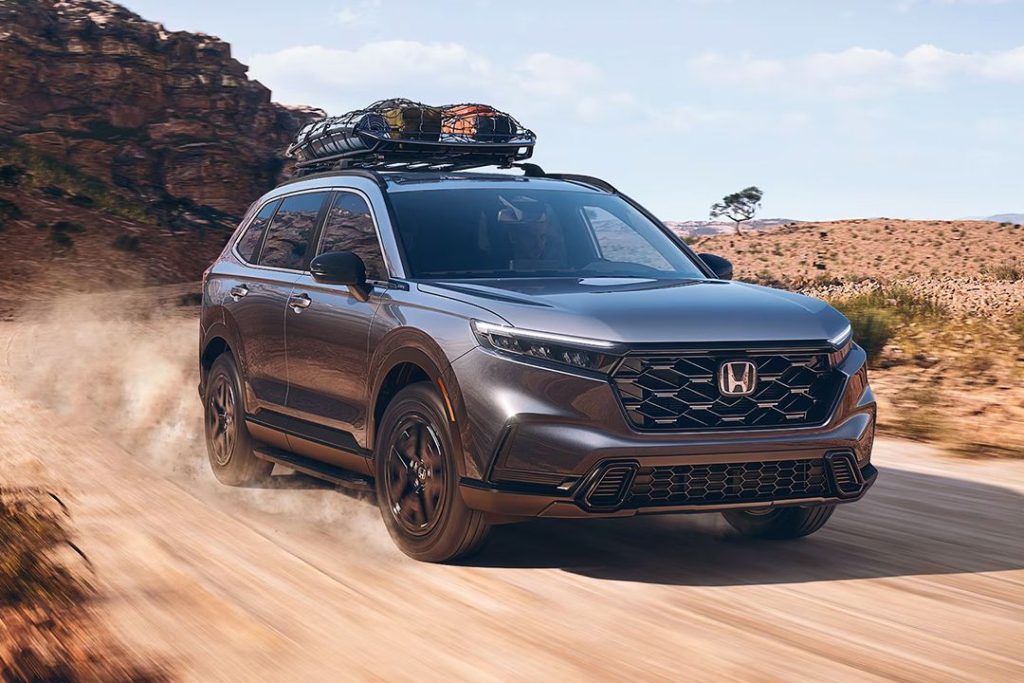
There is another option for buyers focused on efficiency. The CR-V Hybrid produces 204 total system horsepower, and its AWD configuration is rated at 37 mpg combined. Its hybrid system also delivers 247 lb-ft of traction-motor torque, giving it a different character from the gas model.
For Denver commuters who want a comfortable daily SUV rather than a specialized off-road machine, the CR-V provides a well-rounded winter package.
6. Toyota Highlander Hybrid
When winter driving involves both Denver commuting and regular trips into the mountains, having more passenger and cargo capacity can be worth the additional size.
The Toyota Highlander Hybrid brings three-row seating, standard all-wheel drive, and 8 inches of ground clearance, making it a practical choice for families that need more than a compact crossover can provide.
Its 2.5-liter four-cylinder hybrid powertrain produces 243 horsepower, with Toyota’s electric all-wheel-drive system sending power to the rear axle when needed.
The Highlander Hybrid is rated at about 35 mpg combined, which is notable for a three-row SUV. Its hybrid system also reduces the need to rely entirely on the gasoline engine for propulsion, a useful characteristic when climbing grades around Colorado.
Size is the main trade-off. The Highlander Hybrid measures 194.9 inches long and 76 inches wide, so it requires more space than the smaller SUVs already covered. That extra footprint comes with genuine utility, though.
Toyota’s U.S.-market specifications list seating for up to seven passengers, while cargo capacity reaches 48 cubic feet behind the second row and 84 cubic feet behind the front seats when the rear seating is folded.
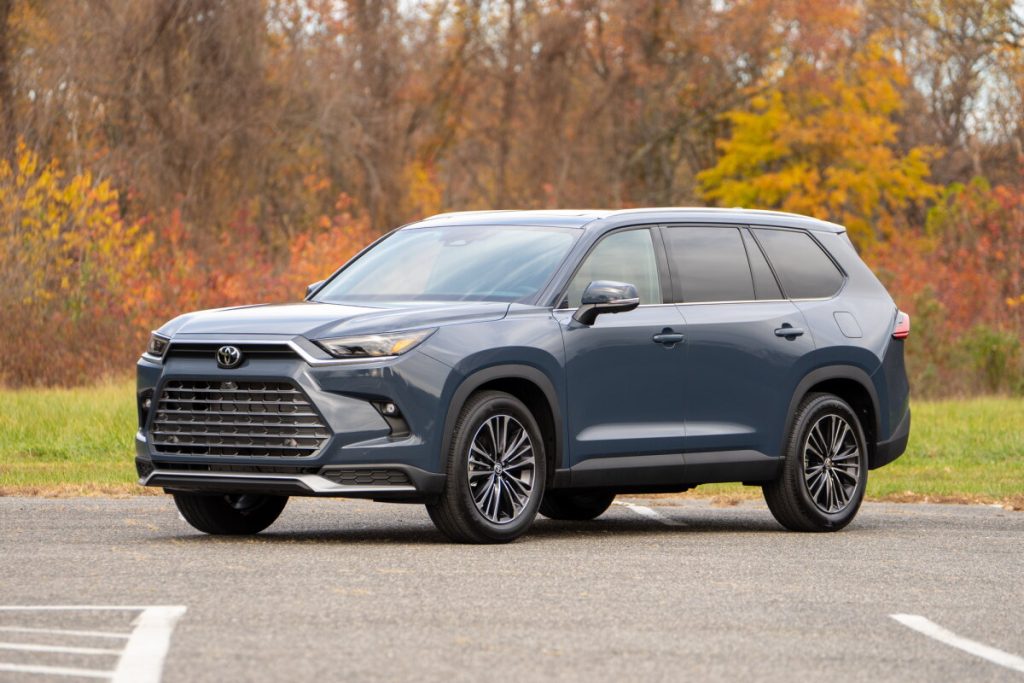
The 8-inch minimum ground clearance is not class-leading, but it gives the Highlander enough height for ordinary snowy roads and residential streets after moderate snowfall. Its larger body can also provide a more substantial cabin for passengers wearing bulky winter clothing.
The Highlander Hybrid therefore makes the most sense for Denver households that value seating and cargo space alongside winter traction. It is not the smallest SUV here, but its combination of AWD, hybrid efficiency, and three-row practicality gives it a distinct advantage for larger families.
7. Subaru Forester
The Subaru Forester is particularly well suited to Denver because its winter equipment is not restricted to an expensive specialty trim. The 2025 Forester comes standard with Symmetrical All-Wheel Drive and 8.7 inches of ground clearance, giving it a strong foundation for snow-covered streets and icy roads.
Subaru’s available dual-function X-MODE can also provide dedicated settings for snow and deep snow, making the system more useful when traction becomes limited.
Altitude adds another consideration. The standard Forester uses a 2.5-liter horizontally opposed four-cylinder producing 180 horsepower and 178 lb-ft of torque.
That output is modest for an SUV of this size, but the engine’s naturally aspirated design is paired with a continuously variable transmission and standard AWD.
Drivers who regularly climb steep grades should remember that naturally aspirated engines can lose power as elevation rises because there is less oxygen available for combustion.
Where the Forester stands out is its combination of clearance and usable space. The 2025 model measures 183.3 inches long and 72.0 inches wide, while Subaru lists 106.6 cubic feet of passenger volume and up to 74.4 cubic feet of cargo capacity.
Those dimensions give it a spacious interior without pushing the vehicle into the bulky category occupied by larger three-row SUVs.
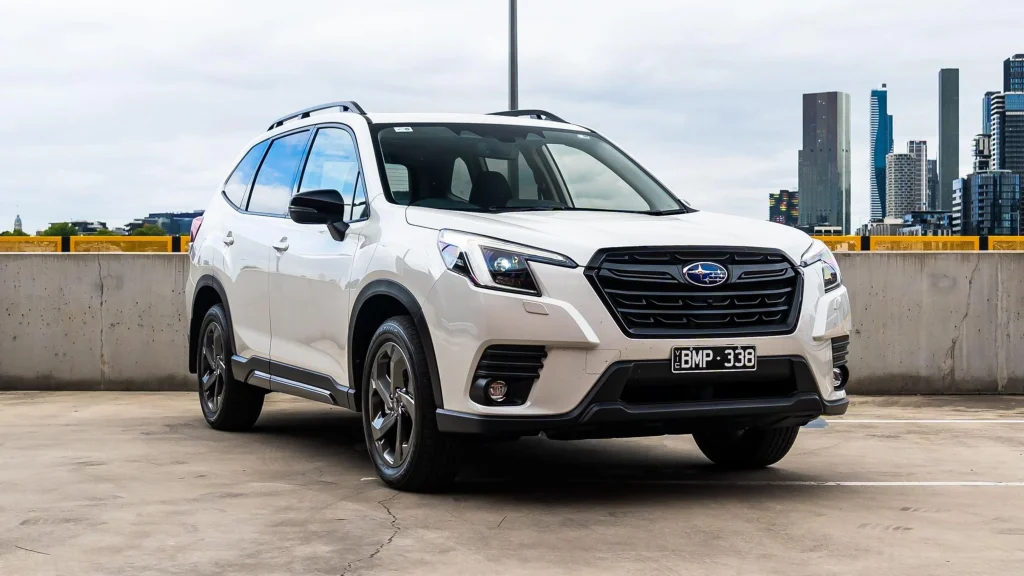
For particularly demanding snow conditions, the Forester Wilderness raises the ground clearance to 9.2 inches and adds enhanced X-MODE and underbody protection. That version also uses all-terrain tires, making it the more appropriate choice for drivers who frequently leave cleared roads.
The standard Forester, however, is enough for many Denver drivers. Its appeal comes from having AWD, substantial clearance, and winter-focused traction technology built into a relatively manageable package.
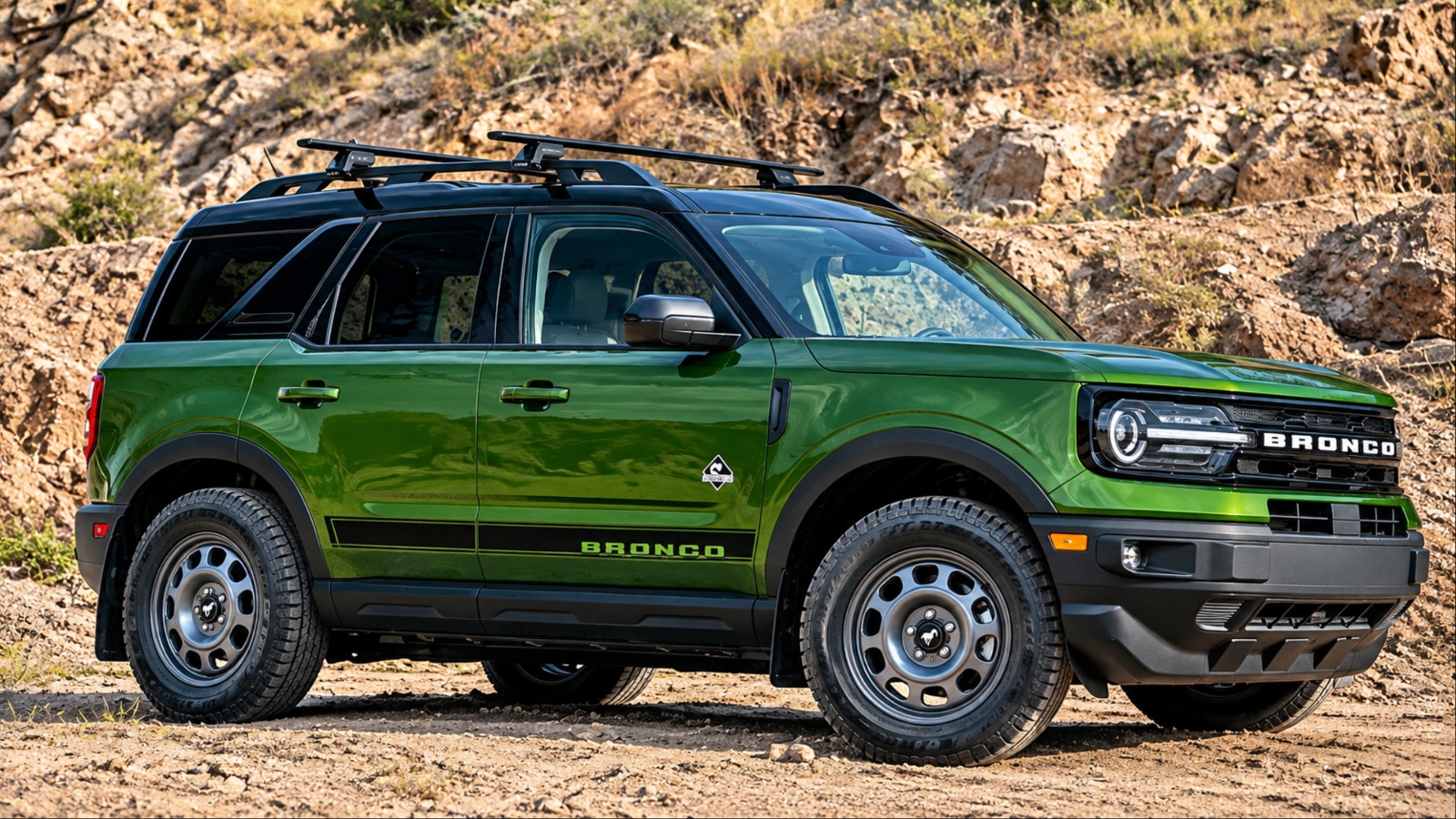
8. Ford Bronco Sport
The Ford Bronco Sport takes a different approach from the more conventional crossovers on this list. Rather than focusing primarily on everyday efficiency, it brings a compact footprint together with standard 4×4 capability and terrain-specific drive modes.
Ford lists Normal, Eco, Sport, Slippery, and Off-Road G.O.A.T. Modes on the 2025 Bronco Sport, giving the driver more control when conditions change from dry pavement to snow.
Its relatively short body is useful in Denver. The 1.5-liter version measures 173.1 inches long and 74.3 inches wide, while Ford lists 7.8 inches of minimum ground clearance in standard form.
The available Sasquatch package raises that figure to 8.8 inches on applicable 1.5-liter models. That compact length can make the Bronco Sport easier to position in crowded parking areas than larger SUVs.
The standard 1.5-liter EcoBoost produces 180 horsepower and is paired with an eight-speed automatic transmission and a standard 4×4. Buyers wanting considerably more performance can move to the Badlands, where a 2.0-liter EcoBoost produces 250 horsepower.
Ford also rates the standard 1.5-liter model at 25 mpg city and 30 mpg highway, while the 2.0-liter version is rated at 21 mpg city and 27 mpg highway.
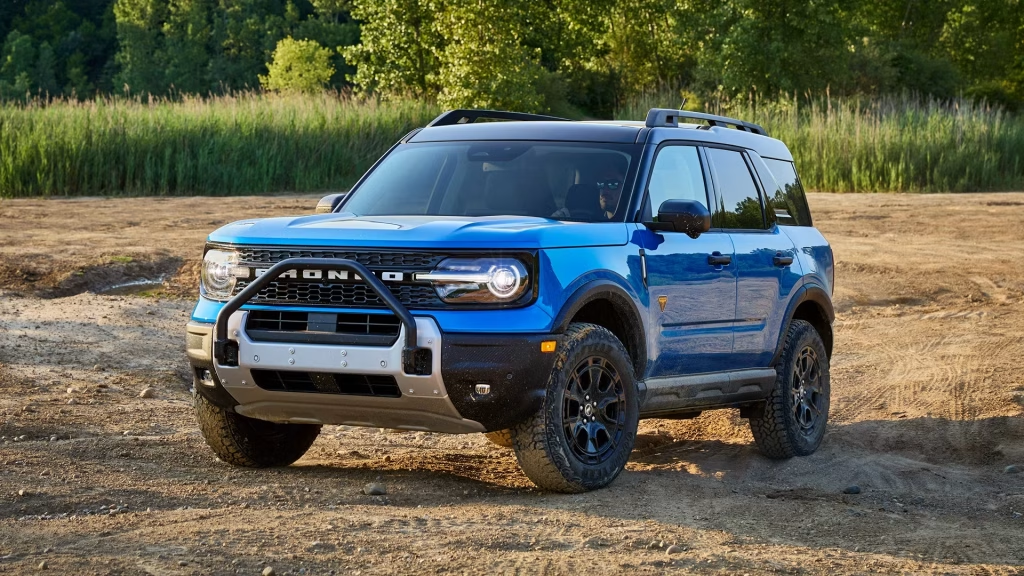
The Bronco Sport’s short exterior dimensions do not mean it is a tiny vehicle inside. Ford provides five-passenger seating, and cargo capacity reaches 65.2 cubic feet behind the first row in the 1.5-liter configuration.
For Denver, the Bronco Sport makes particular sense for someone who sees snow as more than an occasional inconvenience. Its standard 4×4 system, Slippery mode, and available higher-clearance equipment give it a more rugged character than most compact crossovers.
9. Subaru Ascent
For Denver families that need three rows without giving up winter capability, the Subaru Ascent is a compelling step up in size. Every 2025 Ascent comes with Symmetrical All-Wheel Drive, X-MODE, and 8.7 inches of ground clearance.
Subaru specifically designed X-MODE to optimize the AWD system on slippery surfaces, while higher trims add dual-function X-MODE with Snow/Dirt and Deep Snow/Mud settings.
The Ascent also avoids one common concern with larger SUVs at altitude: insufficient engine response. Its standard 2.4-liter turbocharged BOXER four-cylinder produces 260 horsepower and 277 lb-ft of torque.
Because it is turbocharged, the engine is better positioned to compensate for reduced air density at Denver’s elevation than a naturally aspirated engine producing similar power at sea level. Subaru pairs it with a Lineartronic CVT and standard AWD.
Its size is substantial, measuring 196.8 inches long and 76.0 inches wide. That makes it less convenient than a Crosstrek or Forester when parking in confined spaces, but the additional dimensions bring genuine family utility.
The Ascent offers seating for seven or eight passengers depending on configuration, along with up to 75.6 cubic feet of cargo volume behind the first row.
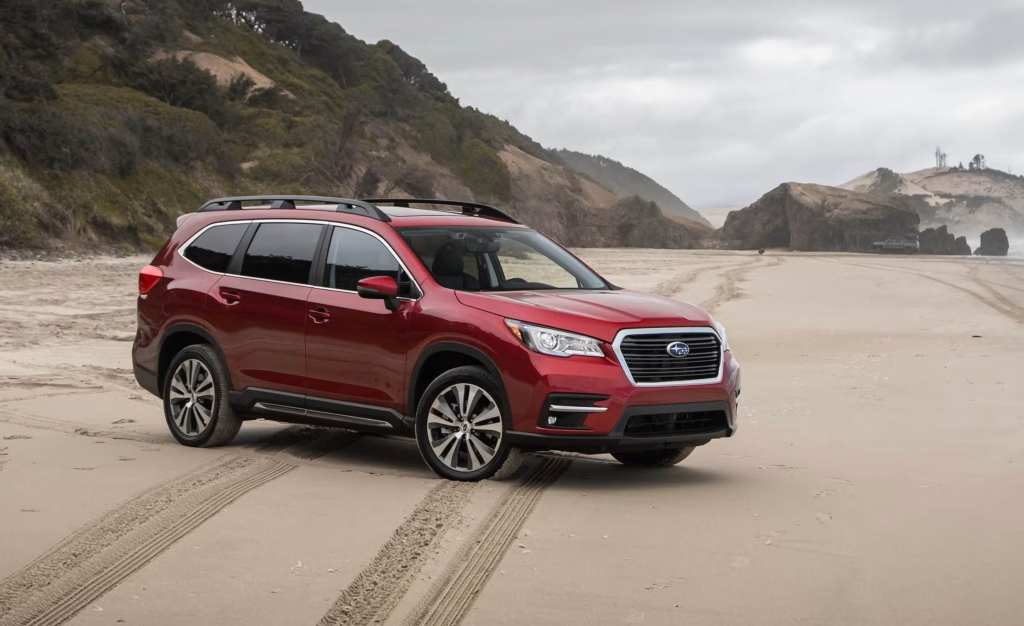
Snow capability is not its only strength. The Ascent can tow up to 5,000 pounds when properly equipped, which gives Denver owners the ability to haul trailers, recreational equipment, or other loads that smaller crossovers cannot handle.
For a family living at altitude, the Ascent stands out because its turbocharged engine, standard AWD, and generous clearance are not optional extras reserved for a premium version. Those features are built into the basic formula.
10. Jeep Grand Cherokee
The Jeep Grand Cherokee brings a different kind of winter capability to Denver. Rather than being designed primarily as a fuel-efficient commuter crossover, it offers available 4×4 systems and Selec-Terrain traction management with a dedicated snow setting.
That makes it particularly interesting for drivers who regularly encounter snow on steep roads or travel beyond the city into Colorado’s mountain terrain.
The 2025 Grand Cherokee’s available 3.6-liter Pentastar V6 produces 293 horsepower and 260 lb-ft of torque in U.S. specifications, giving the SUV substantially more power than many compact crossovers. The V6’s output is useful when carrying several passengers, climbing grades, or maintaining momentum on mountain roads.
The important distinction is that horsepower alone does not determine altitude performance, but having a healthy power reserve can make a naturally aspirated SUV feel less strained as elevation rises.
Ground clearance is another reason the Grand Cherokee deserves consideration. Depending on configuration and suspension setup, Jeep’s four-wheel-drive versions can offer significant clearance, while the available Quadra-Lift air suspension can raise the vehicle for more demanding terrain.
Jeep also offers multiple 4×4 systems, allowing buyers to match the vehicle to their intended use rather than treating every Grand Cherokee as identical.
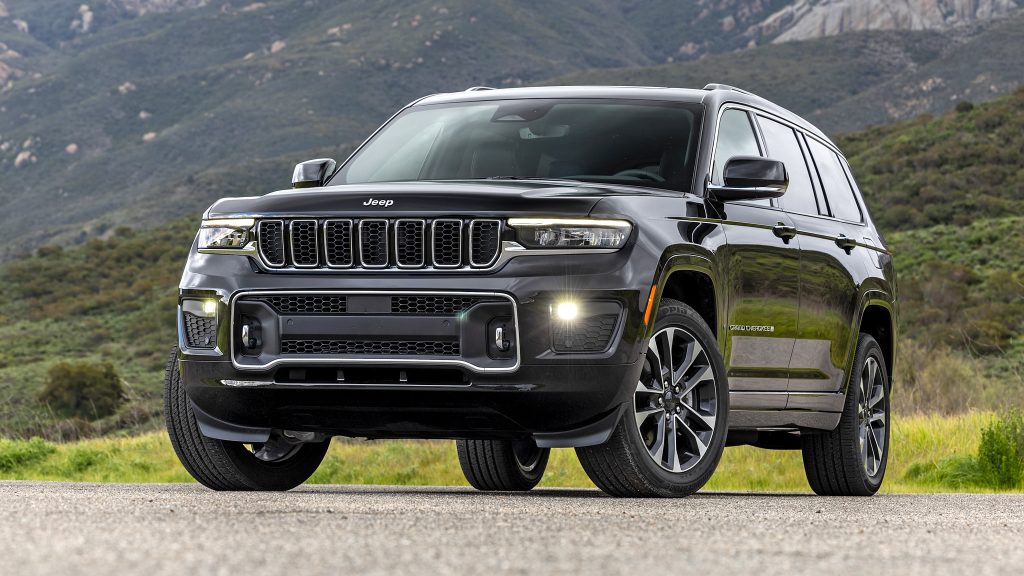
The trade-off is size. The Grand Cherokee measures roughly 193.5 inches long and 77.9 inches wide in standard two-row form, making it considerably larger than the Crosstrek or Bronco Sport. That extra width is noticeable in crowded parking areas, but it also creates a more substantial cabin and useful cargo capacity.
For Denver drivers who spend as much time heading toward the mountains as they do commuting through the city, the Grand Cherokee’s available 4×4 hardware and terrain-management systems give it a clear purpose.
