
New Orleans presents a particularly difficult environment for drivers because flooding can develop from intense rainfall, tropical storms, storm surge, and drainage limitations.
The City of New Orleans notes that much of the city is below sea level and that heavy rainfall can cause water to pool because drainage depends heavily on pumping infrastructure. Some low-lying areas can experience significant flooding when rainfall becomes intense.
That makes ground clearance, traction, water-fording capability, and vehicle configuration more relevant than simply choosing the biggest SUV available.
None of these vehicles makes floodwater safe to cross, and moving water can overwhelm a vehicle quickly. The best choices are those offering useful clearance and capability while still being practical for everyday New Orleans driving.
1. Ford Bronco
The Ford Bronco stands out for its published water-fording capability, a feature that can be especially useful when driving through flood-prone areas.
Depending on configuration, the 2026 Bronco can provide up to 33.5 inches of water-fording capability, while the Bronco Raptor is rated for up to 37 inches. Ground clearance ranges from 8.3 inches on the standard 2-door version to 13.1 inches on the Raptor.
That specification does not mean a driver should treat 33.5 inches of floodwater as a safe target. Ford specifically advises determining water depth before attempting a crossing and proceeding slowly.
Floodwater can hide potholes, damaged pavement, open drains, and debris, while moving water introduces forces that have nothing to do with the vehicle’s published fording rating.
For New Orleans, the Bronco’s advantage is its combination of clearance and four-wheel-drive capability. The available Sasquatch package raises ground clearance to 11.5 or 11.6 inches depending on body style and provides 35-inch tires. The Badlands configuration reaches 10.5 inches of clearance.
The standard 2.3-liter EcoBoost produces 300 horsepower and 325 lb-ft of torque, while the available 2.7-liter V6 produces 330 horsepower and 415 lb-ft. The Raptor’s 3.0-liter V6 produces 418 horsepower and 440 lb-ft.
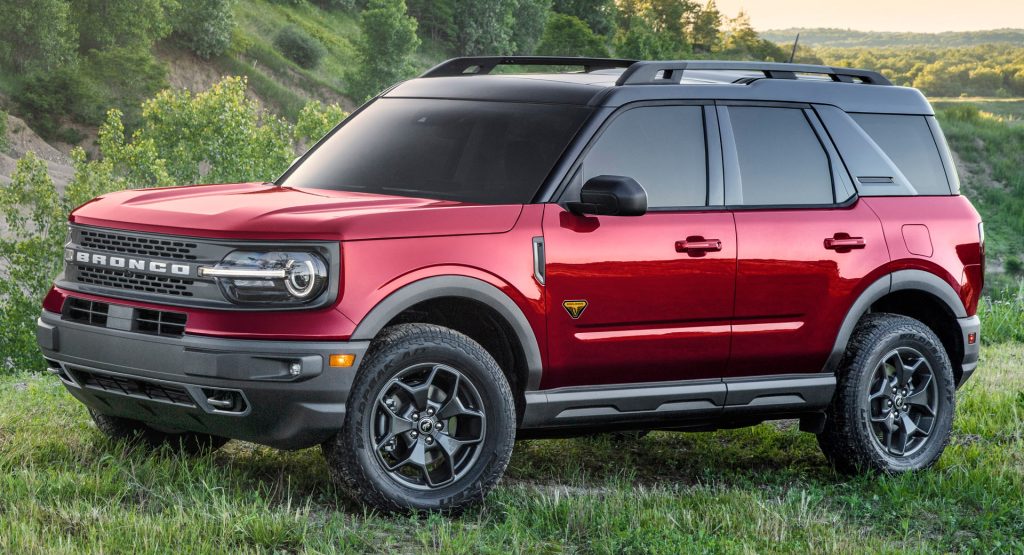
For a city where water can accumulate quickly, those physical capabilities give the Bronco a meaningful advantage over ordinary crossovers, provided the driver understands that no specification overrides flood-safety warnings.
2. Toyota 4Runner
The Toyota 4Runner makes sense for New Orleans drivers who want substantial clearance without moving into a full-size truck-based SUV. The 2026 model offers up to 10.1 inches of ground clearance, according to Toyota, giving the chassis useful height when streets become covered with standing water or other obstacles.
Its drivetrain choices are also important. Toyota offers the 4Runner with rear-wheel drive, part-time four-wheel drive, or full-time four-wheel drive depending on configuration. That gives buyers the ability to choose a setup appropriate for their normal driving conditions rather than forcing every version into the same configuration.
Power comes from a 2.4-liter turbocharged four-cylinder producing 278 horsepower and 317 lb-ft of torque in the standard i-FORCE configuration. The available i-FORCE MAX hybrid raises output to 326 horsepower and 465 lb-ft of torque.
The 4Runner’s body-on-frame construction and available off-road equipment make it particularly well suited to rough surfaces, but those qualities should not be confused with immunity to flood damage. Water can enter the cabin, differentials, electrical components, and other mechanical areas even when the vehicle has sufficient ground clearance.
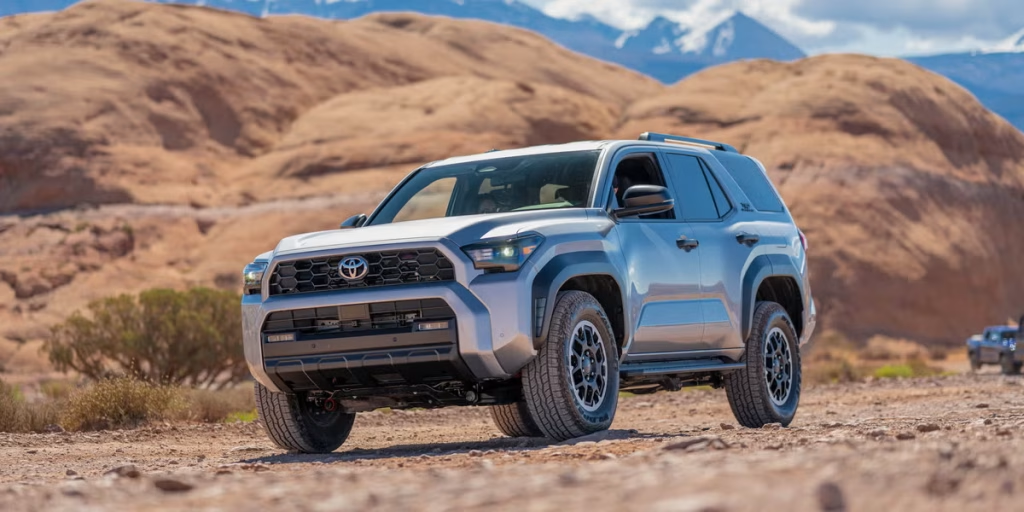
What makes the 4Runner attractive for New Orleans is therefore its combination of elevated ride height, available four-wheel drive, and substantial low-speed capability. Toyota also offers models with specialized off-road hardware, including the Trailhunter and TRD Pro.
For ordinary city use, however, the standard configuration may make more sense than paying for equipment designed primarily for trails. The important factor is having sufficient clearance and traction for the conditions you actually encounter, while avoiding flooded roads whenever authorities advise against travel.
3. Jeep Wrangler
For a vehicle that may encounter waterlogged streets, the Jeep Wrangler brings a level of factory-rated water capability that most conventional SUVs simply do not offer.
Jeep’s Trail Rated specifications list the Wrangler Rubicon with up to 33.6 inches of water-fording capability in its most capable configuration, while the Wrangler 4xe Rubicon is rated at 31.5 inches. Jeep also lists as much as 12.9 inches of ground clearance for the most capable Wrangler configuration.
Those numbers are useful for understanding the vehicle’s engineering, but they should not be interpreted as permission to drive through New Orleans floodwater.
Jeep explicitly warns that drivers should know the water depth and ensure it is consistent with the vehicle’s rating. Floodwater can conceal road damage, and moving water can push a vehicle sideways regardless of its four-wheel-drive system.
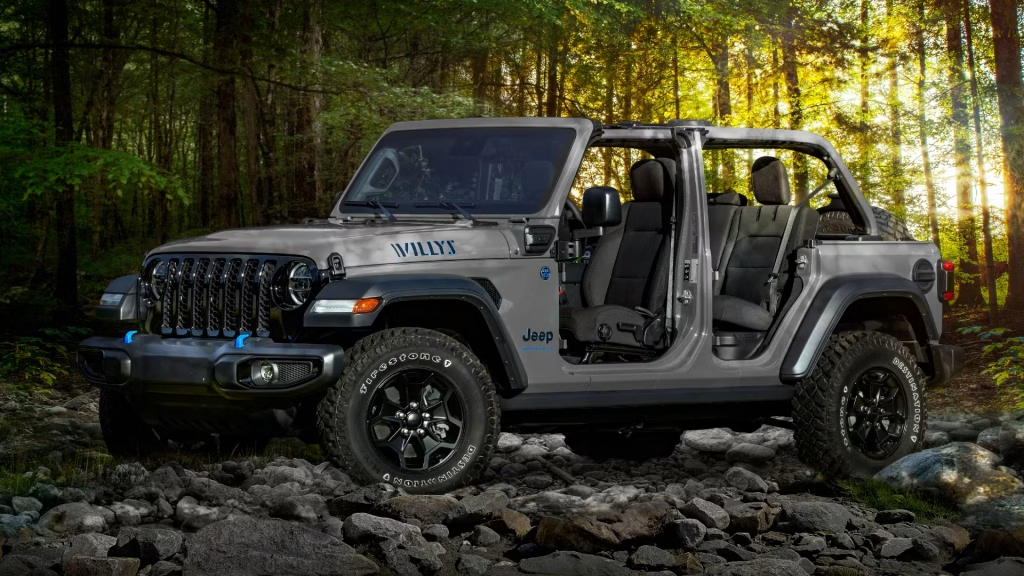
The Wrangler’s advantage comes from its purpose-built 4×4 hardware. The 2026 lineup offers the 3.6-liter Pentastar V6 with 285 horsepower and up to 260 lb-ft of torque, while the available 2.0-liter turbocharged engine produces up to 270 horsepower and 295 lb-ft of torque. The 392 uses a 6.4-liter V8 producing 470 horsepower and 470 lb-ft.
For everyday New Orleans use, the less extreme versions may actually make more sense. You gain substantial clearance and four-wheel-drive capability without necessarily choosing the most expensive off-road configuration.
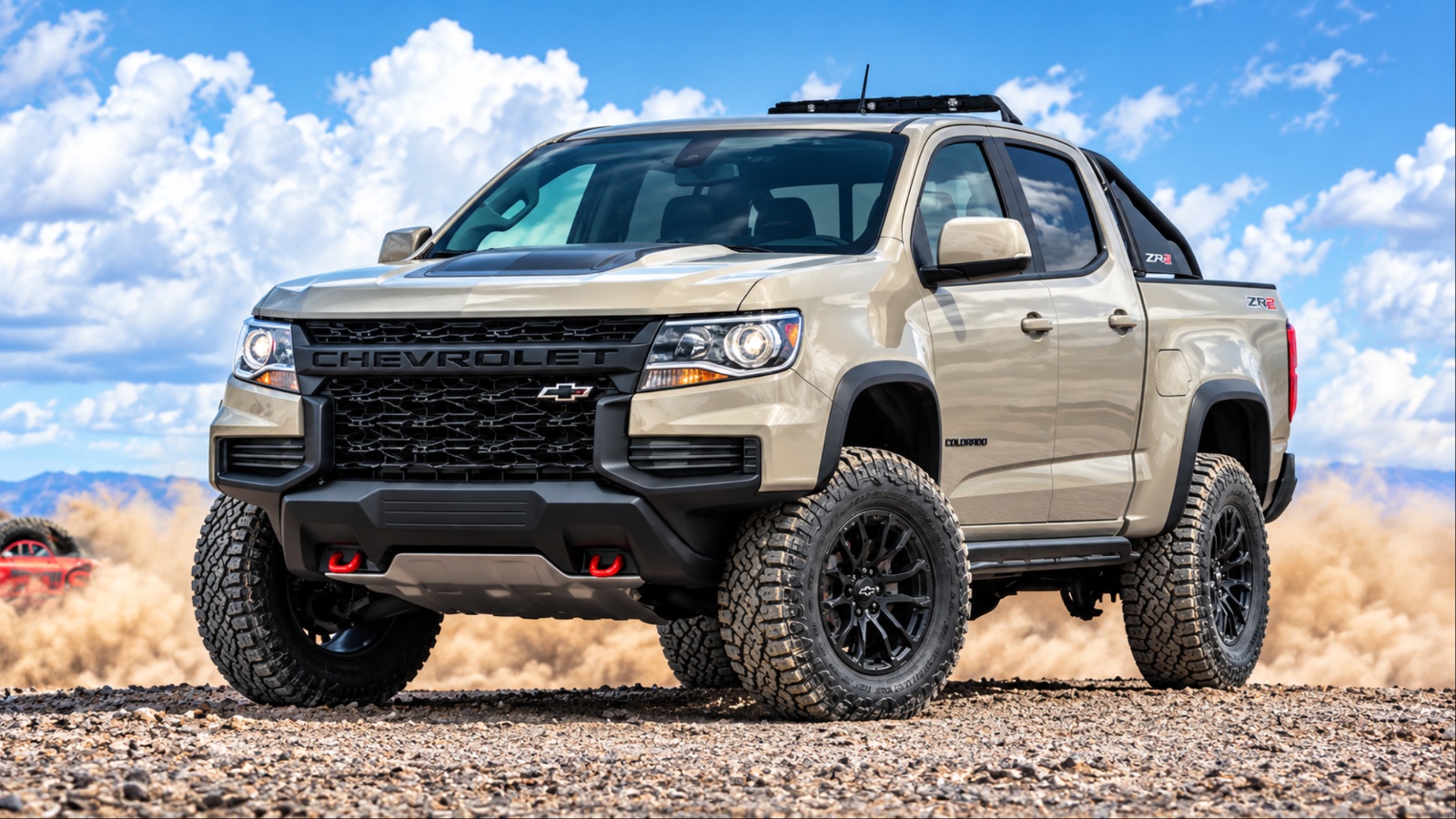
4. Chevrolet Colorado ZR2
The Chevrolet Colorado ZR2 approaches flood-prone driving from a different direction. Rather than being designed primarily as a high-clearance SUV, it is a midsize pickup with factory suspension and tire equipment intended for demanding terrain.
Chevrolet’s 2026 Colorado ZR2 uses the 2.7-liter TurboMax engine, producing 310 horsepower and 430 lb-ft of torque. The truck also receives a factory 3-inch suspension lift and 33-inch mud-terrain tires.
Those features can be valuable when a flooded street has become littered with debris or the pavement beneath standing water is uneven. The ZR2’s extra ride height creates more space beneath the truck than a typical commuter pickup, while the larger tires provide additional capability on poor surfaces.
Chevrolet also offers the Colorado ZR2 Bison, which pushes ground clearance to 12.2 inches with 35-inch mud-terrain tires and additional underbody protection. That version is even more specialized, although its equipment is primarily intended for off-road use rather than routine urban flooding.
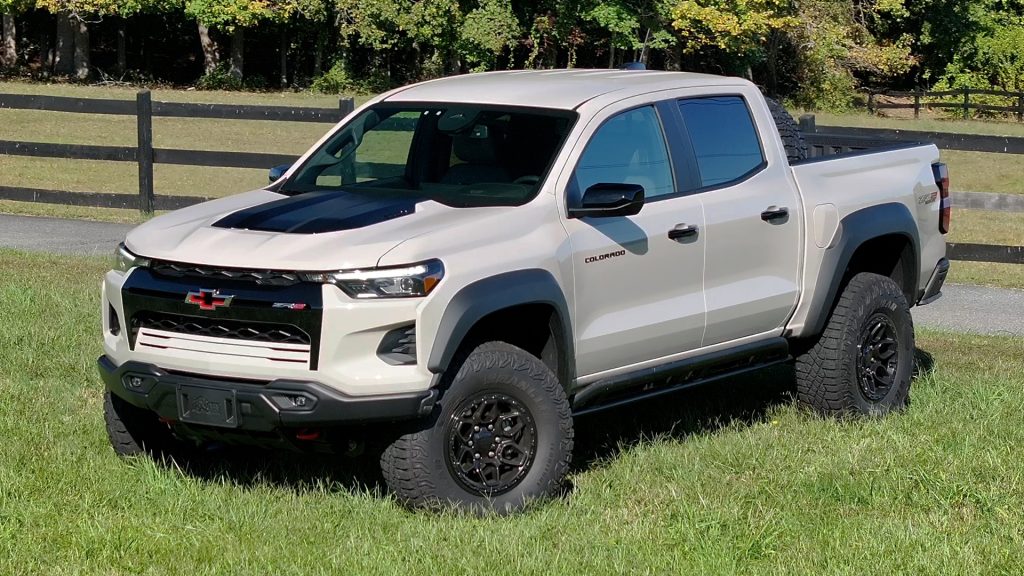
There is an important distinction to keep in mind. Chevrolet’s published off-road specifications are not a general recommendation to drive through floodwater. Ground clearance can help a vehicle navigate rough terrain, but it cannot stop water from reaching sensitive electrical or mechanical components or make fast-moving floodwater safe.
For a New Orleans driver who wants a truck that can handle poor roads in addition to everyday commuting, the Colorado ZR2’s combination of clearance, traction hardware, and substantial torque makes it a compelling choice. But the smartest flood strategy remains avoiding water whenever a safe alternative exists.
5. Toyota Land Cruiser
The Toyota Land Cruiser earns a place on this list because it combines substantial ground clearance with a full-time four-wheel-drive system and a body-on-frame design. For New Orleans, those characteristics are useful when streets are covered with standing water, damaged pavement, or debris after severe weather.
Toyota lists 8.7 inches of ground clearance for the U.S.-market Land Cruiser, giving it more underbody space than many conventional family SUVs.
Power comes from Toyota’s i-FORCE MAX hybrid powertrain, which combines a 2.4-liter turbocharged four-cylinder engine with an electric motor. The system produces 326 horsepower and 465 lb-ft of torque.
That substantial torque output is useful for low-speed driving on loose or uneven surfaces, although it does not make the vehicle immune to floodwater.
The Land Cruiser also uses a full-time 4WD system, with a two-speed transfer case and locking center and rear differentials available depending on configuration. Those features are designed primarily for off-road traction rather than flood protection, but they give the vehicle more capability when road surfaces become difficult.
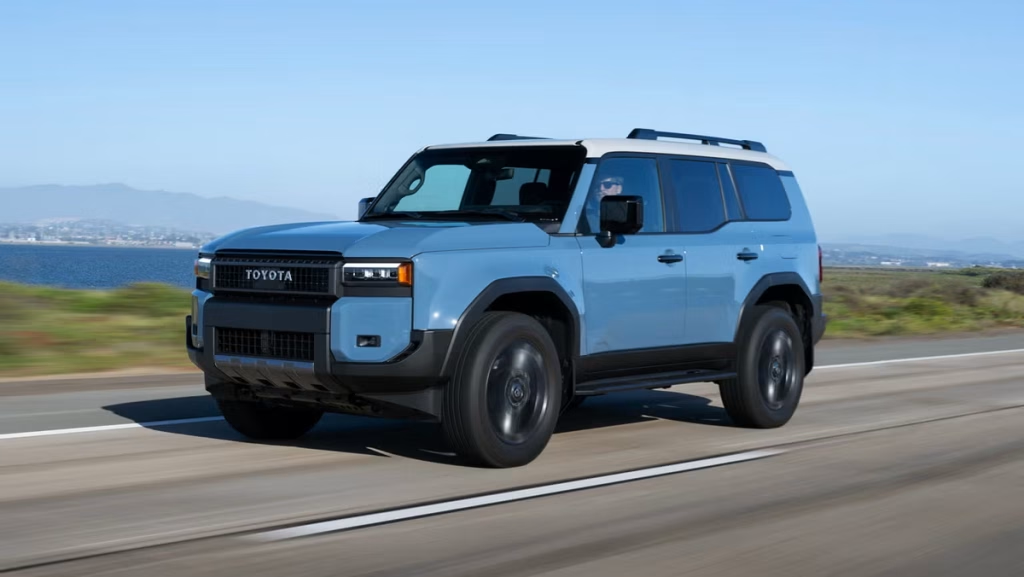
There is an important limitation. Toyota’s published ground-clearance figure does not establish a safe flood depth. Water can enter mechanical and electrical components before it reaches the bottom of the body, and water moving across a roadway can make even a high-clearance SUV unstable.
That makes the Land Cruiser a strong choice for dealing with poor conditions around New Orleans, rather than a vehicle that should be deliberately driven through deep flooding.
6. Ford F-150 Raptor
The Ford F-150 Raptor is considerably larger than the typical vehicle used for city commuting, but its factory off-road hardware gives it several characteristics that are relevant when roads become severely compromised.
The 2026 Raptor has 12 inches of minimum running ground clearance with its standard 35-inch tires, while the 37-inch-tire configuration reaches 13 inches. Ford also specifies a 32-inch water-fording depth for both tire configurations.
Ford’s owner information is especially helpful because it provides a clear limit for water crossings. The manual advises drivers not to exceed 4 mph in water. This highlights why a vehicle’s water-fording rating should never be treated as an invitation to drive quickly through floodwater.
The standard Raptor uses a 3.5-liter high-output EcoBoost V6 producing 450 horsepower and 510 lb-ft of torque. The Raptor R goes considerably further with a 5.2-liter supercharged V8 producing 720 horsepower and 640 lb-ft of torque.
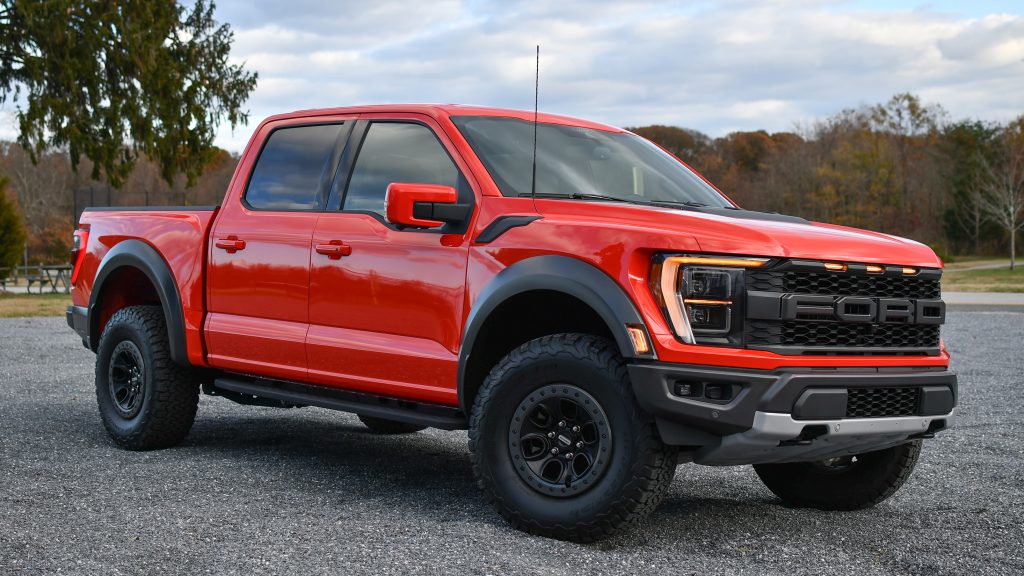
For flood-prone New Orleans, the standard Raptor is arguably the more sensible choice. Its 12-inch clearance and factory water-fording specification provide substantial physical capability without needing the extreme performance of the Raptor R.
Still, the truck’s size is a disadvantage on narrow streets and crowded urban areas. More importantly, no water-fording specification can account for an unseen hole, washed-out pavement, or rapidly moving water. The Raptor is best viewed as a highly capable vehicle for difficult conditions, not a reason to ignore flood warnings.
7. Jeep Gladiator
The Jeep Gladiator brings pickup-truck practicality together with the Wrangler family’s off-road hardware, making it an interesting option for drivers who regularly deal with damaged roads, standing water, and debris after severe weather.
Its available four-wheel-drive systems, solid axles, and substantial suspension travel give it considerably more capability than a typical street-oriented pickup.
The most relevant configuration is the Gladiator Mojave or Rubicon, although their strengths differ. The Rubicon is engineered around low-speed technical terrain, while the Mojave is designed for high-speed desert-style off-road use.
Jeep’s Trail Rated equipment on the Rubicon includes features intended to improve traction, ground clearance, and water-fording capability. Depending on configuration, Jeep lists water-fording capability of up to 31.5 inches.
That number should be treated as an engineering specification, not a recommended flood depth for New Orleans. Floodwater can conceal road damage and debris, while flowing water can destabilize a vehicle. Even a capable 4×4 should avoid flooded roads whenever an alternative route is available.
The Gladiator’s 3.6-liter Pentastar V6 produces 285 horsepower and 260 lb-ft of torque. The engine is paired with either a six-speed manual or eight-speed automatic transmission, depending on configuration.
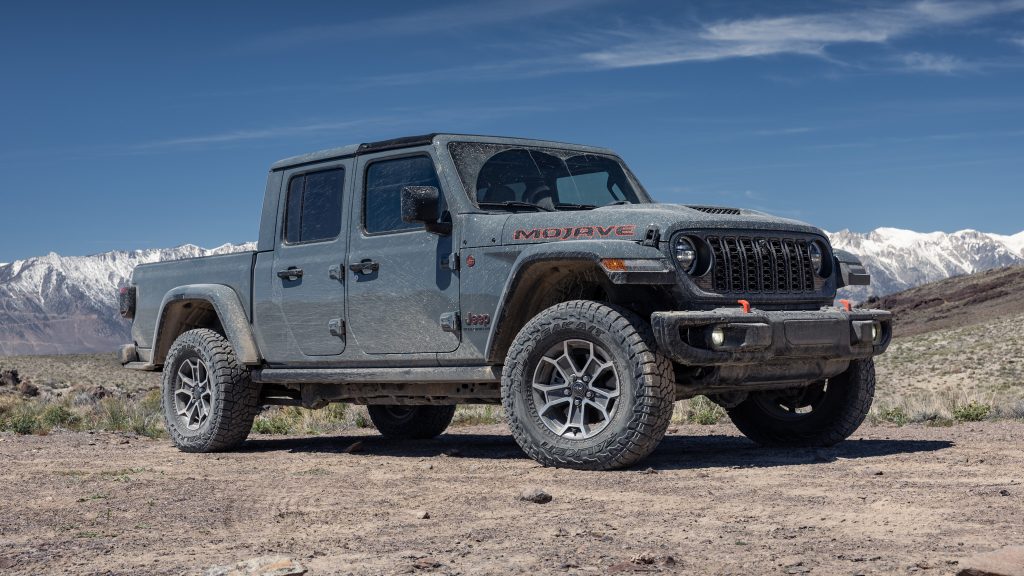
Its pickup bed can also be useful after storms, allowing owners to carry recovery equipment, supplies, or cleanup materials. The downside is its relatively large footprint compared with ordinary passenger vehicles.
For a New Orleans resident who wants one vehicle capable of handling everyday driving and legitimate off-road conditions, the Gladiator offers a compelling combination. Its flood-related advantage comes from clearance and water-fording engineering, but responsible driving remains far more important than any specification sheet.
8. Rivian R1S
The Rivian R1S takes a completely different approach from the traditional gasoline-powered off-roaders on this list. Its electric powertrain delivers instant torque, while the vehicle’s available quad-motor configuration can independently control torque at each wheel.
Rivian also gives the R1S adjustable air suspension, allowing the vehicle’s ride height to change according to driving conditions.
The R1S can provide up to 14.9 inches of ground clearance in its highest suspension setting, according to Rivian. That is considerably more than most conventional family SUVs and gives the vehicle useful underbody clearance when roads are covered with shallow standing water or debris. (rivian.com)
There is an important caveat for anyone choosing an EV with flooding in mind. High ground clearance does not make a vehicle waterproof. Rivian’s published specifications should not be taken as a recommendation to drive through floodwater.
Water can damage electrical systems, bearings, brakes, and other components, while submerged roads may contain hazards that cannot be seen.
The R1S is nevertheless exceptionally capable away from ordinary pavement. Its electric motors provide immediate torque without waiting for a conventional transmission to build engine speed, while the suspension can provide substantial clearance when needed. Rivian offers multiple battery and motor configurations, so performance and range vary by model.
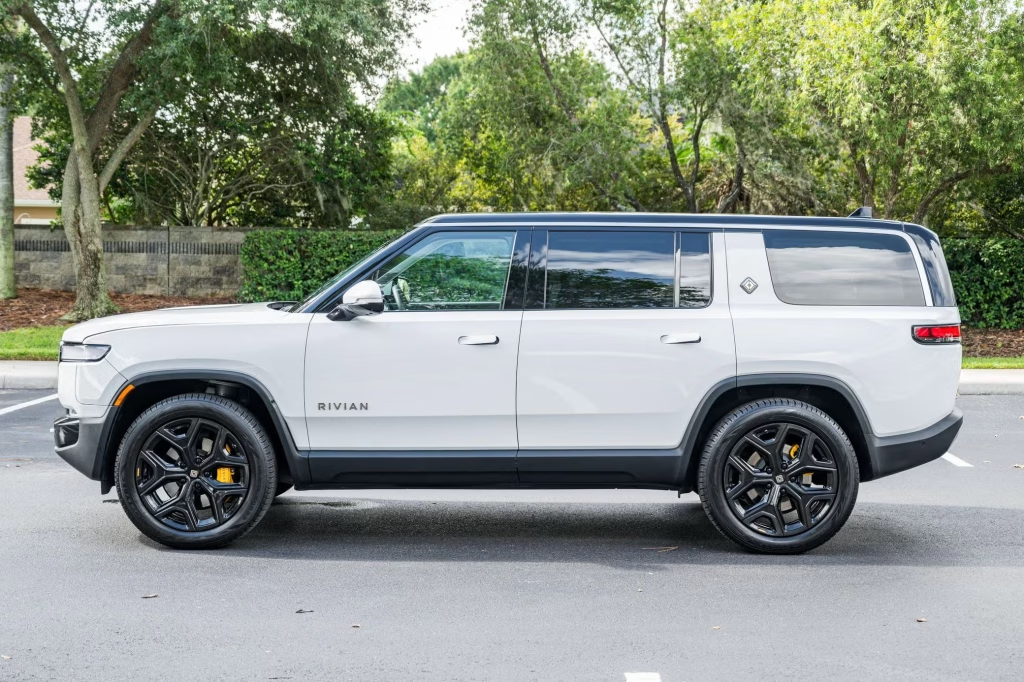
For New Orleans, the R1S is best suited to someone who wants a high-clearance daily driver with strong all-weather and off-road capability, rather than a vehicle specifically for crossing flooded streets.
The bigger lesson is important. No vehicle on this list can make floodwater inherently safe. The National Weather Service advises motorists to avoid flooded roads because water depth and the strength of the current can be difficult to judge from inside a vehicle.
9. GMC Yukon AT4
The GMC Yukon AT4 is a strong choice for New Orleans drivers who need a large family SUV with more capability than a conventional three-row crossover. GMC equips the AT4 with a high-approach-angle front fascia, front skid plate, recovery hooks, all-terrain tires, and four-wheel-drive hardware.
The 2026 Yukon AT4 also has 8.0 inches of ground clearance, according to GMC’s published specifications.
The Yukon may not offer class-leading ground clearance, but it has another advantage in severe weather situations. GMC says it can accommodate up to eight passengers, giving families plenty of space for people and essential supplies when conditions become difficult.
The AT4 also has a 210.1-inch overall length and 81-inch width, so buyers should remember that its substantial dimensions can make narrow flooded streets more difficult to navigate.
The available 6.2-liter V8 produces 420 horsepower and 460 lb-ft of torque, while the 3.0-liter Duramax turbo-diesel produces 305 horsepower and 495 lb-ft. GMC also offers a 5.3-liter V8 rated at 355 horsepower and 383 lb-ft.
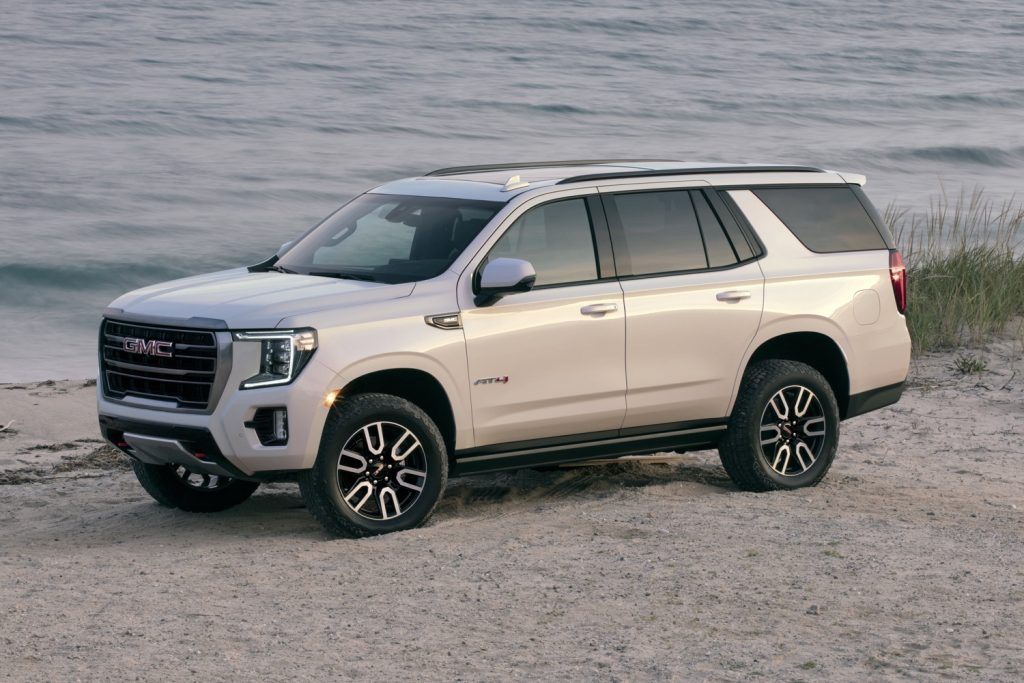
The AT4’s all-terrain tires and four-wheel-drive system can be useful when roads become slippery or covered with debris. However, neither the ground clearance nor the drivetrain makes deep floodwater safe. GMC itself warns drivers to follow the owner’s manual regarding water fording.
For New Orleans, the Yukon AT4 makes the most sense as a capable family vehicle that can handle difficult roads after storms, rather than as a machine for deliberately crossing flooded streets.
10. GMC Sierra 1500 AT4
The GMC Sierra 1500 AT4 brings pickup-truck practicality to the list while offering substantially more ground clearance than an ordinary half-ton pickup.
GMC lists 11.1 inches of ground clearance with the short box and 11.0 inches with the standard box, helped by the factory-installed 2-inch suspension lift. The AT4 is also offered with four-wheel drive and all-terrain tires.
For New Orleans, the combination is useful after storms when streets may contain standing water, broken pavement, or scattered debris. The Sierra’s elevated suspension provides additional space underneath the truck, while four-wheel drive can improve traction on slippery surfaces.
GMC offers several powertrains. The available 6.2-liter V8 produces 420 horsepower and 460 lb-ft of torque, while the 3.0-liter Duramax turbo-diesel delivers 305 horsepower and 495 lb-ft. GMC also lists a 5.3-liter V8 with 355 horsepower and 383 lb-ft.
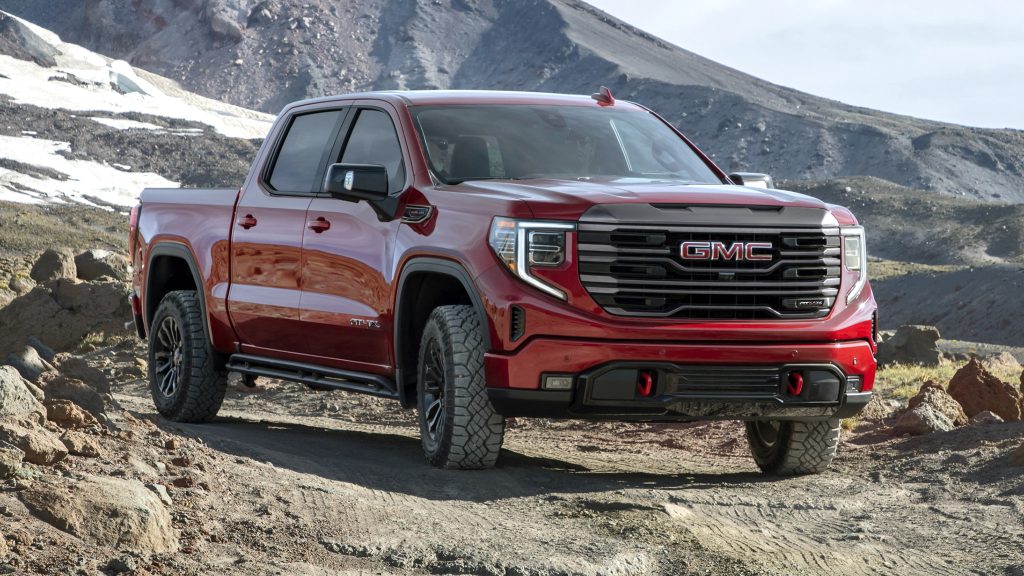
The AT4 also offers a practical advantage that SUVs cannot always provide: an open cargo bed. This can be useful for carrying cleanup equipment, generators, tools, and other supplies after a storm. Any exposed cargo should still be properly secured and protected from rain and other weather conditions.
secured.
Its biggest drawback in New Orleans is its size. A full-size pickup requires more room to maneuver than a compact SUV, and its capability should never encourage a driver to enter moving floodwater.
The Sierra 1500 AT4 is therefore best considered a high-clearance, four-wheel-drive utility vehicle for difficult conditions. Its hardware can help when roads become rough or slippery, but avoiding flooded roads remains the safest strategy.
