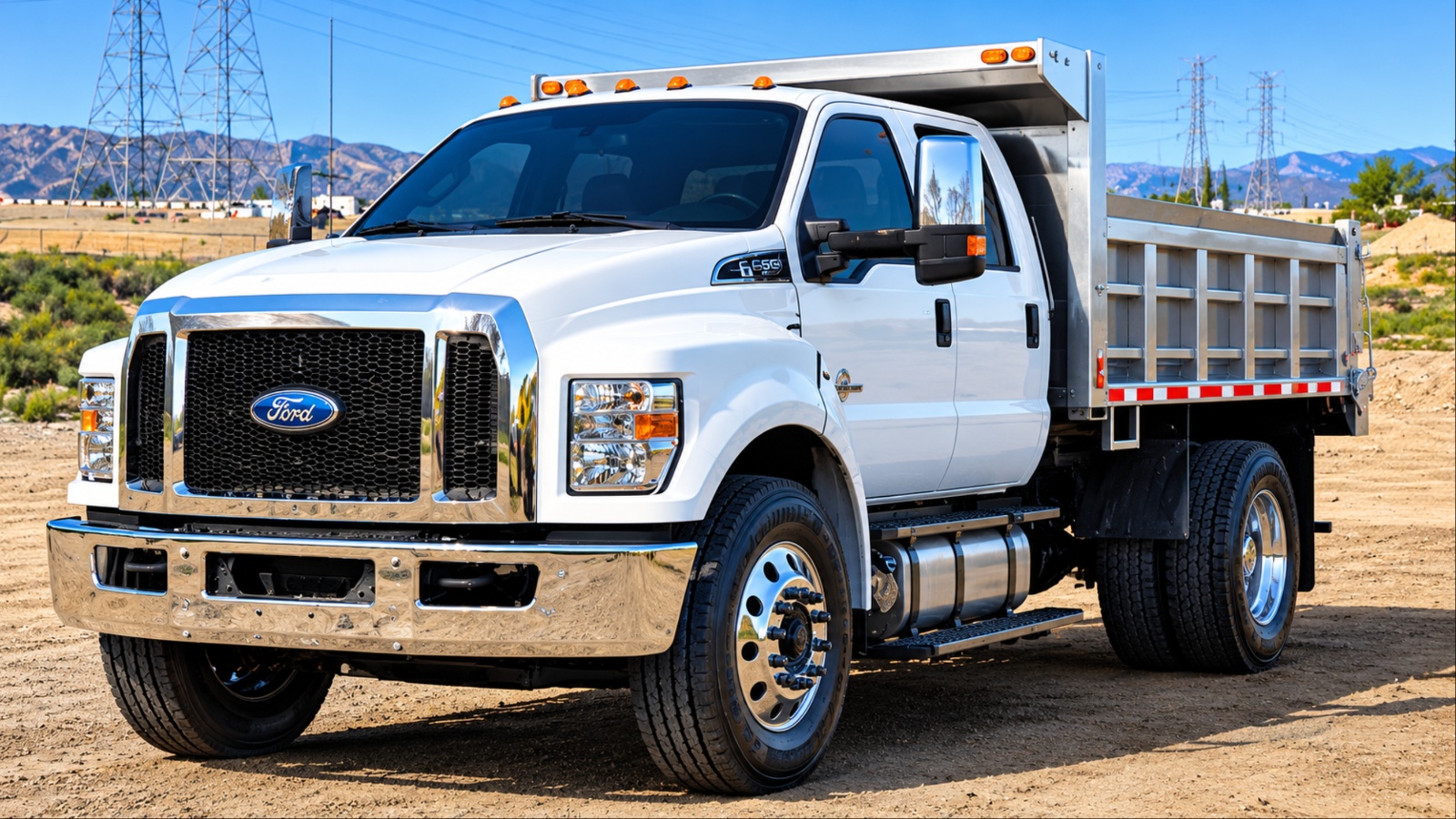
Construction fleets have little patience for trucks that spend more time in a repair bay than on a jobsite. A dependable work truck can keep a crew moving, haul equipment between projects, and earn money for years after its payments are finished.
That is why fleet buyers tend to favor platforms with strong frames, proven diesel engines, readily available parts, and configurations designed specifically for severe-duty work.
The trucks below stand out because manufacturers build them around demanding commercial applications, from towing equipment to carrying heavy bodies and operating on rough job sites. Their ability to remain useful, repairable, and configurable is what makes them valuable long-term fleet assets.
1. Ford F-Series Super Duty
Construction companies have been using Ford’s Super Duty family for decades because it covers an unusually broad range of work. An F-250 can handle lighter contractor duties, while an F-350, F-450, or heavier chassis configuration can move substantially larger loads.
That flexibility matters to a fleet because the truck does not necessarily become useless when the company’s requirements increase. Instead, the same basic platform can be configured for dump bodies, utility beds, service bodies, trailers, and other commercial equipment.
The current Super Duty also has numbers that explain why it remains such a serious construction tool. Ford’s 2025 lineup offers a 6.7-liter Power Stroke diesel producing 475 horsepower and 1,050 lb-ft of torque, while the available high-output version reaches 500 horsepower and 1,200 lb-ft.
Ford rates the Super Duty for up to 40,000 pounds of maximum available towing and up to 8,000 pounds of maximum available payload in the appropriate configurations.
That capability is useful in construction because a fleet can spec the truck around the job instead of buying a completely different vehicle for every task.
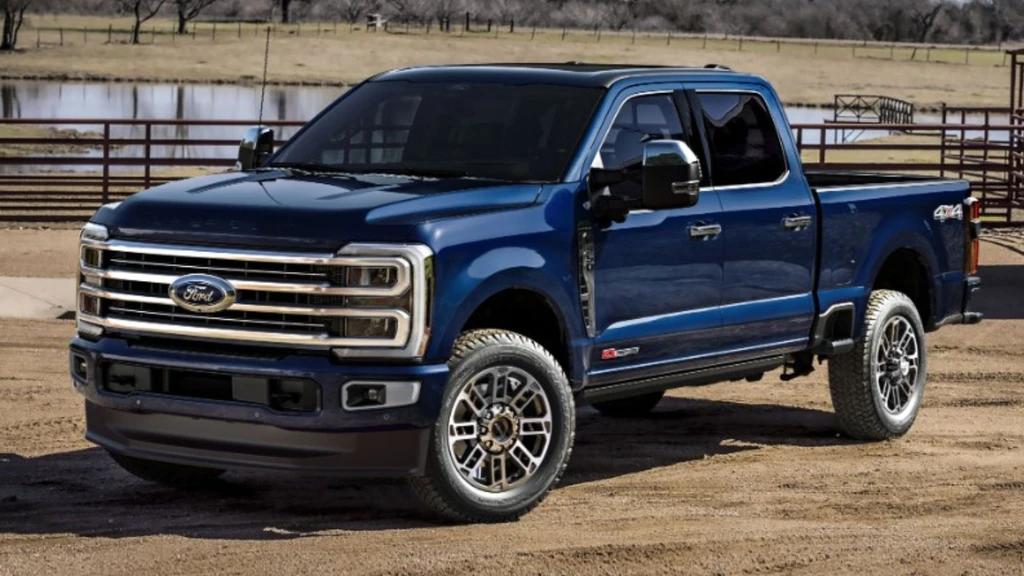
Ford also offers the Super Duty with regular, SuperCab, and crew cab configurations, along with different wheelbases and bed lengths. The 2025 F-350, for example, can have a 14,000-pound GVWR in a dual-rear-wheel configuration.
The long-term appeal is therefore less about a single headline specification and more about keeping the truck productive as its role changes.
2. Chevrolet Silverado HD
The Chevrolet Silverado HD has a particularly strong argument for staying in construction fleets because General Motors itself highlights its long-term dependability record.
GM Fleet says the Silverado HD has been America’s most awarded heavy-duty truck for dependability, according to J.D. Power from 2016 through 2025. That does not mean every Silverado will run indefinitely, but it provides meaningful evidence for why fleet operators continue considering the platform when downtime matters.
For serious construction work, the Duramax option is the version that attracts the most attention. The 2025 Silverado HD’s available 6.6-liter turbo-diesel V8 produces 470 horsepower and 975 lb-ft of torque.
Chevrolet pairs it with an Allison 10-speed automatic transmission, and properly configured Silverado HD models can tow as much as 36,000 pounds.
The platform is also available in 2500 HD and 3500 HD forms, giving fleets different levels of capacity without abandoning the same basic truck family. That is valuable when a contractor needs everything from a daily service truck to a heavy-duty towing vehicle.
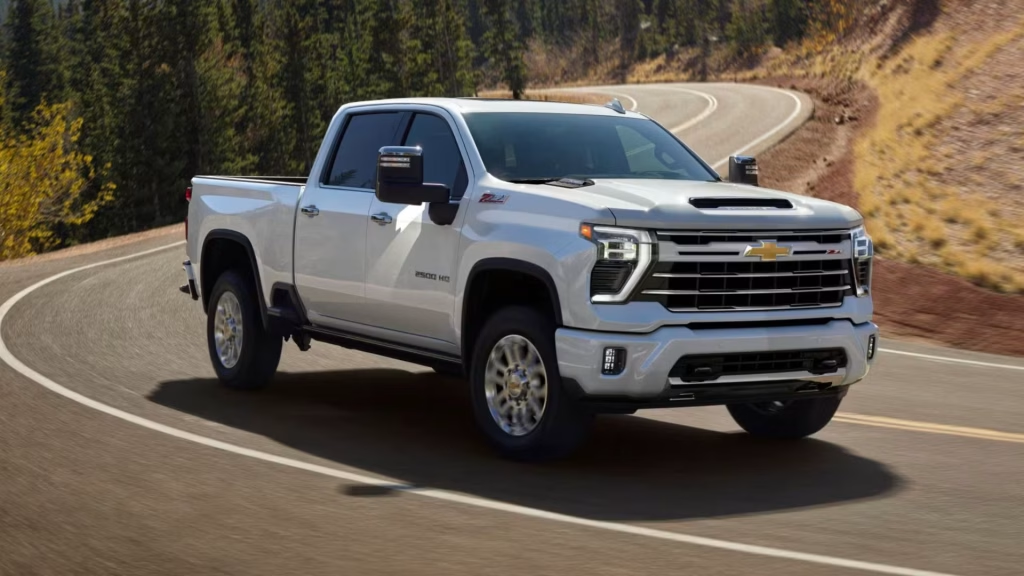
The chassis-cab version makes the Silverado even more relevant to construction companies. The 2025 Silverado 3500 HD Chassis Cab offers a maximum 14,000-pound GVWR and available payload ranging from 6,047 to 7,329 pounds depending on configuration.
Chevrolet also offers 60-inch and 84.5-inch cab-to-axle options, giving body builders room to install specialized equipment.
That ability to accept different bodies is one reason a construction fleet can keep a Silverado useful long after the original truck configuration has stopped matching the company’s needs.
3. Ram 3500
For construction fleets that routinely pull heavy equipment, the Ram 3500 earns its place through a combination of towing strength and a chassis designed for commercial work.
The important point is that Ram offers the truck in several configurations, allowing a contractor to select a pickup or chassis-cab arrangement depending on whether the priority is hauling tools, pulling trailers, or carrying a specialized body.
The available 6.7-liter Cummins turbo-diesel inline-six remains the headline powertrain. In the 2025 Ram 3500 Chassis Cab, it produces 360 horsepower and 800 lb-ft of torque when paired with the TorqueFlite HD eight-speed automatic transmission.
Ram rates the 4×2 chassis-cab version for up to 25,680 pounds of trailer weight and a 33,000-pound maximum GCWR. The 4×4 version is rated for up to 25,410 pounds of trailering.
That capability explains why construction companies can keep these trucks working for long periods. A vehicle that can move a loaded equipment trailer without operating continuously at the edge of its capability has a useful advantage in commercial service.
The chassis-cab version also gives fleets the option of fitting service bodies, utility equipment, and other specialized configurations instead of treating the pickup bed as the only available workspace.
The Cummins engine’s inline-six layout is another important part of the truck’s identity. Its substantial low-speed torque suits jobs involving heavy trailers and equipment, where pulling power matters more than quick acceleration.
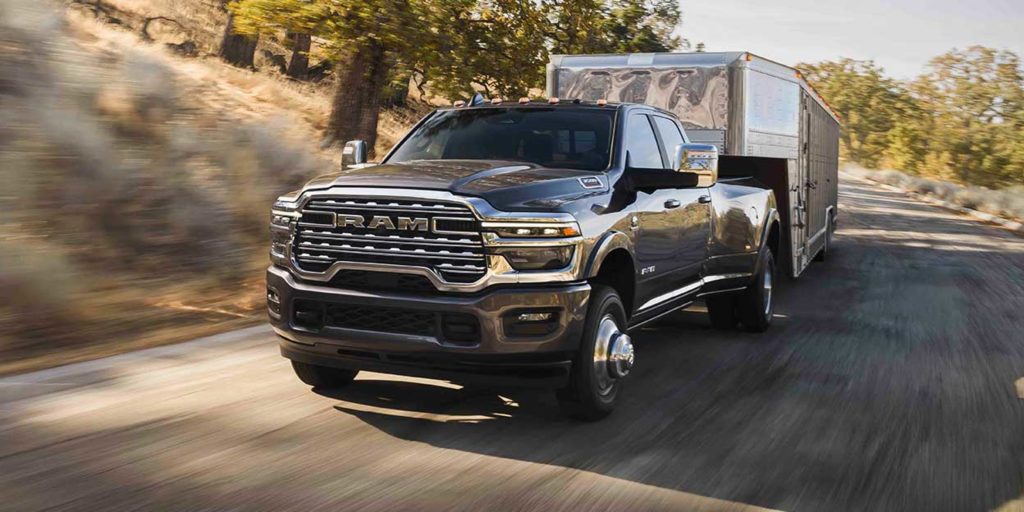
Long fleet life also depends on keeping the truck useful as jobs change. A Ram 3500 can serve as a contractor’s everyday truck early in its life and later become dedicated towing or equipment-hauling machinery.
That versatility helps explain why construction operators can justify keeping a capable heavy-duty platform in service rather than replacing it simply because its first assignment has changed.
4. GMC Sierra 3500 HD
The GMC Sierra 3500 HD is designed with a straightforward commercial goal. It gives operators enough capability to handle demanding jobs without needing a larger truck for every task. That versatility makes it a strong fit for construction fleets, where the same truck might haul materials one day and tow heavy equipment the next.
Its available 6.6-liter Duramax turbo-diesel V8 produces 470 horsepower and 975 lb-ft of torque. GMC pairs that engine with an Allison 10-speed automatic transmission, and the 3500 HD can be configured for up to 36,000 pounds of maximum towing.
The diesel also includes an exhaust brake, an especially useful feature when a heavy trailer has to be controlled on long descents.
The chassis-cab version makes the Sierra even more attractive to commercial operators. GMC lists a maximum 14,000-pound GVWR and maximum available payload of 7,329 pounds for the 2025 Sierra 3500 HD Chassis Cab. Those numbers give a body builder considerable flexibility when installing work-oriented equipment.
That flexibility is one of the reasons a fleet may keep a Sierra 3500 HD long after the truck’s first assignment changes. A pickup bed can be replaced by a service body, dump body, or other commercial equipment, allowing the underlying truck to continue producing value.
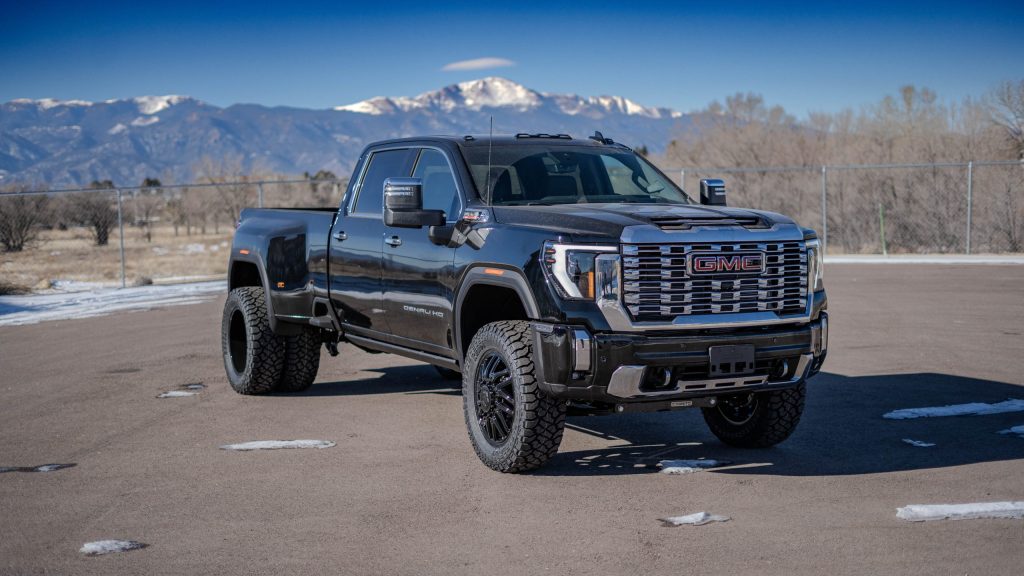
The Duramax and Allison combination is also well suited to repeated heavy-duty operation. The 975 lb-ft torque figure is particularly relevant when pulling equipment because the engine does not need to rely on high engine speed to produce substantial pulling force.
For a construction company, longevity is therefore not simply about how many years the truck survives. It is about how many different jobs the same chassis can continue performing. The Sierra 3500 HD’s range of configurations gives it a strong advantage in that respect.
5. Ford F-450 Super Duty
When a construction fleet needs something beyond the capability of a conventional heavy-duty pickup, the Ford F-450 Super Duty is one of the trucks that makes sense to keep for the long haul.
Its appeal comes from the fact that Ford engineered the F-450 specifically for serious commercial and towing duties rather than simply adding a larger engine to a lighter truck.
The available 6.7-liter Power Stroke diesel is central to that mission. In the 2025 Super Duty, the standard Power Stroke produces 475 horsepower and 1,050 lb-ft of torque, while the high-output version reaches 500 horsepower and 1,200 lb-ft.
Ford’s published towing guide shows the F-450 pickup can reach 30,000 pounds of conventional towing in specified configurations, while fifth-wheel and gooseneck capability can be considerably higher depending on configuration.
Construction companies also benefit from the F-450’s chassis-cab format. The 2025 F-450 Super Duty Chassis Cab can tow up to 17,500 pounds conventionally in the configurations covered by Ford’s towing guide, while its maximum GCWR can reach 39,000 pounds with the appropriate diesel and axle combination.
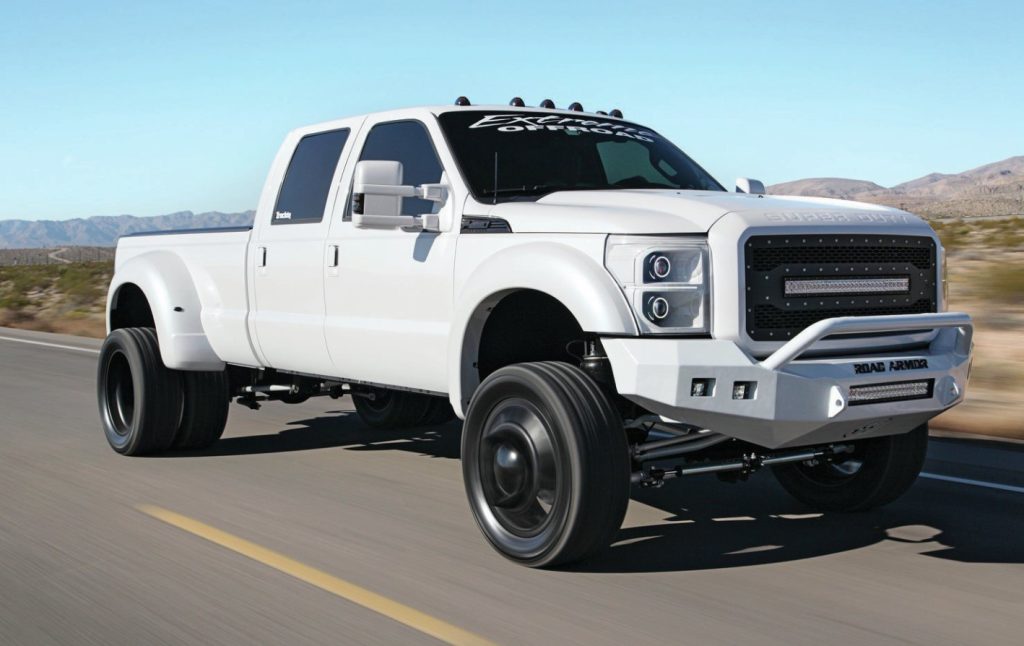
That distinction matters because fleets rarely keep a truck simply because its engine lasts. They keep it because the chassis continues to accept useful work. An F-450 can become a service truck, equipment hauler, utility vehicle, or specialized body carrier depending on how it is configured.
For a construction company, that versatility can delay replacement. Instead of retiring a truck when its original role disappears, the fleet can move it into another assignment where its high capacity remains useful.
6. GMC Sierra 2500 HD
Not every construction job requires a 3500 HD, and that is where the GMC Sierra 2500 HD becomes attractive. It occupies a useful middle ground for fleets that need substantial towing and payload capability without stepping into the largest heavy-duty configuration for every truck.
The available 6.6-liter Duramax turbo-diesel V8 produces 470 horsepower and 975 lb-ft of torque, with an Allison 10-speed automatic transmission. GMC’s 2025 Sierra HD specifications also include an exhaust brake and tow/haul mode, both of which are useful when a truck spends much of its working life pulling equipment trailers.
GMC rates the Sierra HD family for up to 36,000 pounds of maximum available towing when properly configured. The company specifically lists the 2500 Crew Cab with up to 21,870 pounds of available maximum towing, showing how much capacity a fleet can obtain without moving to the 3500 series.
There is another reason the truck can remain useful for years. Its versatility goes beyond towing. A contractor can use a Sierra 2500 HD to carry tools, construction materials, and workers during the week, then switch to hauling a heavy enclosed or equipment trailer when the job requires it.
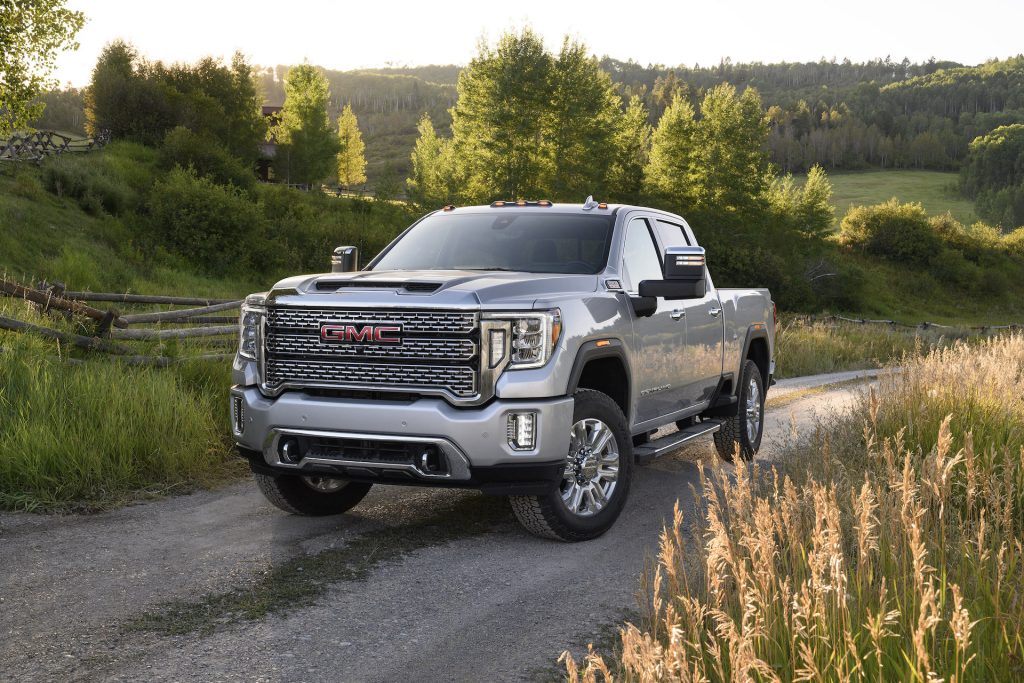
The diesel’s 975 lb-ft of torque is particularly valuable in this environment. Construction trailers can become extremely heavy once machinery, tools, and materials are loaded, so strong low-speed pulling ability is more useful than a high horsepower figure by itself.
For fleets, the Sierra 2500 HD therefore represents a practical balance. It has enough capacity for demanding jobs, but it does not necessarily require every operator to move into a larger one-ton truck. That balance can help a company standardize equipment while keeping trucks productive across different assignments.
7. Toyota Tundra
Toyota’s Tundra is not the first truck that comes to mind when people think about long-term construction fleets, but its combination of frame strength, towing ability, and relatively straightforward full-size pickup configuration makes it a useful choice for contractors that do not need a one-ton truck for every assignment.
The current Tundra uses a fully boxed high-strength steel ladder frame, while the bed is made from sheet-molded compound with aluminum reinforcing crossmembers. Toyota says the composite construction helps resist dents, impacts, and rust, characteristics that matter when a truck spends its life around construction materials and equipment.
There are two gasoline powertrains. The standard i-FORCE 3.4-liter twin-turbo V6 produces 389 horsepower and 479 lb-ft of torque.
The available i-FORCE MAX combines the twin-turbo V6 with a hybrid system and produces 437 horsepower and 583 lb-ft of torque. Maximum towing reaches 12,000 pounds, while maximum payload reaches 1,940 pounds in the appropriate configuration.
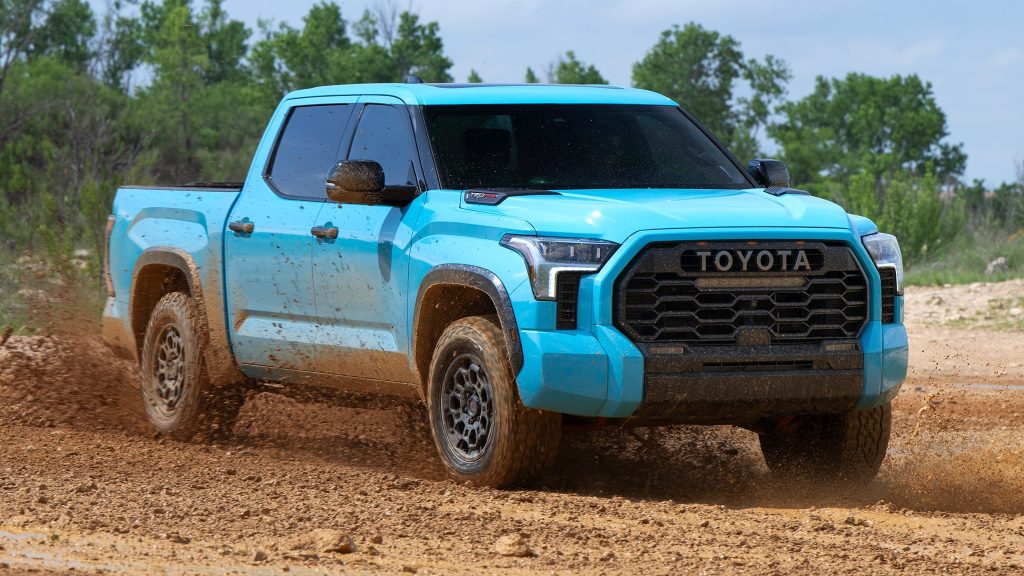
That capability puts the Tundra in a useful position for smaller construction fleets. A contractor hauling skid-steer attachments, enclosed tool trailers, landscaping equipment, or building supplies may not need the enormous capacities of an F-450 or chassis-cab truck.
Buying more capacity than the job requires can also mean carrying unnecessary cost and size every day. Toyota’s fleet information specifically lists the Tundra i-FORCE MAX as a commercial fleet vehicle, with production in San Antonio, Texas.
The Tundra’s durability story is therefore less about claiming it will last forever and more about giving a contractor a truck that can remain useful through multiple assignments.
8. Ford F-650
The Ford F-650 changes the definition of a work truck. While the pickups above can handle many construction jobs, the F-650 belongs to Ford’s medium-duty commercial range and is designed for businesses that need substantially more chassis capacity.
Its appeal to construction fleets begins with the range of configurations. Ford offers the F-650 in regular-cab and crew-cab forms, with multiple wheelbases and available diesel power.
The truck can be ordered as a bare chassis for specialized body installation, which allows a contractor to build a service truck, dump truck, utility vehicle, or other dedicated work machine around the same basic platform.
The available 6.7-liter Power Stroke V8 diesel is particularly suited to this type of duty. Ford’s medium-duty specifications list 330 horsepower and 825 lb-ft of torque for the diesel, with a 10-speed automatic transmission. The gasoline option uses a 7.3-liter V8 producing 335 horsepower and 468 lb-ft of torque.
Capacity is where the F-650 separates itself from conventional pickups. Depending on configuration, Ford offers GVWR ratings ranging from approximately 20,000 to 29,000 pounds. That gives fleet managers substantially more room to specify equipment without approaching the limits of a pickup-based platform.
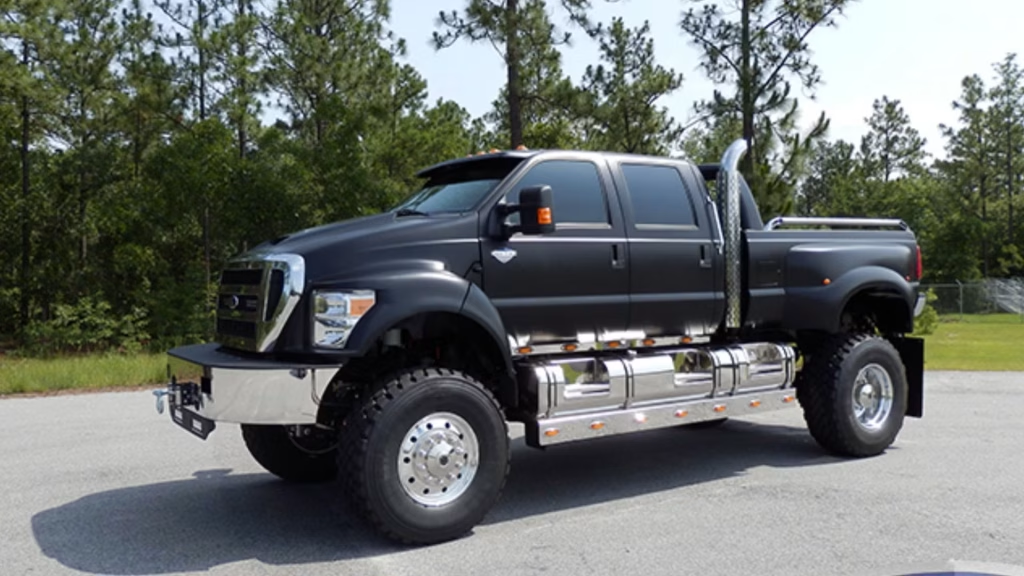
The F-650 can also remain in service after its original body has become obsolete. A construction company might start with a service body, then eventually rebuild the truck around a different application rather than replacing the entire vehicle.
That is an important characteristic in fleet economics because the chassis can remain useful even as the company’s needs change.
For operators who regularly carry heavy tools, compressors, generators, or construction equipment, that extra capacity can prevent a truck from being overloaded simply because a job becomes larger than expected.
9. Chevrolet Silverado 5500 HD
The Chevrolet Silverado 5500 HD belongs in a different category from the typical pickup-based construction truck. It is a medium-duty chassis cab designed from the beginning to receive commercial bodies, which makes it particularly valuable to fleets that want to keep a truck working through several different assignments.
For 2025, Chevrolet gives the Silverado 5500 HD a GVWR range of 17,500 to 19,500 pounds. The truck is available with regular or crew cab configurations and wheelbases ranging from 165 to 243 inches for the regular cab, depending on configuration. Chevrolet also offers both 4×2 and 4×4 drivetrains.
The construction connection becomes even clearer when looking at the frame. Chevrolet describes the chassis cab as having a single-piece frame rail designed to support different upfits, including utility bodies, dump bodies, and stake bodies. That means a fleet can purchase the chassis once and adapt the truck around the type of work it needs to perform.
Power comes from the 6.6-liter Duramax turbo-diesel V8 paired with an Allison transmission. Chevrolet’s medium-duty platform also offers features such as an available locking rear axle, while the chassis can be equipped with factory rear air suspension.
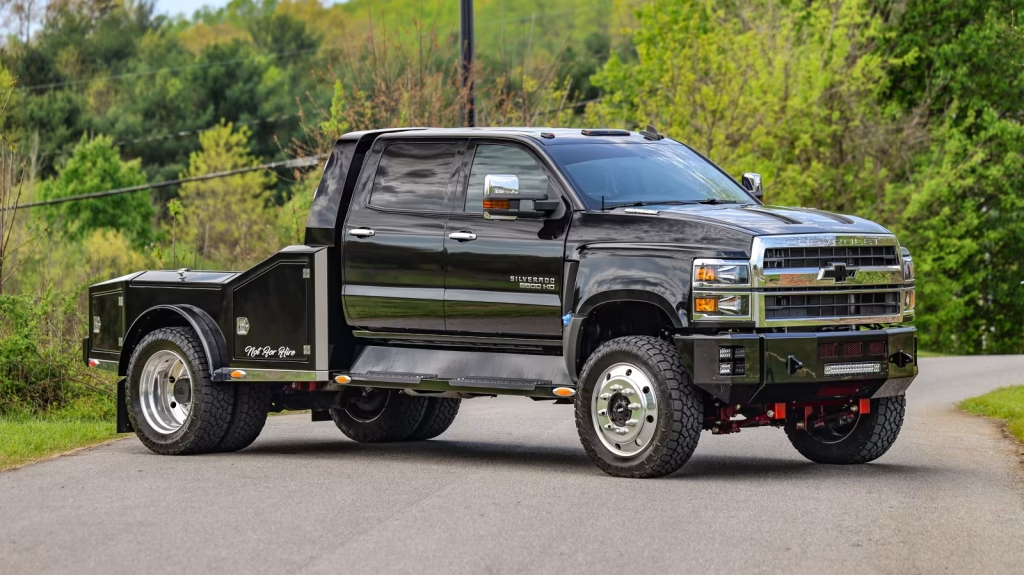
The maximum available GVWR across the Silverado 4500 HD, 5500 HD, and 6500 HD family reaches 23,500 pounds.
That combination makes the 5500 HD particularly suited to contractors running dump trucks, equipment carriers, and specialized service vehicles. It is not necessarily the right truck for every construction crew, but when a fleet needs a dedicated work platform, its ability to accept different bodies can keep the same chassis productive for many years.
10. Ram 5500 Chassis Cab
The Ram 5500 Chassis Cab is built for a construction environment where a conventional pickup eventually runs out of capacity. Rather than giving contractors a pickup with an oversized tow rating, Ram starts with a commercial chassis intended to carry specialized equipment and work with different body builders.
The numbers explain why it has become relevant to demanding fleets. For 2025, the 5500 Chassis Cab has a maximum GVWR of 19,500 pounds and a maximum diesel GCWR of 43,000 pounds.
With the available 6.7-liter Cummins turbo-diesel inline-six, Ram lists 360 horsepower and 800 lb-ft of torque. Maximum diesel towing reaches 34,540 pounds, while maximum diesel payload is rated at 11,190 pounds in the appropriate configuration.
The frame is also designed specifically with commercial upfits in mind. Ram uses straight, flat frame rails with predrilled mounting holes, while its Vehicle System Interface Module provides access to more than 70 vehicle inputs and outputs, including lighting and Power Take-Off controls.
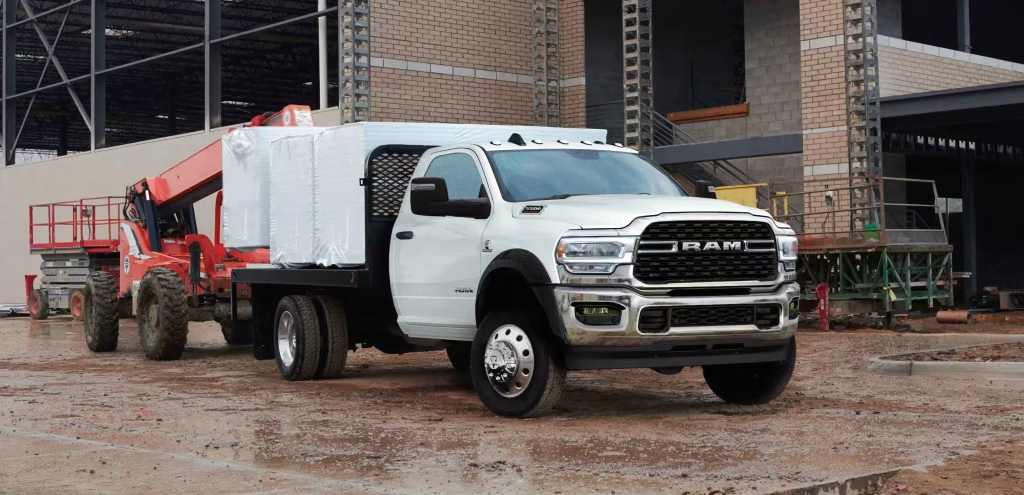
That matters to construction companies because the truck can become much more than a vehicle. PTO capability can support equipment such as hydraulic systems and other powered work bodies, allowing the truck’s engine to contribute directly to the job instead of simply moving the truck from one location to another.
Ram also offers up to 480 amps of diesel dual-alternator output, which is useful for specialized commercial bodies requiring substantial electrical power.
A construction fleet can therefore keep a Ram 5500 productive even after its original assignment changes. The chassis can support different bodies, tools, and equipment throughout its working life, which is precisely the kind of adaptability that helps commercial trucks remain fleet assets for many years.