
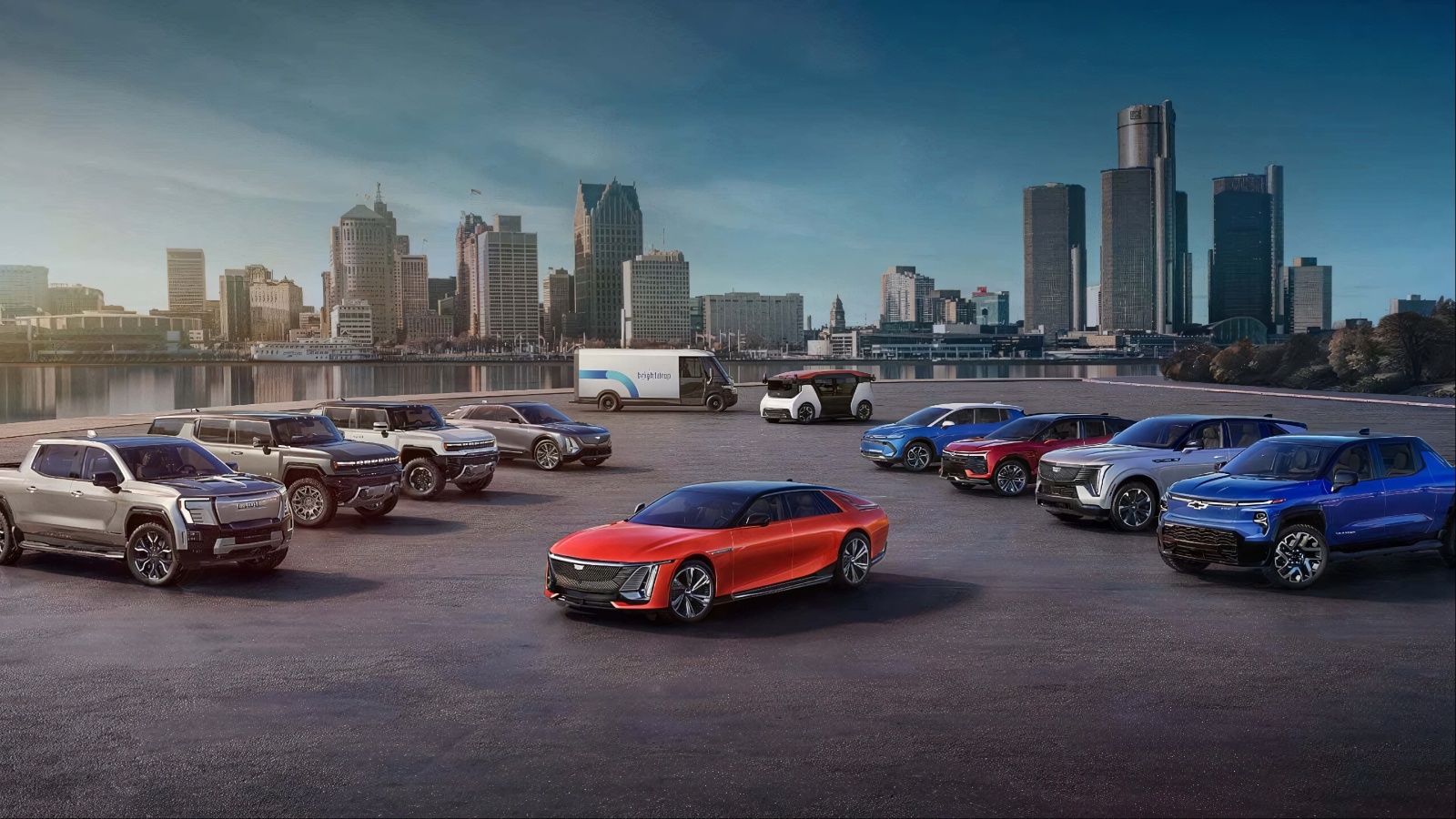
General Motors CEO Mary Barra has reaffirmed that electric vehicles remain the company’s long-term direction, even as the U.S. transition to battery-powered transportation has progressed more slowly than automakers once expected.
Speaking with Fortune, Barra said GM’s view of electric vehicles as the eventual destination has not changed despite shifting government policies, slower consumer adoption, and continuing concerns about charging infrastructure.
Her comments highlight GM’s increasingly flexible strategy. The company continues to invest in EVs while maintaining a broad lineup of hybrids, gas-powered trucks, and SUVs to match current consumer demand.
The position is notable because GM has significantly adjusted its electrification strategy over the past several years. The company once planned around a much faster transition toward battery-electric vehicles, but changing market conditions have pushed it toward a more gradual approach.
Barra now argues that the slower pace should not be confused with a reversal of GM’s long-term strategy.
Changing Regulations Have Altered the Pace
Barra pointed to the regulatory environment as one of the biggest reasons the American EV transition has developed differently from expectations earlier in the decade.
She explained to Fortune that U.S. automakers had previously been operating under an environment that effectively pointed toward EVs accounting for roughly 40% to 50% of vehicle sales by 2030.
Regulations and government policy have since changed, giving consumers and manufacturers more flexibility over the types of vehicles they buy and produce. That change has influenced GM’s product strategy.
Rather than attempting to push customers into electric vehicles at the same pace regardless of demand, GM is maintaining a broader lineup. Battery-electric models are being developed alongside hybrids and traditional internal-combustion vehicles, particularly in segments such as large pickups and SUVs where gasoline-powered vehicles remain highly profitable.
Barra has described this approach as giving customers more choice. The strategy also reflects the economics of the American market. Many U.S. buyers depend on their vehicles for daily transportation and may not have the ability to maintain separate vehicles for different purposes.
That makes range, charging access, purchase price, and convenience particularly important when customers consider switching from gasoline to electric propulsion.
GM therefore has little incentive to abandon profitable gasoline vehicles while EV demand remains uneven.
At the same time, walking away from electric vehicles would leave the company poorly positioned if battery-powered vehicles eventually become the dominant technology.
Barra’s position is essentially that GM needs to operate through the transition rather than bet everything on one timetable.
Charging Infrastructure Remains a Major Barrier
Barra also identified charging infrastructure as one of the most important factors limiting EV adoption in the United States.
She said that although federal infrastructure funding has been approved, permitting has made it difficult to build charging stations quickly. The number of chargers continues to increase, but the pace of deployment has not always matched the expectations surrounding the country’s EV transition.
That problem is particularly important for consumers who cannot conveniently charge at home.
For homeowners with garages or dedicated parking spaces, overnight charging can make an EV relatively simple to operate. Drivers who rely on street parking, apartments, or shared parking facilities may depend heavily on public charging.
A shortage of convenient and reliable chargers can therefore become a practical barrier even when an EV itself offers sufficient range. GM has been attempting to address part of that problem through partnerships and software.
The company says its Energy Pass system, integrated into its Chevrolet, Cadillac, and GMC applications, allows customers to access and pay across multiple charging networks. GM is also moving its entire EV lineup toward native NACS charging ports for the 2027 model year, eliminating the need for an adapter on compatible North American charging stations.
GM has also invested in bidirectional charging. The company says more than 250,000 GM EVs on American roads are capable of bidirectional charging, allowing properly equipped vehicles to send electricity back to a home or, eventually, the grid. GM is working with utilities to develop the software and grid protocols necessary to expand that capability.
That means GM increasingly sees EVs as more than transportation products. The battery can potentially become part of a household energy system, providing backup power during outages or helping manage electricity demand. GM has said it wants bidirectional capability to become a foundational feature across its EV portfolio.
GM Is Taking a More Flexible Route to Electrification
Barra’s comments also explain why GM continues to invest in electric vehicles despite the slower U.S. transition.
GM has already committed billions of dollars to EV manufacturing, batteries, and related technologies. Its Spring Hill battery operation represents a $2.3 billion investment, while Factory Zero in Detroit-Hamtramck was developed as a dedicated EV assembly facility.
The company has also continued expanding its electric lineup across Chevrolet, Cadillac, and GMC.
GM reported that it was the second-largest EV seller in the United States in 2025, with EV sales increasing 48% year over year. The company has said it remains focused on improving its electrical products while reducing the losses associated with EV production.
That last point is critical. The challenge for GM is not simply convincing customers to buy EVs. It also needs to produce them profitably.
Electric vehicles can require substantial investment in battery plants, raw materials, software, and manufacturing equipment. If consumer demand grows more slowly than expected, automakers can end up with factories and production capacity that are difficult to utilize efficiently.
GM’s current strategy attempts to limit that risk by maintaining several propulsion technologies simultaneously.
Hybrids provide one bridge between gasoline and fully electric vehicles. Traditional trucks and SUVs continue generating substantial revenue, while EVs allow GM to develop technology and manufacturing capacity for the market it believes is coming.
Barra’s comments suggest GM does not view the current slowdown as evidence that EVs have failed. Instead, she sees it as evidence that the transition will take longer and depend more heavily on factors outside the automaker’s direct control.
The international market reinforces that argument. Europe and China have adopted EVs at different rates from the United States, influenced by regulations, incentives, and charging infrastructure. Reuters reported that global EV sales continued to rise in August 2026, with Europe leading growth while the U.S. and China were comparatively weaker.
China demonstrates what can happen when charging infrastructure and policy support develop alongside consumer demand. EV penetration there reached 65% in July 2026, according to Reuters, while the country has built an enormous charging network.
For GM, that makes the long-term argument for electrification relatively straightforward even if the American timetable remains uncertain.
Barra’s position is that EVs ultimately offer capabilities that combustion vehicles cannot replicate, including instant torque, lower operating complexity, and the ability to integrate directly with the electrical grid.
But GM does not need every customer to make the switch immediately. The company can continue offering gasoline vehicles and hybrids while improving battery technology, expanding charging access, and lowering EV costs. GM is also developing new battery chemistries intended to make electric vehicles more affordable.
That approach gives the automaker room to respond if U.S. EV adoption accelerates later in the decade.
The central message from Barra is therefore less about abandoning the transition and more about changing its pace. GM still sees electric vehicles as the eventual destination, but it is no longer assuming that regulation alone will determine when American consumers get there.
For now, the company is keeping its options open. It continues to offer gasoline and hybrid vehicles for today’s buyers while developing EVs for those ready to make the switch. At the same time, it is investing in charging and energy technologies to make electric ownership more convenient.
If charging infrastructure improves and battery costs continue to fall, Barra believes the underlying advantages of EVs will eventually drive wider adoption. GM’s strategy is to remain prepared for that future without forcing the company or its customers to arrive there before the market is ready.
