
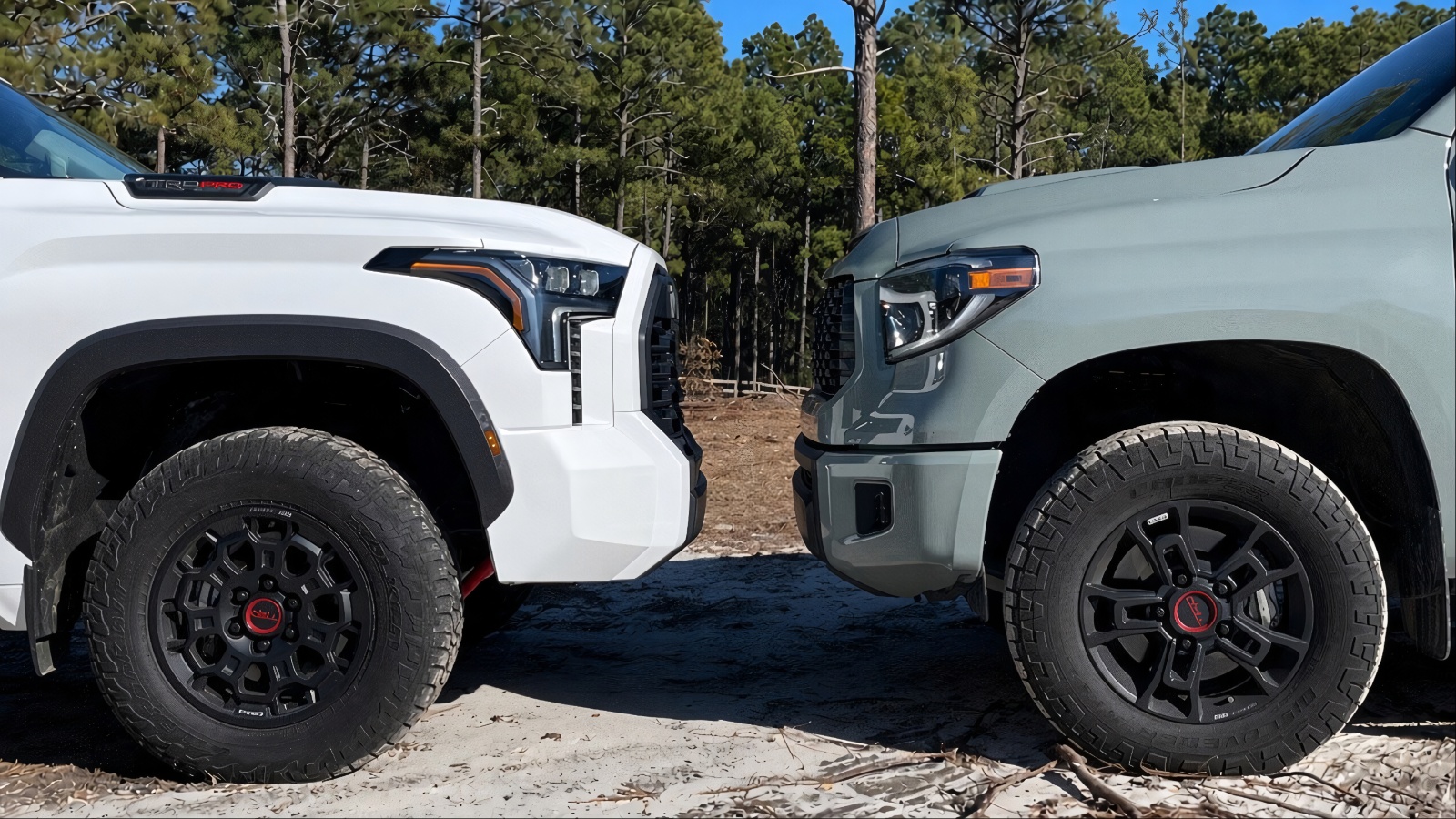
The 2026 Toyota Tundra and Sequoia share much of their engineering DNA, including Toyota’s twin-turbo V6 architecture, body-on-frame construction, and available i-FORCE MAX hybrid powertrain.
Yet they are designed around very different priorities. The Tundra is a full-size pickup built to haul, tow, and work, while the Sequoia turns that truck-based foundation into a three-row family SUV.
That distinction makes this comparison more interesting than simply asking which Toyota is bigger or more powerful. The Tundra starts at $41,260, while the Sequoia starts at $65,725, creating a substantial price gap before options are considered.
The Tundra can tow up to 12,000 pounds and carry up to 1,850 pounds of payload, while the Sequoia counters with seating for up to eight and as much as 86.9 cubic feet of cargo space with the rear seats folded.
So which is the smarter buy? That depends on whether your priorities are centered on work and capability or passenger comfort and family practicality.
Price and Value
The biggest difference between these two Toyotas appears before either one leaves the dealership. The 2026 Tundra starts at $41,260, while the Sequoia starts at $65,725. That means the SUV commands more than $24,000 above the entry-level pickup.
The Tundra also gives buyers a much wider range of pricing. The SR5 starts at $46,510, Limited at $54,860, Platinum at $63,695, and 1794 Edition at $64,380. The TRD Pro begins at $72,565, while the luxurious Capstone reaches $80,800.
That spread is important because it lets buyers choose a Tundra according to their actual needs. Someone who wants a dependable full-size truck for work does not need to spend luxury-SUV money. Even the base truck provides seating for five, a composite cargo bed, and an available 4WD configuration.
The Sequoia has a different value proposition. Its higher entry price buys a much more family-oriented vehicle, with three rows, seating for up to eight, a large enclosed cargo area, and standard hybrid power. Toyota also equips the Sequoia with the i-FORCE MAX twin-turbo V6 across the 2026 lineup, producing 437 horsepower and 583 lb-ft of torque.
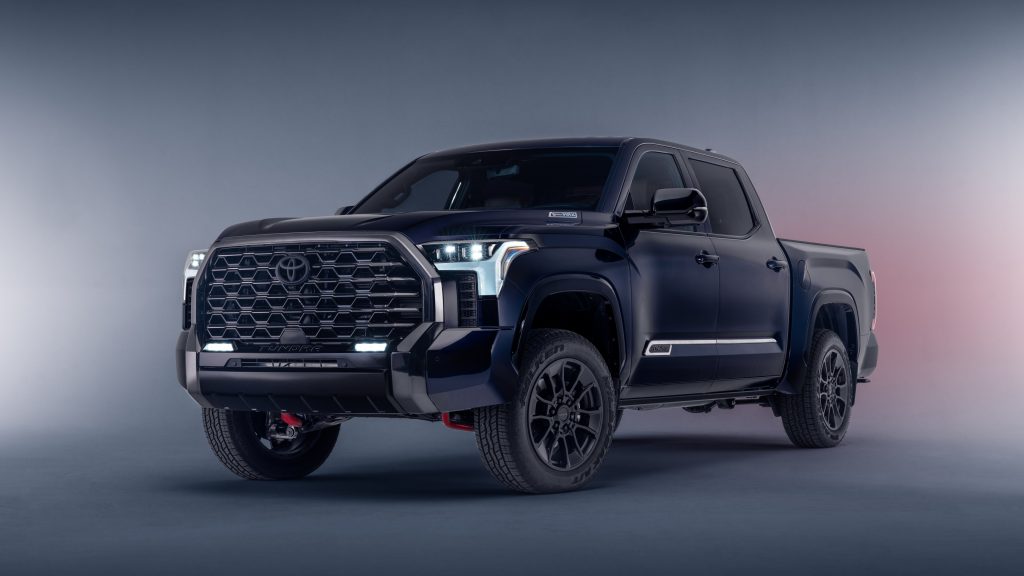
The problem is that buyers must pay for capabilities they may not need. If your household rarely uses a third row and you don’t need enclosed passenger space, the Sequoia’s premium is difficult to justify.
The Tundra provides more financial flexibility at the lower end and gives buyers the option to spend heavily only when they actually want additional equipment.
Winner: Toyota Tundra
Powertrain and Performance
The Tundra and Sequoia are surprisingly close mechanically, but the pickup offers greater powertrain flexibility.
The 2026 Tundra offers two engines. Its standard i-FORCE twin-turbo V6 produces 389 horsepower and 479 lb-ft of torque. Buyers can also choose the i-FORCE MAX hybrid, which combines the twin-turbo V6 with an electric motor to produce 437 horsepower and 583 lb-ft of torque. Both use a 10-speed automatic transmission.
The Sequoia takes a simpler approach. Every 2026 model uses the i-FORCE MAX hybrid system, producing the same 437 horsepower and 583 lb-ft of torque available in the Tundra. That gives the Sequoia strong acceleration and plenty of low-end torque, particularly useful when carrying passengers or towing.
The interesting part is that the Tundra’s base engine is not simply a stripped-down alternative. With 389 horsepower and 479 lb-ft, it already provides substantial performance while allowing buyers to avoid paying for the hybrid system.
Fuel economy also depends heavily on configuration. Toyota lists the Tundra at up to 18/23 mpg city/highway on several conventional configurations, while some versions achieve different ratings. The Sequoia reaches up to 21/24 mpg city/highway, or 22 mpg combined, according to Toyota and Edmunds.
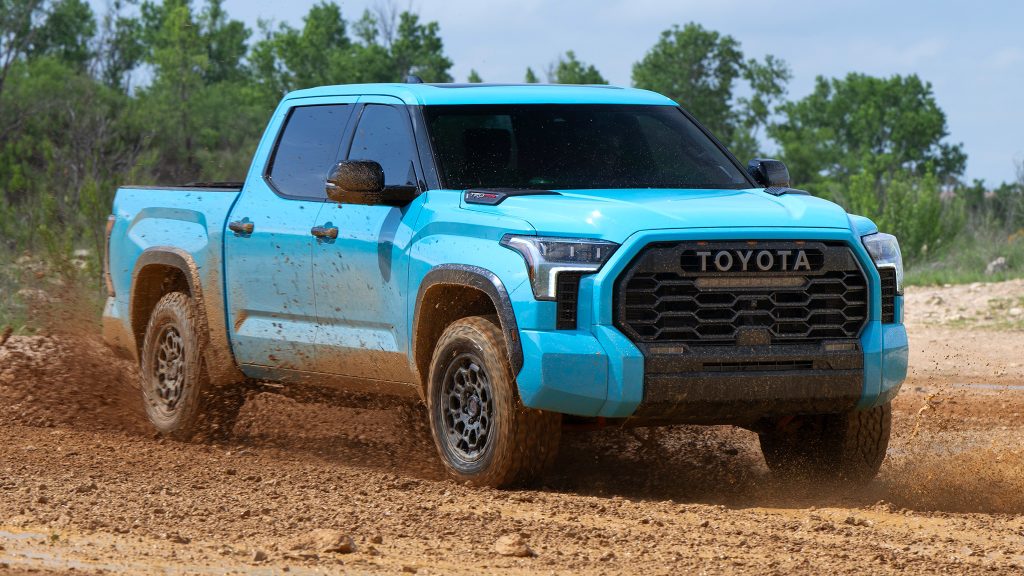
There is another advantage to the Tundra: its size and configuration choices allow it to function as a traditional work truck, while higher trims can become genuinely upscale.
The Sequoia is certainly not slow or underpowered. In fact, its standard 437-hp hybrid gives it an impressive powertrain. But the Tundra provides more choice, including the ability to buy a powerful non-hybrid truck at a substantially lower price.
Winner: Toyota Tundra
Towing and Hauling Capability
This is where the Tundra establishes a clear advantage. Toyota rates the 2026 Tundra for up to 12,000 pounds of maximum towing capacity. Its maximum payload rating reaches 1,850 pounds. Those figures place the Tundra firmly in traditional full-size pickup territory.
That capability is useful for more than recreational towing. The Tundra’s pickup bed also provides a major practical benefit because bulky, dirty, or weather sensitive equipment can be stored separately from passengers and kept out of the cabin.
The Tundra’s composite bed is available in 5.5-, 6.5-, and 8.1-foot configurations, giving buyers the ability to prioritize maneuverability or cargo length. Toyota also made a tow hitch and 7/4-pin connector standard for the 2026 model year.
The Sequoia is impressive for an SUV, but it cannot match the pickup’s maximum rating. Toyota lists its maximum towing capacity at up to 9,500 pounds. The SUV also includes an integrated trailer brake controller and trailer sway control to make towing easier.
A 9,500-pound rating is enough for large boats, travel trailers, utility trailers, and recreational equipment. For many families, it will be more than sufficient.
But the Tundra still wins because it offers more than just a higher tow rating. Its open bed makes loading large equipment considerably easier, while its maximum payload rating gives it greater flexibility when carrying heavy cargo.
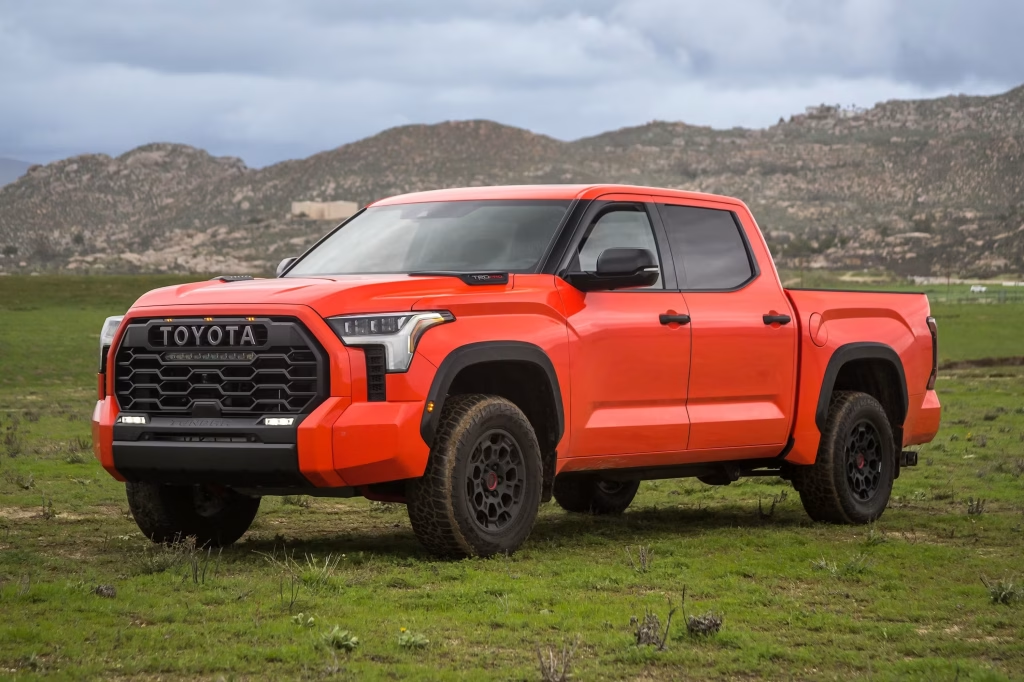
There is also an important distinction between towing capacity and everyday hauling. A Sequoia can carry luggage, groceries, camping equipment, and passengers under one roof. A Tundra can separate passengers from messy or oversized cargo.
If your lifestyle includes frequent trailer use, construction materials, landscaping equipment, motorcycles, ATVs, or other bulky loads, the Tundra makes considerably more sense.
Winner: Toyota Tundra
Passenger Space and Family Practicality
The Sequoia wins this category because the Tundra simply cannot provide what a three-row SUV does.
The 2026 Sequoia seats up to eight with a second-row bench or up to seven with available captain’s chairs. Toyota also equips every 2026 Sequoia with power-folding third-row seats.
That makes the Sequoia far more suitable for families who regularly transport children, grandparents, friends, or multiple passengers. The third row transforms the vehicle from a five-seat truck-based machine into a genuine family hauler.
Cargo flexibility is another advantage. Toyota lists maximum cargo capacity at 86.9 cubic feet with the rear seats folded. The Sequoia also uses a sliding third row and multi-level adjustable cargo shelf system to help balance passenger and storage requirements.
The Tundra, meanwhile, can seat five depending on cab configuration, and its CrewMax configuration offers substantial passenger space. But the cargo bed remains exposed, and there is no third seating row.
For buyers who carry bicycles, camping gear, sports equipment, tools, or dirty outdoor equipment, that bed is actually an advantage. But for families dealing with luggage, groceries, pets, child seats, and passengers, enclosed SUV cargo space is easier to manage.
The Sequoia also provides a more natural loading environment for family trips. Everything stays inside the vehicle, protected from weather and separated from the road.
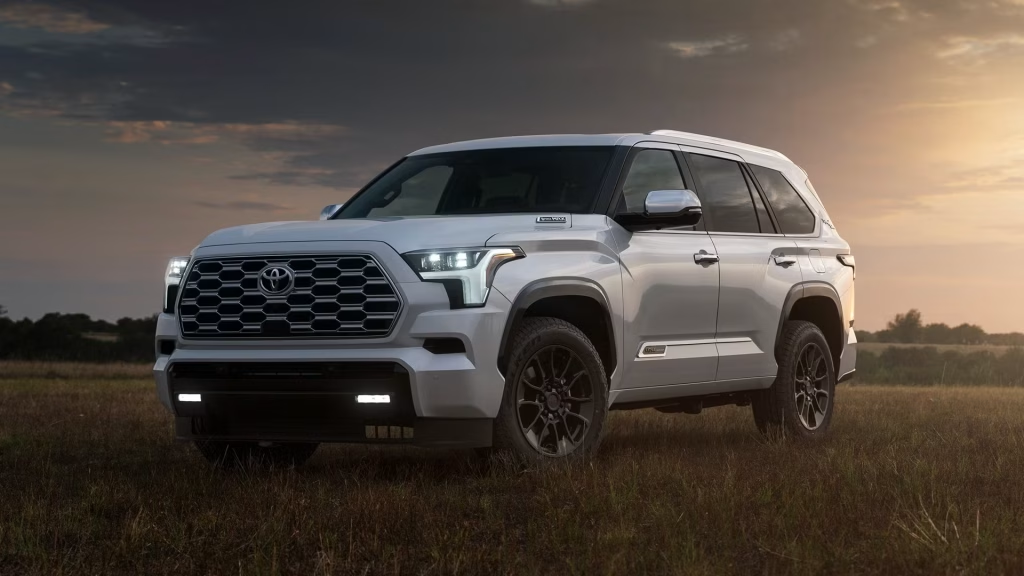
There is one tradeoff to consider with the Sequoia. When the third row is in use, it takes up some of the available cargo space. Buyers who regularly carry seven or eight passengers will therefore have less room for luggage compared with those who keep the third row folded.
Still, the fundamental advantage remains. The Sequoia can comfortably perform duties that the Tundra cannot.
If passenger capacity is a major consideration, there is no reason to choose the pickup simply because both vehicles share Toyota’s truck-based architecture.
Winner: Toyota Sequoia
Comfort, Technology, and Everyday Driving
The Tundra is no longer a basic work truck disguised as a family vehicle. Higher trims can offer leather, premium materials, advanced infotainment, heated and ventilated seating, and other upscale features. But the Sequoia is designed from the beginning to function as a premium family SUV.
Toyota’s 2026 Sequoia lineup adds several comfort-focused upgrades. The Limited moves to leather-trimmed seating, while the 1794, Platinum, and Capstone grades offer available or standard massaging front seats depending on trim. Toyota also offers a 14-inch multimedia touchscreen on higher grades.
That emphasis changes the driving experience. The Sequoia’s cabin is intended to keep passengers comfortable during long road trips, while its three-row layout gives families much greater flexibility.
The Tundra can still be extremely comfortable. In fact, higher trims such as the Platinum, 1794 Edition, and Capstone push the truck into luxury territory. But buyers are still sitting inside a vehicle designed around a pickup bed and heavy-duty capability.
That distinction matters in everyday driving. The Tundra is longer than the Sequoia in comparable configurations, and its truck proportions can make parking garages, narrow streets, and tight urban spaces less convenient. Edmunds lists a 2026 Tundra CrewMax at 233.6 inches long, compared with 208.1 inches for the Sequoia.
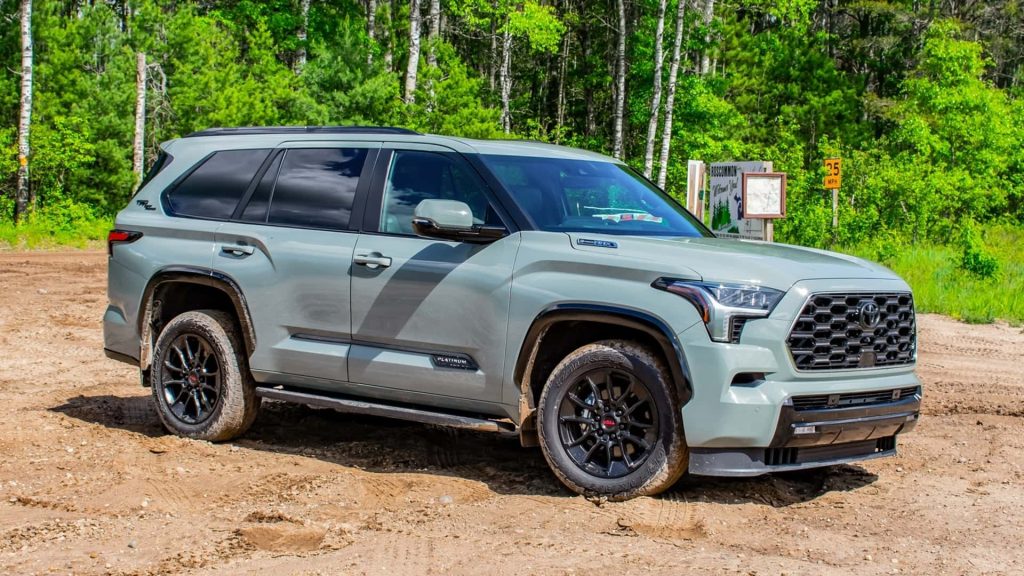
The Sequoia is still a large SUV, but its shorter footprint makes it more natural for family transportation.
The Tundra’s driving position and open-bed utility remain appealing to buyers who want a truck first. But if the vehicle is primarily used for commuting, road trips, school runs, shopping, and carrying passengers, the Sequoia’s design is better aligned with those tasks.
Winner: Toyota Sequoia
Capability, Versatility, and Long-Term Ownership
This is the hardest category because both vehicles are built around Toyota’s body-on-frame truck architecture, but their priorities are very different.
The Tundra has the advantage when one vehicle needs to perform several demanding jobs. It can serve as a commuter during the week, a tow vehicle on weekends, and a cargo hauler whenever necessary. Its available 4WD configurations and off-road-focused TRD models also give it substantial capability away from paved roads.
Toyota’s available Crawl Control system, offered on 4×4 TRD Pro and vehicles equipped with the TRD Off-Road Package, automatically manages throttle and braking at low speeds to help negotiate difficult terrain.
The Sequoia is also highly capable. Its truck-based construction, hybrid powertrain, available 4WD system, and towing technology make it much more capable than a typical three-row crossover. The TRD Pro version adds a stronger off-road focus while retaining the practicality of three rows.
But the Tundra has a broader working envelope. Its available 12,000-pound towing rating exceeds the Sequoia’s 9,500-pound maximum, while the pickup bed gives owners an additional form of cargo capacity that cannot be replicated by an SUV’s enclosed luggage area.
The Sequoia makes more sense if versatility means moving people and their belongings. The Tundra makes more sense if versatility means moving people, equipment, trailers, materials, and recreational toys.
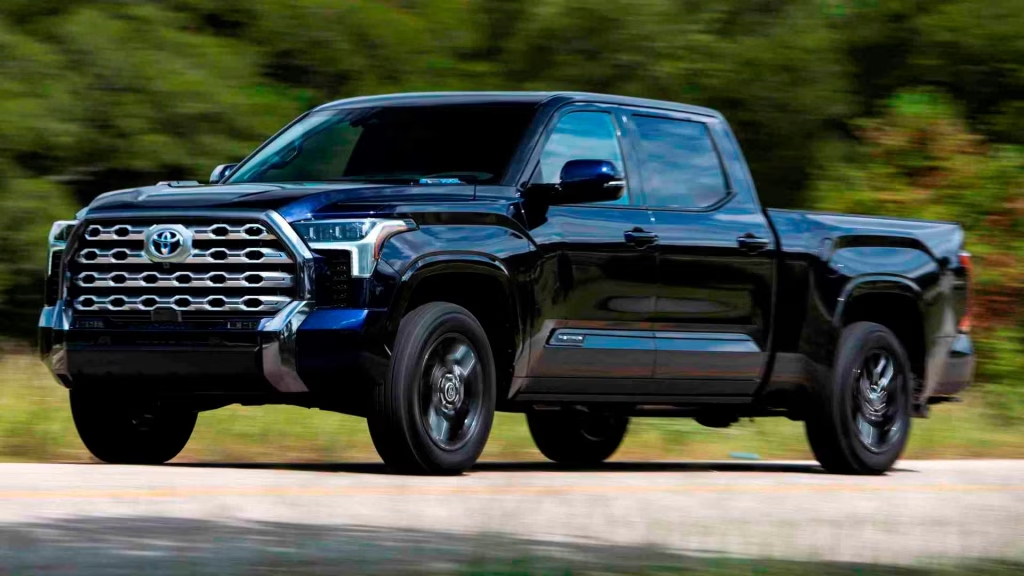
There is also the question of complexity. The Sequoia makes the i-FORCE MAX hybrid standard, whereas Tundra buyers can choose between the conventional i-FORCE and hybrid i-FORCE MAX. That gives Tundra customers greater freedom to select the powertrain that fits their priorities and budget.
For someone planning to keep the vehicle for many years, having the option to avoid unnecessary equipment can itself be valuable.
Winner: Toyota Tundra
Tundra vs. Sequoia: Which Is the Smarter Buy?
| Category | Winner | The Edge |
|---|---|---|
| Price and Value | Toyota Tundra | Lower entry price provides serious capability without paying for SUV packaging. |
| Powertrain and Performance | Toyota Tundra | Two powertrain choices deliver strong performance with greater configuration flexibility. |
| Towing and Hauling Capability | Toyota Tundra | 12,000-pound towing capacity and a dedicated cargo bed dominate utility. |
| Passenger Space and Family Practicality | Toyota Sequoia | Three rows and seating for up to eight make family transportation easier. |
| Comfort, Technology, and Everyday Driving | Toyota Sequoia | Premium cabin features and shorter dimensions suit daily family use better. |
| Capability, Versatility, and Long-Term Ownership | Toyota Tundra | Greater towing, hauling flexibility, and powertrain choice broaden its usefulness. |
Final Verdict: Toyota Tundra
The Toyota Tundra is the smarter buy for most buyers who prioritize value, capability, and versatility.
Its biggest advantage is that it does not force you to spend Sequoia money to get serious Toyota truck capability. Starting at $41,260, the Tundra gives buyers a substantially lower entry point, multiple powertrains, a dedicated cargo bed, up to 12,000 pounds of towing capacity, and up to 1,850 pounds of payload.
The Sequoia is the better choice for a family-focused buyer. Its $65,725 starting price buys three rows, seating for up to eight, enclosed cargo space, standard 437-hp hybrid power, and a more comfortable SUV-oriented cabin.
The decision becomes simple when the priorities are clear. Choose the Tundra if you tow frequently, carry large or dirty cargo, want a pickup bed, need maximum capability, or want to spend less upfront.
Choose the Sequoia if passenger capacity, enclosed cargo space, road-trip comfort, and family usability matter more than maximum towing and hauling ability.
For buyers who want one vehicle capable of handling work, recreation, towing, and everyday driving without paying more than necessary, the Tundra takes the smarter-buy crown.
