
The best roadside tool is rarely the one you buy after something goes wrong. A cheap tool sitting in the trunk can save a tow, a long wait, or an unnecessary trip to a repair shop when a minor problem appears at the worst possible time.
The trick is choosing equipment that solves a genuine problem without filling your vehicle with gadgets you will never use. Tire pressure, electrical faults, warning lights, loose fasteners, and dead batteries are all situations where inexpensive tools can make a real difference.
These eight options focus on affordable equipment that can be useful to American drivers without requiring professional mechanical skills.
1. Digital Tire Pressure Gauge
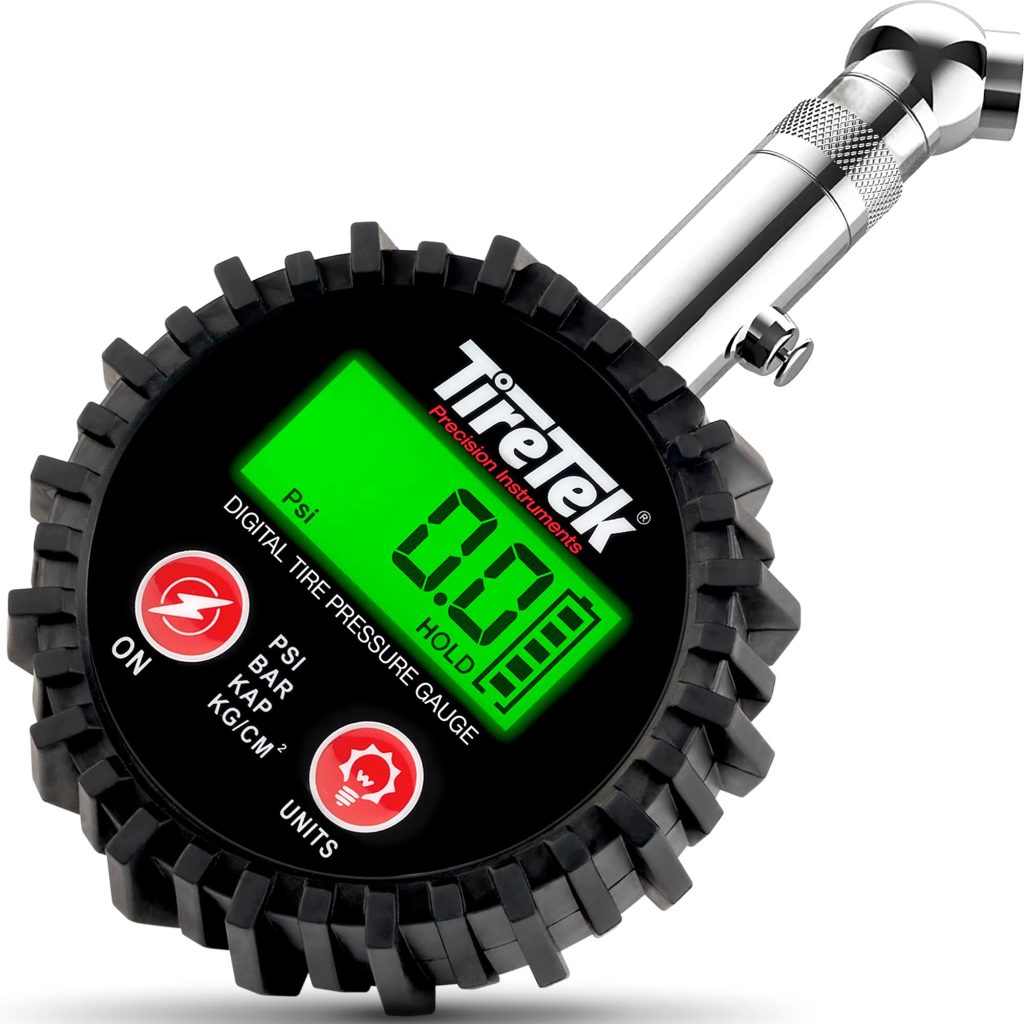
A digital tire pressure gauge is one of the cheapest tools that can prevent a surprisingly large amount of trouble. It takes seconds to check a tire, yet many drivers rely on the vehicle’s tire-pressure monitoring system alone. TPMS is useful, but it is not a substitute for regularly measuring pressure with a gauge.
A dedicated gauge lets you compare the actual pressure against the specification listed on the vehicle’s tire-information label. That number is vehicle-specific, so guessing based on the number molded into the tire sidewall can lead to the wrong pressure. A good digital gauge also makes small differences easier to identify than a basic visual inspection.
You do not need an expensive professional instrument for normal roadside use. For example, Harbor Freight’s current MERLIN Digital Tire Inflator displays pressure in 0.1 PSI increments and is rated at plus or minus 1 percent accuracy at 150 PSI. It costs $29.99 at the time of checking, although prices can change.
The bigger benefit is catching a problem before the tire becomes visibly flat. A slow leak can reduce pressure over days or weeks while the vehicle still appears perfectly normal. Checking all four tires before a long trip can reveal an imbalance that deserves investigation.
Keep the gauge somewhere accessible rather than buried under luggage. If you feel the steering suddenly change, see a tire-pressure warning, or simply have not checked pressures recently, you can verify the tires immediately.
It is a small purchase with a very practical purpose, and unlike many emergency gadgets, it is useful even when nothing is broken.
2. 12-Volt Tire Inflator
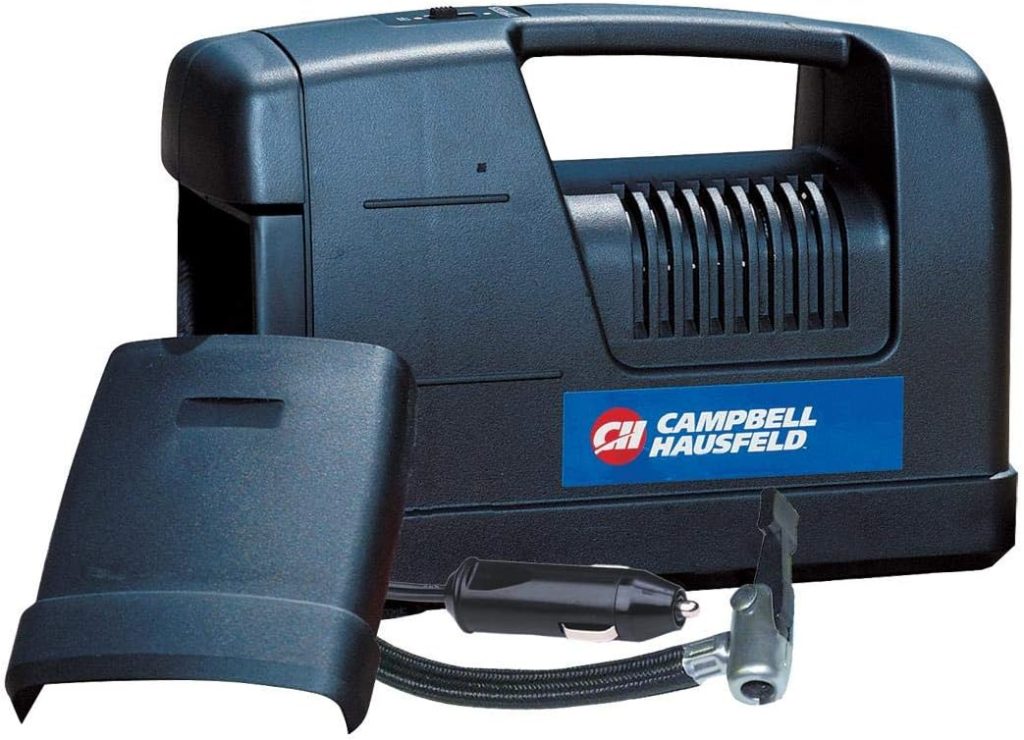
A tire inflator becomes valuable at exactly the moment when finding a gas station with a working air machine becomes inconvenient. A compact 12-volt compressor can restore pressure after a slow leak or top up a tire that has gradually lost air, potentially allowing you to reach a tire shop rather than stopping immediately for roadside assistance.
There is a good reason this tool belongs near the top of a cheap-car-tool list. Cars.com includes a tire inflator among its recommended basic tools for vehicle owners, alongside a pressure gauge, multimeter, OBD-II reader, and portable jump pack.
The affordable options can be surprisingly capable. Harbor Freight’s Pittsburgh 12V Portable Tire Inflator is rated at 0.59 CFM and can inflate a standard 195/70R14 car tire from 0 to 35 PSI in about six minutes. The unit weighs 1.65 pounds and includes a 10-foot power cord, making it small enough to keep in a trunk without sacrificing much space.
A more powerful option is available for drivers who want faster inflation. Pittsburgh’s 12/120V model is rated at 120 PSI and is advertised as filling a standard car tire from 0 to 35 PSI in 5.5 minutes. It can run from either a vehicle’s 12-volt supply or a 120-volt outlet.
Remember what an inflator cannot do. If a tire has a major puncture or damaged sidewall, adding air is not a repair. It is a temporary measure to help you reach a safe location when the tire can still hold pressure.
This distinction makes a portable inflator most useful when used alongside a reliable pressure gauge. The gauge shows the tire’s actual pressure, while the compressor allows you to correct low pressure when the issue is minor. Together, they provide a simple way to monitor and adjust tire pressure when needed.
3. Basic OBD-II Code Reader
An inexpensive OBD-II scanner can be one of the most useful tools you own because it gives you information when the check engine light suddenly appears. Every passenger vehicle sold in the United States from the 1996 model year onward has standardized OBD-II diagnostic capability, making a basic scanner useful across a huge range of vehicles.
You do not need a $500 professional diagnostic computer for the first step. Car and Driver’s 2026 testing found budget options capable of reading diagnostic trouble codes, while its testing of the ANCEL BD310 showed that an affordable scanner can also provide live data and freeze-frame information.
The publication also specifically recommends keeping an OBD-II scanner available because it can help determine whether a warning requires immediate attention.
The important thing is understanding what the code means. A trouble code is not automatically proof that a particular component has failed. It tells you what system or condition the vehicle’s computer has detected, which can narrow the investigation considerably.
For example, if the check engine light appears while you are traveling, a scanner can tell you whether the computer has stored a fault before you start guessing. That information can be particularly valuable before deciding whether to continue driving or seek professional help.
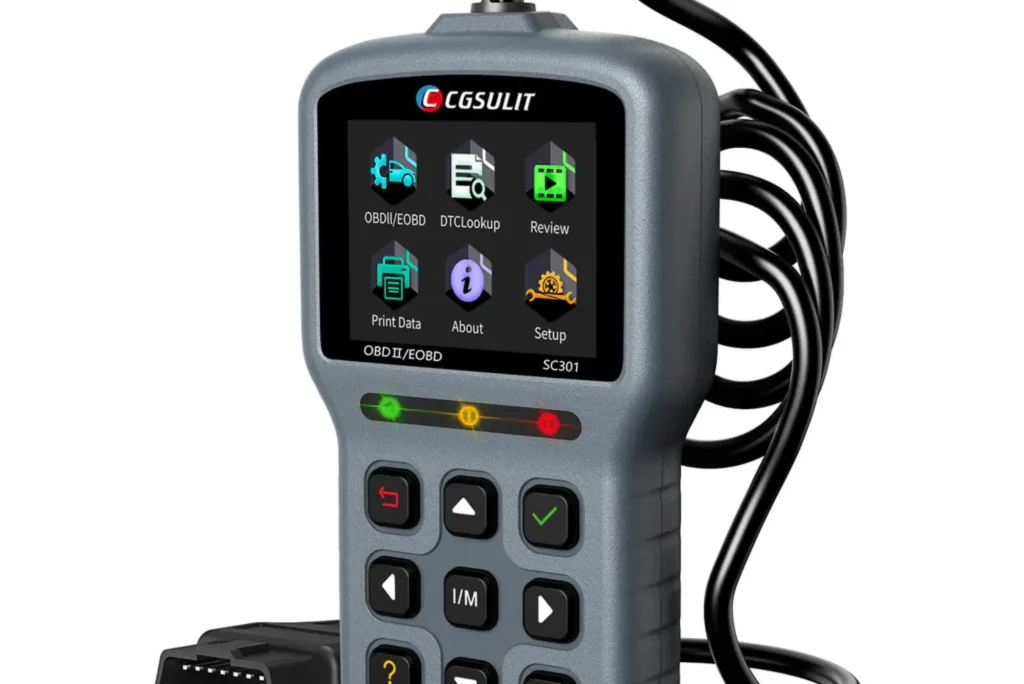
Basic scanners are also inexpensive compared with diagnostic visits. You can find simple units around the $20 to $50 range, while more capable models with live data cost more.
Keep one in the glove box rather than the trunk if possible. When the warning light appears, you want the scanner immediately available. It may not fix the problem, but it can turn an alarming dashboard light into useful information.
4. Digital Multimeter
A digital multimeter is the tool to reach for when the problem looks electrical, but the cause is unclear. Unlike a simple battery tester, a multimeter can measure voltage, resistance, and electrical continuity, making it useful for investigating batteries, fuses, switches, wiring, and charging-system problems.
That versatility is exactly why Cars.com includes a multimeter among its recommended basic tools for car owners. Its 2026 guide specifically identifies a multimeter as useful for checking battery voltage, while other automotive tool guides place it among the fundamental pieces of DIY diagnostic equipment.
You can use one for a surprisingly wide range of basic checks. A voltage measurement across the battery terminals can help determine whether the battery has adequate charge.
A continuity test can help establish whether a fuse or wire has an electrical path. Resistance measurements can sometimes identify an open circuit or an electrical component that is behaving differently from its specified range.
The tool itself does not need to be expensive. A basic automotive-capable meter can be purchased for relatively little money, and you do not need advanced laboratory functions for ordinary vehicle troubleshooting.
One important warning should be kept in mind. A multimeter is useful only when it is connected and set up correctly. Choosing the wrong measurement mode or placing the probes incorrectly can damage the meter and may even create a dangerous short circuit.
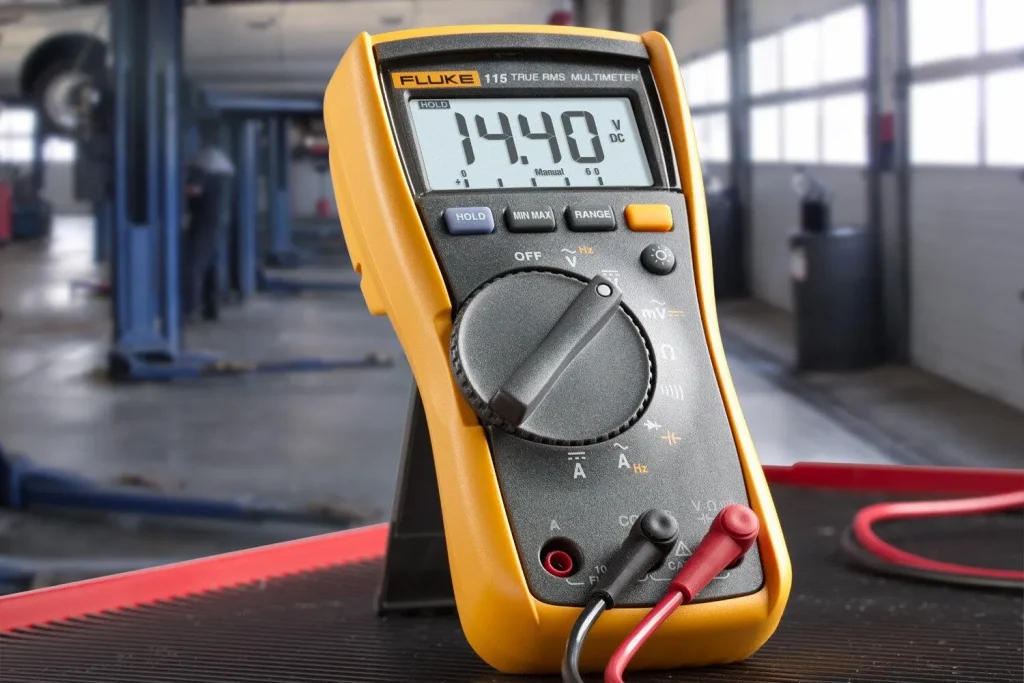
Read the meter’s instructions before testing unfamiliar circuits, and never assume that a resistance setting should be used on a powered circuit.
Once you understand the basics, however, this inexpensive tool can save considerable guesswork. A car that refuses to start might have a battery problem, bad connection, blown fuse, or charging fault.
A multimeter cannot make the diagnosis automatically, but it gives you actual measurements instead of forcing you to replace parts at random.
5. Telescoping Magnetic Pickup Tool
A telescoping magnetic pickup tool looks almost too simple to deserve a place in a car, but dropping a small metal part into the wrong place can quickly prove otherwise.
A bolt, nut, socket, or even a small wrench can disappear into the cramped space around an engine bay, under a seat, or behind interior trim. A magnetic pickup tool gives you a cheap way to retrieve ferrous objects without dismantling half the vehicle.
Its usefulness comes from access rather than mechanical complexity. The telescoping shaft lets you extend the tool into narrow gaps that your hand cannot reach. Some models also use a flexible shaft, allowing the magnetic end to be positioned around obstructions.
This is especially handy during basic maintenance. If you drop a fastener while changing a battery, replacing an air filter, or working around the engine compartment, searching blindly with your fingers can be frustrating. A magnetic pickup tool can locate the missing piece quickly if it is made from a magnetic metal such as steel.
The main limitation is that magnets cannot attract every type of metal. Materials such as aluminum, copper, brass, and many stainless steel alloys generally do not respond strongly to ordinary permanent magnets. As a result, a magnetic pickup tool is useful for certain situations but cannot be relied on as a universal retrieval solution.
Cheap versions are widely available, and there is little reason to spend heavily unless you need a particularly strong magnet or a specialized flexible design. Look for a sturdy shaft and a magnet that is securely attached rather than simply glued onto the end.
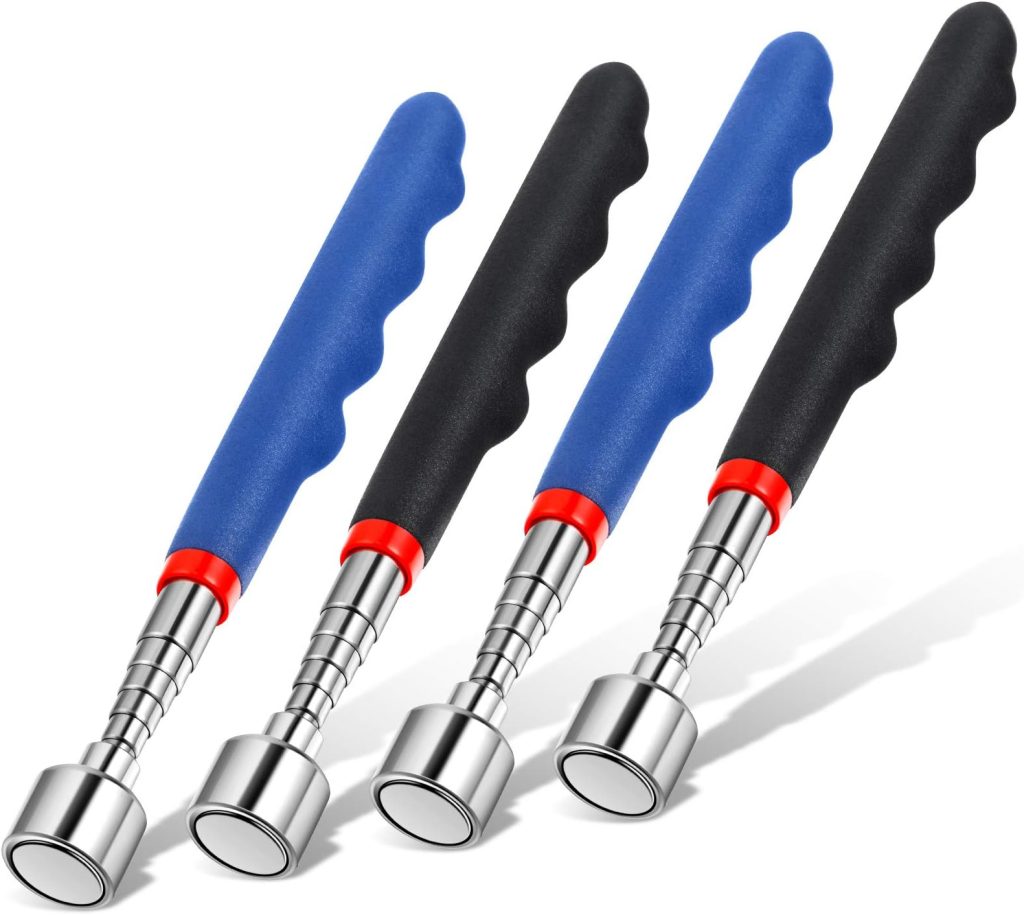
It can also help retrieve small metallic objects that fall onto the ground during roadside work. The tool takes almost no trunk space, weighs very little, and requires no batteries.
That combination makes it one of those tools you may ignore for months and then desperately appreciate for 30 seconds. It will not repair a car, but when a tiny metal part disappears into an inaccessible gap, it can save time, frustration, and unnecessary disassembly.
6. Compact Ratchet and Socket Set
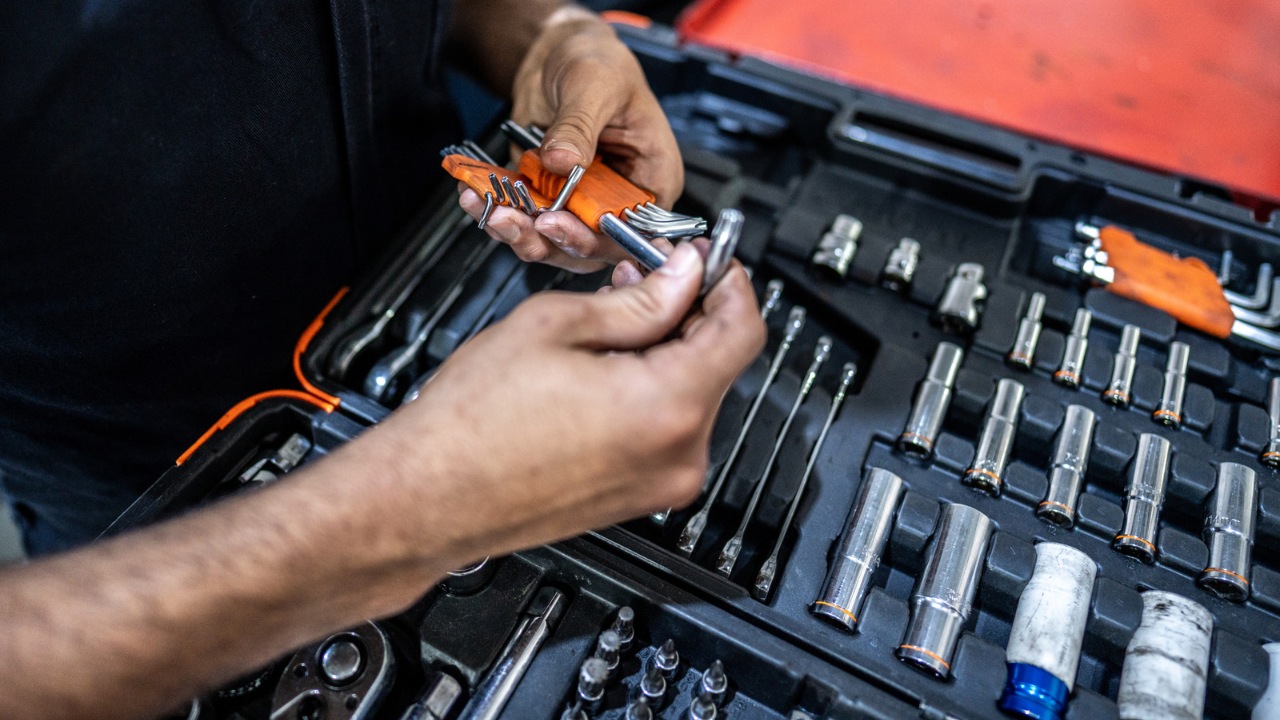
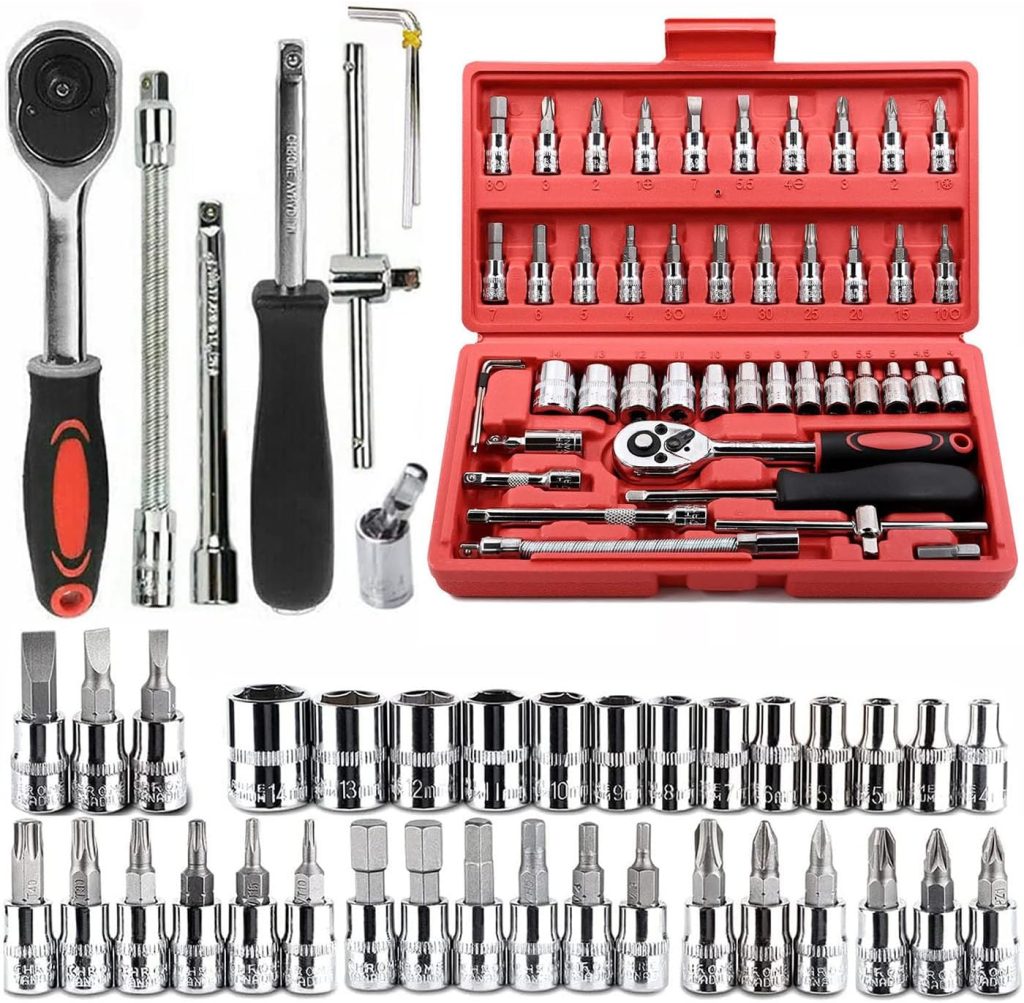
A compact ratchet and socket set can turn a roadside problem from an inconvenience into something you can actually address. Many basic automotive repairs involve fasteners, and carrying the correct sockets is far more useful than trying to improvise with pliers or an adjustable wrench.
You do not need a giant professional mechanic’s set in the trunk. A compact automotive kit covering common SAE and metric sizes can handle many basic jobs. Cars.com specifically recommends carrying basic hand tools, including sockets, wrenches, and screwdrivers, as part of an emergency vehicle toolkit.
A ratchet also offers an important advantage in confined spaces. The socket remains engaged with the fastener while the handle can be moved through a relatively small arc. That is much easier to manage around brackets, battery terminals, and other components than repeatedly repositioning an ordinary wrench.
The set becomes especially useful when combined with a few extensions. A short extension can reach recessed fasteners while keeping your hands away from nearby components. A universal joint can help with awkward angles, although it should not be used carelessly on heavily loaded fasteners.
Choose a set with clearly marked sockets and a sturdy case. A cheap set that mixes metric and SAE sizes without clear identification can create more frustration than it solves. For most modern vehicles, metric fasteners are common, but having some SAE sizes available can still be useful when dealing with aftermarket equipment, older vehicles, or accessories.
There is a safety boundary here. A roadside tool kit is not a substitute for proper lifting equipment or a secure workshop. Never crawl underneath a vehicle supported only by an emergency jack.
Used within its limits, though, a compact ratchet set is one of the most versatile inexpensive tools you can carry. It can tighten a loose fastener, remove a battery terminal, secure a loose component, or help with minor repairs when waiting for assistance is not your only option.
7. Trim Removal Tool Set
A trim removal tool set is a simple and affordable way to make one of the more frustrating car maintenance tasks easier. Interior panels can be difficult to remove without breaking plastic clips or retainers. Using a screwdriver may also leave scratches on the trim or damage the fasteners. A proper trim tool provides better leverage and helps protect the surrounding surfaces while you work.
The basic idea is simple. These tools are shaped like small wedges or levers that allow you to separate panels while spreading the force across a wider area. Many sets include several shapes because automotive interiors use different types of clips and access points.
This becomes useful for jobs that do not initially sound like “repairs.” Replacing a cabin air filter, accessing a fuse panel, investigating a rattle, installing a dash camera, routing a charging cable, or reaching a door component may require removing trim.
Having the right plastic tools means you are less tempted to pry against a visible surface with a metal screwdriver.
A good set does not need to cost much. The main qualities to look for are reinforced construction, smooth edges, and several different profiles. Nylon or similar non-marring materials are generally preferable for painted or textured interior surfaces because they are less likely to leave scratches than bare metal.
There is also a technique involved. If a panel refuses to move, more force is not necessarily the solution. Manufacturers often hide fasteners beneath covers or use clips positioned farther from the obvious opening. Prying aggressively can break the trim before you discover the retaining point.
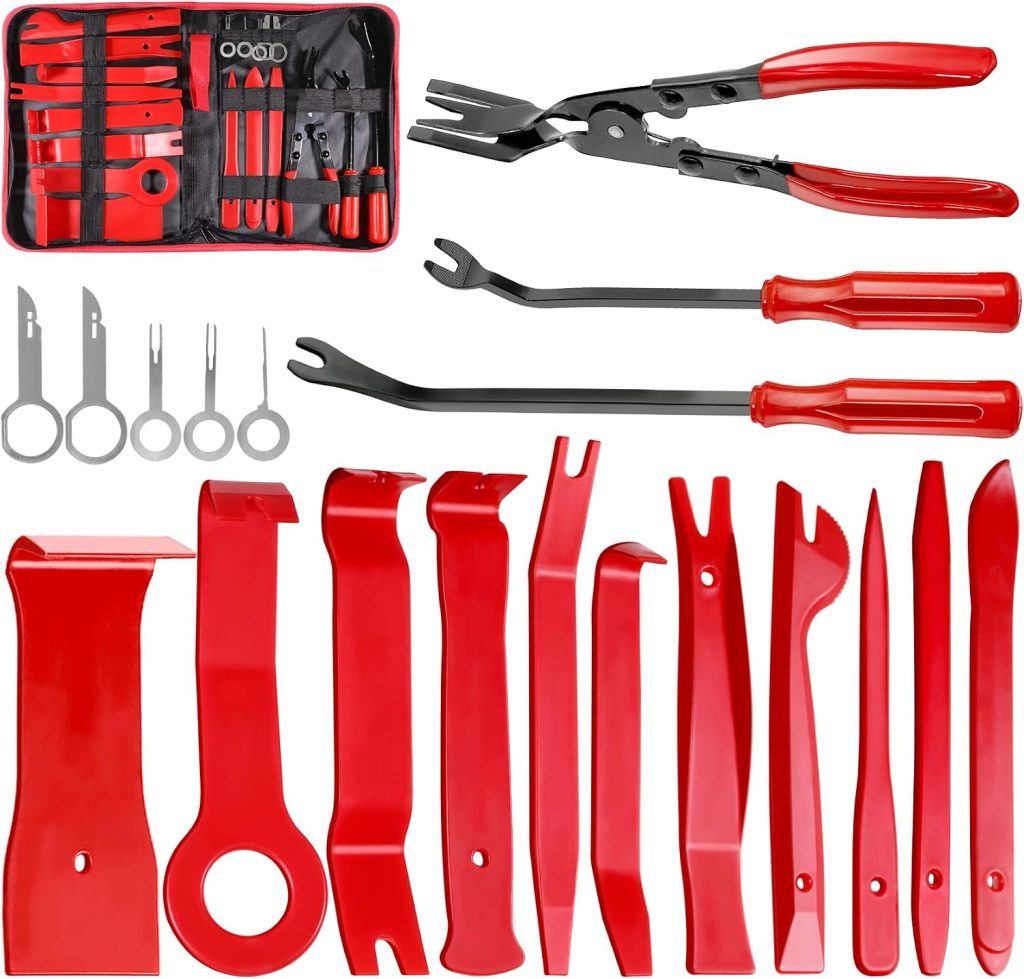
That is why these tools are most valuable as prevention equipment. You keep them until you need to access something, then use the correct shape rather than improvising.
They are particularly worthwhile for anyone who performs even occasional DIY work. A set can sit flat in a small compartment and remain useful for years.
When a dashboard panel needs to come off, or a door trim piece has to be separated, those few inexpensive plastic levers can make the difference between a clean job and an expensive replacement panel.
8. Jumper Cable Set
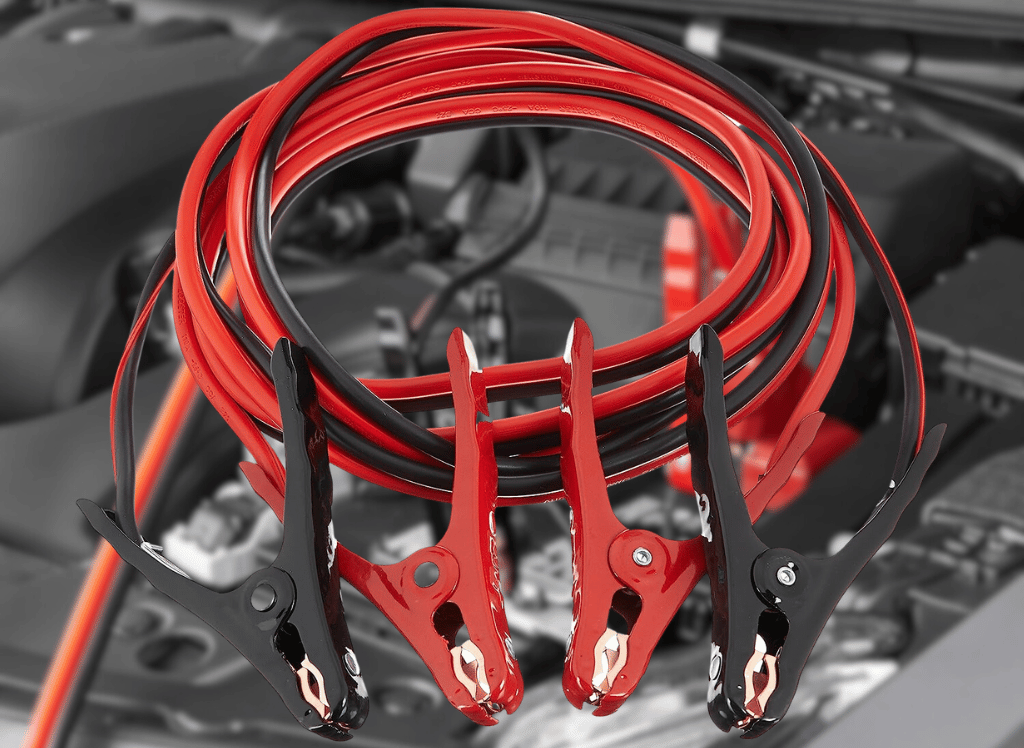
Jumper cables are arguably the most obvious tool on this list, but their usefulness is exactly why they belong in the trunk. A discharged 12-volt battery can leave a perfectly healthy vehicle unable to start, and a suitable set of cables can allow another vehicle with a compatible electrical system to provide enough power for the starter.
A good cable set is more than two pieces of wire with clamps attached. Cable thickness matters because starter motors can demand substantial current. Longer cables provide more flexibility when the assisting vehicle cannot be positioned directly beside the disabled vehicle, but longer cables also add resistance and weight.
Look for heavy-gauge cables with well-insulated clamps and enough length for realistic roadside positioning. The packaging should clearly identify the cable gauge and length rather than relying on vague descriptions such as “heavy duty.”
The correct connection procedure is more important than buying the most expensive set. Both vehicles should be positioned safely, ignition systems switched off before connection, and the positive and negative connections made in the correct sequence according to the vehicle and cable manufacturer’s instructions.
Modern vehicles can have sensitive electronics, so do not assume every vehicle should be treated exactly like an older car.
Jumper cables also have a limitation that drivers sometimes overlook. They do not repair a failed battery. If the battery has an internal failure, the vehicle may shut down again after the cables are removed. Similarly, a charging-system fault can cause a newly started vehicle to lose power again.
That is why cables work particularly well alongside the other inexpensive tools on this list. A tire gauge can identify low pressure, an OBD-II reader can provide diagnostic information, and a multimeter can help check electrical voltage. Jumper cables provide the immediate means to get a discharged vehicle running when the circumstances allow it.
They cost relatively little compared with a tow and take very little trunk space. Even if you never need to use them yourself, carrying a quality pair means you may be able to help another stranded driver safely when a dead battery turns an ordinary trip into an unexpected stop.
