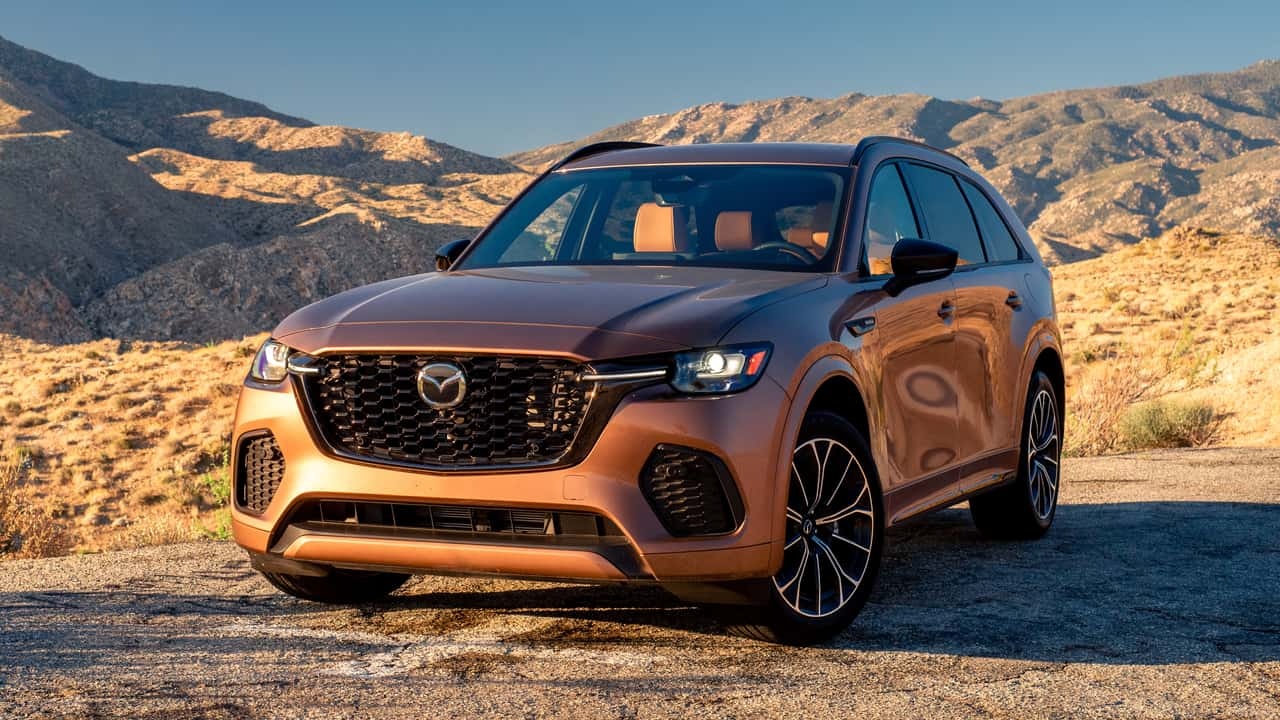
Buying a new car is usually expected to be a long-term decision, yet some models return to the used market surprisingly quickly. iSeeCars analyzed more than 18.5 million new-vehicle sales from 2023 and 2024 and found that the average first-year resale rate was 3.6%. Several models were returned at substantially higher rates.
That does not automatically mean these vehicles are unreliable or poor purchases. Financial pressure, changing needs, dealer demonstration vehicles, and buyer dissatisfaction can all contribute to an early trade-in.
The following models stand out because owners were statistically more likely to sell them within their first year.
1. MINI Clubman
The MINI Clubman stands out because its first-year resale rate was more than three times the 3.6% average recorded across the new-car market in iSeeCars’ study.
According to the research, 11.4% of Clubman units were resold within their first year, making it the most frequently resold non-luxury model in the analysis. Its average new-vehicle transaction price in the study was $43,102.
That figure needs some context. A high early-resale percentage does not establish that Clubman owners were unhappy with their vehicles. iSeeCars specifically notes that quick resale can result from several factors, including owner dissatisfaction, financial circumstances, and dealership practices involving demonstration vehicles.
The Clubman’s unusual design and positioning may also have attracted buyers whose needs changed after living with the vehicle.
The final U.S. Clubman model year was 2024, so the vehicle analyzed here represents a discontinued model rather than a current 2026 purchase.
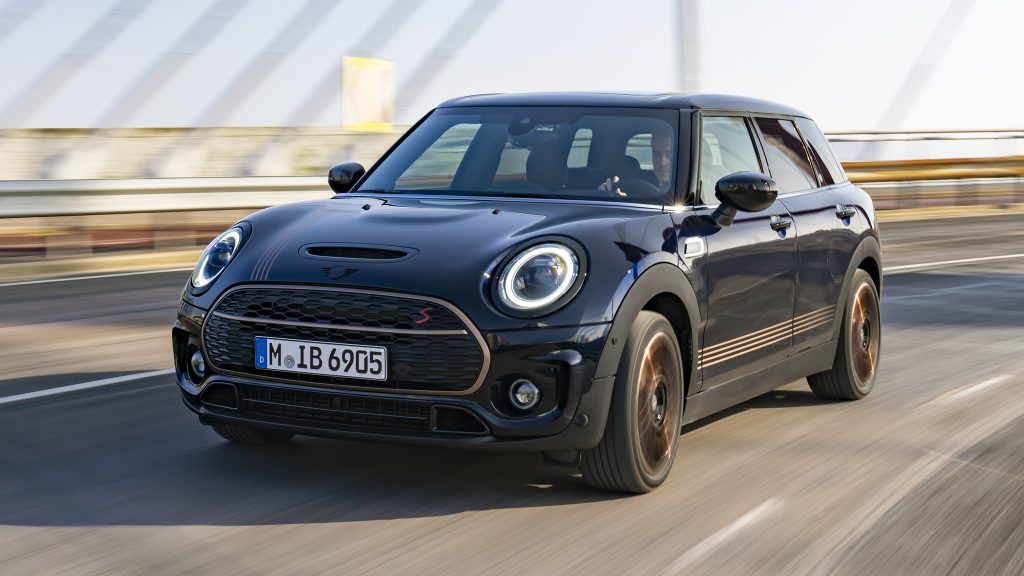
MINI’s U.S. specifications show the Cooper S using a turbocharged 2.0-liter four-cylinder producing 189 horsepower and 206 lb-ft of torque. The model combines a relatively compact footprint with five-passenger seating and a distinctive split rear-door arrangement.
For someone shopping the used market, that early resale history creates an interesting situation. A Clubman that was traded quickly can provide a buyer with a relatively low-mileage example without paying the original new-car price.
2. Mitsubishi Mirage G4
The Mitsubishi Mirage G4 represents a completely different reason for appearing near the top of the early-resale list. Its 8.6% first-year resale rate was more than double the 3.6% average identified by iSeeCars, while its average new price in the study was only $19,619. That made it the second-highest early-resale non-luxury model in the study.
The numbers are particularly interesting because the Mirage G4 was positioned as an inexpensive, fuel-efficient sedan rather than a premium or performance vehicle.
Mitsubishi’s U.S. brochure lists a 1.2-liter three-cylinder engine producing 78 horsepower, paired with a continuously variable transmission on the automatic-equipped versions. The G4 measured 169.5 inches long and 65.7 inches wide, giving it a small footprint for urban driving.
There is an important distinction between affordability and long-term suitability. A buyer may choose an inexpensive car because the initial purchase price looks attractive, then discover that its limited power, basic character, or small-car compromises do not match their needs.
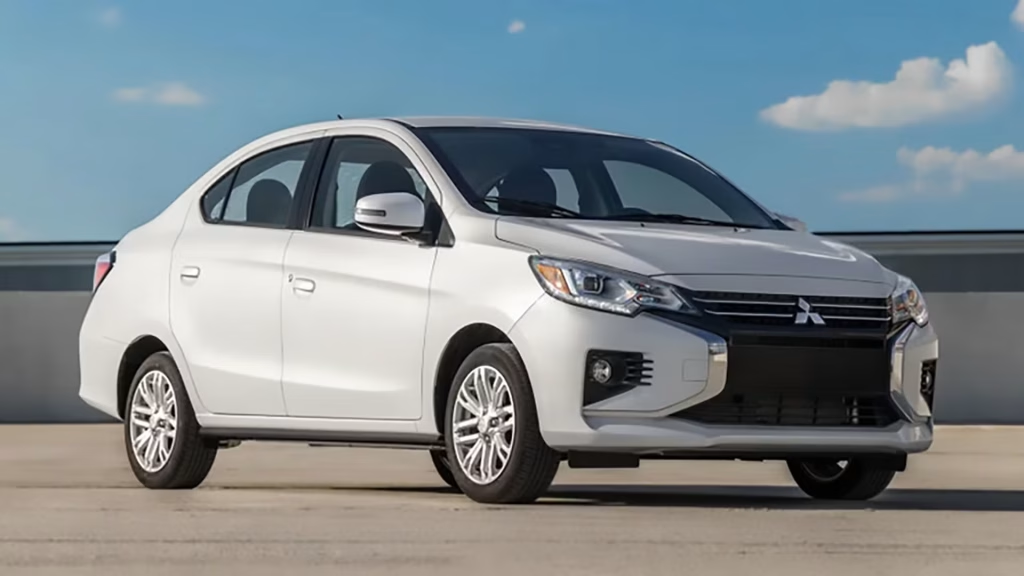
That does not make the Mirage G4 mechanically defective. In fact, iSeeCars’ current resale analysis shows the model retaining 58% of its value after five years, demonstrating that its high first-year resale rate should not automatically be interpreted as a collapse in long-term value.
The Mirage G4’s final new model year was 2024, so today’s examples are used vehicles rather than new-car alternatives.
3. Mazda CX-70
The Mazda CX-70 is an interesting entry because it was not a bargain-basement model or an aging design. It was a brand-new two-row crossover introduced for the 2025 model year, yet 7.2% of CX-70s were resold within their first year, according to iSeeCars.
That was exactly twice the 3.6% first-year resale rate across the broader new-car market in the study. Its average transaction price was $53,851.
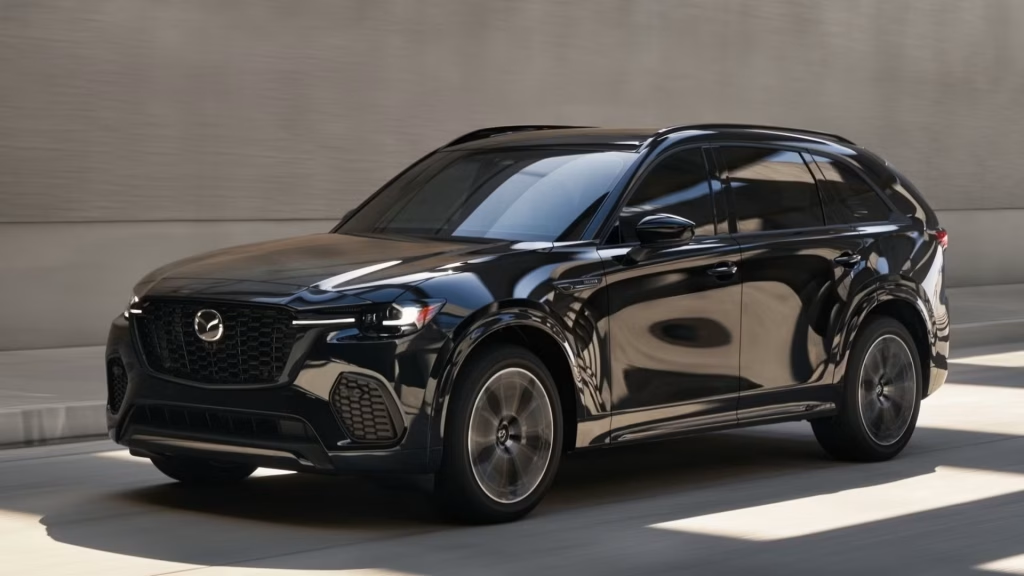
The early resale figure is particularly notable because the CX-70 was designed around buyers seeking a more premium, spacious alternative to smaller crossovers. Mazda positioned it as its largest two-row crossover in the U.S., with generous cargo capacity and several powertrain choices.
The standard 3.3-liter turbocharged inline-six produces 280 horsepower and 332 lb-ft of torque, while Turbo S versions increase output to 340 horsepower and 369 lb-ft. A plug-in hybrid is also available.
A first-year resale does not necessarily indicate a mechanical problem. iSeeCars points out that early sales can reflect dissatisfaction, financial circumstances, or dealership practices involving demonstration vehicles.
The CX-70’s position on the list therefore provides a reason to investigate why individual vehicles are being sold, rather than treating the percentage as a reliability verdict.
For used shoppers, that distinction matters. A nearly new CX-70 that has already absorbed part of its initial depreciation could offer a different financial proposition from buying one new.
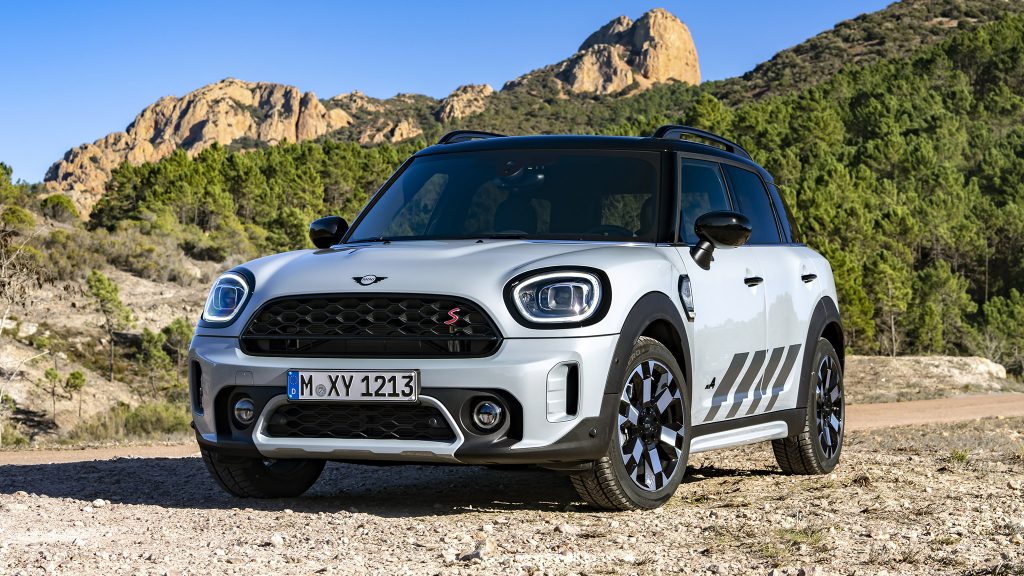
4. MINI Countryman
The MINI Countryman takes the early-trade pattern in another direction. iSeeCars recorded a 6.7% first-year resale rate, putting it well above the 3.6% average for all new vehicles in the study. The average new-vehicle price was $42,205. That means roughly one out of every 15 vehicles in the study appeared in the used market within the defined first-year period.
Countryman buyers are purchasing something quite different from a conventional compact SUV. The model combines MINI’s styling and driving character with substantially more space than the brand’s smaller cars.
For 2025, the Countryman S ALL4 used a 2.0-liter turbocharged four-cylinder producing 241 horsepower and 295 lb-ft of torque, with all-wheel drive and a seven-speed automated manual transmission. It also provides 25 cubic feet of cargo room behind the rear seats and up to 56.2 cubic feet with the rear seats folded.
Those characteristics can make the Countryman appealing on paper, but first-year ownership can reveal whether a buyer actually wanted MINI’s distinctive approach to an SUV. A customer who expected a conventional crossover experience may decide that another vehicle better matches daily driving, family needs, or operating preferences.
The resale statistic itself does not establish why owners left their Countrymen. iSeeCars explicitly identifies multiple possible explanations for rapid resale, including owner dissatisfaction, financial pressure, and dealer-related factors.
For used buyers, the important takeaway is that an early trade-in should trigger a vehicle-specific inspection and history check, not an automatic assumption that the model is problematic.
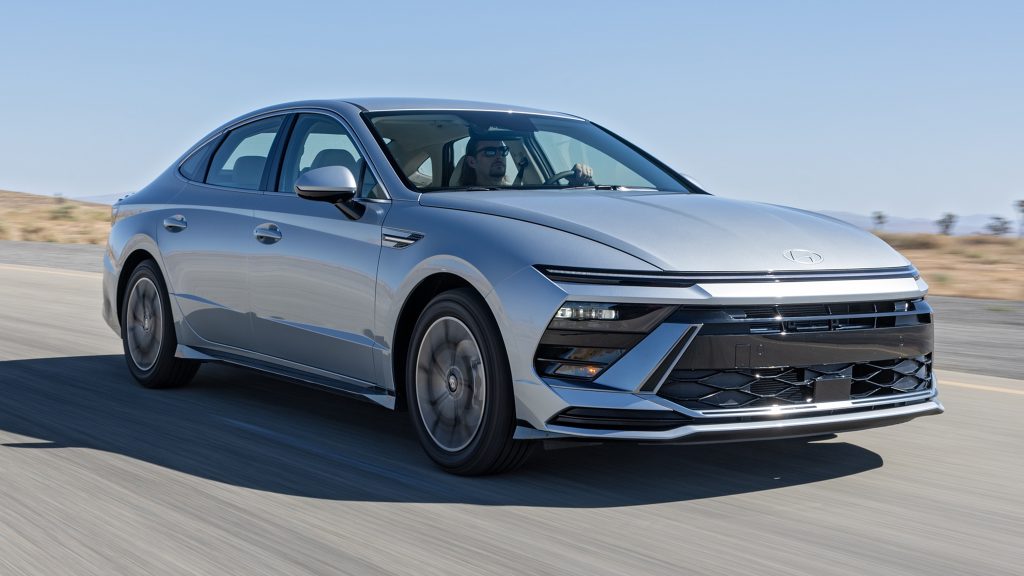
5. Hyundai Sonata
The Hyundai Sonata appears high on the early-trade list despite being one of the more conventional vehicles in the group. iSeeCars found that 6.4% of Sonata vehicles were resold within their first year, compared with 3.6% for the average new vehicle in its study.
The average new-vehicle transaction price was $31,127. That makes the Sonata an interesting example of how early resale patterns are not limited to expensive luxury vehicles.
The Sonata’s appeal has traditionally centered on value, efficiency, technology, and a roomy sedan layout.
For 2025, Hyundai offered several powertrains, including a 2.5-liter four-cylinder with 191 horsepower and 181 lb-ft of torque, a turbocharged 2.5-liter producing 290 horsepower and 311 lb-ft in the N Line, and hybrid versions rated at 192 combined horsepower. Hyundai also offered available all-wheel drive on certain gasoline versions.
That variety makes the first-year resale figure difficult to interpret as a simple statement about the car itself. Different trims attract different buyers, while changing family requirements, financing circumstances, or expectations can lead to an early trade.
iSeeCars specifically cautions that rapid resale can have several causes and does not necessarily indicate that a vehicle is defective.
For used shoppers, a recently traded Sonata could therefore be worth investigating on its individual merits. A complete maintenance history, mileage, accident record, and remaining factory warranty can tell a buyer considerably more than the early-resale statistic alone.
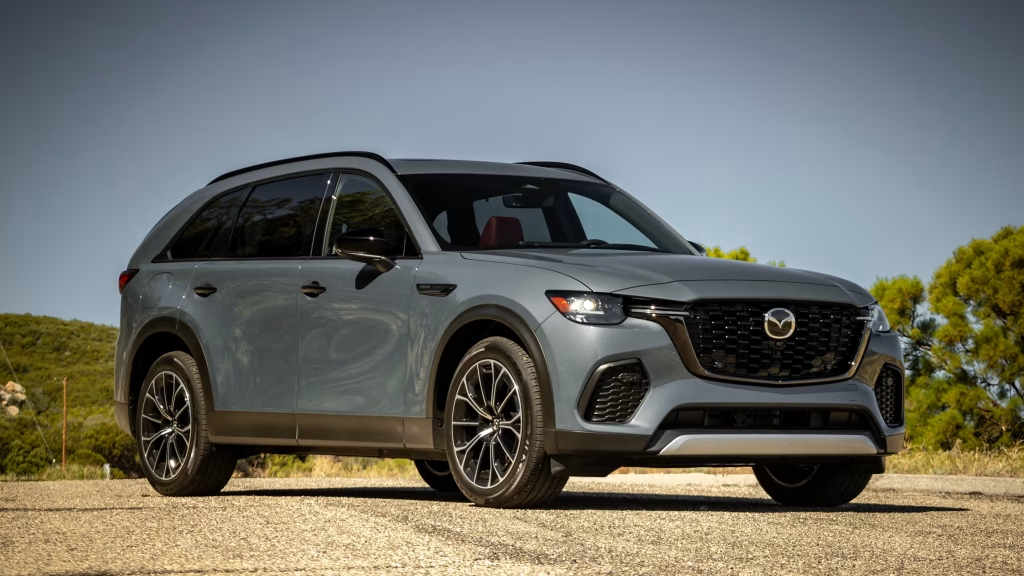
6. Mazda CX-90
The Mazda CX-90 recorded the same 6.4% first-year resale rate as the Hyundai Sonata, placing it well above the 3.6% average in iSeeCars’ analysis. Its average new-vehicle price was considerably higher, at $49,602. The CX-90 is also a relatively new model, making its appearance on the list particularly notable.
Mazda introduced the CX-90 as a larger three-row crossover built around its rear-biased large-vehicle platform. The model offers standard all-wheel drive and multiple powertrains.
The 3.3-liter turbocharged inline-six produces 280 horsepower and 332 lb-ft of torque, while Turbo S versions increase output to 340 horsepower and 369 lb-ft when using the recommended 91-octane fuel. Mazda also offers a plug-in hybrid producing 323 horsepower and 369 lb-ft.
Its early resale rate should not be treated as proof of a widespread mechanical issue. The iSeeCars methodology identifies vehicles that were resold after their original purchase, but the data cannot establish the reason each owner sold.
Some transactions can involve changing circumstances or dealership practices rather than dissatisfaction.
There is another useful angle for used buyers. Because the CX-90 entered the market recently, an early trade can put a nearly new three-row SUV on the used market with much of its original depreciation already absorbed. A buyer should still verify the specific vehicle’s service history and warranty status before making a decision.
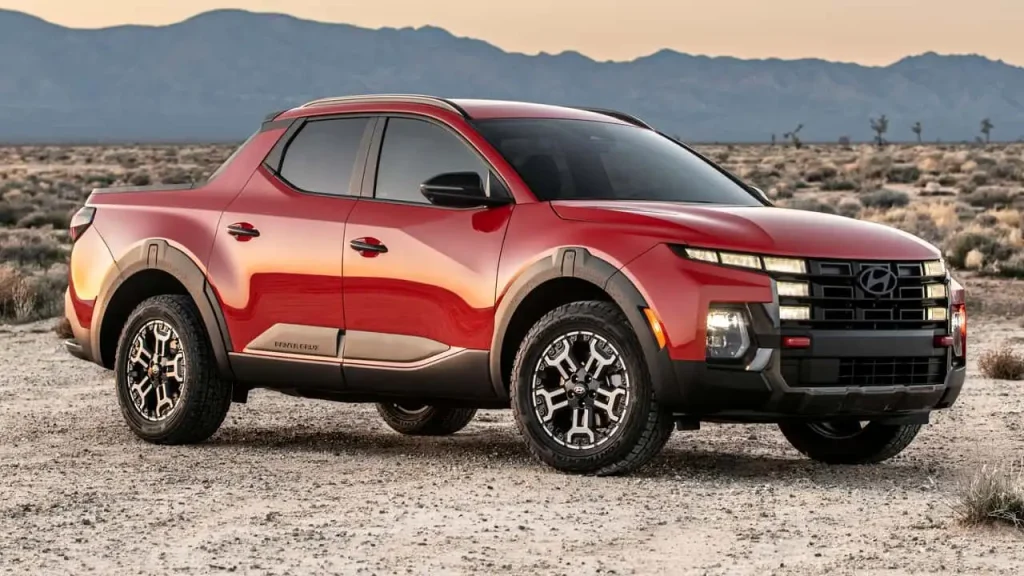
7. Hyundai Santa Cruz
The Hyundai Santa Cruz is another unusual entry because it occupies a niche between a compact pickup and a crossover. iSeeCars found that 6.4% of Santa Cruz models were resold within the first year, compared with a 3.6% average across the vehicles included in its study.
Its average new-vehicle transaction price was $36,764. The figure puts the Santa Cruz alongside the Sonata and CX-90 in the study’s early-resale data.
The Santa Cruz’s unusual format could be part of the reason some buyers reassess their purchase after living with it. It has a five-seat cabin and a 52.1-inch cargo bed, giving it useful pickup functionality without the size of a traditional body-on-frame truck.
That combination works well for some owners, while others may discover that they need either more passenger space or substantially more cargo and towing capability.
Hyundai offered the 2025 Santa Cruz with a naturally aspirated 2.5-liter four-cylinder making 191 horsepower and 181 lb-ft of torque, while the turbocharged version produced 281 horsepower and 311 lb-ft. Depending on configuration, the maximum towing capacity reached 5,000 pounds with trailer brakes.
The early-resale statistic should not be treated as evidence that Santa Cruz itself is unreliable. iSeeCars says first-year resale can result from several factors, including owner dissatisfaction, financial circumstances, and dealership practices.
The data identifies how frequently vehicles returned to the used market, not why every owner sold one.
8. Toyota GR Corolla
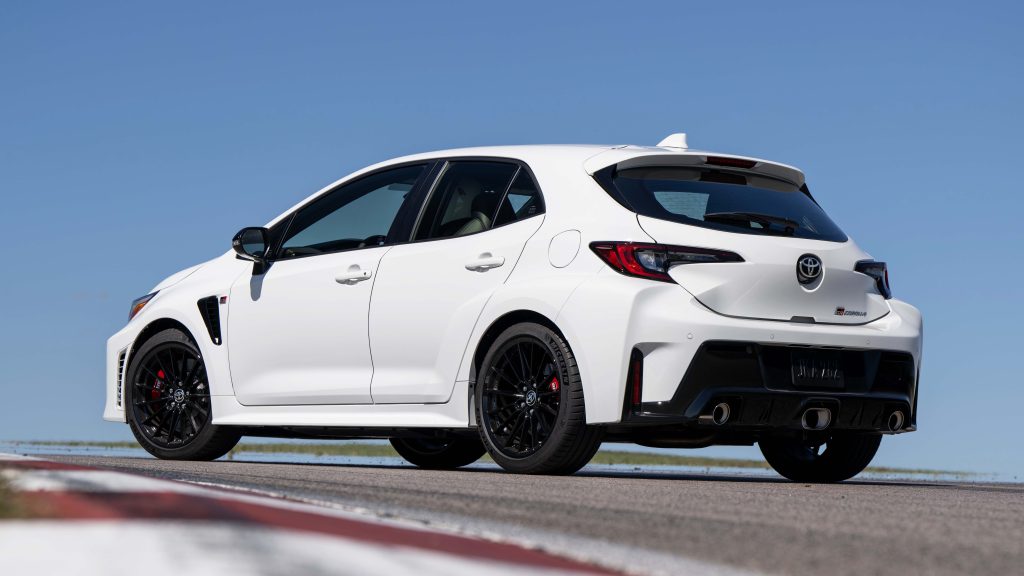
Few cars on this list are as specialized as the Toyota GR Corolla. The high-performance hatchback recorded a 6.3% first-year resale rate, according to iSeeCars, compared with 3.6% for the average new vehicle in the study. Its average new-vehicle price was $43,058.
That number is particularly interesting because the GR Corolla was not designed as an ordinary commuter hatchback. Toyota built it around a turbocharged 1.6-liter three-cylinder engine, GR-FOUR all-wheel drive, aggressive chassis tuning, and performance-focused hardware.
For the U.S. market, Toyota lists the engine at 300 horsepower and 273 lb-ft of torque for the 2025 model year. Earlier versions produced 300 horsepower and 273 lb-ft of torque as well.
The car’s character may make it appealing to enthusiasts who specifically want a high-performance compact. At the same time, a buyer who initially wanted an exciting second vehicle could reconsider after experiencing the compromises that accompany a performance-oriented car.
Ride comfort, road noise, cargo limitations, fuel requirements, and the realities of daily use can matter more after the excitement of a new purchase fades.
There is also a financial dimension. A specialized performance model can attract buyers who later decide their priorities have changed. The 6.3% figure does not establish that GR Corolla owners encountered mechanical problems, and iSeeCars’ methodology cannot determine the reason behind each resale.
For a used example, the vehicle’s history matters considerably. Buyers should check maintenance records, tire condition, accident history, and evidence of modifications or hard use before assuming an early trade-in was simply a normal ownership change.
9. Jeep Cherokee
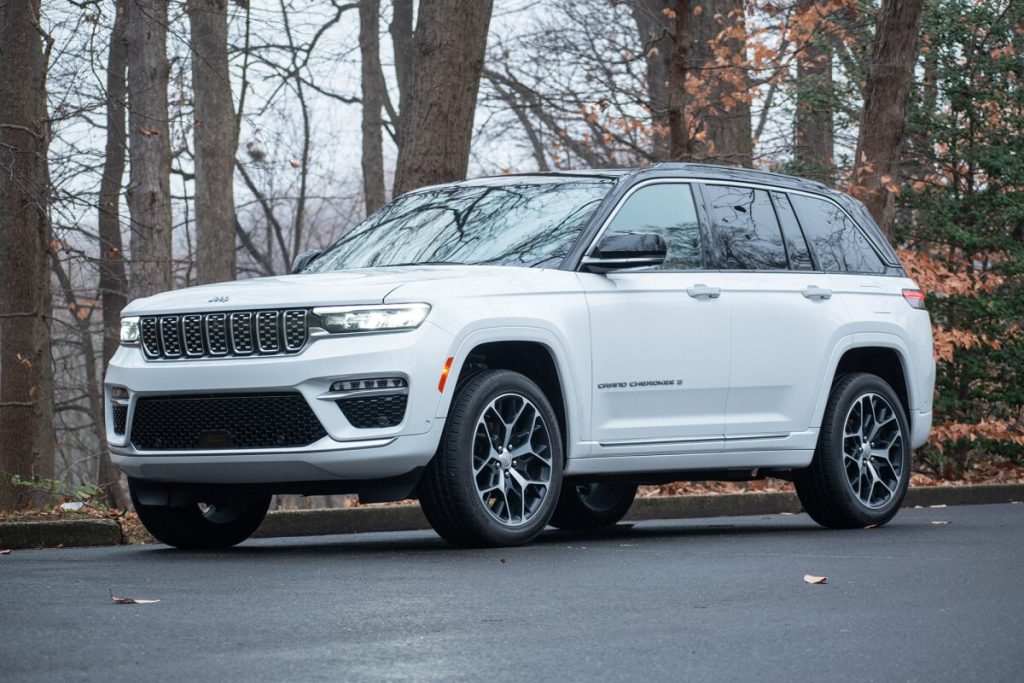
The Jeep Cherokee recorded a 6.3% first-year resale rate in iSeeCars’ analysis, considerably above the 3.6% average for new vehicles. Its average new-vehicle transaction price was $39,350.
The figure places the Cherokee alongside several newer or more specialized models in the non-luxury group, but the statistic should be read carefully because it measures early resale activity rather than a specific mechanical problem.
The Cherokee’s position is also notable because it had already reached the end of its U.S. production run. Jeep discontinued the fifth-generation Cherokee after the 2023 model year, meaning vehicles represented in this dataset were coming from a model line that was already being phased out.
That can influence resale behavior because buyers sometimes reconsider vehicles when a generation or model is discontinued.
There is another important detail in iSeeCars’ methodology. The company identified vehicles that were relisted and sold between four months and one year after their original sale.
It excluded vehicles with fewer than 4,000 miles, along with certain low-volume and discontinued models, so the study is not simply counting every vehicle that changed hands shortly after purchase.
For shoppers considering a used Cherokee, the reason behind the individual trade-in matters more than the percentage alone. A service history, accident record, mileage, and condition can reveal considerably more about a particular example than its inclusion on an early-resale list.
10. MINI Hardtop 4 Door
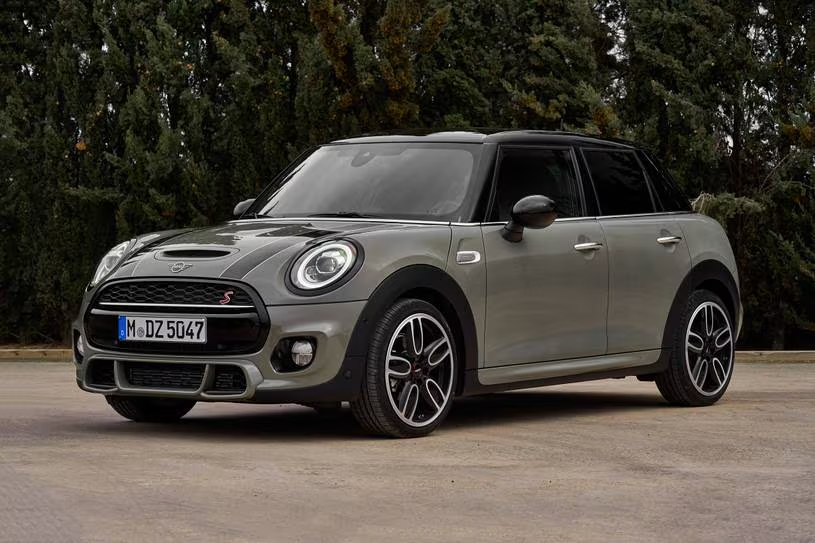
The MINI Hardtop 4 Door completes the non-luxury portion of iSeeCars’ study with a 6.3% first-year resale rate, almost twice the 3.6% rate for the average new vehicle.
The model had an average new-vehicle transaction price of $37,070. Its inclusion also gives MINI three of the ten non-luxury models featured in the study, the Clubman, Countryman, and Hardtop 4 Door.
The four-door hardtop occupies a very specific space in the American market. It provides five seats and greater practicality than the two-door hardtop while retaining the compact dimensions and distinctive styling associated with MINI.
For 2024, the Cooper S version used a turbocharged 2.0-liter four-cylinder producing 189 horsepower and 206 lb-ft of torque. The car measured just 159.1 inches long and 68 inches wide without its mirrors, making it substantially smaller than most American-market crossovers.
That compact size can be an advantage in cities, but it also means the vehicle has a very different ownership proposition from a conventional compact SUV. A buyer who initially prioritizes styling and maneuverability may later decide that additional rear-seat room, cargo space, or a higher driving position matters more.
The 6.3% resale rate does not establish that those owners had the same reason for selling. iSeeCars identifies several possible causes for unusually rapid resale, including changing financial circumstances, dissatisfaction, and dealer demonstration-vehicle practices.