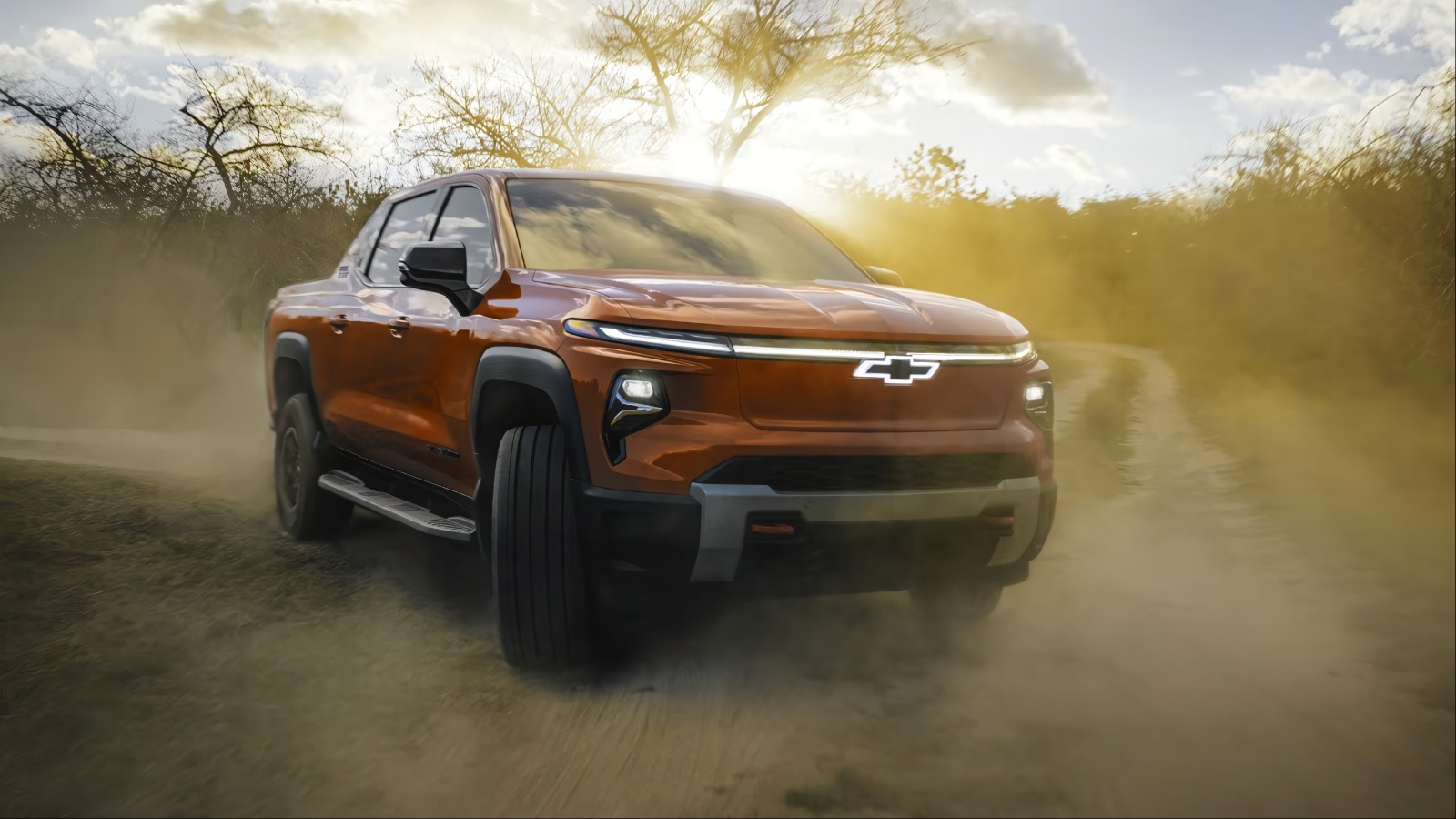
Chevrolet is simplifying the 2027 Silverado EV lineup while making a modest increase to prices across the remaining versions. According to an order guide reported by AutoEvolution and CarsDirect, the electric pickup will cost $200 to $400 more depending on trim, while two versions, the 4LT and RST Stars and Stripes, will disappear.
The changes arrive during a difficult period for electric pickups in the United States. Ford is ending production of the F-150 Lightning, while General Motors is continuing to offer the Silverado EV and GMC Sierra EV.
Chevrolet’s decision to narrow the lineup suggests it is concentrating on fewer configurations as demand for large electric trucks remains below the levels automakers had anticipated.
For 2027, the 4WT Work Truck will start at $53,200 before destination, an increase of $400. The 5WT and 8WT work truck versions rise to $66,600 and $74,600, respectively.
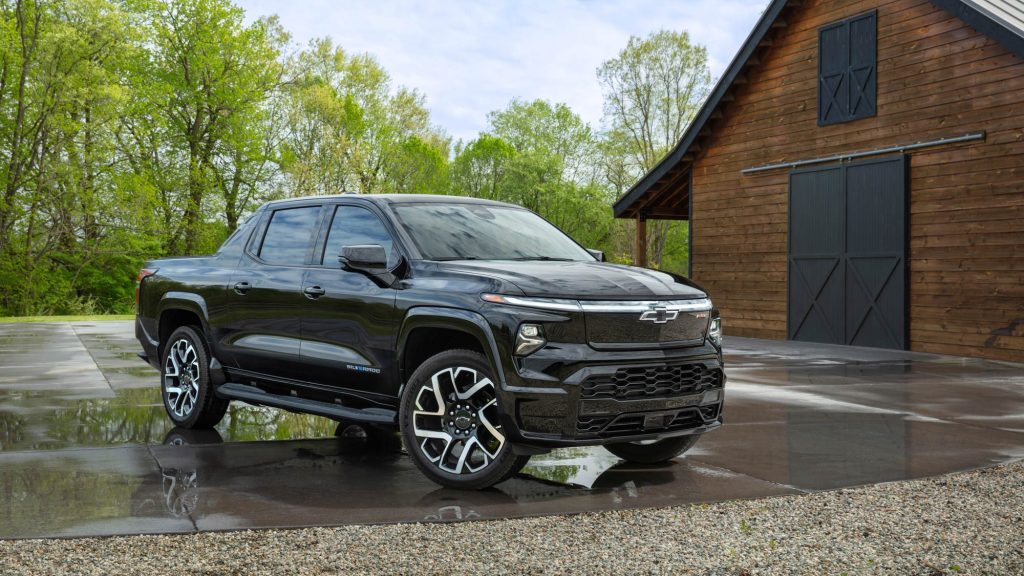
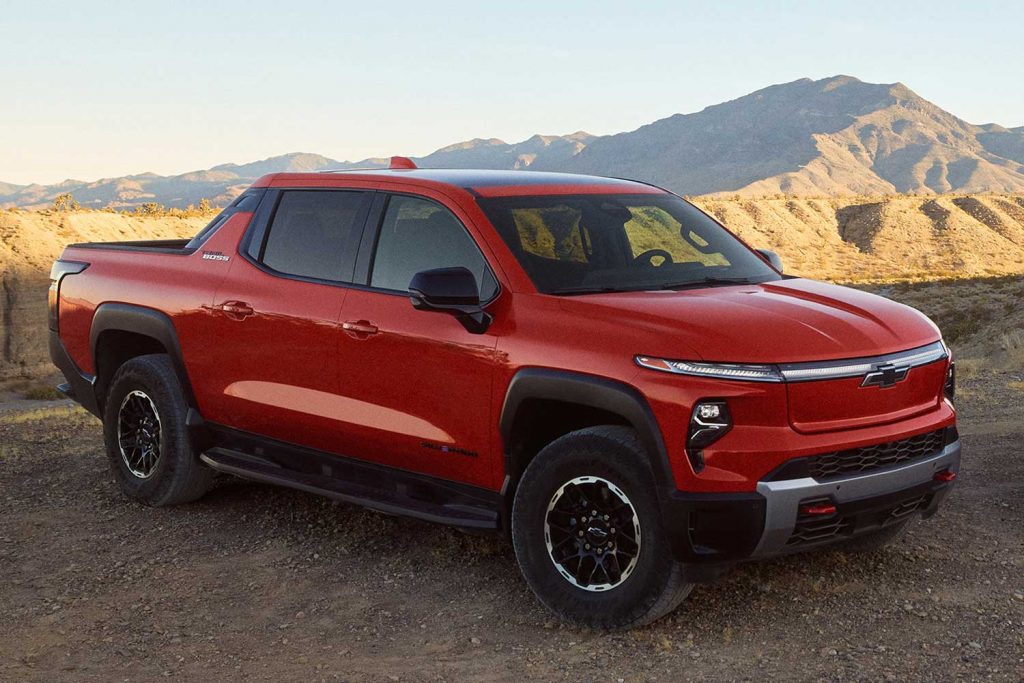
The 2LT increases to $61,100, the 3LT to $69,300, the 2TR Trail Boss to $70,200, and the 3TR Trail Boss to $86,800. The retail trims receive $200 increases, while the listed Work Truck versions rise by $400.
That leaves seven listed configurations, divided among Work Truck, LT, and Trail Boss grades. The 4WT remains important because it gives Chevrolet one of the lowest advertised starting prices among full-size electric pickups, although CarsDirect notes that the work-truck configuration can be difficult for retail shoppers to find on dealer lots.
Two Trims Leave the Silverado EV Range
The most notable change is the removal of the 4LT and RST Stars and Stripes edition. The 4LT occupied a middle position between the lower-priced work versions and higher trims.
It combined the LT configuration with the Max Range battery and included equipment such as Super Cruise, upgraded safety technology, 22-inch wheels, dual-zone climate control, a Multi-Flex Tailgate, ambient lighting, and power-adjustable front seats. It could also provide up to 12,500 pounds of towing capacity when properly equipped.
Its removal means buyers seeking that combination of range and equipment will have to choose another configuration. Chevrolet has not announced a direct replacement for the 4LT.
The RST Stars and Stripes edition is also disappearing. Based on the RST, the special edition added American-flag-inspired graphics, 24-inch gloss-black wheels, and exclusive exterior and interior combinations. Its removal has less effect on the core lineup because it was primarily an appearance-focused special edition rather than a distinct mechanical configuration.
The remaining structure is easier to understand. Work Truck versions target commercial and fleet buyers, LT models cover conventional retail customers, and Trail Boss versions emphasize off-road capability.
The Silverado EV’s core capabilities remain substantial. Chevrolet’s current model offers up to 478 miles of GM-estimated range, up to 775 pound-feet of torque, and up to 12,500 pounds of maximum towing capacity when properly configured.
It also offers features such as the Multi-Flex Midgate, which can expand the cargo area, while Trail Boss models add four-wheel steering and Sidewinder diagonal steering.
A significant practical change for 2027 is the move to a native NACS charging port. GM is transitioning its battery-electric vehicles to the SAE J3400 connector, allowing Silverado EV owners to use compatible Tesla Supercharger locations without relying on a CCS-to-NACS adapter.
The 2026 Silverado EV uses a CCS1 inlet, although an adapter is available. Native NACS integration should simplify public charging for 2027 buyers. GM continues to advertise DC fast charging at rates of up to 350 kW, depending on the charger and vehicle configuration.
A Difficult Market for Electric Pickups
The 2027 changes come as the U.S. electric-truck market enters a period of adjustment. Ford’s decision to discontinue the F-150 Lightning is one of the clearest examples.
The company has shifted its future full-size electric pickup strategy toward an extended-range electric approach rather than continuing the current battery-electric Lightning formula. Stellantis has also adjusted its plans for the Ram 1500 REV as it responds to demand for large electric trucks.
GM, by comparison, is keeping the Silverado EV in production. However, sales have remained relatively modest. AutoEvolution, citing GM’s second-quarter results, reported that Chevrolet dealers delivered 3,672 Silverado EVs during the first half of 2026, compared with 3,044 GMC Sierra EVs sold through GMC dealers.
Those numbers help explain why Chevrolet is not adding more complexity to the lineup. Instead, it is narrowing the number of configurations while making relatively small price adjustments.
Large electric pickups face a pricing challenge because their batteries and equipment can push them into expensive territory. That can make them harder to sell to customers who traditionally buy trucks for towing, hauling, and work use.
The Silverado EV has tried to address that issue with the 4WT work truck. Yet a low advertised price does not necessarily mean broad retail availability because commercial versions can follow different ordering and inventory patterns.
The truck also has features that separate it from conventional electric pickups. The Multi-Flex Midgate can expand the effective cargo area by allowing the rear wall of the cab to fold down. Trail Boss models bring a factory lift, 35-inch all-terrain tires, and four-wheel steering, giving the Silverado EV a stronger off-road focus.
For 2027, Chevrolet is therefore concentrating on charging compatibility, pricing, and lineup structure rather than introducing a major mechanical transformation.
What the 2027 Changes Mean for Buyers
The 2027 Silverado EV remains unusual because its most affordable configuration serves a very different purpose from its higher-end versions.
The 4WT starts at $53,200 before destination, while customers wanting more equipment can move into the LT range. Trail Boss versions target buyers who place greater emphasis on off-road capability.
Removing the 4LT means there is no longer a direct middle-ground option combining its specific equipment package with the Max Range battery. Buyers will have to move to another trim based on their priorities.
The disappearance of the RST Stars and Stripes version is less consequential for most customers because it was a limited-style configuration. The standard lineup remains centered on work, retail, and off-road versions.
The price increases are also relatively limited. A $200 increase on several retail versions is small compared with the purchase price of a full-size electric truck, while the $400 increases affect the Work Truck versions more directly.
The native NACS connector could be more meaningful in daily use. Tesla’s Supercharger network gives Silverado EV owners another large charging network without requiring an adapter, potentially making long-distance travel easier.
Chevrolet is also keeping the truck’s core strengths. Depending on configuration, the Silverado EV can deliver long range, strong towing capability, and substantial electric torque. Its 478-mile maximum range rating remains a significant selling point among full-size electric pickups.
At the same time, Chevrolet’s decision to remove two trims shows that technical capability has not guaranteed strong demand. GM is maintaining a multi-powertrain strategy, continuing to sell gasoline-powered Silverado models alongside the electric version.
That approach gives Chevrolet flexibility as the market develops. Customers who want an electric truck can choose the Silverado EV, while buyers who prefer gasoline power have conventional Silverado options.
The 2027 Silverado EV therefore enters its next model year with a narrower lineup, slightly higher prices, and a more convenient charging interface. There is no major redesign, but the changes show Chevrolet responding to a market that has become more cautious about expensive electric pickups.
With Ford moving away from the current F-150 Lightning and other manufacturers adjusting their electric-truck strategies, Chevrolet is choosing to keep the Silverado EV in production while concentrating on fewer configurations.
The next phase will show whether a simpler lineup, native NACS charging, and modest pricing changes can help the truck find a larger audience in the increasingly competitive U.S. electric-pickup market.