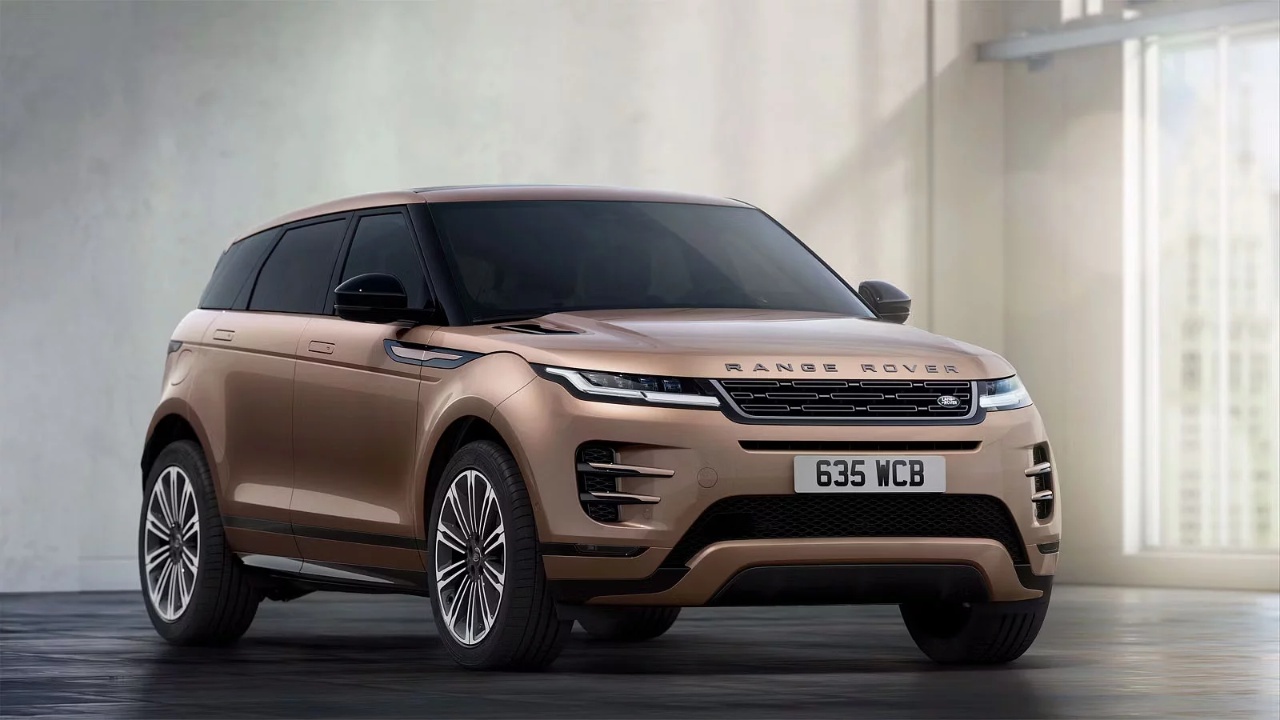
Jaguar Land Rover is considering a new Defender pickup truck specifically for the U.S. market as part of its developing partnership with Stellantis. The potential project would give JLR an entry into America’s enormous pickup segment while allowing the British automaker to build a vehicle locally and reduce its exposure to U.S. import tariffs.
The proposal was reported by Car and Driver on September 15, citing an Automotive News report. The potential pickup would be the first major product to emerge from the collaboration between JLR and Stellantis, which began with a non-binding memorandum of understanding signed in May.
Neither company has formally announced the Defender pickup as a production vehicle, and important details such as its platform, factory, powertrain, and launch date remain undecided.
The idea fits into a broader effort by JLR to expand its presence in North America. The United States is already one of the company’s most important markets, but its vehicles sold there are imported. Building a Defender-based pickup locally could allow JLR to increase sales while creating a product designed specifically around American customer demand.
Stellantis Partnership Opens the Door to U.S. Production
JLR and Stellantis announced their memorandum of understanding in May 2026. The agreement covers potential cooperation in product and technology development in the United States, with both companies saying they wanted to examine ways to use their complementary capabilities.
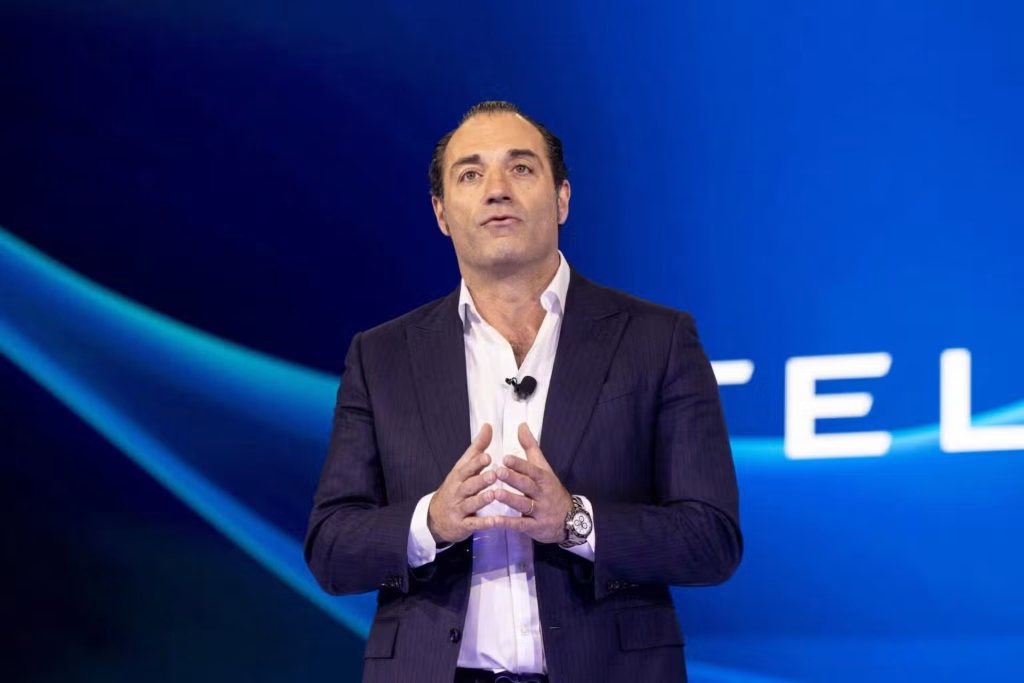
Stellantis CEO Antonio Filosa and JLR CEO PB Balaji described the agreement as an opportunity to create new value while supporting growth in the American market.
The agreement is non-binding, meaning it does not guarantee that any particular vehicle will reach production. Stellantis has also said that any future transactions resulting from the memorandum would require definitive agreements and customary approvals.
JLR subsequently indicated that Defender-branded vehicles could be assembled in the United States through the partnership. Automotive Logistics reported in August that the company planned to use the collaboration to establish U.S. production rather than simply move the existing Defender program across the Atlantic.
That distinction is important. The current Defender is built at JLR’s plant in Nitra, Slovakia, and the company is not simply proposing to move that production line to America. Instead, the reported strategy centers on developing additional Defender products for segments where JLR does not currently compete.
A pickup is a logical candidate because the United States has an exceptionally large market for trucks, while the Defender brand already has strong recognition for off-road capability and premium positioning.
Car and Driver reports that the proposed truck could be developed specifically for the U.S. market, with Stellantis providing assistance in both development and production. JLR has not confirmed the details. The company declined to comment on the latest report, while Stellantis had not provided a detailed public response when the report was published.
The partnership could nevertheless give JLR access to manufacturing expertise and facilities that would otherwise require a much larger investment. Stellantis already has extensive experience producing trucks and SUVs in North America through brands including Ram and Jeep.
Tariffs Make Local Production More Important
The financial case for building a Defender in the United States has become stronger because of U.S. trade policies.
JLR currently imports all of its vehicles sold in America. Car and Driver reports that vehicles built in the United Kingdom face a 10% duty, while models such as the Defender and Discovery built in the European Union face a 15% tariff under the current structure.
Those additional costs can be particularly significant for luxury vehicles because tariffs are calculated against the value of imported vehicles. Producing a vehicle inside the United States could therefore reduce the direct tariff burden while also giving JLR greater control over its American supply chain.
The proposed Defender pickup would be particularly suited to that strategy because it could be designed as a new model from the beginning rather than requiring the existing European production system to be relocated.
The partnership also allows JLR to learn from a company with decades of experience in the American truck market. Stellantis operates Ram, one of the established full-size pickup brands in the United States, while Jeep has extensive experience with off-road vehicles.
That knowledge could help JLR understand everything from customer expectations and towing requirements to manufacturing economics and dealer operations.
JLR has been increasingly vocal about its ambitions for the U.S. market. At an investor presentation in June, CEO PB Balaji said the company wanted its American business to eventually reach the size of JLR’s entire current global business.
Car and Driver reported that North America represented almost 30% of JLR’s global sales in the previous year, with the United States accounting for most of that volume. That makes the American market central to JLR’s future growth strategy.
A locally built Defender pickup could help the company reach customers who might not consider an SUV such as the current Defender. Pickup buyers represent a large and established customer base, particularly among consumers who want a combination of utility, towing ability, off-road performance, and premium features.
A Very Different Kind of Pickup
One of the biggest unanswered questions concerns the truck’s construction. Most of the dominant American pickups, including the Ford F-150, Chevrolet Silverado, GMC Sierra, and Ram 1500, use body-on-frame architecture. The Jeep Gladiator also uses a body-on-frame design.
The current Defender takes a different approach. Its D7x architecture uses a highly rigid monocoque construction rather than the traditional separate frame found beneath most American pickups.
Car and Driver reports that the proposed Defender pickup could follow the current Defender’s basic architecture, potentially giving it a unibody structure.
Stellantis does not currently use a unibody architecture for its primary pickup trucks, although the company has considerable experience with unibody SUVs such as the Jeep Grand Cherokee and Dodge Durango.
A unibody Defender pickup would create a different proposition from the conventional American truck.
It could prioritize ride comfort, road handling, and cabin refinement while retaining the off-road ability associated with the Defender name. However, such a configuration could also limit towing and payload characteristics compared with traditional body-on-frame trucks, depending on the final engineering decisions.
The exact size is also unknown. The truck could be positioned below the largest American pickups, creating a more premium lifestyle-oriented vehicle rather than attempting to compete directly with heavy-duty work trucks.
That would place it closer to the emerging premium pickup niche, where luxury features and distinctive styling can be more important than maximum payload capacity.
The U.S. market already offers upscale versions of mainstream trucks. Ford sells the F-150 Platinum, Ram offers the 1500 Tungsten, and GMC markets the Sierra Denali Ultimate. A Defender pickup could approach the segment from a different direction by starting with a luxury off-road brand rather than upgrading a conventional work truck.
JLR also has a history of considering a Defender pickup. In 2021, former JLR executive Nick Collins told Autocar that there was customer demand for such a model and that a pickup could potentially be developed using a monocoque architecture.
The current Stellantis collaboration could provide a practical route for finally turning that concept into a production program.
Powertrain details have not been announced. Stellantis could potentially contribute to the engineering program, but there is no confirmed information about whether the truck would use a gasoline engine, hybrid system, battery-electric powertrain, or multiple options.
That decision will be important because JLR is simultaneously transitioning its brands toward electrification while the U.S. market continues to demand gasoline-powered trucks and SUVs.
The Defender brand itself is also expanding. JLR has been developing the nameplate beyond the conventional 90, 110, and 130 body styles, while Defender has become an increasingly important part of the company’s strategy.
A pickup would extend that identity into an entirely new category. For Stellantis, cooperation with JLR could also create benefits. The company could potentially gain additional production volume and apply its manufacturing knowledge to a premium vehicle without having to launch another truck brand of its own.

Still, the project remains far from production. Current reports indicate that the Defender pickup could be years away, and neither JLR nor Stellantis has announced a final factory, production timetable, specifications, or pricing.
The two companies first need to turn their non-binding cooperation agreement into a detailed manufacturing and product-development arrangement.
If that happens, the Defender pickup could become one of the most unusual entries in the American truck market. It would combine JLR’s luxury and off-road identity with Stellantis’ U.S. manufacturing and truck expertise, while giving JLR a way to build a vehicle specifically for American buyers.
The tariff advantage adds another reason for the project. Instead of paying import duties on a European-built product, JLR could establish a U.S. production route for a vehicle designed around one of its largest markets.
For now, the Defender pickup remains a reported project rather than a confirmed production model. But the combination of JLR’s U.S. growth ambitions, Stellantis’ manufacturing capabilities, and the size of America’s pickup market gives the proposed vehicle a clear strategic rationale.
If the partnership progresses as expected, the Defender could eventually become a pickup built in America rather than another European import.