
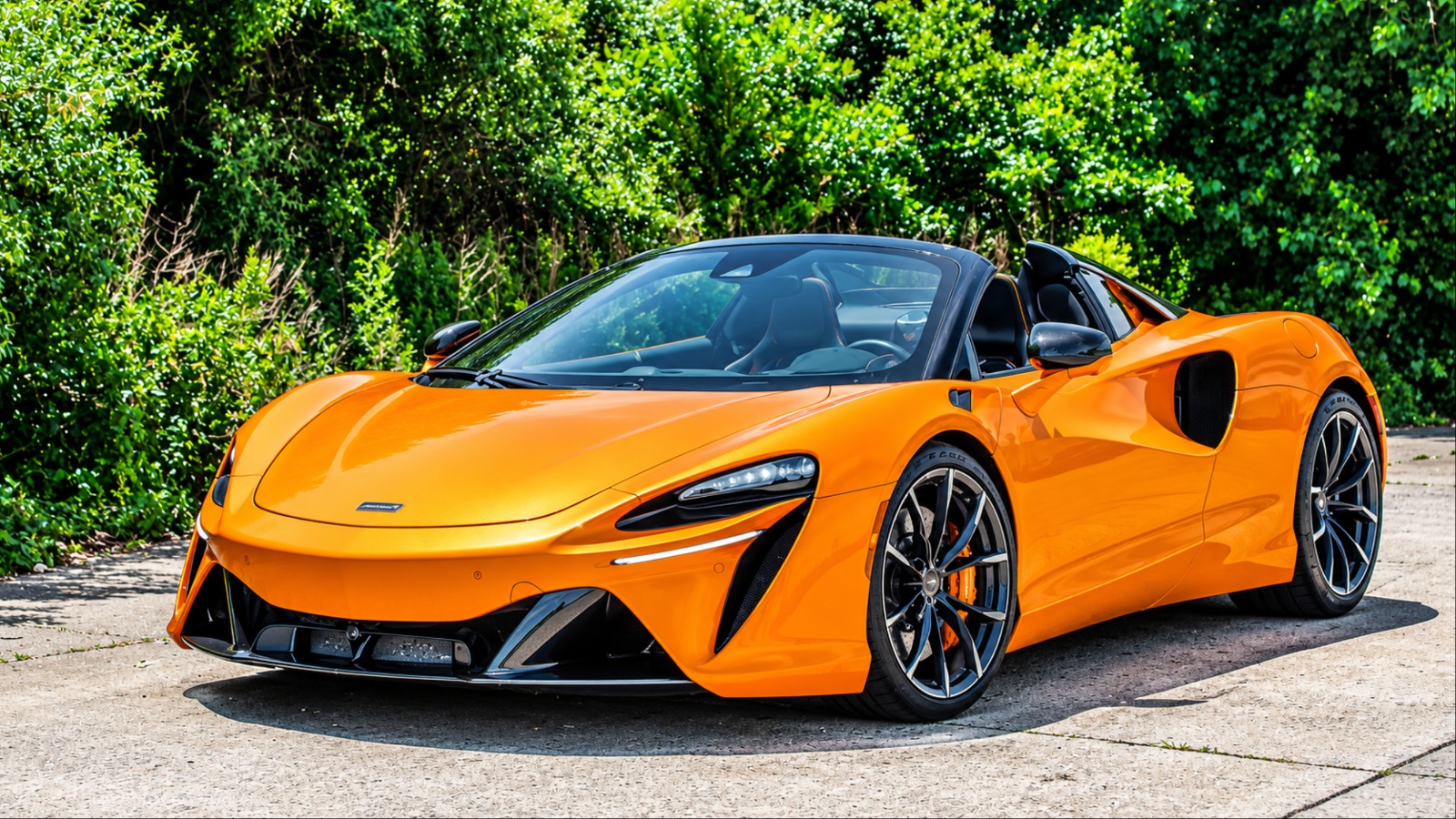
McLaren is preparing to enter the SUV market for the first time as the British performance-car manufacturer looks to increase sales, expand its product range, and compete more directly with larger luxury brands.
The company confirmed on September 16 that its first SUV is part of a major new investment program in the United Kingdom. McLaren plans to invest about $675 million in British manufacturing and engineering operations, including a new assembly facility and expanded in-house development of engines and transmissions.
Reuters reported that the investment is expected to create around 1,000 direct and indirect jobs by 2032.
The SUV represents a significant departure for McLaren, whose roadcar business has historically focused on lightweight sports cars, supercars, and grand tourers. Unlike several competitors that have already entered the SUV segment, McLaren has maintained a much narrower product strategy.
That approach is now changing as the company looks to increase sales volume and strengthen profitability. McLaren’s Abu Dhabi-based shareholder, L’IMAD, has committed approximately $2.01 billion over five years, providing funding for the company’s next phase of expansion.
The first SUV will be central to that plan, although McLaren has not yet revealed its name, specifications, price, or launch date.
McLaren Wants Its SUV to Be Different
McLaren says the new SUV will take a distinctive approach rather than simply following the established formula used by other luxury manufacturers.
That distinction matters because the luxury performance SUV market is already crowded. Ferrari has the Purosangue, Lamborghini sells the Urus, Aston Martin offers the DBX, Bentley has the Bentayga, and Porsche has built a major business around the Cayenne.
These vehicles have demonstrated the commercial potential of combining luxury, performance, and everyday practicality.
McLaren has previously resisted following that path. Its vehicles have generally been designed around low weight, aerodynamic efficiency, and driver involvement rather than the higher seating position and increased cargo capacity associated with SUVs.
Moving into the segment therefore requires McLaren to adapt its engineering philosophy without losing the characteristics that distinguish its sports cars.
The company has not provided technical details, so it remains unclear whether the SUV will use a new platform or technology derived from McLaren’s existing architecture. Its powertrain is also unconfirmed.
Reuters reports that McLaren currently has no plans for a fully electric vehicle, with executives citing insufficient customer demand. That means the first SUV is expected to rely on combustion or hybrid technology rather than battery-electric propulsion.
The decision contrasts with several competitors that have already begun moving toward electrification.
McLaren’s approach reflects its focus on performance and the specific requirements of its customer base. The company has historically used hybrid technology selectively, including in high-performance models where electric motors can supplement combustion power.
A hybrid SUV could potentially provide McLaren with additional performance while maintaining the driving characteristics expected from the brand. However, the company has not confirmed whether the SUV will use a hybrid system.
Whatever powertrain McLaren chooses, weight will likely remain an important engineering consideration. SUVs are generally heavier than sports cars because they require larger structures, more interior space, and additional equipment.
McLaren’s challenge will be creating an SUV that provides the practicality customers expect without becoming too far removed from the brand’s lightweight performance philosophy.
The company is also expected to use its expertise in aerodynamics and chassis engineering to differentiate the vehicle. McLaren’s existing road cars are designed with extensive aerodynamic development, and that experience could influence the SUV’s body design and handling characteristics.
The result is expected to be positioned as a performance-focused luxury SUV rather than simply a larger family vehicle carrying a McLaren badge.
$675 Million Investment Will Support Expansion
The SUV program is being supported by a much broader investment in McLaren’s British operations.
The company plans to establish a new assembly plant in the UK and expand its engineering capabilities. McLaren currently builds its road cars in Woking, Surrey, and the additional capacity will allow it to increase production as its model range expands.
Reuters reported that McLaren produced approximately 2,000 cars in 2025, highlighting how small its current production scale remains compared with larger luxury manufacturers.
Increasing volume through an SUV could help McLaren spread development and manufacturing costs across more vehicles while generating additional revenue.
The company is also bringing more engine and transmission development and production in-house. Greater control over these components could allow McLaren to develop powertrains specifically around the requirements of future models rather than relying as heavily on external suppliers.
That could become particularly useful as the company expands beyond its existing sports-car lineup.
McLaren has also changed its sales strategy by moving toward a build-to-order model. Reuters reported that the company is using the approach to improve residual values and reduce the amount of unsold inventory held by dealers.
For a low-volume luxury manufacturer, controlling inventory is important. Producing too many vehicles can lead to discounts, while producing too few can limit sales and leave customers waiting for vehicles.
An SUV could give McLaren substantially more potential volume while the build-to-order system helps the company maintain control over production.
The investment is also expected to support approximately 1,000 direct and indirect jobs by 2032. That includes positions connected to manufacturing, engineering, and the wider UK supply chain.
Keeping production and engineering activity in Britain is an important part of McLaren’s strategy. The company has built much of its identity around British engineering, and expanding its domestic manufacturing footprint allows it to maintain that connection while increasing capacity.
The investment follows a period of ownership and business restructuring. L’IMAD’s larger financial commitment gives McLaren the resources to develop new products and expand its industrial operations.
The SUV is therefore not an isolated project. It is part of a larger attempt to transform McLaren from a relatively small specialist sports-car manufacturer into a broader luxury performance business.
A New Direction for the McLaren Brand
The biggest question is how far McLaren can expand without changing the characteristics that have defined the company.
The SUV segment offers significant commercial opportunities, but it also requires a different approach to customers. Buyers expect greater practicality, comfortable interiors, cargo capacity, and everyday usability alongside performance.
McLaren will have to balance those requirements with the brand’s emphasis on lightweight engineering and driving dynamics.
The company says the SUV will have a distinctive approach, suggesting that it does not intend to simply replicate the formulas used by Ferrari, Lamborghini, or Aston Martin. Exactly what that means will become clearer as development progresses.
McLaren’s decision to avoid an immediate battery-electric vehicle also separates the project from some competitors. Reuters reports that the company does not currently see sufficient customer demand for a fully electric McLaren.
That position could change as technology and market conditions develop, but for now the company is concentrating on powertrains it believes are better suited to its customers.
The SUV will also allow McLaren to attract buyers who want the brand’s performance image but require more practicality than a traditional supercar provides. That could include families, existing McLaren owners looking for an everyday vehicle, and customers moving into the brand for the first time.
The company has not yet confirmed when the SUV will enter production. It also has not disclosed how many examples it plans to build annually.
Those details will be important because production volume will determine how much the new model changes McLaren’s business.
For now, the confirmed investment of approximately $669.6 million provides the foundation for that expansion. A new assembly facility, greater in-house powertrain capability, and additional engineering resources will allow McLaren to develop more vehicles while maintaining a significant manufacturing presence in the UK.
The first SUV will be the clearest test of the strategy. McLaren is entering a market where established luxury brands have already built strong customer bases, but the company believes its performance engineering and distinctive design approach can give the vehicle its own identity.
If McLaren can translate its lightweight engineering philosophy into a practical SUV without losing the characteristics associated with its sports cars, the model could become a major part of the company’s future product range.
For now, the SUV remains under development, with its technical specifications and launch details yet to be announced. However, McLaren’s approximately $669.6 million investment shows that the company is preparing to expand its product lineup significantly and move beyond its traditional focus on supercars.
