
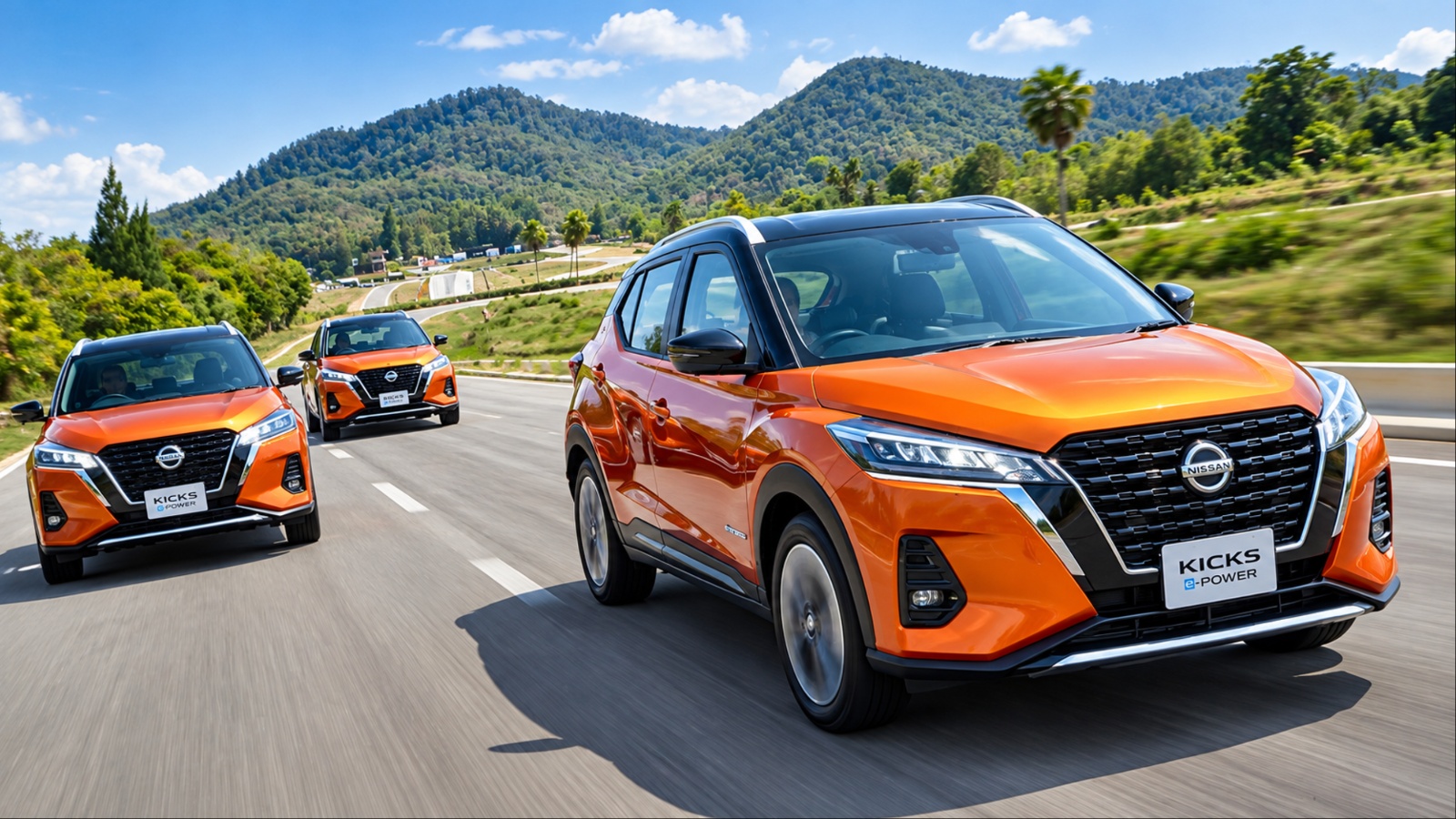
Nissan is adding another electrified model to its Sunderland manufacturing operation as the Japanese automaker prepares to build the Kicks e-POWER hybrid SUV for European customers. The company will invest £170 million, or about $229 million, to produce the compact crossover at its UK plant.
Announced on September 16, the investment will bring the Kicks into production alongside the Qashqai, Juke, and electric Leaf. Nissan has not yet provided a production start date, but the decision gives Sunderland another model as the factory marks its 40th anniversary.
Reuters reported that the Kicks will be sold across Europe, including the UK, while Nissan has also identified Turkey as a market for the model.
The announcement is significant because Nissan has been restructuring its global operations to reduce costs and adjust production capacity. The Sunderland plant has faced questions about its long-term utilization as Nissan changes its European product strategy.
Adding another model could help maintain manufacturing activity while giving Nissan a compact hybrid SUV suited to markets where customers are not moving entirely to battery-electric vehicles.
The Kicks will also become the tenth model produced at Sunderland since the plant opened in 1986.
Kicks Brings Nissan’s e-POWER Technology to Europe
The Kicks is a B-segment crossover and represents a new addition to Nissan’s European lineup. The second-generation Kicks are already manufactured in Japan, Mexico, and Brazil for global markets, but Europe has not previously received the model. More than 1.8 million Kicks vehicles have been sold across more than 70 countries, according to Nissan.
The European version will use Nissan’s third-generation e-POWER hybrid system, which differs from a conventional hybrid because the gasoline engine does not directly drive the wheels.
Instead, the petrol engine acts as a generator, producing electricity for the battery and electric motor. The electric motor is responsible for driving the wheels, giving the vehicle an electric-style driving response without requiring the owner to plug the vehicle into an external charger.
Nissan describes the system as a plug-free electric driving experience. Its current third-generation e-POWER technology has been redesigned to improve efficiency, emissions, refinement, and engine operation.
Nissan’s UK specifications for the latest e-POWER system cite fuel economy of up to 64.2 mpg and CO₂ emissions as low as 100 grams per kilometer, although final European figures for the Kicks will depend on its homologation.
The technology is already familiar to workers at Sunderland. Nissan currently builds the e-POWER version of the Qashqai at the facility, giving the plant experience with the hybrid system and its associated manufacturing processes. More than 200,000 Qashqai e-POWER models have reportedly been built in the UK.
That existing expertise should make the Kicks easier to integrate into Sunderland’s production operations than an entirely unfamiliar electrified system.
The decision also reflects Nissan’s approach to European electrification. Rather than relying exclusively on battery-electric vehicles, the company is maintaining a range of powertrain options.
The Kicks e-POWER does not require charging infrastructure because its gasoline engine generates electricity while the vehicle is operating. For drivers who want some of the characteristics of electric propulsion but still rely on conventional fuel infrastructure, it can provide a different alternative to both gasoline-only vehicles and full EVs.
Nissan says the third-generation system was comprehensively re-engineered compared with earlier versions. Changes include improved engine calibration, reduced noise and better efficiency. The system can also use regenerative braking to recover energy during deceleration and return it to the battery.
The Kicks therefore gives Nissan another way to reduce fuel consumption and emissions without requiring customers to make the complete transition to a battery-electric vehicle.
Sunderland Gets Another Model as Nissan Restructures
The £170 million investment is particularly important for Sunderland because Nissan has been reassessing production across its global manufacturing network.
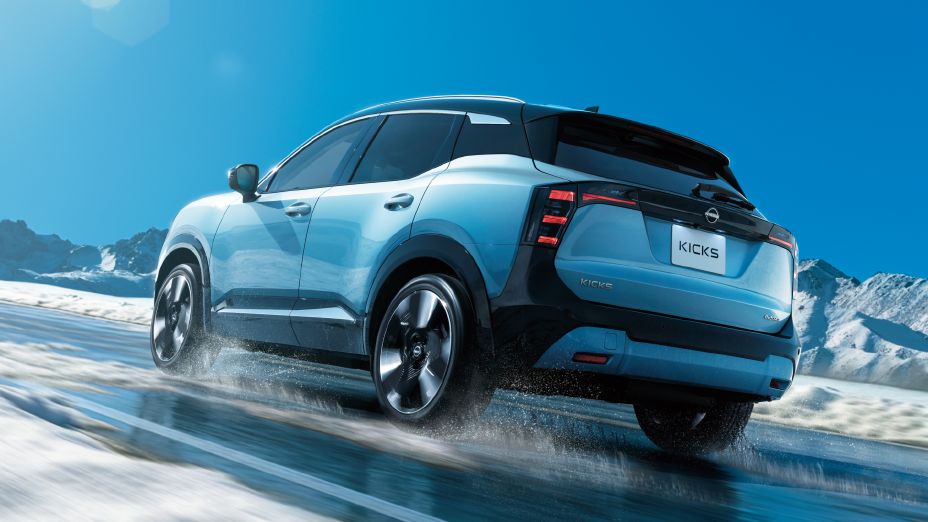
Reuters reported that Nissan has been cutting costs, reducing jobs and reviewing factories as part of its restructuring. The company has also shelved some future programs, including an electric version of the Qashqai. At the same time, Nissan has been examining ways to make better use of its Sunderland facilities.
The plant currently produces the Qashqai, Juke and Leaf. Nissan has also confirmed that the next-generation Juke, which will become an electric model, will be built at Sunderland. Adding the Kicks means the factory will have another vehicle allocated to its production lines.
Nissan says Sunderland has received approximately £5 billion in investment over four decades and has produced more than 11.9 million vehicles. The plant directly employs around 6,000 people and supports thousands more jobs through its supply chain.
The Kicks allocation therefore has implications beyond the vehicle itself. A new model can help maintain employment, supplier demand, and manufacturing activity at a facility that plays a major role in Britain’s automotive industry.
UK Business and Trade Secretary Jonathan Reynolds described the decision as a significant vote of confidence in the country’s automotive manufacturing sector.
Nissan’s Sunderland operation is also strategically important because it exports vehicles to multiple international markets. Producing the Kicks locally will allow the company to supply European customers from an established UK manufacturing base rather than importing the model from one of its existing global production locations.
That could provide Nissan with greater control over supply for the European market while supporting the utilization of its British production facilities.
The timing is also notable because Nissan has been discussing additional ways to use Sunderland. Reuters previously reported that the company was considering renting one of the site’s two production lines to Chinese automaker Chery. The proposed arrangement would allow Chery to manufacture vehicles at the facility while Nissan continues its own production.
Adding the Kicks gives Nissan another internally allocated model instead of relying exclusively on outside production partnerships to maintain plant activity.
Hybrid Strategy Gives Nissan More Flexibility
The Kicks also fits into Nissan’s broader European strategy, where the company is attempting to provide customers with different electrified powertrains.
Battery-electric vehicles remain an important part of Nissan’s plans. The Leaf is now built at Sunderland, while the company continues to develop additional EVs for Europe. However, Nissan is also expanding e-POWER and other hybrid technology as market conditions change.
That flexibility has become increasingly important because the pace of EV adoption differs significantly between countries and customer groups. Some consumers have access to home charging and are comfortable switching to a full EV, while others still need the convenience of gasoline refueling for longer journeys.
The e-POWER system addresses part of that gap. Drivers receive electric-motor propulsion while retaining a gasoline engine that can generate electricity when needed.
Nissan’s current UK e-POWER technology can also operate with e-Pedal Step, allowing the driver to accelerate and decelerate using a single pedal in many situations. Nissan says the latest system has improved refinement and reduced noise compared with earlier generations.
For a compact crossover such as the Kicks, those characteristics could make the technology particularly relevant. The B-segment SUV market is highly competitive in Europe, with buyers increasingly looking for efficient vehicles that remain practical for everyday use.
The Kicks will give Nissan another compact crossover alongside the Juke while occupying a different position in the company’s electrified lineup.
The company has not yet disclosed the European Kicks’ final specifications, pricing, performance figures, or production volumes. Nissan has also not announced when manufacturing will begin at Sunderland. Reuters specifically reported that no production timeline was provided with the investment announcement.
Those details will determine how significant the Kicks becomes for Nissan’s European business.
For Sunderland, however, the immediate importance is clearer. The plant has secured another model allocation at a time when Nissan is reviewing its global manufacturing footprint and attempting to reduce costs.
The Kicks will join a production portfolio that already includes combustion, hybrid and battery-electric vehicles. That combination allows Sunderland to manufacture vehicles using several different propulsion technologies rather than depending entirely on the rapid growth of one segment.
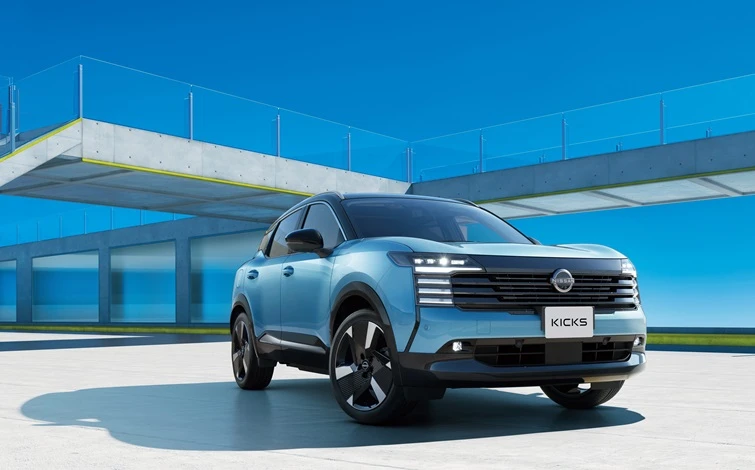
The factory’s existing experience with Qashqai e-POWER should also help Nissan introduce the Kicks without building an entirely separate production operation for its hybrid system.
Nissan says the Kicks will be the tenth model produced at Sunderland, adding another chapter to the site’s 40-year history. The company has built millions of vehicles there for markets around the world, making the plant one of the UK’s most important automotive manufacturing locations.
For Nissan, the investment is therefore about more than launching a new crossover. It supports the company’s effort to maintain a competitive European manufacturing footprint while responding to changing demand for electrified vehicles.
The Kicks e-POWER gives Nissan a compact hybrid product that does not require external charging, while its Sunderland production provides additional work for one of the company’s most established factories.
With the £170 million investment confirmed but production timing still undisclosed, the next major details will be the vehicle’s European specifications, pricing and launch schedule. For now, Nissan’s decision ensures that Sunderland will have another electrified model in its portfolio and reinforces the plant’s role in the company’s European strategy.
