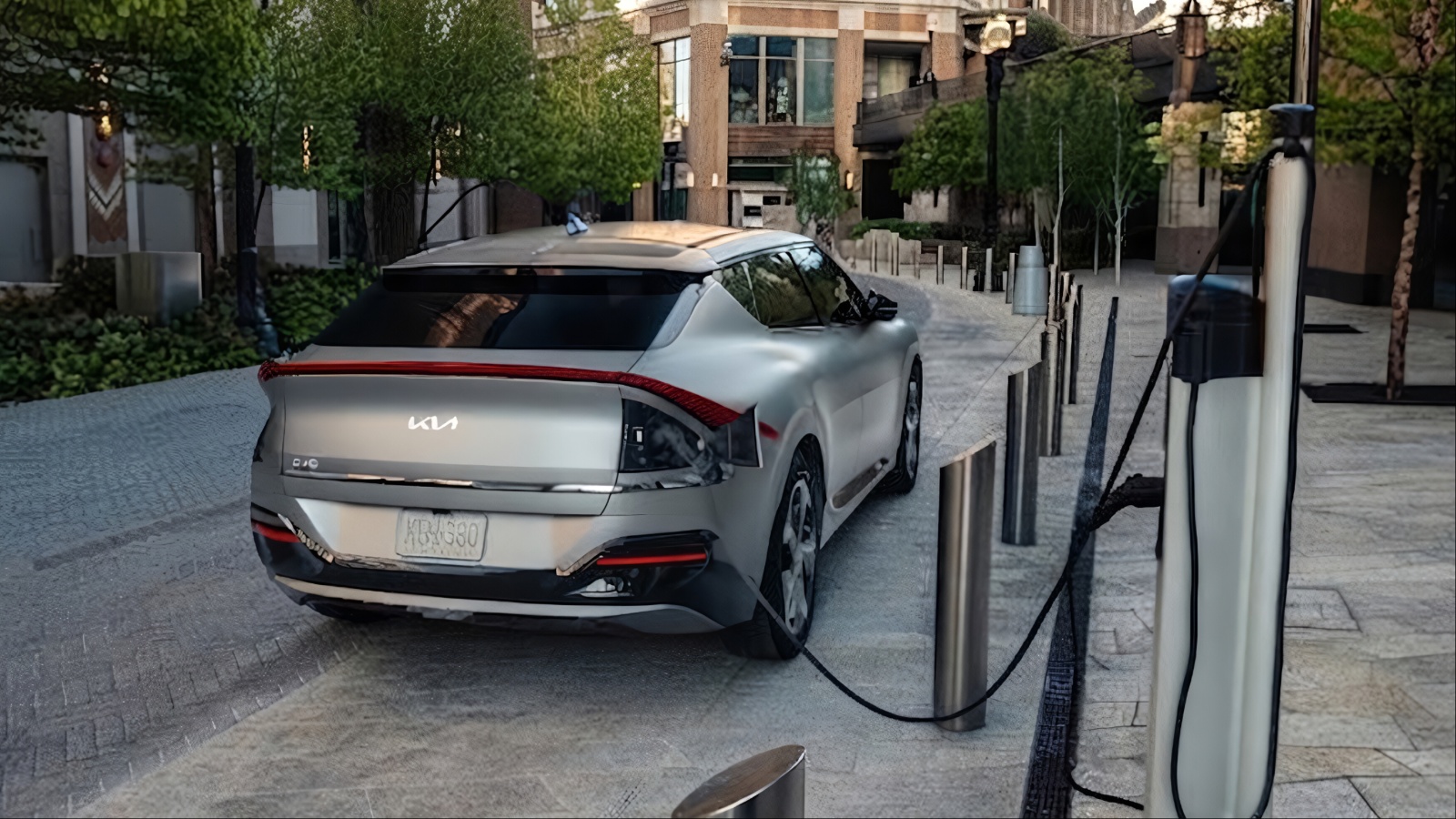
Electric vehicles don’t burn gasoline, which means their owners don’t pay the per-gallon gas taxes that have funded America’s roads and bridges for a century. As EV adoption climbs, that gap in transportation revenue has grown too large for many state legislatures to ignore.
Their fix has been a special annual registration surcharge aimed squarely at EV and plug-in hybrid owners, designed to approximate what a comparable gas-powered driver would pay at the pump each year.
These fees vary widely by state, both in size and in how they’re calculated, and several are set to climb further in the coming years through automatic inflation adjustments or scheduled step-ups.
Some states apply a single flat charge regardless of the vehicle’s price or age, while others use formulas tied to fuel efficiency trends, inflation, or gas-tax equivalents, which means the exact dollar figure can shift from one registration cycle to the next even without new legislation.
Below are eight states currently charging EV owners $200 or more annually, the highest tier of these surcharges nationwide, along with what the money funds, how each fee is structured, and how it compares to what a similar gas-powered vehicle owner pays in fuel taxes over the course of a year.
1. Washington
Washington charges electric vehicle owners $225 a year, the result of two separate line items rather than a single flat number. A $150 annual EV fee is paired with a $75 “transportation electrification fee,” and together they apply to any battery-electric vehicle as well as to plug-in hybrids with at least 30 miles of all-electric range.
Plug-in hybrids that fall short of that range threshold, along with conventional hybrids, pay a smaller $75 annual fee instead, and electric motorcycles are charged just $30.
The transportation electrification fee stands out because its stated purpose differs from the road-funding approach used by many other states. Revenue from the fee is specifically designated for EV charging infrastructure programs, while the base $150 fee goes toward general transportation accounts, including the state’s Move Ahead WA account.
Washington was also an early adopter of EV registration fees, first introducing its charge in 2012, years before similar fees became more common across the country.
Unlike some states, Washington does not include an automatic inflation adjustment for its EV surcharge in the same statute. A 2% annual adjustment adopted through 2025 legislation applies to a separate weight-based vehicle licensing fee, not the EV and hybrid charges.
Drivers in the Seattle metro area should also remember that the $225 EV fee is separate from the Sound Transit regional excise tax. That tax can add hundreds of dollars for higher-value vehicles, meaning annual registration costs in King County can be significantly higher than the state EV fee alone suggests.
2. Georgia
Georgia’s non-commercial alternative fuel vehicle fee is $238.59 for the period from July 2026 through June 2027, placing it among the higher EV surcharges in the country. Commercial alternative fuel vehicles pay $357.98 annually, while low-speed vehicles are charged $111.64.
These amounts can change from year to year because Georgia law requires the Department of Revenue to recalculate the fees every July 1. The calculation is based on changes in average U.S. vehicle fuel efficiency and the Consumer Price Index, which means the charges can shift nearly every year.
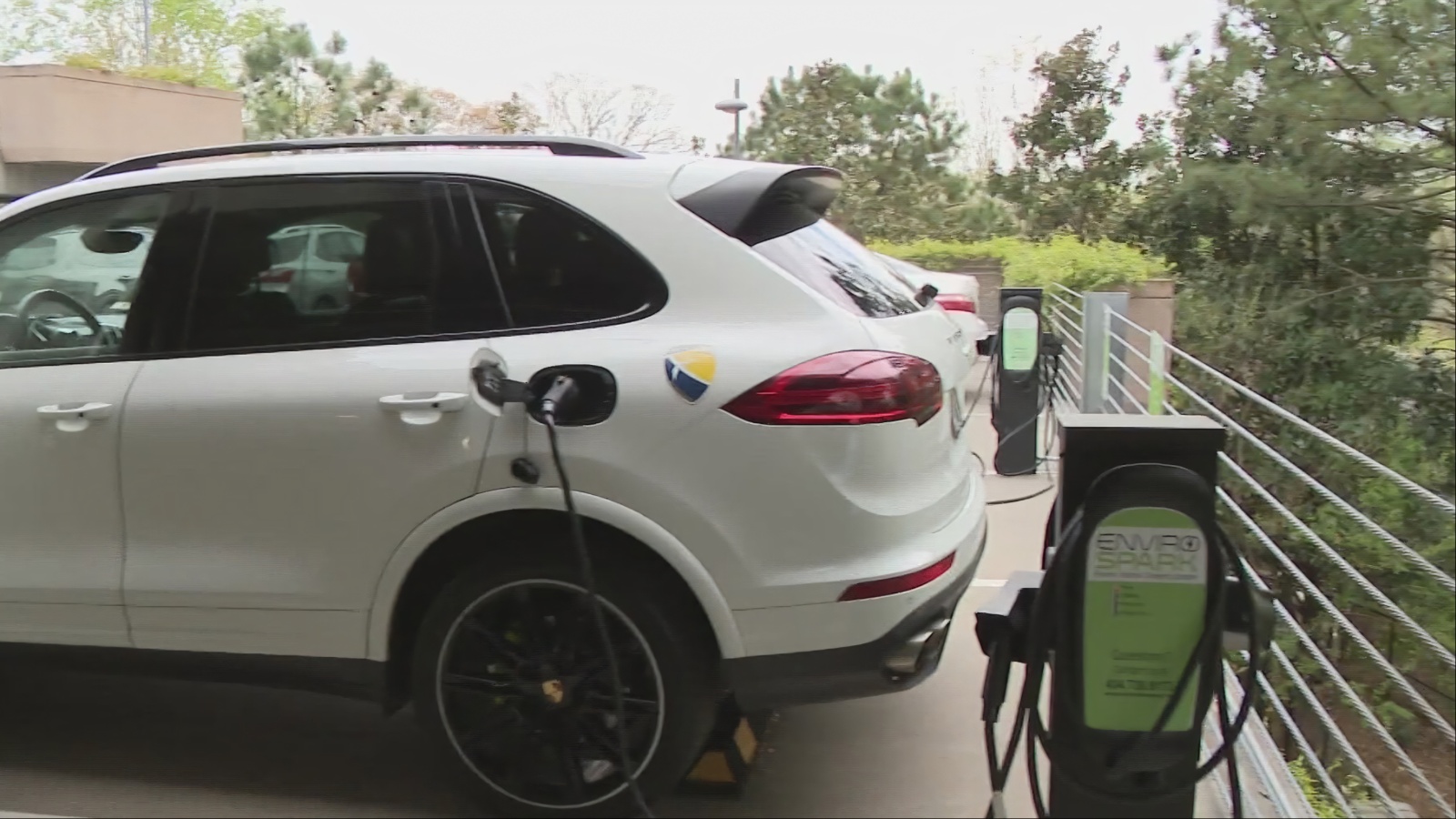
The fee applies to any vehicle that runs solely on electricity, along with plug-in hybrids and flex-fuel vehicles, but only if their owners have opted for an alternative fuel vehicle license plate. Conventional (non-plug-in) hybrids and vehicles running on compressed or liquefied natural gas are exempt.
Owners who choose the special alternative fuel plate also pay an additional one-time manufacturing charge and a smaller annual plate fee on top of the licensing fee itself.
Revenue from the fee goes into Georgia’s Transportation Trust Fund, which is managed by the state Department of Transportation. The state collected about $22 million from the fee in fiscal 2024, with revenue projected to reach roughly $41 million by fiscal 2027 as EV registrations increase. The fee has also become a point of debate among Georgia lawmakers, with bills introduced to eliminate it.
Fiscal estimates have put the potential revenue loss from repeal at around $41 million. As of this writing, however, no repeal has been enacted. Critics of the fee have also pointed to its formula-based structure, which has resulted in higher charges in most years since 2015 and can make annual costs less predictable for EV owners.
3. Alabama
Alabama charges $203 a year for battery-electric vehicles and $103 for plug-in hybrids, fees that trace back to the state’s 2019 Rebuild Alabama Act. Rather than adjusting annually like Georgia’s formula-based approach, Alabama’s fees increase by a flat $3 every four years, meaning the current $203/$103 rates, in effect since July 2023, are locked in until they rise again in July 2027.
The law also includes an unusual offset provision. If the federal government imposes its own highway-related surcharge or registration fee on electric or plug-in hybrid vehicles, Alabama’s state fee would be reduced by the same amount.
However, the state fee cannot fall below $150 for battery-electric vehicles or $75 for plug-in hybrids. The provision is designed to prevent EV owners from effectively paying twice for similar highway-related charges.
The revenue split is spelled out in detail in state law. The first $150 collected from each battery-electric vehicle and the first $75 from each plug-in hybrid are divided so that 66.67 percent goes to the state, with the remainder split between counties and municipalities.
Those state-level dollars specifically fund Alabama’s Electric Transportation Infrastructure Grant Program, which supports charging infrastructure buildout, making Alabama one of the states that directs at least part of its EV surcharge back toward the EV ecosystem itself rather than general road maintenance alone.
With EV registrations in the state still numbering in the tens of thousands, Alabama’s fee ranks among the highest flat surcharges nationally, trailing only a handful of states with formula-based or inflation-indexed fees that have overtaken it in recent years.
4. Texas
Texas took a two-tiered approach when it introduced its EV fee under Senate Bill 505, which took effect on September 1, 2023. New EV registrants pay a $400 fee up front that covers the initial two-year registration period, followed by a $200 annual fee at each renewal. The charge applies only to fully electric vehicles. Plug-in hybrids are exempt because they still use gasoline and therefore contribute to state fuel tax revenue.
Lawmakers set the $200 figure based on a 2020 state agency report estimating that Texas loses roughly $200 per year in combined state and federal gasoline tax revenue for every EV that replaces a gas-powered vehicle on the road.
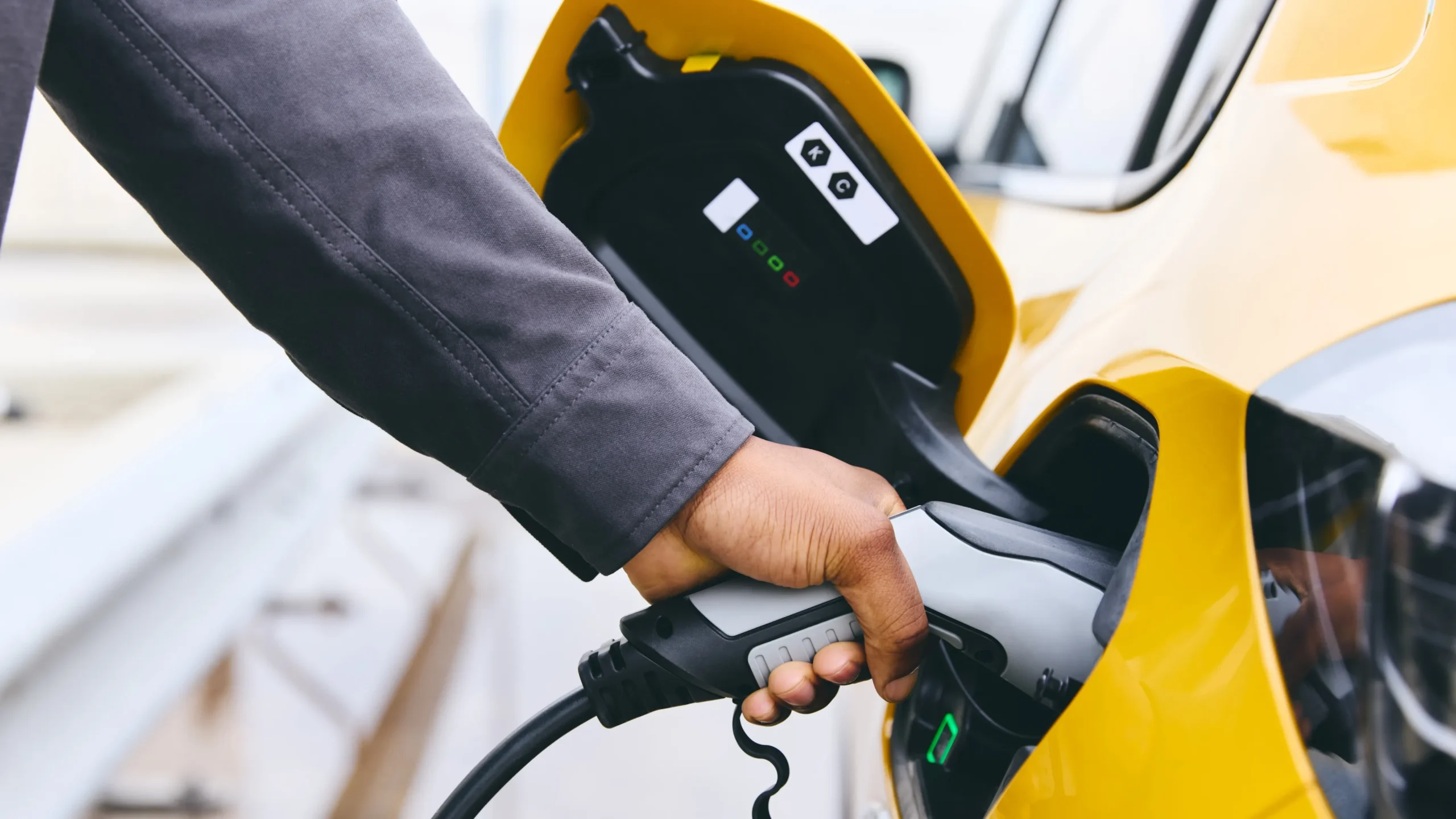
That revenue normally flows into the State Highway Fund, which the Texas Department of Transportation has described as its primary funding source for road construction and maintenance, so the fee is designed to plug that specific hole rather than fund anything EV-specific.
The cost stacks on top of Texas’s standard annual registration fee of roughly $50.75 for most passenger vehicles, meaning a new EV buyer’s total first-year state registration costs can exceed $650.
Critics, including Consumer Reports policy analysts, argued during the bill’s passage that flat fees like this one overcharge lower-mileage EV drivers relative to what they’d actually owe under a gas tax, while high-mileage drivers may still come out ahead of what they’d pay at the pump.
Texas also does not currently offer a statewide EV sales tax exemption, and a separate rebate program that once offered up to $2,500 toward a new EV purchase has been closed since funding ran out in late 2025, leaving the $200 annual fee with little offsetting incentive on the purchase side.
5. Arkansas
Arkansas has charged electric vehicle owners $200 annually since 2019, when the state adopted its fee alongside a wave of other states responding to early EV adoption trends. Plug-in hybrid owners pay $100 a year, while owners of conventional, non-plug-in hybrid vehicles are charged a smaller $50 annual fee, giving Arkansas a three-tiered structure based on how much a vehicle actually relies on gasoline.
The fee was created as part of a broader Arkansas highway funding package that also raised the state’s fuel tax and adjusted fees for other vehicle categories, reflecting an approach that spread new transportation revenue across several sources rather than relying on EV owners alone.
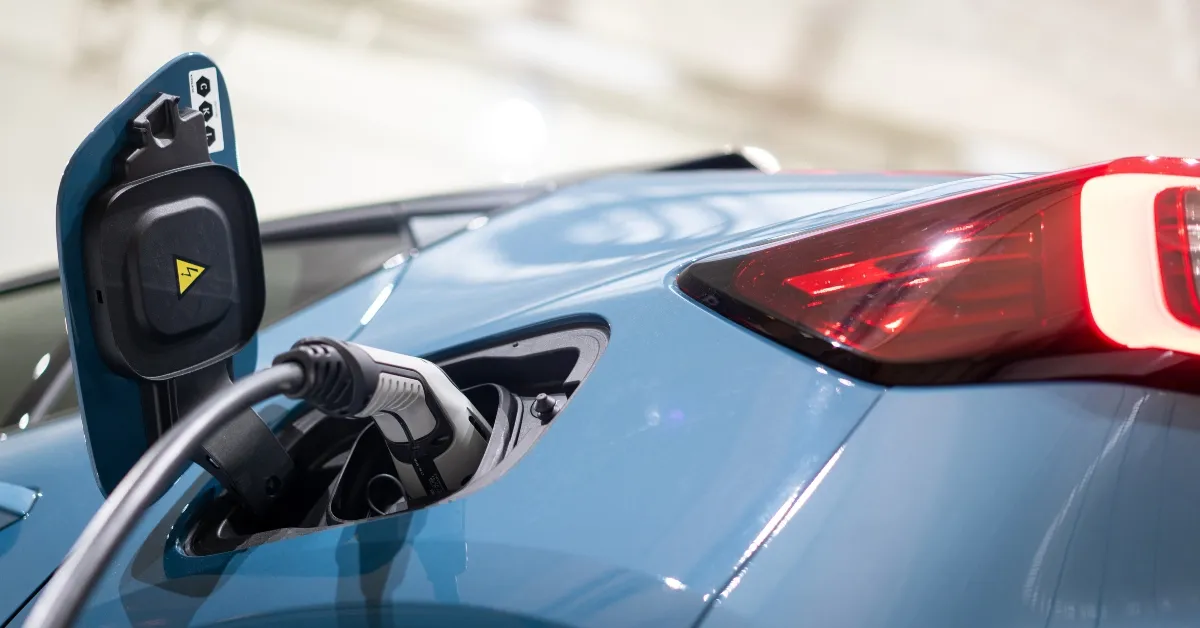
Arkansas’s relatively modest EV adoption numbers compared to larger states mean the fee generates comparatively limited revenue in absolute terms, but it applies uniformly regardless of a vehicle’s price, so a budget EV and a luxury electric model are charged the identical $200.
Arkansas does not currently exempt EVs from sales tax, and it has no right-to-charge law guaranteeing renters or condo owners the ability to install home charging equipment, which sets it apart from some other states in this list that pair EV surcharges with offsetting purchase incentives.
Combined with the annual fee, that makes Arkansas one of the less EV-friendly states from a total cost-of-ownership standpoint, even though its $200 charge sits in the middle of this group rather than at the top.
State officials have estimated EV owners in Arkansas still save several hundred dollars a year on fuel costs compared with gas-powered vehicles even after accounting for the fee, which has been part of the public case for keeping the surcharge at its current level rather than reducing it.
6. Ohio
Ohio charges $200 annually for fully electric vehicles, $150 for plug-in hybrids, and $100 for conventional hybrids. The state introduced this three-tier structure in 2019 as part of a broader transportation budget bill and later adjusted the fees in 2023. The system follows a model used by several other states, with higher annual charges for vehicles that rely more heavily on electricity and less on gasoline.
More than half of the revenue collected from Ohio’s EV and hybrid fees is directed into the state’s highway operating fund, which covers day-to-day road maintenance and operations.
The remainder is distributed among Ohio’s municipalities, counties, and townships, giving local governments a direct stake in the fee’s revenue rather than routing all of it through a single state-level account. That local distribution mechanism is somewhat distinctive among the states charging $200 or more, several of which send EV fee revenue exclusively to state highway funds.
For context on what the fee is meant to replace, one analysis found that a typical 2021 model-year gas vehicle driven 15,000 miles a year would generate roughly $227 in Ohio state gas taxes, putting Ohio’s flat $200 EV fee reasonably close to, though slightly below, what an equivalent gas-powered driver contributes annually.
That rough parity has been part of the state’s public justification for the charge since it was first introduced, and it’s a comparison Ohio officials have repeated whenever the fee structure has faced legislative scrutiny in subsequent budget cycles.
7. West Virginia
West Virginia has charged EV owners $200 annually since 2017, making it one of the earlier adopters of a dedicated electric vehicle registration surcharge, alongside states like Oregon, Indiana, and Wisconsin that also moved in that same year. Plug-in hybrid and hybrid vehicle owners in the state pay a lower $100 annual fee, following the same reduced-rate logic used in Alabama, Arkansas, and Ohio.
The annual fee is only one part of what West Virginia EV buyers face at registration time. The state also imposes a 5 percent motor vehicle title privilege tax whenever a vehicle, electric or otherwise, is titled with the DMV, functioning much like a sales tax but collected at the point of titling rather than at a dealership.
On a $20,000 used EV, for example, that tax alone adds roughly $1,000 to the out-the-door cost, on top of a $10 title fee and the standard annual $200 EV surcharge.
West Virginia does not offer a state-level purchase incentive for new or used EVs, and the federal credits that once offset some of that cost expired for vehicles delivered after September 30, 2025.
Some regional utilities, including Appalachian Power’s TakeCharge WV program, offer modest rebates for home charging equipment, but absent a broader state incentive, West Virginia’s combination of title tax and flat annual fee makes it one of the pricier states in which to register and keep an EV on the road, particularly for buyers financing a used EV where the 5 percent title tax is assessed on the full purchase price rather than phased in over time.
8. Wyoming
Wyoming is among the states that charge $200 or more annually for electric vehicles. The state began phasing in the fee in 2015 and expanded it in 2019. Unlike states with more complex systems, Wyoming keeps its structure simple with a single $200 annual charge for battery-electric vehicles. There are no separate rates for plug-in or conventional hybrids, unlike the tiered systems used in states such as Ohio, Arkansas, and West Virginia.
That simplicity reflects Wyoming’s broader vehicle registration system, which relies heavily on flat, weight-based fee schedules rather than value-based or formula-driven calculations.

Wyoming has one of the smallest EV markets in the country, which means the fee produces relatively little revenue. State officials have justified the charge by noting that EV owners rely on the same state highways as gasoline vehicle drivers but do not contribute to the fuel tax revenue that helps maintain and fund those roads.
This concern is especially relevant in Wyoming, where fuel tax collections represent a significant source of transportation funding and the state’s small population limits revenue from vehicle registration fees.
Wyoming does not offer a state incentive for purchasing an EV or a sales tax exemption to help offset its annual fee. The state is often mentioned alongside Alabama, Georgia, and Washington as having a less favorable cost structure for EV ownership. This is driven not only by the amount of the annual fee but also by the lack of state incentives that could help reduce the financial burden on EV buyers.
As EV adoption slowly picks up even in lower-population states like Wyoming, the flat $200 charge is likely to draw more scrutiny, though so far the state has shown little appetite for revisiting either the amount or the structure it adopted a decade ago.