
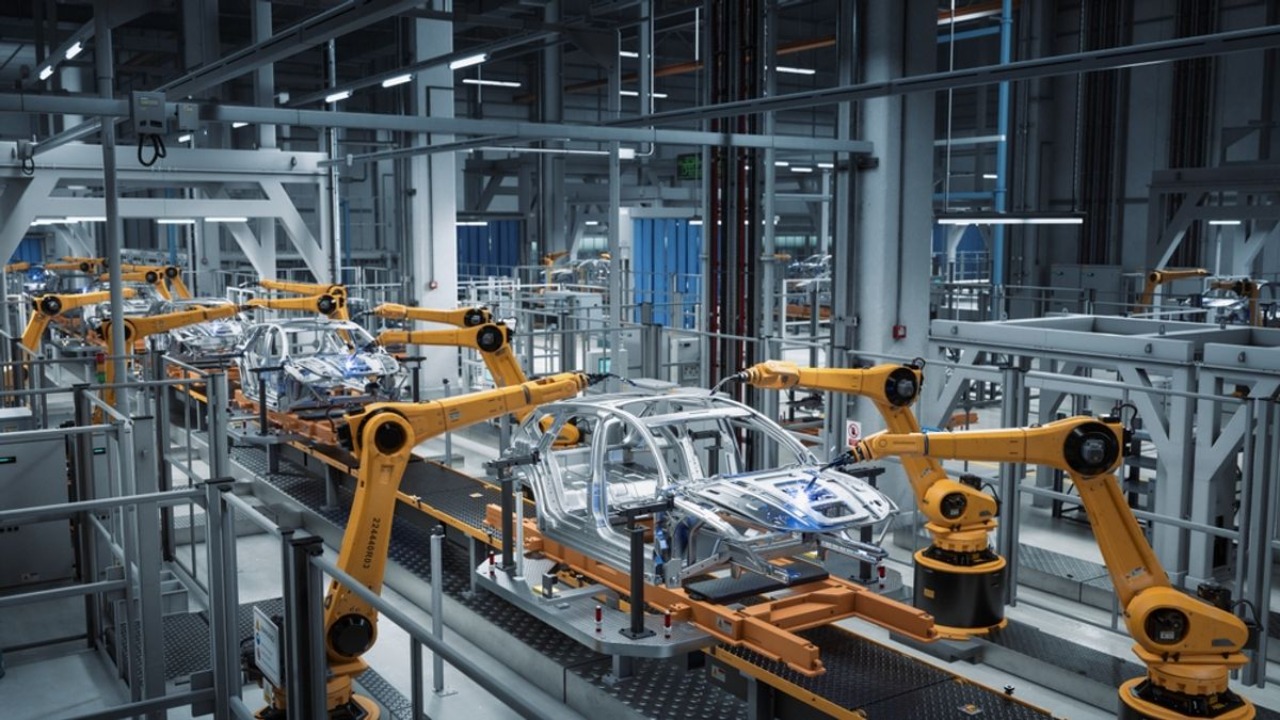
Toyota is preparing for a major transformation of its manufacturing operations, with the automaker estimating that modernizing its factories through greater automation and robotics could require spending about 1 trillion yen, or $6.4 billion, every year from 2028.
The figure represents a potential scale of investment rather than a confirmed multiyear spending commitment, and Toyota has not specified how long the spending would continue.
The plan covers more than Toyota’s own factories. According to Reuters, the estimate includes Toyota, its group companies, and major suppliers, making the potential project considerably broader than a conventional factory-upgrade program.
Toyota has told investors that approximately 400,000 robots could eventually be required to support the automation effort across those operations.
The proposed change comes at a time when automakers are dealing with two major challenges. Many are working with aging factory infrastructure while also facing a shortage of skilled workers who can operate and maintain increasingly sophisticated production systems.
Toyota’s move also shows how robotics is becoming part of the industry’s broader strategy for controlling manufacturing costs while preparing factories for vehicles that require different production processes.
Toyota’s $6.4 Billion Automation Push
Toyota’s estimate was discussed with investors earlier in September and covers a wide range of automation technologies. Reuters reported that the approximately 400,000 robots would include both humanoid and conventional industrial machines.
Some would replace existing equipment, while others would be newly installed to add manufacturing capabilities that Toyota does not currently have.
The scale is significant because Toyota operates one of the world’s largest automotive manufacturing networks, with factories and production partners spread across multiple regions.
Its production system has traditionally emphasized efficiency, standardized processes, and continuous improvement, but the latest initiative would add a much larger robotics component to those principles.
Toyota’s own description of its production system already places automation alongside human involvement. Its Toyota Production System includes jidoka, a concept that Toyota describes as “automation with a human touch.”
The idea is to stop production when abnormalities are detected and improve productivity rather than simply replacing workers with machines.
That philosophy is relevant to the new investment because Toyota is not describing a manufacturing future based entirely on machines operating without people. Instead, the company is looking at industrial robots, automated logistics, and future human-robot collaboration on factory floors.
Automated logistics could become particularly important as factories become more flexible. Modern vehicle plants must move thousands of components through production areas while maintaining precise timing.
Automating some of that movement can reduce repetitive work and potentially allow employees to focus on tasks requiring greater judgment or technical expertise.
The 1 trillion-yen figure should also be treated carefully. Toyota did not say that it has approved a fixed annual budget of that amount beginning in 2028.
Reuters reported that the company has not specified whether the potential spending would definitely occur or how many years it would continue. The estimate instead illustrates the possible financial scale of modernizing the wider manufacturing network.
Why Toyota Is Increasing Automation
Labor availability is one of the central reasons automakers are increasing their interest in robotics. Vehicle manufacturing requires large numbers of workers, but some production tasks are repetitive, physically demanding, or require operations to continue around the clock.
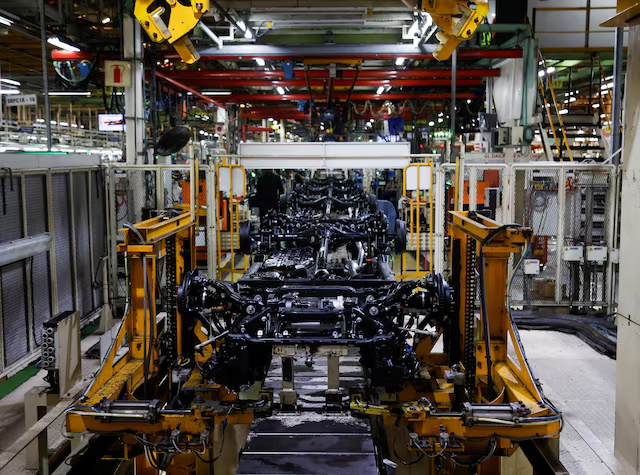
An aging workforce can make those challenges more difficult. Automation can handle certain repetitive processes while allowing employees to move into jobs involving equipment supervision, programming, maintenance, and quality control.
The other issue is aging infrastructure. Many manufacturing plants have been operating for decades, and the machinery used in older facilities may not have been designed for the production requirements of modern electric, hybrid, or software-heavy vehicles.
The transition toward electrification is one reason manufacturing systems are changing. Battery packs, electric drive units, and other high-voltage components require production processes that differ from those used for traditional gasoline engines and transmissions.
At the same time, automakers are increasingly developing vehicles with more software and electronic systems.
Toyota has been reorganizing its own manufacturing engineering operations as part of that transition. In May 2026, the company announced that it would establish a new Production Engineering Group, bringing manufacturing engineering capabilities from several areas together.
Toyota said the move was intended to strengthen manufacturing capabilities for the future by integrating engineering, production, and manufacturing engineering expertise.
The automation push therefore fits into a larger restructuring of how Toyota develops and produces vehicles.
The company is also investing in facilities and technology that support more integrated vehicle development. Toyota’s Technical Center in Shimoyama, Japan, for example, is designed around an end-to-end development process in which vehicles can be tested, modified, and retested rapidly.
Automation could eventually connect these manufacturing improvements with Toyota’s broader digital strategy. More sensors, data collection, and software-controlled equipment could allow factories to identify production problems faster and adjust processes with less manual intervention.
Toyota’s Robotics Ambitions Extend Beyond Cars
The size of the proposed investment also raises the possibility that Toyota sees robotics as more than a manufacturing tool.
Reuters reported that analysts at Bernstein believe Toyota’s increasing focus on robotics could help create growth opportunities beyond traditional vehicle manufacturing. The analysts expect robotics-related announcements to become more frequent as Toyota accelerates its efforts in the field.
Toyota has already maintained a long-standing interest in robotics and artificial intelligence. Its broader research network includes Toyota Research Institute in North America, which works in areas including artificial intelligence, automated driving, and robotics.
Toyota has also established Woven by Toyota to develop software-driven technologies and new mobility businesses.
The factory automation program could provide Toyota with a large-scale environment for testing and deploying robotic technology. Rather than developing robots only as standalone products, Toyota can potentially use them across manufacturing, material handling, and collaboration with employees.
Humanoid robots are particularly interesting because they could eventually operate in environments designed around human workers. Conventional industrial robots are usually optimized for specific tasks and fixed locations.
A humanoid machine could theoretically perform multiple tasks using equipment and workspaces already designed for people, although the practical capabilities and economics of such systems remain developing areas.
Toyota is not alone in pursuing this direction. Hyundai, which owns Boston Dynamics, has said it plans to deploy humanoid robots at its U.S. plant in Georgia from 2028. That means major automakers are increasingly treating robotics as a manufacturing technology with potential strategic importance rather than simply another piece of factory equipment.
For Toyota, the potential 1 trillion-yen annual investment could therefore serve several purposes at once. It could help modernize aging factories, address labor shortages, improve logistics and production flexibility, and create a larger platform for experimenting with robotics.
The challenge will be turning that investment into measurable manufacturing benefits. Installing hundreds of thousands of machines would not automatically make factories more efficient.
Toyota would need to integrate the equipment with existing production systems, train employees, maintain the robots, and ensure that automation does not reduce the flexibility that has traditionally been central to its manufacturing approach.
There is also the question of cost. At $6.4 billion annually, the potential investment would represent a substantial long-term commitment, particularly if spending remained at that level for multiple years. Toyota has not provided a fixed timetable or confirmed that the full amount will be spent each year.
For now, the announcement is best understood as a signal of the scale Toyota believes may be necessary to modernize its manufacturing ecosystem.
The company is looking at an automation network involving approximately 400,000 robots across Toyota, its group companies, and major suppliers, covering everything from industrial production and logistics to future human-robot cooperation.
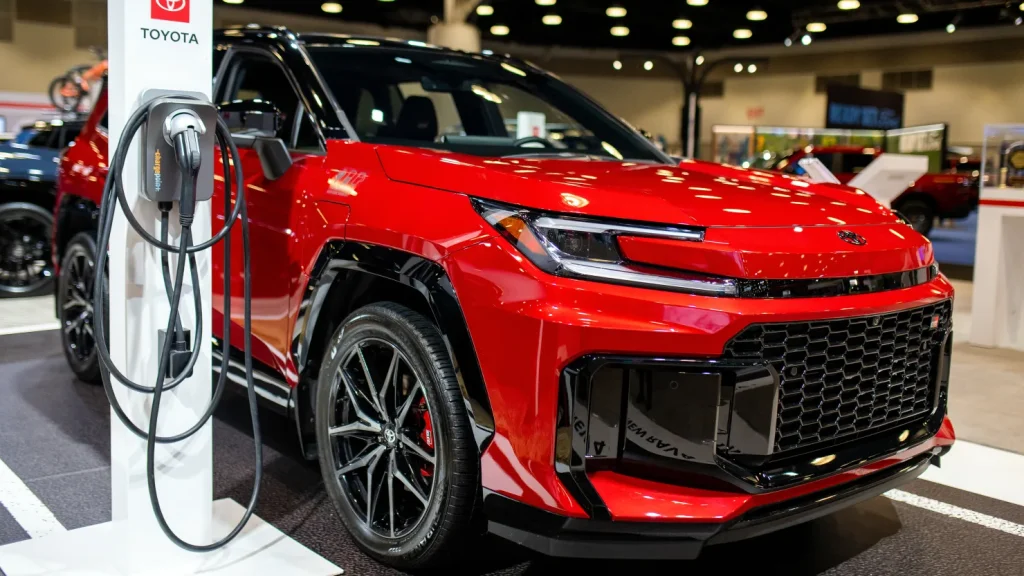
If the plan develops as outlined, Toyota’s factories could look substantially different by the end of the decade. Robots would not simply replace existing machines. They could become part of a wider manufacturing system in which humans, automated logistics, and increasingly capable robotic equipment work together.
The investment also reflects a broader change taking place across the automotive industry. Automakers are under pressure to build vehicles more efficiently while adapting factories for hybrid, electric, and software-driven technologies.
Toyota’s proposed spending shows that the next phase of automotive manufacturing may depend as much on robotics and digital production systems as on the vehicles coming off the assembly line.
For Toyota, the potential 1 trillion-yen annual cost from 2028 is therefore not simply a factory modernization bill. It represents the possible scale of the company’s effort to redesign how its manufacturing network operates as the automotive industry enters a more automated era.
