
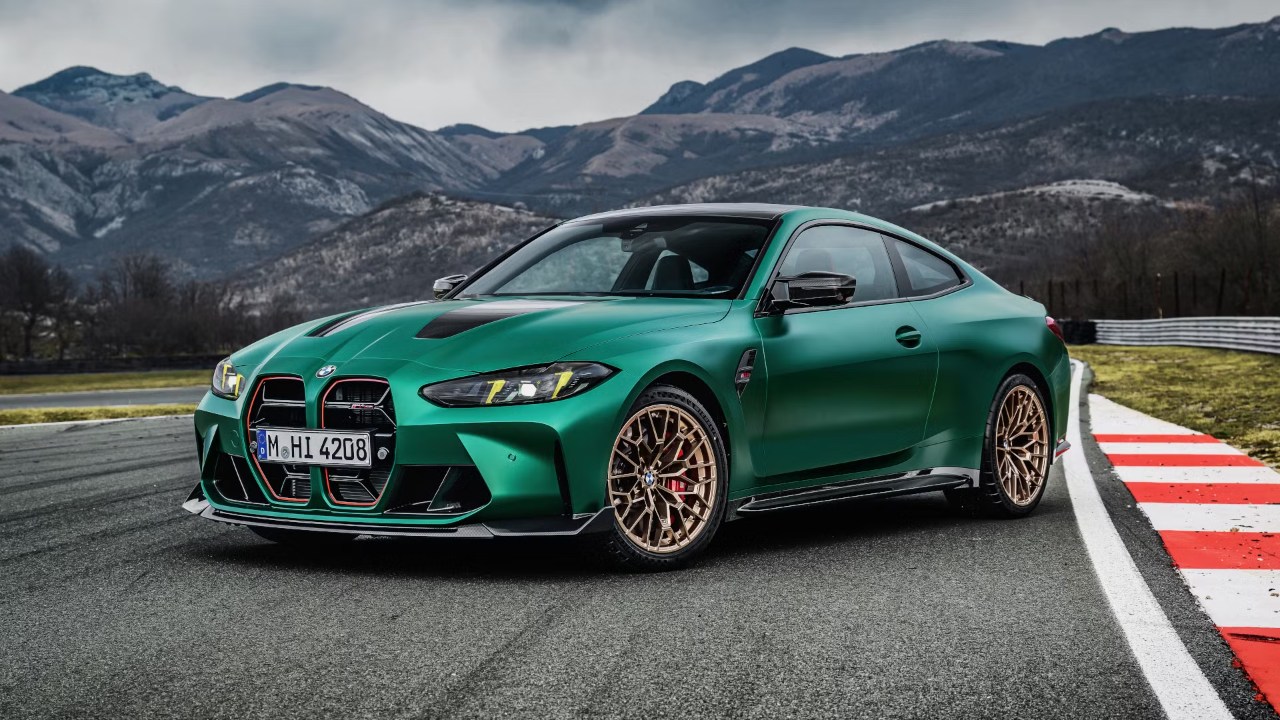
As manual transmissions become increasingly rare in the U.S., several performance cars are approaching major model changes that could alter their transmission choices.
The outlook differs from one vehicle to another. Some manual transmissions have been confirmed for discontinuation, others are temporarily on hold, while a few appear likely to disappear based on current product plans rather than official announcements.
BMW’s next-generation M3 is one of the clearest examples, while Honda has confirmed that the Civic Si will return for 2028 but has also created uncertainty around the gearbox. This list examines eight cars whose manual-transmission futures are changing as automakers move toward their next-generation lineups.
1. BMW M3
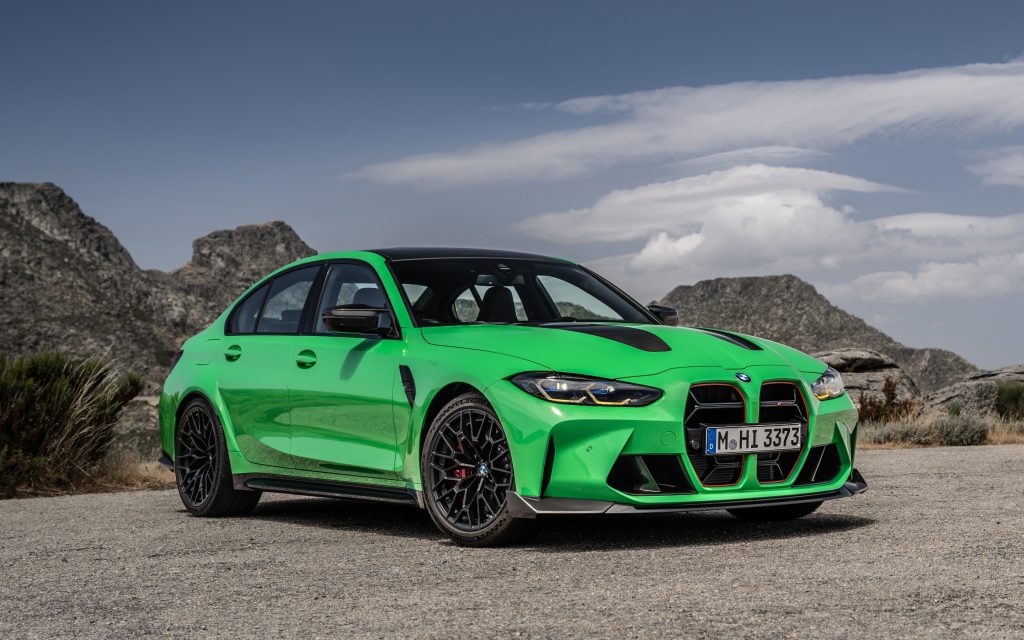
The BMW M3 is one of the clearest examples of a manual transmission approaching the end of its current run. The existing G80 M3 is still available in the United States with a six-speed manual, but that generation is nearing the end of its production cycle.
BMW has already announced a 2027 M3 CS Handschalter, a limited-production, rear-wheel-drive model using a six-speed manual, which serves as a special sendoff for the current generation.
The next M3, expected around the 2028 model year, is widely reported to use a new powertrain strategy that could include electrification and all-wheel drive.
Current reporting indicates that the next-generation car is not expected to offer a manual transmission. BMW has not yet published a final U.S. specification sheet confirming every detail, so that distinction is important.
The potential loss matters because the manual M3 is already a specialized configuration. The 2026 U.S. M3 produces 473 horsepower and 406 lb-ft of torque in its base rear-wheel-drive form, and that version is paired with the six-speed manual. The Competition models use an eight-speed automatic instead.
BMW M boss Frank van Meel previously said the company’s manual transmissions would continue as long as customer demand justified them, but the current product cycle is bringing the M3 toward a major transition.
For buyers who specifically want an M3 with three pedals, the current generation represents the final confirmed window before the next major redesign changes the equation.
2. BMW M4
The BMW M4 faces a similar situation, although its timeline is slightly different from the M3. The current G82 M4 remains available in the United States with a six-speed manual when ordered in its base rear-wheel-drive configuration.
BMW’s more powerful Competition versions use an eight-speed automatic, making the manual a deliberately limited choice within the M4 family.
The reason it belongs in a 2028-focused discussion is the approaching end of the current generation and uncertainty surrounding its successor. BMW previously stated that it intended to keep the manual available in the M4, but that commitment dates from an earlier product cycle.
More recent reporting indicates that BMW is not planning a straightforward next-generation M4 in the same form, while the future of the combustion-powered 4 Series is itself uncertain.
The current manual M4 uses BMW’s 3.0-liter twin-turbocharged inline-six, producing 473 horsepower and 406 lb-ft of torque. The six-speed manual sends power to the rear wheels.
That combination is increasingly unusual because high-output turbocharged engines make manual transmissions more difficult and expensive to engineer for relatively small production volumes.
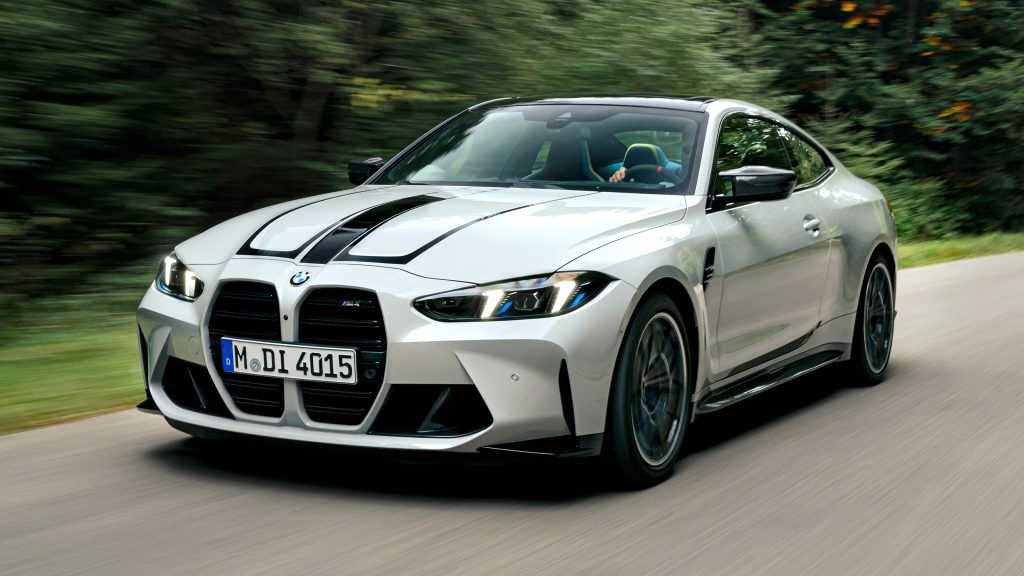
The M4’s significance goes beyond its numbers. It is one of the few modern luxury performance coupes where buyers can still combine substantial power with a conventional clutch pedal. BMW has acknowledged that manual demand is a major factor in determining whether these transmissions remain economically viable.
Until BMW releases final specifications for the next generation, the exact 2028 outcome remains unconfirmed. What is certain is that the current manual M4’s future is tied closely to the next generation’s development.
3. 2028 BMW M2
The BMW M2 is another car whose manual-transmission future becomes uncertain as BMW reshapes its M lineup. Unlike the M3, however, there is no confirmed announcement that the M2 manual disappears for 2028. That distinction matters.
The current M2 remains one of BMW’s strongest commitments to the traditional six-speed gearbox, with the manual offered as standard equipment on the regular M2.
BMW has already announced a major change for 2027: the M2 will gain an M xDrive all-wheel-drive version, and that configuration will be automatic-only. The existence of that model does not eliminate the rear-wheel-drive manual, but it shows BMW is expanding the M2 toward drivetrains where an automatic makes more sense.
The current U.S. M2 uses BMW’s 3.0-liter twin-turbocharged inline-six, producing 473 horsepower and 406 lb-ft of torque. The six-speed manual sends power to the rear wheels, while an eight-speed automatic is available.
BMW has not yet published final 2028 M2 specifications, so saying the manual is definitely gone would go beyond the available evidence.
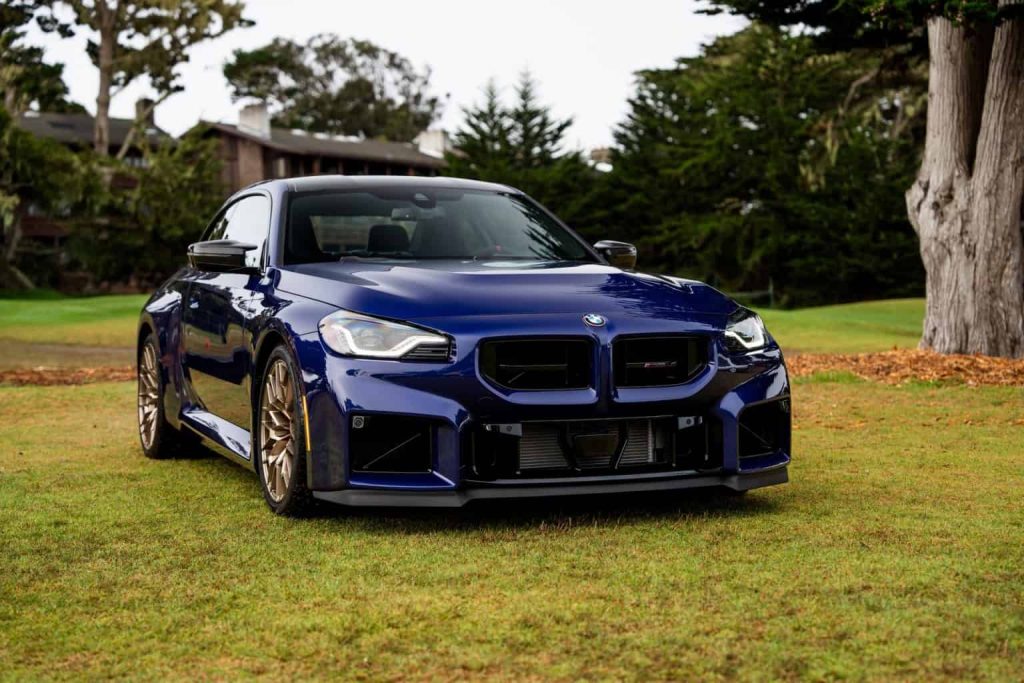
That makes the M2 different from the M3. Its manual is still part of the current product plan, and reports indicate M2 production could continue longer than the current M3 generation.
For this article, the M2 should therefore be viewed as a manual option at risk rather than a confirmed deletion. Its future depends on how BMW develops the next M2 and whether demand remains strong enough to justify keeping the six-speed.
4. Toyota GR Supra
The Toyota GR Supra provides a much more definitive manual-transmission ending, because the current fifth-generation Supra itself is reaching the end of production.
Toyota announced a 2026 GR Supra MkV Final Edition, giving the sports car a final production-year sendoff. The regular 3.0-liter GR Supra is available with a six-speed manual, while the automatic uses an eight-speed transmission.
That means the manual does not need to be separately canceled for 2028. Once the current Supra ends production, this particular manual configuration disappears with it. Toyota has not announced a new 2028 GR Supra with a manual transmission, so there is currently no confirmed successor that preserves the three-pedal setup.
The current U.S. GR Supra 3.0 uses a 3.0-liter turbocharged inline-six producing 382 horsepower and 368 lb-ft of torque. The six-speed manual is rear-wheel drive only. The 2026 Final Edition takes the formula further with additional performance-oriented equipment, but it remains part of the outgoing generation.
The Supra’s ending is especially interesting because its manual transmission arrived after the fifth-generation car’s initial launch. Toyota developed the six-speed specifically for the 3.0-liter engine after customer demand demonstrated that there was still an audience for a traditional gearbox.
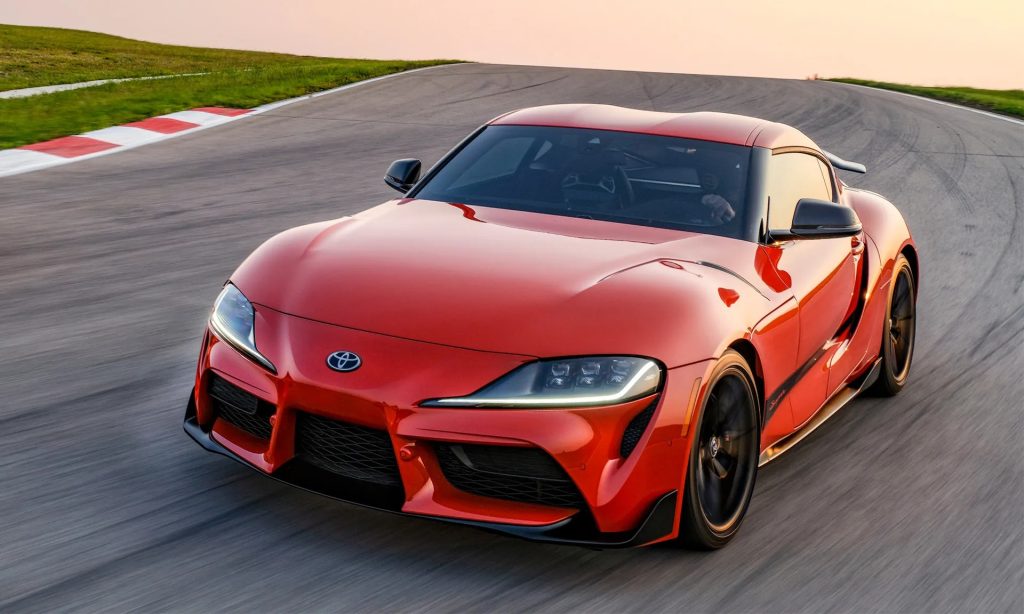
The car therefore represents a rare modern example of an automaker adding a manual after launch, only for the entire generation to eventually reach the end of its production cycle.
Unless Toyota announces another generation with three pedals, the current Supra will become one of the increasingly small number of recent performance cars where buyers can specifically choose a manual.
5. Cadillac CT5-V Blackwing
Few cars illustrate the shrinking manual market as dramatically as the Cadillac CT5-V Blackwing. Its six-speed manual transmission is paired with a hand-built 6.2-liter supercharged V8, producing 668 horsepower and 659 lb-ft of torque.
That combination makes the Blackwing one of the most unusual performance sedans still available in the United States. Cadillac itself lists the six-speed manual alongside a 10-speed automatic for the 2026 model.
The problem for 2028 is not that Cadillac has announced the manual will disappear from a 2028 CT5-V Blackwing. The current-generation car is ending.
Cadillac confirmed that the existing CT5 will be retired after the 2026 model year, while also saying the CT5 nameplate’s legacy will continue with a future gasoline-powered vehicle. The company has not confirmed that the replacement will retain the Blackwing name, V8, or six-speed manual.
That leaves the manual Blackwing’s future particularly uncertain. A report published in July 2026 said a second-generation Blackwing was expected, although Cadillac declined to confirm the report. Even if the performance badge returns, there is no official commitment to reproduce the current formula.
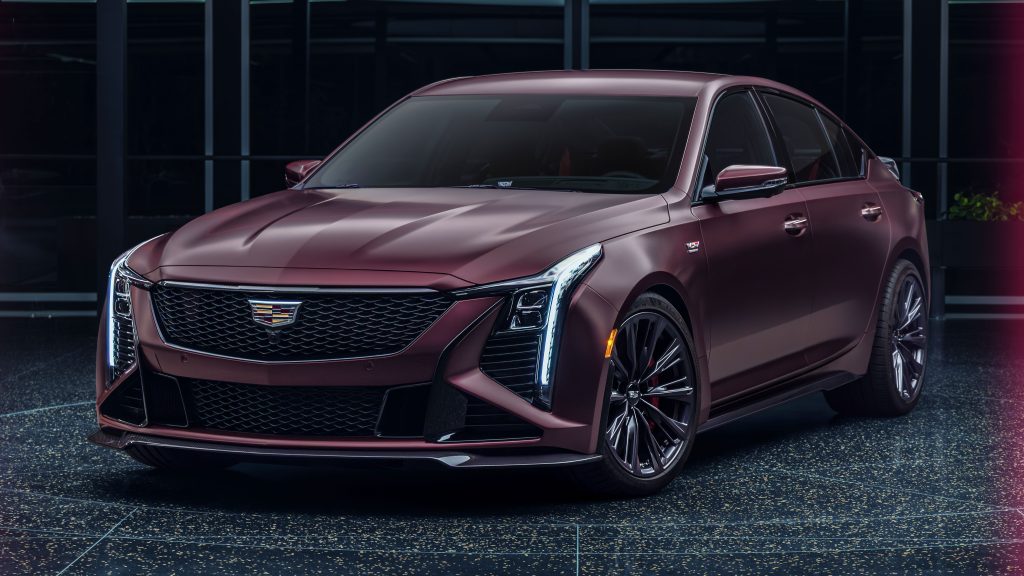
For enthusiasts, that makes the 2026 Blackwing significant. Its combination of a supercharged V8, rear-wheel drive, and a clutch pedal belongs to a formula that is becoming exceptionally difficult to replace.
6. Acura Integra A-Spec
The Acura Integra A-Spec occupies a slightly different position because its manual transmission has not been permanently canceled. Instead, Acura’s six-speed manual is being put on hold, creating a major question for the 2028 model year.
Honda confirmed in July 2026 that production of the manual-equipped Integra A-Spec would pause after the 2026 model year. The company said the earliest anticipated return for the A-Spec six-speed manual is the 2028 model year.
That wording is important because it does not guarantee the gearbox will return. The current 2026 Integra A-Spec with the Technology Package can be ordered with a six-speed manual and uses Acura’s 1.5-liter turbocharged four-cylinder.
It produces 200 horsepower and 192 lb-ft of torque, with front-wheel drive sending the power through the manual gearbox. Acura also equips the manual version with rev-match control.
For 2027, buyers therefore lose access to this particular manual configuration while Acura works through the next phase of the Integra. The uncertainty begins with the 2028 model year because Acura has not confirmed that the A-Spec 6MT will actually return then.
The Integra Type S should not be confused with the A-Spec. Acura continues to position the Type S separately, with its 320-horsepower 2.0-liter turbocharged engine and standard six-speed manual. That means the manual question here applies specifically to the A-Spec version.
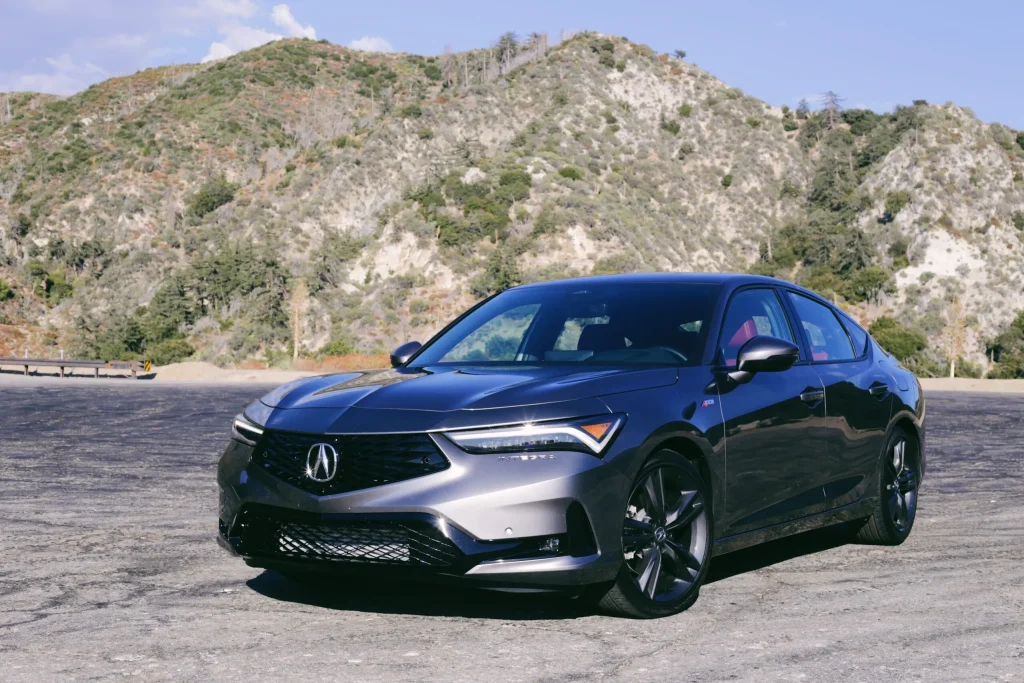
If Acura ultimately decides against bringing the A-Spec manual back, the change would remove one of the more affordable three-pedal performance-oriented choices from the U.S. market.
7. Lotus Emira
The Lotus Emira is entering a period of transition that could make its current six-speed manual configuration difficult to carry into the 2028 era. The important distinction is that Lotus has not announced that the manual Emira will definitely disappear in 2028.
Instead, the company has confirmed that the Emira itself will continue while preparing a substantially different future sports-car lineup. Lotus recently reaffirmed the Emira’s production continuity, citing continued demand for combustion-engine sports cars.
That makes this case different from a straightforward discontinuation. The current U.S. Emira has been offered a six-speed manual alongside an automatic, depending on the powertrain. The V6 version has been particularly important to enthusiasts because it combines a supercharged 3.5-liter engine with rear-wheel drive and a traditional gearbox.
However, Lotus is already developing new hybrid technology for its next-generation sports cars. Its upcoming Type 135, now expected to arrive as a combustion-hybrid flagship, is planned for 2028.
Recent reporting indicates that the future lineup is moving toward hybrid powertrains and automatic transmissions, although Lotus has not released a complete 2028 Emira transmission strategy.
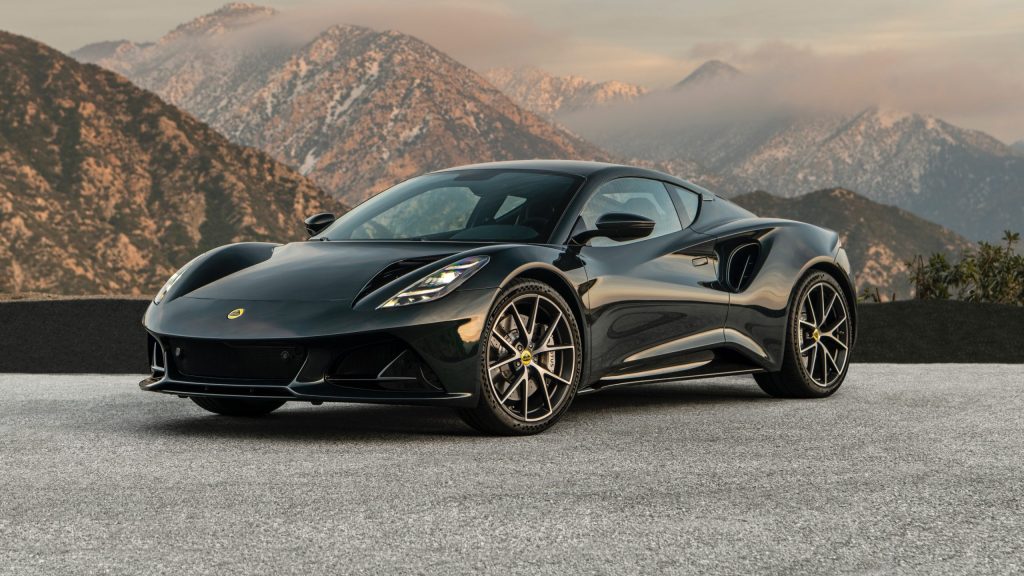
That leaves the Emira’s manual as an option worth watching rather than one that can be declared finished today. If Lotus eventually replaces the current powertrain with its newer hybrid architecture, the traditional six-speed could disappear even if the Emira name remains.
For American buyers, the significance is considerable because the Emira represents one of the few modern sports cars where lightweight construction and a conventional manual gearbox remain central to the driving experience.
8. Cadillac CT4-V Blackwing
The Cadillac CT4-V Blackwing is another manual-equipped performance car approaching the end of its current chapter, although its situation is more definitive than several other entries on this list.
Cadillac is ending production of the current CT4 after the 2026 model year, which means the existing Blackwing and its six-speed manual will not continue into 2028. Cadillac has said the CT4 and CT5 nameplates will be retired after 2026, with future combustion-powered vehicles carrying forward elements of their legacy.
The CT4-V Blackwing uses a 3.6-liter twin-turbocharged V6 producing 472 horsepower and 445 lb-ft of torque. Its six-speed manual transmission sends power to the rear wheels, while Cadillac also offers a 10-speed automatic.
That combination has made the Blackwing unusual in a market where high-output sport sedans increasingly rely on automatic transmissions.
The question for 2028 is whether Cadillac will reproduce that formula in whatever eventually follows the CT4. There is currently no official commitment to another compact V-Series sedan with a manual transmission.
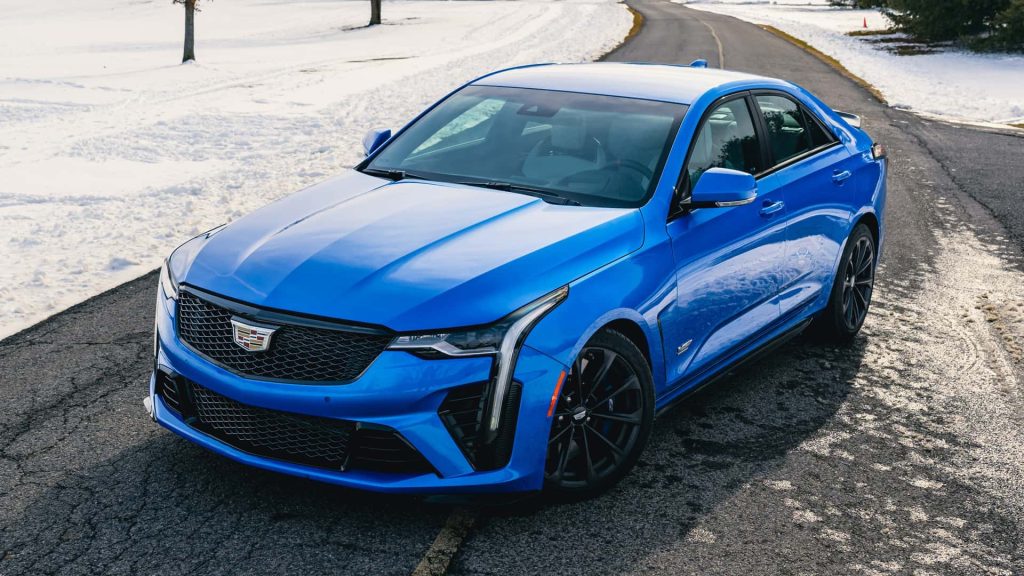
Reports about future Cadillac performance products have circulated, but Cadillac has not confirmed a direct manual-equipped CT4-V Blackwing successor.
That means the disappearance is certain for the current car, while the fate of a replacement remains unknown. For manual-transmission buyers, the distinction matters because a future Cadillac performance sedan could retain the V-Series name while changing its engine, drivetrain, and transmission.
The CT4-V Blackwing therefore represents another manual option that will not simply carry into the 2028 model year unchanged.
